


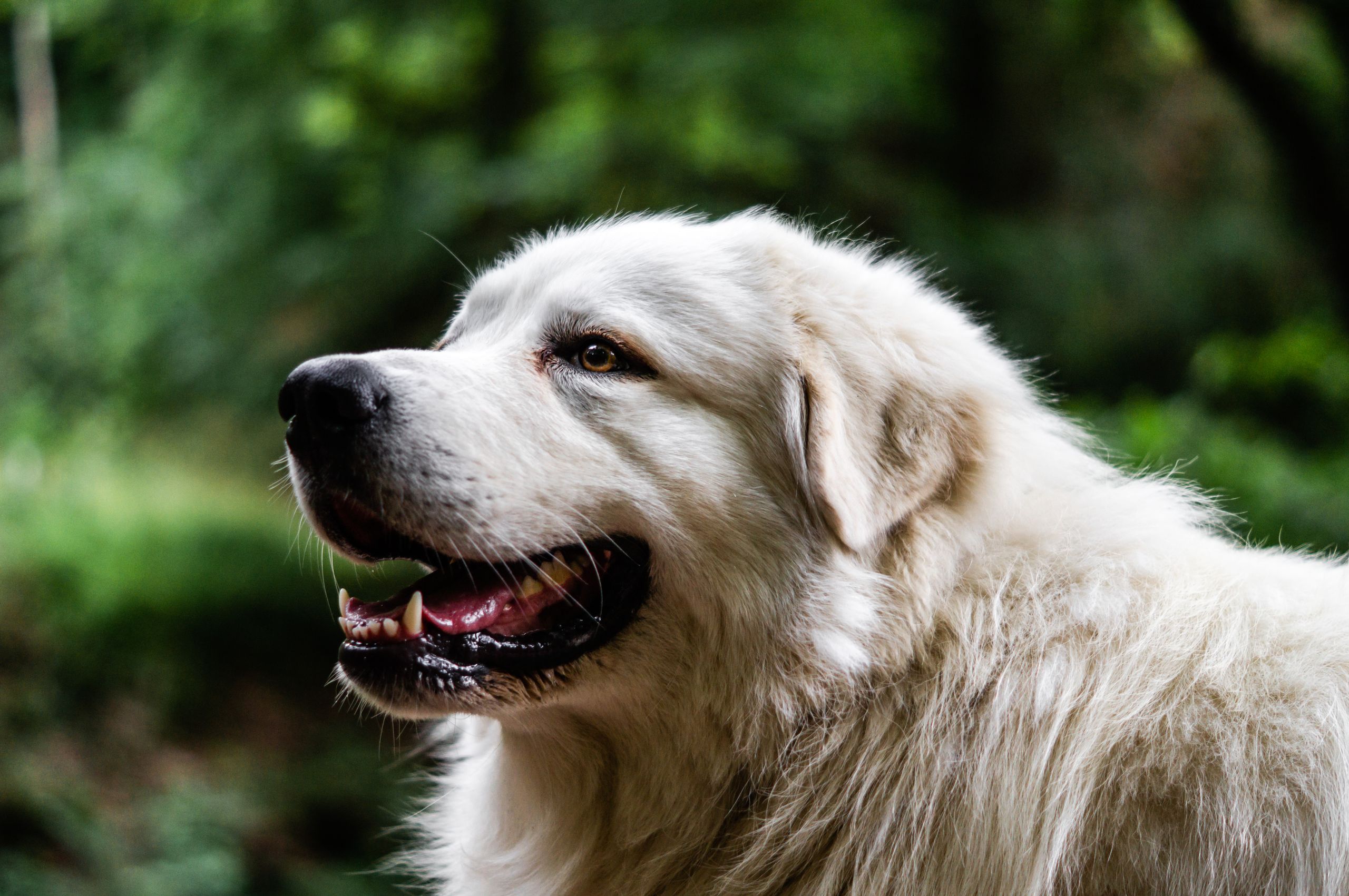
History
Known to the FCI as the Chien de Montagne des Pyrénées, or Pyrenean Mountain Dog, this is a French livestock guardian with ancient roots in the Pyrenees. The FCI standard notes references in the Middle Ages, including by Gaston Phoebus in the fourteenth century, and says that by the seventeenth century the dog was also a companion and fashionable at the court of Louis XIV. For centuries before that it had lived with shepherds and their flocks in the high valleys, guarding against wolves and bears.
The first detailed description came from Count de Bylandt in 1897. Breed clubs appeared around 1913, and in 1923 the Réunion des Amateurs de Chiens Pyrénées registered an official standard with the French Kennel Club, which has remained essentially unchanged. The current FCI standard dates from 2001 and places the breed in Group 2, Section 2.2, mountain-type molossoids. Its original job was to protect flocks from predators on its own, without a shepherd's direction, which explains much of its character today.
Temperament
The standard describes a dog selected for its guarding and dissuasive ability and its attachment to the flock, combining strength and agility with gentleness towards those it protects. It also notes a propensity for independence and initiative that demands a certain degree of authority from the owner. In practice the breed is calm, affectionate with its family and confident in making its own decisions.
These are not dogs that live to obey. A Pyrenean will consider a request and may decide it has a better idea, particularly when it believes it is protecting the household. Many are night owls and bark at sounds and movements after dark, which is the guarding instinct at work. They are usually reserved but polite with visitors who are introduced properly.
Children and other pets
With its own children a well-raised Pyrenean is usually patient and protective, though its size means toddlers can be knocked over and the dog may try to intervene in rough play with visiting children. Most accept other household pets, including cats, especially when raised with them, and many treat them as part of the flock they are meant to watch over. Unfamiliar dogs entering their territory may be challenged, so introductions need care.
Exercise and the daily walk
The breed is not built for running marathons. An adult needs around an hour to an hour and a half of steady walking a day, with time to patrol, sniff and watch. Pyreneans prefer a measured pace and often stop to take in the surroundings. Their idea of a good afternoon is lying where they can see the comings and goings.
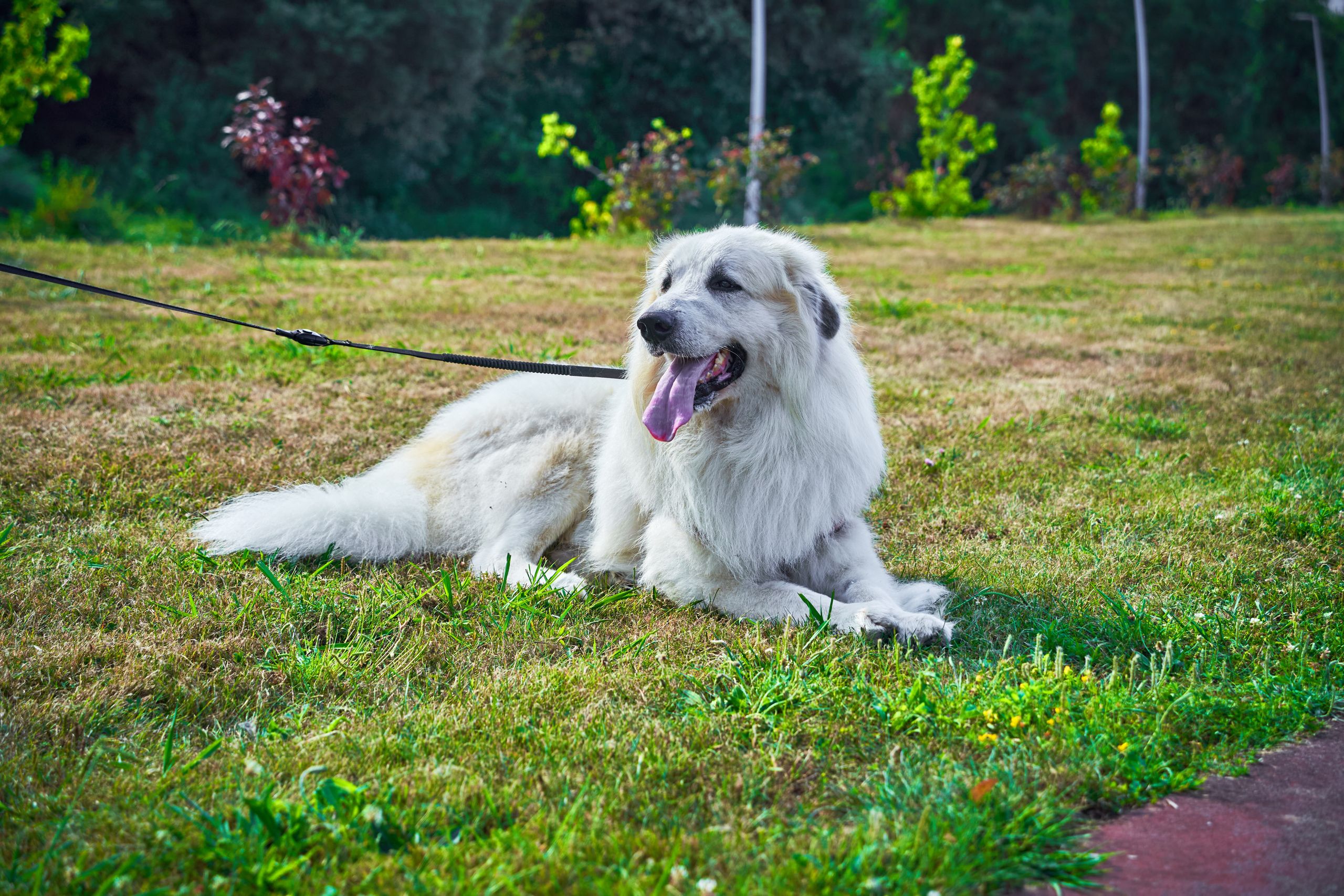
Off-lead freedom is risky for a guardian breed with an independent streak and a tendency to roam, so most owners use a long line or fenced areas. Puppies grow quickly and should avoid stairs, long walks and jumping while their joints develop. In warm weather the thick coat makes exercise hard, and walks should be short and shaded.
Training
Training a Pyrenean is about patience, consistency and mutual respect. The dog learns quickly but repeats things only when it sees value in them, and repetitive drills are counterproductive. Food rewards, calm confidence and clear routines work best, and harsh methods damage trust.
Lead manners must be taught while the puppy is still small, because an adult can outweigh many owners. Socialisation with visitors, delivery people, children and other dogs is vital so the guarding instinct stays proportionate. Expect barking to need management; teaching the dog that you have noticed a noise and that it can stand down is more effective than trying to silence it entirely.
Coat and grooming
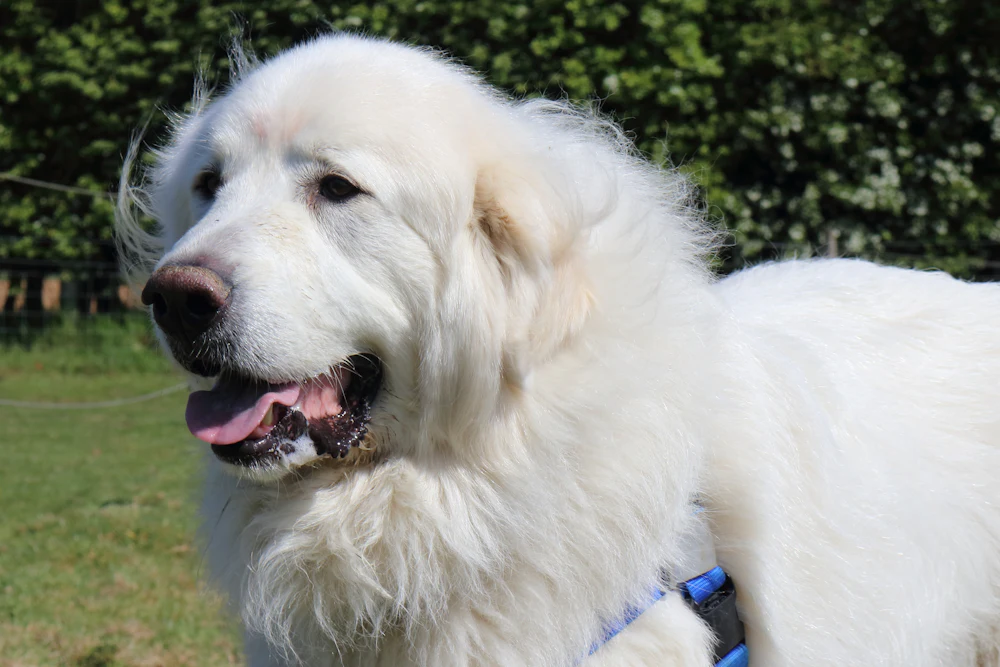
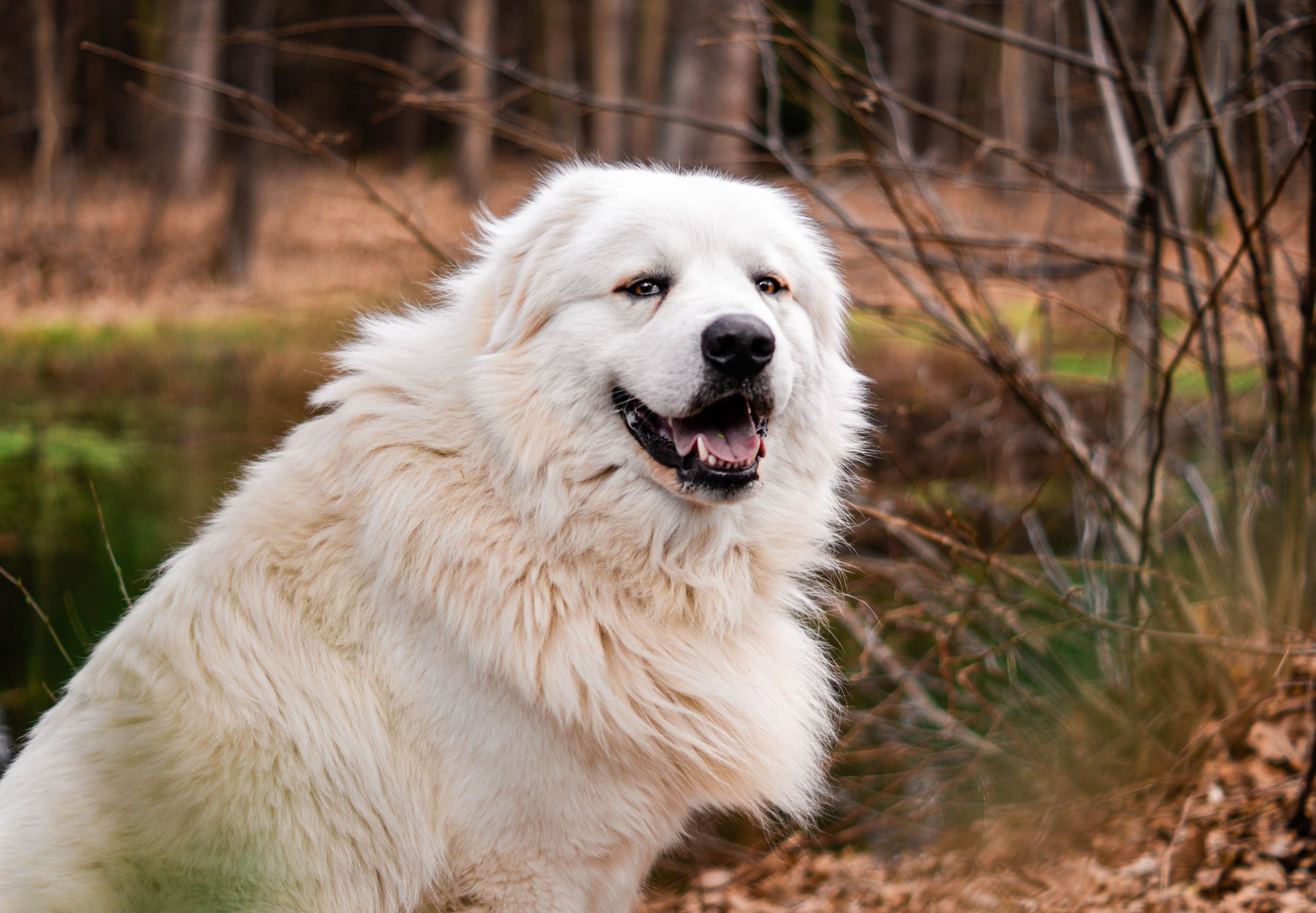
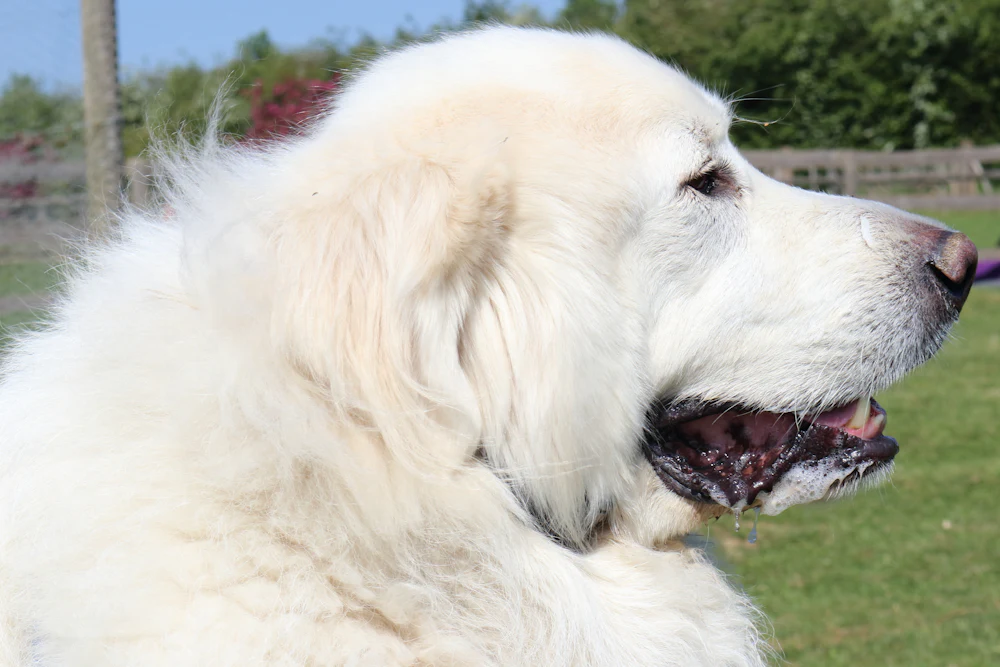
The coat is well furnished, flat, fairly long and supple, with a thick undercoat and longer hair on the neck, tail and the backs of the legs. Brush thoroughly two or three times a week, more during the heavy seasonal moults, when the undercoat comes out in quantity. Dirt tends to dry and brush out of a healthy coat. The FCI standard allows white, or white with patches of grey (badger or wolf), pale yellow or orange (arrouye) on the head, ears and base of the tail, sometimes on the body. Double dewclaws on the hind legs are part of the standard.
Feeding and weight
Feed a good-quality complete diet formulated for large or giant breeds, especially during the puppy growth phase, when too much energy or calcium can harm developing joints. Adults often eat less than their size suggests. Split food into two meals a day and avoid exercise around feeding because of the deep chest. Keep the dog lean to reduce strain on hips and elbows.
Work out a starting calorie figure and food weight with the calorie calculator. Not sure this is the right breed? Take the quiz.
Health
Every breed carries predispositions. These are the conditions most often discussed for the Great Pyrenees, not a prediction for any individual dog.
- Hip dysplasia
- Elbow dysplasia
- Patellar luxation (slipping kneecaps)
- Gastric dilatation-volvulus (bloat)
- Neuronal degeneration (inherited neurological disease, DNA test available)
- Glanzmann's thrombasthenia (inherited bleeding disorder)
What to ask the breeder. Ask for hip and elbow scores and a patella assessment for both parents, plus DNA results for neuronal degeneration and Glanzmann's thrombasthenia.
Choosing a puppy
A Pyrenean puppy looks like a polar bear cub and grows at remarkable speed. Teach lead walking, handling and grooming early, while the puppy is still manageable. Socialise widely with people, children, traffic, lifts and other dogs, and introduce brushing as a daily routine. Avoid stairs and long walks while growing, and use a puppy diet designed for giant breeds to support steady, controlled growth.
In Luxembourg the national kennel club is the Fédération Cynologique Luxembourgeoise (FCL), a member of the FCI. Many owners also buy from breeders in Germany, France or Belgium; a puppy coming from another EU country must be microchipped and vaccinated against rabies, which in practice means it cannot travel before about fifteen weeks of age. Where to get a dog in Luxembourg.
The older Great Pyrenees
Older Pyreneans slow down and may become stiff in the hips and elbows. Keep walks shorter and gentle, provide a thick orthopaedic bed and use non-slip rugs on smooth floors. In flats, lifts become essential as stairs grow difficult. Keep the dog slim and check regularly for lumps, lameness or changes in appetite.
A realistic day
A realistic weekday for a working household in Luxembourg City, with a midday visit. Adjust it to your dog, not the other way round.
Steady thirty-minute walk while the air is cool
Breakfast, then rest by a window or in a quiet, cool room
Midday visit: a calm stroll, toilet break, fresh water and a brush
Evening walk in a park with time to watch and sniff, then dinner
Short final outing and settling for the night
A Great Pyrenees in Luxembourg
A Pyrenean can live in a large flat with a lift, but it is better suited to a house with a secure garden. Stairs are hard on a growing or older giant dog, and the size of the breed in a small lift needs planning. Night barking is the biggest challenge in apartment buildings, so think carefully about neighbours before choosing this breed.
Heat is the other concern. On summer days in the 30s °C, walk only at dawn and late evening, keep the dog in a cool room and never leave it in a car. Shady routes through the Bambësch or the Grünewald are much better than city pavements. The usual rules apply: microchip, registration with the commune, liability insurance and the annual dog tax.
Every dog in Luxembourg must be identified, declared to the commune and covered by liability insurance. How registration works.
When you travel
A sitter must know that this dog guards its home and may be wary of strangers, so the first meeting should be calm and with the owner present. Keep a steady routine, two meals with rest around them, and walks only in cool hours in summer. The dog may bark at night; reassure rather than punish. Watch for signs of bloat.
PAWLY's holiday and overnight care takes place in your home, so your dog keeps its own bed and routine.
Myths and facts
MythA big fluffy dog is a lazy dog.
FactPyreneans are calm indoors but are working guardians that need daily walks and something to watch.
MythThey are easy to train because they are gentle.
FactGentleness does not mean obedience; the breed is independent and needs patient, consistent training.
MythShaving the coat helps in summer.
FactThe double coat helps insulate the dog; shaving it can cause problems. Shade, cool rooms and timing walks are safer ways to manage heat.
Is it the right dog for you?
Suits
- Experienced owners who appreciate an independent dog
- Houses with a secure garden and understanding neighbours
- Calm households that enjoy steady walks
- Families who want a gentle, watchful companion
Think twice if
- You live in a small flat or a building with thin walls
- You need reliable off-lead recall
- Night barking would be a problem
- You cannot cope with white hair on clothes and furniture
Questions owners ask
Are Great Pyrenees and Pyrenean Mountain Dogs the same?
Yes. Great Pyrenees is the name used in North America, while the FCI and most of Europe use Pyrenean Mountain Dog, or Chien de Montagne des Pyrénées in France. They are the same breed, standard No. 137 in the FCI nomenclature.
Do Pyreneans bark a lot?
They can, especially at night, because barking is how a guardian warns off predators. Training helps manage it, but it rarely disappears completely. This is an important consideration for people living in flats or close to neighbours.
Can a Pyrenean be off lead?
Many owners keep them on lead or a long line outside fenced areas. The breed was developed to work independently and may wander or follow its own judgement. Reliable recall is possible in some dogs but should never be assumed.
How do I keep a Pyrenean cool in summer?
Walk only in early morning and late evening, keep the dog indoors in a cool room, provide plenty of water and avoid hot pavements. Regular brushing helps remove dead undercoat. Watch for heavy panting or lethargy, which can signal heatstroke and need a vet.
Sources
- FCI breed standard No. 137 (Chien de Montagne des Pyrénées)
- Great Pyrenees Club of America health statement (AKC)
Photo: Unsplash (Unsplash License) · Photo: Pexels (Pexels License) · Photo: Pexels (Pexels License) · Photo: Unsplash (Unsplash License) · Photo: Pexels (Pexels License)
General information for dog owners in Luxembourg, not veterinary or legal advice. Official facts (origin, size, group, history and temperament as described by the breed standard) follow the FCI standard; health and care sections reflect breed-club and veterinary guidance and are typical ranges rather than rules. For your own dog, ask your vet, the breed club or your commune. How this guide is written and checked. Last reviewed 8 October 2026.
Need someone for your Great Pyrenees?
PAWLY offers an individual 45-minute walk or a home visit at your dog's pace, the same walker every time, and a written report with photos after every visit, across Luxembourg City.
Read next: the journal, for the Great Pyrenees
All articles
Arthritis: the pain owners file under old age
Giant breeds tend to have joint trouble early; this is what to look for.

Dogs in hot weather: the Luxembourg summer guide
The Great Pyrenees carries a heavy coat or a heavy frame, which makes a Luxembourg summer the hard season.

Growing a large-breed puppy without wrecking its joints
A giant puppy grows fast on soft bones; how it grows decides its joints for life.
Similar breeds
All 198 breeds
Pyrenean Mastiff
A huge, white, patched mountain guardian that is gentle with its family, grave with strangers and impossible to overlook in a lift.
EnergyGroomingFlat life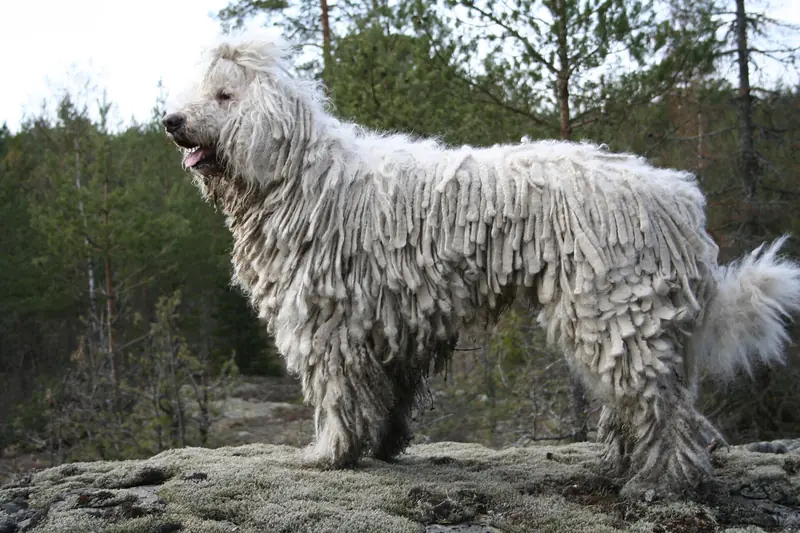
Komondor
A Hungarian livestock guardian under a mop of white cords, built to watch alone all night and to decide for itself who is a threat.
EnergyGroomingFlat life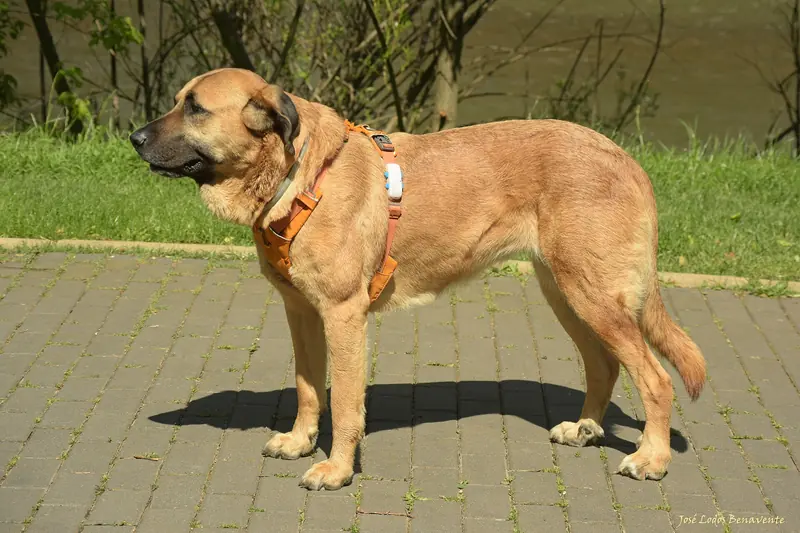
Spanish Mastiff
The sheep guardian of the Spanish migration routes, a heavy, deep-voiced dog with a gentle face and a serious job description.
EnergyGroomingFlat life

