History
The Spanish Mastiff, Mastín Español, is closely tied to the seasonal movement of livestock in Spain, and especially to the Merino flocks. The FCI standard describes how the breed accompanied the wandering herds in the Middle Ages, at the time of the Mesta, defending sheep from wolves and other predators during their long migrations between summer and winter pastures. That job explains the dog's size, steadiness and hardiness.
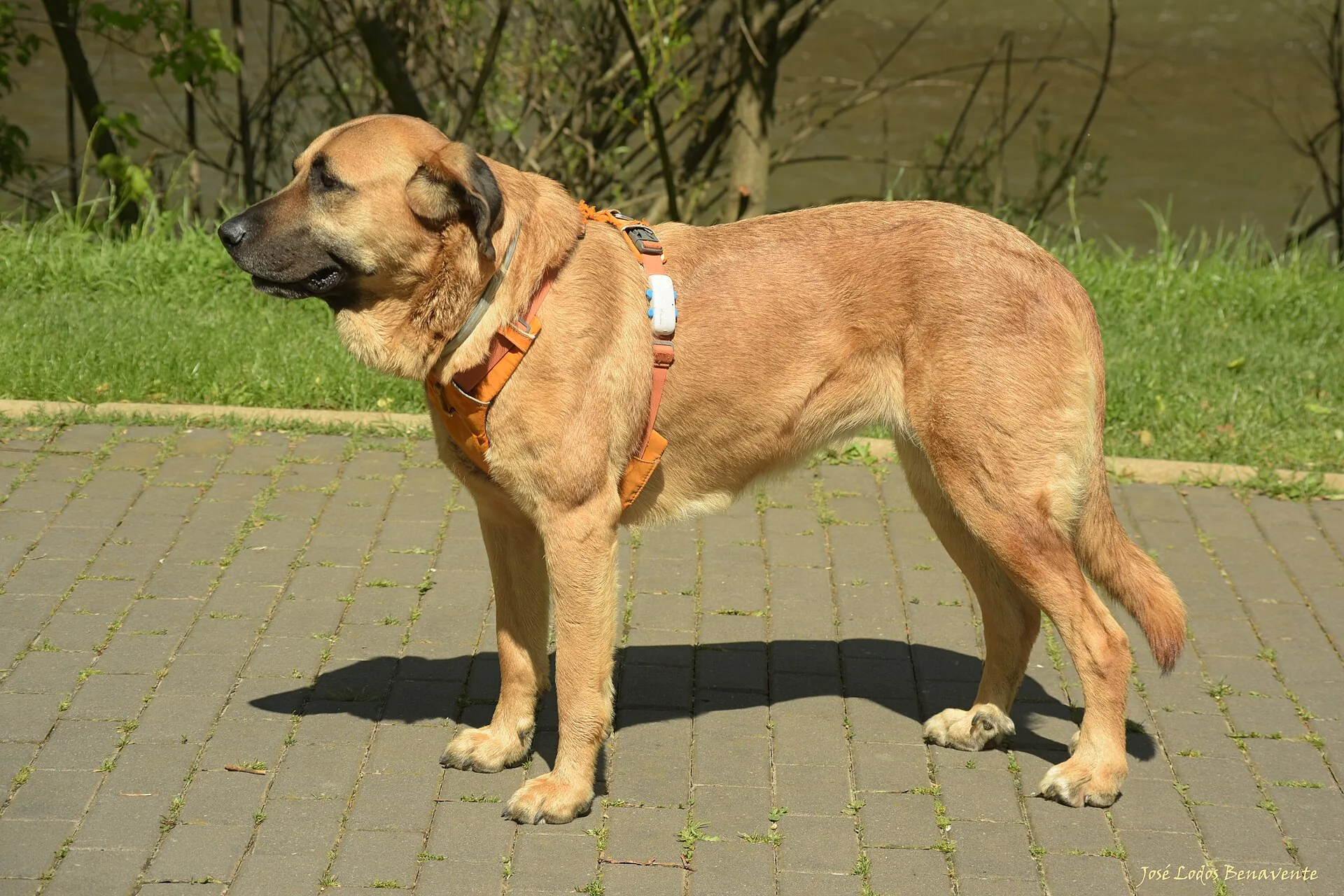
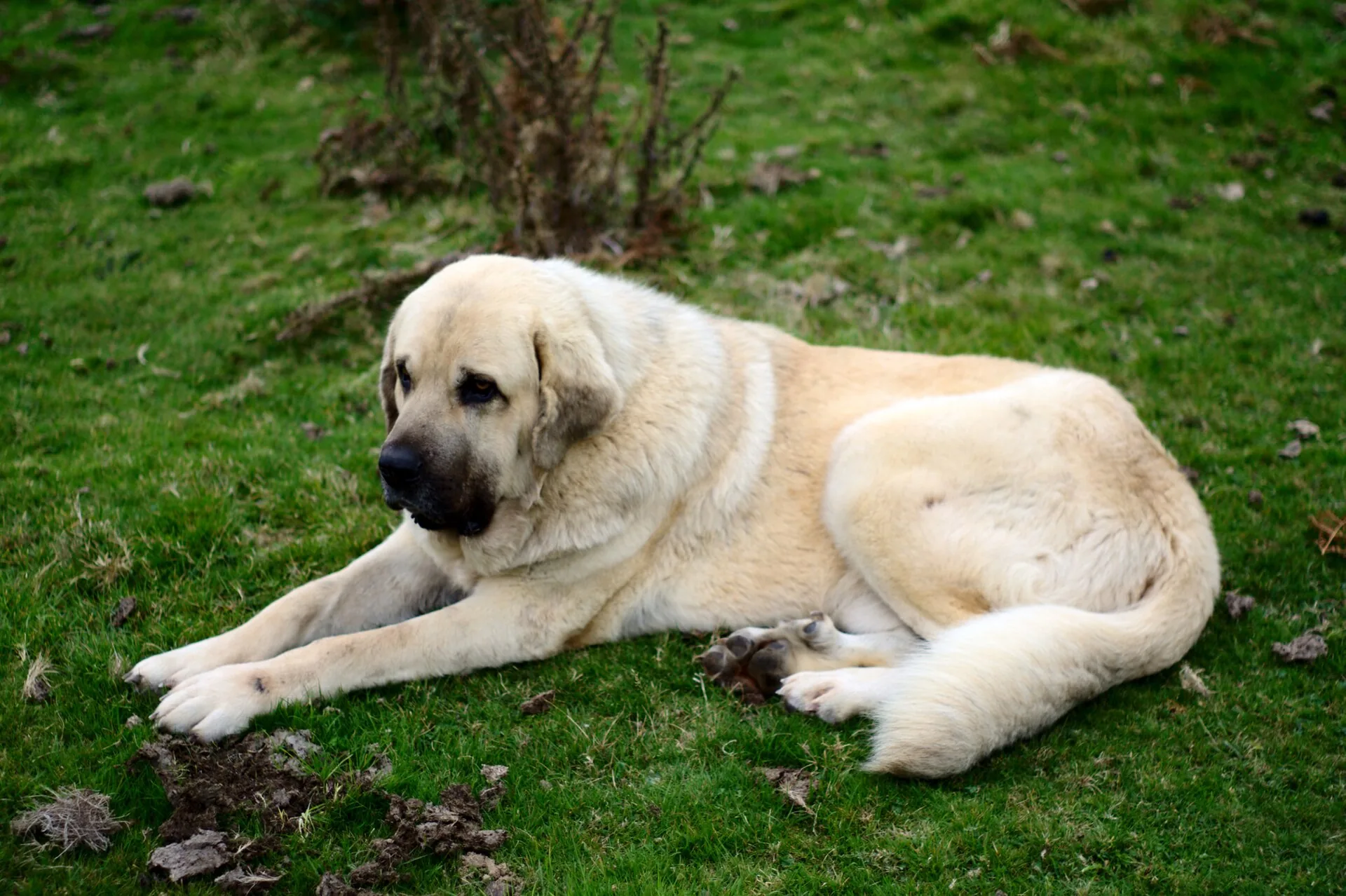
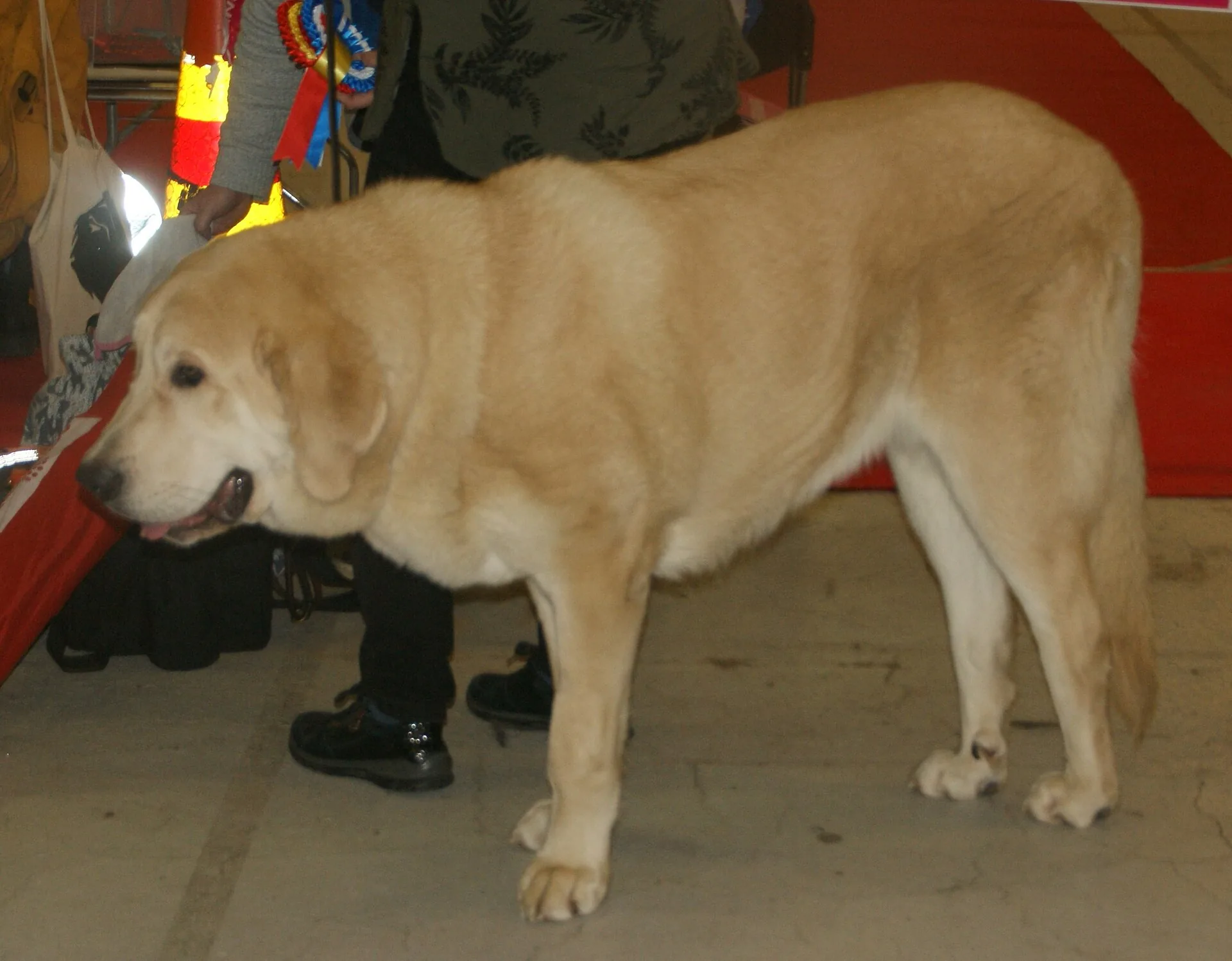
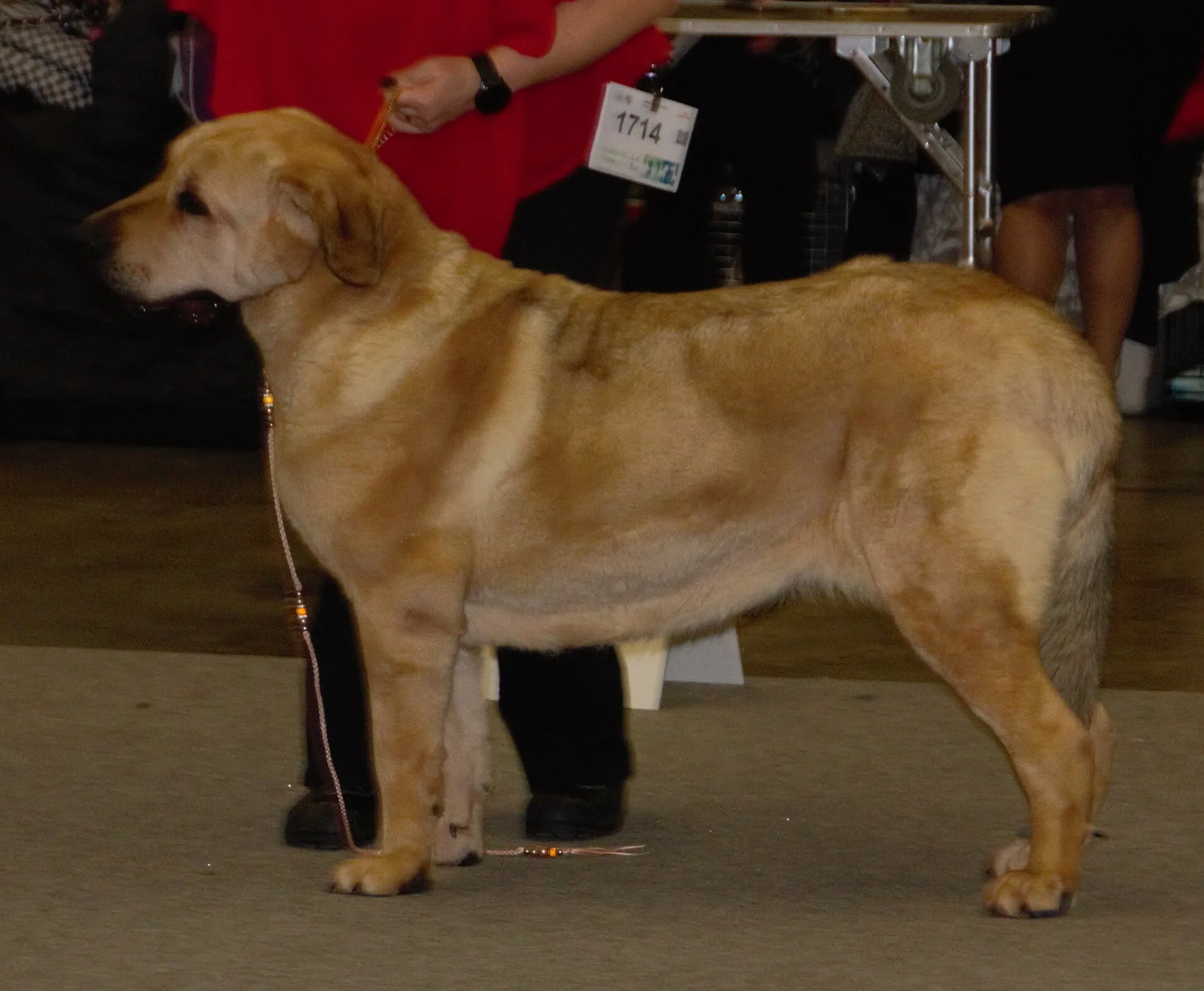
Today the FCI lists it in Group 2, Section 2.2, Molossoid breeds of mountain type, without a working trial, and gives its use as guard and defence. The standard, published on 26 May 1982 and valid in its current form since 30 August 2002, describes a dog of great size, of medium proportions, very powerful and muscular, with a massive head and a body covered with a semi-long coat. It serves today both as a livestock guardian and as a protector of farms and country estates.
Temperament
The standard describes a very intelligent, rustic, affectionate, kind and noble dog, very determined when facing dangerous animals and in front of strangers, with a distinctive deep and sonorous bark. At home this usually means a quiet, dignified giant that is gentle with its family and often content to lie across a doorway, watching.
The guarding instinct is not decorative. A Spanish Mastiff is bred to assess threats on its own and to stand its ground, and it may be indifferent or reserved with strangers. Some individuals are more watchful than others, which is why careful breeding, early socialisation and calm, consistent handling count for so much. Do not rely on a reputation for being a gentle giant: it is gentle with the people it knows, and its tolerance for strangers has to be taught and managed.
Children and other pets
With its own family the breed tends to be loyal, patient and protective. As with every giant, size is the issue: a Spanish Mastiff can knock over a toddler by leaning, and the breed's protective instinct may react to boisterous play between children. Always supervise contact and avoid leaving the dog with visiting children. Other dogs in the home are generally accepted when raised together, while unfamiliar dogs may be treated with suspicion. Cats and small animals can live with a mastiff raised alongside them, but each outing needs control.
Exercise and the daily walk
The breed needs steady walking rather than athletics: about an hour a day for a healthy adult, split between two or three outings, with a secure space to wander and observe. It was built to walk long distances beside the flock at a measured pace, so adults often enjoy a relaxed outing, but they are not suited to sustained running or sports.
Safety and control matter more than distance. Use a strong lead and harness and keep off-lead time within secure fencing. Puppies grow extremely quickly and their joints are fragile, so avoid forced running, jumping and slippery stairs for the first year and a half. In warm weather keep exercise to cool hours, and allow rest before and after meals because of the bloat risk. A calm, regular routine suits the breed better than variety for its own sake.
Training
A Spanish Mastiff is intelligent but self-directed. It works out what you want and then decides whether the request makes sense. Short, calm sessions with rewards the dog values, repeated gently over many months, produce the best behaviour. Heavy-handed methods tend to cause resistance, and a half-grown dog of this size cannot be physically forced into anything.
Priorities are loose-lead walking, patient behaviour at doors and in lifts, a dependable settle and calm greetings. Socialise widely from the start: people of all ages, vehicles, buses, other dogs and the vet. Continue into adolescence, when the guarding instinct develops. First-time owners should seek good help from a trainer familiar with giant guardian breeds, and should be honest with themselves about the strength and stubborn streak involved.
Coat and grooming
The standard describes a dense, thick, medium-length, smooth coat distributed all over the body. Brush weekly and more often during the seasonal moult, when large quantities of undercoat come out. Bathing is occasional. Permitted colours include self-colours such as yellow, fawn, red, black, wolf and deer colour, as well as combinations including brindle, parti-colour and white collar. Check the skin around the lips and jowls for dirt and moisture.
Feeding and weight
Choose a complete food made for large and giant breeds, with controlled energy while the puppy grows so that bones and joints are not rushed. Feed two or three smaller meals instead of a single large one, and rest the dog before and after eating. Keep the adult lean, with ribs that can be felt but not seen. Training treats count towards the daily ration. Fresh water should be available at all times, particularly in warm weather.
Work out a starting calorie figure and food weight with the calorie calculator. Not sure this is the right breed? Take the quiz.
Health
Every breed carries predispositions. These are the conditions most often discussed for the Spanish Mastiff, not a prediction for any individual dog.
- Hip dysplasia and elbow dysplasia, common in giant breeds
- Gastric dilatation and volvulus (bloat), a sudden emergency in deep-chested dogs
- Eyelid problems (entropion or ectropion)
- Developmental bone and joint problems in fast-growing puppies
- Overheating in warm weather because of size
What to ask the breeder. Ask for hip and elbow results for both parents and an eye examination, and ask about bloat in the family line. Meet the parents to assess temperament around strangers.
Choosing a puppy
The puppy is a clumsy, soft-faced bundle that grows with startling speed. Protect the joints with non-slip floors, short walks, plenty of rest and no jumping from cars or furniture. Socialise at the puppy's pace: lifts, pavements, buses, strangers and calm dogs. Start handling of paws, ears and mouth at once, and teach door manners and loose-lead walking early. A strong pen or crate makes chewing less costly, and gentle training works better than force with a dog that will soon outweigh you.
In Luxembourg the national kennel club is the Fédération Cynologique Luxembourgeoise (FCL), a member of the FCI. Many owners also buy from breeders in Germany, France or Belgium; a puppy coming from another EU country must be microchipped and vaccinated against rabies, which in practice means it cannot travel before about fifteen weeks of age. Where to get a dog in Luxembourg.
The older Spanish Mastiff
As with other giants, ageing starts early, often around seven years. Keep exercise regular and gentle, provide a thick orthopaedic bed and non-slip floors, and watch weight. A dog that is stiff on rising, reluctant on stairs or less interested in food should see the vet. Hot weather is harder on older dogs, so plan for shade and cool surfaces. Practical mobility matters too, since you cannot lift a dog of this size when it struggles.
A realistic day
A realistic weekday for a working household in Luxembourg City, with a midday visit. Adjust it to your dog, not the other way round.
Calm 30-minute lead walk on quiet streets, then breakfast and a rest.
Owner leaves for work; the dog settles in a cool spot with water and a chew.
Midday visit: a steady 40-minute walk, water, a toilet break and a check that the dog is cool and relaxed.
Evening walk of about an hour in a quiet area with some training, then dinner after a rest.
Final short outing and a brush if it is moulting, then bed.
A Spanish Mastiff in Luxembourg
Giant guardian dogs and Luxembourg City are an awkward match, but not an impossible one for the right home. A calm adult can sleep through most of the day in a spacious flat with a lift, yet the dog's weight, its deep bark and its reaction to noises in the building call for thought. A house with a secure garden outside the centre is the more natural setting.
For walks, the Pétrusse valley and Parc Merl are best at quiet times, while the forest edges at Bambësch and in the Grünewald offer longer, calmer outings on a firm lead. Summer days in the 30s °C are a risk for a heavy dog, so keep to early and late hours with shade and water. Free buses and trams exist, but a giant dog needs gradual training before using them. Every dog must be microchipped, declared to the commune, insured for third-party liability and subject to the annual dog tax. The law of 9 May 2008 names the Mastiff and dogs of similar morphology, so check with the commune or ministry how it applies before acquiring a Spanish Mastiff.
Every dog in Luxembourg must be identified, declared to the commune and covered by liability insurance. How registration works.
When you travel
A sitter must have real experience with giant guardian dogs and meet the dog several times before the owner travels. Keep the dog on a strong lead outdoors, secure gates and doors, and avoid heavy exercise around meals. Do not leave it in a hot room or car. Keep to the usual routine and portions, know the signs of bloat, and leave the vet's details and clear instructions on who may enter the home.
PAWLY's holiday and overnight care takes place in your home, so your dog keeps its own bed and routine.
Myths and facts
MythSpanish Mastiffs are gentle giants with everyone.
FactThey are gentle with their families, but the standard stresses determination in front of strangers and dangerous animals. Training and management are needed.
MythThey need hours of daily running.
FactThe breed was built for steady walking beside a flock. An hour of calm exercise a day suits most adults.
MythBecause it is big, it cannot live in a flat.
FactA calm adult can manage in a roomy flat with a lift, but its size, voice and need for secure outings make it demanding.
Is it the right dog for you?
Suits
- Owners experienced with giant guardian breeds
- Homes with a secure garden and understanding neighbours
- People who want a calm, dignified protector
- Families with sensible older children and plenty of space
Think twice if
- You live in a small flat with thin walls
- You want a dog that welcomes all visitors
- You want a low-shedding dog
- You could not hold a very heavy dog on a lead
Questions owners ask
How big is a Spanish Mastiff?
The FCI standard sets minimum heights of 77 cm for males and 72 cm for females, desirably over 80 and 75 cm, with no upper limit. It gives no weight, but these are very heavy dogs.
Is it a good family dog?
It is typically loyal and protective with its family, but it is huge and reserved with strangers. Supervision with children, early socialisation and careful management of visitors are essential.
Is it the same as the Pyrenean Mastiff?
No. They are separate Spanish breeds with separate FCI standards. The Spanish Mastiff has a semi-long coat in solid or combined colours, while the Pyrenean Mastiff is white with a mask and patches.
Does it cope with warm summers?
With care. Walk in the cool hours, provide shade, cool floors and water, and never leave the dog in a car or hot room.
Sources
Photo: Joselodos, CC0, via Wikimedia Commons · Photo: Eduardo Diez Viñuela, CC BY-SA 3.0, via Wikimedia Commons · Photo: Canarian, CC BY-SA 4.0, via Wikimedia Commons · Photo: Canarian, CC BY-SA 4.0, via Wikimedia Commons
General information for dog owners in Luxembourg, not veterinary or legal advice. Official facts (origin, size, group, history and temperament as described by the breed standard) follow the FCI standard; health and care sections reflect breed-club and veterinary guidance and are typical ranges rather than rules. For your own dog, ask your vet, the breed club or your commune. How this guide is written and checked. Last reviewed 8 October 2026.
Need someone for your Spanish Mastiff?
PAWLY offers an individual 45-minute walk or a home visit at your dog's pace, the same walker every time, and a written report with photos after every visit, across Luxembourg City.
Read next: the journal, for the Spanish Mastiff
All articles
Dogs in hot weather: the Luxembourg summer guide
The Spanish Mastiff carries a heavy coat or a heavy frame, which makes a Luxembourg summer the hard season.

Arthritis: the pain owners file under old age
Giant breeds tend to have joint trouble early; this is what to look for.

Growing a large-breed puppy without wrecking its joints
A giant puppy grows fast on soft bones; how it grows decides its joints for life.
Similar breeds
All 198 breeds
Pyrenean Mastiff
A huge, white, patched mountain guardian that is gentle with its family, grave with strangers and impossible to overlook in a lift.
EnergyGroomingFlat life
English Mastiff
A vast, gentle English guardian: calm, dignified and big enough to change the shape of your home.
EnergyGroomingFlat life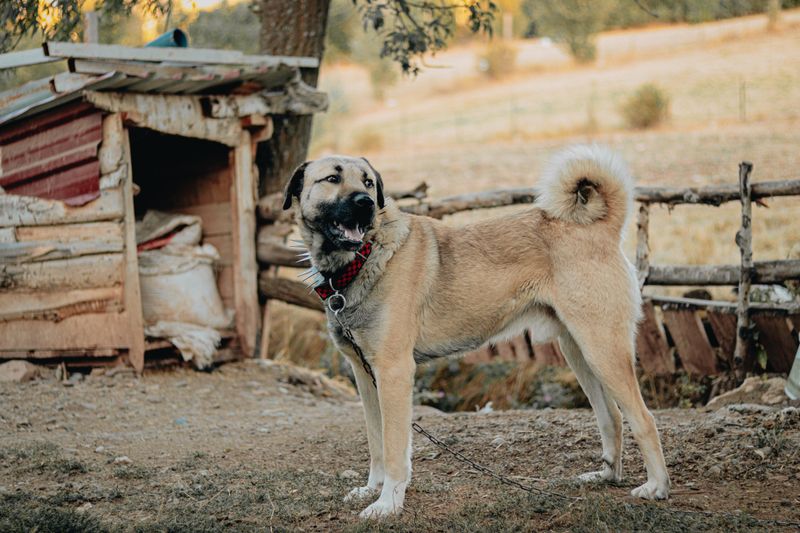
Kangal Shepherd Dog
A Turkish flock guardian with a black mask and a calm, measuring gaze, bred to make its own decisions at night on an empty hillside.
EnergyGroomingFlat life

