


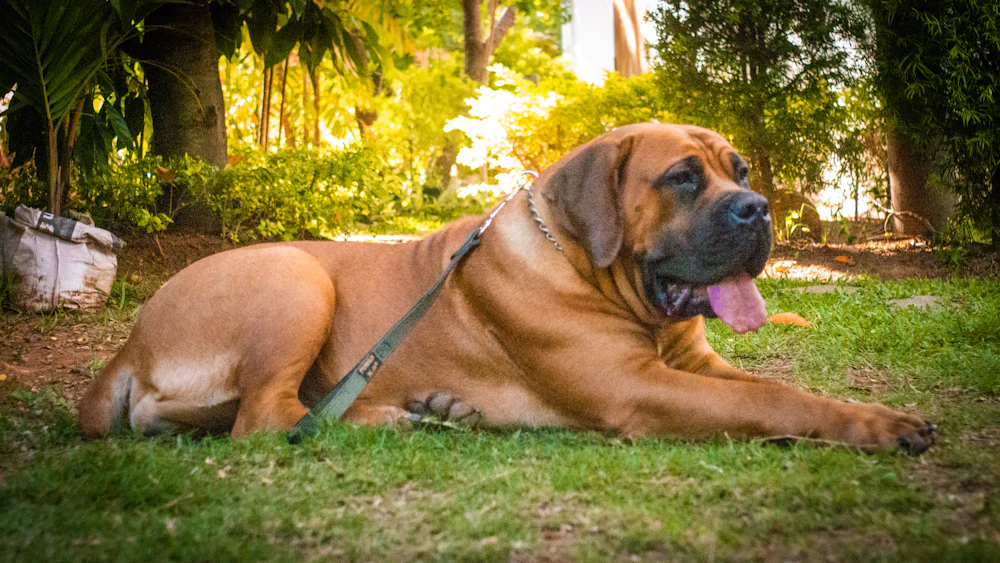
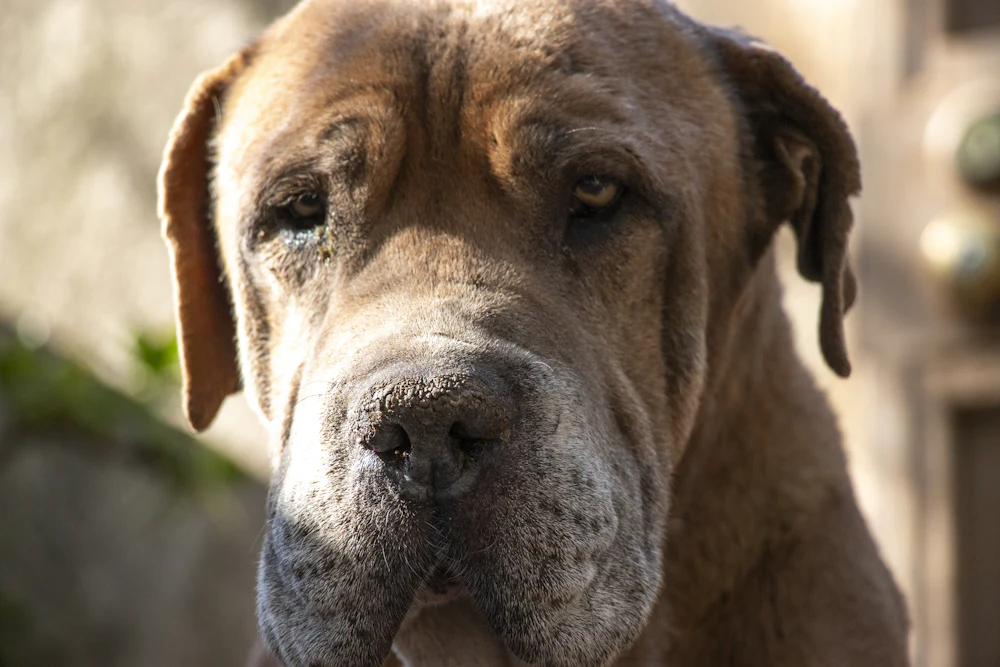
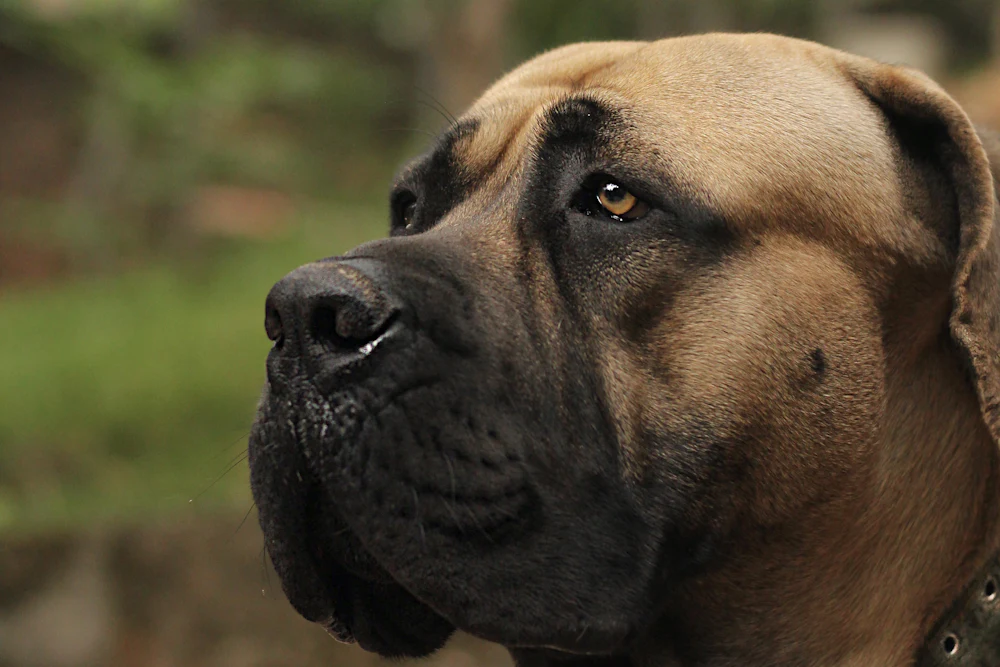
History
The Mastiff has existed in Britain for centuries, and the FCI standard places it in the nation's story from well before the fifteenth-century Battle of Agincourt. It quotes the old account that when the Romans invaded Britain they found a mastiff type of dog already here, and were so impressed that they took some back to fight in the arenas of Rome. Whatever the exact truth, the breed has long stood for strength and loyalty.
The standard records that the breed nearly disappeared after the Second World War, and was revived using stock imported from abroad. The modern Mastiff, in the standard's words, combines grandeur with good nature, with an extremely large frame and heavy bone. It is a breed that owes its present existence to a small number of committed breeders, and it is worth buying from one of them, after asking how long they have bred and what became of their dogs.
Temperament
The FCI standard describes a combination of grandeur and courage: calm, affectionate to its owners, but capable of guarding. Towards strangers the typical Mastiff is indifferent rather than hostile, and timidity is considered unacceptable. In daily life that means a large, quiet dog that watches the room, accepts visitors without fuss and does not need to prove anything.
Mastiffs are sensitive. They dislike harshness, they dislike being left alone, and they can look wounded by a raised voice. They mature slowly and stay puppyish for years in a body that is already enormous. Drooling, snoring and leaning against your legs are all part of the arrangement, and the dog will often follow you from room to room.
Children and other pets
Patient and gentle with children they know, but their size means a clumsy swipe of a tail or shoulder can knock a small child over. Supervise all contact with toddlers and teach children to leave the dog alone when it rests. Mastiffs usually get on with other pets if raised with them, though a large dog can unsettle a small one simply by sitting in the wrong place, so introduce animals calmly.
Exercise and the daily walk
A Mastiff needs moderate, gentle exercise of about 45 minutes to an hour a day, split into two or three outings, ideally in cool weather. Steady walking suits the breed, and a slow pace on soft ground is kinder to the joints than anything fast.
Puppies and adolescents should not be over-exercised, because their large bones grow slowly, and stairs, jumping and long runs should be avoided. In hot weather exercise only early and late. A Mastiff is not a jogging companion, and a dog that lies down mid-walk should be allowed to rest.
Training
Mastiffs are intelligent but slow to mature. They respond to gentle, consistent, reward-based training and are sensitive to harsh handling. Start early, because a dog of 60 kilos or more is hard to manage if it has learned to pull, jump or ignore you. Sessions should be short and calm.
Focus on loose-lead walking, a reliable recall in safe places, waiting at doors and lifts, and a settled down. Socialise widely and gently from puppyhood, because a large, protective dog needs good manners with strangers, other dogs and the vet, and an unsocialised Mastiff is a serious responsibility.
Coat and grooming
The FCI describes a short, close-lying coat, coarser over the neck and shoulders. Accepted colours are apricot, fawn or brindle, always with a black muzzle, ears and nose. A weekly brush keeps shedding in check, though it is a steady shedder. Wipe the face, wrinkles and jowls regularly, keep nails trimmed, and keep a towel handy, because Mastiffs drool, snore and snort.
Feeding and weight
A giant breed needs a carefully managed diet. Feed a good-quality large-breed food in two or three meals to reduce bloat risk, avoid exercise around mealtimes and keep puppies on a measured diet so that growth is slow and steady. Raised bowls are a debated topic, so ask your vet. Keep adults lean, since extra weight strains joints, and expect substantial food bills.
Work out a starting calorie figure and food weight with the calorie calculator. Not sure this is the right breed? Take the quiz.
Health
Every breed carries predispositions. These are the conditions most often discussed for the English Mastiff, not a prediction for any individual dog.
- Gastric dilatation-volvulus (bloat), an emergency
- Hip and elbow dysplasia
- Dilated cardiomyopathy
- Cystinuria
- Bone cancer and other cancers
What to ask the breeder. Ask for hip and elbow scores, heart screening, DNA tests for cystinuria and progressive retinal atrophy where relevant, and information on longevity in the lines.
Choosing a puppy
Ask for hip and elbow scores, heart screening and DNA tests for the parents, and about longevity in the lines. Meet the mother and judge her temperament, because a calm parent is the best predictor. Keep a growing puppy lean and avoid stairs and jumping. Socialise widely and gently, and plan the home, car and finances before collecting a puppy that will outgrow a sofa within months.
In Luxembourg the national kennel club is the Fédération Cynologique Luxembourgeoise (FCL), a member of the FCI. Many owners also buy from breeders in Germany, France or Belgium; a puppy coming from another EU country must be microchipped and vaccinated against rabies, which in practice means it cannot travel before about fifteen weeks of age. Where to get a dog in Luxembourg.
The older English Mastiff
Mastiffs age early, and many are old at seven. Watch for stiffness, weight changes, coughing and lumps, and adapt the home with ramps and non-slip floors. Soft, thick bedding on the ground floor spares the joints. Plan regular vet checks, discuss pain relief early and accept that shorter walks and longer sleeps are the natural pattern now.
A realistic day
A realistic weekday for a working household in Luxembourg City, with a midday visit. Adjust it to your dog, not the other way round.
A slow, steady walk.
Breakfast, then rest.
Midday visit with a short stroll.
Gentle longer walk.
Final walk.
An English Mastiff in Luxembourg
Check the law before you do anything else. Luxembourg's law of 9 May 2008 names the Mastiff among the dogs it treats as potentially dangerous, together with the Staffordshire Bull Terrier, the American Staffordshire Terrier and the Tosa, and dogs of similar morphology. Owners need a training certificate and ministerial authorisation. Ask the ministry in writing how it classifies the dog you are considering before you buy, and confirm what insurance is required.
Beyond the law, a Mastiff needs a lift, wide doorways, a large car, cool summers and a strong owner. Summers in the 30s °C are hard on a heavy dog, so plan early and late walks. The Bambësch and Grünewald forests offer shade, and the usual dog tax, microchip and declaration to the commune apply.
Every dog in Luxembourg must be identified, declared to the commune and covered by liability insurance. How registration works.
Luxembourg dog law. This breed is named in the law of 9 May 2008 on dogs, which requires a training certificate and a ministerial authorisation before you acquire the dog. Read the rules before you commit.
When you travel
Mastiffs bond closely with their family, so a sitter who stays or visits often is best. Introduce them first, ideally over a few walks together. The sitter must be strong enough to handle a large, strong dog, know the signs of bloat, and keep the dog cool. Leave the vet's number, feeding times and the instruction to avoid exercise around meals.
PAWLY's holiday and overnight care takes place in your home, so your dog keeps its own bed and routine.
Myths and facts
MythMastiffs are dangerous.
FactThe FCI describes them as calm and affectionate to owners, capable of guarding. Size and protectiveness demand training and management, not fear.
MythMastiffs need huge amounts of exercise.
FactThey need moderate, gentle exercise, not hard running.
MythA Mastiff is just a bigger Bullmastiff.
FactThey are separate breeds with their own standards and history.
Is it the right dog for you?
Suits
- Experienced owners with space
- Calm households
- People who can manage a very large dog
- Owners who can meet the legal requirements
Think twice if
- Anyone unable to meet the legal requirements
- People with small flats or limited budgets
- People who cannot lift or control a very large dog
Questions owners ask
Is the Mastiff on Luxembourg's dangerous dog list?
The 2008 law names the Mastiff, alongside the Staffordshire Bull Terrier, the American Staffordshire Terrier and the Tosa. Owning one requires a certificate and ministerial authorisation, so confirm how your dog is classified before you buy. Our article sets out the rules.
How long do Mastiffs live?
Usually seven to ten years, like many giant breeds. Good breeding, a lean body and early care of the joints and heart give the best chance of reaching the upper end.
Do Mastiffs drool a lot?
Many do, especially after drinking or in heat, and they snore and snort too. Keep towels in the main rooms and wipe the face and jowls daily. If you dislike drool, this breed is a poor choice.
Can a Mastiff live in a flat?
It is possible with a lift, wide doors and a calm routine, because the dog is quiet indoors. The difficulties are the weight on stairs, the space and the legal requirements, so think carefully.
Sources
Photo: Unsplash (Unsplash License) · Photo: Unsplash (Unsplash License) · Photo: Unsplash (Unsplash License)
General information for dog owners in Luxembourg, not veterinary or legal advice. Official facts (origin, size, group, history and temperament as described by the breed standard) follow the FCI standard; health and care sections reflect breed-club and veterinary guidance and are typical ranges rather than rules. For your own dog, ask your vet, the breed club or your commune. How this guide is written and checked. Last reviewed 8 October 2026.
Need someone for your English Mastiff?
PAWLY offers an individual 45-minute walk or a home visit at your dog's pace, the same walker every time, and a written report with photos after every visit, across Luxembourg City.
Read next: the journal, for the English Mastiff
All articles
Luxembourg's dangerous dog list: the breeds, the obligations, and the debate
The law of 9 May 2008 names the English Mastiff; these are the obligations that follow.

Arthritis: the pain owners file under old age
Giant breeds tend to have joint trouble early; this is what to look for.

Growing a large-breed puppy without wrecking its joints
A giant puppy grows fast on soft bones; how it grows decides its joints for life.
Similar breeds
All 198 breeds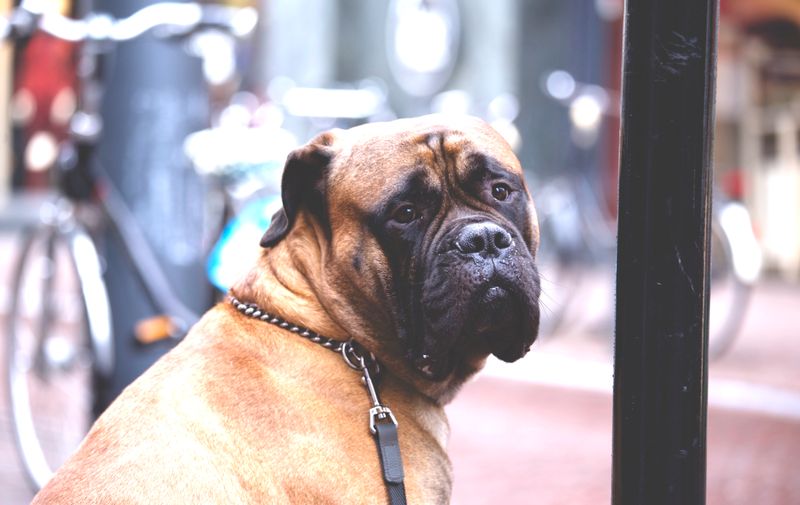
Bullmastiff
A quiet, heavyweight guardian bred to stop poachers, now more likely to lean its whole bulk against your knees on the sofa.
EnergyGroomingFlat life
Neapolitan Mastiff
A heavy, loose-skinned guardian from the Naples hinterland, calm and devoted at home and imposing enough to end most arguments at the door.
EnergyGroomingFlat life
Dogue de Bordeaux
An ancient French guardian with a huge head and a soft heart, calm at home, vigilant at the door and demanding of careful ownership.
EnergyGroomingFlat life

