


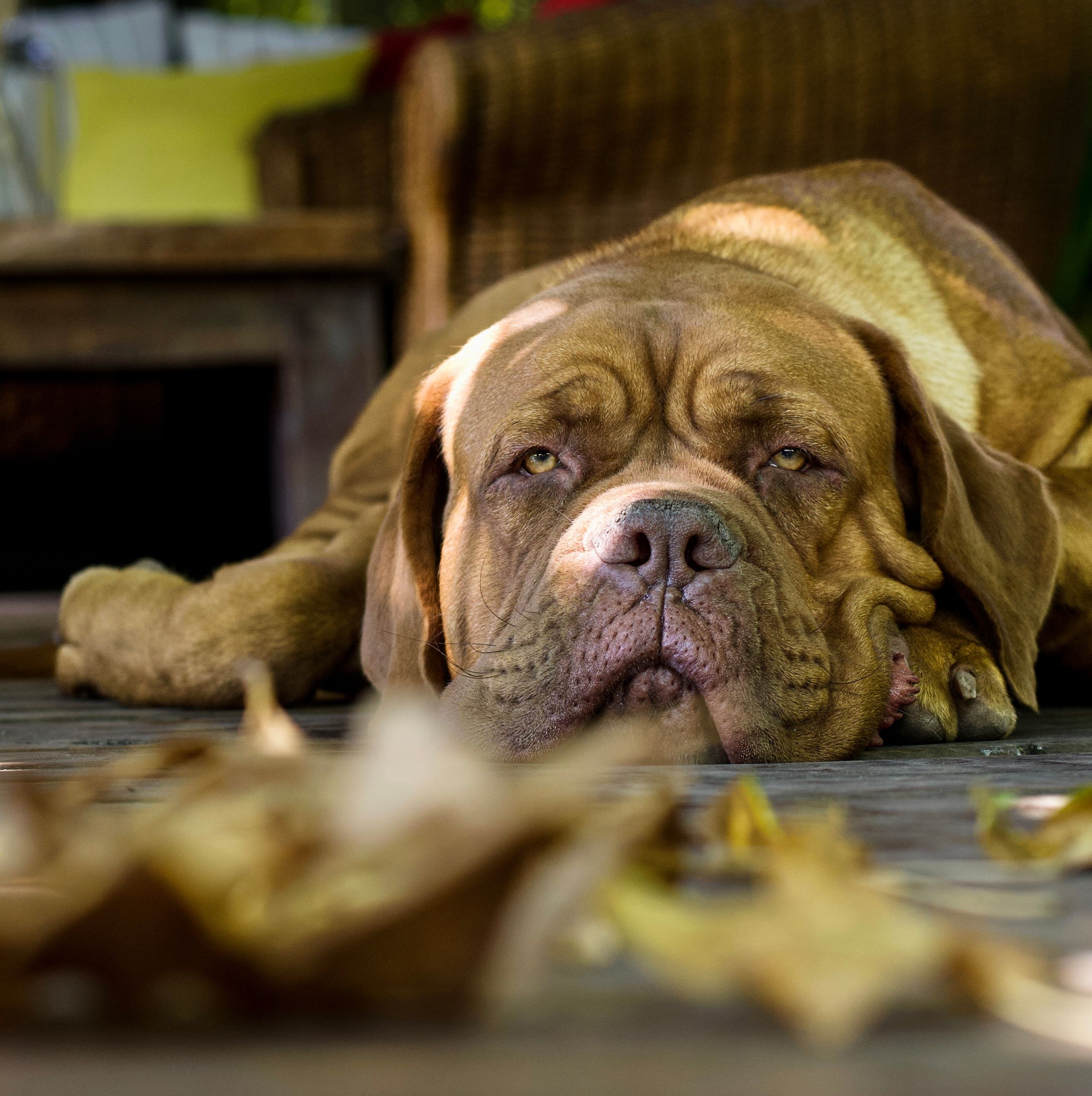
History
The FCI standard calls the Dogue de Bordeaux one of the most ancient French breeds, probably descended from the Alans and in particular the 'alan vautre' described in the fourteenth century by Gaston Phoebus, Count of Foix, in his hunting book. The word 'dogue' itself appears at the end of that century. By the mid nineteenth century these dogs were little known outside Aquitaine, where they hunted large game such as boar, guarded houses and cattle, worked for butchers and, regrettably, were used for fighting.
In 1863 they were shown under their present name at the first French dog show, held at the Jardin d'Acclimatation in Paris. Of the types once found around Toulouse, Paris and Bordeaux, the Bordeaux type became today's breed. It suffered badly in both World Wars and was threatened with extinction after the second, before a fresh start in the 1960s. The FCI places it in Group 2, Section 2.1, Molossoid breeds of mastiff type, under a 2008 standard.
Temperament
The standard describes an ancient fighting dog gifted for guarding, which it does with vigilance and great courage but without aggressiveness. It is a good companion, very attached and affectionate to its owner, calm and balanced with a high stimulus threshold, and the male normally has a dominant character. That combination is what owners see daily: a placid, often lazy housemate who quietly takes note of everything happening at the gate.
With their families most Dogues are gentle and physically affectionate, leaning their full weight against a favourite person. With strangers they are watchful and may not welcome uninvited guests, especially in their own home. They are not a dog for an owner who wants a casual, sociable companion for café terraces without serious effort: their strength and guarding instinct require early socialisation, calm leadership and a sense of responsibility.
Children and other pets
In a well-run household a Dogue can be very gentle with its own children, but sheer size is an issue: a friendly swing of the head or a playful bump can floor a toddler, and children should never walk this dog alone. Visiting children who run and shriek may be misread by a guardian breed, so supervision is essential. Many live peacefully with a cat they have grown up with. Same-sex dog pairs, particularly two males, can be difficult.
Exercise and the daily walk
Adults need steady rather than strenuous exercise: two or three walks a day adding up to around 45 minutes to an hour, at a walking pace with time to sniff. The Dogue is a heavy, short-muzzled breed and does not cope well with long runs, ball-chasing marathons or heat. A slow, interesting walk through Parc Merl in the morning is more useful than an exhausting hike.
Puppies and adolescents must be protected from too much exercise, stairs and jumping while their heavy frame grows. On warm days, walks should be short and scheduled for early morning and late evening, with water and shade available, as overheating is a real risk. Like other deep-chested giants, the breed should rest for an hour or so either side of a large meal to reduce the risk of bloat.
Training
Training a Dogue is about cooperation, not force. They are intelligent but can be stubborn, and an adult of 50 kilos or more cannot be physically managed if it decides not to move. Reward-based training started early, with good lead manners taught before the dog is too heavy to hold, is essential. Calm, consistent routines suit them far better than long drills.
Socialisation should continue well beyond puppyhood, with regular, positive meetings with visitors, other dogs, traffic and public places. Teach a solid 'wait' at doors and in the lift, and a calm greeting for guests. Owners with no experience of large guardian breeds should work with a qualified trainer from the start, and should be ready for a dog that will test boundaries in adolescence.
Coat and grooming
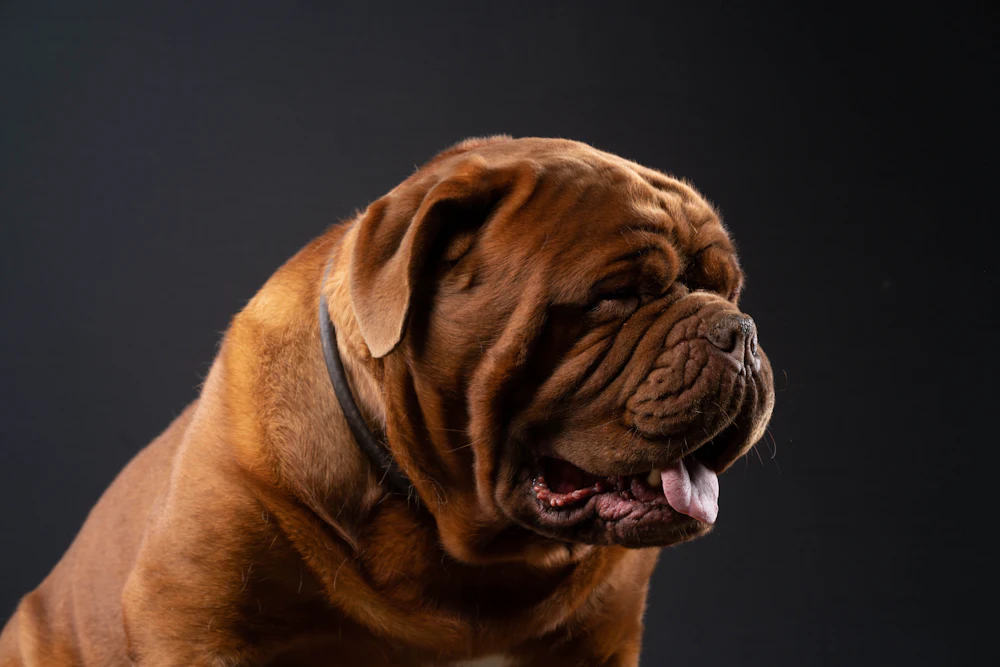
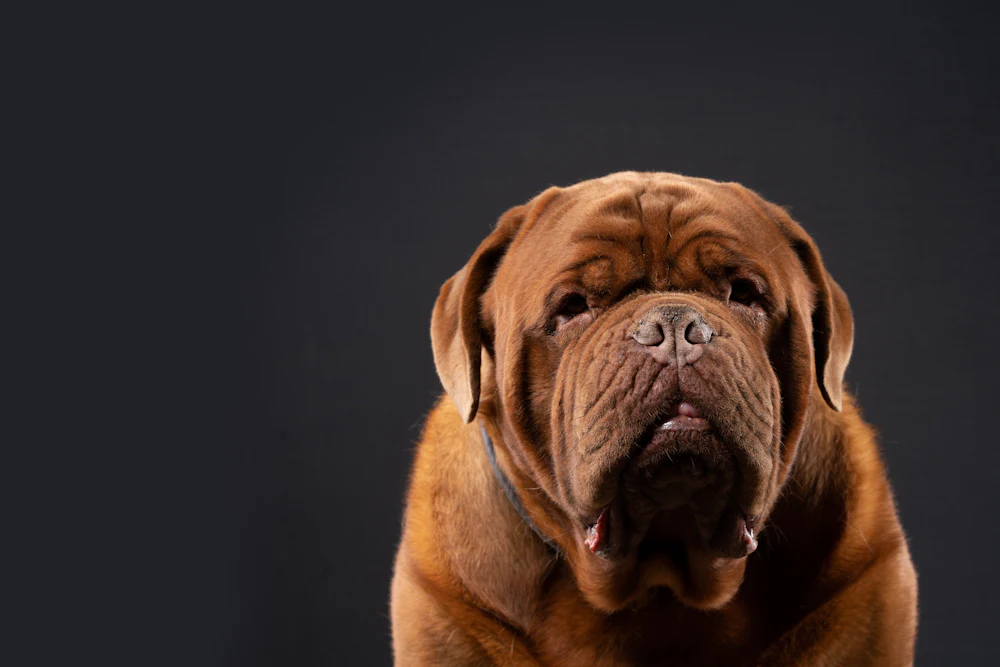
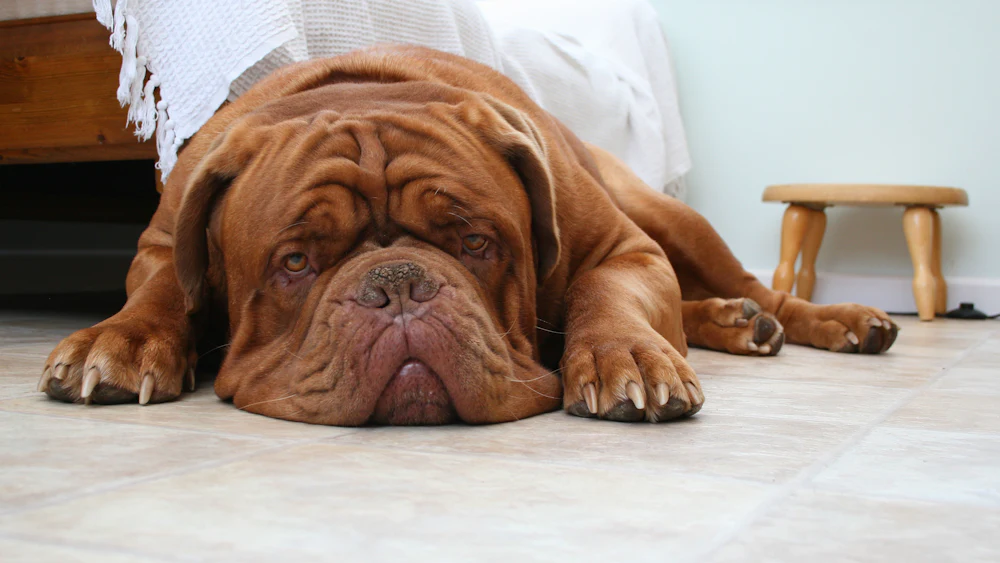
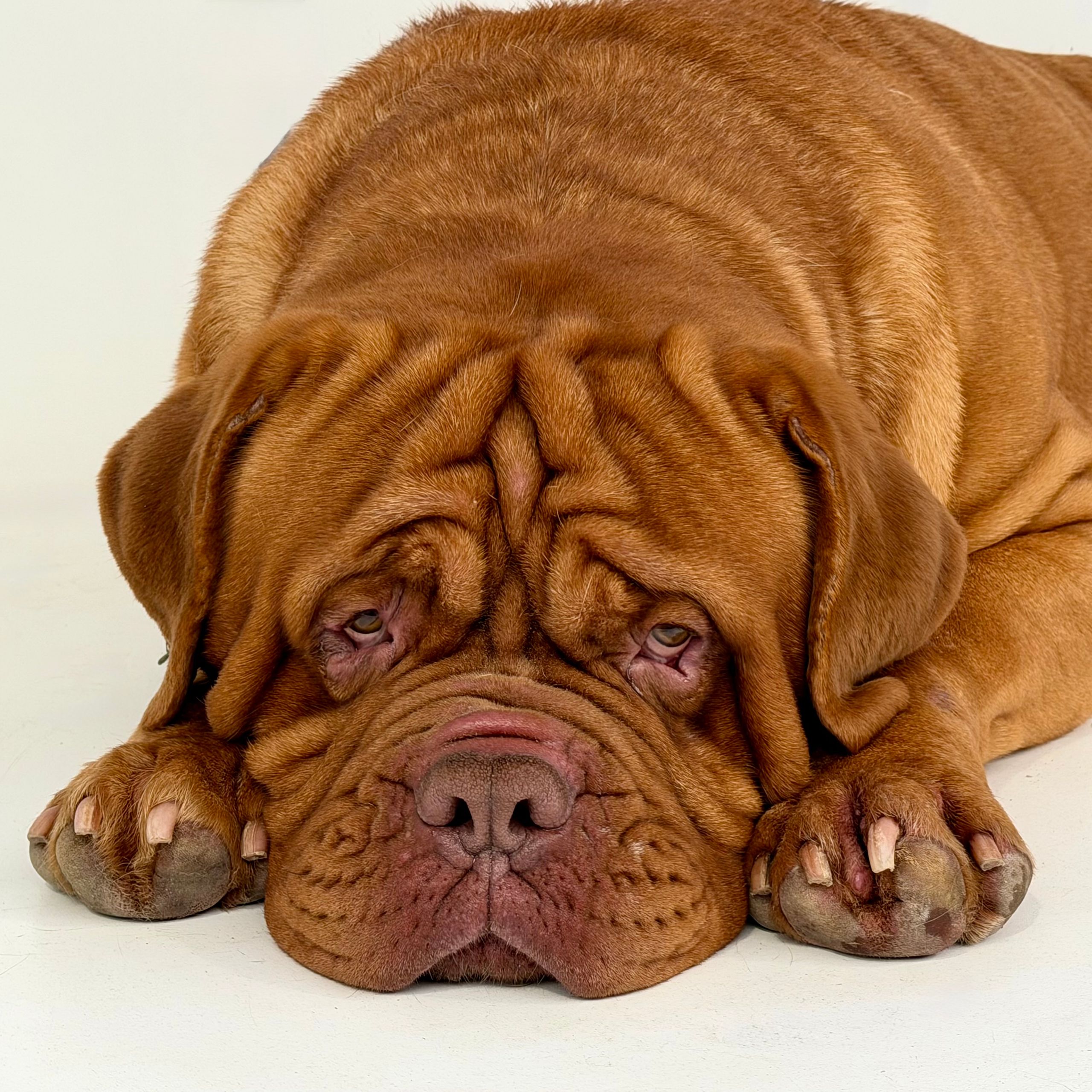
The FCI standard asks for a fine, short, soft coat. Care is simple: a weekly brush with a rubber mitt removes loose hair, and the breed sheds moderately all year. The real grooming task is the face. Folds and wrinkles should be wiped and dried regularly to prevent skin irritation, and many Dogues drool, so a towel near the water bowl is useful. The coat is self-coloured in all shades of fawn from mahogany to isabella; limited white on the chest and feet is allowed, and the dog may have a black mask, a brown mask or no mask.
Feeding and weight
Feed a good quality complete diet designed for large or giant breeds, especially during puppyhood, when controlled, steady growth helps protect joints. Divide food into two or three meals a day rather than one, and keep the dog quiet after eating. Excess weight puts extra strain on hips, elbows and heart, so keep the dog lean. Raised bowls are a subject of debate; ask your vet. Expect a fair amount of slobber at mealtimes.
Work out a starting calorie figure and food weight with the calorie calculator. Not sure this is the right breed? Take the quiz.
Health
Every breed carries predispositions. These are the conditions most often discussed for the Dogue de Bordeaux, not a prediction for any individual dog.
- Hip and elbow dysplasia
- Heart disease, including aortic stenosis and dilated cardiomyopathy
- Gastric dilatation-volvulus (bloat)
- Heat intolerance and breathing difficulties linked to the short muzzle
- Skin fold infections and eyelid problems (entropion and ectropion)
- Cancer, which contributes to the breed's short life expectancy
What to ask the breeder. Ask for hip and elbow scores and a recent cardiac examination for both parents, and how long the breeder's previous dogs have lived.
Choosing a puppy
A Dogue puppy grows from a few kilos to well over 40 in about a year, so planning matters. Carry it up stairs where practical, avoid slippery floors and keep play gentle. Socialise widely and calmly: lifts, trams, children, delivery drivers and other dogs. Teach loose-lead walking and polite greetings while the puppy is still small enough to guide. Feed a large-breed puppy diet and resist the urge to make it grow fast.
In Luxembourg the national kennel club is the Fédération Cynologique Luxembourgeoise (FCL), a member of the FCI. Many owners also buy from breeders in Germany, France or Belgium; a puppy coming from another EU country must be microchipped and vaccinated against rabies, which in practice means it cannot travel before about fifteen weeks of age. Where to get a dog in Luxembourg.
The older Dogue de Bordeaux
The Dogue ages early, and owners should expect signs of slowing by six or seven. Shorter, gentler walks, a thick orthopaedic bed and non-slip flooring help joints. Watch closely for breathlessness, coughing, fainting or reluctance to exercise, which can signal heart disease, and for new lumps. Regular veterinary checks are worthwhile. Many older Dogues remain loving, dignified companions who mainly want to be near their people.
A realistic day
A realistic weekday for a working household in Luxembourg City, with a midday visit. Adjust it to your dog, not the other way round.
Short, slow toilet walk before the street gets busy, then breakfast and a quiet rest.
Rest at home while the owner prepares for work; face folds wiped and dried.
Midday visit: a 20-minute walk in the shade, fresh water, and a check that the dog is relaxed.
Evening walk of around 30 minutes at an easy pace, timed for the cooler part of the day in summer, then a rest before dinner.
A calm last outing, well over an hour after dinner, then bed on a thick mattress.
A Dogue de Bordeaux in Luxembourg
A Dogue de Bordeaux is a serious undertaking in a Luxembourg City flat. It is usually quiet and inactive indoors, but lifts, narrow stairwells and busy pavements require a well-trained dog and a strong handler. A ground-floor home or a house with a secure garden is far easier. On the free buses and trams a dog of this size takes up a lot of room, so outings are often planned by car or on foot.
Luxembourg's law of 9 May 2008 on dogs names the Mastiff and dogs of similar morphology among the types that need a training certificate and ministerial authorisation. Before choosing this breed, ask your commune and the competent authorities whether those rules apply to your dog. Summer temperatures in the 30s °C are dangerous for a heavy, short-muzzled breed, so plan walks around the heat. Microchip, commune declaration, liability insurance and the annual dog tax are always required.
Every dog in Luxembourg must be identified, declared to the commune and covered by liability insurance. How registration works.
When you travel
A sitter must be someone the dog already knows and accepts, as a guardian breed may not welcome a stranger entering its home. Arrange introductions well before the trip. The sitter needs to be physically able to handle the dog on the lead, know the routine around meals and rest, keep walks short in heat, and recognise signs of bloat or breathing distress. Overnight care in the dog's own home is usually best.
PAWLY's holiday and overnight care takes place in your home, so your dog keeps its own bed and routine.
Myths and facts
MythA Dogue is aggressive by nature.
FactThe FCI standard describes vigilance and courage without aggressiveness. Temperament depends heavily on breeding, socialisation and handling.
MythBig dogs need huge amounts of exercise.
FactAdults need steady daily walks, but heavy exercise, especially in heat, can harm this breed.
MythA large breed means a long-lived dog.
FactThe opposite is true. Giant breeds age faster, and the Dogue's life expectancy is among the shorter ones.
Is it the right dog for you?
Suits
- Experienced owners of large guardian breeds
- Calm, adult households
- Homes with a secure garden and few stairs
- People prepared for high veterinary costs
Think twice if
- This would be your first dog
- You live in an upper-floor flat with stairs only
- You often host visitors and children
- You cannot face a short life expectancy
Questions owners ask
Do Dogues de Bordeaux drool a lot?
Most do, especially after drinking, eating or in warm weather, because of their loose lips and heavy jowls. Owners keep towels handy and wipe the face several times a day. It is part of the breed, not a sign of illness, unless it changes suddenly.
Can a Dogue de Bordeaux live in a flat?
Some do, as adults are quiet and fairly inactive indoors. The difficulty lies in stairs, lifts, narrow corridors and the need for a strong, well-trained dog in shared spaces. A ground-floor home with outdoor access is more practical, especially as the dog ages.
Are they good guard dogs?
Yes, the breed was developed for guarding and remains naturally watchful. That instinct needs careful management, including early socialisation and clear rules for visitors, so the dog does not decide alone who is welcome. Many seldom bark but will position themselves between their family and a stranger.
Why is their life expectancy so short?
Giant breeds generally age faster, and the Dogue is also affected by heart disease, bloat, joint problems and cancer. Choosing a breeder who health-tests and tracks longevity, keeping the dog lean and having regular vet checks all help, but owners should be realistic.
Sources
- FCI breed standard No. 116 (Dogue de Bordeaux)
- The Royal Kennel Club, Dogue de Bordeaux breed information
- American Kennel Club, health testing requirements (Working Group)
Photo: Unsplash (Unsplash License) · Photo: Unsplash (Unsplash License) · Photo: Unsplash (Unsplash License) · Photo: Pexels (Pexels License) · Photo: Pexels (Pexels License)
General information for dog owners in Luxembourg, not veterinary or legal advice. Official facts (origin, size, group, history and temperament as described by the breed standard) follow the FCI standard; health and care sections reflect breed-club and veterinary guidance and are typical ranges rather than rules. For your own dog, ask your vet, the breed club or your commune. How this guide is written and checked. Last reviewed 8 October 2026.
Need someone for your Dogue de Bordeaux?
PAWLY offers an individual 45-minute walk or a home visit at your dog's pace, the same walker every time, and a written report with photos after every visit, across Luxembourg City.
Read next: the journal, for the Dogue de Bordeaux
All articles
Dogs in hot weather: the Luxembourg summer guide
Flat-faced and short-nosed breeds like the Dogue de Bordeaux overheat quickly, which matters in a Luxembourg summer.

Arthritis: the pain owners file under old age
Giant breeds tend to have joint trouble early; this is what to look for.

Growing a large-breed puppy without wrecking its joints
A giant puppy grows fast on soft bones; how it grows decides its joints for life.
Similar breeds
All 198 breeds
English Mastiff
A vast, gentle English guardian: calm, dignified and big enough to change the shape of your home.
EnergyGroomingFlat life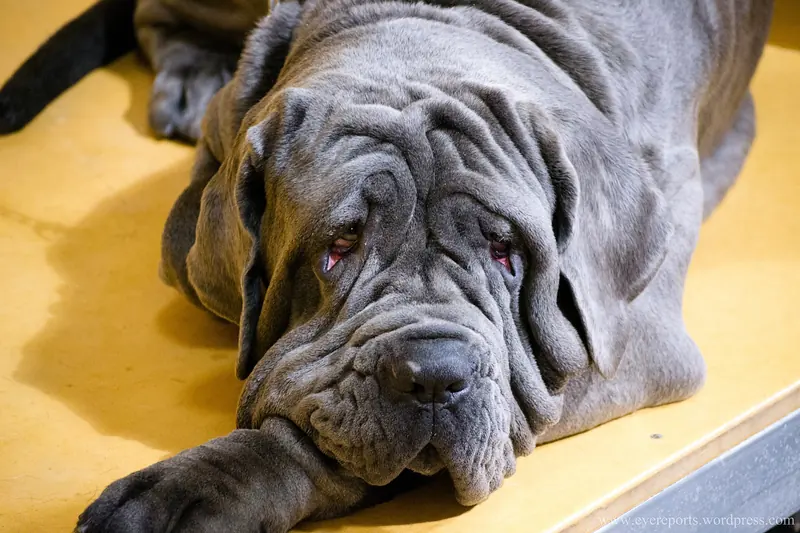
Neapolitan Mastiff
A heavy, loose-skinned guardian from the Naples hinterland, calm and devoted at home and imposing enough to end most arguments at the door.
EnergyGroomingFlat life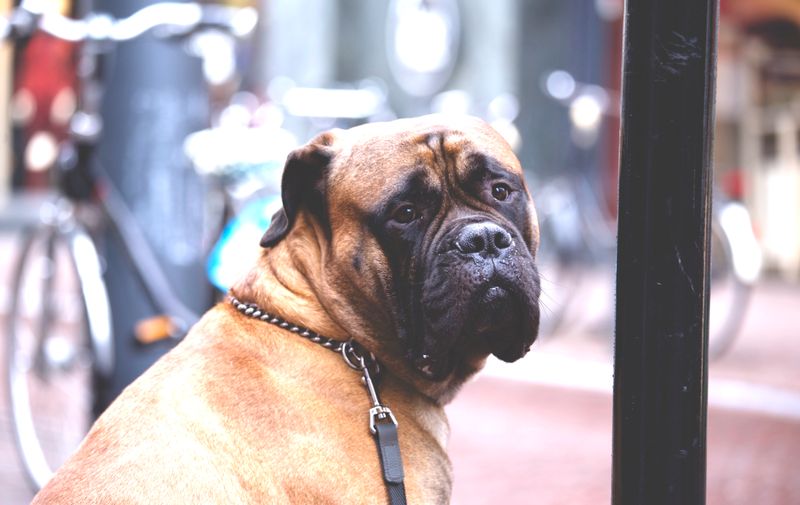
Bullmastiff
A quiet, heavyweight guardian bred to stop poachers, now more likely to lean its whole bulk against your knees on the sofa.
EnergyGroomingFlat life

