

History
The Bullmastiff is a British breed, created according to the FCI standard from crosses between the Old English Mastiff and the Bulldog. Its original job was specific: gamekeepers on large estates needed a powerful, silent dog that could help them catch and hold poachers rather than maul them. Speed over a short distance, strength and steady nerves mattered more than stamina or sound.
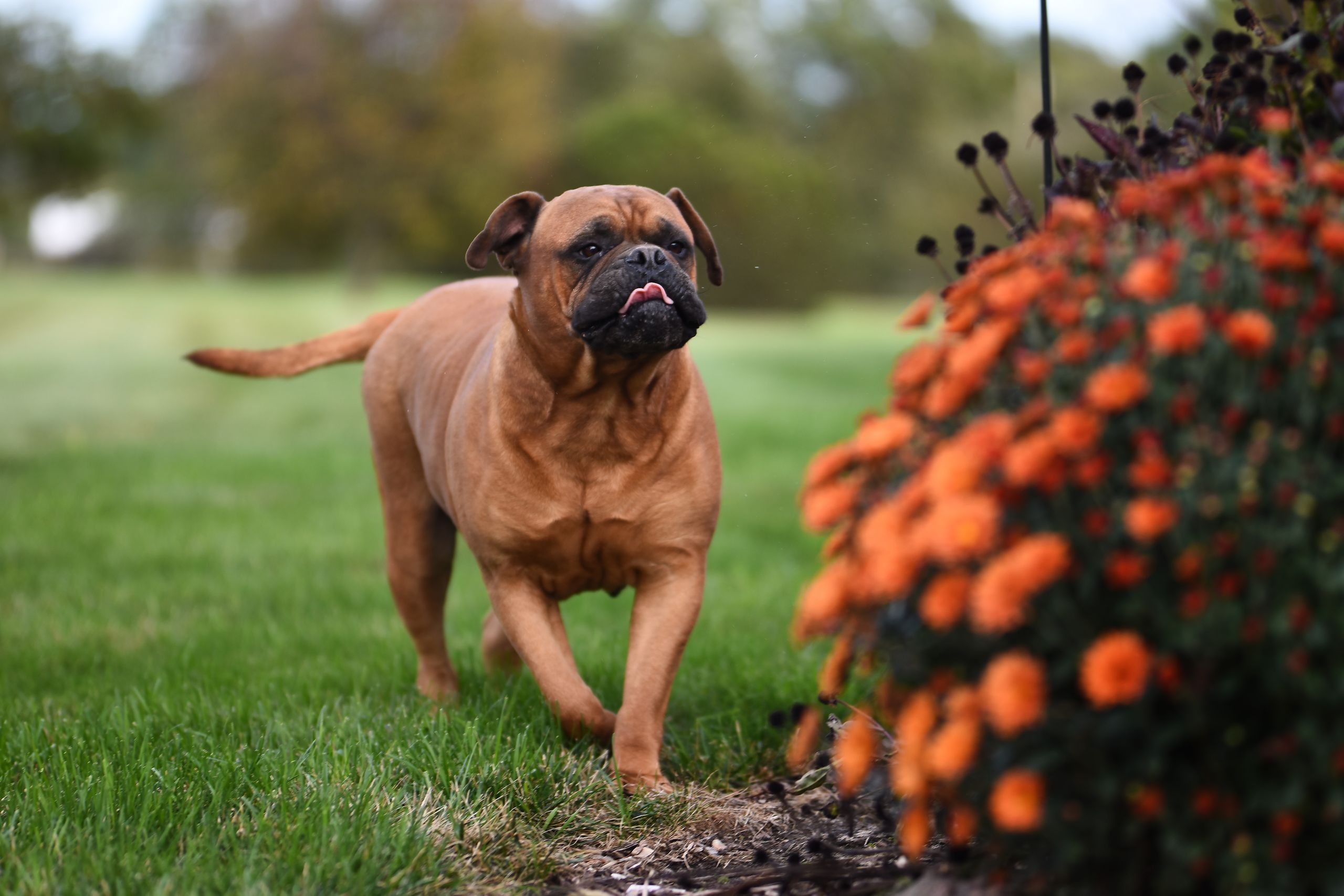
The standard describes a dog of intelligence, observation and great physical and mental reliability, with legendary courage in the face of intruders. The FCI now places it in Group 2 among the mastiff-type molossoid breeds, without working trial, and lists its use as a watchdog. Its general appearance is defined as powerful and symmetrical, showing great strength, but not cumbersome, sound and active.
Temperament
The FCI calls the Bullmastiff powerful, enduring, active and reliable, high-spirited, alert and faithful. At home most are calm and affectionate, content to follow their people from room to room and spend much of the day resting. They bark relatively little, which surprises owners expecting a noisy guard. A Bullmastiff tends to watch, assess and position itself between its family and anything it finds doubtful.
That watchfulness needs good management. Many adults are reserved with strangers and can be intolerant of unfamiliar dogs, particularly of the same sex. Thorough socialisation in puppyhood and a calm, consistent owner matter more than with most breeds, because a 55 kg dog that decides to make its own decisions is difficult to overrule physically. Handled well, the breed is steady and dignified.
Children and other pets
Within its own family a well-bred, well-raised Bullmastiff is usually gentle and patient with children, though its weight alone can knock a toddler flat, so supervision is essential. Visiting children who play rough with yours may be misread as a threat. Many live peacefully with a cat raised alongside them. Meetings with unfamiliar dogs should be managed on lead, and same-sex pairs are not always a good idea.
Exercise and the daily walk
Adults need about an hour of exercise a day, ideally split into two or three moderate walks with time to sniff and look around. They are not built for long runs or jogging alongside a bicycle, and they overheat easily. Short bursts of play on grass are welcome. Some Bullmastiffs are surprisingly agile for their size, but the joints of a heavy dog must be respected.
Puppies grow fast and should not be over-exercised. Avoid stairs where possible, long forced walks and jumping in and out of cars until growth is complete, which in this breed can take close to two years. Never exercise a Bullmastiff hard around meal times because of the risk of bloat, and keep summer walks to the coolest part of the day.
Training
Bullmastiffs respond to calm, consistent training and plenty of motivation. They are intelligent but not eager to repeat exercises without reason, and they can be stubborn. Keep sessions short, reward generously and set clear house rules from the start, such as waiting at doors and not jumping up, because what is charming in a 12 kg puppy is a problem in a 55 kg adult.
Lead manners are the single most important skill. Teach loose-lead walking early and practise in increasingly busy places. Socialisation should include visitors to the home, other dogs at a distance, lifts and public transport. A puppy class run by a trainer experienced with guarding breeds is a good investment, and owners should be physically able to hold a strong dog.
Coat and grooming
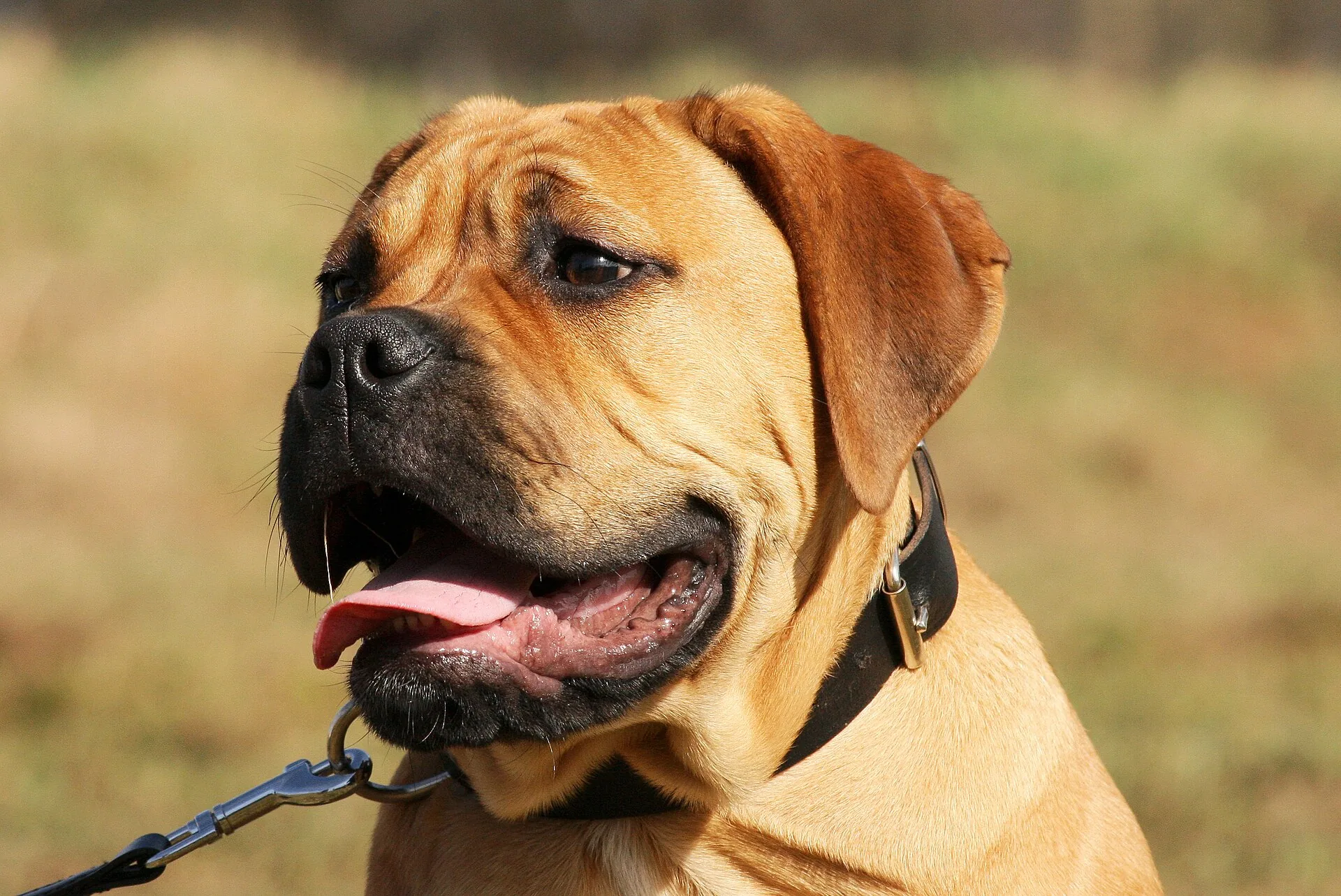
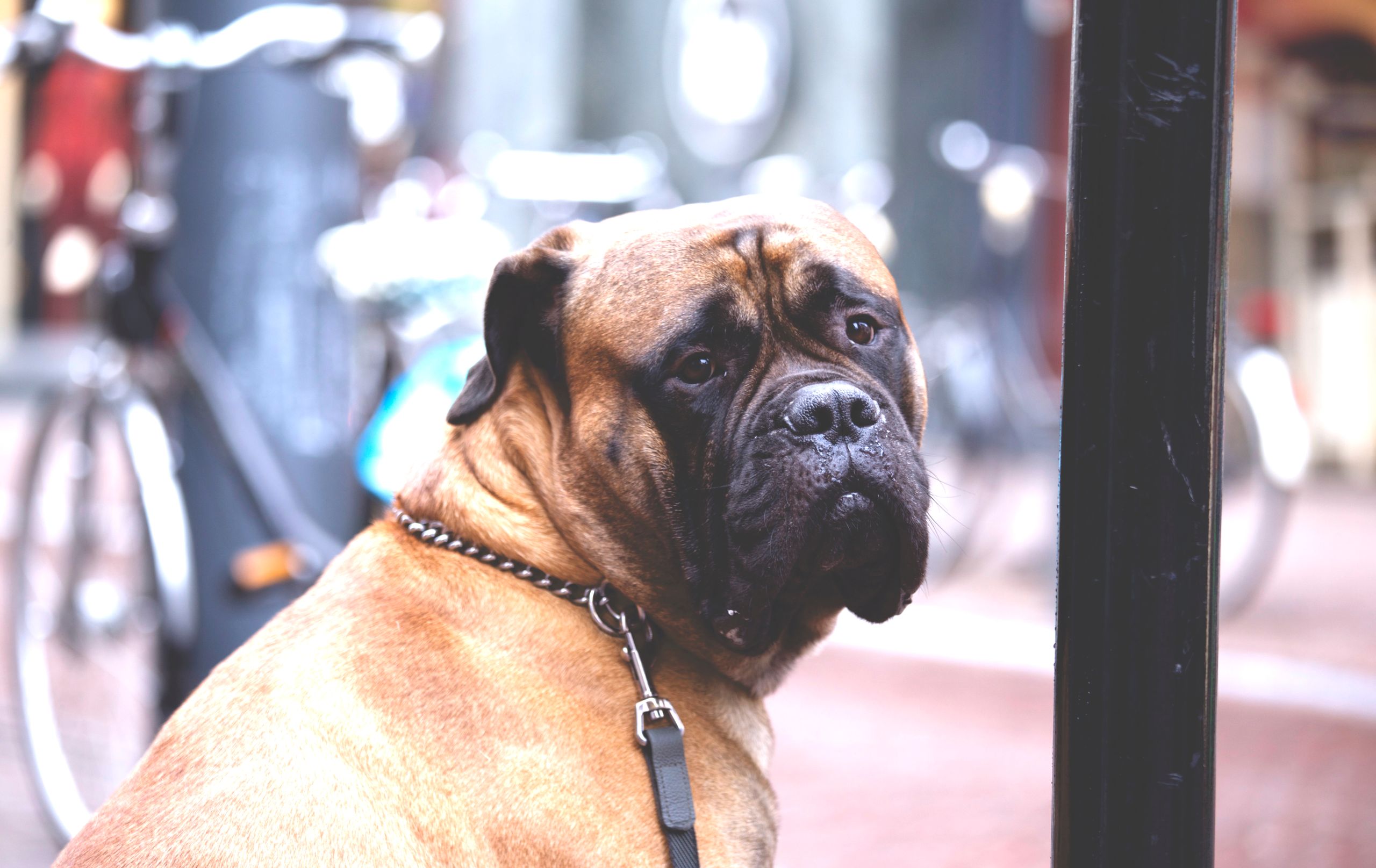
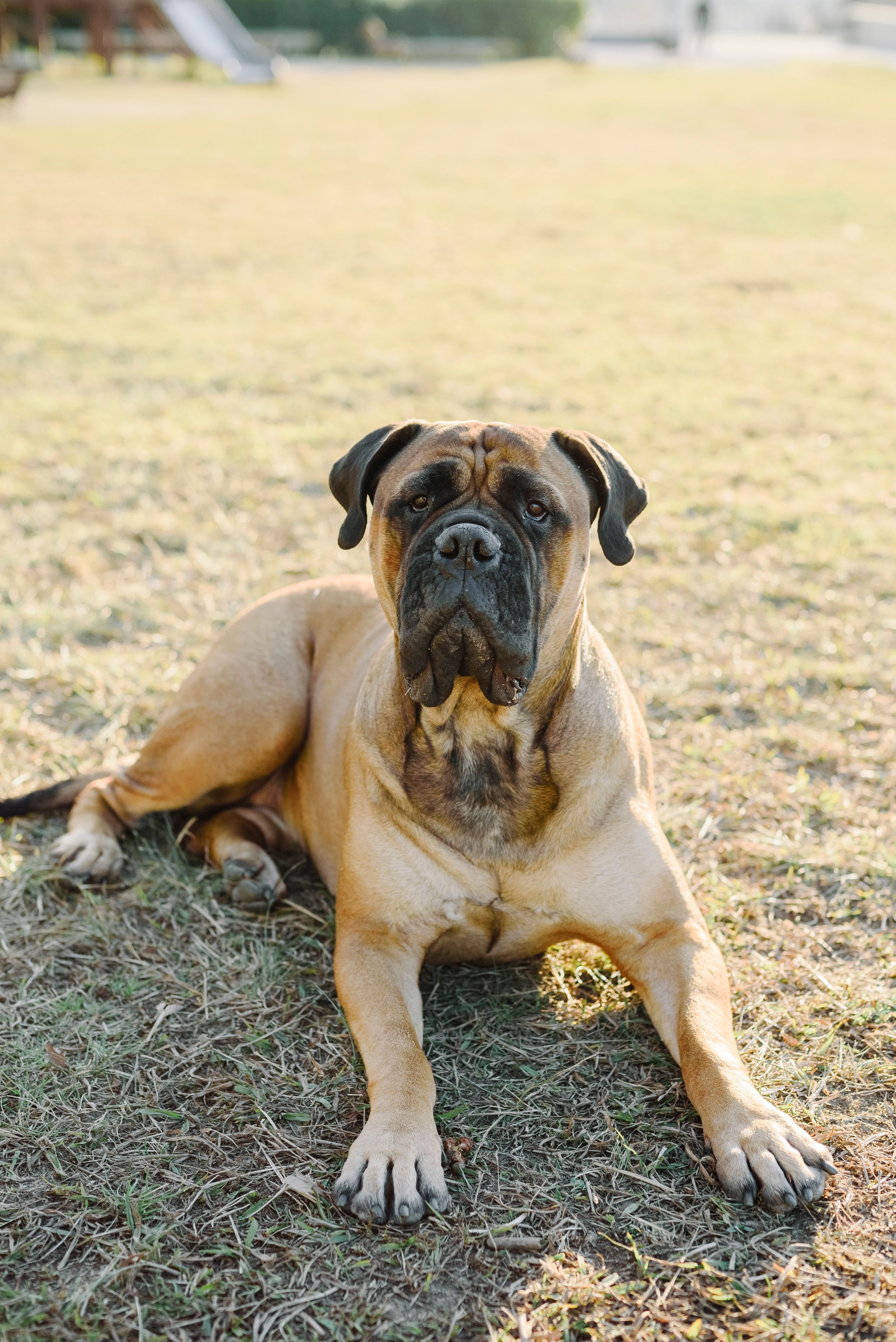
The FCI describes a short, hard, weather-resistant coat lying flat to the body. A weekly brush with a rubber mitt removes dead hair; shedding is moderate, heavier at seasonal moults. Wipe the face folds and around the lips regularly, and check nails, as heavy dogs do not always wear them down. Permitted colours are any shade of brindle, fawn or red, pure and clear, with a slight white marking on the chest allowed. A black muzzle is essential, with dark markings around the eyes.
Feeding and weight
Feed a complete diet designed for large and giant breeds, especially during puppyhood, when controlled growth protects the joints. Divide the ration into two or three meals and rest the dog before and after eating to reduce the risk of bloat. Keep the dog lean, as extra weight shortens a big dog's working life. Expect drool around the water bowl.
Work out a starting calorie figure and food weight with the calorie calculator. Not sure this is the right breed? Take the quiz.
Health
Every breed carries predispositions. These are the conditions most often discussed for the Bullmastiff, not a prediction for any individual dog.
- Hip and elbow dysplasia
- Gastric dilatation-volvulus (bloat)
- Eyelid problems (entropion)
- Breathing difficulty and heat intolerance in some individuals
- Cancers such as lymphoma
- Cruciate ligament rupture
What to ask the breeder. Ask for hip and elbow scores and recent eye examination results for both parents, and ask how the parents cope with exercise and warm weather.
Choosing a puppy
A Bullmastiff puppy is soft, sleepy and appealing, and grows almost visibly each week. Use this period to build habits: handling, grooming, waiting for food, walking on a loose lead and being calm around visitors. Socialise steadily but gently, avoiding overwhelming experiences. Use non-slip rugs on smooth floors and carry the puppy on stairs while it is still small enough to carry.
In Luxembourg the national kennel club is the Fédération Cynologique Luxembourgeoise (FCL), a member of the FCI. Many owners also buy from breeders in Germany, France or Belgium; a puppy coming from another EU country must be microchipped and vaccinated against rabies, which in practice means it cannot travel before about fifteen weeks of age. Where to get a dog in Luxembourg.
The older Bullmastiff
The breed's life is relatively short, and many Bullmastiffs show stiffness from around six or seven years. Keep walks shorter and more frequent, maintain a lean weight and provide a thick, supportive bed. Ramps help with cars. Watch for lumps, breathing changes and reluctance to rise, and report them to your vet promptly.
A realistic day
A realistic weekday for a working household in Luxembourg City, with a midday visit. Adjust it to your dog, not the other way round.
Steady 30-minute walk before the day warms up, then breakfast and a rest.
Owner leaves; the dog sleeps on a supportive bed in a cool room.
Midday visit: a calm 30-minute stroll with sniffing, fresh water and a check of the face folds.
Evening walk of about 40 minutes; dinner after the dog has settled.
Short toilet break and a quiet evening.
A Bullmastiff in Luxembourg
Owners should check carefully with their commune whether a Bullmastiff is considered to fall under the law of 9 May 2008, which names the Mastiff among breeds requiring a training certificate and ministerial authorisation and also covers dogs of similar morphology. Clarify this before the dog arrives. All dogs must also be microchipped, declared to the commune, insured for third-party liability and registered for the annual dog tax.
In daily life a Bullmastiff can do well in a flat with a lift, as it is calm indoors and rarely noisy. Without a lift, stairs become a real problem for an ageing heavy dog. Summer days in the 30s °C demand early and late walks only, ideally in shaded places such as the Bambësch forest. Busy paths in the Pétrusse valley call for confident handling and a well-trained dog.
Every dog in Luxembourg must be identified, declared to the commune and covered by liability insurance. How registration works.
When you travel
A sitter must be physically capable of handling a heavy, strong dog and should meet it several times before the owner leaves. Explain the dog's view of strangers and other dogs, the feeding routine and the rest period around meals. In hot weather, walks should be short and early. Leave the vet's details and the signs of bloat and heatstroke clearly written down.
PAWLY's holiday and overnight care takes place in your home, so your dog keeps its own bed and routine.
Myths and facts
MythBullmastiffs are aggressive attack dogs.
FactThey were bred to catch and hold poachers, not to maul them, and the FCI describes a reliable, faithful dog. Poor socialisation, not the breed itself, is the main risk.
MythA big dog needs a lot of running.
FactAdults need moderate, regular walks. Long runs and heat are hard on their joints and breathing.
MythThey make constant noise as guard dogs.
FactMost bark relatively little and guard by presence and watchfulness.
Is it the right dog for you?
Suits
- Experienced owners who want a calm, devoted companion
- Homes with a lift or ground-floor access
- People who prefer moderate, unhurried walks
- Adult households or families with older children
Think twice if
- You cannot physically hold a 50 kg dog on the lead
- You have not checked how your commune applies the 2008 dog law
- You want a jogging partner
- You often have unfamiliar visitors and dogs in the home
Questions owners ask
Does a Bullmastiff need a special permit in Luxembourg?
The law of 9 May 2008 names the Mastiff and dogs of similar morphology among the types requiring a training certificate and ministerial authorisation. Ask your commune and vet how this applies to a Bullmastiff before bringing one home, and keep written confirmation.
Is a Bullmastiff good with children?
Often yes with its own family, being patient and gentle. Its size and protectiveness mean that supervision is necessary, particularly with toddlers and with visiting children whose rough play may be misread.
How much exercise does an adult need?
About an hour a day, in two or three moderate walks. Short play sessions are welcome, but long runs, jogging and exercise in hot weather should be avoided.
Do Bullmastiffs drool and snore?
Many drool, especially after drinking and in warm weather, and some snore. A towel near the water bowl helps. Noisy breathing during light exercise should be checked by a vet.
Sources
Photo: Pexels (Pexels License) · Photo: Pexels (Pexels License) · Photo: Maja Dumat, CC BY 2.0, via Wikimedia Commons · Photo: Pexels (Pexels License)
General information for dog owners in Luxembourg, not veterinary or legal advice. Official facts (origin, size, group, history and temperament as described by the breed standard) follow the FCI standard; health and care sections reflect breed-club and veterinary guidance and are typical ranges rather than rules. For your own dog, ask your vet, the breed club or your commune. How this guide is written and checked. Last reviewed 8 October 2026.
Need someone for your Bullmastiff?
PAWLY offers an individual 45-minute walk or a home visit at your dog's pace, the same walker every time, and a written report with photos after every visit, across Luxembourg City.
Read next: the journal, for the Bullmastiff
All articles
Dogs in hot weather: the Luxembourg summer guide
The Bullmastiff carries a heavy coat or a heavy frame, which makes a Luxembourg summer the hard season.

Arthritis: the pain owners file under old age
Giant breeds tend to have joint trouble early; this is what to look for.

Growing a large-breed puppy without wrecking its joints
A giant puppy grows fast on soft bones; how it grows decides its joints for life.
Similar breeds
All 198 breeds
English Mastiff
A vast, gentle English guardian: calm, dignified and big enough to change the shape of your home.
EnergyGroomingFlat life
Cane Corso
An athletic Italian guardian with a working dog's mind, devoted to its family and quietly certain about who belongs at the gate.
EnergyGroomingFlat life
Dogue de Bordeaux
An ancient French guardian with a huge head and a soft heart, calm at home, vigilant at the door and demanding of careful ownership.
EnergyGroomingFlat life

