


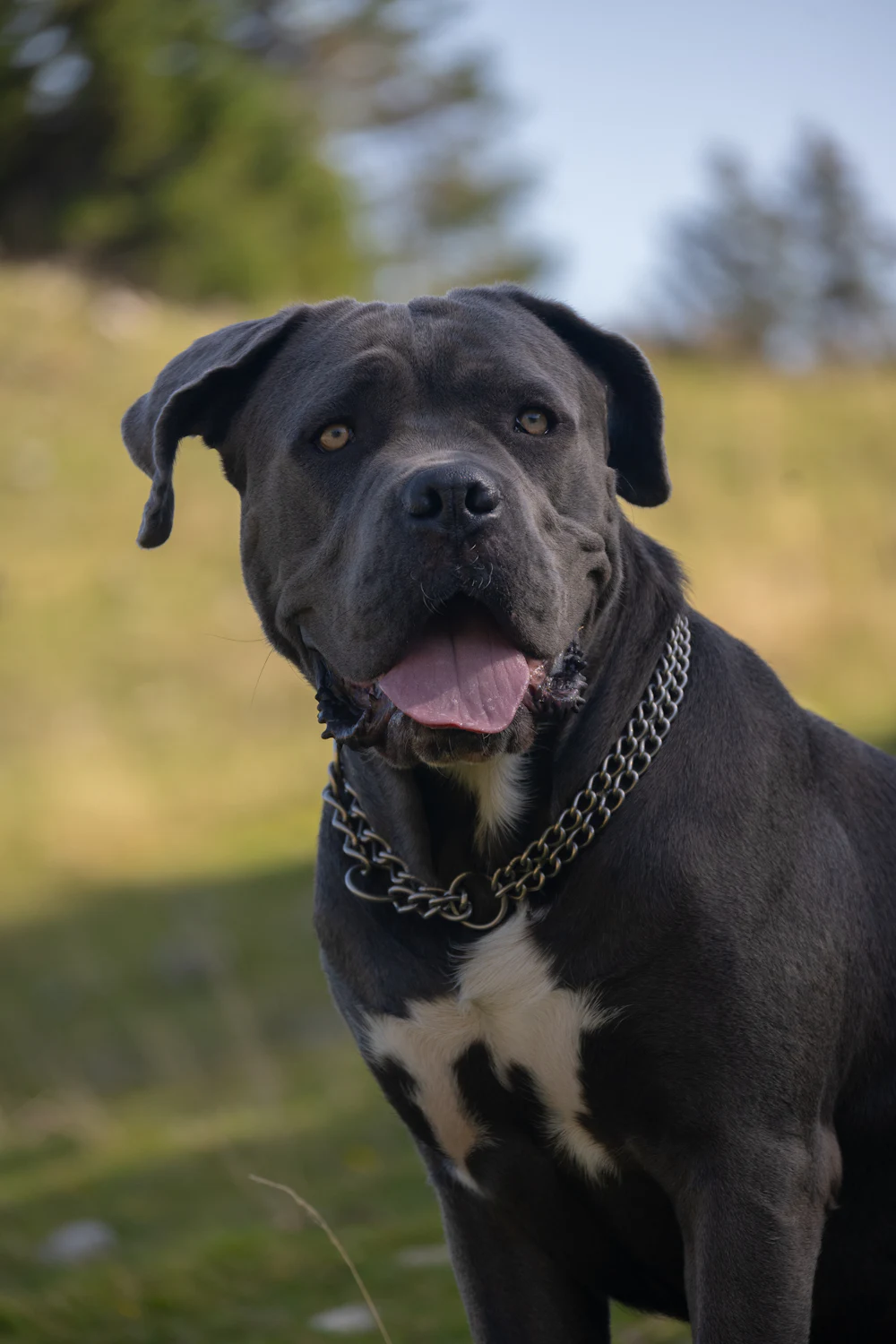
History
The Cane Corso Italiano is, according to the FCI standard, a direct descendant of the old Roman Molossian. The breed was once found throughout Italy, but in the recent past it survived mainly in Apulia and the neighbouring regions of southern Italy, where farmers kept it to guard property and livestock. The standard traces the name to the Latin cohors, meaning protector or guardian of the farmyard.
Its working life was varied. The FCI notes that it was used in the past for herding cattle and hunting big game, as well as guarding, and today classifies it as a polyvalent utility dog with working trial. It sits in Group 2 among the mastiff-type molossoid breeds. Compared with heavier relatives, the Cane Corso is lighter, more athletic and built for movement, which shows in its energy and agility.
Temperament
The FCI standard sums up the breed as a guardian of property, family and livestock, extremely agile and responsive. That responsiveness is the key to living with one. A well-bred, well-raised Cane Corso is affectionate and gentle with its own people, alert to everything happening around the home and naturally reserved, sometimes suspicious, with strangers.
This is not a dog that guards only when asked. It notices unusual movement, monitors visitors and may decide for itself whether someone is welcome. Without clear guidance and broad socialisation, that instinct can turn into overprotectiveness. With a calm, consistent owner who provides structure and work, the breed is steady, biddable and remarkably sensitive to the household's mood.
Children and other pets
A Cane Corso raised with children is often protective and tolerant with them, but its strength and speed mean that play must always be supervised, and children should never be left to handle the dog alone. Visiting friends play-fighting with your children can trigger protective reactions. Other dogs, particularly of the same sex, may not be accepted easily. A cat raised alongside is often tolerated; unfamiliar small animals outdoors may not be.
Exercise and the daily walk
This is the most athletic of the mastiff types, and an adult needs around an hour and a half of activity a day: brisk walks, structured play and, above all, mental work. Obedience training, scent games and controlled retrieving give a guardian breed a constructive job. Lack of stimulation is a common cause of behaviour problems.
Puppies need restraint: heavy dogs grow quickly, and long walks, repetitive jumping and stairs strain developing joints. Build fitness gradually after growth is complete. Avoid hard exercise around meals because of the bloat risk, and in summer move all activity to the cool hours of the day.
Training
Training is not optional with this breed. Begin on the first day with handling, calm greetings, waiting at doors and lead manners, and continue throughout life. The Cane Corso learns quickly and responds well to clear, fair, reward-based guidance. It reacts poorly to inconsistency and harshness, which can damage trust in a dog that needs to trust its owner's judgement.
Socialisation should be thorough and carefully managed: many people of different ages, dogs at a sensible distance, visitors at home, traffic, lifts and public transport. The aim is a dog that sees the world as ordinary, not a dog that greets everyone. Work with a trainer who knows guardian breeds, and make sure every adult in the household can handle the dog safely.
Coat and grooming
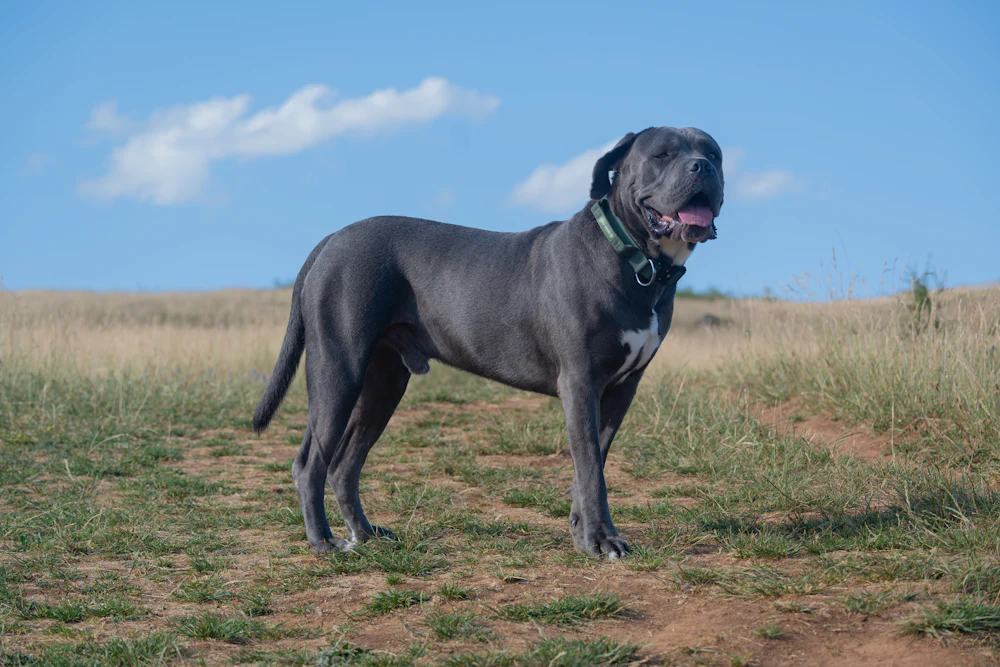
The coat is short, shiny and very dense with a light undercoat. A weekly brush with a rubber mitt is enough, with a little more during seasonal moults. Check ears, nails and the skin between the toes. The FCI permits black, lead grey, slate grey and light grey, light fawn, dark fawn and stag red, dark wheaten, and black or grey brindle. In fawn and brindle dogs the black or grey mask must not extend beyond the line of the eyes.
Feeding and weight
Feed a complete diet suited to large breeds, with controlled growth during puppyhood to protect the joints. Two or three meals a day are preferable to one, and rest around meals reduces the risk of bloat. Keep the dog lean and muscular rather than heavy; you should be able to feel the ribs easily. Use food rewards during training as part of the daily ration.
Work out a starting calorie figure and food weight with the calorie calculator. Not sure this is the right breed? Take the quiz.
Health
Every breed carries predispositions. These are the conditions most often discussed for the Cane Corso, not a prediction for any individual dog.
- Hip and elbow dysplasia
- Gastric dilatation-volvulus (bloat)
- Eyelid problems (entropion and ectropion)
- Dental skeletal retinal anomaly (DSRA), for which a DNA test exists
- Heart disease, for which cardiac screening is recommended
What to ask the breeder. Ask for hip and elbow scores, a cardiac examination and DNA results for DSRA for both parents, and meet the mother to judge her temperament.
Choosing a puppy
A Cane Corso puppy needs a structured start. Teach calm routines, gentle handling and alone time in a crate or pen from the first week. Socialise every day in small doses, using food to make new experiences pleasant. Enrol in a puppy class with an experienced trainer. Limit stairs and long walks while growing, and protect joints with non-slip floors at home.
In Luxembourg the national kennel club is the Fédération Cynologique Luxembourgeoise (FCL), a member of the FCI. Many owners also buy from breeders in Germany, France or Belgium; a puppy coming from another EU country must be microchipped and vaccinated against rabies, which in practice means it cannot travel before about fifteen weeks of age. Where to get a dog in Luxembourg.
The older Cane Corso
From around seven years the breed may begin to slow down. Shorter, more frequent walks and gentle mental games keep an older guardian content. Maintain a lean weight, provide a thick bed and use ramps for the car. Watch for stiffness, lumps or changes in breathing and report them early. Older dogs can become less tolerant of disturbance, so give them a quiet retreat.
A realistic day
A realistic weekday for a working household in Luxembourg City, with a midday visit. Adjust it to your dog, not the other way round.
A brisk 40-minute walk with a short training session, then breakfast and rest.
Owner leaves; the dog settles in a quiet room with a long-lasting chew.
Midday visit by a familiar, experienced walker: 45 minutes of walking and scent games.
Evening walk of about an hour with obedience practice; dinner after cooling down.
Short toilet walk and a calm evening with the family.
A Cane Corso in Luxembourg
The law of 9 May 2008 names the Mastiff among dog types requiring a training certificate and ministerial authorisation, and also covers dogs of similar morphology. Ask your commune how this applies to a Cane Corso before bringing one home, and keep written confirmation. Microchipping, declaration to the commune, third-party liability insurance and the annual dog tax apply as for every dog.
In a city flat the breed can live well with a lift, generous daily exercise and quiet neighbours, though it may alert to noises in the corridor. Forest walks in the Grünewald or Bambësch suit it better than crowded urban paths. In summer, with temperatures in the 30s °C, walk only in the early morning and late evening. Public transport is free, but a large guardian should be comfortable and controlled before boarding.
Every dog in Luxembourg must be identified, declared to the commune and covered by liability insurance. How registration works.
When you travel
Choose a sitter or walker who has met the dog several times and is confident with guardian breeds; the dog may not accept a stranger entering the home. Explain routines, cues and how the dog reacts to visitors and other dogs. Insist on lead walks only, rest around meals and short outings in hot weather. Leave the vet's contact details and signs of bloat clearly written.
PAWLY's holiday and overnight care takes place in your home, so your dog keeps its own bed and routine.
Myths and facts
MythThe Cane Corso is simply a lighter Neapolitan Mastiff.
FactBoth are Italian molossoids, but the Cane Corso is a distinct breed with its own standard, built for agility and versatile work.
MythA guardian breed should not be socialised, so it stays protective.
FactSocialisation produces a stable dog able to distinguish normal life from real threats. Poorly socialised guardians are more dangerous, not better guards.
MythThey are lazy like other mastiffs.
FactThe FCI describes the breed as extremely agile and responsive. It needs real daily exercise and mental work.
Is it the right dog for you?
Suits
- Experienced owners familiar with guardian breeds
- People who enjoy daily training and structure
- Calm households with a predictable routine
- Homes with a lift and easy access to quiet green space
Think twice if
- This would be your first dog
- You often host visitors, children's friends or other dogs
- You have not checked the 2008 dog law with your commune
- No one at home can physically handle a 45 kg dog
Questions owners ask
Is the Cane Corso covered by Luxembourg's dog law?
The law of 9 May 2008 names the Mastiff and dogs of similar morphology. Whether a particular Cane Corso falls within that description should be confirmed with your commune and vet before you commit, ideally in writing.
Is a Cane Corso good with children?
With its own family, often yes, and many are protective of the children they live with. Strength and guarding instinct mean constant supervision, and care with visiting children whose noisy play may be misinterpreted.
Can a Cane Corso be left alone during the day?
Adults can rest for several hours, but a full working day alone is too long for an active guardian. A midday walk by a familiar walker helps, and the dog should be introduced to that person in advance.
How much exercise does a Cane Corso need?
About an hour and a half a day for a healthy adult, combining brisk walks with training and scent work. Puppies need much less, with care for growing joints.
Sources
Photo: Unsplash (Unsplash License) · Photo: Unsplash (Unsplash License) · Photo: Unsplash (Unsplash License) · Photo: Unsplash (Unsplash License) · Photo: Unsplash (Unsplash License)
General information for dog owners in Luxembourg, not veterinary or legal advice. Official facts (origin, size, group, history and temperament as described by the breed standard) follow the FCI standard; health and care sections reflect breed-club and veterinary guidance and are typical ranges rather than rules. For your own dog, ask your vet, the breed club or your commune. How this guide is written and checked. Last reviewed 8 October 2026.
Need someone for your Cane Corso?
PAWLY offers an individual 45-minute walk or a home visit at your dog's pace, the same walker every time, and a written report with photos after every visit, across Luxembourg City.
Read next: the journal, for the Cane Corso
All articles
Feeding, portions and how to tell if your dog is the right weight
Large dogs suffer more from extra weight; this is how to judge the right one.

Dog first aid: the six emergencies and what to do first
Bloat is an emergency in deep-chested breeds like the Cane Corso; this covers what cannot wait.

The dog that barks and lunges on the lead
Some Cane Corso dogs are selective with other dogs; this is the plan for lunging and barking on the lead.
Similar breeds
All 198 breeds
Neapolitan Mastiff
A heavy, loose-skinned guardian from the Naples hinterland, calm and devoted at home and imposing enough to end most arguments at the door.
EnergyGroomingFlat life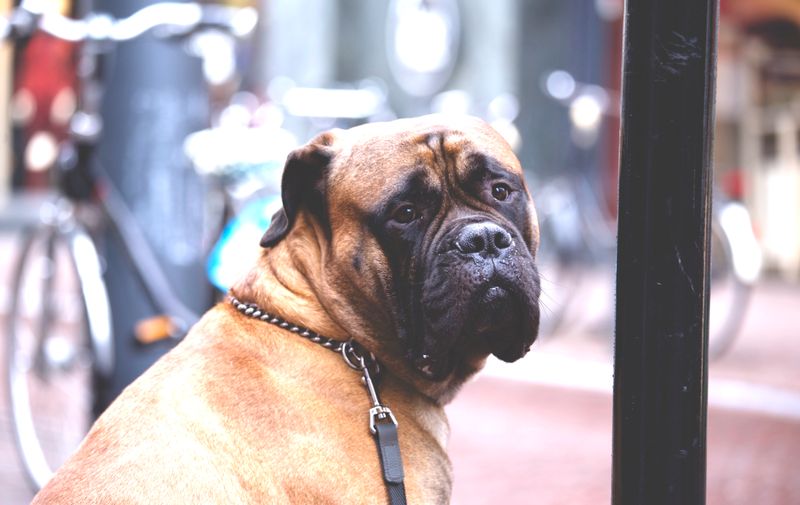
Bullmastiff
A quiet, heavyweight guardian bred to stop poachers, now more likely to lean its whole bulk against your knees on the sofa.
EnergyGroomingFlat life
Dogue de Bordeaux
An ancient French guardian with a huge head and a soft heart, calm at home, vigilant at the door and demanding of careful ownership.
EnergyGroomingFlat life

