


History
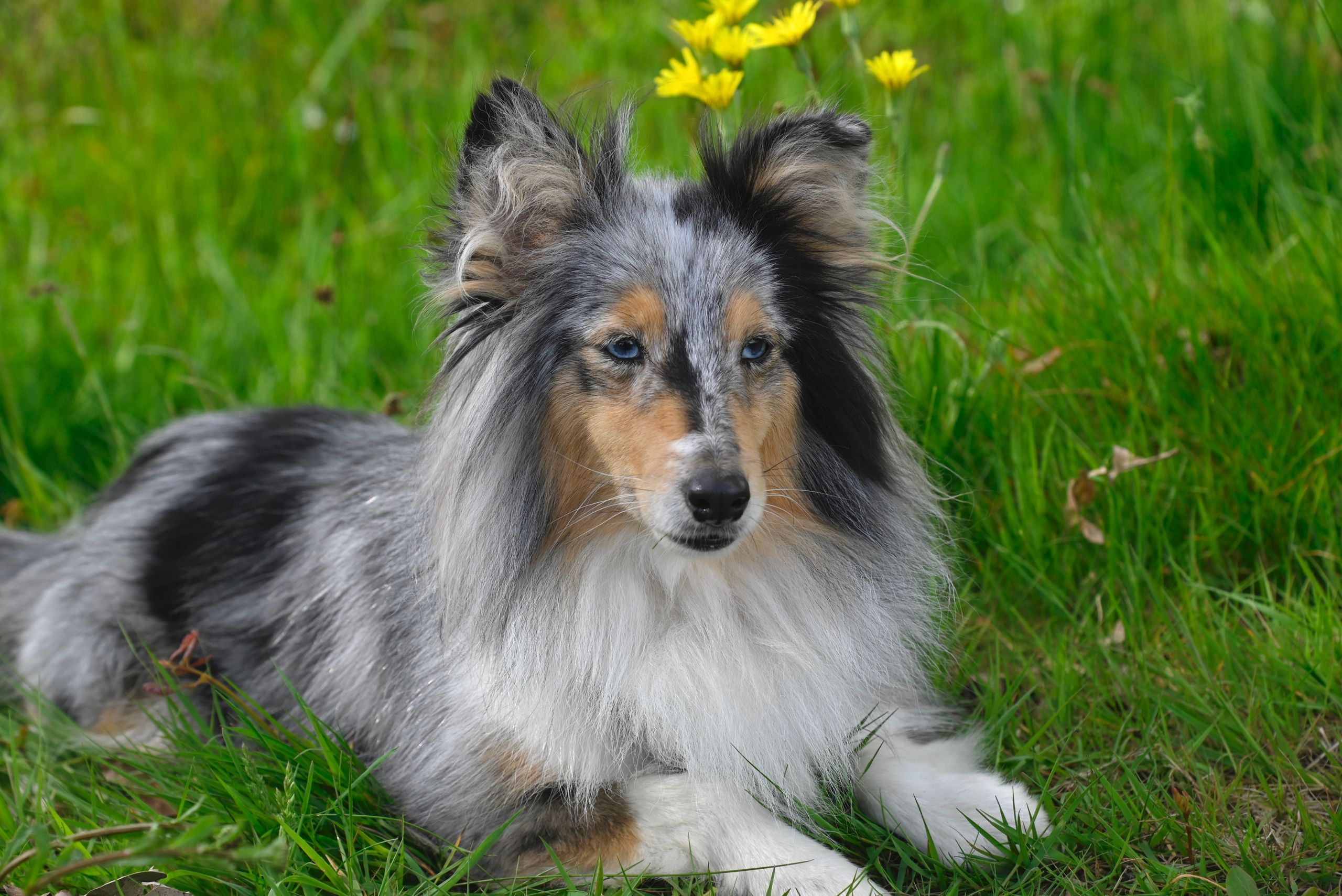
The Shetland Sheepdog comes from the Shetland Islands, where small herding dogs worked alongside small island livestock in rough, open country. The FCI lists Great Britain as the country of origin and describes the Sheltie as a small, long-haired working dog of great beauty, free from cloddiness. Its resemblance to a miniature Rough Collie is no accident, since collie blood was used in the development of the modern type, yet the Sheltie has its own proportions, its own size and a quite different manner.
Today it works mainly as a companion, and the standard lists its use as companion dog and sheepdog. The FCI places it in Group 1, Section 1, with the sheepdogs, without a working trial, and the current standard was published in August 2013. The standard is firm on size: males should stand 37 cm at the withers and females 35.5 cm, and a deviation of more than 2.5 cm is highly undesirable. A dog that is bigger than that is not simply a large Sheltie, it is outside the breed's type.
Temperament
The FCI describes the Sheltie as alert, gentle, intelligent, strong and active, affectionate and responsive to its owner, reserved towards strangers and never nervous. Those words hold together well. A Sheltie watches, listens and responds, often before you have finished a sentence. It is a dog that learns your routine within a week and starts organising it. The reserve with strangers means a visitor may be greeted by a stare and a short burst of barking.
The standard's phrase never nervous is something of an ideal, and in real life many Shelties are sensitive to noise, raised voices and sudden change. A well-bred, well-socialised Sheltie holds steady; an under-socialised one can become shy or reactive. The herding history shows in play, as the dog may circle, nudge or shadow children and other pets. It is an affectionate, devoted breed that wants to be part of whatever the household is doing.
Children and other pets
Shelties are gentle and affectionate with children but may try to herd them, running round their legs and nipping at heels. Calm children who do not shriek or chase make the best partners. Most Shelties live well with other dogs and with cats if introduced sensibly. Sensitive to tension at home, they do poorly in a household with a lot of shouting or conflict.
Exercise and the daily walk
An hour to an hour and a half a day suits an adult, divided into a proper walk and some active mental work. The Sheltie is an agile, strong little dog and a natural for agility, obedience and rally, which provide a productive outlet. Without it, a clever herding dog finds its own jobs, such as patrolling the window, rounding up visitors and barking at anything that moves.
Variety keeps the Sheltie happy. Mix lead walks with fetch, trick training, nose work and a few minutes of recall practice in a secure area. Many Shelties have a strong chase instinct for bikes, joggers and cars, so train a solid recall before going off the lead. In hot weather keep sessions short, since that thick double coat holds heat.
Training
Shelties are clever, sensitive and eager to please, and they are among the stars of agility and obedience. Gentle, reward-based training works best; a raised voice can make a Sheltie anxious for the rest of the day. Keep sessions short and upbeat, finish on a success and be prepared to be outsmarted by a dog that has noticed the pattern in your routine.
Barking is the breed's best-known habit. Teach a quiet cue early, reward calm responses to noises in the building, and give the dog enough mental work that it does not need to invent alarms. Socialisation with visitors, children, lifts and traffic prevents the shyness some Shelties show. Practise herding impulses on a toy, not on ankles.
Coat and grooming
The FCI describes a double coat, with a long, harsh outer layer and a soft undercoat, and an abundant mane and frill. Permitted colours are sable, from pale gold to deep mahogany, tricolour, blue merle, black and white, and black and tan, with white markings on the chest, blaze, collar, legs and tail tip. Brush several times a week, especially behind the ears and on the trousers. Expect a heavy seasonal shed.
Feeding and weight
Keep Shelties lean: beneath the coat it is easy to miss weight gain, so feel the ribs and waist regularly. Weigh portions and use part of the daily food for training. Some have sensitive digestion, and the breed's tendency to gallbladder problems is another reason to avoid fatty scraps. Change food gradually and keep treats small and low in fat.
Work out a starting calorie figure and food weight with the calorie calculator. Not sure this is the right breed? Take the quiz.
Health
Every breed carries predispositions. These are the conditions most often discussed for the Shetland Sheepdog, not a prediction for any individual dog.
- Collie eye anomaly (an inherited eye condition, with a DNA test)
- MDR1 drug sensitivity (a gene change that makes some medicines unsafe, with a DNA test)
- Dermatomyositis (an inherited skin and muscle condition)
- Gallbladder mucocele
- Hypothyroidism (underactive thyroid)
What to ask the breeder. Ask for eye examination results, DNA tests for collie eye anomaly and MDR1, and thyroid and hip results for both parents.
Choosing a puppy
Ask for eye examinations and DNA tests for collie eye anomaly and MDR1, and ask about dermatomyositis and thyroid disease in the lines. Meet the parents and, if possible, the wider family: nervous parents often mean nervous puppies, and a calm, confident mother is the best sign. Socialise early with traffic, lifts, children and different people, and begin quiet-cue training at once, before barking at every sound becomes a habit.
In Luxembourg the national kennel club is the Fédération Cynologique Luxembourgeoise (FCL), a member of the FCI. Many owners also buy from breeders in Germany, France or Belgium; a puppy coming from another EU country must be microchipped and vaccinated against rabies, which in practice means it cannot travel before about fifteen weeks of age. Where to get a dog in Luxembourg.
The older Shetland Sheepdog
Watch for weight gain, coat changes and tiredness, which can indicate hypothyroidism, and have eyes checked regularly. Many Shelties stay bright and keen for years, but hearing and sight may fade, so keep routines predictable and avoid startling the dog. Shorter, gentler walks and continued mental games help an older dog stay engaged, and a warm bed protects stiff joints.
A realistic day
A realistic weekday for a working household in Luxembourg City, with a midday visit. Adjust it to your dog, not the other way round.
Morning walk with a short training game while the streets are quiet.
Breakfast, then a few minutes of quiet-cue practice by the door.
Midday visit with a toilet break, a puzzle and some brushing.
Longer walk or an agility or trick session in a park.
Final short walk and a brush.
A Shetland Sheepdog in Luxembourg
A good flat dog in many ways, but barking at noises in the building is common, and thin walls test neighbours. Teach calm responses to the lift, the stairwell and the door from the first weeks. Compact and easy to carry, a Sheltie is straightforward on stairs and in lifts. The Pétrusse valley and Parc Merl give good morning walks, while Kinnekswiss is good for a quiet game.
At weekends the Bambësch and Grünewald forests give varied walking, with free buses and trams to get there. The long double coat means summer needs care: with temperatures in the 30s, walk early and late, carry water and never leave a Sheltie in a parked car. Do not shave the coat. In wet autumn weather, dry the trousers and feathering to avoid mats.
Every dog in Luxembourg must be identified, declared to the commune and covered by liability insurance. How registration works.
When you travel
Shelties can be sensitive to change and to strangers. Introduce the sitter beforehand, keep mealtimes and walks the same, and leave a worn item with your scent. Warn the sitter about alarm barking and ask them to keep the dog on a lead outdoors, because herding dogs may chase bikes or joggers. Continue brushing during the stay.
PAWLY's holiday and overnight care takes place in your home, so your dog keeps its own bed and routine.
Myths and facts
MythShelties are miniature Rough Collies.
FactThey look similar and collie blood was used in their development, but the Sheltie is a separate breed from the Shetland Islands, with its own size and type.
MythBarking cannot be reduced.
FactIt rarely disappears, but early training, a quiet cue and enough activity reduce it a great deal.
MythShelties are fragile lapdogs.
FactThey are active, strong little herding dogs. The FCI describes them as alert, strong and active, and they enjoy agility and long walks.
Is it the right dog for you?
Suits
- Families wanting a small, trainable dog
- Dog sport enthusiasts
- Owners who enjoy grooming
- Calm homes with an eye for routine
Think twice if
- Thin-walled flats and long absences
- Rough or noisy households
- You dislike grooming
- You want a dog that does not bark
Questions owners ask
Is a Sheltie a miniature collie?
No. It resembles the Rough Collie, and collie blood was used in its development, but the Shetland Sheepdog is a separate breed with its own size and proportions. The FCI standard asks for 37 cm in males and 35.5 cm in females.
Do Shelties bark a lot?
Many do. It is a breed trait that training can reduce but rarely removes. Early quiet-cue practice, enough exercise, calm socialisation and a gentle response to noises in the building make flat living much easier.
Do Shelties shed?
Yes, heavily once or twice a year, and lightly in between. Brush several times a week, paying attention behind the ears and on the trousers, and expect hair on dark clothes and sofas, particularly in spring and autumn.
Are Shelties good for first-time owners?
They can be, since they are clever and want to please. They are also sensitive, vocal and need regular grooming, so a first-time owner should be prepared for patient, gentle training.
Sources
Photo: Unsplash (Unsplash License) · Photo: Pexels (Pexels License) · Photo: Unsplash (Unsplash License) · Photo: Pexels (Pexels License) · Photo: Pexels (Pexels License)
General information for dog owners in Luxembourg, not veterinary or legal advice. Official facts (origin, size, group, history and temperament as described by the breed standard) follow the FCI standard; health and care sections reflect breed-club and veterinary guidance and are typical ranges rather than rules. For your own dog, ask your vet, the breed club or your commune. How this guide is written and checked. Last reviewed 8 October 2026.
Need someone for your Shetland Sheepdog?
PAWLY offers an individual 45-minute walk or a home visit at your dog's pace, the same walker every time, and a written report with photos after every visit, across Luxembourg City.
Read next: the journal, for the Shetland Sheepdog
All articles
Grooming and coat care through the Luxembourg year
The Shetland Sheepdog has a coat that needs a routine that holds through the Luxembourg seasons.

House training in an apartment, without a garden door
Small dogs can be slow to house-train; this is the flat routine.

How much exercise does your dog actually need?
The Shetland Sheepdog is an active breed, so it is worth checking the exercise numbers against your actual week.
Similar breeds
All 198 breeds
Rough Collie
A Scottish working sheepdog in an extravagant coat, gentle and sensitive at home, and happiest when its family is close by.
EnergyGroomingFlat life
Border Collie
Probably the most capable working dog in the world, and for the same reason one of the hardest to keep in a city flat.
EnergyGroomingFlat life
Pembroke Welsh Corgi
A big herding dog on short legs, bold, clever and much more athletic than it looks.
EnergyGroomingFlat life

