


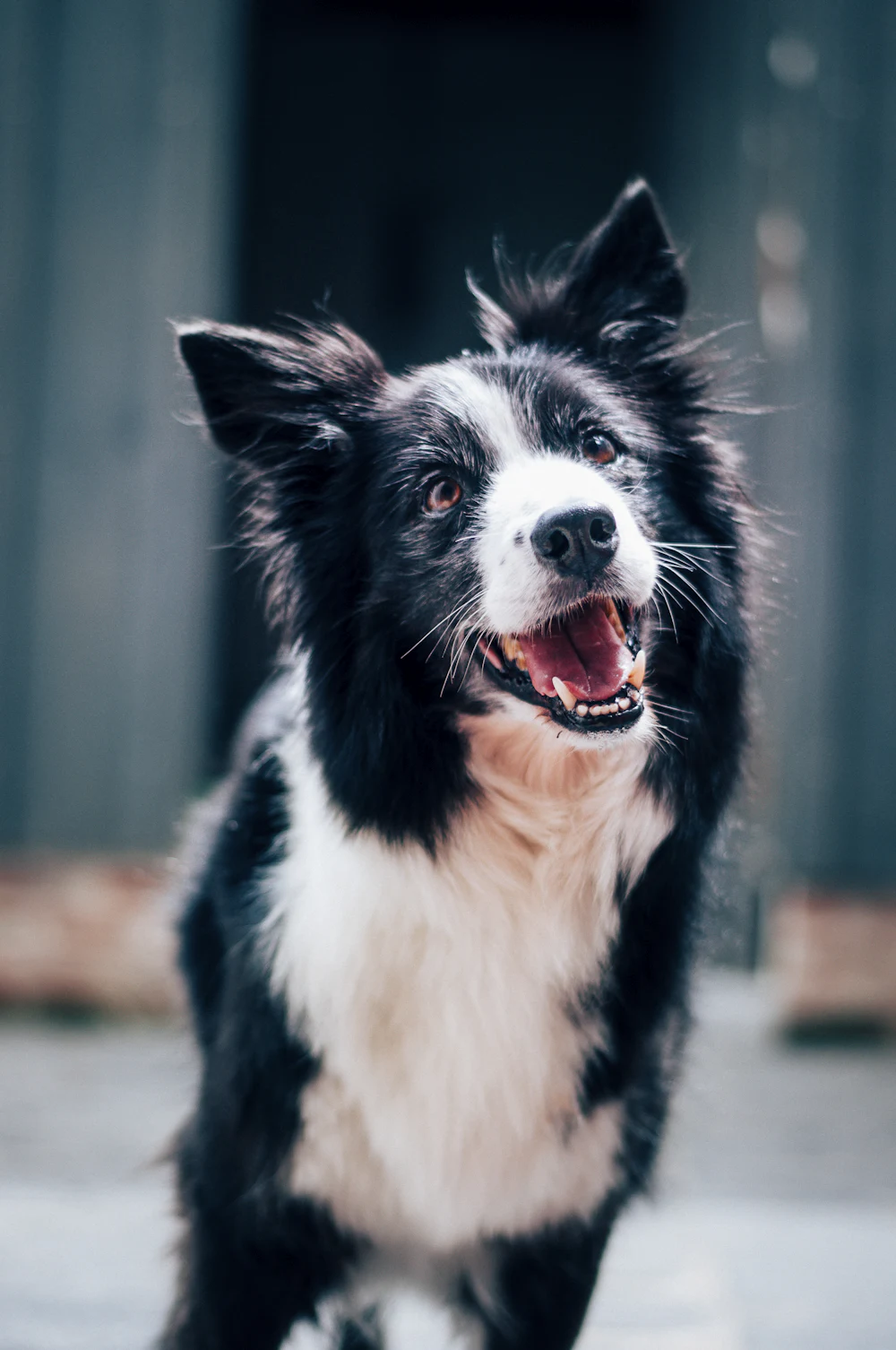
History
The Border Collie comes from the hill farms on the border between England and Scotland, where it was bred purely for its ability to gather and move sheep. The FCI lists Great Britain as the country of origin and classes the breed in Group 1 with sheepdogs, noting that a working trial is required. Much of the modern breed traces back to one dog, Old Hemp, born in Northumberland in 1893.
For most of its history the breed was selected on working ability alone, and the International Sheep Dog Society, founded in 1906, still registers dogs on that basis. The FCI standard reflects this: it asks for a dog that is tenacious, hard working and highly tractable, with a smooth, balanced outline and enough substance for endurance, but without coarseness. Looks come second to function, and that heritage is the key to living with one.
Temperament
The standard describes a keen, alert, responsive and intelligent dog that is neither nervous nor aggressive, and an excessively shy or aggressive temperament is a disqualifying fault. In daily life that translates into a sensitive, fast learning dog that notices everything, including things you did not intend to teach. The famous herding eye, a fixed stare and crouch, can turn into chasing bicycles, cars and joggers if it has no outlet.
Border Collies are devoted to their people but often reserved with strangers, and many are sensitive to noise and sudden change. The expression should be mild and keen, and a well raised dog usually has exactly that: watchful, willing and quietly intense. Problems tend to appear when that intelligence is left unemployed, producing barking, spinning, shadow chasing or obsessive staring.
Children and other pets
Collies are usually devoted to children, but the herding instinct can show as circling, nipping at heels and chasing running toddlers. Teach calm games, keep early meetings supervised, and never leave a young child to manage the dog. They can live with cats and other pets, though some will try to herd them, and a dog that fixes its stare on a cat needs interrupting early. Children old enough to help with trick training often get the best out of the breed.
Exercise and the daily walk
Distance alone does not satisfy a Border Collie; it builds a fitter dog that needs more. What they need is a job: training, agility, herding lessons, scent work or trick training. Twenty minutes of focused mental work each day matters as much as the walk, and a dog that has searched for hidden toys will often settle faster than one that has simply run.
Equally important is teaching the dog to switch off. A collie that has learned to settle on a mat is a pleasure to live with. One that is always on is exhausting for everyone, including itself, so build rest into the routine as deliberately as the exercise.
Training
Border Collies will train you if you do not train them. Keep sessions short, make the criteria clear, and teach impulse control early: waiting at doors, settling on a mat, ignoring moving bikes. Reward calmness as generously as you reward speed, because a collie left to guess will invent a game of its own.
Give the dog a sport or job, such as agility, obedience, herding lessons or scent work. Harsh methods are a poor fit for such a sensitive animal and can produce anxiety rather than obedience. Just as important is teaching an off switch, with calm rewards for relaxing.
Coat and grooming
The FCI recognises two varieties, moderately long or smooth, both with a dense, medium textured topcoat over a soft, dense undercoat that keeps out weather. Care is fairly easy: a weekly brush, more during the seasonal shed when the undercoat comes out in handfuls. Many colours are permitted, but white must never predominate, and merles may have blue eyes. Feathering behind the legs and on the tail collects mud and burrs, so check it after woodland walks.
Feeding and weight
Active collies need a good quality diet matched to their workload, and a dog in hard training eats noticeably more than a sofa companion. Because many are food motivated, part of the daily ration can be earned through training and puzzle feeders, which adds mental work at no extra cost. Keep the dog lean, as extra weight is hard on joints, and avoid hard exercise straight after a large meal.
Work out a starting calorie figure and food weight with the calorie calculator. Not sure this is the right breed? Take the quiz.
Health
Every breed carries predispositions. These are the conditions most often discussed for the Border Collie, not a prediction for any individual dog.
- Collie eye anomaly (a DNA test exists)
- Hip dysplasia
- Epilepsy
- Trapped neutrophil syndrome and neuronal ceroid lipofuscinosis (DNA tests exist)
- Noise sensitivity
What to ask the breeder. Ask for hip scores, an eye examination, and DNA test results for CEA, TNS and CL from both parents, and ask what the parents do for work or sport.
Choosing a puppy
Choose a breeder who tests for CEA, TNS and CL and scores hips. Consider whether a working bred or companion bred dog suits your life, because working lines can be intense. Puppies should meet city noises early, including trams, lifts and traffic, as noise sensitivity is common. Start settling practice in the first week and keep the games calm, since an overexcited puppy teaches itself to stare and chase.
In Luxembourg the national kennel club is the Fédération Cynologique Luxembourgeoise (FCL), a member of the FCI. Many owners also buy from breeders in Germany, France or Belgium; a puppy coming from another EU country must be microchipped and vaccinated against rabies, which in practice means it cannot travel before about fifteen weeks of age. Where to get a dog in Luxembourg.
The older Border Collie
Many collies stay active into their teens. Adapt the exercise but not the mental work: older collies still need puzzles, training and purpose, and boredom shows quickly in a dog that once worked hard. Shorter walks, softer ground and non slip flooring help stiff joints. Watch for hearing loss and reduced vision, and keep routines predictable.
A realistic day
A realistic weekday for a working household in Luxembourg City, with a midday visit. Adjust it to your dog, not the other way round.
Forty five minutes of walking with a training game, such as sit and wait at each kerb.
Breakfast from a puzzle feeder, then a settle on the mat while you get ready.
A walker collects the dog for a midday outing with scent work and a short training session.
Long walk or agility class, finishing with a calm cool down on the way home.
Quiet time, a chew and a short final walk before bed.
A Border Collie in Luxembourg
A Border Collie in a Luxembourg apartment with eleven empty hours a day is one of the most common unhappy combinations we see. It can work, but only with daily training, a midday break and an owner who genuinely enjoys working with the dog. Lifts are a good place to practise sitting and waiting, and the free buses and trams make city outings a useful training ground for ignoring movement.
Traffic is a real risk for dogs that chase moving things. Solid recall training and a long line come before any off lead freedom, whether in the Bambësch, the Grünewald or the Pétrusse valley. Summers can reach the 30s, so move hard exercise to early morning or evening, and keep scent games indoors on the hottest days.
Every dog in Luxembourg must be identified, declared to the commune and covered by liability insurance. How registration works.
When you travel
A Border Collie left with a sitter needs the same mental work as usual, not just walks. Leave a written list of games, commands and rest times, plus the feeder toys. Changes of routine can unsettle sensitive collies, so keep the timetable steady. Tell the sitter about any noise fears, and never let the dog off the lead near roads.
PAWLY's holiday and overnight care takes place in your home, so your dog keeps its own bed and routine.
Myths and facts
MythA Border Collie just needs more running.
FactMore running makes a fitter collie that needs even more. Mental work and learning to settle are what bring balance.
MythCollies are too clever to need training.
FactTheir intelligence makes training essential. Untrained, they invent their own jobs, and those are rarely convenient.
MythA Border Collie cannot be a pet.
FactMany are happy family dogs when the owner provides training and purpose. The difficulty is the lifestyle, not the dog.
Is it the right dog for you?
Suits
- Active owners who want to train seriously
- Households with time and a garden or easy park access
- People interested in dog sports
- Owners who enjoy teaching tricks
Think twice if
- You work long days with nobody home
- You want a calm house dog without effort
- You live beside busy streets and cannot train recall
- Young children need a dog that never herds
Questions owners ask
Can a Border Collie live in a flat?
Some do, happily. It depends almost entirely on the hours alone and the amount of mental work, not on square metres. A flat dog needs daily training, a midday break and a firm routine.
Why does my collie stare at other dogs?
That is the herding eye. It is normal breed behaviour, but other dogs can find it rude. Teach a look at me cue and move on before tension builds. Redirect the stare early with a treat.
How much exercise does a Border Collie need?
Around two hours a day for an adult, split into walks, training and play. The quality matters more than the miles, and a settled evening is part of the plan. A second walk later in the day should include some training.
Are Border Collies easy to train?
They learn quickly, which cuts both ways. Good habits form fast and so do bad ones. Short, consistent sessions and early impulse control work better than long drills. Reward calm behaviour as well as speed.
Sources
Photo: Unsplash (Unsplash License) · Photo: Unsplash (Unsplash License) · Photo: Unsplash (Unsplash License) · Photo: Unsplash (Unsplash License) · Photo: Unsplash (Unsplash License)
General information for dog owners in Luxembourg, not veterinary or legal advice. Official facts (origin, size, group, history and temperament as described by the breed standard) follow the FCI standard; health and care sections reflect breed-club and veterinary guidance and are typical ranges rather than rules. For your own dog, ask your vet, the breed club or your commune. How this guide is written and checked. Last reviewed 8 October 2026.
Need someone for your Border Collie?
PAWLY offers an individual 45-minute walk or a home visit at your dog's pace, the same walker every time, and a written report with photos after every visit, across Luxembourg City.
Read next: the journal, for the Border Collie
All articles
Working breeds in a city flat: the honest version
High-drive dogs like the Border Collie can live in a flat, but it takes a plan.
How much exercise does your dog actually need?
The Border Collie is an active breed, so it is worth checking the exercise numbers against your actual week.

Arthritis: the pain owners file under old age
Hip and joint problems are among those discussed for the Border Collie; this is how to spot and manage them.
Similar breeds
All 198 breeds
Australian Shepherd
Beautiful, clever and tireless, and despite the name, an American ranch dog.
EnergyGroomingFlat life
Shetland Sheepdog
A small, sensitive herding dog from the Shetland Islands, bright and devoted, and a keen barker.
EnergyGroomingFlat life
German Shepherd
Intelligent, loyal and built to work. In the right hands one of the finest dogs there is; without a job, a handful.
EnergyGroomingFlat life

