


History
Despite the name, the Australian Shepherd is an American breed. The FCI standard says the modern dog developed entirely within the United States, and that it acquired its name through association with Basque herders who arrived from Australia during the 1800s. The theories about its deeper origins vary, so the standard is cautious, but it is clear that the breed's character was shaped on American ranches.
After the Second World War its popularity grew alongside western horseback riding, promoted through rodeos, shows, films and television. American stockmen preserved the breed's versatility, intelligence, herding drive and distinctive appearance. The FCI places it in Group 1, Section 1, sheepdogs, without a working trial. That working past still shows: this is a dog bred to read livestock and people all day, and it applies the same attention to your household.
Temperament
The standard calls the Australian Shepherd an intelligent working dog of strong herding and guarding instincts, loyal and with all day stamina. It describes an even disposition, good natured and seldom quarrelsome, though initially reserved with strangers. Aggression and excess shyness are faults. In real life this means a dog that watches everything, notices every change in routine and takes a little while to decide about visitors.
Aussies want a job and a person. A bored Aussie invents entertainment, usually destructive: herding the children, shadowing the cat, rounding up bicycles or barking at the window. Properly occupied, they are warm, funny and strikingly responsive. They bond closely with their own people, and many follow them from room to room. Expect sensitivity, quick learning and a dog that remembers your mistakes.
Children and other pets
Aussies are often good with their own children but may try to herd them by circling, nudging or nipping at heels, and can be wary of visitors. Supervision and training help, and so does giving the dog a proper job to do. Many live happily with other dogs, and a well socialised adult is usually friendly. Small pets and cats may trigger chasing, and sudden movement can set off the herding reflex.
Exercise and the daily walk
Plan on around two hours a day, with training built in. Walking alone is not enough: add fetch, frisbee, scent work, agility or herding style games. Aussies do well with sports and structured classes, and twenty minutes of thinking can tire them more than an hour of plodding. Without outlets, energy turns into barking, nipping and chasing.
Teach an off switch as carefully as you teach activity. A calm settle on a mat, rewarded and practised daily, prevents the dog becoming a permanent motion machine. Young dogs need to be protected from too much repetitive high impact exercise, such as endless ball chasing, while their joints are developing.
Training
Aussies learn fast and enjoy it. Use reward based methods, keep sessions varied and short, and increase difficulty steadily. They are sensitive to harsh handling, which can make them anxious or reactive. Teach the basics early, then add tricks, games and sports. Because they take training seriously, owners should be consistent: an Aussie quickly learns what you actually allow, not what you say.
Socialisation matters, particularly for a breed that can be reserved with strangers. Expose puppies calmly to people, traffic, lifts, bicycles and other dogs. Work on impulse control around moving things, and teach a reliable recall and a settle. A dog that has been given too little to do will find its own work.
Coat and grooming
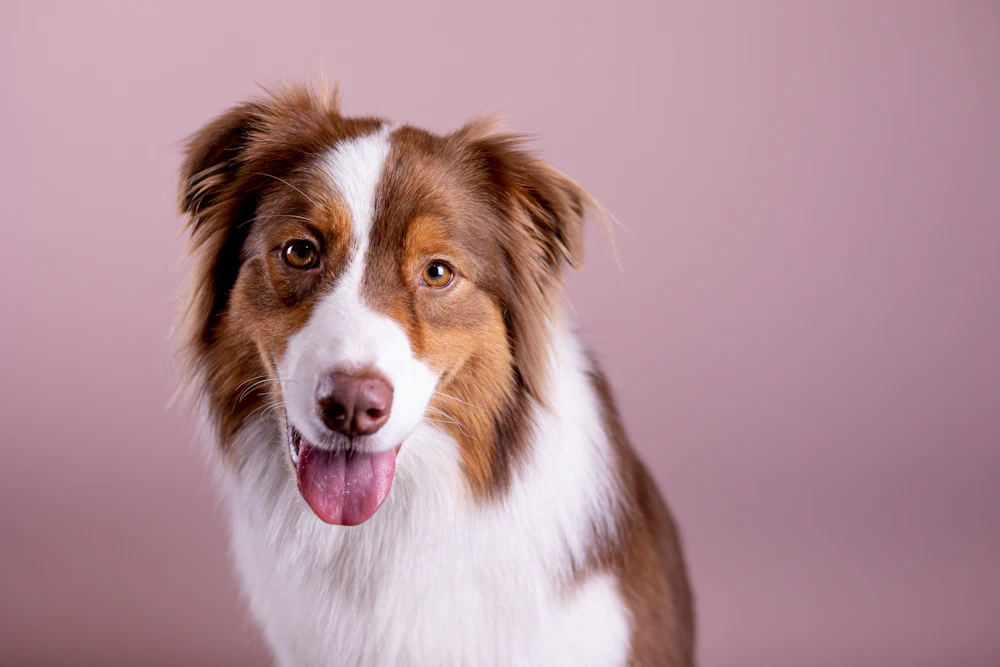
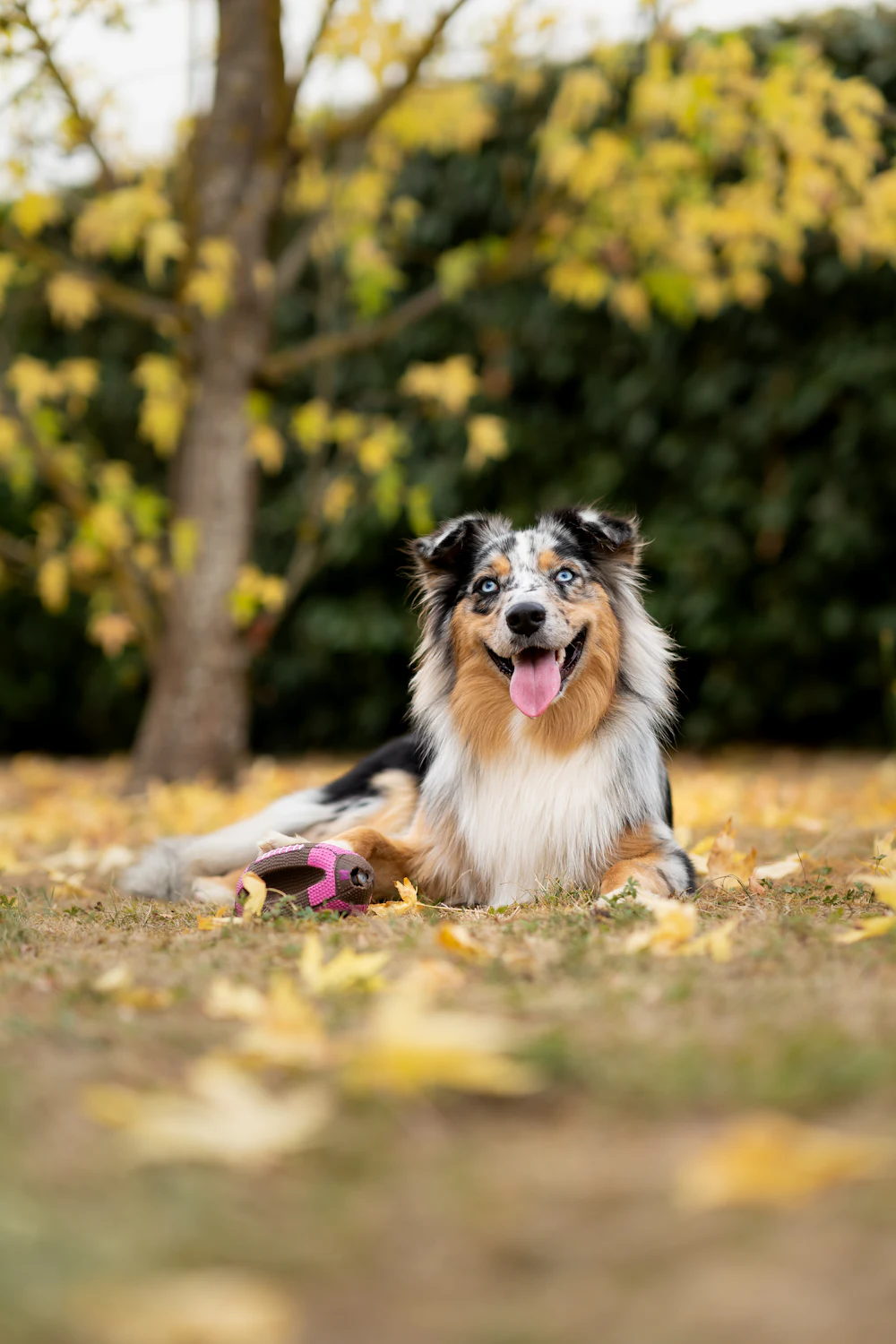
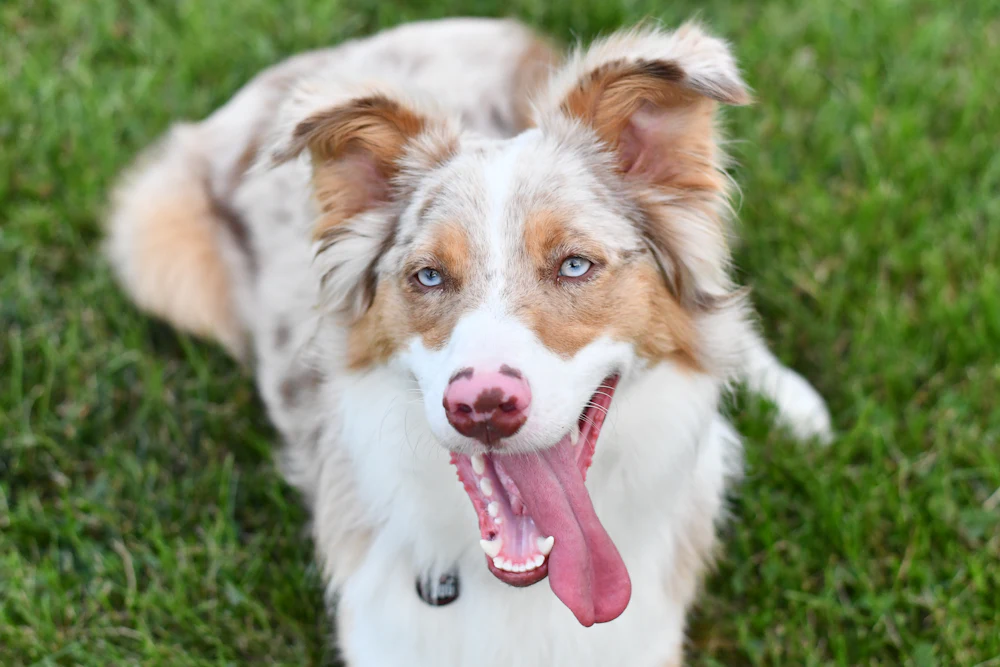
The standard describes straight to wavy, medium length, weather resistant hair. Colours are blue merle, black, red merle and red, each with or without white and tan markings. Brush once or twice a week to prevent tangles on the feathering and behind the ears, and expect a heavy moult once or twice a year. Do not clip or shave the double coat, as it protects against heat and cold. The FCI says the tail may be docked or natural.
Feeding and weight
Aussies are athletic and usually enthusiastic eaters, but pet dogs are easily overfed. Feed measured amounts of a balanced diet suited to age and activity, and use part of the daily ration for training and puzzle feeders. Keep the dog lean. Change foods gradually, avoid heavy exercise straight after meals, and talk to a vet about the right diet if the dog is very active in sport.
Work out a starting calorie figure and food weight with the calorie calculator. Not sure this is the right breed? Take the quiz.
Health
Every breed carries predispositions. These are the conditions most often discussed for the Australian Shepherd, not a prediction for any individual dog.
- MDR1 gene mutation, which causes sensitivity to certain common drugs (a DNA test exists; tell your vet)
- Hip dysplasia
- Hereditary cataracts and collie eye anomaly
- Epilepsy
- Deafness and eye defects in double merles
What to ask the breeder. Ask for hip and elbow scores, an eye examination and DNA tests for MDR1, HSF4 cataract and CEA for both parents. Never buy from a merle to merle mating.
Choosing a puppy
Pick a breeder who tests the parents, avoids merle to merle matings and raises the litter among everyday noise. Look for a bold, curious puppy and meet the mother. Plan time: an Aussie puppy needs training from the first week, short walks, plenty of mental games and sleep. Test for MDR1 early, because it affects which medicines a vet can safely use, and start calm habituation to lifts, traffic and strangers.
In Luxembourg the national kennel club is the Fédération Cynologique Luxembourgeoise (FCL), a member of the FCI. Many owners also buy from breeders in Germany, France or Belgium; a puppy coming from another EU country must be microchipped and vaccinated against rabies, which in practice means it cannot travel before about fifteen weeks of age. Where to get a dog in Luxembourg.
The older Australian Shepherd
Ageing Aussies often remain keen to work well into their teens, which means owners have to temper enthusiasm with sense. Watch for stiff hips, cataracts, hearing loss and new lumps, and replace high impact games with swimming, scent trails and shorter walks. Keep the dog lean, provide a supportive bed and check eyes and ears regularly. Mental work remains important for as long as the dog enjoys it.
A realistic day
A realistic weekday for a working household in Luxembourg City, with a midday visit. Adjust it to your dog, not the other way round.
Forty five minutes of walking, with a ball or frisbee game in a safe space.
Breakfast from a puzzle feeder, then a settle on the bed.
Midday visit with a walk and a short training session.
Longer outing, or an agility or herding class twice a week.
Quiet evening and a final toilet walk.
An Australian Shepherd in Luxembourg
An Aussie can live in a flat only if the owner is committed to activity. The dog will cope with lifts and corridors, but it will not cope with boredom. Daily time in the Pétrusse valley, Parc Merl or the Kinnekswiss park provides routine, while weekends in the Grünewald or Bambësch forests give the dog a proper run. Watch for the herding of bikes and joggers, and keep the dog on a lead near paths.
Summers in Luxembourg can reach the 30s, and the double coat holds heat. Exercise early and late, keep water to hand and use shade. Dog sports and classes are a good outlet in the city, and the national kennel club, the Fédération Cynologique Luxembourgeoise, is a sensible starting point for training contacts. As with any dog, you need a microchip, a declaration to the commune, third party liability insurance and the annual dog tax.
Every dog in Luxembourg must be identified, declared to the commune and covered by liability insurance. How registration works.
When you travel
An Aussie needs a sitter who is active, confident and happy to fill the day. Provide the routine, the training cues the dog knows, favourite games and the vet's details, including the MDR1 result. Warn the sitter about herding behaviour and sensitivity to noise. Keep the dog occupied with puzzle toys and walks, and avoid leaving it alone for long periods, because a bored Aussie will devise its own projects.
PAWLY's holiday and overnight care takes place in your home, so your dog keeps its own bed and routine.
Myths and facts
MythAussies come from Australia.
FactThe breed as we know it was developed on ranches in the western United States. The name reflects an association with sheep and shepherds from Australia.
MythBlue eyes mean the dog is deaf.
FactBlue and odd eyes are common and normal in the breed. Deafness risk is linked to double merles, not to eye colour alone.
MythAn Aussie is just a medium sized, friendlier Border Collie.
FactThey are separate breeds. Aussies are often more reserved with strangers, have a guarding streak and a different herding style.
Is it the right dog for you?
Suits
- Active, experienced owners
- Dog sports enthusiasts
- Families with time for daily training
- Anyone who enjoys a thinking dog
Think twice if
- First time owners without support
- Long days alone
- Sedentary households
Questions owners ask
What is MDR1?
A gene mutation common in several herding breeds that makes some medicines, including certain antiparasitics, dangerous at normal doses. Test your dog, tell your vet the result and keep it in the dog's records.
Mini American Shepherd or Aussie?
The Miniature American Shepherd is a separate, smaller breed with a similar temperament. Smaller does not mean calmer, and the same need for daily work, exercise and training applies, so do not choose the smaller dog expecting an easier life.
Do Aussies shed a lot?
Yes, particularly twice a year. The double coat sheds moderately all year and heavily in season. Brushing once or twice a week helps, and daily brushing in moult keeps hair off the furniture. Do not shave the coat.
Can an Aussie be left alone while I work?
Only with preparation. A tired, trained Aussie can rest for a few hours, ideally with a midday visit. Long, regular absences lead to barking, chewing and anxiety, so this is not a dog for a household that is out all day.
Sources
Photo: Unsplash (Unsplash License) · Photo: Unsplash (Unsplash License) · Photo: Unsplash (Unsplash License) · Photo: Unsplash (Unsplash License) · Photo: Unsplash (Unsplash License)
General information for dog owners in Luxembourg, not veterinary or legal advice. Official facts (origin, size, group, history and temperament as described by the breed standard) follow the FCI standard; health and care sections reflect breed-club and veterinary guidance and are typical ranges rather than rules. For your own dog, ask your vet, the breed club or your commune. How this guide is written and checked. Last reviewed 8 October 2026.
Need someone for your Australian Shepherd?
PAWLY offers an individual 45-minute walk or a home visit at your dog's pace, the same walker every time, and a written report with photos after every visit, across Luxembourg City.
Read next: the journal, for the Australian Shepherd
All articles
Working breeds in a city flat: the honest version
High-drive dogs like the Australian Shepherd can live in a flat, but it takes a plan.
How much exercise does your dog actually need?
The Australian Shepherd is an active breed, so it is worth checking the exercise numbers against your actual week.

The front door: barking, deliveries and escapes
A watchful breed reacts at the door; this is how to manage it.
Similar breeds
All 198 breeds
Border Collie
Probably the most capable working dog in the world, and for the same reason one of the hardest to keep in a city flat.
EnergyGroomingFlat life
Shetland Sheepdog
A small, sensitive herding dog from the Shetland Islands, bright and devoted, and a keen barker.
EnergyGroomingFlat life
Belgian Shepherd Malinois
The police and military dog of choice: brilliant, intense and not a family pet for most families.
EnergyGroomingFlat life

