


History
The Malinois takes its name from Malines, the French name for the Belgian city of Mechelen. The FCI standard covers all four varieties of the Belgian Shepherd Dog under one number: Groenendael, Tervueren, Laekenois and Malinois, separated by coat and colour. Its story begins with the varied herding dogs of Belgium in the late 1800s, when enthusiasts under Professor A. Reul set about standardising the type, and the Belgian Shepherd Dog Club was founded in Brussels in 1891.
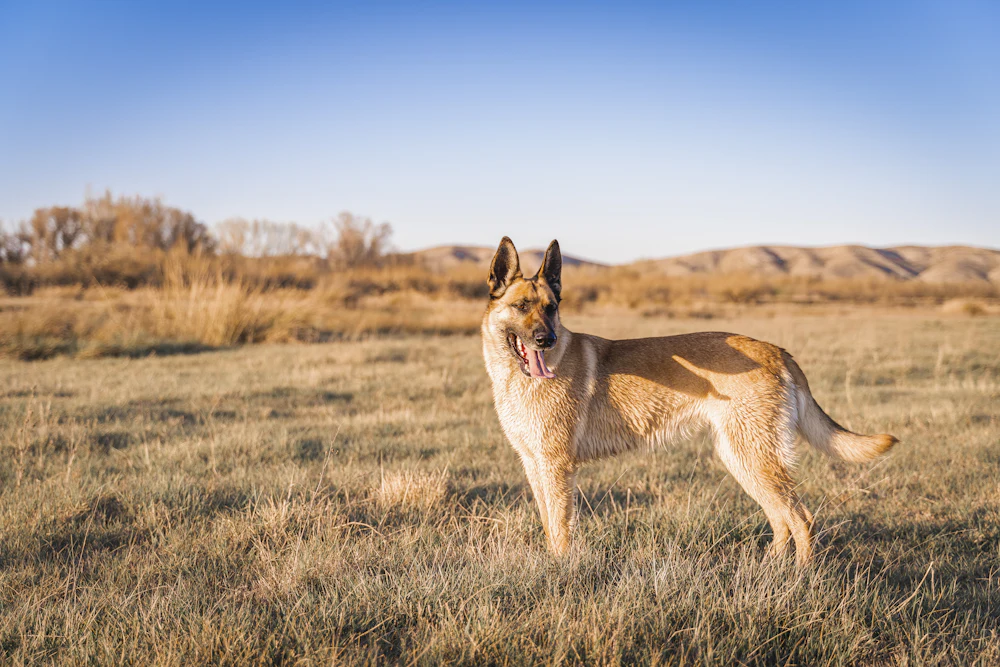
According to the FCI, a standard was written by 1892, official registration began in 1901 and by 1910 type and temperament were established. The Malinois is the short-haired variety, and the standard allows only fawn with black overlay and a black mask. Its speed, drive and trainability have since made it a leading police, military and detection dog in many countries, a reputation that has also drawn many unprepared families to the breed.
Temperament
The FCI describes the Belgian Shepherd as a watchful and active dog, bursting with energy and always ready to leap into action. It prizes the qualities of a good guard dog of property, a lively and alert temperament and a confident nature that shows no fear or aggressiveness. Add elegance and power in a medium frame, and you have a fair portrait of the Malinois: a lean, fast, watchful dog that seems permanently switched on.
Malinois are intelligent, intensely driven and sensitive, and very responsive to training. They are loyal to their people and keenly aware of what is happening around them. That drive does not switch itself off. Without enough work, a Malinois can become anxious, destructive or reactive, chasing shadows, barking at movement or turning household objects into targets. They suit experienced handlers who train every day and who understand arousal, impulse control and the importance of rest.
Children and other pets
Malinois can be good with their own family's children, but they are fast, mouthy and intense, and a young dog may bump, nip or herd small children without malice. Supervise closely and teach calm behaviour around running and shouting. Many are wary of strangers and can be too much for other dogs, so choose play partners carefully and keep early socialisation positive.
Exercise and the daily walk
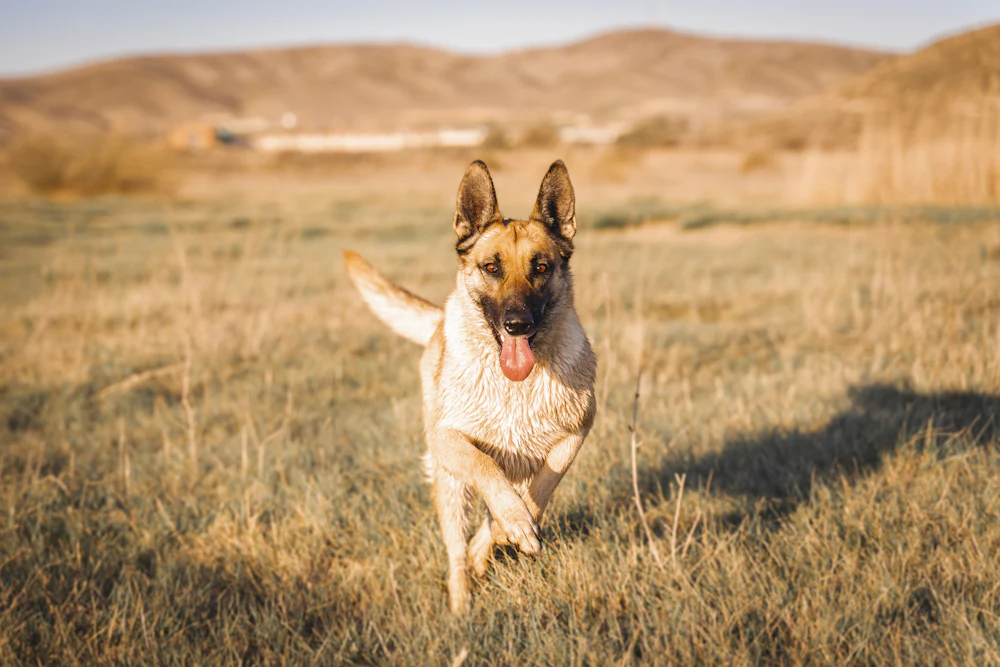
The needs are very high, both physical and mental. Plan on two hours or more a day, and a good share of that should be purposeful: running with a ball or tug, fast recalls, obedience drills, and sustained work rather than aimless walking. A short, brisk outing at breakfast will not do.
Dog sports such as IGP, mondioring, obedience, agility and scent work are not optional extras for most Malinois, they are how the dog stays balanced. A club with experienced handlers is often the best investment an owner can make. Teach a settle as part of every session, since a dog that only ever rises to a high pitch of excitement never learns to rest.
Training
Malinois are brilliant, fast and intense. They need structured training every day, ideally with a club or trainer experienced in working breeds. Reward-based methods, especially toy play and food, suit their drive well. Keep sessions short and clear, and be precise with timing, because a dog this quick will learn your mistakes as readily as your intentions.
Teaching a Malinois to switch off is as important as teaching it to work. Practise lying on a mat, calm lead walking and quiet waiting at doors. Without calm training, many Malinois become frantic and reactive. Socialise with traffic, trams, crowds and calm dogs from an early age, and avoid letting a young dog practise chasing bikes, joggers or children.
Coat and grooming
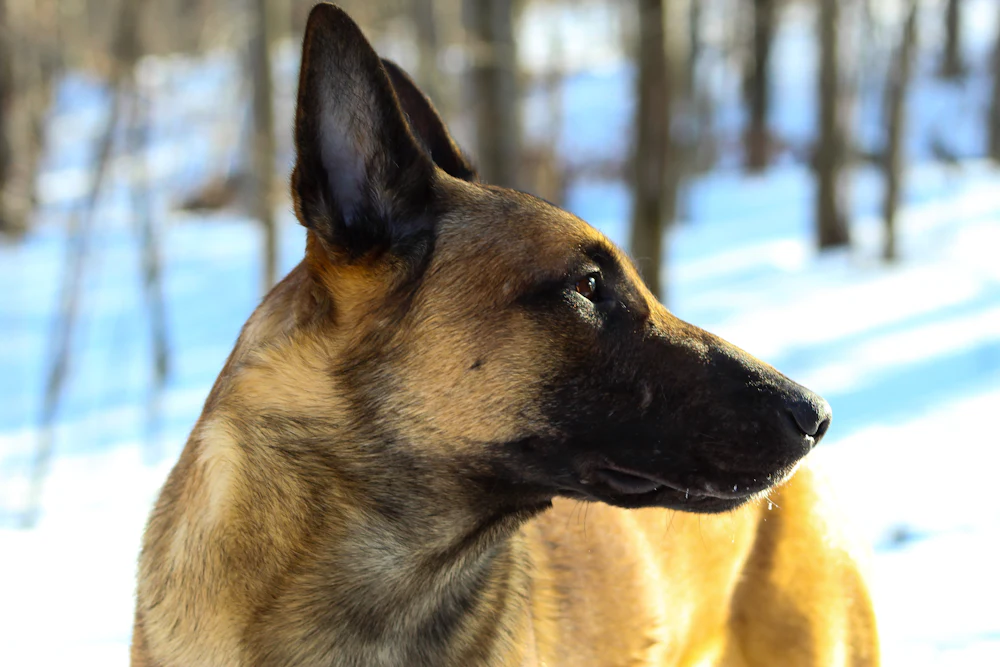
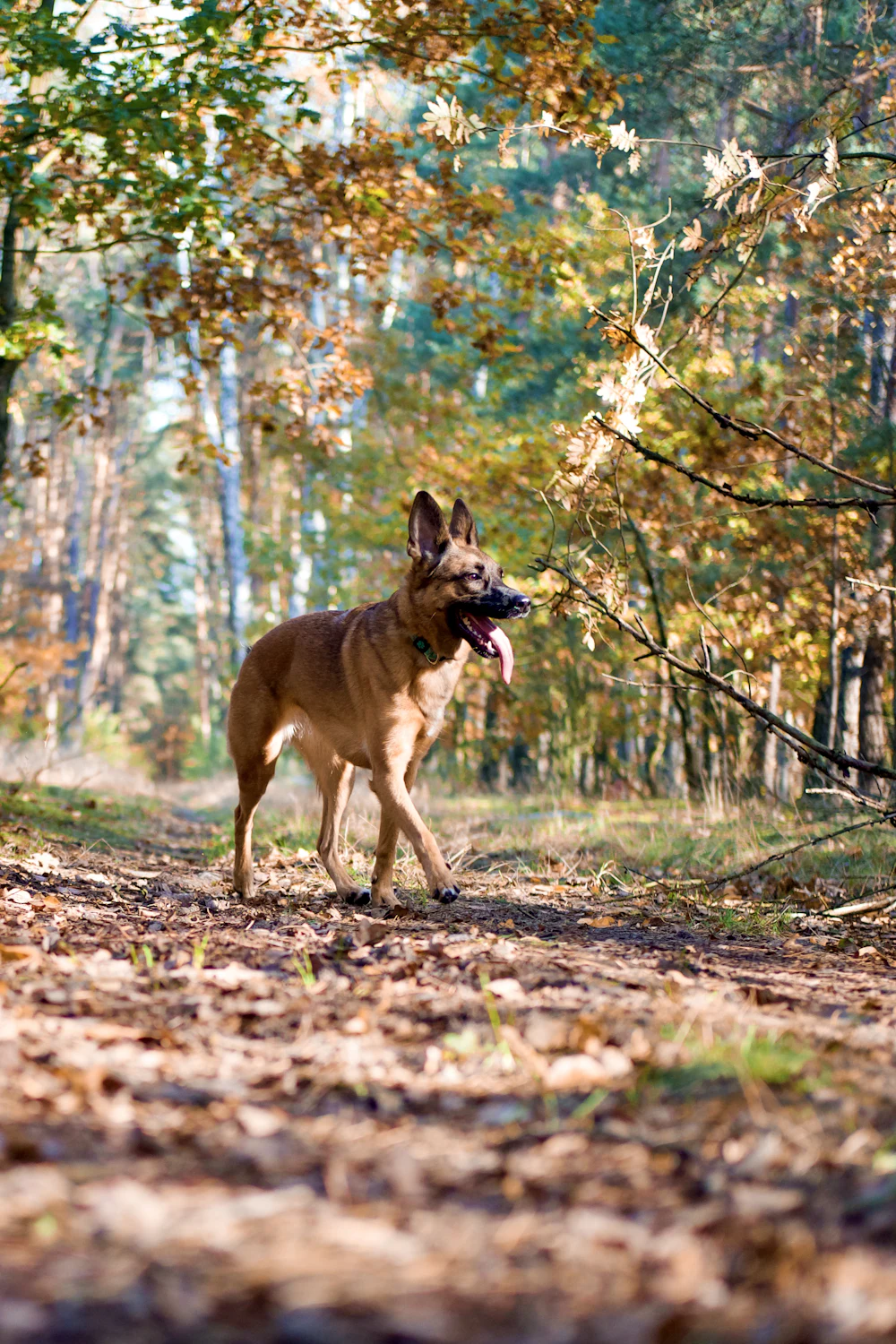
The short, close-lying coat is easy to maintain and sheds seasonally, with a heavier shed in spring and autumn. A weekly brush is usually enough, and a rubber mitt helps in the shedding season. The FCI standard permits only fawn with black overlay, with a black mask: ears, eyelids and lips must be pigmented. Bathe only when needed, and check ears, nails and teeth regularly.
Feeding and weight
Feed according to workload, and use part of the daily ration as a training tool. Many Malinois are lean and athletic by nature and burn a great deal of energy, so a sport dog needs more than a quiet companion. Split the daily food into two meals, avoid hard exercise right after eating, and keep an eye on body condition rather than the bowl.
Work out a starting calorie figure and food weight with the calorie calculator. Not sure this is the right breed? Take the quiz.
Health
Every breed carries predispositions. These are the conditions most often discussed for the Belgian Shepherd Malinois, not a prediction for any individual dog.
- Hip and elbow dysplasia
- Epilepsy
- Progressive retinal atrophy
- Injuries from high-intensity activity
What to ask the breeder. Ask for hip and elbow scores and an eye examination for the parents, and about the lines' working background and temperament. Ask whether the breeder places puppies with owners who can meet the breed's needs.
Choosing a puppy
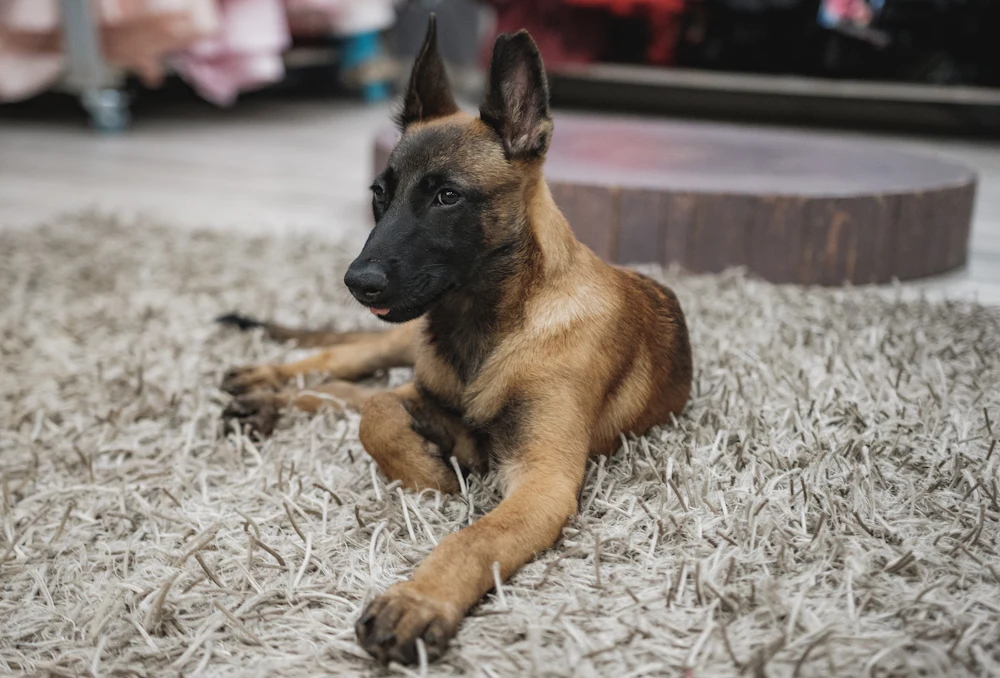
Ask for hip and elbow scores and eye examinations, and about the working background of the parents. Choose lines suited to family life if that is what you need, because some working lines are far too intense for a household. Expect a fast, mouthy puppy that needs training from the first week, and avoid hard jumping or long runs while the joints are growing.
In Luxembourg the national kennel club is the Fédération Cynologique Luxembourgeoise (FCL), a member of the FCI. Many owners also buy from breeders in Germany, France or Belgium; a puppy coming from another EU country must be microchipped and vaccinated against rabies, which in practice means it cannot travel before about fifteen weeks of age. Where to get a dog in Luxembourg.
The older Belgian Shepherd Malinois
Malinois often remain active into old age. Adapt the intensity, but keep training and mental work, because a retired Malinois that suddenly has no job can become anxious. Watch for stiffness, changes in vision, weight gain and seizures, and see a vet promptly if any appear. Gentler walks and scent games suit the later years well.
A realistic day
A realistic weekday for a working household in Luxembourg City, with a midday visit. Adjust it to your dog, not the other way round.
Structured training and a long walk before work.
Breakfast from a puzzle feeder, then a rest.
Midday visit from a walker: a brisk outing and a short training session.
Club training or a long exercise session in a forest.
Calm time on the mat and a final walk.
A Belgian Shepherd Malinois in Luxembourg
We see Malinois in Luxembourg flats with owners who admired them in videos. It rarely goes well without a serious training club and several hours of work a day. A flat is not the problem in itself, but a dog that is ignored, under-exercised or left to guard the hallway will quickly make its feelings known to the neighbours, through barking, scratching or reactivity at the door.
With the right handler, Luxembourg offers plenty of room. The Bambësch and the Grünewald are good for fast, purposeful outings, and the Pétrusse valley and Parc Merl are useful for lead work. Summers can reach the 30s, so work the dog early and late. Buses and trams are free, which makes calm commuting practice easy. Handle the formalities from day one: microchip, declaration to the commune, third-party liability insurance and the annual dog tax.
Every dog in Luxembourg must be identified, declared to the commune and covered by liability insurance. How registration works.
When you travel
A Malinois needs a sitter who can maintain its training and exercise, not simply feed it. Introduce them before your trip, leave a clear routine and a list of commands, and agree that the dog will have real work each day. Tell the sitter how to handle doors, other dogs and any triggers. A bored Malinois can cause serious damage in a short time.
PAWLY's holiday and overnight care takes place in your home, so your dog keeps its own bed and routine.
Myths and facts
MythA Malinois is a German Shepherd in a lighter coat.
FactIt is a separate Belgian breed, one of four varieties of the Belgian Shepherd Dog, lighter, finer-boned, faster and generally more intense than most German Shepherds.
MythMalinois are aggressive.
FactThe FCI describes a confident dog showing no fear or aggressiveness. Problems usually come from boredom, poor socialisation and owners who cannot meet the dog's needs.
MythA tired Malinois is a good Malinois, so run it more.
FactRunning alone builds fitness and drive. Calm training, mental work and rest teach the dog to settle, which matters more in a family home.
Is it the right dog for you?
Suits
- Experienced, very active handlers
- People who do dog sport or work training
- Owners with time every day
- Those who enjoy structure
Think twice if
- You want a relaxed family pet
- You are a first-time owner
- You work long hours
- You live in a small flat
Questions owners ask
Is a Malinois a good family pet?
Only for some families. It can be loyal and affectionate, but it is intense, fast and demanding. Households that train daily and exercise it well can succeed. A busy family expecting a laid-back dog will probably struggle.
How much exercise does a Malinois need?
Two hours or more a day, with real training or sport as part of it. Walking alone is rarely enough. Mental work, scent games and calm rest periods matter as much as running.
Are Malinois good for first-time owners?
Rarely. The breed needs experienced handling, strong training and a lot of time. A first-time owner with a good club and realistic expectations can manage, but most people find the breed overwhelming.
How does a Malinois differ from a Groenendael?
Both are Belgian Shepherd Dogs. The Malinois is short-haired and fawn with a black mask, while the Groenendael is long-haired and black. The Malinois is often seen as more driven and physically intense.
Sources
Photo: Unsplash (Unsplash License) · Photo: Unsplash (Unsplash License) · Photo: Unsplash (Unsplash License) · Photo: Unsplash (Unsplash License) · Photo: Unsplash (Unsplash License)
General information for dog owners in Luxembourg, not veterinary or legal advice. Official facts (origin, size, group, history and temperament as described by the breed standard) follow the FCI standard; health and care sections reflect breed-club and veterinary guidance and are typical ranges rather than rules. For your own dog, ask your vet, the breed club or your commune. How this guide is written and checked. Last reviewed 8 October 2026.
Need someone for your Belgian Shepherd Malinois?
PAWLY offers an individual 45-minute walk or a home visit at your dog's pace, the same walker every time, and a written report with photos after every visit, across Luxembourg City.
Read next: the journal, for the Belgian Shepherd Malinois
All articles
Working breeds in a city flat: the honest version
High-drive dogs like the Belgian Shepherd Malinois can live in a flat, but it takes a plan.

The front door: barking, deliveries and escapes
A watchful breed reacts at the door; this is how to manage it.
How much exercise does your dog actually need?
The Belgian Shepherd Malinois is an active breed, so it is worth checking the exercise numbers against your actual week.
Similar breeds
All 198 breeds
German Shepherd
Intelligent, loyal and built to work. In the right hands one of the finest dogs there is; without a job, a handful.
EnergyGroomingFlat life
White Swiss Shepherd Dog
A snow-white shepherd with a gentler edge than its better-known cousin, and the same appetite for a job and a family to belong to.
EnergyGroomingFlat life
Beauceron
France's powerful black-and-tan herding dog: athletic, serious and loyal to a capable owner.
EnergyGroomingFlat life

