


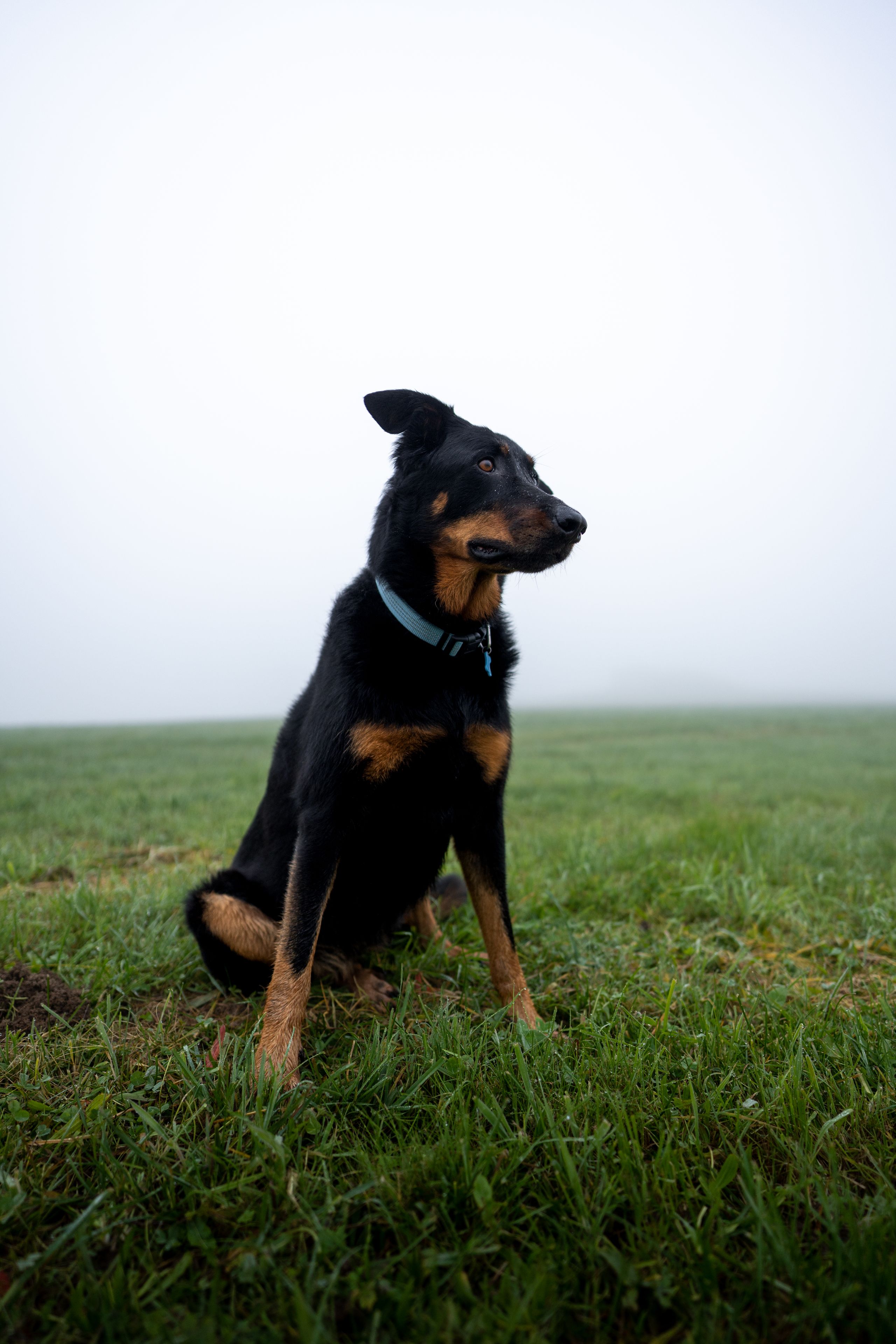
History
The FCI describes the Beauceron, or Berger de Beauce, as one of the ancient French sheepdogs of the plains. It was selected for its aptitude to drive and guard flocks of sheep, and the standard lists France as its country of origin. The breed takes its second name from the Beauce, the flat farming country south-west of Paris, where a dog that could work all day in open ground was worth more than one that merely looked the part.
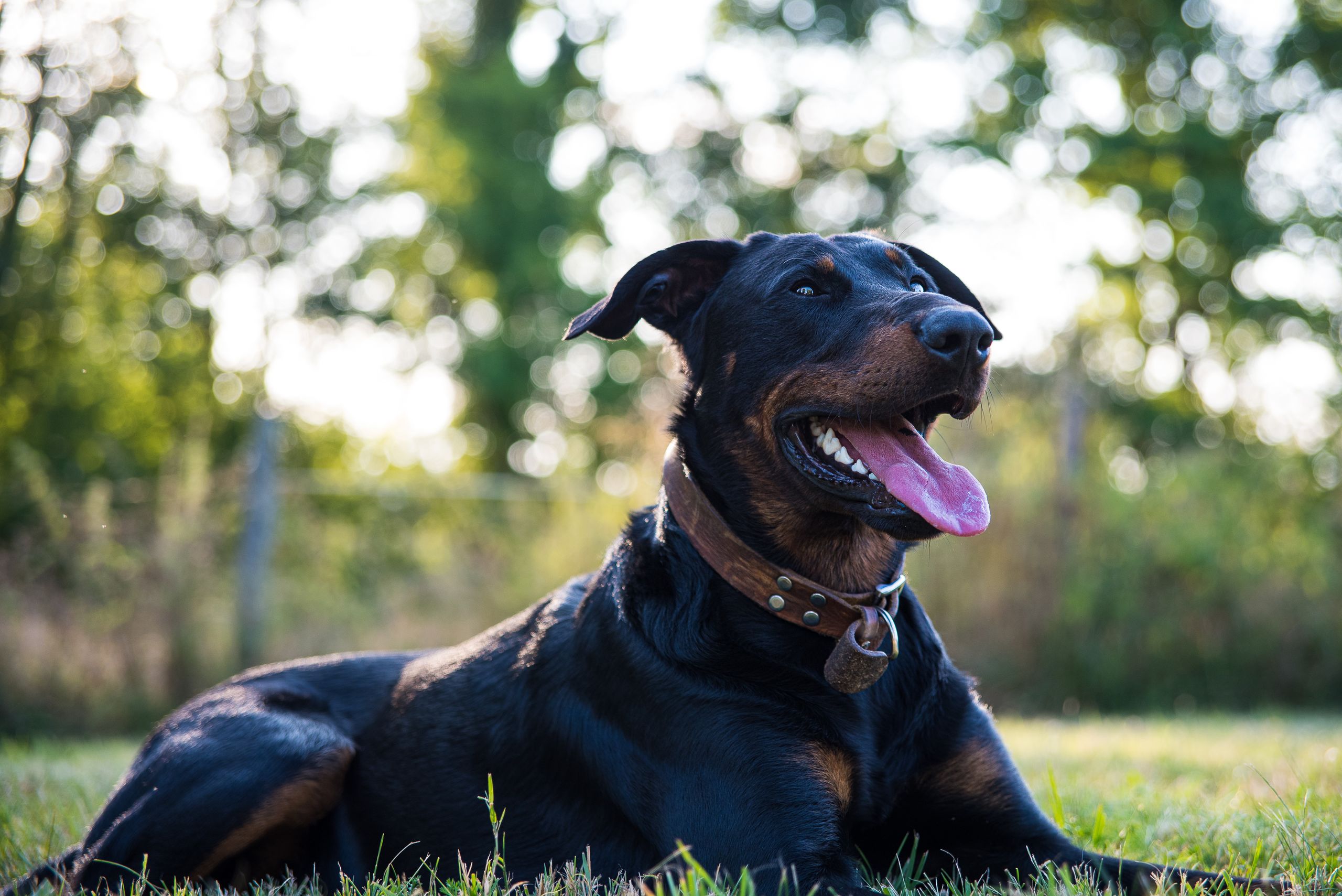
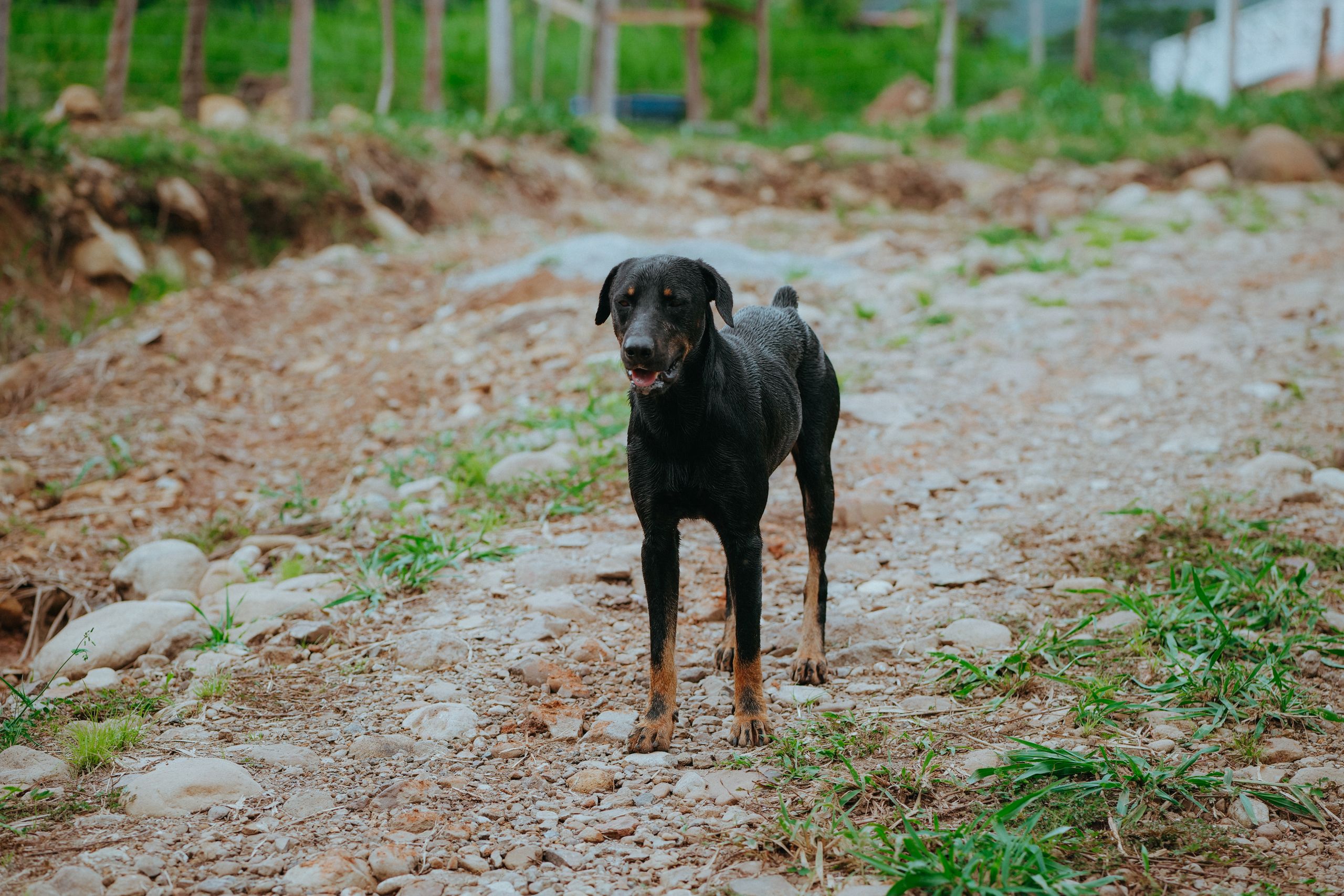
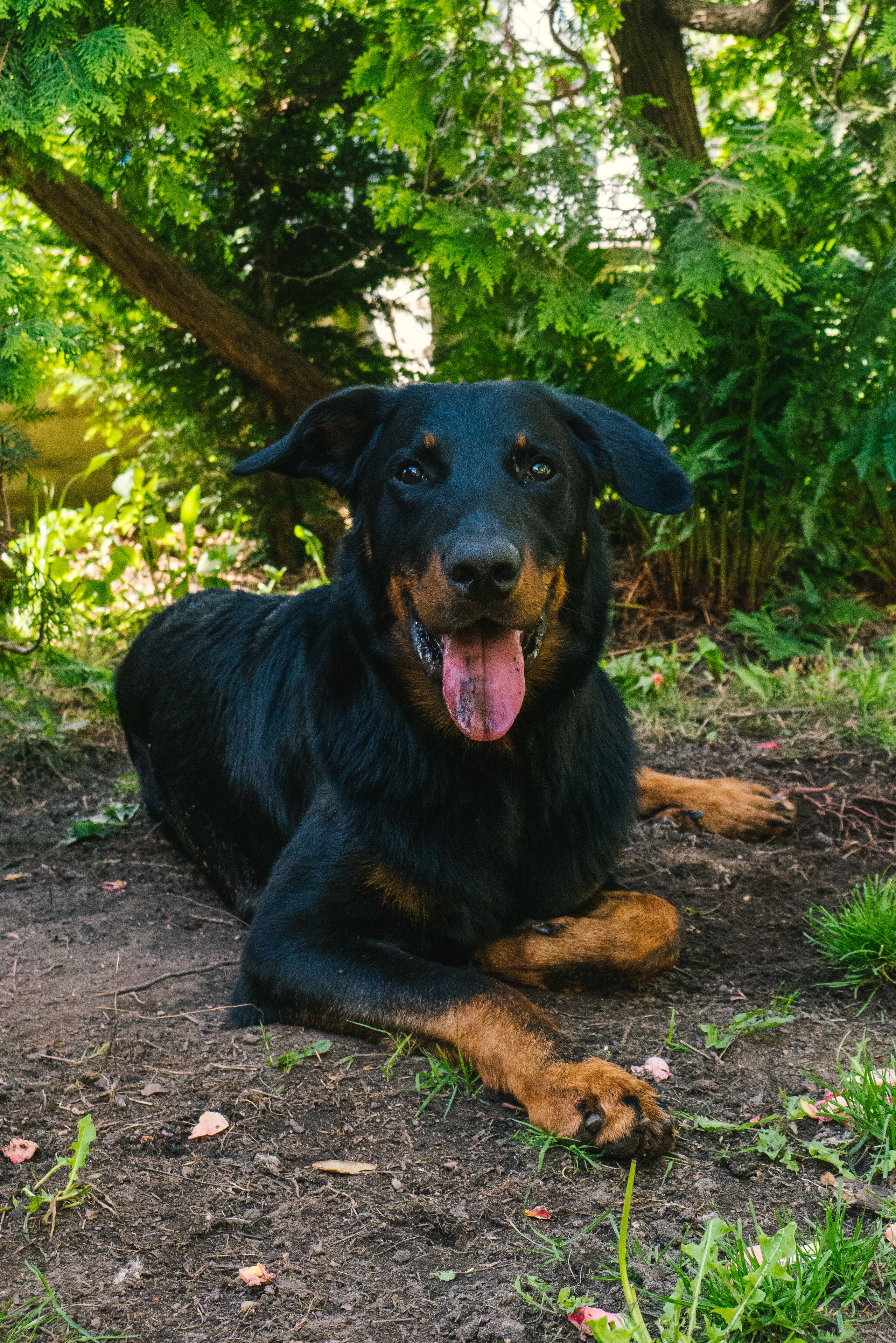
The nickname bas-rouge, meaning red stockings, comes from the tan markings on the legs, which the standard still asks for in the black-and-tan dogs. Early herding dogs of this type came in several colours, including grey and wholly tan, and the standard now permits only two: black and tan, and harlequin, which is grey, black and tan in equal parts. The same standard asks for double dewclaws on the hind legs, a feature that tells you at once this is a working dog first and an ornament a long way second.
Temperament
On paper the temperament is described as frank, self-assured and candid in expression, gentle and fearless, and never timid, worried or mean. Dogs that are aggressive or overly shy are disqualified. In daily life this adds up to a dog that looks at you directly, decides how it feels about a stranger and rarely hurries to change its mind. At seven in the morning in a lift, a well-raised Beauceron stands quietly at your knee and watches the doors, which is exactly what a flock dog is meant to do.
That steadiness is easy to mistake for aloofness, and it asks something of the owner in return. The breed is intelligent and strong-willed, and it respects people who are calm, fair and consistent rather than loud. It is also slow to mature, so a Beauceron of two can still behave like an adolescent in a body the size of a Labrador. Plan for years of training rather than months, and expect the dog to test the household rules until it is sure you mean them.
Children and other pets
A Beauceron raised with children usually becomes devoted to them, but it is a large, strong herding dog and a toddler can be knocked over by pure enthusiasm. Supervise every interaction, and teach children not to run and shriek around the dog. With visitors, expect a watchful pause before friendliness. Some Beaucerons are pushy with other dogs, especially those of the same sex, so careful early socialisation matters. Cats in the same house can work if introduced young, though herding instincts may still lead to chasing.
Exercise and the daily walk
Think of two hours a day as the baseline, split between a proper morning outing and a longer evening one. This is a dog bred to cover ground behind a flock, so a quick lap round the block does very little. Trotting beside a bicycle on a quiet path is a popular option, but wait until the joints have finished growing, and never exercise hard around mealtimes because of the bloat risk.
Physical exercise is only half of it. A Beauceron needs a job: scent games, obedience, tracking, agility or a club that works with herding breeds. Ten minutes of focused training tires the dog more than half an hour of aimless walking. Without work, the usual result is a bored, noisy and sometimes destructive dog, and in a flat that shows within days rather than weeks.
Training
Start on the first day, calmly and consistently. Reward-based methods work well, combined with clear boundaries and a leader the dog can trust. Harsh corrections tend to backfire with a strong-willed breed, producing either resistance or a dog that stops engaging. Keep sessions short, varied and purposeful, and ask for good manners at doors, on stairs and in the lift before asking for anything fancy.
Socialisation is the heart of the matter. Take the puppy to see trams, buses, children, bicycles, crowds and other calm adult dogs, always at a pace it can cope with. A Beauceron that has met the city sensibly by the age of six months is far easier to live with than one first exposed at a year. Joining a club with experienced handlers is worth the effort for most owners.
Coat and grooming
The coat is short, about 3 to 4 cm, smooth on the head and backed by a dense undercoat. The FCI allows two colours: black and tan, with red-squirrel tan markings, or harlequin, which is grey, black and tan. A weekly brush keeps it in order, and daily brushing helps during the heavy twice-yearly shed. Check the hind double dewclaws regularly, because the nails can catch or grow into the skin, and keep the nails trimmed.
Feeding and weight
Beaucerons are a deep-chested breed and bloat is a genuine risk, so feed two or three smaller meals rather than one large one. Avoid exercise for an hour either side of a meal and discourage gulping, perhaps with a slow-feeder bowl. Choose a complete diet suited to a large, active dog, and keep the dog lean, since extra weight puts stress on the hips and heart.
Work out a starting calorie figure and food weight with the calorie calculator. Not sure this is the right breed? Take the quiz.
Health
Every breed carries predispositions. These are the conditions most often discussed for the Beauceron, not a prediction for any individual dog.
- Gastric dilatation-volvulus (bloat), an emergency
- Hip dysplasia
- Dilated cardiomyopathy (a heart muscle disease)
- Hypothyroidism
- Eye conditions
What to ask the breeder. Ask for hip scores, heart screening and eye examinations for both parents, and about the age and cause of death in close relatives, particularly any from bloat or heart disease.
Choosing a puppy
Visit the breeder, meet the mother and, if possible, the father, and judge their temperament as well as their papers. Ask to see hip scores and heart screening results. A good breeder raises puppies in the house, handles them daily and introduces household noises early. Plan for puppy classes in the first weeks, and be honest about whether you have the time, space and experience for a dog of this size and character.
In Luxembourg the national kennel club is the Fédération Cynologique Luxembourgeoise (FCL), a member of the FCI. Many owners also buy from breeders in Germany, France or Belgium; a puppy coming from another EU country must be microchipped and vaccinated against rabies, which in practice means it cannot travel before about fifteen weeks of age. Where to get a dog in Luxembourg.
The older Beauceron
Beaucerons age gradually. Look for stiffness after rest, slower stairs, weight gain, coughing, tiredness or a change in appetite. Regular heart checks are sensible from middle age, and joint support can be discussed with your vet. Keep the dog moving with shorter, gentler outings and continue the mental games, which keep an older dog bright and settled.
A realistic day
A realistic weekday for a working household in Luxembourg City, with a midday visit. Adjust it to your dog, not the other way round.
A purposeful walk of 45 minutes, with some obedience on the way.
Breakfast in a calm spot, then rest and no rough play for an hour.
Midday visit from a walker: toilet break, a training game and fresh water.
A long outing in the Bambësch or the Grünewald, with scent work or ball retrieval.
Final short walk and a calm wind-down before bed.
A Beauceron in Luxembourg
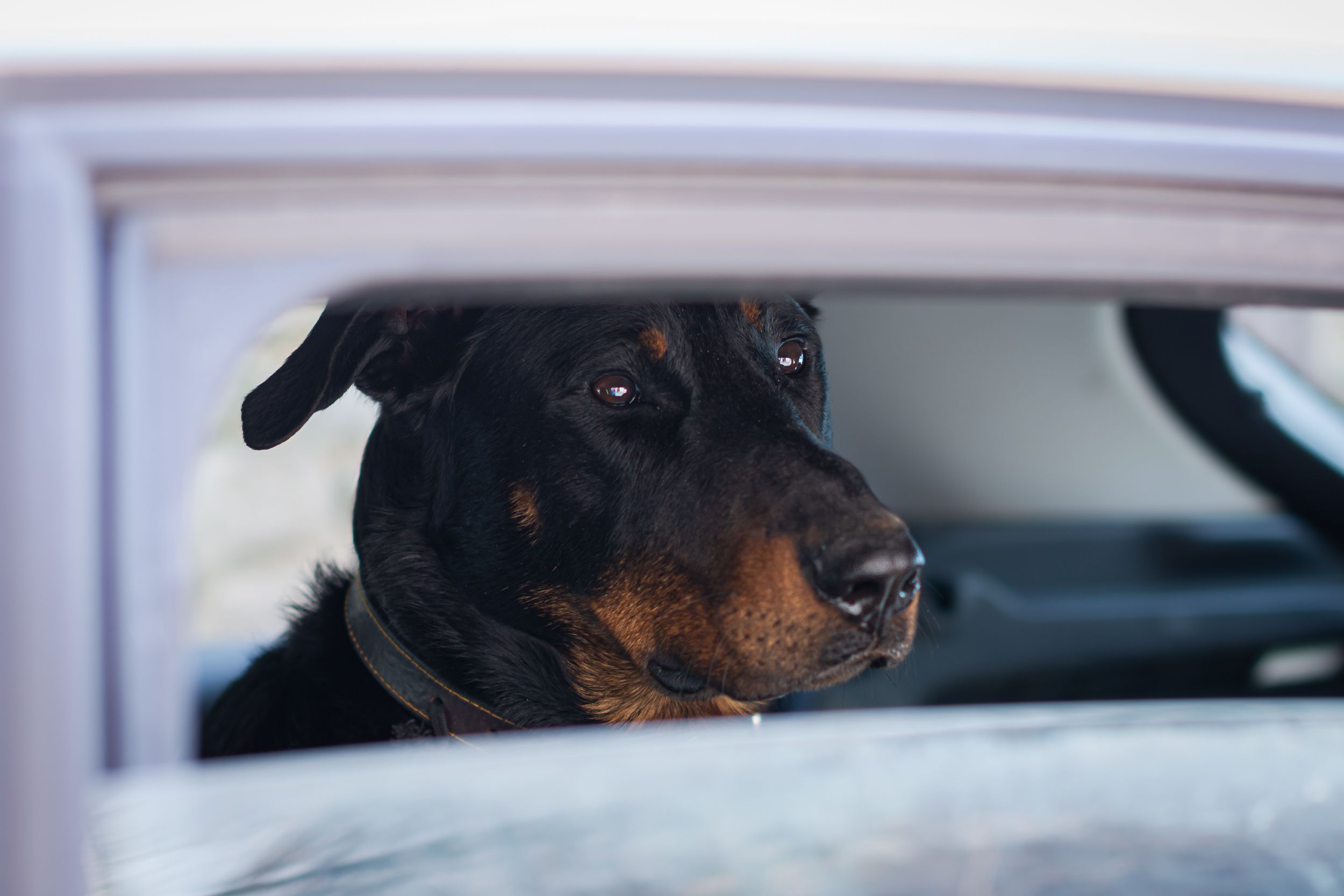
A Beauceron is a demanding flat dog. It can live in an apartment with a lift if the exercise and mental work are truly delivered, but it is a large animal, and narrow corridors, shared stairwells and thin walls all test it. Teach it to wait at the door and to ride the lift quietly, and introduce neighbours properly so a watchful dog does not meet them as a surprise at close range.
The city offers good ground for the breed. The Pétrusse valley and Parc Merl are fine for morning outings, while the Bambësch forest and the Grünewald give space for long, varied walks. Summers can reach the 30s, and a heavy black coat soaks up heat, so exercise early and late. France is next door, and the breed is familiar to local vets and trainers. Remember the usual obligations: microchip, declaration to the commune, third-party liability insurance and the annual dog tax.
Every dog in Luxembourg must be identified, declared to the commune and covered by liability insurance. How registration works.
When you travel
Introduce the sitter well before you travel, because Beaucerons are wary of strangers and will not accept a new person on day one. Agree the rules for doors, visitors and lead handling, and leave a written routine for meals and walks. Insist on full exercise and training while you are away, split the meals and warn the sitter about bloat symptoms: a swollen belly, retching and restlessness need a vet immediately.
PAWLY's holiday and overnight care takes place in your home, so your dog keeps its own bed and routine.
Myths and facts
MythBeaucerons are dangerous.
FactThey are powerful and protective, and in careless hands that is a problem. In experienced, consistent hands they are steady, watchful and loyal.
MythA Beauceron is a French Dobermann.
FactThey are a separate herding breed, heavier, with a different history and temperament. The black-and-tan colouring is where the resemblance ends.
MythA big dog is fine with a big garden and no training.
FactSpace helps, but a Beauceron needs company and work. Bored dogs with large gardens still become noisy, destructive or anxious.
Is it the right dog for you?
Suits
- Experienced, active owners
- People who enjoy training or dog sport
- Households with space and time
- Calm, consistent handlers
Think twice if
- You are a first-time owner
- You live in a small flat
- You have little time for training
- You want a dog that welcomes every stranger
Questions owners ask
Is a Beauceron good for a first-time owner?
Usually not. It is powerful, intelligent and slow to mature, and it needs experienced, consistent handling. A first-time owner with a good trainer and a lot of time can succeed, but the breed will not forgive inconsistency or a lack of structure.
Why are Beaucerons called bas-rouge?
The name means red stockings and refers to the tan markings on the legs, which are part of the black-and-tan colouring. It is one of the oldest nicknames in French herding breeds and is still widely used.
How much exercise does a Beauceron need?
About two hours a day, including training, scent work or sport. A bored Beauceron becomes destructive and difficult, so mental effort counts as much as distance. Avoid hard exercise around mealtimes because of the bloat risk.
Can a Beauceron live in a flat in Luxembourg?
It can, if the owner delivers the exercise and the training every single day and the dog has been well socialised to lifts, stairs and neighbours. It is not an easy flat dog, and you should plan for the heat in summer.
Sources
Photo: Pexels (Pexels License) · Photo: Pexels (Pexels License) · Photo: Pexels (Pexels License) · Photo: Pexels (Pexels License) · Photo: Pexels (Pexels License)
General information for dog owners in Luxembourg, not veterinary or legal advice. Official facts (origin, size, group, history and temperament as described by the breed standard) follow the FCI standard; health and care sections reflect breed-club and veterinary guidance and are typical ranges rather than rules. For your own dog, ask your vet, the breed club or your commune. How this guide is written and checked. Last reviewed 8 October 2026.
Need someone for your Beauceron?
PAWLY offers an individual 45-minute walk or a home visit at your dog's pace, the same walker every time, and a written report with photos after every visit, across Luxembourg City.
Read next: the journal, for the Beauceron
All articles
The dog that barks and lunges on the lead
Some Beauceron dogs are selective with other dogs; this is the plan for lunging and barking on the lead.

Feeding, portions and how to tell if your dog is the right weight
Large dogs suffer more from extra weight; this is how to judge the right one.

The front door: barking, deliveries and escapes
A watchful breed reacts at the door; this is how to manage it.
Similar breeds
All 198 breeds
Belgian Shepherd Malinois
The police and military dog of choice: brilliant, intense and not a family pet for most families.
EnergyGroomingFlat life
Dobermann
An elegant, square-built German guard dog that is far more devoted, sensitive and people-minded than its fierce reputation suggests.
EnergyGroomingFlat life
German Shepherd
Intelligent, loyal and built to work. In the right hands one of the finest dogs there is; without a job, a handful.
EnergyGroomingFlat life

