


History
The Dobermann takes its name from Friedrich Louis Dobermann, a German of the nineteenth century who worked as a dog catcher and abattoir manager. The FCI standard says he developed the breed by mixing butcher's dogs, early Rottweilers, with black shepherd dogs with rust-red markings from Thuringia. The result was a dog bred to guard and protect, and it was soon used as a police dog, earning the nickname Gendarme dog.
The breed sits in FCI Group 2, Section 1, Pinscher and Schnauzer type, and the country of origin is Germany. The standard describes a dog of medium size, strong and muscularly built, with an elegant, square-proportioned frame, a determined expression and a proud bearing. Males stand 68 to 72 cm and weigh about 40 to 45 kg, while females stand 63 to 68 cm and weigh about 32 to 35 kg. Deviations in size of more than 2 cm are a disqualifying fault.
Temperament
The FCI asks for a dog that is friendly and calm, very devoted to the family, with medium temperament and alertness. It must have self-confidence, trainability, courage and adaptability in social settings. Aggression and shyness are both disqualifying faults. This is a long way from the snarling guard of films: a well-bred Dobermann is attentive, watchful and quietly confident, and it expects to be included in everything its family does.
Closeness is a defining trait. Dobermanns shadow their owners, lean against their legs and read their moods with unsettling accuracy. They also feel cold, loneliness and harsh words more keenly than their appearance suggests. A bored or isolated Dobermann becomes anxious or destructive, while a dog with exercise, training and company is serious, loyal and often surprisingly clownish with its own people.
Children and other pets
With its own family, including children it has grown up with, a well-socialised Dobermann is loyal, gentle and protective. Its size and speed demand supervision around small children and visitors, and boisterous play can become rough. It generally accepts other pets if raised with them, though some are dominant with dogs of the same sex. Early socialisation and calm management of visitors matter more than with most breeds.
Exercise and the daily walk
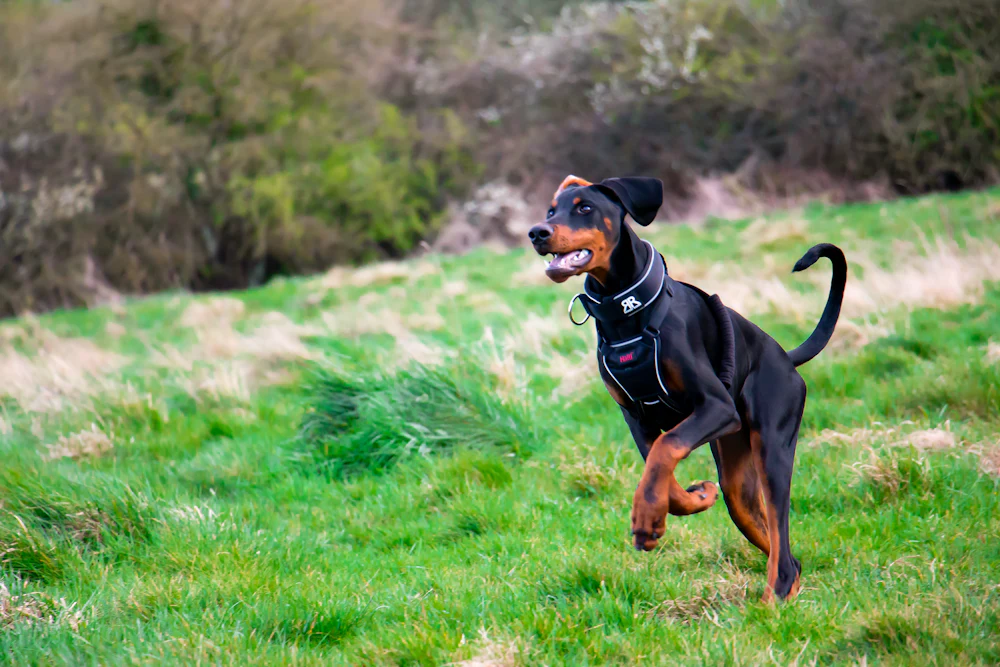
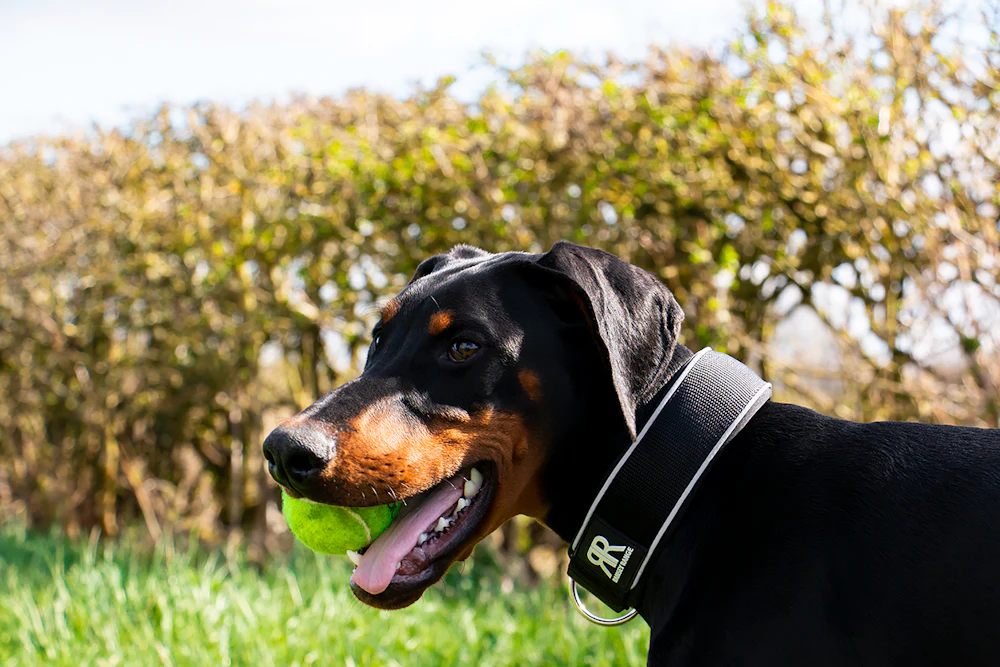
Around two hours a day is a realistic target, combining walks, running, fetch and some training. A Dobermann is athletic and enjoys cycling alongside, jogging, hiking and canine sports such as agility, obedience and tracking. Because of its short coat and low body fat, it appreciates a coat in winter and should not be left outside in the cold.
Mental exercise counts as much as physical. Teach new commands, play search games and add obedience routines to the daily walk. Without work, a young Dobermann invents its own, and that can mean chewing, guarding and barking. Avoid overdoing hard exercise in puppyhood, keep it off hard surfaces, and avoid vigorous exercise soon after meals, as deep-chested dogs are at risk of bloat.
Training
Dobermanns are intelligent, eager to work and quick to learn, which makes them rewarding and demanding. They need calm, firm, reward-based training from the first week, with clear rules and no harshness. A sensitive dog shuts down under pressure, and a confident one tests anyone who wavers. Short, varied sessions keep attention, and a job such as scent work or obedience channels the guarding instinct.
Socialisation is essential. Take the puppy to many places and let it meet people, dogs, traffic and lifts while it is young, so that watchfulness stays healthy and does not become suspicion. Teach calm greetings, a reliable recall and settling on a mat. This is a breed for experienced or committed owners who will attend classes and keep training for life, not just through puppyhood.
Coat and grooming
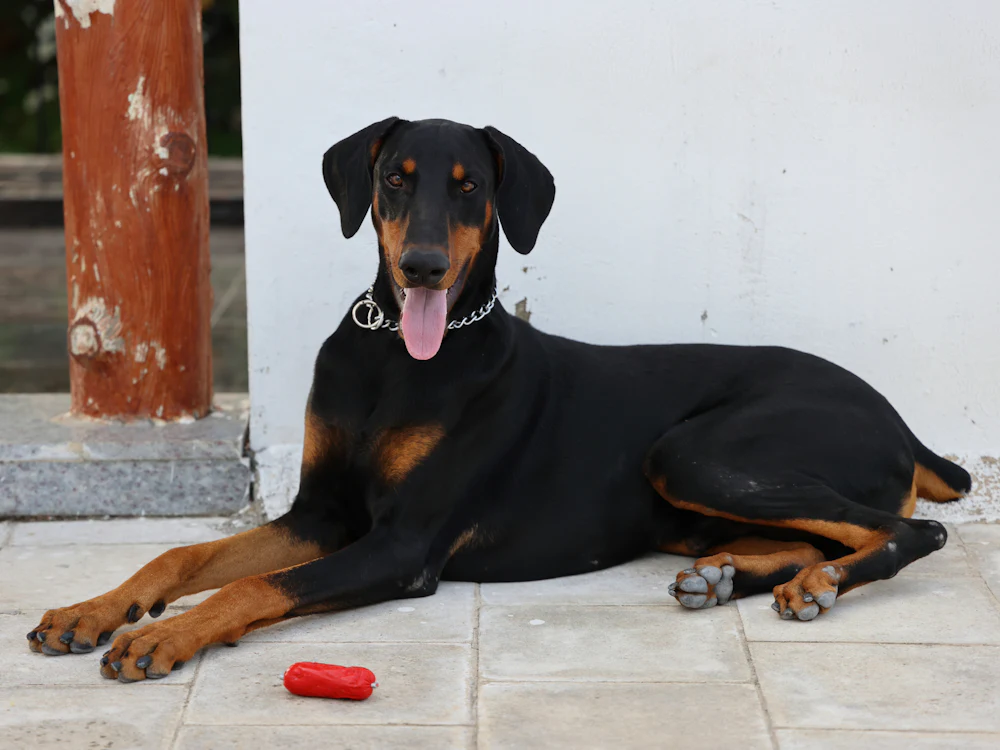
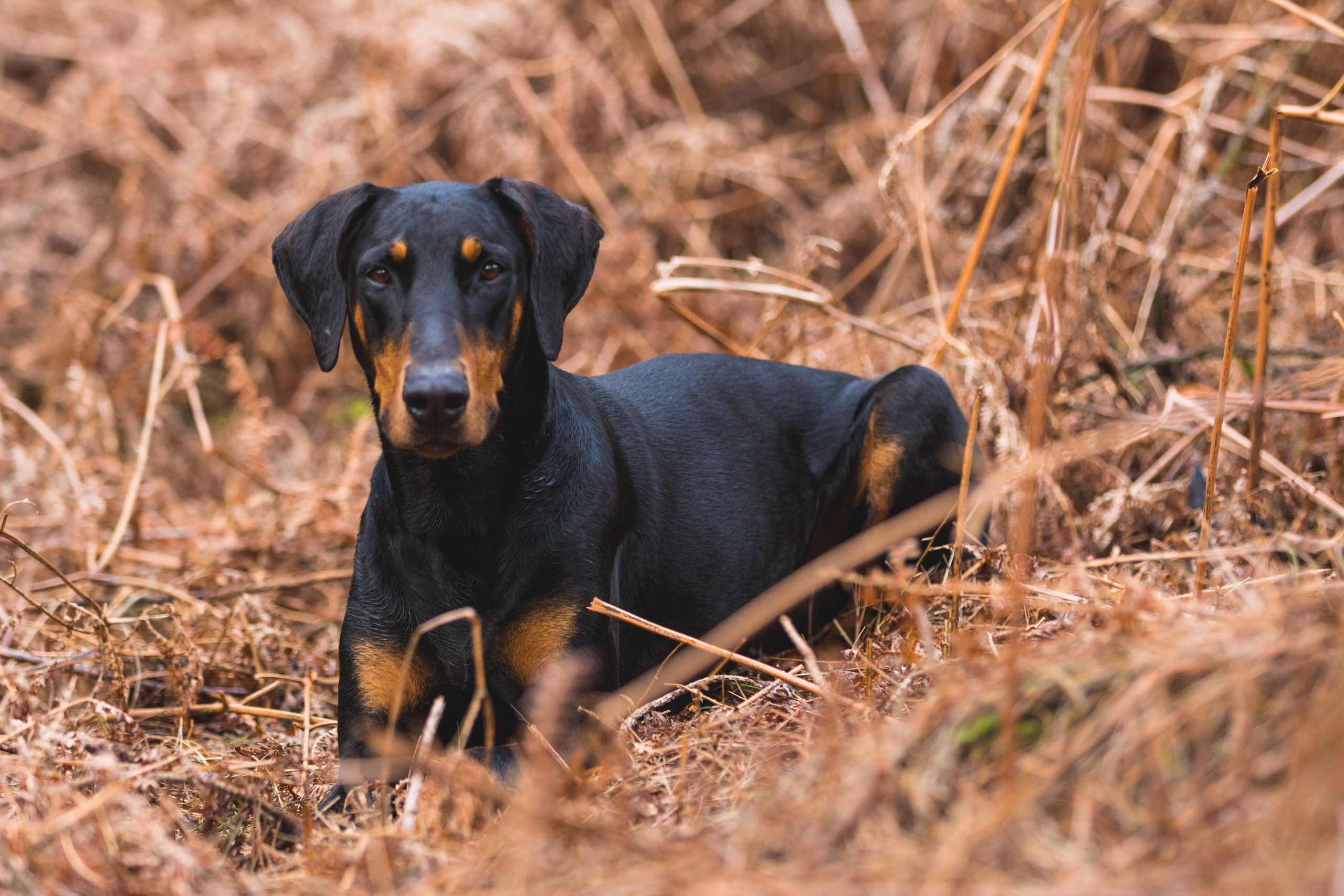
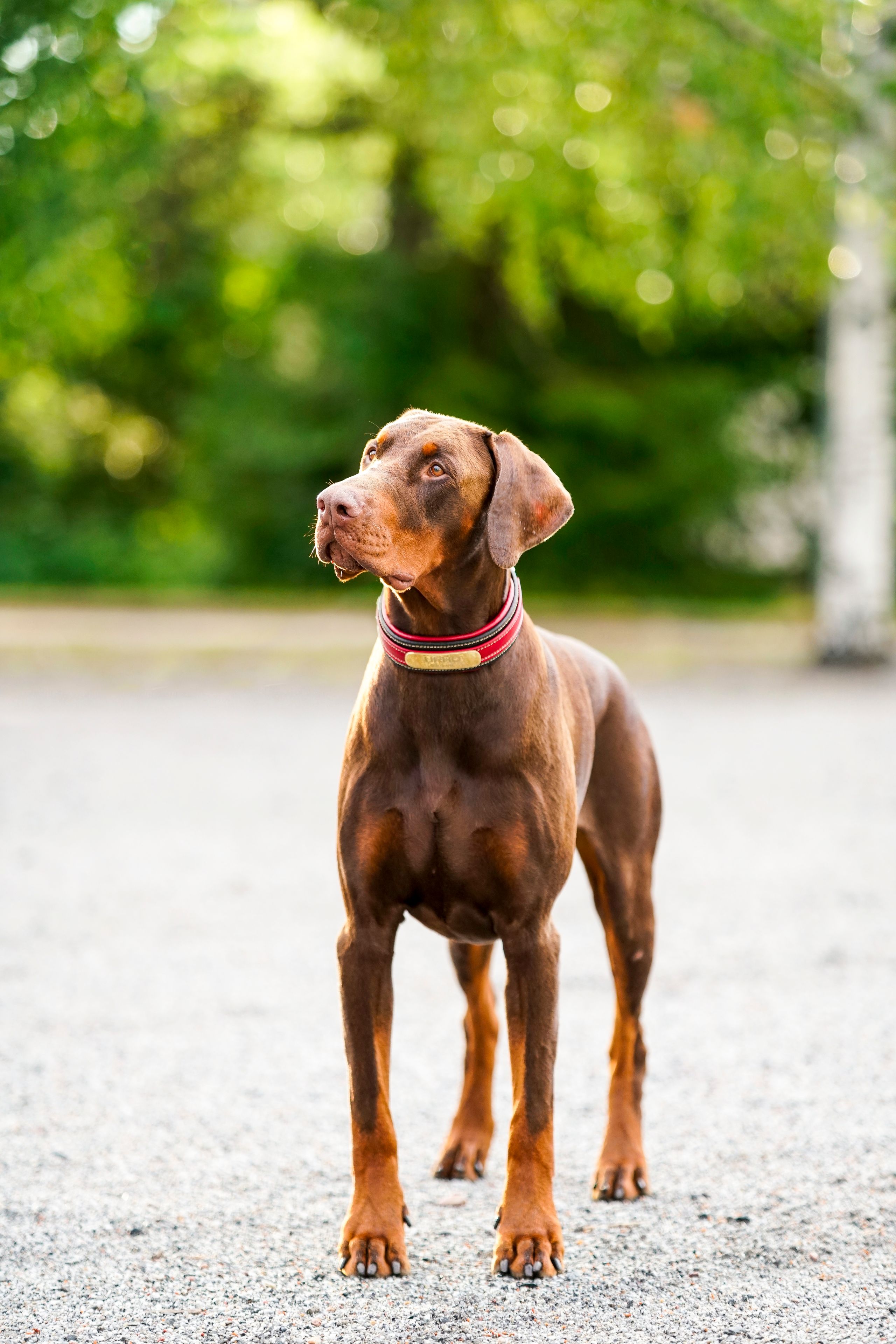
The coat is short, hard and dense, lying smooth and tight. The FCI recognises two varieties, black or brown, each with clearly defined rust-red markings on the muzzle, chest, legs and underside, and it disqualifies white spots. Weekly brushing with a rubber mitt removes loose hair, and the dog sheds lightly year round. Bathe only when dirty, check the nails and ears, and provide a coat in cold weather, as it has little insulation.
Feeding and weight
Feed a complete, good-quality diet suited to a large, active dog, in two or three measured meals rather than one large one, as the deep chest raises the risk of bloat. Rest the dog before and after meals and avoid raised bowls unless your vet advises them. Keep the dog lean, adjust portions to activity, and provide fresh water after exercise.
Work out a starting calorie figure and food weight with the calorie calculator. Not sure this is the right breed? Take the quiz.
Health
Every breed carries predispositions. These are the conditions most often discussed for the Dobermann, not a prediction for any individual dog.
- Dilated cardiomyopathy, a heart disease that is very common in the breed
- Von Willebrand disease, an inherited bleeding disorder with a DNA test
- Wobbler syndrome (cervical spondylomyelopathy), a neck problem affecting the spinal cord
- Hip dysplasia, a joint malformation that can cause pain and arthritis
- Hypothyroidism, an underactive thyroid, and bloat in the deep chest
What to ask the breeder. Ask for heart screening (echocardiogram and Holter monitor), a von Willebrand DNA test, hip scores and any history of wobbler syndrome for both parents, and ask how old their dogs lived.
Choosing a puppy
Choose a breeder who tests the parents for heart disease and von Willebrand disease, and who can discuss the longevity of the line. Expect a bright, mouthy, clingy puppy who needs company and early training. Socialise widely from the first weeks, avoid hard exercise and stairs while it grows, and teach it to be alone gently. A Dobermann puppy is not for a household that is rarely home.
In Luxembourg the national kennel club is the Fédération Cynologique Luxembourgeoise (FCL), a member of the FCI. Many owners also buy from breeders in Germany, France or Belgium; a puppy coming from another EU country must be microchipped and vaccinated against rabies, which in practice means it cannot travel before about fifteen weeks of age. Where to get a dog in Luxembourg.
The older Dobermann
Older Dobermanns often remain devoted but need more care. Regular heart checks matter, since cardiomyopathy can appear silently, and so do hip, neck and thyroid checks. Watch for coughing, fainting, weakness or stiffness. Keep weight lean, use a warm, padded bed, and shorten the walks rather than cutting them. Their closeness to the family often grows with age.
A realistic day
A realistic weekday for a working household in Luxembourg City, with a midday visit. Adjust it to your dog, not the other way round.
Toilet break and a brisk 45 minute walk with some jogging or fetch. Breakfast follows after a rest, not straight after exercise.
A food puzzle and a mat. A Dobermann that has been exercised and trained will rest, a bored one will pace.
Midday visit: toilet break, water, 30 minutes of walking, and a short training session with recall and settling.
The main exercise, about an hour, in the forest or a large park with training and play, then dinner after a cooling-down period.
Last toilet break and a calm evening near the family, on a padded bed with a blanket. The dog likes company.
A Dobermann in Luxembourg
A Dobermann can live in a Luxembourg flat if the exercise, training and company are guaranteed. Learn the lift routine, keep the dog under control in corridors, and prepare neighbours for a large, imposing dog that is actually friendly. Good routes include the Pétrusse valley early in the day, Parc Merl and the municipal park, and the Bambësch and Grünewald forests at weekends for a proper run.
Climate matters more than you might expect. The short, thin coat offers little protection from cold winters, so a good coat is useful, while summers in the 30s call for early and late exercise only. Every Dobermann needs a microchip, commune declaration, third-party liability insurance and the annual dog tax. The breed is not among the four types named in the 2008 dog law, but its appearance can alarm people, so a calm, trained dog matters.
Every dog in Luxembourg must be identified, declared to the commune and covered by liability insurance. How registration works.
When you travel
A sitter must be confident, calm and physically capable, because a Dobermann is strong and sensitive to tension. Keep to the daily routine, including training, exercise and meals spaced away from activity. Dobermanns dislike being left alone, so avoid long absences, keep a coat on in cold, never let the dog off the lead in unfamiliar places and know the vet's number.
PAWLY's holiday and overnight care takes place in your home, so your dog keeps its own bed and routine.
Myths and facts
MythDobermanns are naturally vicious.
FactThe FCI asks for a friendly, calm and devoted dog and disqualifies aggression and shyness. Poor breeding and handling produce problem dogs, not the breed as such.
MythThey are a good choice as a first guard dog.
FactThey are alert and protective, but they need experienced, consistent handling, socialisation and training. Without these, protection can turn into anxiety or over-reaction.
MythA short coat means they cope with any weather.
FactThe thin, close coat gives little warmth. Dobermanns feel the cold and need a coat in winter and indoor living all year.
Is it the right dog for you?
Suits
- Experienced or committed owners who enjoy daily training
- Active people who run, cycle or hike with their dog
- Homes where someone is around for much of the day
- Families who want a devoted, protective and sensitive companion
Think twice if
- You are out at work for long hours every day
- You want a dog that is relaxed with every stranger
- You cannot commit to heart checks and lifelong training
- You live in a building where a large dog would cause tension
Questions owners ask
Is a Dobermann a good family dog?
Yes, when well bred, trained and socialised. It is loyal and protective with its family, but strong and energetic, so supervision with small children and firm, kind training are essential. Choose a breeder who health tests and socialises.
How big does a Dobermann get?
The FCI gives 68 to 72 cm and about 40 to 45 kg for males, and 63 to 68 cm and about 32 to 35 kg for females. Dogs more than 2 cm outside the range are disqualified in the ring.
Do Dobermanns need a lot of exercise?
Yes, around two hours a day, combining walking, running and training. They also need mental work, because an unoccupied Dobermann can become anxious, noisy or destructive. Daily structure helps, and so does a safe indoor rest space.
Can a Dobermann be left alone?
Only for short periods. They are devoted and thrive on company, and many become anxious or destructive when isolated. Build alone time gradually and arrange midday visits. Ask a sitter or neighbour to cover the middle of the day.
Sources
Photo: Unsplash (Unsplash License) · Photo: Pexels (Pexels License) · Photo: Unsplash (Unsplash License) · Photo: Unsplash (Unsplash License) · Photo: Pexels (Pexels License)
General information for dog owners in Luxembourg, not veterinary or legal advice. Official facts (origin, size, group, history and temperament as described by the breed standard) follow the FCI standard; health and care sections reflect breed-club and veterinary guidance and are typical ranges rather than rules. For your own dog, ask your vet, the breed club or your commune. How this guide is written and checked. Last reviewed 8 October 2026.
Need someone for your Dobermann?
PAWLY offers an individual 45-minute walk or a home visit at your dog's pace, the same walker every time, and a written report with photos after every visit, across Luxembourg City.
Read next: the journal, for the Dobermann
All articles
Long-backed breeds, stairs and the spine
A long back makes stairs matter more than most owners think.

Working breeds in a city flat: the honest version
High-drive dogs like the Dobermann can live in a flat, but it takes a plan.

Feeding, portions and how to tell if your dog is the right weight
Large dogs suffer more from extra weight; this is how to judge the right one.
Similar breeds
All 198 breeds
Rottweiler
A calm, powerful working dog from the town of Rottweil, loyal and protective, and a real responsibility.
EnergyGroomingFlat life
Boxer
A clown with a guardian's heart: playful, loyal and slow to grow up.
EnergyGroomingFlat life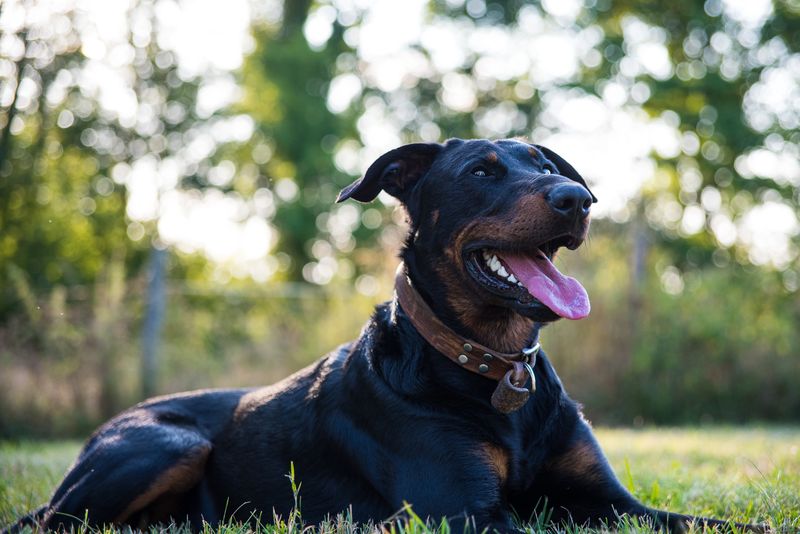
Beauceron
France's powerful black-and-tan herding dog: athletic, serious and loyal to a capable owner.
EnergyGroomingFlat life

