


History
The German Shepherd was created deliberately. The FCI standard records that the Verein für Deutsche Schäferhunde (SV) was founded at its first general meeting in Frankfurt am Main on 20 September 1899, on proposals by A. Meyer and Max von Stephanitz. The aim was a working dog, bred from the central and southern German herding breeds of the time, with the ultimate objective of producing a dog inclined to high achievement.
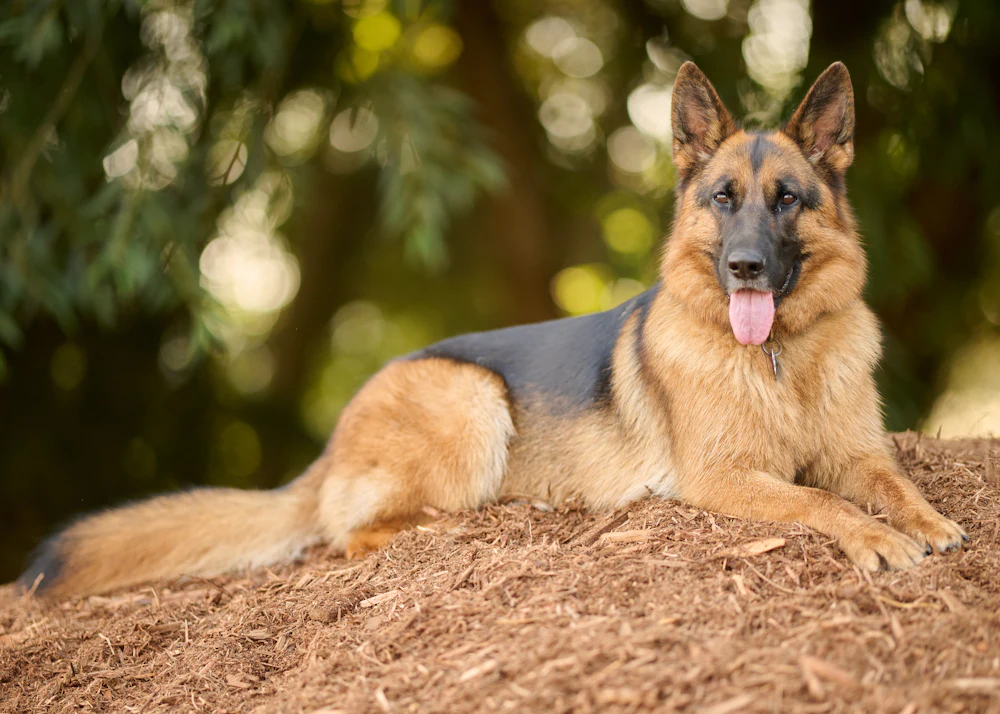
The standard has been amended many times since, with revisions recorded in 1901, 1909, 1930, 1961 and 1976, and further changes in 1991, 1997 and 2008. That long paper trail reflects how seriously the breed's founders took the idea of breeding for function. Today there is a marked divide between show lines and working lines, and the FCI text itself stresses that the dog is medium-sized, slightly elongated, powerful, well-muscled, with dry bone and a firm overall structure.
Temperament
The FCI says the German Shepherd must be well balanced, with strong nerves, self-assured, absolutely natural and, except in a stimulated situation, good-natured, as well as attentive and willing to please. Read that carefully. It describes a stable, confident dog that works with you, not an edgy one that must be controlled. Dogs that fall short of this are not representing the breed well.
In practice a good Shepherd is calm at home, deeply attached to its family, often to one person above all, and watchful with strangers. It needs a job. That can be tracking, obedience, scent work or simply structured training every day, but a Shepherd left to itself will appoint itself guardian of the corridor, the lift and the letterbox.
Children and other pets
A well-socialised Shepherd is devoted to its family's children and often protective of them. Supervise visits from children's friends, since rough play can look like a threat to a guarding dog, and teach children to be calm around the dog's food and bed. Many Shepherds live well with other pets when raised together, though herding instincts can lead to chasing and nipping at running children, which needs early guidance.
Exercise and the daily walk
Physical exercise matters, but mental work matters more. Twenty minutes of training or nose work tires a Shepherd more than an extra kilometre. Plan on about two hours a day in total, divided between walks, training and play. Avoid repetitive high-impact exercise such as long runs beside a bicycle while the dog is still growing, roughly until eighteen months.
Working-line dogs need considerably more activity and a real task, while show-line dogs are usually easier to satisfy. Whatever the line, a Shepherd that has had a morning of structured work will usually settle in the flat for hours, while an unexercised one patrols, barks and chews.
Training
Train every day, in short sessions. Shepherds enjoy structure and understanding the job. Obedience, tracking and scent work all suit them. Aim for a dog that is neutral around strangers and other dogs rather than one that engages with everything, and reward calm behaviour on the lead.
Socialisation between eight and sixteen weeks is critical: different people, surfaces, sounds, lifts, buses. A Shepherd that meets the world calmly as a puppy is far easier as an adult. Find a good trainer early, because mistakes in a strong, intelligent dog are costly and take time to undo.
Coat and grooming
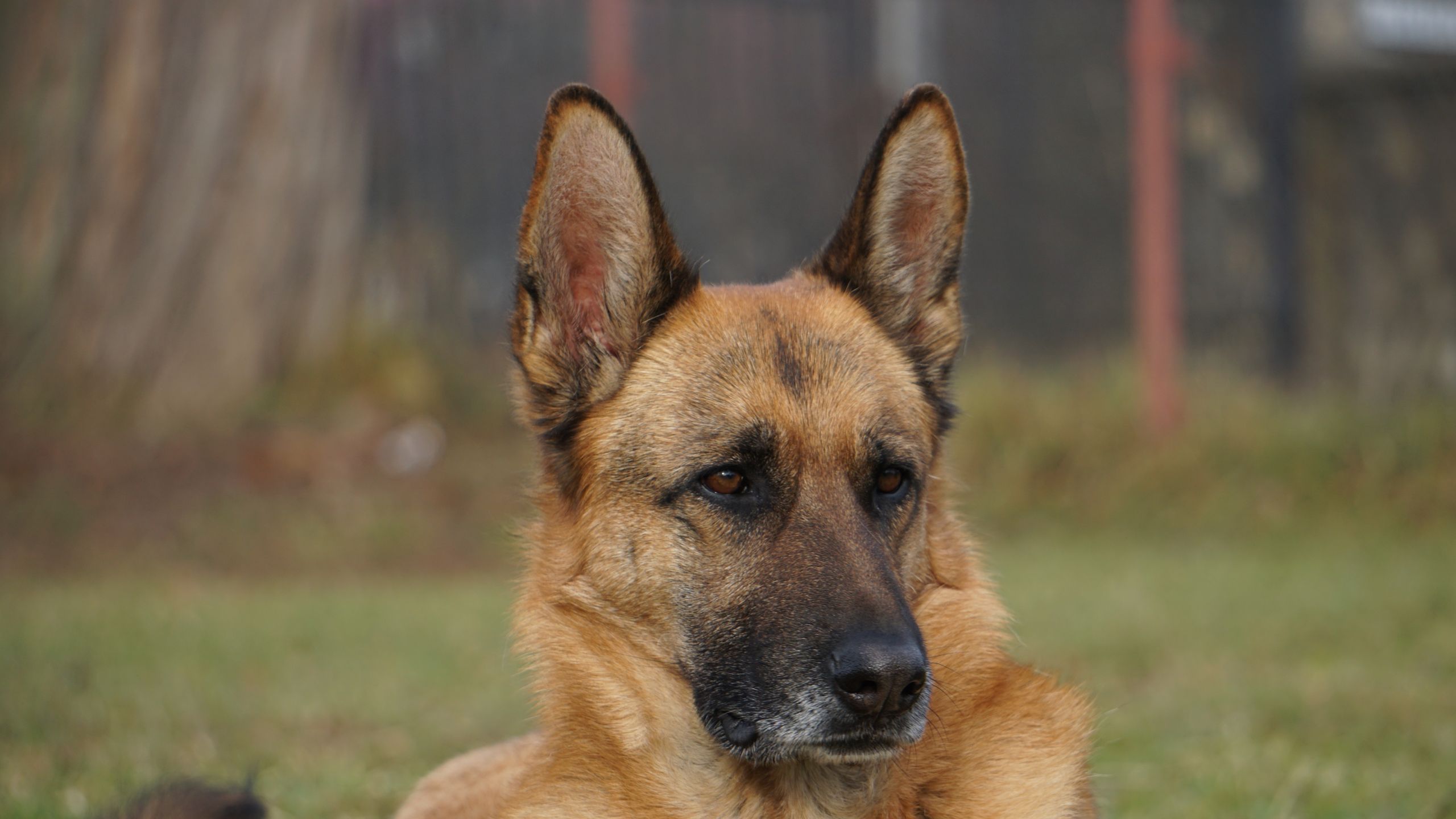
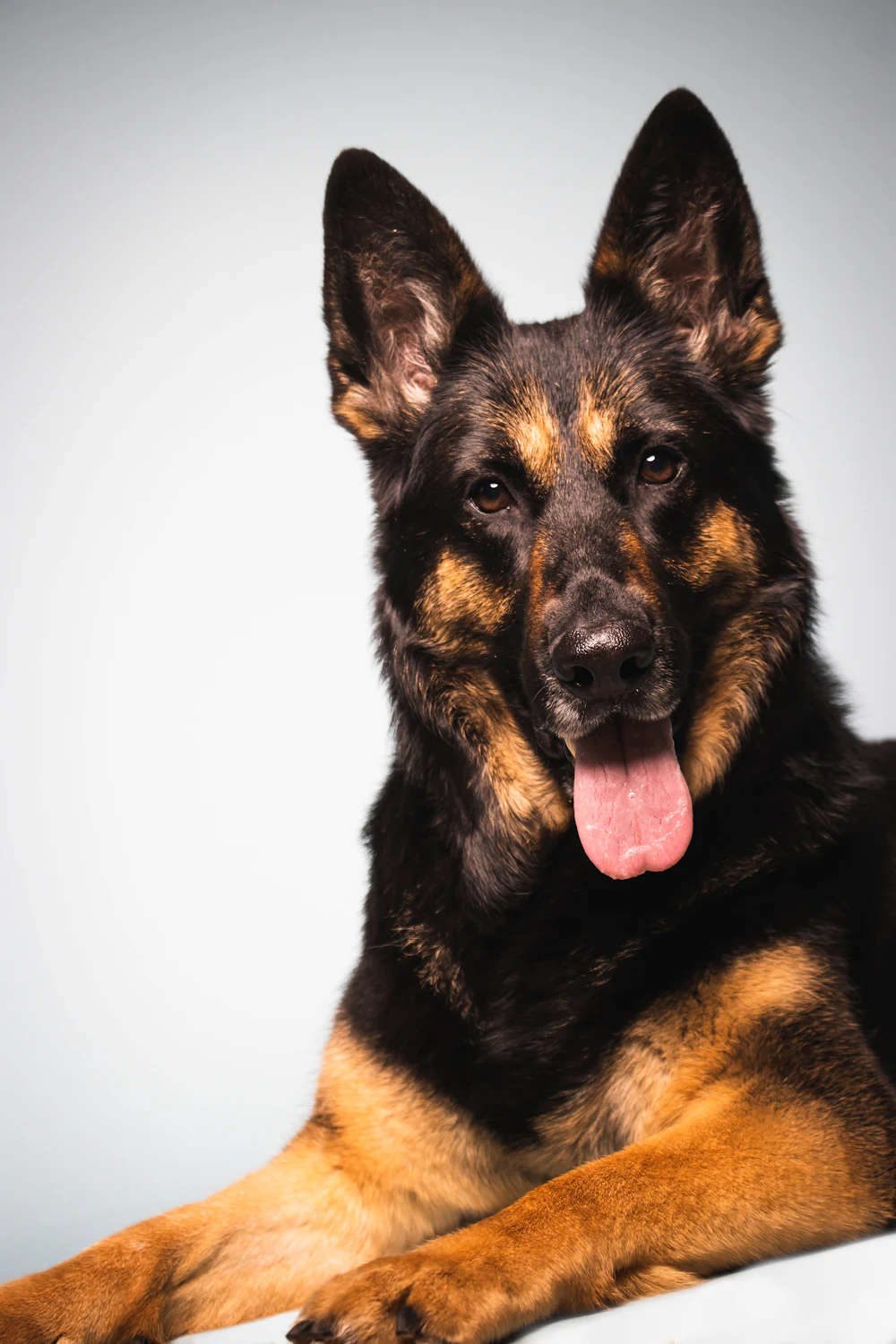
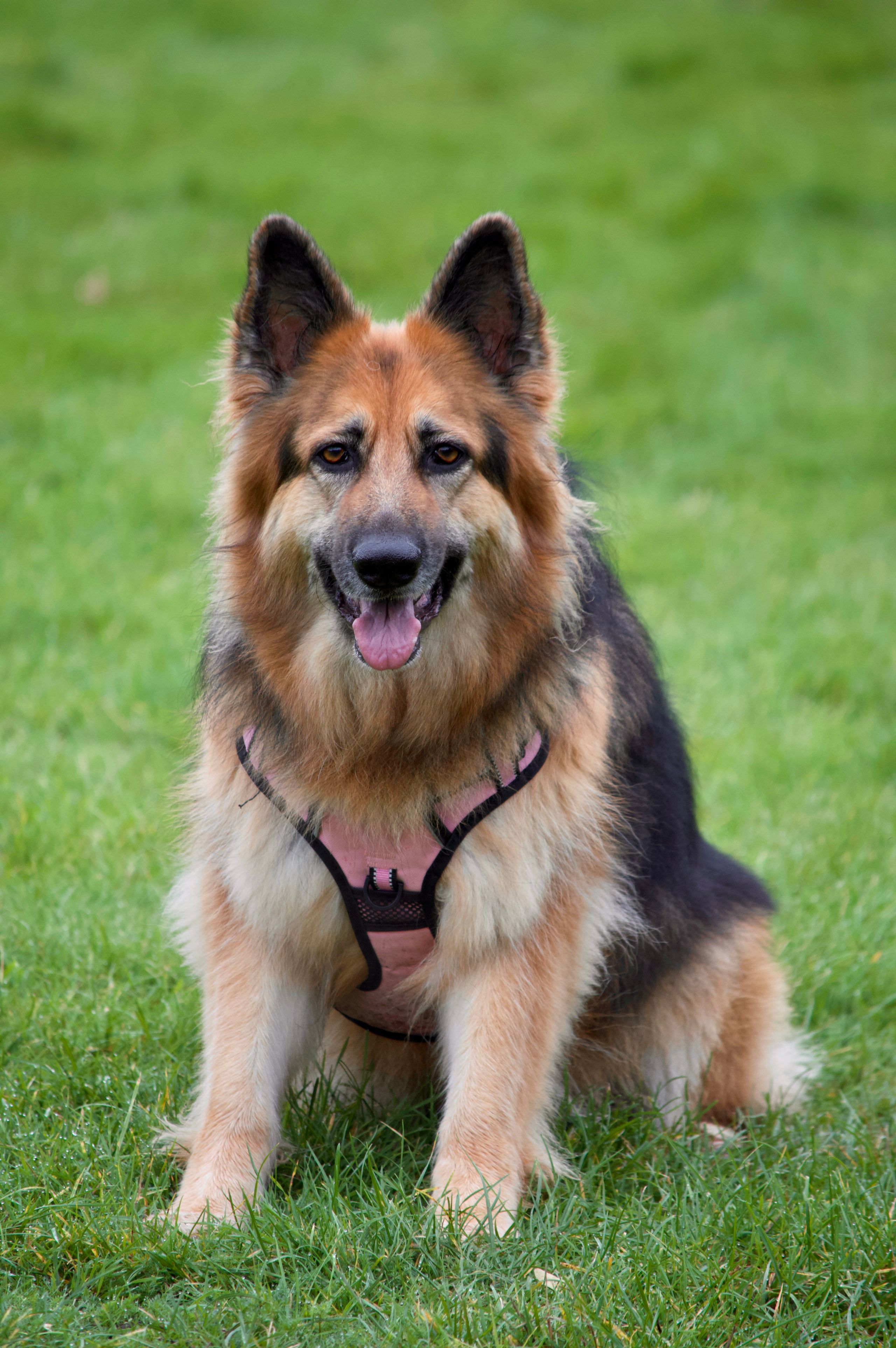
The FCI recognises two coat varieties, double coat and long double coat, both with undercoat. Colours include black with reddish-brown, brown, yellow or light grey markings, solid black, and grey with darker shading, black saddle and mask. White is not permitted. The coat sheds constantly and heavily twice a year, so an undercoat rake used twice a week makes a large difference. Long-coated Shepherds need more brushing still.
Feeding and weight
Large-breed puppy food and controlled growth protect the joints. Because the breed is prone to bloat, split the daily food into at least two meals and avoid vigorous exercise just before and after eating. Some Shepherds have sensitive digestion, so change foods gradually and discuss persistent loose stools with your vet. Keep the dog lean, with the ribs easy to feel.
Work out a starting calorie figure and food weight with the calorie calculator. Not sure this is the right breed? Take the quiz.
Health
Every breed carries predispositions. These are the conditions most often discussed for the German Shepherd, not a prediction for any individual dog.
- Hip and elbow dysplasia
- Degenerative myelopathy (a DNA test exists)
- Gastric dilatation-volvulus (bloat), an emergency
- Exocrine pancreatic insufficiency
- Anal furunculosis
- Skin and ear allergies
What to ask the breeder. Hip and elbow scores for both parents are the essential minimum, and a DNA test for degenerative myelopathy is widely available.
Choosing a puppy
Decide between working and show lines, and meet at least the mother. Ask for hip and elbow results and the degenerative myelopathy test. A good breeder will match the puppy's energy to your household and will ask you plenty of questions in return. Look for a confident, curious puppy that has met varied people and surfaces, and be wary of anyone who sells on temperament claims alone.
In Luxembourg the national kennel club is the Fédération Cynologique Luxembourgeoise (FCL), a member of the FCI. Many owners also buy from breeders in Germany, France or Belgium; a puppy coming from another EU country must be microchipped and vaccinated against rabies, which in practice means it cannot travel before about fifteen weeks of age. Where to get a dog in Luxembourg.
The older German Shepherd
Degenerative myelopathy and arthritis both show as hind-leg weakness: scuffing nails, swaying, difficulty on slippery floors. Non-slip surfaces and keeping muscle through gentle walks help. Report changes to your vet early. Ramps for the car, a supportive bed and shorter, calmer outings keep an older Shepherd comfortable, and mental work remains a pleasure at any age.
A realistic day
A realistic weekday for a working household in Luxembourg City, with a midday visit. Adjust it to your dog, not the other way round.
A brisk walk with some focused obedience.
Breakfast, then a settle on the bed.
Midday walk and a ten-minute scent game.
Longer walk, tracking or training club twice a week.
Final walk and calm time.
A German Shepherd in Luxembourg
Shepherds can live in flats, but it is not the easy option. They notice every noise on the landing and many bark at it. Training a calm response to the building's sounds from the first week saves a great deal of trouble with neighbours. Lifts and stairwells are a good place to practise sitting quietly while people pass.
The Grünewald and Bambësch forests are ideal for long walks and tracking, and free buses and trams make socialisation trips easy. Summers can reach the 30s °C, and a thick double coat suffers, so walk early and late. Because of the breed's reputation, a Shepherd that walks calmly past other dogs and people makes a strong impression, and it is worth investing in that. Dog tax and insurance apply.
Every dog in Luxembourg must be identified, declared to the commune and covered by liability insurance. How registration works.
When you travel
Shepherds bond closely and can be wary of strangers, so introduce the sitter before you leave, ideally with a walk together. Their routine, and a familiar person, matter more than the place. The sitter must be confident handling a strong dog, understand the need for training and mental work, and know the signs of bloat.
PAWLY's holiday and overnight care takes place in your home, so your dog keeps its own bed and routine.
Myths and facts
MythShepherds must be dominated to behave.
FactThe dominance model of dog training has been abandoned by behavioural science. Clear, consistent, reward-based training works better and builds trust.
MythThe sloping back is how the breed should look.
FactExtreme rear angulation in some show lines is debated and criticised. The FCI describes a medium-sized, powerful dog with a firm overall structure.
MythShepherds are naturally aggressive.
FactThe FCI describes a self-assured, good-natured dog, attentive and willing to please. Aggression suggests poor breeding, poor socialisation or boredom.
Is it the right dog for you?
Suits
- Experienced owners who enjoy training
- Active households with time every day
- People who want a close, loyal companion
Think twice if
- First-time owners without support from a trainer
- Long days alone
- Households that want a dog to be friendly with everyone
Questions owners ask
Are German Shepherds aggressive?
Not by nature. They are protective and reserved with strangers, as the standard intends, but it also asks for a self-assured, good-natured dog. Aggression usually comes from poor breeding, poor socialisation or boredom.
Working line or show line?
For family life, a well-bred show or pet line is usually easier. Working lines need an owner who actually trains and works the dog every day, and they can be too much for a household that wants a quiet companion.
How much does a German Shepherd weigh?
The FCI gives 30 to 40 kg for males and 22 to 32 kg for females, with heights of 60 to 65 cm and 55 to 60 cm. Keep the dog lean, because extra weight strains the hips and back.
Do German Shepherds shed a lot?
Yes. They shed all year and heavily twice a year, in both coat varieties. Regular brushing with an undercoat rake helps, and a good vacuum cleaner is a sensible investment for any Shepherd household.
Sources
Photo: Unsplash (Unsplash License) · Photo: Pexels (Pexels License) · Photo: Pexels (Pexels License) · Photo: Unsplash (Unsplash License) · Photo: Pexels (Pexels License)
General information for dog owners in Luxembourg, not veterinary or legal advice. Official facts (origin, size, group, history and temperament as described by the breed standard) follow the FCI standard; health and care sections reflect breed-club and veterinary guidance and are typical ranges rather than rules. For your own dog, ask your vet, the breed club or your commune. How this guide is written and checked. Last reviewed 8 October 2026.
Need someone for your German Shepherd?
PAWLY offers an individual 45-minute walk or a home visit at your dog's pace, the same walker every time, and a written report with photos after every visit, across Luxembourg City.
Read next: the journal, for the German Shepherd
All articles
Working breeds in a city flat: the honest version
High-drive dogs like the German Shepherd can live in a flat, but it takes a plan.

Dog first aid: the six emergencies and what to do first
Bloat is an emergency in deep-chested breeds like the German Shepherd; this covers what cannot wait.

Feeding, portions and how to tell if your dog is the right weight
Large dogs suffer more from extra weight; this is how to judge the right one.
Similar breeds
All 198 breeds
Belgian Shepherd Malinois
The police and military dog of choice: brilliant, intense and not a family pet for most families.
EnergyGroomingFlat life
Border Collie
Probably the most capable working dog in the world, and for the same reason one of the hardest to keep in a city flat.
EnergyGroomingFlat life
Dobermann
An elegant, square-built German guard dog that is far more devoted, sensitive and people-minded than its fierce reputation suggests.
EnergyGroomingFlat life

