


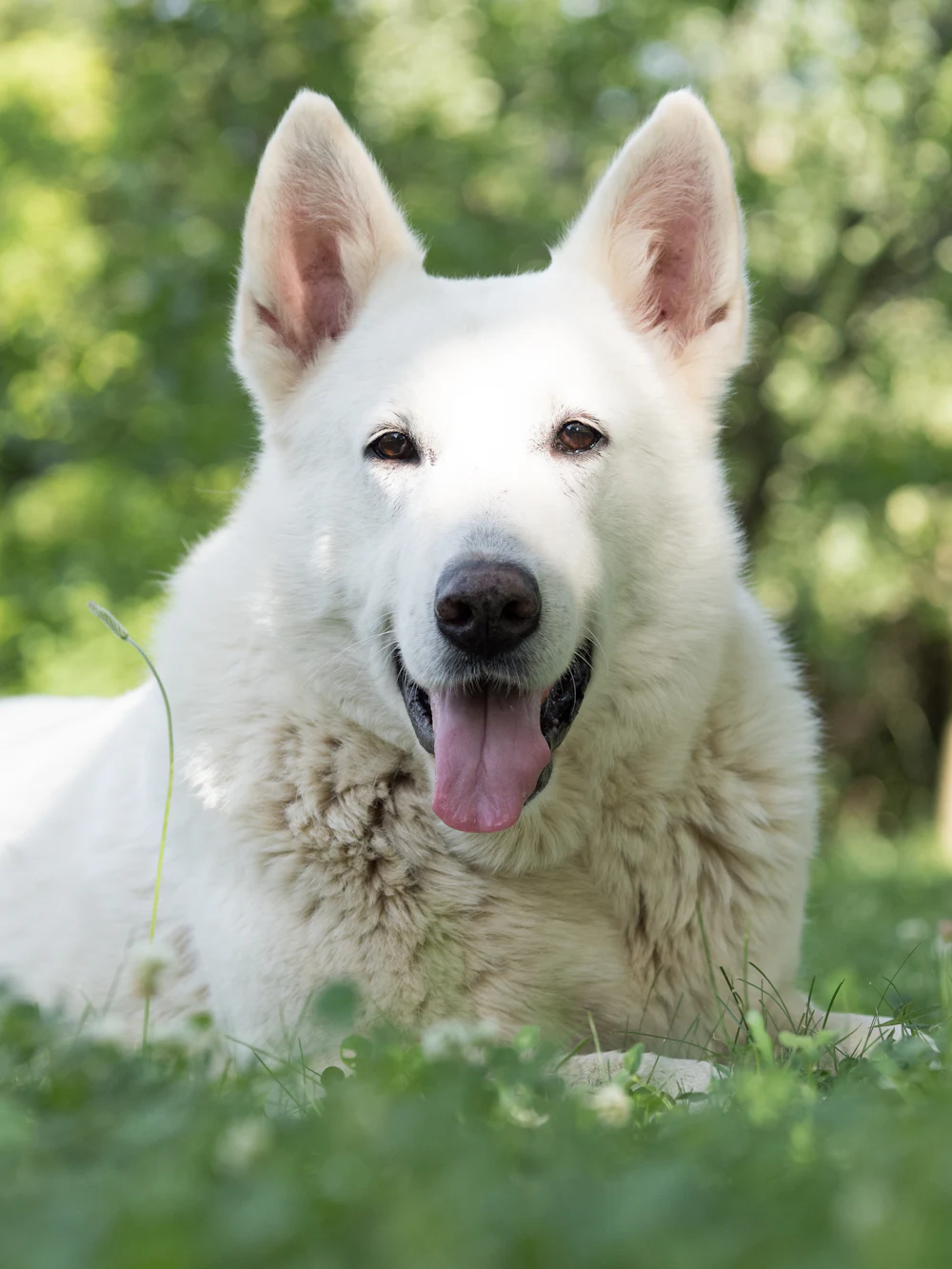
History
The White Swiss Shepherd Dog, Berger Blanc Suisse in French, is listed by the FCI as number 347 in Group 1, Section 1, with Switzerland as its country of origin. Its standard is dated 4 July 2011. It is classed as a companion and family dog, without a working trial. The history in the standard is short and quite specific: white shepherd dogs were accepted as a distinct breed in the United States and Canada, and the white dogs reached Switzerland in the early 1970s.
The standard names an American male, Lobo, born on 5 March 1966, as the foundation sire of the breed in Switzerland. His descendants, registered in the Swiss Stud Book, together with further imports from North America, spread gradually across Europe. Since June 1991 the breed has been registered in the appendix of the Swiss Stud Book. It is therefore a young breed in its present form.
Temperament
The FCI describes a lively and balanced temperament, friendly and discreet, with strong social competence and good trainability, never fearful and not aggressive without provocation. That sums up the breed well. White Swiss Shepherds are usually affectionate with their families, alert without being edgy, and happy to be included. They are more reserved with strangers than a Labrador, but a well-bred dog is calm rather than suspicious.
As with other shepherds, they are sensitive to the mood of a household and unhappy when excluded. A bored or isolated White Swiss may bark, pace or develop anxious habits, and some individuals are nervous if poorly socialised. They have a natural watchfulness, and will often announce visitors, but a stable dog should settle quickly. They thrive on a clear routine, regular work and plenty of contact with their people.
Children and other pets
A well-socialised White Swiss Shepherd is usually good with children, loyal and gentle, though a young dog is strong and may herd or bump small children. Supervise and teach calm play. They normally get along with other dogs if introduced early. With cats and small animals they are generally trustworthy when raised with them, but a running animal outdoors may still trigger interest.
Exercise and the daily walk
An adult needs about an hour and a half to two hours of activity a day. This is a working-type dog with stamina, so a quick walk around the block will not satisfy it. Regular outings that combine walking, play and training suit best, with a good run in a safe area several times a week. Variety keeps the mind engaged and prevents boredom.
Obedience, tracking, agility, hiking and nose work all suit the breed, and many White Swiss Shepherds enjoy a training class as much as a long walk. Their white coat makes summer heat an issue, so keep exercise to cooler hours, and avoid hard exercise around meals because of bloat risk. Puppies should have moderate exercise and limited jumping until the skeleton has matured, usually well into the second year.
Training
The standard speaks of good trainability, and this is a keen, intelligent dog that learns quickly. Use positive, consistent methods, with plenty of praise, food and play, and keep sessions interesting. They are sensitive to harsh handling, which can create anxious or avoidant behaviour. Because they learn so fast, they also pick up unwanted habits, such as barking at the window or pulling to other dogs, so be consistent from the start.
Early and broad socialisation is essential for a stable dog: people, children, other dogs, lifts, trams, bikes and city noise, introduced gently. Teach recall, calm lead walking and a relaxed settle, and practise time alone in small steps. A reliable off-lead dog is possible with training, but a shepherd may chase movement, so build recall carefully and use a long line where needed.
Coat and grooming
The FCI describes a dense double coat, medium length or long, with straight protective hair and plenty of undercoat, in white only. It sheds throughout the year and heavily, once or twice a year, when the undercoat comes out in clumps. Brush two or three times a week and daily at moulting time, with an undercoat rake. White coats show dirt but usually clean up when dry, so bathe only when necessary. Never clip or shave the coat, which protects against both cold and sun.
Feeding and weight
Feed a complete diet suited to a large, active breed, in two meals a day. Growing puppies should not be over-fed or given supplements without veterinary advice, since fast growth strains joints. The deep chest means avoiding exercise around meals and gulping, and sensitive digestion is common in shepherds, so change foods slowly. Watch weight, as extra kilos strain joints. Some dogs have skin or food sensitivities that your vet can help to manage.
Work out a starting calorie figure and food weight with the calorie calculator. Not sure this is the right breed? Take the quiz.
Health
Every breed carries predispositions. These are the conditions most often discussed for the White Swiss Shepherd Dog, not a prediction for any individual dog.
- Hip and elbow dysplasia
- MDR1 gene mutation, which causes sensitivity to certain drugs
- Degenerative myelopathy, a progressive spinal cord condition of older dogs
- Gastric dilatation and volvulus (bloat)
- Skin allergies and sensitive digestion
What to ask the breeder. Ask for hip and elbow scores and the MDR1 test result for both parents, and ask whether the breeder tests for degenerative myelopathy.
Choosing a puppy
White Swiss Shepherd puppies are fluffy, clever and mouthy. Start early with lifts, stairs, traffic, other dogs and different people, always keeping experiences positive. Provide chews and a pen for the teething stage, and begin training in short sessions with treats. Protect the joints by limiting jumping, stairs and long runs while the dog grows, and practise being left alone for short periods from the first week. Introduce coat brushing early so that grooming is a pleasure.
In Luxembourg the national kennel club is the Fédération Cynologique Luxembourgeoise (FCL), a member of the FCI. Many owners also buy from breeders in Germany, France or Belgium; a puppy coming from another EU country must be microchipped and vaccinated against rabies, which in practice means it cannot travel before about fifteen weeks of age. Where to get a dog in Luxembourg.
The older White Swiss Shepherd Dog
From about eight years White Swiss Shepherds often slow down, and hips, elbows and spine deserve attention. Provide an orthopaedic bed, non-slip floors and shorter, more frequent walks. Weight control and joint support, discussed with a vet, help comfort. Watch for a dragging hind foot, weakness or wobbling, which need veterinary advice. Keep the mind busy with gentle scent games and training, and keep the coat brushed, as older dogs groom less.
A realistic day
A realistic weekday for a working household in Luxembourg City, with a midday visit. Adjust it to your dog, not the other way round.
Forty-minute walk on lead with some training; breakfast afterwards, followed by a brush.
Owner leaves; the dog rests on a cool floor with water and a chew toy.
Midday visit: a 45-minute walk in a quiet green area with some play or recall practice and fresh water.
Main outing of 1 to 1.5 hours with training and a run in a safe area; dinner after a rest.
Last toilet break and a calm evening, with a few minutes of brushing during the moult.
A White Swiss Shepherd Dog in Luxembourg
A White Swiss Shepherd can live in a Luxembourg City flat if it has a lift, regular long outings and company, as it is calm indoors when its needs are met. The Pétrusse valley and Parc Merl give good daily walks, while the Bambësch and Grünewald forests provide room to run. Free buses and trams are helpful for reaching them, and a well-socialised dog usually copes with public transport. Barking at noises in a hallway can annoy neighbours, so train a quiet response early.
The dense double coat is a drawback in hot weather. In the 30s °C, walk at dawn or dusk, keep the dog cool and offer shade and water. Winter cold and damp are no problem. The white coat sheds heavily, so expect hair on floors and clothes in every season. As with all dogs, microchip, declaration to the commune, third-party liability insurance and the annual dog tax are required.
Every dog in Luxembourg must be identified, declared to the commune and covered by liability insurance. How registration works.
When you travel
A sitter should keep to the dog's routine and provide the full amount of exercise, as an under-exercised shepherd may become restless or noisy. Warn about the MDR1 drug sensitivity and leave the vet's details. Keep the dog on lead near roads, offer water and shade in warm weather, and brush during the moult. Some dogs fret when their person is away, so quiet company and a clear structure help.
PAWLY's holiday and overnight care takes place in your home, so your dog keeps its own bed and routine.
Myths and facts
MythWhite Swiss Shepherds are albinos.
FactWhite is the coat colour the standard asks for, and it is not the same thing as albinism.
MythThey are just white German Shepherds.
FactThe breed has its own FCI standard, number 347, with Switzerland as country of origin, and its own stud book history, though it shares ancestry with shepherd dogs.
MythA white coat means constant bathing.
FactWhite coats usually clean up when dry. Regular brushing matters more than baths.
Is it the right dog for you?
Suits
- Active owners who enjoy training and outings
- Families who want a loyal, trainable shepherd
- People who can offer company and mental work
- Owners who accept shedding
Think twice if
- You dislike hair on floors and clothes
- You are away for long hours every day
- You want an easy-going, independent dog
- You cannot offer daily exercise and training
Questions owners ask
How big is a White Swiss Shepherd?
According to the FCI, males are 58 to 66 cm and about 30 to 40 kg, females 53 to 61 cm and about 25 to 35 kg. They are lighter and more moderate than some larger shepherd breeds.
Does a White Swiss Shepherd shed a lot?
Yes. The dense double coat sheds all year and heavily once or twice a year. Regular brushing with an undercoat rake reduces loose hair, but you will need a good vacuum cleaner and patience.
Are White Swiss Shepherds good family dogs?
Generally yes, being friendly, balanced and trainable, as the FCI describes. They need socialisation, exercise and company, and supervision with young children because of their size and herding tendencies.
Can a White Swiss Shepherd cope with summer heat?
With care. The double coat is warm, so walk early and late, give shade, water and a cool floor, and never leave the dog in a car. Do not shave the coat without veterinary advice.
Sources
Photo: Unsplash (Unsplash License) · Photo: Pexels (Pexels License) · Photo: Unsplash (Unsplash License) · Photo: Pexels (Pexels License) · Photo: Unsplash (Unsplash License)
General information for dog owners in Luxembourg, not veterinary or legal advice. Official facts (origin, size, group, history and temperament as described by the breed standard) follow the FCI standard; health and care sections reflect breed-club and veterinary guidance and are typical ranges rather than rules. For your own dog, ask your vet, the breed club or your commune. How this guide is written and checked. Last reviewed 8 October 2026.
Need someone for your White Swiss Shepherd Dog?
PAWLY offers an individual 45-minute walk or a home visit at your dog's pace, the same walker every time, and a written report with photos after every visit, across Luxembourg City.
Read next: the journal, for the White Swiss Shepherd Dog
All articles
Dogs in hot weather: the Luxembourg summer guide
The White Swiss Shepherd Dog carries a heavy coat or a heavy frame, which makes a Luxembourg summer the hard season.

Long-backed breeds, stairs and the spine
A long back makes stairs matter more than most owners think.

Feeding, portions and how to tell if your dog is the right weight
Large dogs suffer more from extra weight; this is how to judge the right one.
Similar breeds
All 198 breeds
German Shepherd
Intelligent, loyal and built to work. In the right hands one of the finest dogs there is; without a job, a handful.
EnergyGroomingFlat life
Belgian Groenendael
The black, long-haired Belgian shepherd: elegant, sensitive and intense, and made for close work with one person.
EnergyGroomingFlat life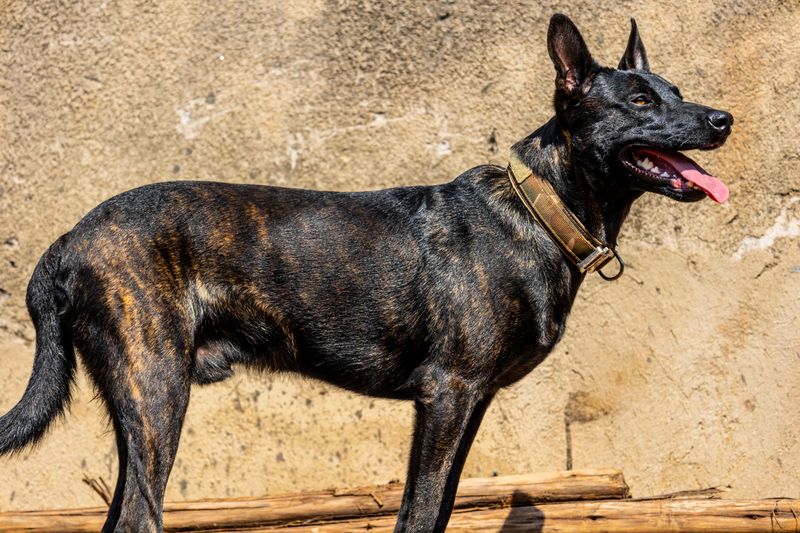
Dutch Shepherd
A brindle, tireless herding dog with a worker's brain, happiest with a job to do and a person to do it with.
EnergyGroomingFlat life

