

History
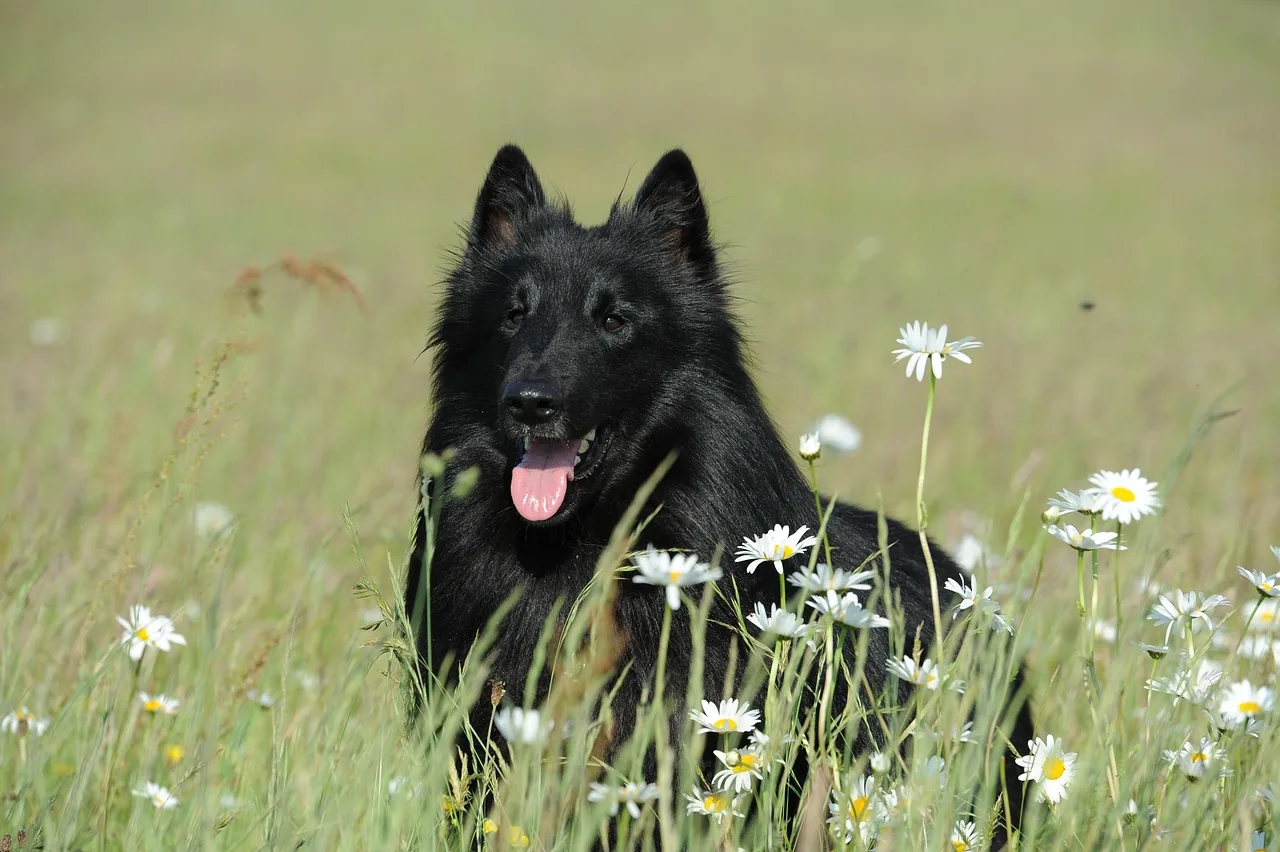
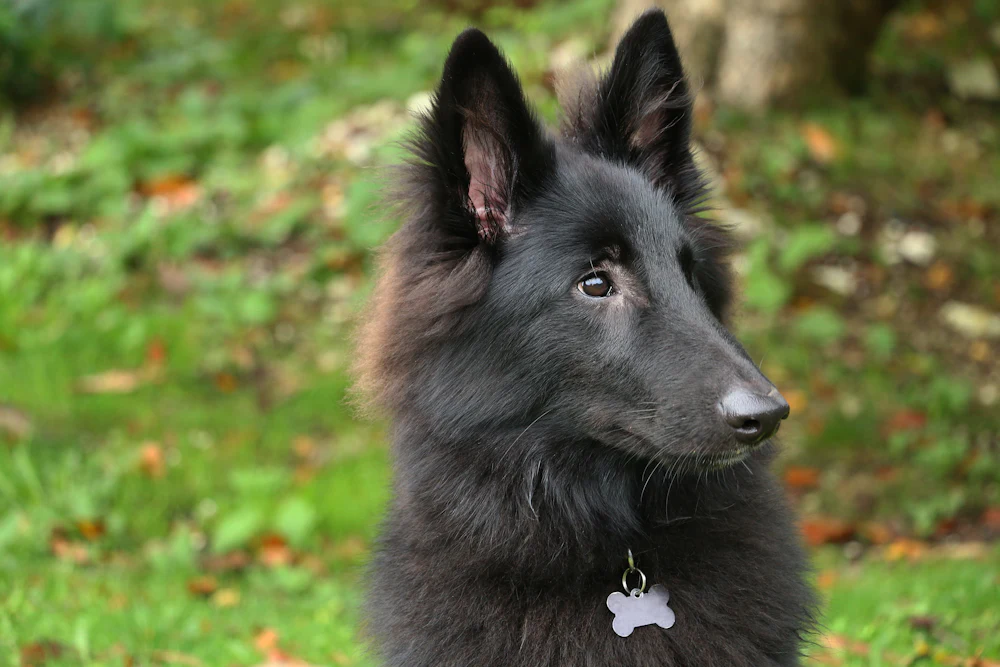
The Groenendael is the long-haired black variety of the Belgian Shepherd Dog, which the FCI treats as a single breed with four coat varieties: Groenendael, Tervueren, Malinois and Laekenois. The standard traces the breed to the varied herding dogs of Belgium in the late 1800s. Enthusiasts under Professor A. Reul set about fixing a type, and the Belgian Shepherd Dog Club was founded in Brussels in 1891, followed that November by a gathering of 117 dogs at Cureghem.
A written standard followed in 1892, official registration began in 1901 with the Royal Saint-Hubert Society stud book, and by 1910, according to the FCI, the type and temperament of the Belgian Shepherd were established. The Groenendael takes its name from the Château Groenendael near Brussels, where Nicolas Rose bred black, long-haired dogs. The standard allows only uniform black for this variety. It has worked as a herder, guard and service dog, and still does.
Temperament
The FCI describes the Belgian Shepherd as a watchful and active dog, bursting with energy and always ready to leap into action. It prizes the qualities of a good guard dog of property, with a lively, alert temperament and a confident nature that shows no fear or aggressiveness. The same standard calls the breed mediolineal, harmoniously proportioned and combining elegance with power. The Groenendael wears that description well: a dark, slender, quick animal that seems to be paying attention to everything at once.
Most Groenendaels attach closely to one person, and they are sensitive dogs, quick to notice a change of mood or routine. That sensitivity is the source of both their brilliance and their difficulties. A well-handled dog is responsive and eager. A bored, under-socialised or harshly handled one can become anxious, reactive or obsessive about movement, shadows and noise. They are watchful with strangers rather than friendly by default, and they need an owner who offers calm, fair structure every day.
Children and other pets
Groenendaels are loyal and gentle with their own family, but the herding instinct is real. A dog may nudge or nip at the heels of running children, so supervise young ones and teach the dog to settle when the house is lively. Same-sex dogs do not always get on, and some are wary of unfamiliar dogs, so socialise widely. With cats it depends on early exposure and the individual, though the quick movement of a cat can trigger the chase.
Exercise and the daily walk
Two hours a day is a fair starting point, and it should be real exercise rather than a stroll to the bakery. A morning outing of 45 minutes to an hour, a midday break and a longer evening session suit most adults. Running alongside a bicycle on a quiet path, fetch with a toy and off-lead time in a safe place all help, provided the dog has a reliable recall first.
Mental work counts equally. Scent games, obedience, agility, tracking and herding-style sports give the dog a job, and a Groenendael without a job will invent one, often unhelpfully. Puzzle feeders, hide-and-seek and learning new tricks fill the quieter hours. The breed is a good match for people who want an active partner rather than a decoration, and a poor one for people who want a calm background presence.
Training
Groenendaels are highly intelligent and sensitive, and they learn quickly, including the things you did not mean to teach. Reward-based training, a calm voice and clear structure work best. Harsh methods can cause anxiety or shutdown. Keep sessions short and varied, finish on a success, and avoid drilling the same exercise until the dog is bored or frantic.
Socialise early, widely and gently, with traffic, trams, crowds and calm dogs. Teach an off switch deliberately: a mat, a settle command and rewards for lying quietly. A dog that never relaxes wears itself and everyone else out. Be especially careful with fast movement such as bicycles, joggers and scooters, which can set off the herding reflex and are worth practising from a distance.
Coat and grooming
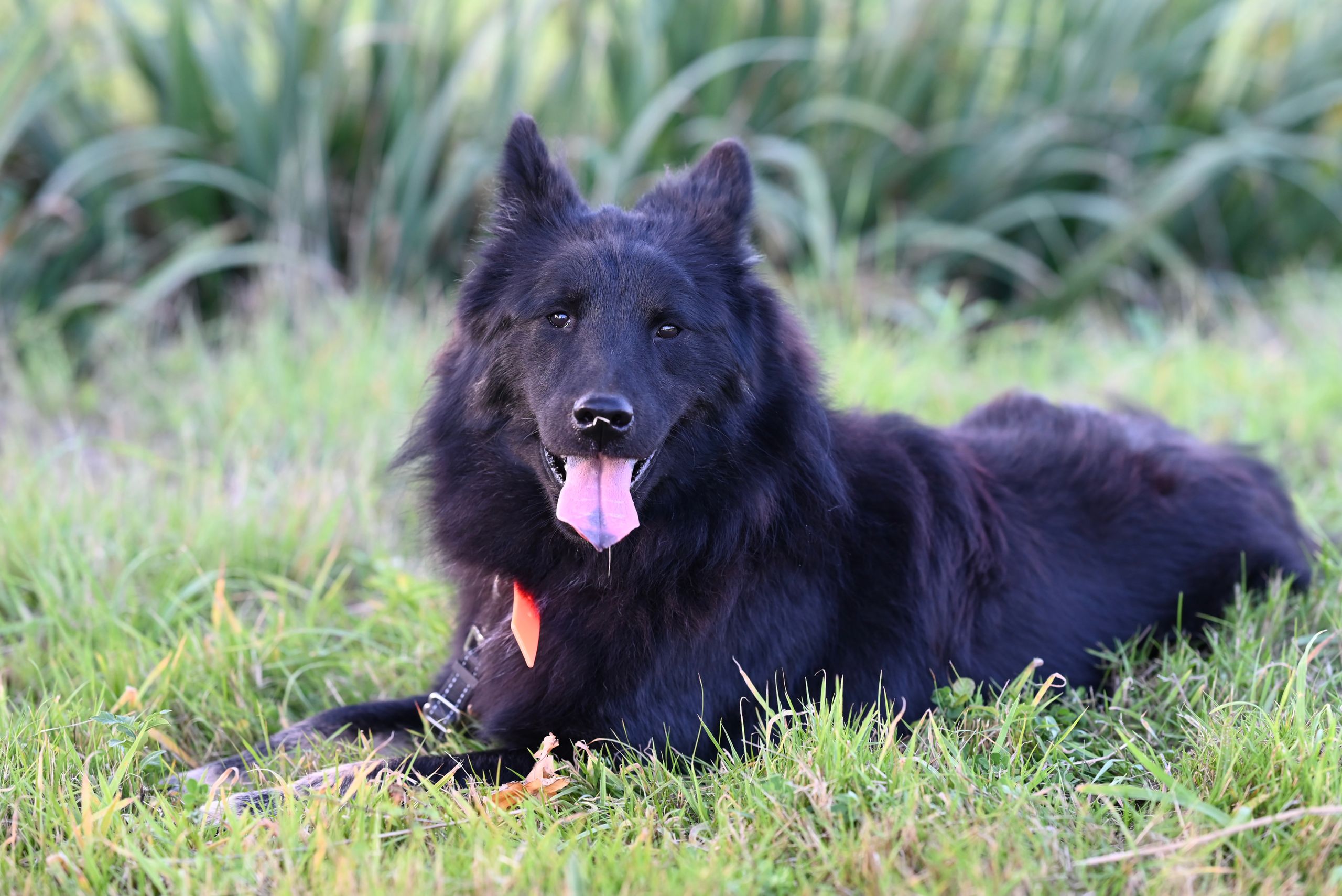
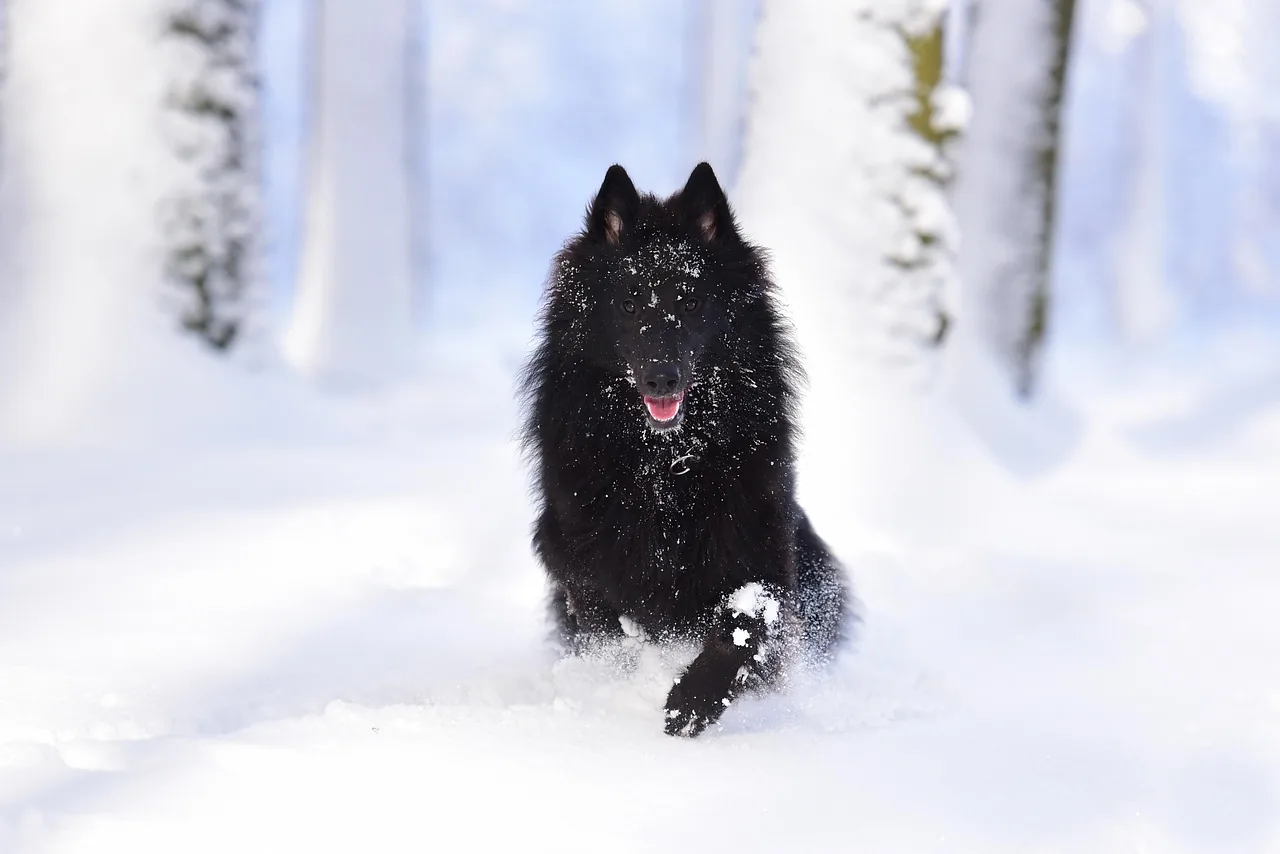
The long, straight black coat is beautiful but needs regular attention. It has a dense undercoat and a ruff around the neck and chest. Brush two or three times a week, and daily during the heavy seasonal shed, when it comes out in handfuls. It resists dirt and dries fairly quickly. The standard asks for uniform black, so expect a black dog on your sofa and pale carpets to show every hair.
Feeding and weight
Feed a good-quality complete diet suited to the dog's energy, split into two meals, and avoid vigorous exercise around mealtimes. Groenendaels are lean, athletic dogs and should stay that way, with ribs easily felt under the coat. Working and sport dogs need more food than flat-dwelling companions, so adjust to the dog in front of you. Use part of the daily ration for training rewards.
Work out a starting calorie figure and food weight with the calorie calculator. Not sure this is the right breed? Take the quiz.
Health
Every breed carries predispositions. These are the conditions most often discussed for the Belgian Groenendael, not a prediction for any individual dog.
- Hip and elbow dysplasia
- Epilepsy
- Eye conditions
- Gastric dilatation-volvulus (bloat)
- Allergies
What to ask the breeder. Ask for hip and elbow scores and eye examinations for both parents, and whether epilepsy has occurred in the lines. A good breeder will answer directly and share results.
Choosing a puppy
Ask for hip and elbow scores and eye tests for the parents, and about epilepsy in the lines. Meet the mother and, if possible, the father to judge temperament. Choose a breeder who socialises puppies thoroughly, with household sounds, new surfaces and gentle handling. Expect a busy, sensitive puppy, and enrol in classes early. Be honest about the time and calm structure you can offer.
In Luxembourg the national kennel club is the Fédération Cynologique Luxembourgeoise (FCL), a member of the FCI. Many owners also buy from breeders in Germany, France or Belgium; a puppy coming from another EU country must be microchipped and vaccinated against rabies, which in practice means it cannot travel before about fifteen weeks of age. Where to get a dog in Luxembourg.
The older Belgian Groenendael
Watch for stiffness, weight gain and anxiety as the dog ages, and for any seizures, which need a vet. Older Groenendaels still enjoy mental work, so keep up scent games and short training sessions while softening the exercise. Check the eyes and teeth regularly, and keep the dog lean to protect the joints.
A realistic day
A realistic weekday for a working household in Luxembourg City, with a midday visit. Adjust it to your dog, not the other way round.
A long, purposeful walk with a few minutes of obedience.
Breakfast, then a quiet rest.
Midday visit from a walker: a brisk outing and a training game.
Long walk in the Grünewald with scent or ball work.
Final walk and a calm wind-down.
A Belgian Groenendael in Luxembourg
A Groenendael is a demanding flat dog. It can live in one only if its exercise and mental work are delivered every day, whatever the weather. Lifts, stairwells and neighbours' dogs are all good practice. The dog's alertness means it may react to every sound in the corridor, so teach it to ignore doors and footsteps, and reward quiet behaviour from the first week.
Luxembourg suits the breed better than many cities. The Pétrusse valley, Parc Merl and the Municipal Park are handy for daily outings, while the Bambësch and the Grünewald offer long walks under trees. Buses and trams are free, which is a gift for training a dog to ride public transport calmly. Summer heat matters for a black, double-coated dog, so walk early and late. Do not forget microchip, commune declaration, liability insurance and the annual dog tax.
Every dog in Luxembourg must be identified, declared to the commune and covered by liability insurance. How registration works.
When you travel
A sitter must be able to give the dog real exercise and some training, not simply feed it and open the door. Introduce them before you travel, because Groenendaels bond closely and can be anxious without their person. Leave a written routine, the commands you use and your vet's number, and ask for walks of a decent length each day.
PAWLY's holiday and overnight care takes place in your home, so your dog keeps its own bed and routine.
Myths and facts
MythA Groenendael is just a black German Shepherd.
FactIt is a separate Belgian breed, lighter and more finely built, with a different history and a more intense, sensitive temperament.
MythBelgian Shepherds are four different breeds.
FactThe FCI treats them as one breed with four coat varieties: Groenendael, Tervueren, Malinois and Laekenois, each defined by coat type and colour.
MythA long coat means an outdoor dog.
FactGroenendaels bond closely and want to be with their people. They are indoor companions that need regular exercise and a lot of attention.
Is it the right dog for you?
Suits
- Active, experienced owners
- People who enjoy training or dog sport
- Owners who can offer calm structure
- Those who want a close partner
Think twice if
- You are out all day
- You want an easygoing dog
- You prefer a low-grooming coat
- You are a first-time owner
Questions owners ask
Is a Groenendael a good family dog?
It can be, with an active family that offers structure and supervises children. It is loyal and gentle at home, but the herding instinct and sensitivity mean it suits a calm, consistent household better than a chaotic one.
How much does a Groenendael shed?
A good deal. The long black coat sheds lightly through the year and heavily in the seasonal shed, when daily brushing helps. Expect black hair on carpets and clothes, and a vacuum cleaner that works for a living.
What is the difference between a Groenendael and a Malinois?
Both are varieties of the Belgian Shepherd Dog. The Groenendael is long-haired and uniformly black, while the Malinois is short-haired, fawn with black overlay and a black mask. Temperament is similar, though the Malinois is often more intense.
Can a Groenendael be left alone?
Not for long stretches. It bonds closely and needs company, exercise and mental work. A midday visit from a walker helps a great deal, and alone-time should be taught gradually from puppyhood.
Sources
Photo: Unsplash (Unsplash License) · Photo: Pexels (Pexels License) · Photo: Pixabay (Pixabay Content License) · Photo: Pixabay (Pixabay Content License)
General information for dog owners in Luxembourg, not veterinary or legal advice. Official facts (origin, size, group, history and temperament as described by the breed standard) follow the FCI standard; health and care sections reflect breed-club and veterinary guidance and are typical ranges rather than rules. For your own dog, ask your vet, the breed club or your commune. How this guide is written and checked. Last reviewed 8 October 2026.
Need someone for your Belgian Groenendael?
PAWLY offers an individual 45-minute walk or a home visit at your dog's pace, the same walker every time, and a written report with photos after every visit, across Luxembourg City.
Read next: the journal, for the Belgian Groenendael
All articles
Working breeds in a city flat: the honest version
High-drive dogs like the Belgian Groenendael can live in a flat, but it takes a plan.

Feeding, portions and how to tell if your dog is the right weight
Large dogs suffer more from extra weight; this is how to judge the right one.

Grooming and coat care through the Luxembourg year
The Belgian Groenendael has a coat that needs a routine that holds through the Luxembourg seasons.
Similar breeds
All 198 breeds
Belgian Shepherd Malinois
The police and military dog of choice: brilliant, intense and not a family pet for most families.
EnergyGroomingFlat life
Belgian Tervuren
The long-coated Belgian Shepherd in fawn and black, elegant and sensitive, bursting with energy and happiest working closely with its person.
EnergyGroomingFlat life
German Shepherd
Intelligent, loyal and built to work. In the right hands one of the finest dogs there is; without a job, a handful.
EnergyGroomingFlat life

