
History
The Tervuren is one of the four varieties of the Belgian Shepherd Dog, alongside the Groenendael, the Malinois and the Laekenois; the FCI treats them as a single breed distinguished by coat and colour. According to the FCI standard, the breed took shape in the 1890s, when enthusiasts set out to sort the many local Belgian herding dogs into consistent types. Professor A. Reul of the Cureghem veterinary school is regarded as its founder.
The Belgian Shepherd Dog Club was founded in Brussels on 29 September 1891, and the first detailed standard was drawn up by April 1892. Registration with the Société Royale Saint-Hubert followed in 1901, and type and temperament were considered stable by around 1910. The variety takes its name from the town of Tervuren, east of Brussels. The FCI places the breed in Group 1, Section 1, with a working trial.
Temperament
The FCI standard describes the Belgian Shepherd as a watchful and active dog, bursting with energy and always ready to leap into action, confident and without fear or aggressiveness. It also notes its use as a guarding, defence and tracking dog, an all-purpose service dog and a family dog. A good Tervuren is alert, intelligent and deeply attached to its family.
Sensitivity is part of the package. Tervurens notice everything, react quickly and can be wary of strangers if not well socialised. They thrive on close partnership and can become anxious or restless when bored or left alone too long. Compared with the Malinois, many owners find the Tervuren slightly softer in the home, but it still needs real work.
Children and other pets
Raised well, a Tervuren is usually gentle and protective with children it knows, and enjoys being part of family activities. Its herding instinct may lead to chasing or circling running children, so supervision and clear rules are needed. It generally gets on with other dogs when socialised early, and can live with a cat it has been raised with, though small animals outdoors may trigger chasing.
Exercise and the daily walk
An adult Tervuren needs around two hours of activity a day, including mental work. Long walks, jogging, hiking and play are a good base, but the breed really shines in obedience, agility, tracking, herding and other dog sports. A few short training sessions spread through the day can make a big difference to its calmness at home.
Many Tervurens develop a good recall with training and stay close to their owner, but their interest in moving things means traffic, cyclists and wildlife can be triggers. Keep the dog on lead near roads and use a long line in forests until recall is reliable. In summer, exercise in the cool hours, as the long coat holds heat.
Training
Tervurens learn quickly and enjoy working with a person. Positive, consistent training with clear signals suits them best, and they are often outstanding in competitive sports. Harsh or erratic handling can make a sensitive dog anxious, while too little structure lets it find its own, often unhelpful, jobs.
Socialisation must be broad and continuous: people of all kinds, trams, lifts, city noise and other dogs. Teach settling on a mat, calm greetings at the door and how to switch off. Without that, a Tervuren can become reactive or overprotective in a busy city environment.
Coat and grooming
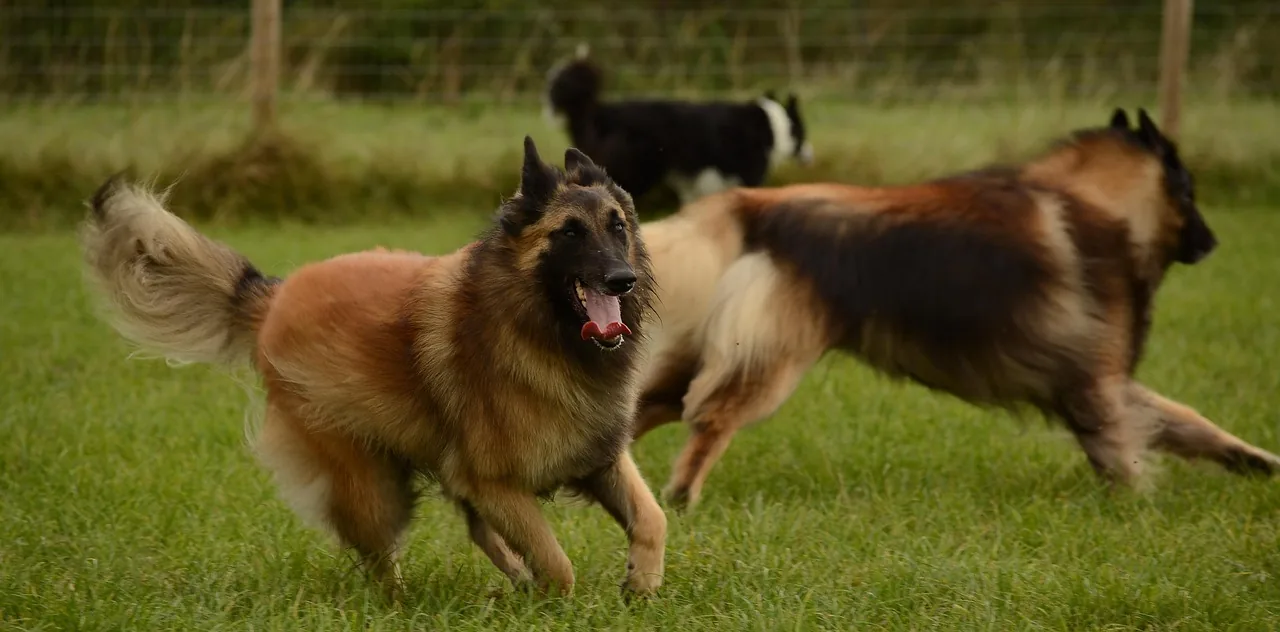
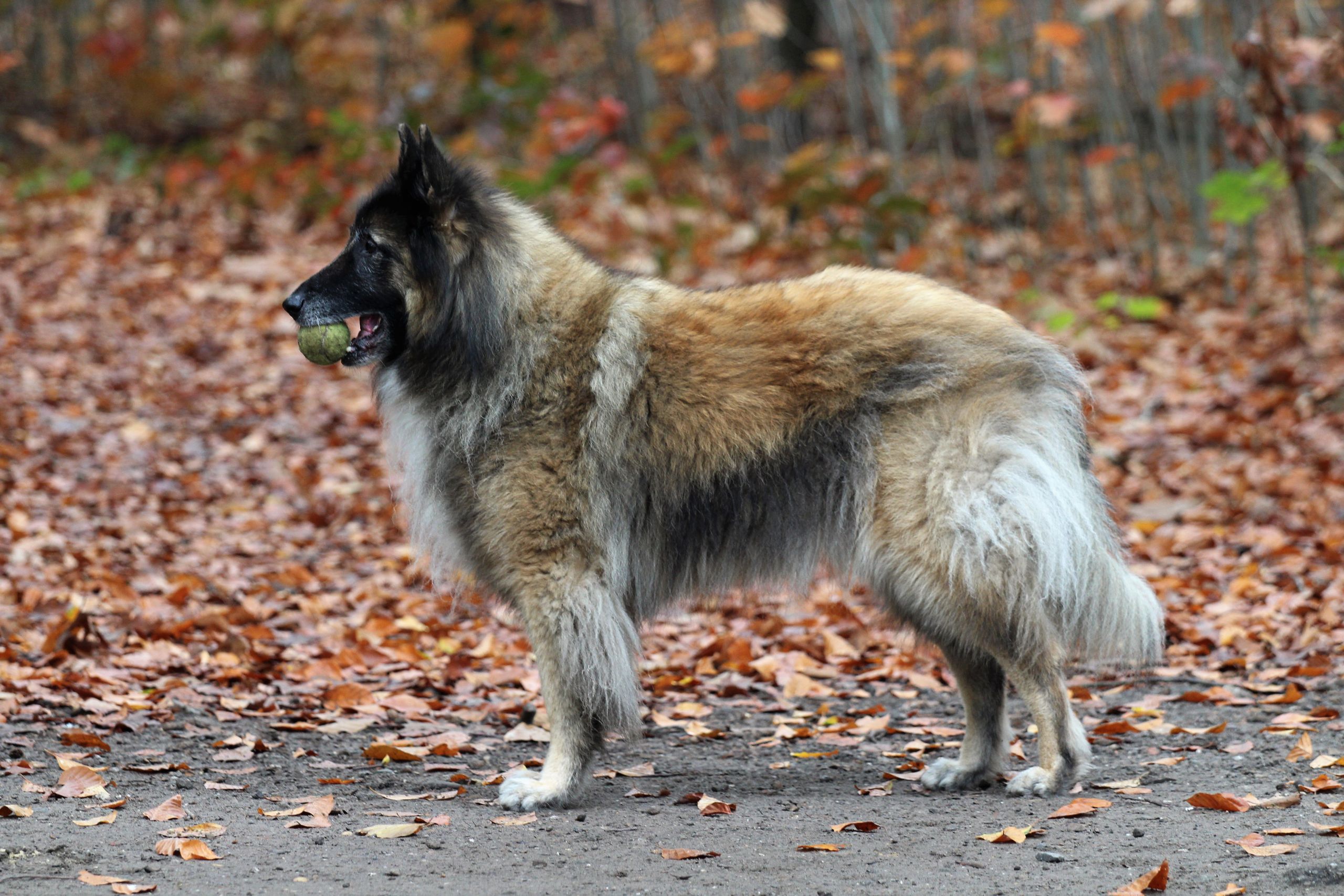
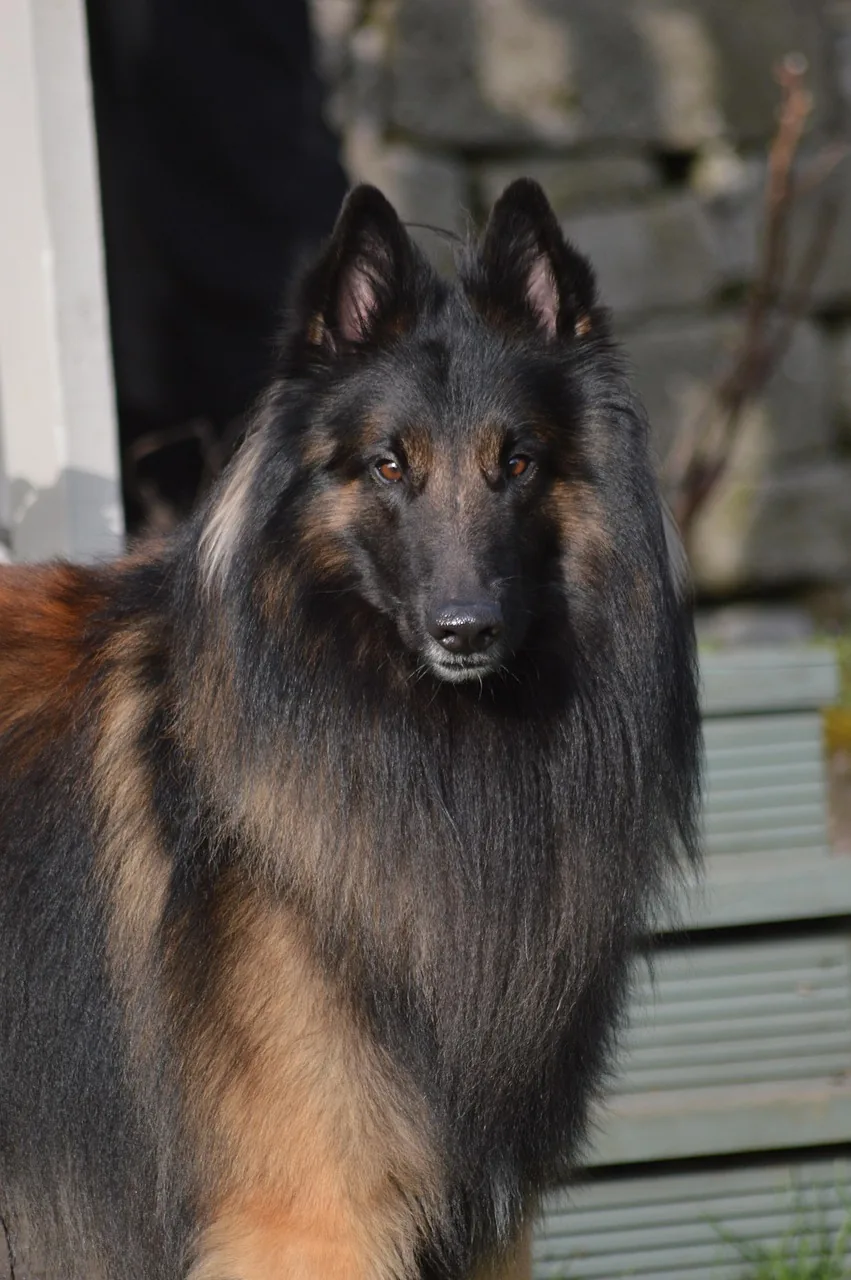
The Tervuren has the long-haired variety coat of the Belgian Shepherd: straight, abundant outer hair over a dense undercoat, with a ruff around the neck and fringes on the legs and tail. The FCI standard accepts fawn with black overlay or grey with black overlay, with a black mask, and fawn with black overlay is preferred. The coat sheds steadily and heavily during the seasonal moult. Brushing two or three times a week prevents tangles behind the ears and in the trousers, with daily brushing during the moult.
Feeding and weight
Feed a complete diet suited to an active medium to large dog and adjust portions to the real workload, since a competition dog and a family pet need different amounts. Keep the dog lean to protect its joints. Many Tervurens are keen on food, which makes it a useful training tool, so set aside part of the daily ration for rewards. Two meals a day suit most adults.
Work out a starting calorie figure and food weight with the calorie calculator. Not sure this is the right breed? Take the quiz.
Health
Every breed carries predispositions. These are the conditions most often discussed for the Belgian Tervuren, not a prediction for any individual dog.
- Hip dysplasia
- Elbow dysplasia
- Epilepsy
- Progressive retinal atrophy
- Hypothyroidism
- Cataracts
What to ask the breeder. Ask for hip and elbow scores, recent eye examinations and thyroid testing for both parents, and whether there is any history of epilepsy in the line.
Choosing a puppy
Tervuren puppies are bright, playful and quick to learn, for better or worse. Start training and socialisation immediately, with short sessions and plenty of rest. Avoid long runs and repetitive jumping while the joints develop. Introduce the puppy to grooming, being handled and staying alone for short periods. Many people underestimate how sensitive this breed is: a calm, predictable routine helps the puppy grow into a confident adult.
In Luxembourg the national kennel club is the Fédération Cynologique Luxembourgeoise (FCL), a member of the FCI. Many owners also buy from breeders in Germany, France or Belgium; a puppy coming from another EU country must be microchipped and vaccinated against rabies, which in practice means it cannot travel before about fifteen weeks of age. Where to get a dog in Luxembourg.
The older Belgian Tervuren
Older Tervurens usually stay active and attentive, but may slow down and develop joint stiffness. Shorter walks, low-impact activities such as nose work, and keeping the dog lean help it stay comfortable. Watch for changes in eyes, thyroid function or behaviour, and keep training going, as mental activity remains important.
A realistic day
A realistic weekday for a working household in Luxembourg City, with a midday visit. Adjust it to your dog, not the other way round.
A brisk 45-minute walk with a few minutes of training in the Pétrusse valley, then breakfast.
Short settle exercise and a chew toy as the owner leaves for work.
PAWLY midday visit: a 45-minute walk with games and scent work in Parc Merl, plus fresh water and a quick brush if needed.
Agility or obedience class, or a long walk in the Bambësch forest, followed by dinner.
Short last walk and a quiet evening at home.
A Belgian Tervuren in Luxembourg
A Tervuren can live in a Luxembourg City flat if its daily needs are met, but it is not a dog for a sedentary lifestyle. It can be alert to noises in corridors and lifts, so early desensitisation and good routines help. Parks such as the Pétrusse valley, Parc Merl and the Kinnekswiss suit training walks, and the Bambësch and Grünewald forests offer longer outings, though wildlife means a long line is wise.
Indoors, the long coat brings back mud and leaves after a wet November walk, so a towel by the door and a weekly brush save a lot of vacuuming. Local clubs affiliated to the FCL, the national kennel club, are a natural place to look for obedience and sport training. In summer, when temperatures reach the 30s °C, keep exercise to early morning and evening. Every dog in Luxembourg must be microchipped, declared to the commune and insured for third-party liability.
Every dog in Luxembourg must be identified, declared to the commune and covered by liability insurance. How registration works.
When you travel
A sitter must keep the Tervuren's routine consistent, including long walks, training games and quiet time. The dog may be wary of new people at first, so introductions before the owner leaves are important. Keep it on lead near roads and in forests, and avoid leaving it alone for long periods, as it may become anxious. Regular brushing keeps the coat in good condition during the stay.
PAWLY's holiday and overnight care takes place in your home, so your dog keeps its own bed and routine.
Myths and facts
MythThe Tervuren is a different breed from the Malinois.
FactWithin the FCI they are varieties of the same breed, the Belgian Shepherd Dog, distinguished by coat and colour.
MythA long coat means a calm dog.
FactTervurens are energetic working dogs and need plenty of exercise and mental stimulation, whatever their coat.
MythThey are aggressive guard dogs.
FactThe FCI standard calls for a confident dog without fear or aggressiveness. Good breeding and socialisation produce a watchful but balanced companion.
Is it the right dog for you?
Suits
- Active owners who enjoy training and dog sports
- Families looking for a loyal, involved companion
- People with time for daily exercise and grooming
- Experienced owners who appreciate a sensitive working dog
Think twice if
- Think twice if you are away from home for long days
- Think twice if you prefer low-energy companions
- Think twice if you dislike regular grooming and hair
- Think twice if you have no time for training
Questions owners ask
What is the difference between a Tervuren and a Groenendael?
Both are long-coated Belgian Shepherds. The Groenendael is solid black, while the Tervuren is fawn or grey with black overlay and a black mask. Their temperament and care needs are very similar.
Is a Tervuren a good family dog?
Yes, with an active family who provide training, exercise and clear routines. It can be very affectionate with children it knows, but its herding instincts and sensitivity need careful management.
How much grooming does a Tervuren need?
Brushing two or three times a week, with daily brushing during the moult. Pay attention to the areas behind the ears and on the hindquarters where tangles form.
Can a Tervuren live in a flat?
It can, if it gets around two hours of activity a day and plenty of mental work. Without that, it may become restless, noisy or anxious in a small space.
Sources
Photo: Pexels (Pexels License) · Photo: Pixabay (Pixabay Content License) · Photo: Pixabay (Pixabay Content License)
General information for dog owners in Luxembourg, not veterinary or legal advice. Official facts (origin, size, group, history and temperament as described by the breed standard) follow the FCI standard; health and care sections reflect breed-club and veterinary guidance and are typical ranges rather than rules. For your own dog, ask your vet, the breed club or your commune. How this guide is written and checked. Last reviewed 8 October 2026.
Need someone for your Belgian Tervuren?
PAWLY offers an individual 45-minute walk or a home visit at your dog's pace, the same walker every time, and a written report with photos after every visit, across Luxembourg City.
Read next: the journal, for the Belgian Tervuren
All articles
Working breeds in a city flat: the honest version
High-drive dogs like the Belgian Tervuren can live in a flat, but it takes a plan.

The front door: barking, deliveries and escapes
A watchful breed reacts at the door; this is how to manage it.

Dogs and cats in the same flat
The Belgian Tervuren can see small animals as prey; this covers living with a cat in a flat.
Similar breeds
All 198 breeds
Belgian Groenendael
The black, long-haired Belgian shepherd: elegant, sensitive and intense, and made for close work with one person.
EnergyGroomingFlat life
Belgian Shepherd Malinois
The police and military dog of choice: brilliant, intense and not a family pet for most families.
EnergyGroomingFlat life
German Shepherd
Intelligent, loyal and built to work. In the right hands one of the finest dogs there is; without a job, a handful.
EnergyGroomingFlat life

