


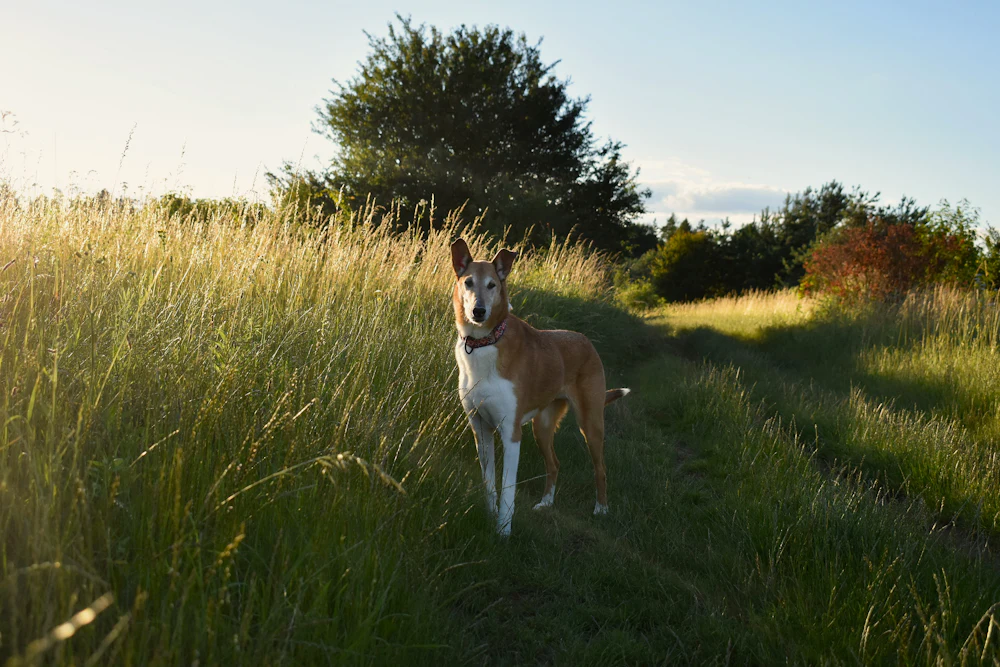
History
The Smooth Collie is the short-coated variety of the Scottish and northern English herding collie, and the FCI lists it as a separate breed, number 296, with Great Britain as its country of origin and Group 1 as its home. The standard gives no historical text of its own, and the FCI classes the dog as a sheepdog without a working trial.
The Rough Collie became a household name and a fashionable show dog, while the Smooth stayed quieter and less numerous, kept by people who valued a collie that needed no daily grooming. Today it is above all a companion, though the standard still describes the breed as a sheepdog, and many individuals show a flicker of herding behaviour, circling children or nudging at heels, when excited.
Temperament
The FCI describes a friendly disposition with no trace of nervousness or aggressiveness, and the general appearance section speaks of intelligence, alertness and activity. In daily life that translates into a dog that is soft, sensitive and closely attached to its household. Smooth Collies tend to read the mood of a room, and many will follow one person from kitchen to study and settle at their feet.
A raised voice or a tense atmosphere can unsettle these dogs, and an under-socialised puppy may grow into a shy adult who barks at strangers from a distance. They are alert and will announce visitors, usually with a pleasant, rather high bark, but they are not guards.
Children and other pets
Smooth Collies are generally gentle with children and happy to be part of family life, which is why the breed has such a loyal following. Their herding heritage can show as nipping at running feet, so teach children to move calmly and teach the dog an alternative, such as fetching a toy. Cats are normally accepted when the dog grows up with them, though a fast, fleeing cat may trigger a chase in some individuals.
Exercise and the daily walk
An adult needs roughly an hour to an hour and a half of activity a day, split into at least two outings. It is not an extreme dog, but it is an athletic one with a long, efficient stride, and it enjoys a proper run in a safe space as well as steady walking.
Off-lead reliability is usually good when recall has been built carefully from puppyhood, but a collie that spots movement can fixate, so keep a lead handy near roads and cyclists. Puppies should not be asked for long walks or repeated jumping before the joints have matured, and exercise in summer heat should be limited to the cool hours.
Training
Smooth Collies respond best to gentle, reward-based teaching, short sessions and a clear structure. Harsh corrections tend to backfire, producing a dog that shuts down or avoids the handler. Because they are clever, they also learn the wrong things quickly, so be consistent about jumping up, barking at the window and pulling on the lead.
Early socialisation matters more than for many breeds, since a shy streak is the usual weakness. Expose the puppy gently to lifts, trams, buses, other dogs and different people, always at the dog's pace. Teach a calm settle, a reliable recall and relaxed handling for grooming and vet visits.
Coat and grooming
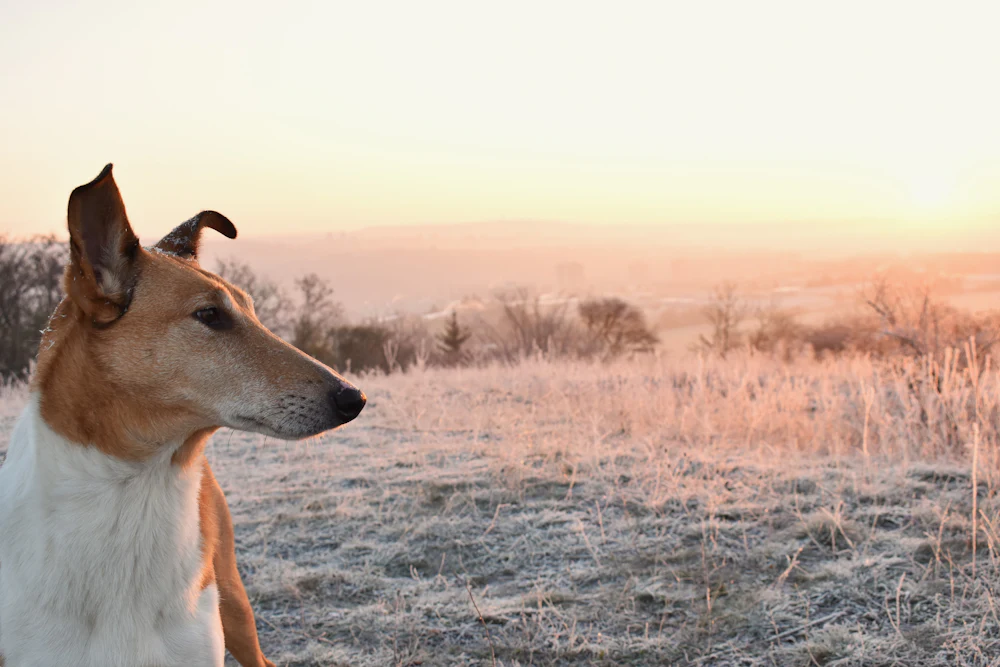
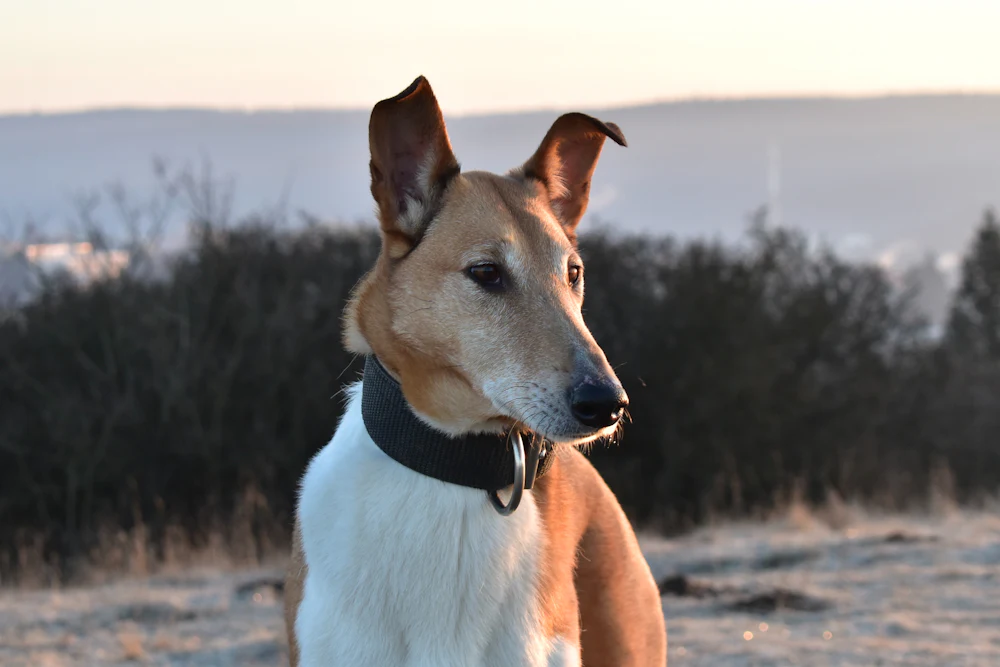
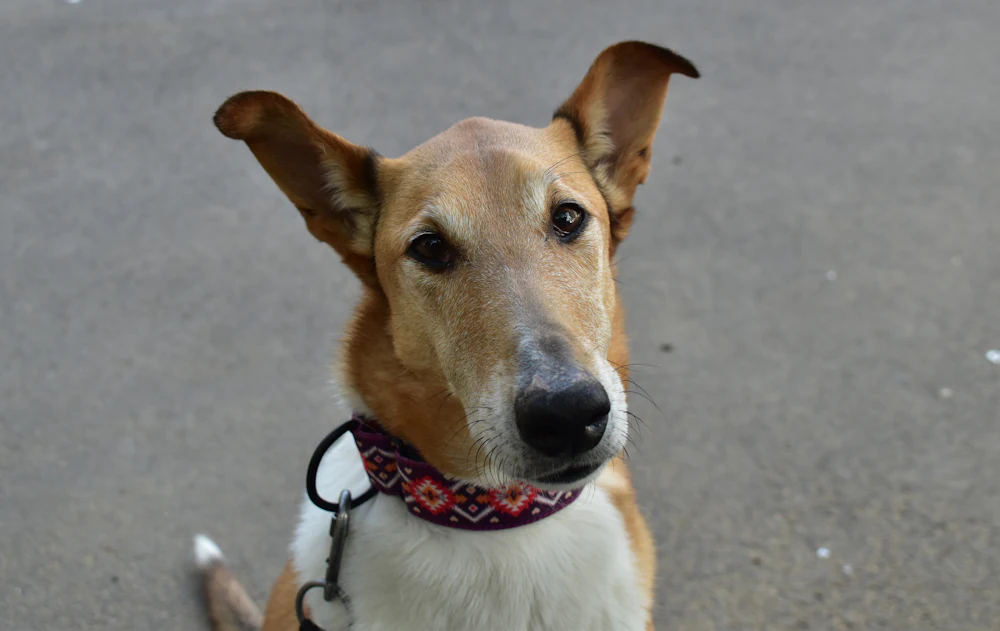
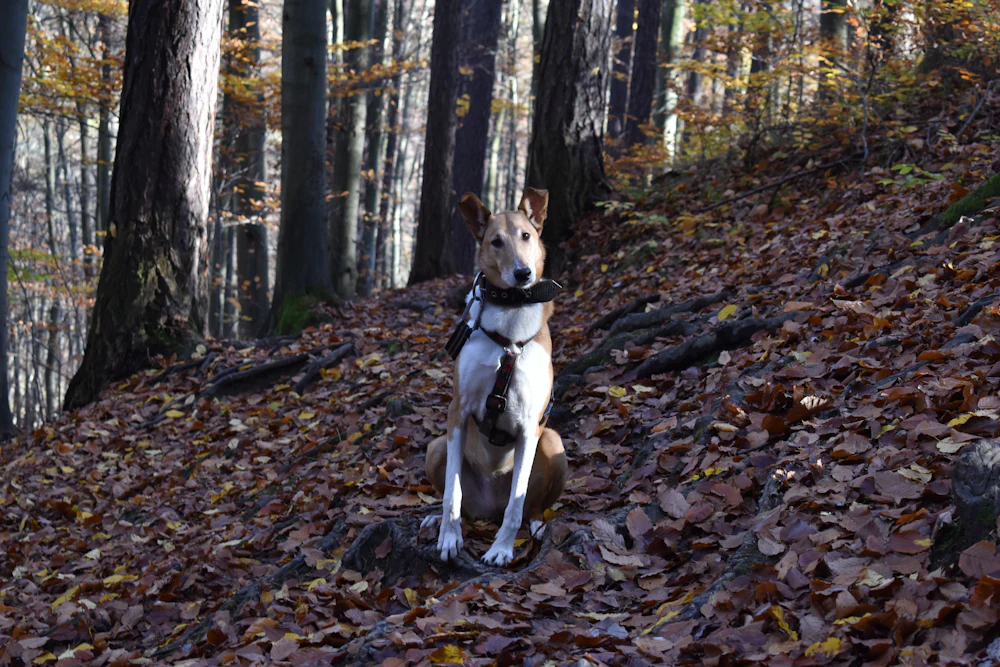
The FCI asks for a short, flat top coat of harsh texture over a very dense undercoat, and states that it must not be trimmed or clipped. Brush weekly with a firm brush or rubber mitt, and more often during the heavy seasonal moult, when the undercoat comes out in handfuls. Permitted colours are sable and white, from light gold to rich mahogany, tricolour, and blue merle, all with the white markings typical of the breed.
Feeding and weight
Feed a good complete diet suited to a medium, active dog, in two meals a day. Smooth Collies are usually not greedy, but a quiet life can still lead to weight gain, so check body condition by feeling the ribs. Because the breed is deep in the chest, avoid hard exercise just before and after meals, and ask your vet about the signs of bloat.
Work out a starting calorie figure and food weight with the calorie calculator. Not sure this is the right breed? Take the quiz.
Health
Every breed carries predispositions. These are the conditions most often discussed for the Smooth Collie, not a prediction for any individual dog.
- Sensitivity to certain drugs (MDR1 gene mutation), which should be tested for before any treatment
- Collie eye anomaly, an inherited developmental eye condition
- Progressive retinal atrophy, a gradual inherited loss of sight
- Gastric dilatation and volvulus (bloat), a risk in deep-chested breeds
- Skin and coat problems linked to allergies
What to ask the breeder. Ask for the results of the MDR1 test and a current eye examination for both parents, and ask which hereditary conditions the breeder screens for in the line.
Choosing a puppy
Smooth Collie puppies are bright, quick to learn and easily startled, so the first weeks matter. Start with short, happy introductions to the lift, the stairs, the street and different people, and let the puppy retreat when worried. Keep exercise gentle while the bones grow, with free play on soft ground rather than long marches, and begin calm handling of ears, paws and coat early.
In Luxembourg the national kennel club is the Fédération Cynologique Luxembourgeoise (FCL), a member of the FCI. Many owners also buy from breeders in Germany, France or Belgium; a puppy coming from another EU country must be microchipped and vaccinated against rabies, which in practice means it cannot travel before about fifteen weeks of age. Where to get a dog in Luxembourg.
The older Smooth Collie
Many Smooth Collies stay lively into their early teens, though eyes and joints deserve attention from about eight years. Offer shorter, more frequent walks, a warm, non-slip place to rest and regular vet checks, including sight and hearing. Keep the mind busy with gentle scent games and simple tricks. Watch weight carefully, as a slowing dog gains easily, and report any cloudiness of the eyes, stiffness or change in drinking promptly.
A realistic day
A realistic weekday for a working household in Luxembourg City, with a midday visit. Adjust it to your dog, not the other way round.
Fifteen to twenty minutes of lead walking and a toilet break, then breakfast, followed by a few minutes of training.
Owner leaves for work; the collie settles by the window with a chew or food toy, and a radio on low.
Midday visit: a 40-minute walk in a quiet green space with a ball or a few training games, fresh water.
Main evening outing of about an hour, with a longer off-lead stretch where it is safe; dinner on return.
Last toilet break, a short brush of the coat if needed, and a quiet settle on the bed.
A Smooth Collie in Luxembourg
A Smooth Collie is a good fit for life in a Luxembourg City flat, provided there is a lift or manageable stairs and someone to give two proper outings a day. Indoors it is calm and clean. Outdoors, the Pétrusse valley and Parc Merl are good for morning and evening walks, and the Bambësch and Grünewald forests give room to run. Free buses and trams make it easy to reach them, and a socialised collie usually copes well with public transport.
The dense double coat is warmer than it looks, so summer days in the 30s °C call for early and late walks, shade and water. Barking is the main neighbourly issue: a bored or lonely collie may call out when left, so build up time alone gradually, and consider a midday visit if you work long hours. Remember the standard Luxembourg obligations: microchip, declaration to the commune, third-party liability insurance and the annual dog tax.
Every dog in Luxembourg must be identified, declared to the commune and covered by liability insurance. How registration works.
When you travel
A sitter should know that this dog is sensitive and thrives on routine, so keep walk and meal times as close to normal as possible. Warn the sitter about the MDR1 drug sensitivity and leave the vet's details. Expect some sulking or barking on the first evenings. Keep the dog on lead near roads, supply water in warm weather, and brush a little each day if the coat is shedding.
PAWLY's holiday and overnight care takes place in your home, so your dog keeps its own bed and routine.
Myths and facts
MythSmooth Collies are just Rough Collies with the coat cut off.
FactThey are bred as a separate variety with a short coat of its own, and the FCI lists them under a separate standard number. The coat is never trimmed or clipped.
MythA short coat means no shedding.
FactThe very dense undercoat is shed heavily at least twice a year, and loose hair appears in between. Short hair is easier to manage, but it is not hair-free.
MythCollies are all like the dog in the films.
FactIndividuals vary. Many are gentle and clever, but they also need training, exercise and socialisation, and some are shy or noisy without them.
Is it the right dog for you?
Suits
- Owners who want a gentle, trainable dog with an easy coat
- Active people who enjoy daily outings and training games
- Households with children who can behave calmly around a dog
- Flat dwellers who can offer company and a midday break
Think twice if
- You are away from home for long hours with no midday help
- You dislike barking or loose hair on the floor
- You want a guard dog or a dog that is indifferent to company
- You are not prepared to socialise a sensitive puppy carefully
Questions owners ask
Is a Smooth Collie easier to look after than a Rough Collie?
In terms of grooming, yes. The short coat needs a weekly brush rather than long sessions with mats and tangles. The temperament and exercise needs are similar, so the saving is in time spent on the coat only.
How much do Smooth Collies bark?
They are alert and can be vocal, especially when bored, anxious or left alone. Good socialisation, enough exercise and gradual training for time alone reduce the problem, though they will usually still announce visitors.
What is the MDR1 mutation?
It is a gene change found in many collie-type breeds that makes dogs sensitive to certain drugs. A simple DNA test shows whether a dog carries it. Tell any vet that you own a collie, and check test results with the breeder.
Can a Smooth Collie live in a flat?
Yes, if it has two real outings a day, company and a calm routine. It is clean and quiet indoors when its needs are met. The lift and the neighbours matter more than the floor area.
Sources
Photo: Unsplash (Unsplash License) · Photo: Unsplash (Unsplash License) · Photo: Unsplash (Unsplash License) · Photo: Unsplash (Unsplash License) · Photo: Unsplash (Unsplash License)
General information for dog owners in Luxembourg, not veterinary or legal advice. Official facts (origin, size, group, history and temperament as described by the breed standard) follow the FCI standard; health and care sections reflect breed-club and veterinary guidance and are typical ranges rather than rules. For your own dog, ask your vet, the breed club or your commune. How this guide is written and checked. Last reviewed 8 October 2026.
Need someone for your Smooth Collie?
PAWLY offers an individual 45-minute walk or a home visit at your dog's pace, the same walker every time, and a written report with photos after every visit, across Luxembourg City.
Read next: the journal, for the Smooth Collie
All articles
Dog first aid: the six emergencies and what to do first
Bloat is an emergency in deep-chested breeds like the Smooth Collie; this covers what cannot wait.

The itchy dog: working through it in the right order
Skin trouble is among the conditions discussed for the Smooth Collie; this is the order to work through it.

Dogs in apartment buildings: the rules, the neighbours and the noise
Flat life is one of the Smooth Collie's strengths, but building rules and neighbours still count.
Similar breeds
All 198 breeds
Rough Collie
A Scottish working sheepdog in an extravagant coat, gentle and sensitive at home, and happiest when its family is close by.
EnergyGroomingFlat life
Border Collie
Probably the most capable working dog in the world, and for the same reason one of the hardest to keep in a city flat.
EnergyGroomingFlat life
Shetland Sheepdog
A small, sensitive herding dog from the Shetland Islands, bright and devoted, and a keen barker.
EnergyGroomingFlat life

