


History
The Appenzeller Sennenhund, or Appenzell Cattle Dog, comes from the Appenzell region of north-eastern Switzerland. The FCI standard says the breed was first documented in 1853, and that the Swiss Cynological Society supported it from 1895 to 1898. The Appenzeller Sennenhund Club was founded in 1906 under Professor Albert Heim, a stud book was started, and the first standard was written in 1914.
It is one of the four Swiss mountain and cattle dogs, classified by the FCI in Group 2, Section 3. The standard lists its traditional uses as a driving, watch, guard, house and farm dog, and describes a tricolour, medium-sized, almost square dog of muscular, agile build with a cheeky expression. Although it now lives in Switzerland and several other European countries, the breeding population remains modest.
Temperament
The standard describes a lively, high-spirited, self-assured, reliable and fearless dog, slightly suspicious of strangers, a watchdog that cannot be bribed and one that is capable of learning. Anyone who has met one will recognise that. An Appenzeller is bright, alert and quick to react, with a strong sense of what belongs to its family. It will bark at passers-by, at a ring of the bell and at changes you have not noticed.
This is a dog that wants a job. Its herding background shows in the way it circles, nips at heels and tries to organise children and other pets. Without enough exercise and mental work it finds its own occupations, and these are rarely welcome: barking, digging, chasing bikes. Given steady activity and a firm, fair owner it is a devoted, funny and very loyal companion.
Children and other pets
With a household it knows, the Appenzeller can be a lively and loyal family dog, but the herding urge matters. It may nip at running children's heels, and it needs supervised introductions and clear rules. It is usually best with older, active children who can join in training. Towards other dogs it can be assertive. Cats and small pets are usually accepted if raised together, though outside the home the chase instinct is strong.
Exercise and the daily walk
This is not a breed for the casual walker. An adult needs at least two hours of activity a day, and ideally more on weekends, made up of brisk walking, running, hiking or cycling by a safe path, plus real mental work. The Appenzeller was built to cover mountain pasture all day, and a short lap round the block will leave it frustrated.
Mental tasks are as important as miles. Dog sports such as agility, obedience, tracking or herding trials use the dog's speed and intelligence. Games with a ball or frisbee can become obsessive, so mix them with sniffing and training. Take care that the dog is not over-exercised while growing: avoid repeated jumping and long runs until about a year to eighteen months, and keep the lead on near roads and cyclists.
Training
The standard calls it capable of learning, and it learns fast, including the things you did not mean to teach. It does best with an owner who is calm, consistent and active, and training that is varied and rewarding. Heavy-handed methods tend to produce a stubborn, defensive dog. Start with impulse control, since this is a breed that reacts first and thinks later.
Socialisation matters from the start, because the natural suspicion of strangers can become over-barking or reactivity. Expose the puppy to people, other dogs, trams, lifts and traffic in a calm way and reward quiet behaviour. Teach a reliable recall and a settle on a mat, and discourage heel-nipping early. Enrolling in a club for obedience or agility gives both of you structure and an outlet.
Coat and grooming
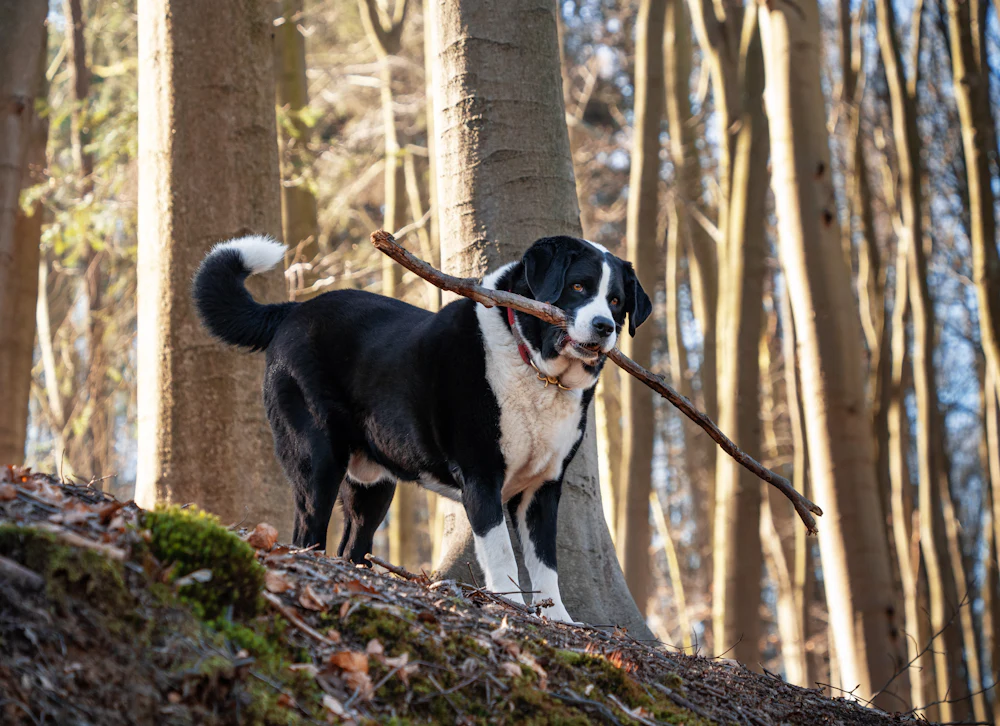
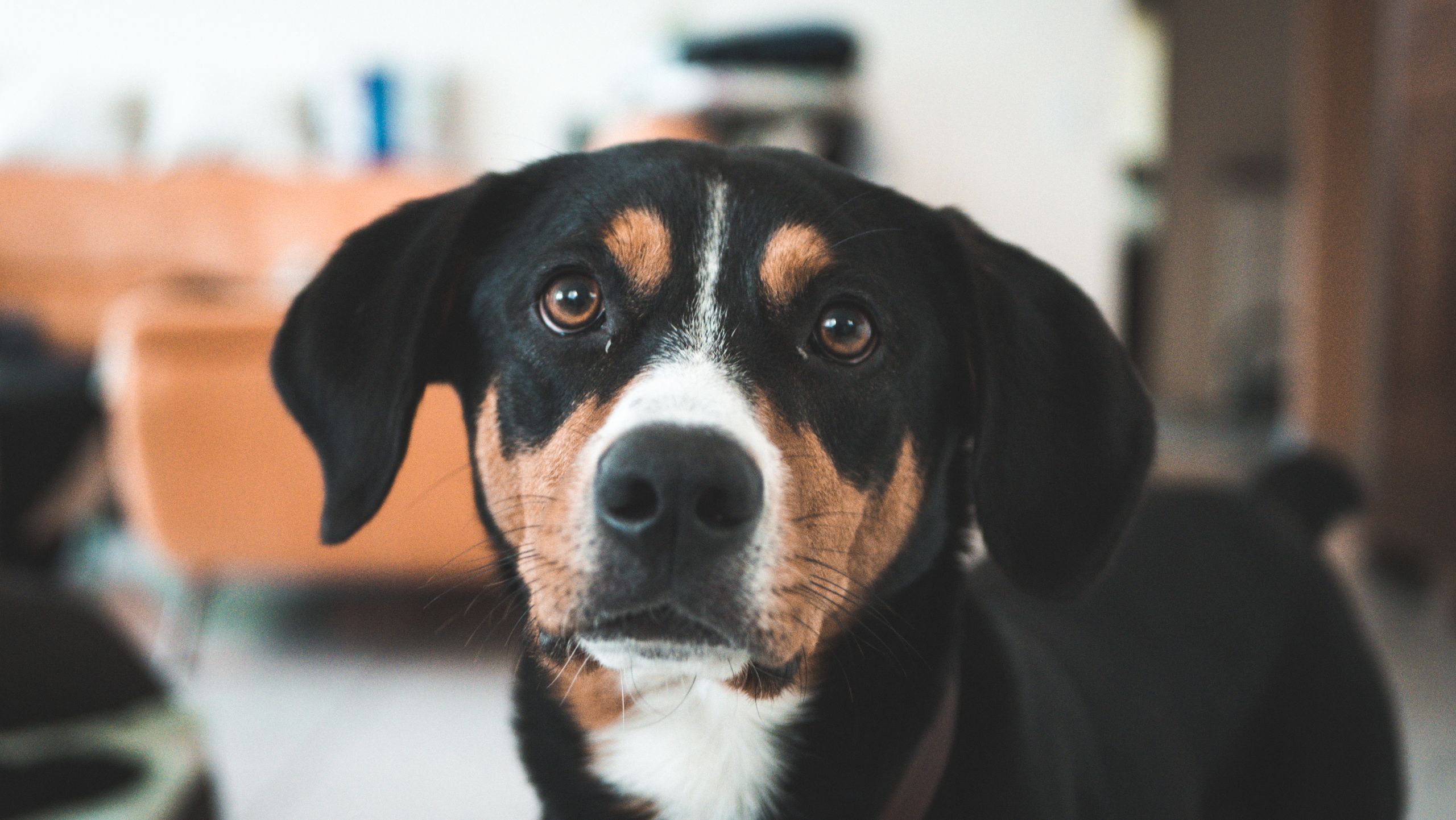
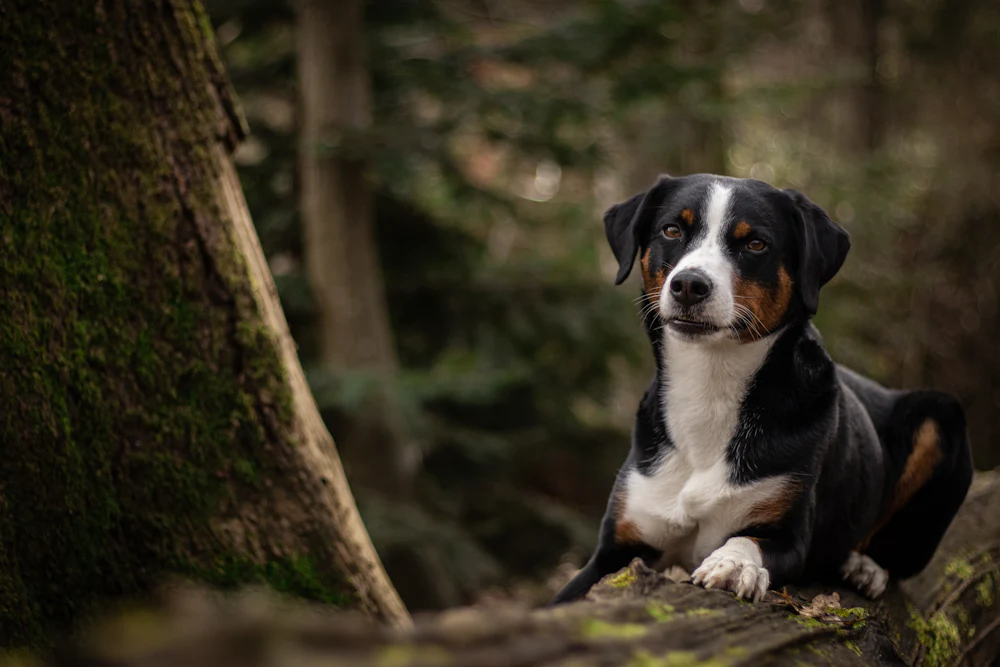
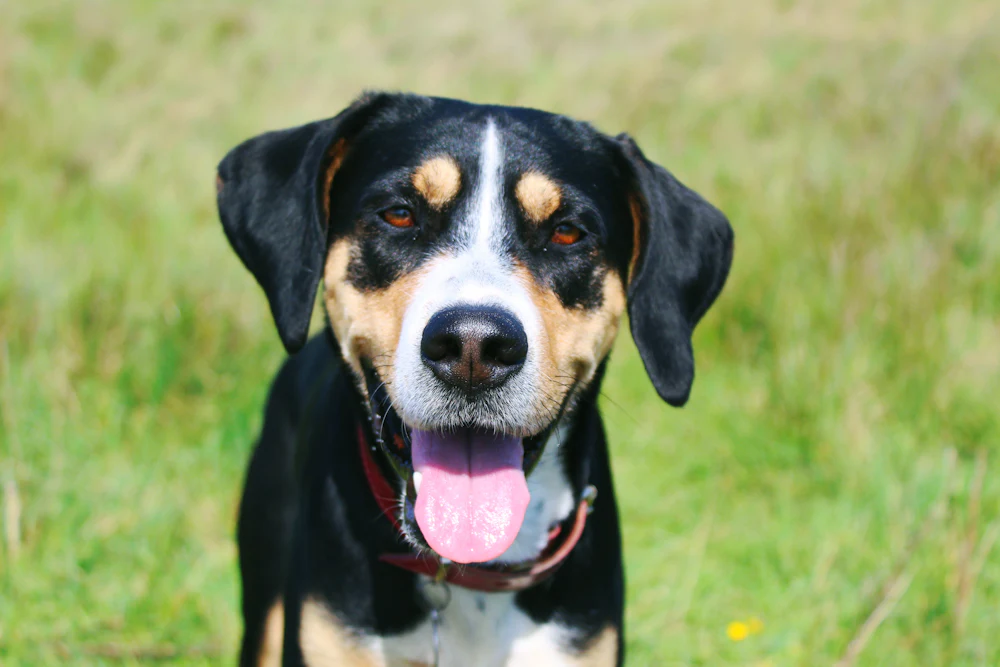
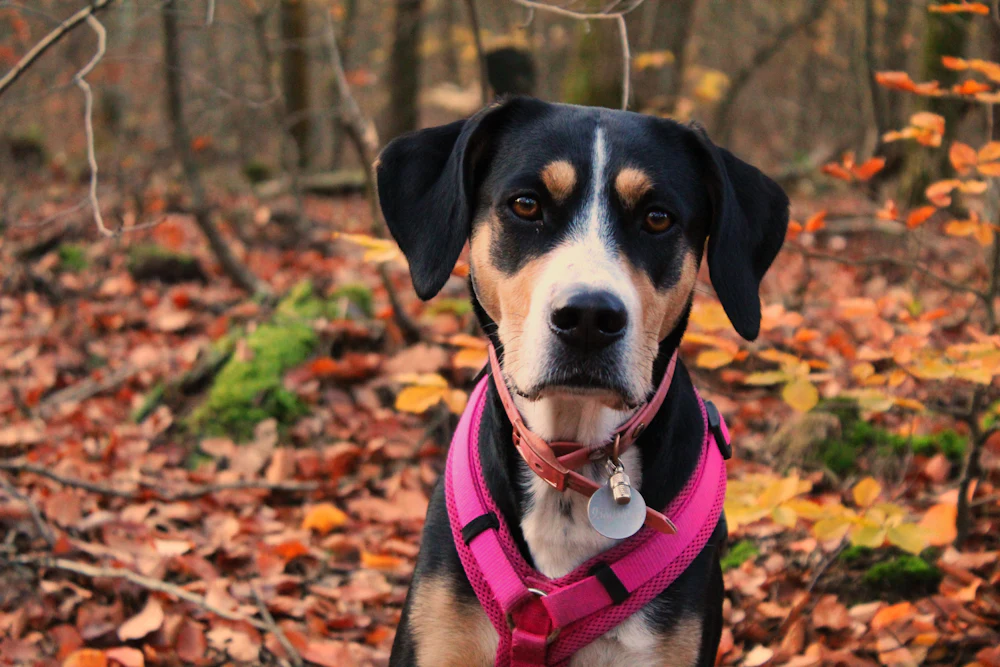
The coat is a double coat, with a firm, close-fitting top coat and a thick undercoat. The base colour is black or havana brown, with reddish-brown and white markings as symmetrical as possible: a white blaze from the skull over the nose, white from chin to chest, white on all four feet and on the tail tip. Brush once a week, more often during the twice-yearly moult. Bathing is rarely necessary. Check ears and feet after muddy walks.
Feeding and weight
An active working dog does well on a complete food of good quality, in two measured meals. Adjust amounts to activity: a dog running every day needs far more than one that is resting through winter. Avoid overfeeding treats during training. Keep young dogs lean so that joints grow steadily, and pay attention to body condition by feeling the ribs. Allow rest after meals, and have fresh water at all times.
Work out a starting calorie figure and food weight with the calorie calculator. Not sure this is the right breed? Take the quiz.
Health
Every breed carries predispositions. These are the conditions most often discussed for the Appenzeller Sennenhund, not a prediction for any individual dog.
- Hip and elbow dysplasia (malformed joints)
- Eye problems, including persistent pupillary membranes (PPM) and cataract
- Epilepsy, reported in some lines
- Gastric torsion (bloat), seen occasionally in active dogs
- Allergies and skin trouble in some individuals
What to ask the breeder. Ask for hip and elbow scores, eye examination certificates for both parents, and whether epilepsy or other inherited conditions appear in the lines. Ask about the dogs' temperament and how the puppies are socialised.
Choosing a puppy
An Appenzeller puppy is bright, bold and always busy. Start gentle, varied socialisation in the first weeks, with city sounds, strangers and other calm dogs. Keep walks short and on soft ground while the joints grow, and give mental games such as hiding treats or simple tricks. Teach it to be alone in short stretches, and not to nip at ankles. Provide safe chews and a crate or bed where it can rest, because overtired puppies become wild.
In Luxembourg the national kennel club is the Fédération Cynologique Luxembourgeoise (FCL), a member of the FCI. Many owners also buy from breeders in Germany, France or Belgium; a puppy coming from another EU country must be microchipped and vaccinated against rabies, which in practice means it cannot travel before about fifteen weeks of age. Where to get a dog in Luxembourg.
The older Appenzeller Sennenhund
Many Appenzellers stay energetic and sharp into old age. Watch for stiff hips and elbows, and reduce high-impact games while keeping the walks regular and the mind busy. Check the eyes, teeth and weight, and arrange a veterinary check twice a year. Provide a warm, firm bed and keep brain games going with scent work and gentle tricks, since an under-stimulated older dog still gets bored.
A realistic day
A realistic weekday for a working household in Luxembourg City, with a midday visit. Adjust it to your dog, not the other way round.
A brisk 40-minute walk with training breaks, then breakfast and a rest.
Owner leaves for work; the dog has a stuffed chew and a window it can watch, though not too closely.
Midday visit: an energetic 60-minute walk or run, with ball or training games, fresh water.
Longer evening outing of an hour or more, ideally in the forest, including training and sniffing.
Short toilet break, a calm settle on the mat and lights out.
An Appenzeller Sennenhund in Luxembourg
An Appenzeller can live in a Luxembourg flat only if its exercise and mental needs are met in full. Many city dogs of this breed become noisy and restless if they are left for long periods. A house with a garden or an apartment close to green space is better. Barking at noises in the stairwell and at neighbours is a real issue in a shared building, so early training is important.
The country gives the breed plenty to do. The Bambësch and Grünewald forests offer long, varied walks, and the Pétrusse valley, Parc Merl and the Municipal Park are useful for shorter outings. Buses and trams are free nationwide, so a day out on a lead, with a longer hike, is easy to arrange. In summer, which can reach the 30s °C, exercise early or late; the double coat is thick.
Every dog in Luxembourg must be identified, declared to the commune and covered by liability insurance. How registration works.
When you travel
A sitter needs energy. This dog must have its walks, mental games and its routine, or it will invent its own entertainment. Keep it on a lead near roads and cyclists, as the herding and chasing instinct is strong. Expect watchful barking at the door and at strangers; do not hand the lead to someone unfamiliar. Confirm feeding times, the vet's number and any commands the dog knows.
PAWLY's holiday and overnight care takes place in your home, so your dog keeps its own bed and routine.
Myths and facts
MythIt is just a smaller Bernese Mountain Dog.
FactIt is a separate breed, lighter, faster and more driven than the other Swiss mountain dogs, and a working herder, not a gentle giant.
MythA tricolour farm dog is happy to lie around.
FactThe Appenzeller was bred to work all day and needs about two hours of exercise plus mental tasks.
MythA suspicious dog is a poor family dog.
FactThe standard says slightly suspicious of strangers, but loyal and reliable with its own family. Training and socialisation make a good house dog.
Is it the right dog for you?
Suits
- Active owners who run, hike or cycle
- People who want a dog for agility, obedience or herding sports
- Households with older, sensible children
- Owners with experience of working or herding breeds
Think twice if
- You work long hours and cannot offer a lot of exercise
- You want a quiet dog for a small flat
- You have toddlers or running children and little time to supervise
- You dislike barking or watchful dogs
Questions owners ask
Is the Appenzeller a good first dog?
Rarely. It is clever, energetic and quick to take over if the owner is inconsistent. A first-time owner who is active, patient and ready to attend training classes can succeed, but it takes commitment.
How much exercise does it need?
About two hours a day for an adult, with real mental activity as well. A dog that gets less may bark, dig, chase and nip.
Does the Appenzeller bark a lot?
It can. It is a watchdog by nature and reacts to sounds. Training from puppyhood, enough exercise and calm routines reduce it, but a certain amount of alert barking is normal.
Does it shed much?
It has a short double coat that sheds moderately all year and heavily during the moult. Weekly brushing is usually enough, and daily brushing during the moult helps.
Sources
Photo: Unsplash (Unsplash License) · Photo: Pexels (Pexels License) · Photo: Unsplash (Unsplash License) · Photo: Unsplash (Unsplash License) · Photo: Unsplash (Unsplash License)
General information for dog owners in Luxembourg, not veterinary or legal advice. Official facts (origin, size, group, history and temperament as described by the breed standard) follow the FCI standard; health and care sections reflect breed-club and veterinary guidance and are typical ranges rather than rules. For your own dog, ask your vet, the breed club or your commune. How this guide is written and checked. Last reviewed 8 October 2026.
Need someone for your Appenzeller Sennenhund?
PAWLY offers an individual 45-minute walk or a home visit at your dog's pace, the same walker every time, and a written report with photos after every visit, across Luxembourg City.
Read next: the journal, for the Appenzeller Sennenhund
All articles
Working breeds in a city flat: the honest version
High-drive dogs like the Appenzeller Sennenhund can live in a flat, but it takes a plan.

Dogs and cats in the same flat
The Appenzeller Sennenhund can see small animals as prey; this covers living with a cat in a flat.

The front door: barking, deliveries and escapes
A watchful breed reacts at the door; this is how to manage it.
Similar breeds
All 198 breeds
Bernese Mountain Dog
A gentle Swiss giant, beautiful and good-natured, with a sadly short life expectancy.
EnergyGroomingFlat life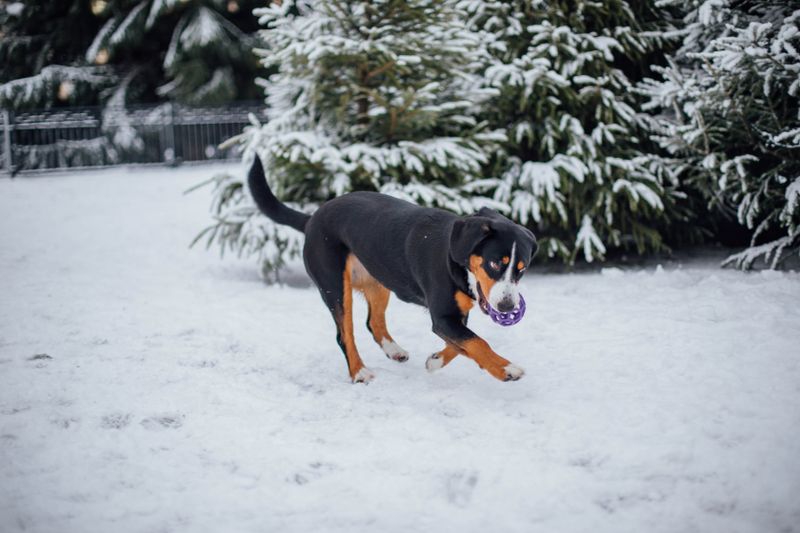
Entlebucher Mountain Dog
The smallest and liveliest of the Swiss mountain dogs, a compact tricolour cattle dog that herds, plays and keeps a sharp eye on its patch.
EnergyGroomingFlat life
Greater Swiss Mountain Dog
A big, steady Swiss farm dog with a tricolour coat and a gentle manner, built to pull a cart and happiest when it is near its people.
EnergyGroomingFlat life

