


History
The Bernese Mountain Dog began as a farm dog in the region of the Swiss canton of Bern. It was once called the Dürrbächler, after the hamlet of Dürrbach, and worked as a guardian, a cattle drover and a draught dog that pulled carts of milk and cheese to market. The FCI standard places it among the Swiss Cattle Dogs, a group of large farm and drover breeds from the Swiss countryside.
In 1907, according to the FCI, some breeders of the Burgdorf region decided to promote pure breeding of these dogs, and the Schweizerischer Dürrbach-Klub was set up to settle the breed's characteristics. Albert Heim, the Swiss geologist and dog authority, was among those who helped save and standardise it. By 1910 more than a hundred dogs were shown, and the breed went on to win a following well beyond Switzerland, both as a working dog and as a family companion.
Temperament
The FCI wants a self-confident, attentive and vigilant dog that is fearless in everyday situations, good-natured and devoted to its own people, self-assured and placid towards strangers. It describes the temperament as medium and the dog as docile. That fits experience well: a Berner meets the world with an easy, unhurried calm, will lean its whole weight against your legs and rarely makes a fuss about visitors, although it will notice them and may announce them with a single deep bark.
The softness is real, and so is the sensitivity. Berners are slow to mature, and a dog of two may still behave like a clumsy adolescent in a very large body. They dislike harshness and are happiest when they are close to the family, ideally in the same room. A Berner shut away in a garden or left alone for long days is a miserable animal. Aggressive or overly shy dogs are disqualified in the standard, and good breeders select against both.
Children and other pets
Berners are among the better large breeds for family life. They are patient, gentle and tolerant of children, and usually get on with other dogs and, if raised together, with cats. The risk is size, not temper: a young Berner can knock over a toddler without noticing, and a dog leaning on a child may be too heavy. Supervise young children, and be ready for slobber, shedding and a dog that follows everyone from room to room.
Exercise and the daily walk
Moderate, regular exercise suits the breed: roughly an hour to an hour and a half a day, split into two or three outings. A Berner is built for steady work rather than speed, and it enjoys a long amble in the woods far more than a sprint. Cool mornings and evenings are best, with water available and shade on the route.
Take care with puppies and adolescents. Over-exercising a growing giant puppy, with long runs, repeated jumps or hard stairs, can harm developing joints. Keep outings short and frequent, let the dog set the pace and avoid forced running. Mental work counts too: scent games, simple tricks and carrying things keep a Berner content, and many enjoy draught or cart work, a nod to their ancestry.
Training
Berners are willing, good-natured and keen to please, which makes training pleasant if it begins early. They respond best to gentle, consistent, reward-based methods and are quickly dispirited by shouting or force. Keep sessions short and positive. The aim is manners rather than polish: a dog that waits at doors, does not pull on the lead and comes when called is a joy at this size.
Lead manners matter more than usual, because a pulling Berner can take a walker off their feet. Start loose-lead walking in the first weeks and be patient, since adolescence can bring a lapse. Socialise gently with strangers, other dogs, children, lifts and trams. Teach calm handling of paws, ears and mouth, because a giant dog that resists a vet visit is a real problem.
Coat and grooming
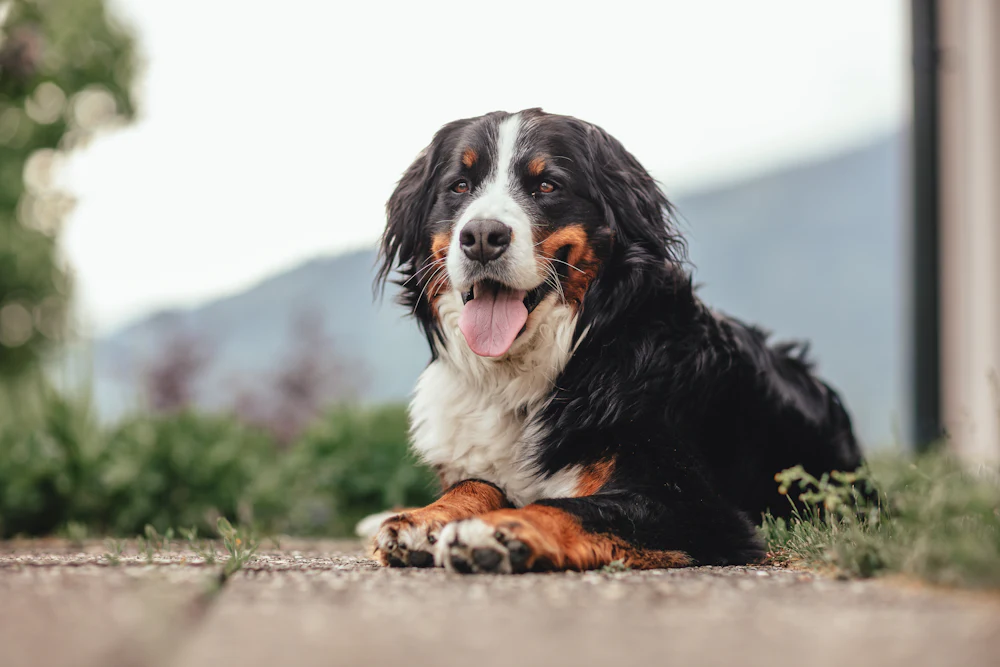
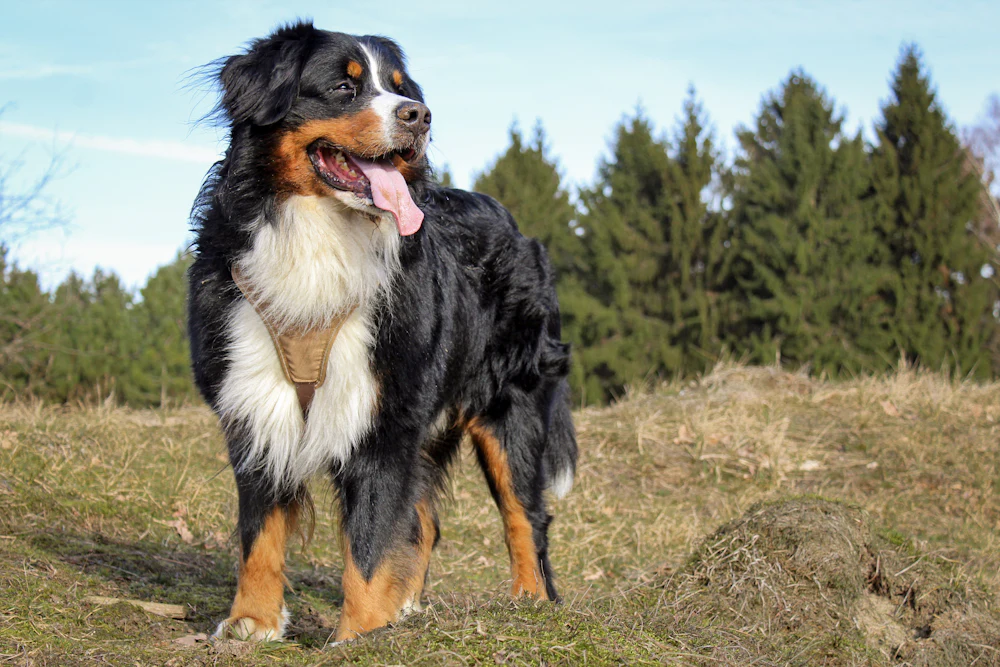
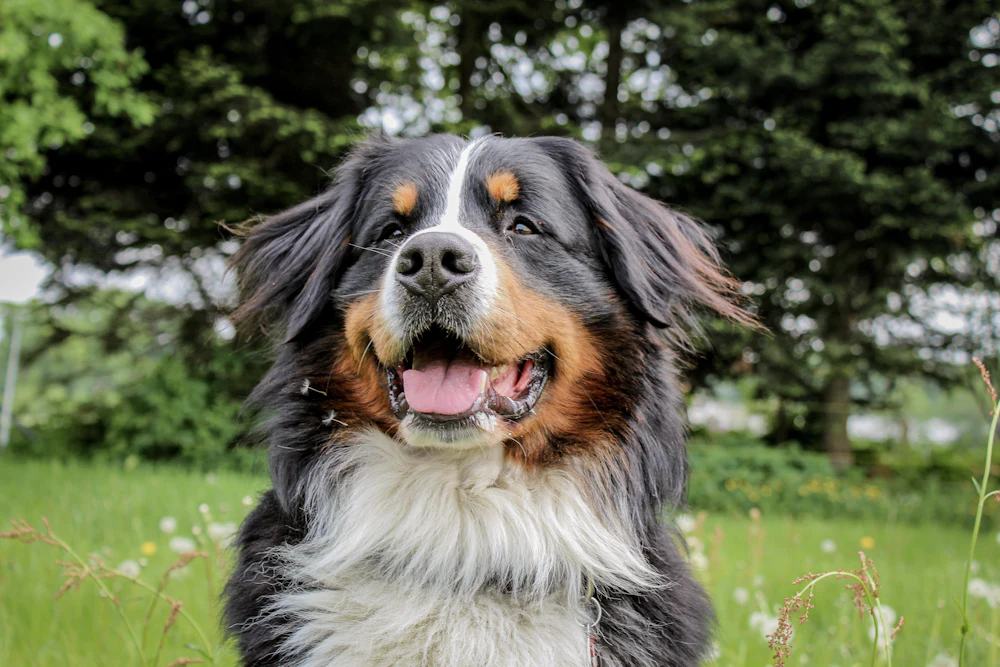
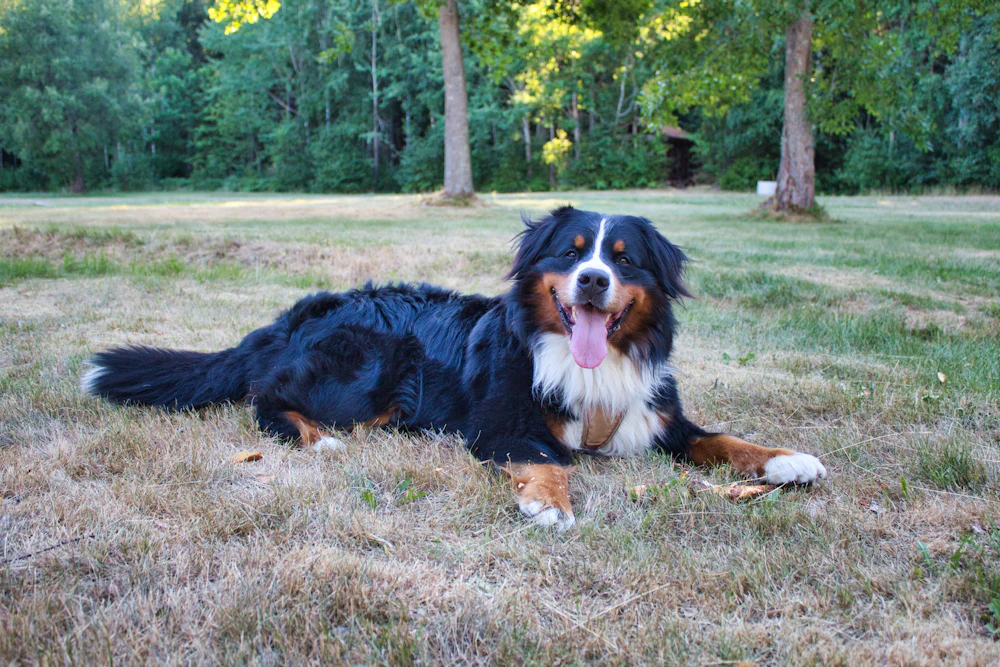
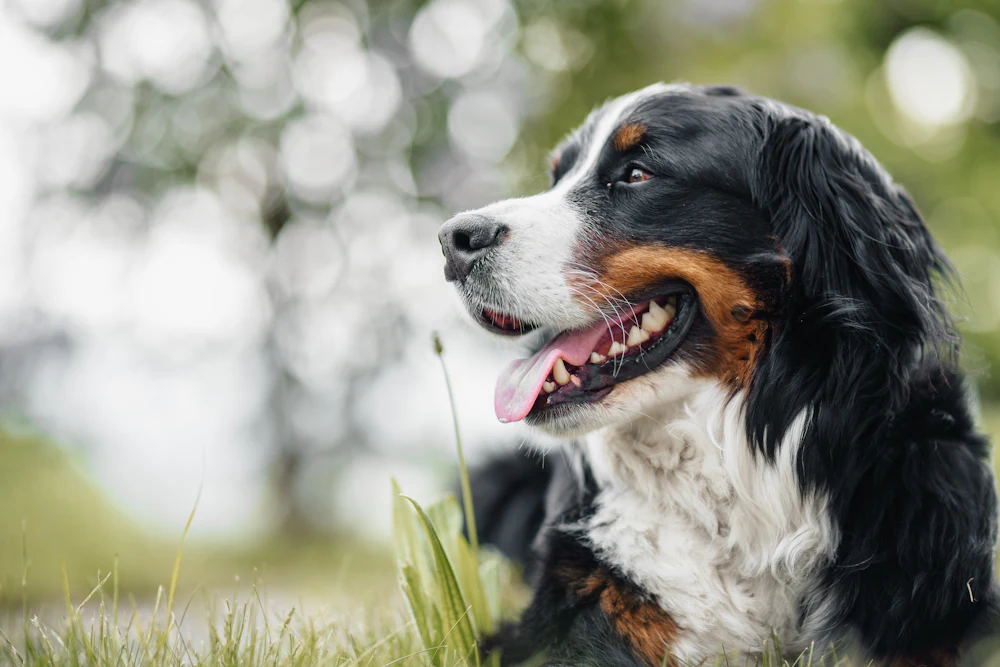
The coat is long, shining and straight or slightly wavy, with a dense undercoat. The FCI wants a jet black main colour with rich tan markings on the cheeks, above the eyes, on all four legs and on the chest, with white markings including a blaze, throat and chest. The coat sheds heavily, especially seasonally. Brush several times a week, and daily in the heavy shed, and expect to vacuum often.
Feeding and weight
Giant dogs eat a lot, and food is one of the real costs of the breed. Feed a complete diet suited to large breeds, split into two or three meals, and avoid vigorous exercise around mealtimes because of the bloat risk. Keep the dog lean throughout life, since extra weight stresses the joints, and do not let a growing puppy gain weight too fast.
Work out a starting calorie figure and food weight with the calorie calculator. Not sure this is the right breed? Take the quiz.
Health
Every breed carries predispositions. These are the conditions most often discussed for the Bernese Mountain Dog, not a prediction for any individual dog.
- Cancer, especially histiocytic sarcoma, which affects the breed at a high rate
- Hip and elbow dysplasia
- Degenerative myelopathy
- Gastric dilatation-volvulus (bloat)
- Short average lifespan, often around eight years
What to ask the breeder. Ask for hip and elbow scores, a DNA test for degenerative myelopathy, and questions about longevity and cancer in the lines, including the age and cause of death of relatives.
Choosing a puppy
Visit the breeder, meet the mother and look at the household where the puppies are raised. Ask for hip and elbow scores, the DNA test result for degenerative myelopathy and the ages at which relatives died. Choose a breeder who is open about cancer in the lines. A Berner puppy grows fast and needs gentle exercise, good footing and early lead training before it becomes too heavy to manage.
In Luxembourg the national kennel club is the Fédération Cynologique Luxembourgeoise (FCL), a member of the FCI. Many owners also buy from breeders in Germany, France or Belgium; a puppy coming from another EU country must be microchipped and vaccinated against rabies, which in practice means it cannot travel before about fifteen weeks of age. Where to get a dog in Luxembourg.
The older Bernese Mountain Dog
Berners age earlier than many breeds, and signs of stiffness, tiredness or weight loss may appear by seven. Watch for lumps, limping, loss of appetite and reluctance to climb stairs, and see a vet promptly if any appear. Slippery floors can be a hazard, so put down rugs. Shorter walks, a soft bed and plenty of company matter most.
A realistic day
A realistic weekday for a working household in Luxembourg City, with a midday visit. Adjust it to your dog, not the other way round.
A gentle half-hour walk in the cool of the morning.
Breakfast, then rest and no exercise for an hour.
Midday visit from a walker: toilet break, a short stroll and fresh water.
An easy hour in the Bambësch or Parc Merl, with plenty of sniffing.
Final short walk and a brush.
A Bernese Mountain Dog in Luxembourg
A Berner in a flat is possible with a lift, but it is not easy. A dog of 40 kg or more takes up a lot of floor, and carrying one downstairs in an emergency is impractical. Check the lift's capacity, and practise riding it from puppyhood. Thick walls, a ground-floor flat or a flat with a balcony make life much easier, and a cool tile floor helps in summer.
Heat is the main issue. Summers can reach the 30s, and a thick double coat with a heavy frame struggles in that weather. Walk at dawn and dusk, carry water and shade the dog on outings, and never leave a Berner in a car. The Bambësch and the Grünewald offer cool, shaded routes, and the Pétrusse valley is good for easy walks. Giant breeds are costly to feed, insure and treat, and the usual rules apply: microchip, commune declaration, liability insurance and the annual dog tax.
Every dog in Luxembourg must be identified, declared to the commune and covered by liability insurance. How registration works.
When you travel
Berners hate being alone, so a sitter who stays in the home is the better choice. Introduce them beforehand, and leave notes on feeding times, the amount to feed and the dog's walking routine. Tell the sitter about heat sensitivity and bloat signs, including a swollen belly and retching. Moving a heavy dog is difficult, so make sure the sitter can handle the dog's size.
PAWLY's holiday and overnight care takes place in your home, so your dog keeps its own bed and routine.
Myths and facts
MythBerners love hot weather because they are fluffy.
FactThe thick coat makes them struggle in heat. Cool mornings and evenings are best, with shade and water.
MythA big dog needs a lot of running.
FactBerners need regular moderate exercise. Over-exercising a growing giant puppy can harm its joints.
MythBerners are just big teddy bears.
FactThey are gentle, but they are also strong, shed heavily and have a short lifespan with high cancer rates. They need owners who understand the demands.
Is it the right dog for you?
Suits
- Families with space and time
- Owners in cooler, rural settings
- People wanting a gentle, calm dog
- Those who want a dog that stays close
Think twice if
- You live in a flat without a lift
- You face hot climates or long summer trips
- You are unprepared for a short lifespan
- You dislike dog hair
Questions owners ask
How long do Bernese Mountain Dogs live?
Often seven to ten years, with many dying around eight. Cancer is the main cause. Ask breeders about longevity in their lines, because family history matters more than any promise made at the point of sale.
Are they good family dogs?
Excellent, provided the family can handle a large, shedding dog. Berners are gentle and patient, but their size demands supervision with small children and a home with room for them.
Can a Bernese Mountain Dog cope with Luxembourg summers?
With care. Walk early and late, provide shade, water and a cool floor indoors, and avoid midday heat. In very hot spells, keep outings short and stay in the shade.
Do Bernese Mountain Dogs need a lot of exercise?
About an hour to an hour and a half a day, at a steady pace. They enjoy long, easy walks more than hard running, and growing puppies need limited, gentle exercise to protect their joints.
Sources
Photo: Unsplash (Unsplash License) · Photo: Unsplash (Unsplash License) · Photo: Unsplash (Unsplash License) · Photo: Unsplash (Unsplash License) · Photo: Unsplash (Unsplash License)
General information for dog owners in Luxembourg, not veterinary or legal advice. Official facts (origin, size, group, history and temperament as described by the breed standard) follow the FCI standard; health and care sections reflect breed-club and veterinary guidance and are typical ranges rather than rules. For your own dog, ask your vet, the breed club or your commune. How this guide is written and checked. Last reviewed 8 October 2026.
Need someone for your Bernese Mountain Dog?
PAWLY offers an individual 45-minute walk or a home visit at your dog's pace, the same walker every time, and a written report with photos after every visit, across Luxembourg City.
Read next: the journal, for the Bernese Mountain Dog
All articles
Dogs in hot weather: the Luxembourg summer guide
The Bernese Mountain Dog carries a heavy coat or a heavy frame, which makes a Luxembourg summer the hard season.

Arthritis: the pain owners file under old age
Giant breeds tend to have joint trouble early; this is what to look for.

Growing a large-breed puppy without wrecking its joints
A giant puppy grows fast on soft bones; how it grows decides its joints for life.
Similar breeds
All 198 breeds
Greater Swiss Mountain Dog
A big, steady Swiss farm dog with a tricolour coat and a gentle manner, built to pull a cart and happiest when it is near its people.
EnergyGroomingFlat life
Saint Bernard
The legendary Alpine rescue dog: gentle, calm and enormous.
EnergyGroomingFlat life
Newfoundland
A giant water dog with a famously sweet nature, and a lot of drool.
EnergyGroomingFlat life

