


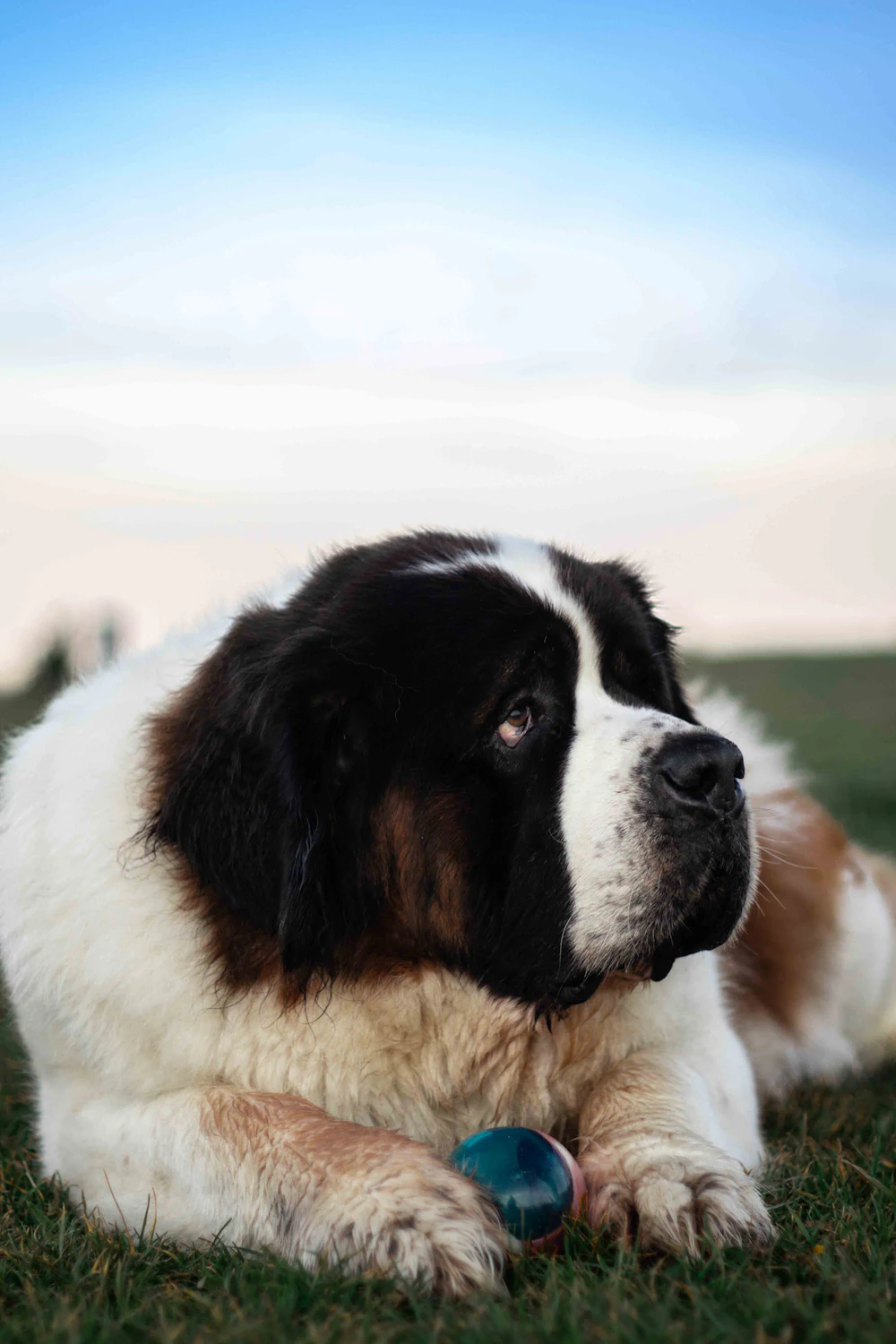
History
The breed takes its name from the hospice at the Great St Bernard Pass in the Swiss Alps, which monks established in the eleventh century. The FCI notes that large mountain dogs have been kept there since the middle of the seventeenth century for guarding and protection, and that the dogs are documented from 1695 onwards. They later became famous for rescue work in snow, and the legendary Barry, credited with saving many travellers, came to epitomise it. His body is displayed at the Natural History Museum in Bern.
The breed was organised in Switzerland well before most others. Heinrich Schumacher of Holligen near Bern was the first to issue pedigrees for his dogs, in 1867, and the Swiss Dog Stud Book, launched in February 1884, registered the St Bernard first. The breed was officially recognised on 2 June 1887 and is Switzerland's national dog. The brandy barrel around the neck is a legend popularised by painting, not history. The FCI recognises two varieties, short-haired and long-haired.
Temperament
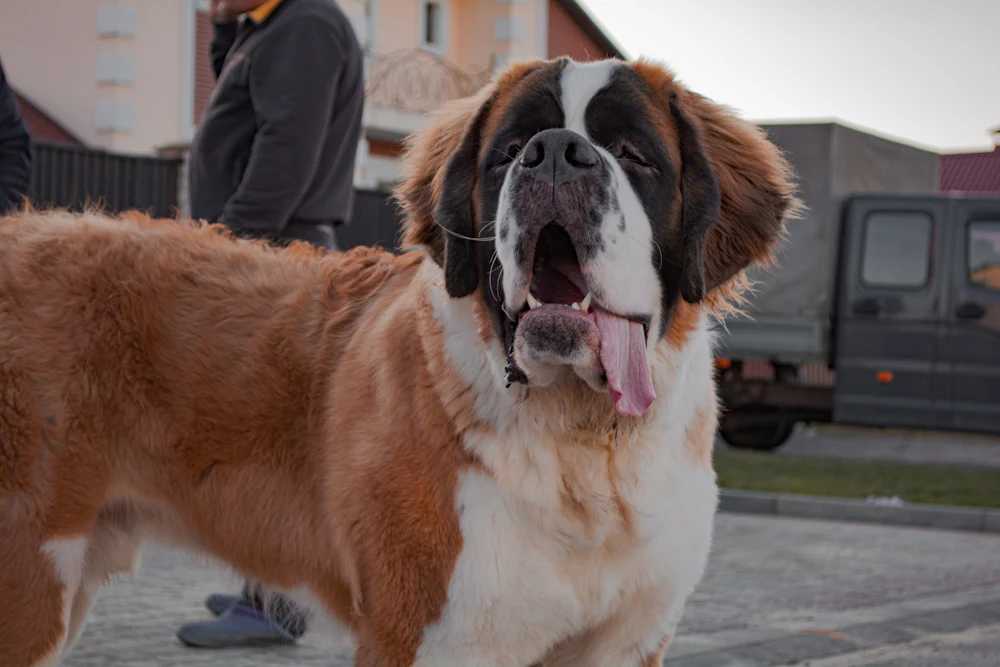
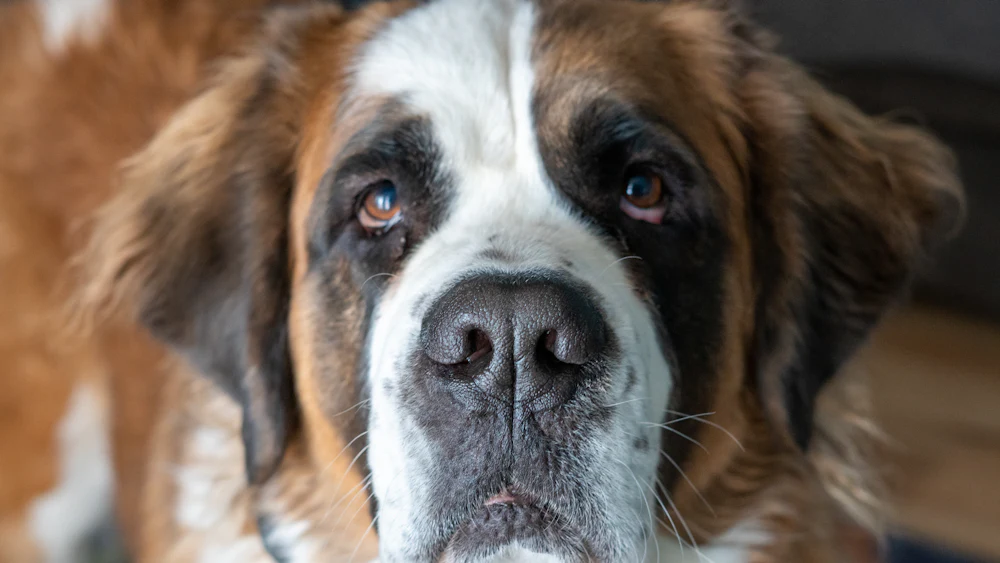
The FCI describes the Saint Bernard as friendly by nature, with a temperament from calm to lively, and watchful. Most are gentle, patient and affectionate, with a mild, rather doleful expression and a deep attachment to their family. An adult tends to move slowly and sleep a great deal, and it is the sort of dog that sighs, flops across a doorway, and lets a household flow around it.
The picture is less peaceful in adolescence, when a large, boisterous youngster with a lot of body and little coordination can wreck a room or flatten a visitor. Calmness comes with maturity, often later than owners expect. Saint Bernards are people dogs, and they dislike being left alone. They are watchful rather than aggressive, and they bark when something is wrong. Drool is a fact of life, and they follow their people everywhere.
Children and other pets
Saint Bernards are usually patient with children, and many seem to enjoy being climbed on. The risk is size: a 70 kg dog can knock over a toddler simply by leaning, and a boisterous young dog can do serious harm without meaning to. Supervise all contact and teach children to leave the dog alone when it rests. Most get on well with other dogs and with cats if raised with them. Give the dog its own cool, quiet place away from children.
Exercise and the daily walk
A Saint Bernard needs around an hour of gentle exercise a day, split into two or three outings. Steady walking suits the breed far better than running, jumping or long distance work. Puppies and adolescents are growing quickly, and too much exercise, stairs or hard impact can harm the joints. Short, frequent walks are better than a long hike, and play should stay on soft ground.
Heat is the main constraint. A heavy, double coated giant overheats quickly, so exercise early in the morning and late in the evening in warm weather, offer plenty of water, and rest in shade. Cool weather suits these dogs, and many love snow. Mental activity matters too: scent games, simple retrieves and basic obedience keep the dog engaged. Do not exercise just before or after eating, because deep chested breeds are at risk of bloat.
Training
Saint Bernards are intelligent and mostly willing, but they mature slowly and can be stubborn. Training should start at once, because a small puppy that jumps up becomes an adult that can knock someone down. Use reward based methods, keep sessions short, and be consistent. A heavy adult cannot be physically controlled, so cooperation matters more than force.
Teach loose lead walking, a solid sit and stay, and a relaxed attitude to handling from the first days. The dog will be examined, groomed and weighed all its life, and a cooperative giant is easier for everyone. Socialise widely to people, dogs, lifts and vehicles. Teach calm greetings, because enthusiastic jumping is a hazard. Group classes are useful, and a patient, sociable owner will get the best from this breed.
Coat and grooming
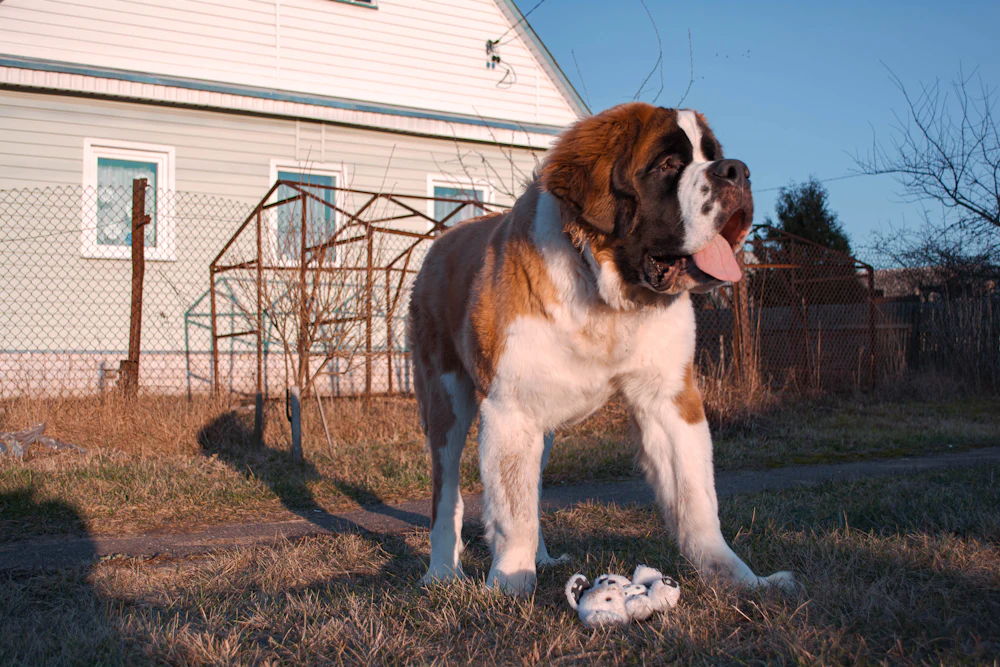
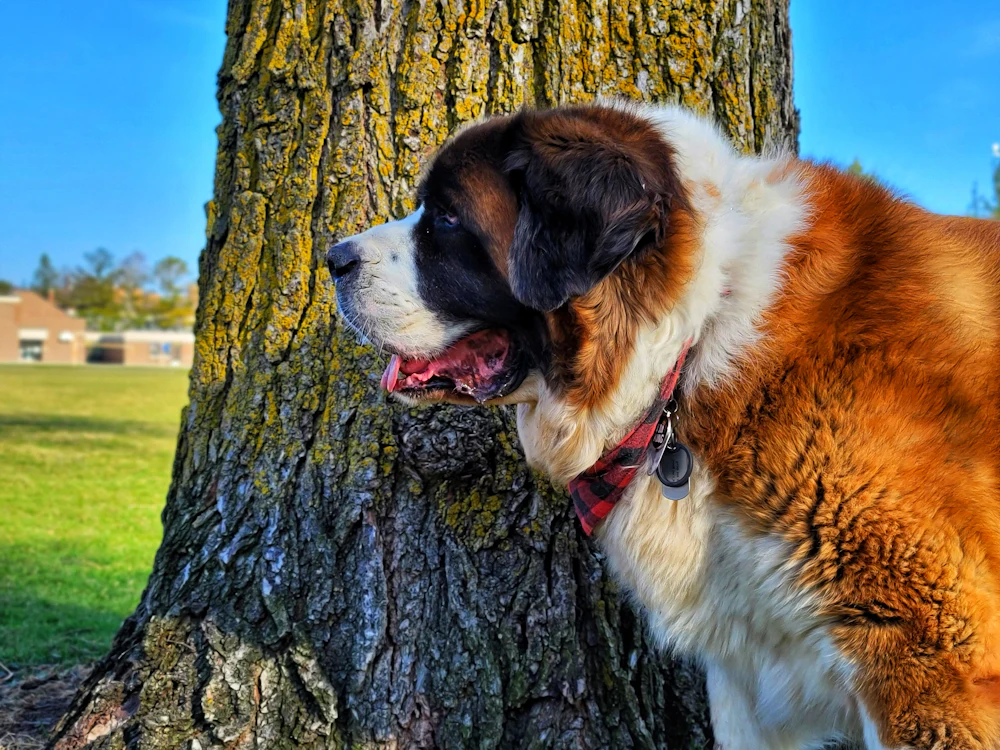
The FCI recognises two coat types. The short-haired has a dense, smooth, close lying topcoat with plenty of undercoat; the long-haired has a straight, medium length topcoat with abundant undercoat and feathering on the legs. Colour is white with red patches, up to an unbroken red mantle, with required white markings on chest, feet, tail tip, muzzle, blaze and neck. Brush weekly, more in the heavy seasonal moults, and wipe the mouth and eyes regularly.
Feeding and weight
Giant breeds need careful feeding. Choose a diet suited to large, fast growing puppies and follow your vet's advice, since controlled, steady growth protects the joints. Adults must stay lean. Because the Saint Bernard is deep chested and prone to bloat, give two or three smaller meals, avoid exercise around feeding and use a slow feeder if the dog gulps. Fresh water should always be available.
Work out a starting calorie figure and food weight with the calorie calculator. Not sure this is the right breed? Take the quiz.
Health
Every breed carries predispositions. These are the conditions most often discussed for the Saint Bernard, not a prediction for any individual dog.
- Hip and elbow dysplasia
- Dilated cardiomyopathy
- Gastric dilatation-volvulus
- Eyelid problems (entropion, ectropion)
- Osteosarcoma
- Heat intolerance
What to ask the breeder. Hip and elbow scores, heart and eye examinations for the parents.
Choosing a puppy
Choose a breeder who tests the parents, with hip and elbow scores, plus heart and eye examinations. Meet the mother, and expect a calm, friendly dog. A Saint Bernard puppy is large already and grows fast, so avoid stairs, jumping and long walks, and never over exercise. Expect heavy drooling, chewing and big appetites. Start training, handling and socialisation immediately, and plan for the space and the cost of a giant breed.
In Luxembourg the national kennel club is the Fédération Cynologique Luxembourgeoise (FCL), a member of the FCI. Many owners also buy from breeders in Germany, France or Belgium; a puppy coming from another EU country must be microchipped and vaccinated against rabies, which in practice means it cannot travel before about fifteen weeks of age. Where to get a dog in Luxembourg.
The older Saint Bernard
Giant breeds age earlier, and the later years need gentle management. Keep the dog lean, provide a thick, supportive bed and non-slip floors, and shorten walks rather than stop them. Watch for stiffness, a cough, tiring easily or a lump, and see your vet quickly. Heat is especially hard for an older dog, so keep rooms cool. Regular vet checks give early warning of heart, joint and other problems.
A realistic day
A realistic weekday for a working household in Luxembourg City, with a midday visit. Adjust it to your dog, not the other way round.
Short, gentle walk in the cool, with water.
Breakfast, then a rest on a cool floor.
Midday visit from a walker: toilet break, a short stroll and fresh water.
Evening walk of 30 to 40 minutes in the shade, or the forest.
Smaller supper, a last toilet trip and bed.
A Saint Bernard in Luxembourg
A Saint Bernard in a Luxembourg flat takes planning. A lift is essential, because carrying or coaxing a giant down stairs is not realistic, and floors must be non-slip. Space matters, and so do neighbours who may not welcome a large, slow dog and its drool. Short walks in the Pétrusse valley and Parc Merl suit the breed, while the Bambësch and Grünewald forests give cool shade for longer outings.
The real challenge is heat. When temperatures reach the 30s, a Saint Bernard is at risk, so walk at dawn or after dusk, keep rooms cool and never leave the dog in a car. Every dog must be microchipped, declared to the commune and insured, and the commune charges an annual dog tax. Buses and trams are free nationwide, but a giant dog needs space and training to travel calmly, so practise at quiet times.
Every dog in Luxembourg must be identified, declared to the commune and covered by liability insurance. How registration works.
When you travel
A sitter needs to handle a large dog and understand its limits. Keep to the walking and feeding routine, and make sure the dog stays cool, rests in shade and has constant access to water. Smaller meals and no exercise around feeding reduce the risk of bloat. Saint Bernards dislike being left alone, so the sitter should stay with the dog, and know the vet's number and the signs of heat stress.
PAWLY's holiday and overnight care takes place in your home, so your dog keeps its own bed and routine.
Myths and facts
MythSaint Bernards carry brandy barrels.
FactThe brandy barrel is a legend popularised by painting, not history. The breed's fame rests on rescue work in the Alps.
MythThey are lazy and need little care.
FactThey are calm, but a giant breed needs careful feeding, grooming, heat management and veterinary attention.
MythThey are too big to be affectionate.
FactThe FCI describes them as friendly by nature. Most are devoted to their family and love company.
Is it the right dog for you?
Suits
- Calm, patient owners with space
- Households with a lift and a cool home
- Families who can supervise a giant
- People who like a gentle, watchful dog
Think twice if
- You dislike drool or heavy shedding
- You live without a lift or in a very small flat
- You cannot manage a very large dog
- You are away for long days
Questions owners ask
How big is a Saint Bernard?
The FCI gives males at least 70 cm and up to 90 cm, and females at least 65 cm and up to 80 cm. They are heavy as well as tall, so plan for space, strength and cost.
Are Saint Bernards good with children?
Usually, because they are gentle and patient, but their size is a hazard. A leaning adult or a bouncing adolescent can knock a child over. Supervise all contact and teach children to respect the dog.
Can a Saint Bernard live in a flat?
It is possible with a lift, non-slip floors, cool rooms and good manners, but it is not easy. They are calm indoors, yet need space to lie, short outings and careful management in summer.
Do Saint Bernards drool?
Yes, many do, especially after drinking or in heat. Keep a cloth handy, wipe the mouth, and expect some mess on walls and furniture. Some dogs drool far less than others.
Sources
Photo: Unsplash (Unsplash License) · Photo: Unsplash (Unsplash License) · Photo: Unsplash (Unsplash License) · Photo: Unsplash (Unsplash License) · Photo: Unsplash (Unsplash License)
General information for dog owners in Luxembourg, not veterinary or legal advice. Official facts (origin, size, group, history and temperament as described by the breed standard) follow the FCI standard; health and care sections reflect breed-club and veterinary guidance and are typical ranges rather than rules. For your own dog, ask your vet, the breed club or your commune. How this guide is written and checked. Last reviewed 8 October 2026.
Need someone for your Saint Bernard?
PAWLY offers an individual 45-minute walk or a home visit at your dog's pace, the same walker every time, and a written report with photos after every visit, across Luxembourg City.
Read next: the journal, for the Saint Bernard
All articles
Dogs in hot weather: the Luxembourg summer guide
The Saint Bernard carries a heavy coat or a heavy frame, which makes a Luxembourg summer the hard season.

Arthritis: the pain owners file under old age
Giant breeds tend to have joint trouble early; this is what to look for.

Growing a large-breed puppy without wrecking its joints
A giant puppy grows fast on soft bones; how it grows decides its joints for life.
Similar breeds
All 198 breeds
Bernese Mountain Dog
A gentle Swiss giant, beautiful and good-natured, with a sadly short life expectancy.
EnergyGroomingFlat life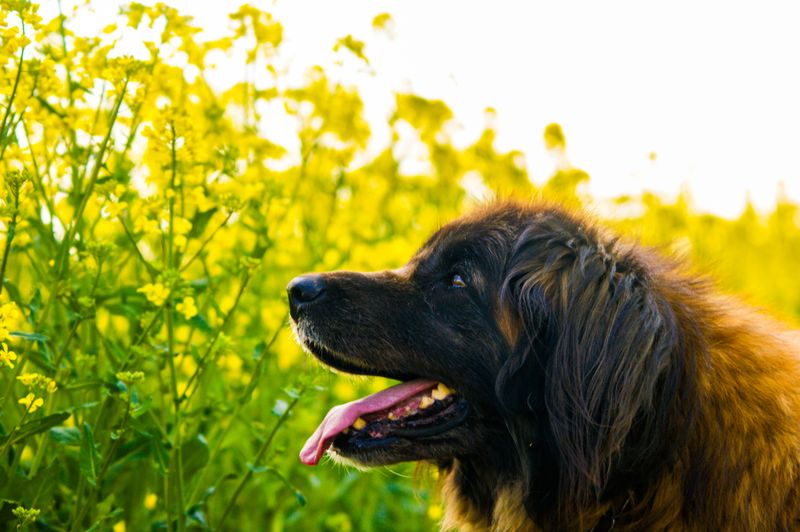
Leonberger
A lion-coloured giant with a black mask and a surprisingly gentle manner, happiest as an unhurried companion who is never left out of anything.
EnergyGroomingFlat life
Newfoundland
A giant water dog with a famously sweet nature, and a lot of drool.
EnergyGroomingFlat life

