


History
The Leonberger takes its name from the town of Leonberg, near Stuttgart. According to the FCI standard, a local town councillor, Heinrich Essig, developed the breed in the 1830s and 1840s, crossing a black and white Newfoundland bitch with a male from the hospice of the Great St Bernard, and later adding Pyrenean Mountain Dog blood. The first dogs recognised as Leonbergers appeared in 1846, and the aim was a dog with the look of the lion in the town's coat of arms.
By the end of the nineteenth century the Leonberger was a favoured farm dog in Baden-Württemberg, and the standard records that numbers fell heavily during both World Wars before the breed recovered. Germany is the country of origin, and the FCI places it in Group 2, Section 2.2, Molossoid breeds of mountain type, with the utilisation of watch, companion and family dog. It is a large, strong, muscular dog that still looks elegant and balanced, not heavy.
Temperament
The FCI standard asks for a self-assured, calm and good-natured dog with a lively side, neither shy nor aggressive, quick to learn and not troubled by noise. It singles out marked friendliness towards children. In daily life that translates into a big, soft-mouthed companion that greets visitors with interest, follows the family from room to room and lies across the kitchen doorway as if appointed to it.
Leonbergers are sensitive and attached, and they do poorly when treated as garden furniture or left alone for long days. They bark to announce visitors, usually in a deep voice and briefly, and many show a mild guarding instinct without any wish to fight.
Children and other pets
A well-bred Leonberger is typically patient and affectionate with children, which is exactly what the standard describes. The size is the issue: a happy adolescent can knock a toddler flat without meaning to, and a dog lying in a corridor is easy to trip over. With other dogs most are sociable, and many live peacefully with cats when raised alongside them, as hunting instinct is not part of the breed's make-up.
Exercise and the daily walk
A Leonberger needs steady, regular exercise rather than speed. Around an hour and a half a day, split into two or three outings, suits most adults, with a longer, relaxed walk at weekends. Puppies and adolescents should not do repeated jumping, stairs or long forced runs while their joints are developing.
Avoid hard exercise straight after meals, since deep-chested giants are at risk of stomach torsion, and keep summer outings for early morning and late evening because the heavy double coat holds heat. Many Leonbergers do cart pulling, water work, tracking or therapy visits with enthusiasm.
Training
Leonbergers are intelligent and willing, and the standard notes good learning ability. They respond best to calm, consistent, reward-based training, and they sulk or switch off when handled harshly. Start early with the basics that matter most at this size: loose-lead walking, a reliable sit and down, waiting at doors and lifts, and coming when called.
Socialisation is part of the job, not an optional extra. Introduce the puppy to buses, trams, lifts, children, bicycles and a wide range of dogs in the first months, while it is still small enough to lift.
Coat and grooming
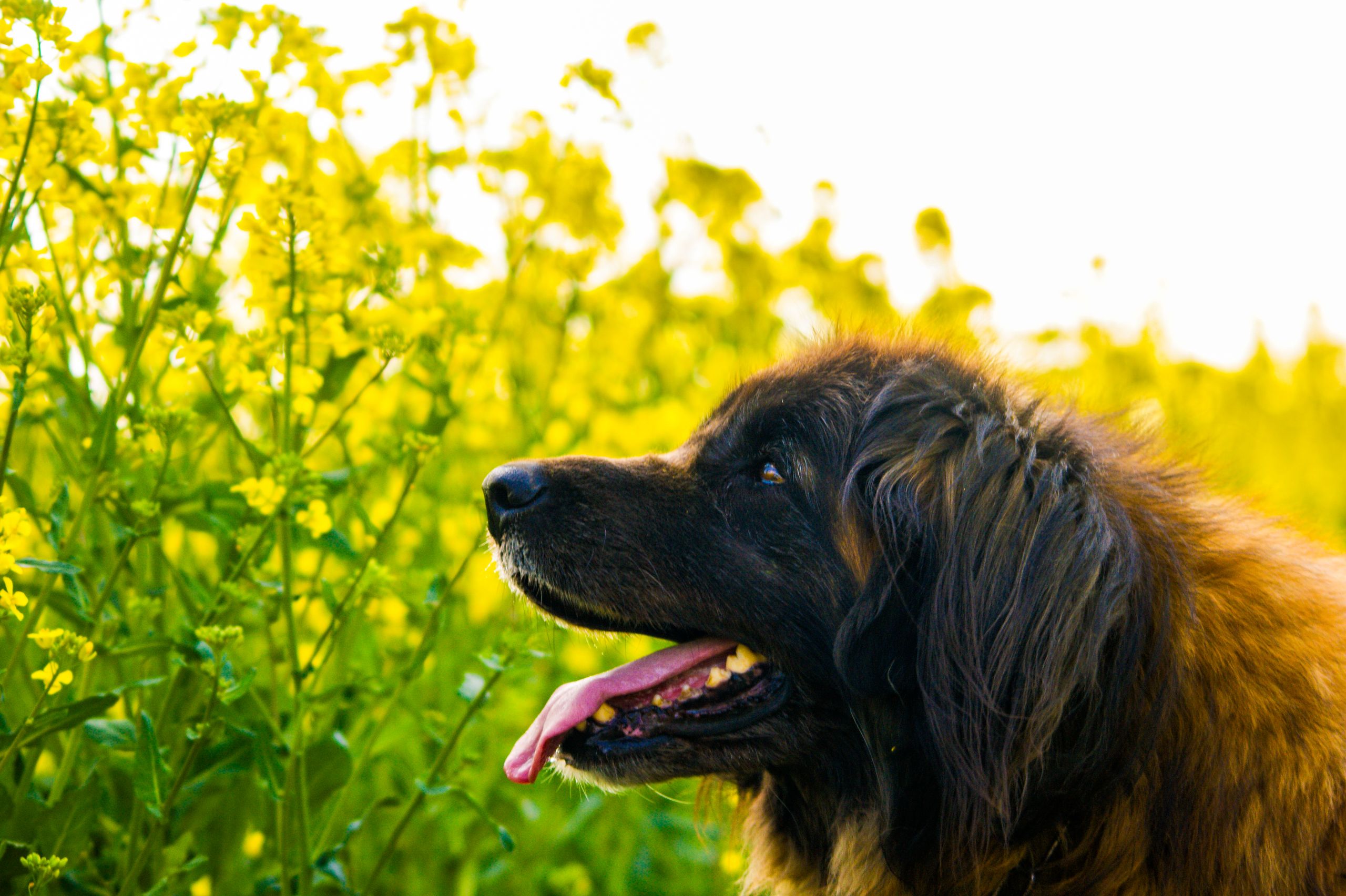
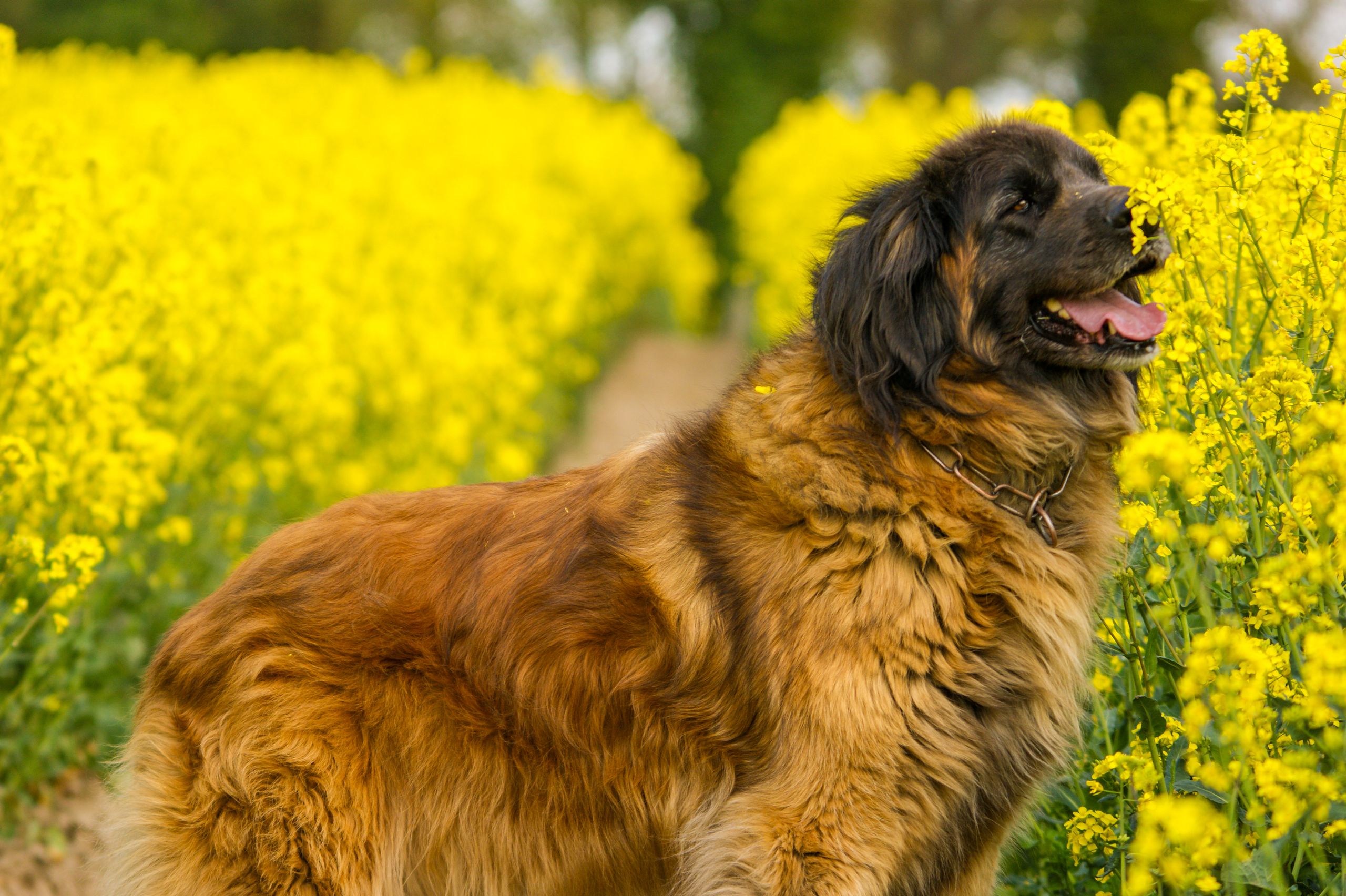
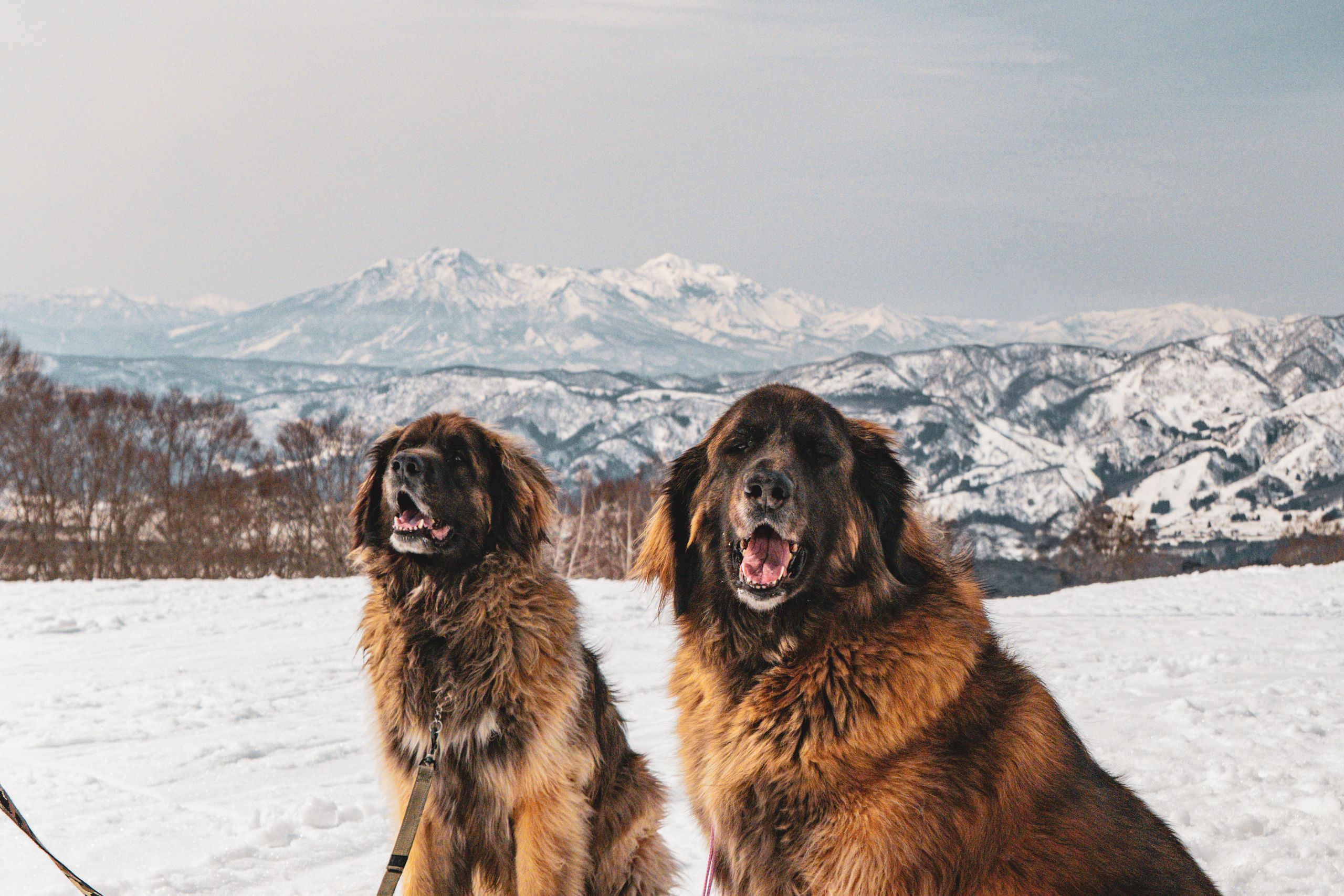
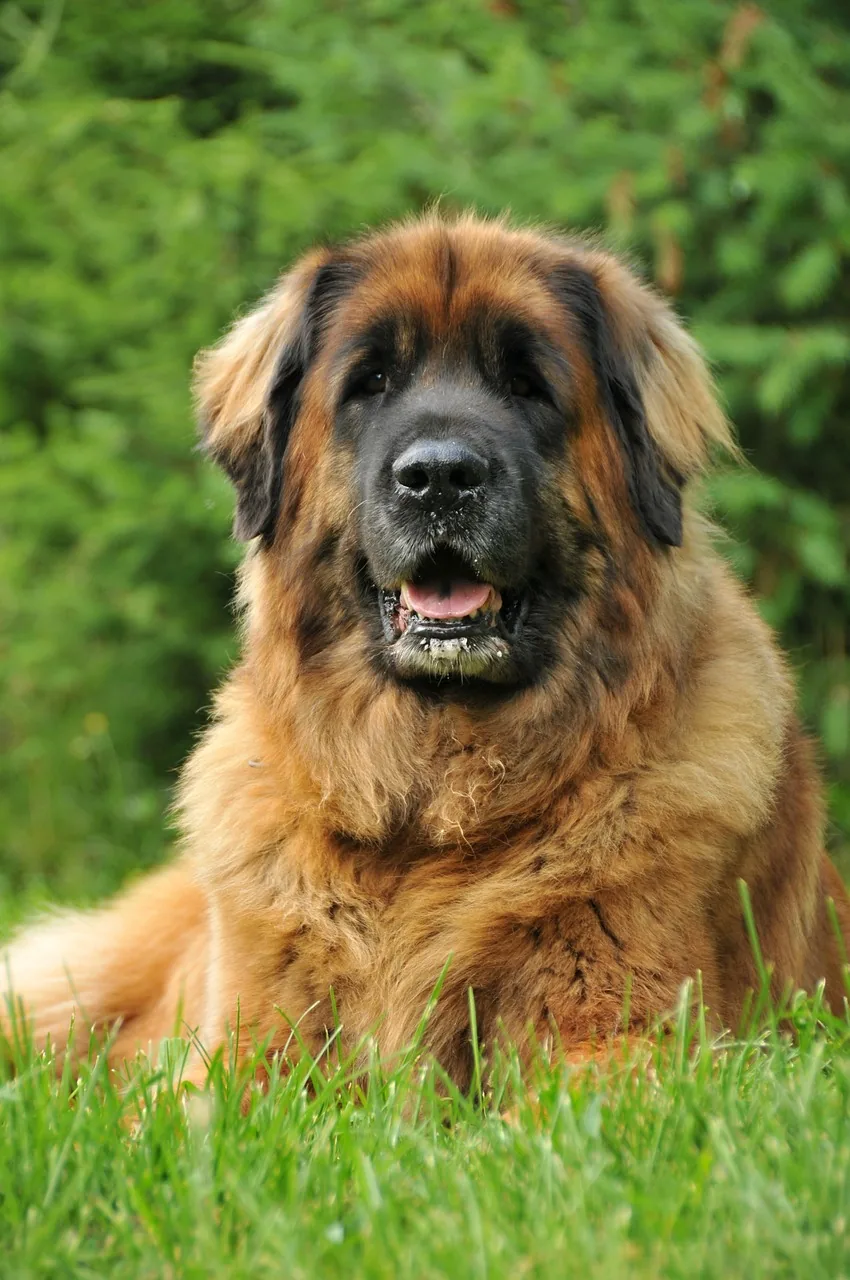
The coat is medium soft to coarse, long and close-fitting, straight or with a slight wave, with a mane on the neck and chest, feathering on the front legs and breeches on the hind legs. The FCI standard permits lion yellow, red, reddish brown and sandy, with every shade between, always with a black mask. Expect heavy shedding, especially twice a year, so regular brushing to the skin is essential, with particular attention behind the ears, in the breeches and under the mane.
Feeding and weight
Giant breeds grow quickly and joints suffer if growth is pushed, so a complete diet formulated for large-breed puppies and carefully measured portions matter. Adults do best on two or three smaller meals rather than one large one, with rest before and after eating to reduce the risk of bloat.
Work out a starting calorie figure and food weight with the calorie calculator. Not sure this is the right breed? Take the quiz.
Health
Every breed carries predispositions. These are the conditions most often discussed for the Leonberger, not a prediction for any individual dog.
- Hip and elbow dysplasia (malformed joints)
- Gastric dilatation and torsion (bloat)
- Osteosarcoma (bone cancer) and other cancers
- Leonberger polyneuropathy (an inherited nerve disease)
- Hypothyroidism (underactive thyroid)
- Entropion and ectropion (eyelid problems)
What to ask the breeder. Ask for hip and elbow scores for both parents, the result of the genetic test for Leonberger polyneuropathy, an eye examination certificate, and what the breeder knows about the ages and causes of death in the dog's close relatives.
Choosing a puppy
Protect growing joints: no jumping from cars or sofas, no long walks, and slippery floors covered with rugs. Carry the puppy up and down stairs while it is small, and begin lead and lift training immediately.
In Luxembourg the national kennel club is the Fédération Cynologique Luxembourgeoise (FCL), a member of the FCI. Many owners also buy from breeders in Germany, France or Belgium; a puppy coming from another EU country must be microchipped and vaccinated against rabies, which in practice means it cannot travel before about fifteen weeks of age. Where to get a dog in Luxembourg.
The older Leonberger
Giant breeds age earlier than small ones, and a Leonberger of seven or eight is already a senior. Keep the dog lean, provide a thick orthopaedic bed and non-slip flooring, and talk to your vet about joint comfort. Twice-yearly check-ups help catch lumps, weight changes and nerve problems early. Many dogs still enjoy gentle forest strolls and plenty of company.
A realistic day
A realistic weekday for a working household in Luxembourg City, with a midday visit. Adjust it to your dog, not the other way round.
Unhurried 30-minute walk, then a small breakfast served on the floor, followed by quiet rest.
Brush the mane and breeches, check the eyes and ears, and settle the dog with water and a chew before the owner leaves.
Midday visit from a PAWLY walker: a calm 40-minute stroll, fresh water and a check that the flat is cool.
Longer evening outing in the Bambësch or the Pétrusse valley, with loose-lead practice and time to sniff.
Last short walk, dinner already digested, and bed on a large mat in the living room.
A Leonberger in Luxembourg
A Leonberger in a Luxembourg flat is possible but demanding. Check that the lift can take a dog of this size with you, and that the building allows it, and ideally choose a ground-floor home or house with a garden. The dog will sleep much of the day, but it needs floor space and a cool spot. Many streets have narrow pavements and cafés with limited room, so loose-lead manners are important from day one.
Summer is the hardest season. When temperatures reach the 30s °C, the thick coat and size make heat stress a real risk, so walk before 8 a.m. and after dusk, avoid hot pavements and offer shade and water. Autumn and winter suit the breed well. Forests such as the Grünewald and the Bambësch are the right places for long outings, and the free buses and trams make them easy to reach, though a dog this size takes up space on a busy tram.
Every dog in Luxembourg must be identified, declared to the commune and covered by liability insurance. How registration works.
When you travel
A sitter needs real physical confidence: this is a strong dog that must be steady on the lead. Follow the routine exactly, with measured meals spaced out and rest after eating. Brush daily, keep the dog cool, and watch for signs of bloat such as a swollen belly, restlessness or unproductive retching, which is an emergency. Leave the vet's number and check that the sitter can get the dog into a car or out of the flat unaided.
PAWLY's holiday and overnight care takes place in your home, so your dog keeps its own bed and routine.
Myths and facts
MythLeonbergers are just big Newfoundlands.
FactNewfoundland was one of the breeds used to create the Leonberger, along with the St Bernard and the Pyrenean Mountain Dog, but the Leonberger is a separate breed with its own standard and its distinctive lion-coloured coat and black mask.
MythA giant dog needs huge amounts of exercise.
FactMost adults need steady daily walks rather than long runs. Too much hard exercise in youth is actually harmful to developing joints.
MythGentle giants are easy to look after.
FactThe temperament is kind, but size brings cost, shedding, drool, short lifespan and veterinary bills that are larger than for most breeds.
Is it the right dog for you?
Suits
- Families with a house or ground-floor home who want a gentle, sociable giant
- People who are home for much of the day
- Owners who enjoy forest walks, swimming and quiet outdoor routines
- Those prepared for grooming, food and veterinary costs of a giant breed
Think twice if
- Think twice if you live on an upper floor with a small or unreliable lift
- Think twice if the dog will be alone for long working days
- Think twice if hot summers, shedding and drool will upset you
- Think twice if a shorter lifespan would be hard for your household to face
Questions owners ask
How big does a Leonberger get?
The FCI standard gives 72 to 80 cm at the withers for males and 65 to 75 cm for females. It does not state a weight, but dogs are heavy and powerful, and many adults are comfortably over 40 kg. Plan for a car, lift and flat that can accommodate a very large dog.
Do Leonbergers shed a lot?
Yes. The long double coat sheds all year and heavily in the seasonal moult. Brushing two or three times a week, daily during the moult, keeps hair under control, but a vacuum cleaner is part of the household equipment.
Are they good with children?
The FCI standard stresses marked friendliness towards children, and well-bred dogs are patient and tolerant. Their size is the risk, so supervise toddlers, teach children to respect the dog's space and avoid rough games with young, bouncy dogs.
Can a Leonberger live in a flat?
It can, if the exercise is regular and the building is suitable, because adults are usually calm indoors. A lift that fits the dog, a cool floor and easy access to green space matter more than square metres, and a house with a garden is easier.
Sources
Photo: Pexels (Pexels License) · Photo: Pexels (Pexels License) · Photo: Pexels (Pexels License) · Photo: Pixabay (Pixabay Content License)
General information for dog owners in Luxembourg, not veterinary or legal advice. Official facts (origin, size, group, history and temperament as described by the breed standard) follow the FCI standard; health and care sections reflect breed-club and veterinary guidance and are typical ranges rather than rules. For your own dog, ask your vet, the breed club or your commune. How this guide is written and checked. Last reviewed 8 October 2026.
Need someone for your Leonberger?
PAWLY offers an individual 45-minute walk or a home visit at your dog's pace, the same walker every time, and a written report with photos after every visit, across Luxembourg City.
Read next: the journal, for the Leonberger
All articles
Dogs in hot weather: the Luxembourg summer guide
The Leonberger carries a heavy coat or a heavy frame, which makes a Luxembourg summer the hard season.

Arthritis: the pain owners file under old age
Giant breeds tend to have joint trouble early; this is what to look for.

Growing a large-breed puppy without wrecking its joints
A giant puppy grows fast on soft bones; how it grows decides its joints for life.
Similar breeds
All 198 breeds
Newfoundland
A giant water dog with a famously sweet nature, and a lot of drool.
EnergyGroomingFlat life
Saint Bernard
The legendary Alpine rescue dog: gentle, calm and enormous.
EnergyGroomingFlat life
Bernese Mountain Dog
A gentle Swiss giant, beautiful and good-natured, with a sadly short life expectancy.
EnergyGroomingFlat life

