

History
The Entlebucher takes its name from the Entlebuch valley in the Swiss cantons of Lucerne and Bern. The FCI standard calls it the smallest of the four Swiss Mountain and Cattle Dogs and says it was first documented in 1889. In 1913 four dogs were presented to Professor Albert Heim at a dog show, and the breed was then entered in the Swiss stud book as the fourth Mountain and Cattle Dog.
The first official standard was not completed until 1927, a year after the Swiss Club of Entlebuch Cattle Dogs was founded in 1926. The FCI lists the breed as originally a driving, watch, guard and farm dog, and now a versatile working and agreeable family dog, in Group 2, Section 3, without working trial. The standard dates from 2002 and recognises a natural tail or a congenital bobtail as equally acceptable.
Temperament
The FCI describes a lively, high-spirited, self-assured and fearless dog, good-natured with familiar people, slightly suspicious of strangers, not to be bribed as a watchdog, and cheerful and capable of learning. That sums it up well. The Entlebucher is a happy, bouncy dog in the house, a family clown with a strong sense of who belongs to the household and who does not.
Its cattle-driving heritage shows daily. Many herd children, joggers and bicycles by circling or nipping at heels, and most have plenty to say about unusual noises, which makes them effective but sometimes noisy guards. They are sensitive and bond closely, so they dislike long periods alone. With a firm, positive hand they are quick, willing and fun, and they flourish when given a task.
Children and other pets
The Entlebucher usually adores its own family and can be a lively playmate for older children, but the herding instinct may lead to heel-nipping and chasing, and the dog needs boundaries and an outlet. Small children should be supervised, as the dog can be boisterous. With other dogs it is generally friendly if socialised, though some are bossy. A cat that has grown up with the dog is often accepted, while a running cat outdoors may trigger a chase.
Exercise and the daily walk
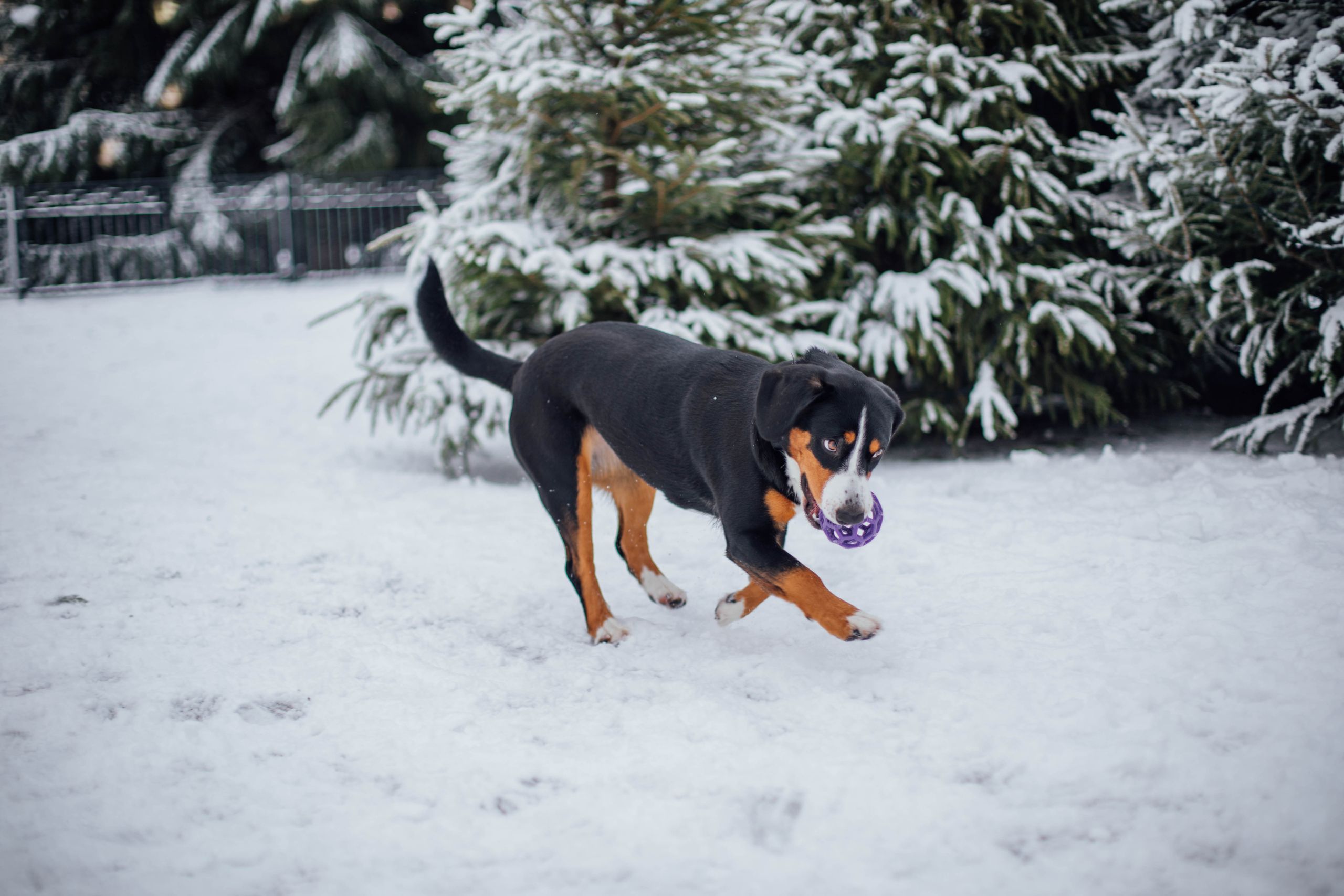
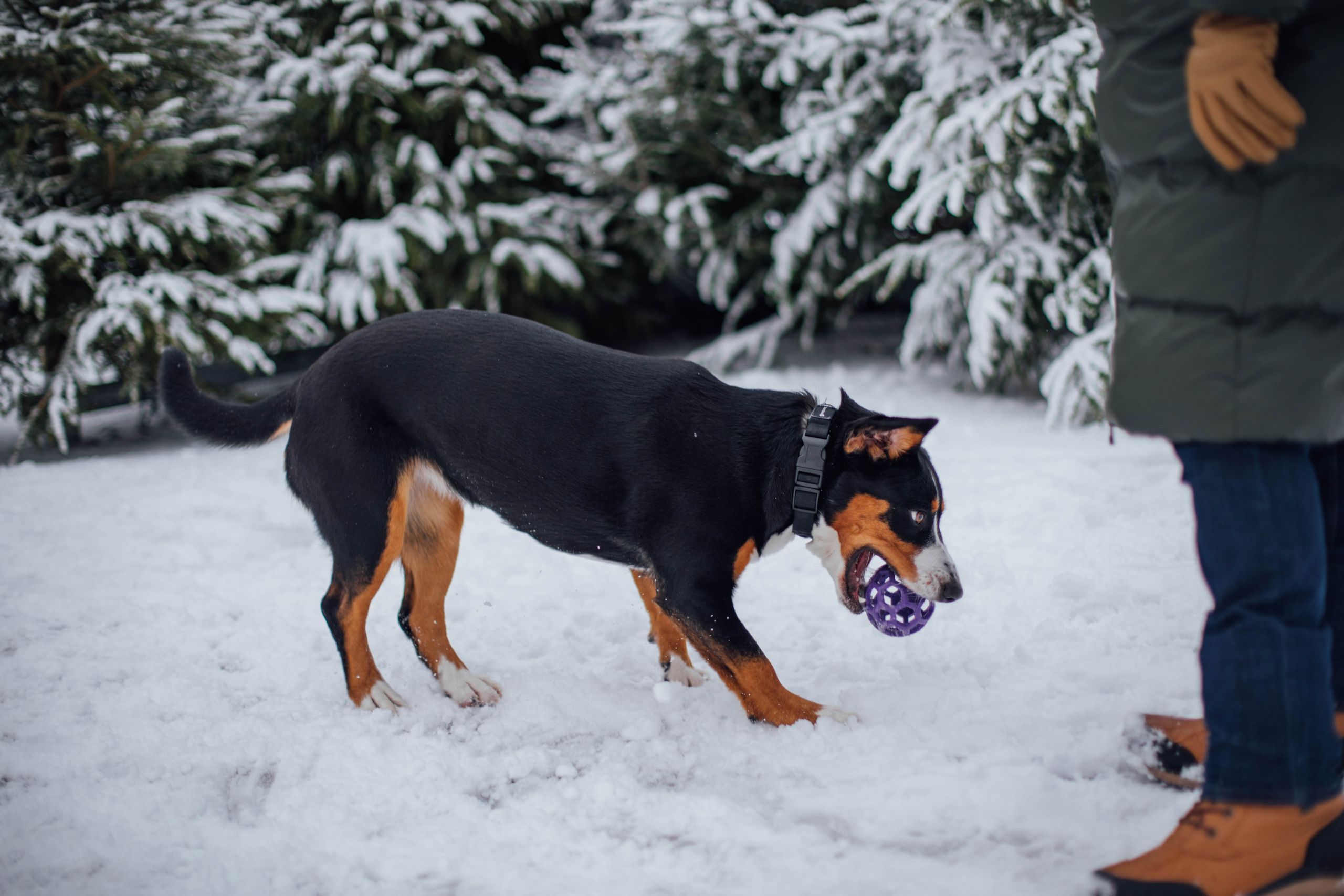
An adult Entlebucher needs around an hour and a half to two hours of activity a day, and it relishes anything with purpose. A brisk walk is a start, but this is a sturdy, agile dog that enjoys hiking, jogging and ball games. A short stroll round the block will not satisfy it.
Dog sports are an excellent use of energy: agility, obedience, rally, herding trials and trick training all suit its keen mind. Games at home, like nose work and hide and seek, help on wet days. Keep off-lead running to safe places, since the herding instinct means a moving car, bicycle or jogger can seem a reasonable target. Teach a reliable recall from the start.
Training
Training should begin early and use positive, reward-based methods. The Entlebucher is cheerful, quick to learn and eager for a challenge, but also self-assured and rather independent, so it benefits from clarity and consistency. Short, varied sessions keep it keen. Harshness backfires with these sensitive dogs. Impulse control, such as waiting, leaving things and calm greetings, should be part of daily life.
Because of the instinct to herd, teach it early what not to chase: bicycles, joggers, cars and children. A rock-solid recall and a reliable down are useful. Socialise the puppy widely, since suspicion of strangers can become barking or wariness if left alone. Lift, bus and tram manners are quickly learnt by a well-socialised dog. Teach it to settle and to be alone in short steps.
Coat and grooming
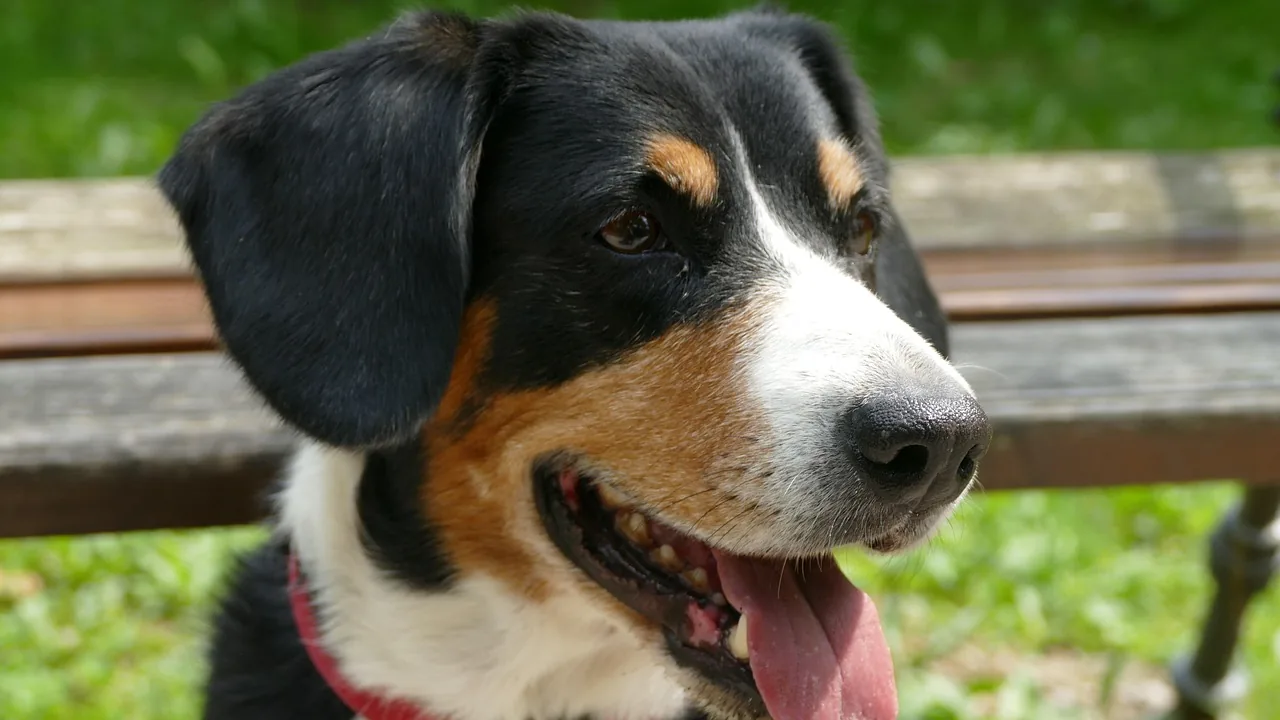
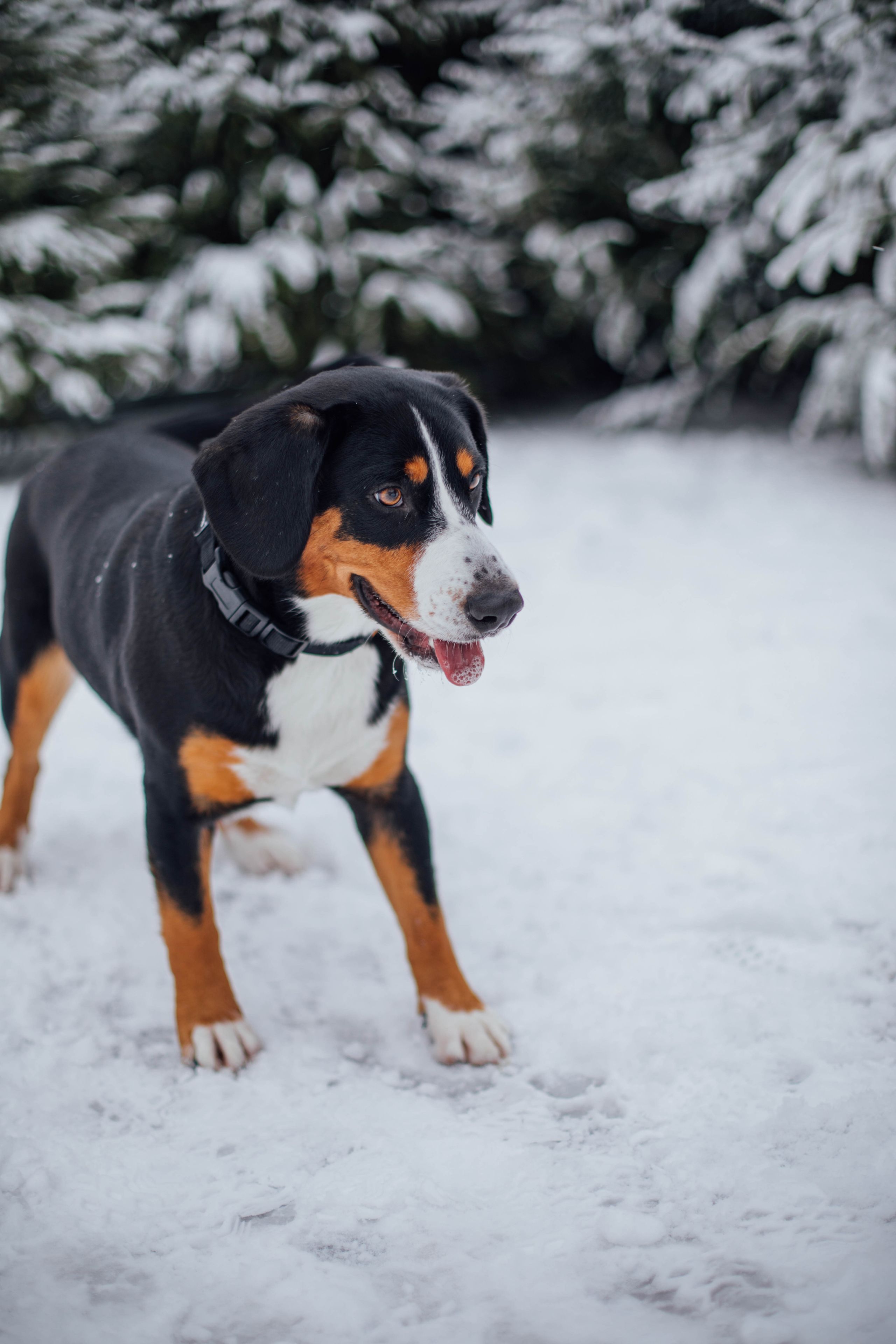
The FCI describes a double coat of short, close-fitting, harsh and shiny topcoat over a dense undercoat. It is easy to keep with weekly brushing, and a rubber mitt helps during the heavier moults in spring and autumn. Baths are rarely needed. The standard requires tricolour: a black base with yellow to reddish-brown markings symmetrically placed above the eyes, on the cheeks and muzzle, throat, chest sides and all four legs, usually with white markings too.
Feeding and weight
Feed a good complete diet suited to a medium-sized, energetic dog, split into two meals. Entlebuchers can put on weight easily if exercise drops, so measure portions and count training treats. Keep the dog lean, as extra weight strains the joints. Growing puppies need a diet that supports steady growth, not rapid growth. Provide fresh water at all times, particularly after exercise.
Work out a starting calorie figure and food weight with the calorie calculator. Not sure this is the right breed? Take the quiz.
Health
Every breed carries predispositions. These are the conditions most often discussed for the Entlebucher Mountain Dog, not a prediction for any individual dog.
- Progressive retinal atrophy (an inherited eye disease leading to blindness)
- Hip dysplasia
- Cataract and other inherited eye conditions
- Elbow problems in some lines
- Dental disease
What to ask the breeder. Ask for hip scores and eye examination certificates for both parents, and whether they have been DNA tested for progressive retinal atrophy, and ask how the breeder has socialised the puppies.
Choosing a puppy
An Entlebucher puppy is a bundle of energy and curiosity. Keep exercise short and gentle while the joints develop, with no long runs or repeated jumping. Start socialisation early with people, children, other dogs, traffic and lifts, and teach it from the first week that heels are not for herding. Short training sessions, a puppy class and calm alone time prevent bad habits. Offer chew toys and food puzzles to use the active mind.
In Luxembourg the national kennel club is the Fédération Cynologique Luxembourgeoise (FCL), a member of the FCI. Many owners also buy from breeders in Germany, France or Belgium; a puppy coming from another EU country must be microchipped and vaccinated against rabies, which in practice means it cannot travel before about fifteen weeks of age. Where to get a dog in Luxembourg.
The older Entlebucher Mountain Dog
Many stay lively into their early teens, though from about nine or ten years they slow down. Shorter, regular walks and gentle games keep joints and mind working. Watch weight and for stiffness, and have eyes and teeth checked regularly, as the breed can develop eye disease. A warm, padded bed and non-slip floors help. They stay devoted and often become even more attached to their person with age.
A realistic day
A realistic weekday for a working household in Luxembourg City, with a midday visit. Adjust it to your dog, not the other way round.
Brisk 30-minute lead walk with a few recall and obedience games, then breakfast.
Owner leaves; the dog rests on a bed with a chew or stuffed toy.
Midday visit: a 45-minute walk with ball play, fresh water and a short training session.
Evening outing of 60 to 75 minutes in a park or forest, with off-lead time where safe.
Short toilet break, a calm cuddle and bed.
An Entlebucher Mountain Dog in Luxembourg
An Entlebucher can live in a Luxembourg flat if its energy is spent outdoors and its voice kept in check. It is compact, tidy and fits easily into a lift, but it will be noisy if bored or alone for long days. Practise calm greetings in corridors, because it will want to herd visitors and bark at sounds. The short, weatherproof coat copes well with cool, wet weather but summers into the 30s °C call for shade, water and early outings.
Good places for walks include the Pétrusse valley, Parc Merl, and the Bambësch and Grünewald forests, where the dog can enjoy long outings on a long line or in safe areas. A bus or tram ride is good practice in social skills. Every dog must be microchipped, declared to the commune and insured, and the commune charges an annual tax. The Fédération Cynologique Luxembourgeoise can point you to clubs for agility and obedience.
Every dog in Luxembourg must be identified, declared to the commune and covered by liability insurance. How registration works.
When you travel
A sitter should know that the Entlebucher is lively, sensitive and attached to its own people, and that it may bark or fret in the first days. Keep to the usual routine, with two outings plus a midday visit, and some mental games. Watch for heel-nipping and chasing of bicycles and joggers, and use a lead or long line in open spaces. Leave the vet's details and a note on commands.
PAWLY's holiday and overnight care takes place in your home, so your dog keeps its own bed and routine.
Myths and facts
MythIt is just a small Bernese Mountain Dog.
FactIt is a separate breed with a different, lighter build and much more energy, and it is the smallest of the four Swiss Mountain and Cattle Dogs.
MythIt is a calm, laid-back farm dog.
FactIt is lively and high-spirited, and needs a good deal of exercise and mental work.
MythHerding dogs only need space.
FactThey need company, training and purposeful activity, not just a garden.
Is it the right dog for you?
Suits
- Active owners who enjoy walking and dog sports
- Families with older, active children
- People who like a cheerful, sensitive dog
- Homes with easy access to parks and woodland
Think twice if
- You are away from home for long hours
- You want a quiet, low-energy dog
- You live in a flat with thin walls
- You are not prepared for daily training
Questions owners ask
Do Entlebuchers bark a lot?
They are alert and vocal, and many will bark at unusual sounds or visitors. Training, exercise and company reduce it, but this is not a silent breed, so consider your neighbours.
Are they born without tails?
Not always. The FCI standard accepts either a natural tail or a congenital bobtail as equally acceptable, so both are seen. Natural long tails may have a white tip.
Is the Entlebucher good with children?
Usually, with older and respectful children. The herding instinct can lead to nipping at heels, so supervision and training are needed, and small children should not be left alone with the dog.
How much exercise does an Entlebucher need?
Plan for about an hour and a half to two hours a day, including training and play. A bored Entlebucher can become noisy or destructive.
Sources
Photo: Pexels (Pexels License) · Photo: Pexels (Pexels License) · Photo: Vanilla_Smile / Pixabay (Pixabay Content License) · Photo: Pexels (Pexels License)
General information for dog owners in Luxembourg, not veterinary or legal advice. Official facts (origin, size, group, history and temperament as described by the breed standard) follow the FCI standard; health and care sections reflect breed-club and veterinary guidance and are typical ranges rather than rules. For your own dog, ask your vet, the breed club or your commune. How this guide is written and checked. Last reviewed 8 October 2026.
Need someone for your Entlebucher Mountain Dog?
PAWLY offers an individual 45-minute walk or a home visit at your dog's pace, the same walker every time, and a written report with photos after every visit, across Luxembourg City.
Read next: the journal, for the Entlebucher Mountain Dog
All articles
The dog that is afraid of people
The Entlebucher Mountain Dog is often reserved with strangers; early, patient handling of that matters.

The front door: barking, deliveries and escapes
A watchful breed reacts at the door; this is how to manage it.

How much exercise does your dog actually need?
The Entlebucher Mountain Dog is an active breed, so it is worth checking the exercise numbers against your actual week.
Similar breeds
All 198 breeds
Appenzeller Sennenhund
A cheeky, tricoloured Swiss farm dog with a restless mind and an opinion about everything that moves past the window.
EnergyGroomingFlat life
Bernese Mountain Dog
A gentle Swiss giant, beautiful and good-natured, with a sadly short life expectancy.
EnergyGroomingFlat life
Greater Swiss Mountain Dog
A big, steady Swiss farm dog with a tricolour coat and a gentle manner, built to pull a cart and happiest when it is near its people.
EnergyGroomingFlat life

