


History
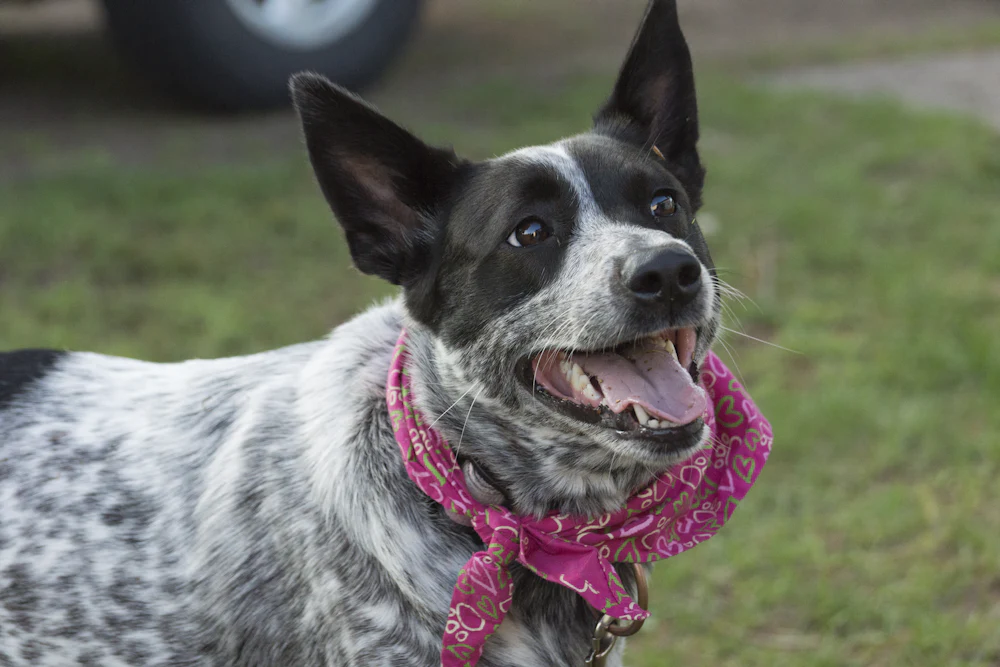
The Australian Cattle Dog was developed in the nineteenth century to control cattle in the vast, harsh conditions of early Australian farming. Herding dogs brought from Britain struggled with the heat, the distances and the semi-wild cattle, so settlers began crossing breeds to create something tougher. According to the FCI standard, blue merle smooth-haired collies were crossed with the dingo, and Dalmatian and black and tan Kelpie blood was added later.
The result was a dog that works cattle quietly and firmly, often by nipping at the heels, which explains the popular names Heeler, Blue Heeler and Queensland Heeler. Australia is the breed's country of origin, and the FCI places it in Group 1, Section 2, among the cattledogs, without a working trial. The current standard, dated 2012, asks for a strong, compact, symmetrically built working dog willing to carry out its task however arduous.
Temperament
The FCI standard describes the breed as always alert, extremely intelligent, watchful, courageous and trustworthy, with an implicit devotion to duty. It also notes a natural suspicion of strangers alongside amenability to handling. In practice, a Cattle Dog tends to attach itself closely to one person or family, follows them from room to room and keeps an eye on everything happening around the home.
This is a dog with opinions and stamina. It can be reserved or protective with visitors and may react to dogs that come too close on the street. Without enough physical and mental work it invents tasks of its own, from guarding the window to herding the household. With the right outlet it is focused, loyal and remarkably easy to live with indoors.
Children and other pets
A well-socialised Cattle Dog can be a devoted family dog, but the herding instinct may lead it to nip at running children's heels, so young children need supervision and the dog needs clear rules. It does best with calm, older children who join in training games. With other dogs it is often fine if raised together, though some are bossy. Cats in the home can be accepted, while outdoor cats and small animals may be chased.
Exercise and the daily walk
Plan on about two hours of activity a day for an adult, and make some of it mental work. Long walks, jogging, hiking and fetch games are a start, but the breed really thrives on structured tasks such as obedience, agility, scent work, herding trials or trick training. Ten minutes of focused training often tires a Cattle Dog more than half an hour of aimless walking.
Off-lead reliability can be good once trained, but many have an intense interest in moving things, from bicycles to joggers to deer. Build recall carefully in safe areas and keep the dog on a lead near traffic. A Cattle Dog with too little to do is not a calmer dog, it is a frustrated one.
Training
The breed learns quickly, which means it learns bad habits as fast as good ones. Short, varied, reward-based sessions work best, and an owner who is clear and consistent will get a superb working partner. Harsh methods tend to backfire with a dog this sharp and this tough.
Socialisation is essential from puppyhood: people of all ages, visitors arriving at the door, trams, lifts and other dogs. Teach a solid settle on a mat, impulse control around moving objects and a calm response to the doorbell. Redirect nipping into tug games and training rather than punishing it.
Coat and grooming
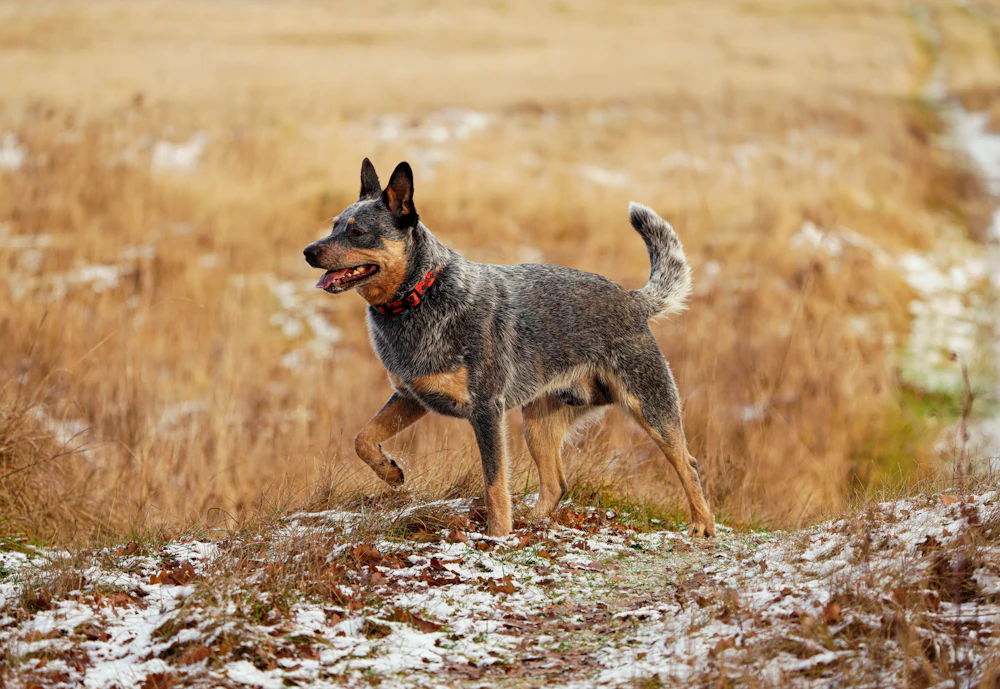
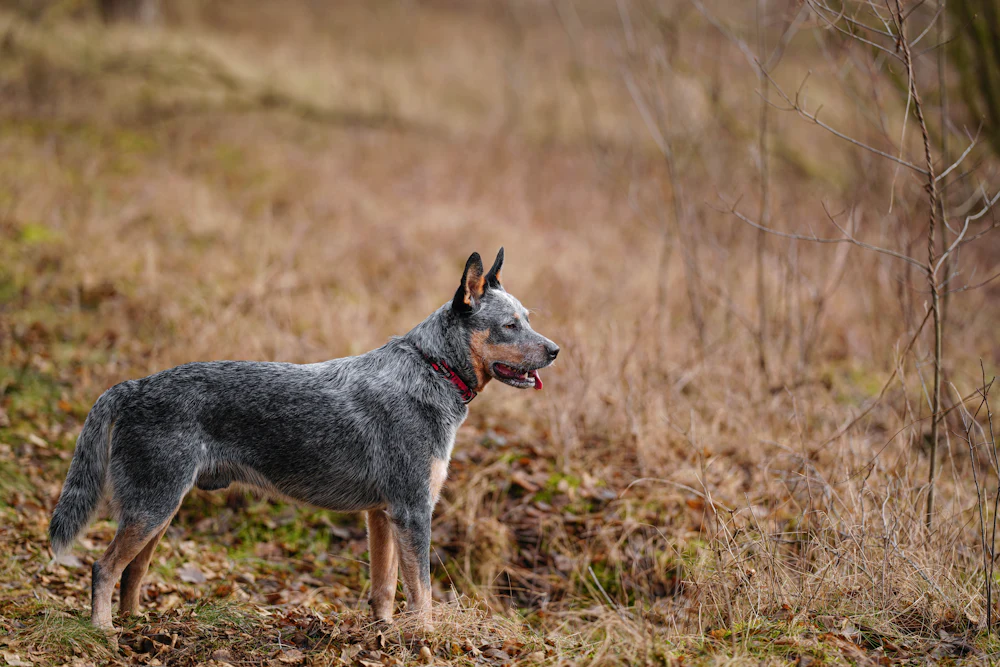
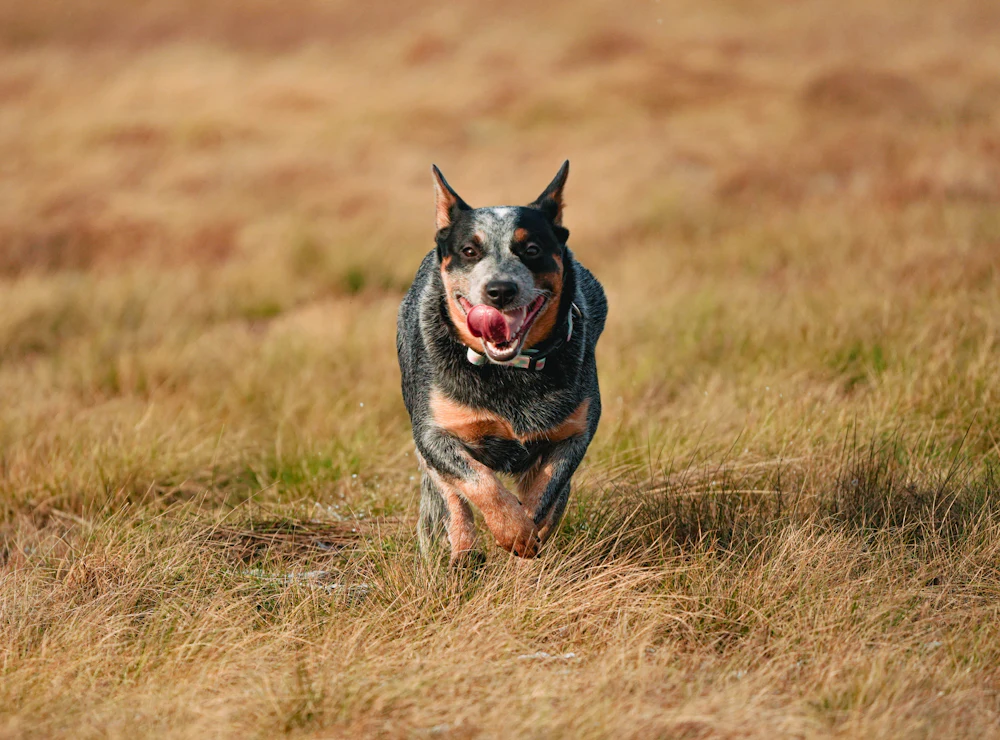
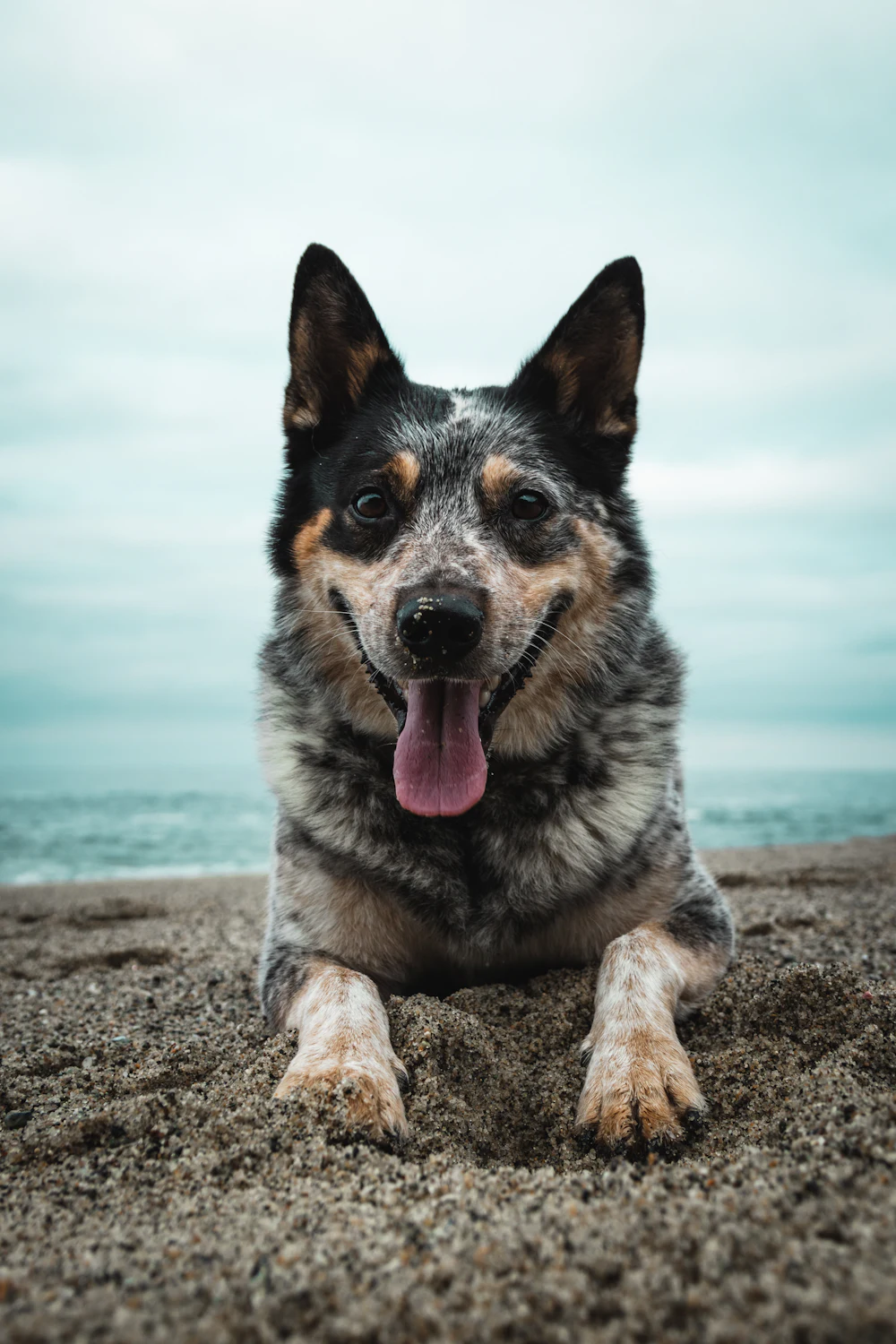
The coat is smooth and double, with a short, dense undercoat and a close, straight, hard outer coat that lies flat and resists rain. The FCI standard recognises two colour varieties: blue, which may be blue mottled or speckled with black, blue or tan markings, and red speckle, evenly speckled throughout with darker red markings permitted on the head. Puppies are born white and colour in over the first weeks. Shedding is moderate most of the year and heavy during the seasonal moult, when daily brushing helps.
Feeding and weight
Feed a complete diet suited to an active medium-sized dog and adjust the portion to the real workload, since a working farm dog and a city companion need very different amounts. Keeping a Cattle Dog lean protects its joints during an active life. Use part of the daily ration for training rewards and puzzle feeders, which also provide useful mental work on days when the weather limits outdoor activity.
Work out a starting calorie figure and food weight with the calorie calculator. Not sure this is the right breed? Take the quiz.
Health
Every breed carries predispositions. These are the conditions most often discussed for the Australian Cattle Dog, not a prediction for any individual dog.
- Progressive retinal atrophy (prcd-PRA)
- Congenital deafness
- Hip dysplasia
- Elbow dysplasia
- Primary lens luxation
What to ask the breeder. Ask for hip and elbow scores, eye examinations and DNA results for PRA and primary lens luxation for both parents, and a BAER hearing test for the puppy.
Choosing a puppy
Cattle Dog puppies are bold, mouthy and curious, with energy that seems endless and an off switch that must be taught. Begin with short training sessions, rest periods in a crate or pen and plenty of chew toys. Exposure to many people and places in the first months reduces the risk of an adult that is wary of strangers. Avoid long runs and repetitive jumping while the dog is growing, and channel nipping into toys from the first day.
In Luxembourg the national kennel club is the Fédération Cynologique Luxembourgeoise (FCL), a member of the FCI. Many owners also buy from breeders in Germany, France or Belgium; a puppy coming from another EU country must be microchipped and vaccinated against rabies, which in practice means it cannot travel before about fifteen weeks of age. Where to get a dog in Luxembourg.
The older Australian Cattle Dog
Many Cattle Dogs stay fit and keen well into old age, and the breed is known for its longevity. As joints stiffen, swap long runs for steady walks and nose work, which keep the mind busy without stressing the body. Keep weight under control, watch for changes in sight or hearing and adapt training to hand signals or touch cues if needed.
A realistic day
A realistic weekday for a working household in Luxembourg City, with a midday visit. Adjust it to your dog, not the other way round.
Brisk 45-minute walk or jog with a few minutes of training on the way, then breakfast in a puzzle feeder.
Short settle exercise on a mat, then a chew toy as the owner leaves for the office.
PAWLY midday visit: a 45-minute walk in Parc Merl or the Pétrusse valley with a fetch game and some scent work, plus fresh water.
Agility, obedience or a long walk in the Bambësch forest, followed by dinner and a calm grooming session.
Last walk around the block and lights out.
An Australian Cattle Dog in Luxembourg
A Cattle Dog can adapt to a flat in Luxembourg City if its needs are met every single day, but it is not a dog for a sedentary routine. It may bark at noises in a corridor or react to dogs in the lift at first, so early desensitisation helps. Parks such as Parc Merl, the Pétrusse valley and Kinnekswiss are good for training on the go, while the Bambësch and Grünewald forests offer longer outings.
The short coat copes with rain and cold, and the breed handles summer better than heavy-coated dogs, though on days in the 30s °C exercise should be moved to early morning and evening. Local dog clubs for agility and obedience suit the breed well. As with every dog in Luxembourg, it must be microchipped, declared to the commune and insured for third-party liability.
Every dog in Luxembourg must be identified, declared to the commune and covered by liability insurance. How registration works.
When you travel
A sitter must be ready for a dog that tests new people. Keep the routine identical, provide long walks and short training games each day, and use puzzle feeders to occupy the mind. Some Cattle Dogs are wary of strangers entering the home, so introductions should happen before the owner leaves. Doors and gates need care, as a bored dog may try to follow its owner.
PAWLY's holiday and overnight care takes place in your home, so your dog keeps its own bed and routine.
Myths and facts
MythA Cattle Dog will calm down with just one long walk.
FactPhysical exercise alone rarely satisfies this breed. Mental work, such as training, scent games and problem solving, is what really settles it.
MythHeelers bite.
FactNipping at heels is a herding behaviour, not aggression. It needs to be redirected early, especially around children.
MythThe breed is only for farms.
FactMany live in towns with active owners who provide daily work through sports and training.
Is it the right dog for you?
Suits
- Active owners who enjoy dog sports or long outdoor days
- People who like training and want a sharp working partner
- Experienced owners comfortable with a strong-willed dog
- Households with older children who join in activities
Think twice if
- Think twice if you want a dog that is friendly to every stranger
- Think twice if you have toddlers and no time for supervision
- Think twice if your days leave little time for exercise and training
- Think twice if you want a quiet, low-maintenance companion
Questions owners ask
Is an Australian Cattle Dog good for a flat?
It can be, with a lift or good stairs and an owner who provides around two hours of activity and mental work a day. Without that, many become noisy, destructive or restless, whatever the size of the home.
Are Cattle Dogs good with strangers?
The FCI standard mentions a natural suspicion of strangers. Most are polite once introduced, but they are rarely the dog that greets everyone. Early, positive socialisation makes a big difference to adult behaviour.
What is the difference between blue and red Heelers?
Only colour. The FCI recognises a blue and a red speckle variety within the same breed, and both colours can appear in the same litter. Temperament, exercise needs and care are the same, so choose a puppy for its parents and character rather than its colour.
How much do they shed?
Moderately for most of the year and heavily during the seasonal moult, when the undercoat comes out in tufts for a few weeks. A weekly brush, daily brushing during the moult and the occasional bath keep hair under control.
Sources
Photo: Unsplash (Unsplash License) · Photo: Unsplash (Unsplash License) · Photo: Unsplash (Unsplash License) · Photo: Unsplash (Unsplash License) · Photo: Unsplash (Unsplash License)
General information for dog owners in Luxembourg, not veterinary or legal advice. Official facts (origin, size, group, history and temperament as described by the breed standard) follow the FCI standard; health and care sections reflect breed-club and veterinary guidance and are typical ranges rather than rules. For your own dog, ask your vet, the breed club or your commune. How this guide is written and checked. Last reviewed 8 October 2026.
Need someone for your Australian Cattle Dog?
PAWLY offers an individual 45-minute walk or a home visit at your dog's pace, the same walker every time, and a written report with photos after every visit, across Luxembourg City.
Read next: the journal, for the Australian Cattle Dog
All articles
Working breeds in a city flat: the honest version
High-drive dogs like the Australian Cattle Dog can live in a flat, but it takes a plan.

Dogs and cats in the same flat
The Australian Cattle Dog can see small animals as prey; this covers living with a cat in a flat.

The front door: barking, deliveries and escapes
A watchful breed reacts at the door; this is how to manage it.
Similar breeds
All 198 breeds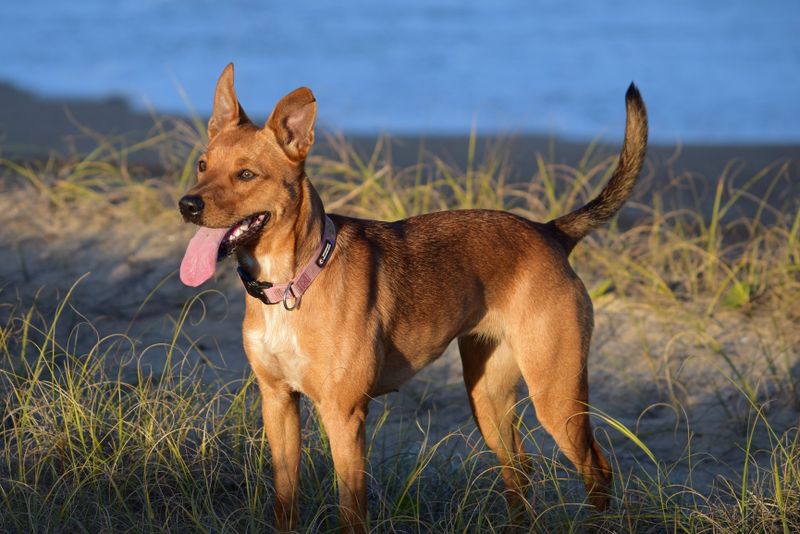
Australian Kelpie
A lean Australian sheep-working dog with inexhaustible stamina and a sharp, restless mind that finds its own jobs if you do not provide them.
EnergyGroomingFlat life
Border Collie
Probably the most capable working dog in the world, and for the same reason one of the hardest to keep in a city flat.
EnergyGroomingFlat life
Australian Shepherd
Beautiful, clever and tireless, and despite the name, an American ranch dog.
EnergyGroomingFlat life

