


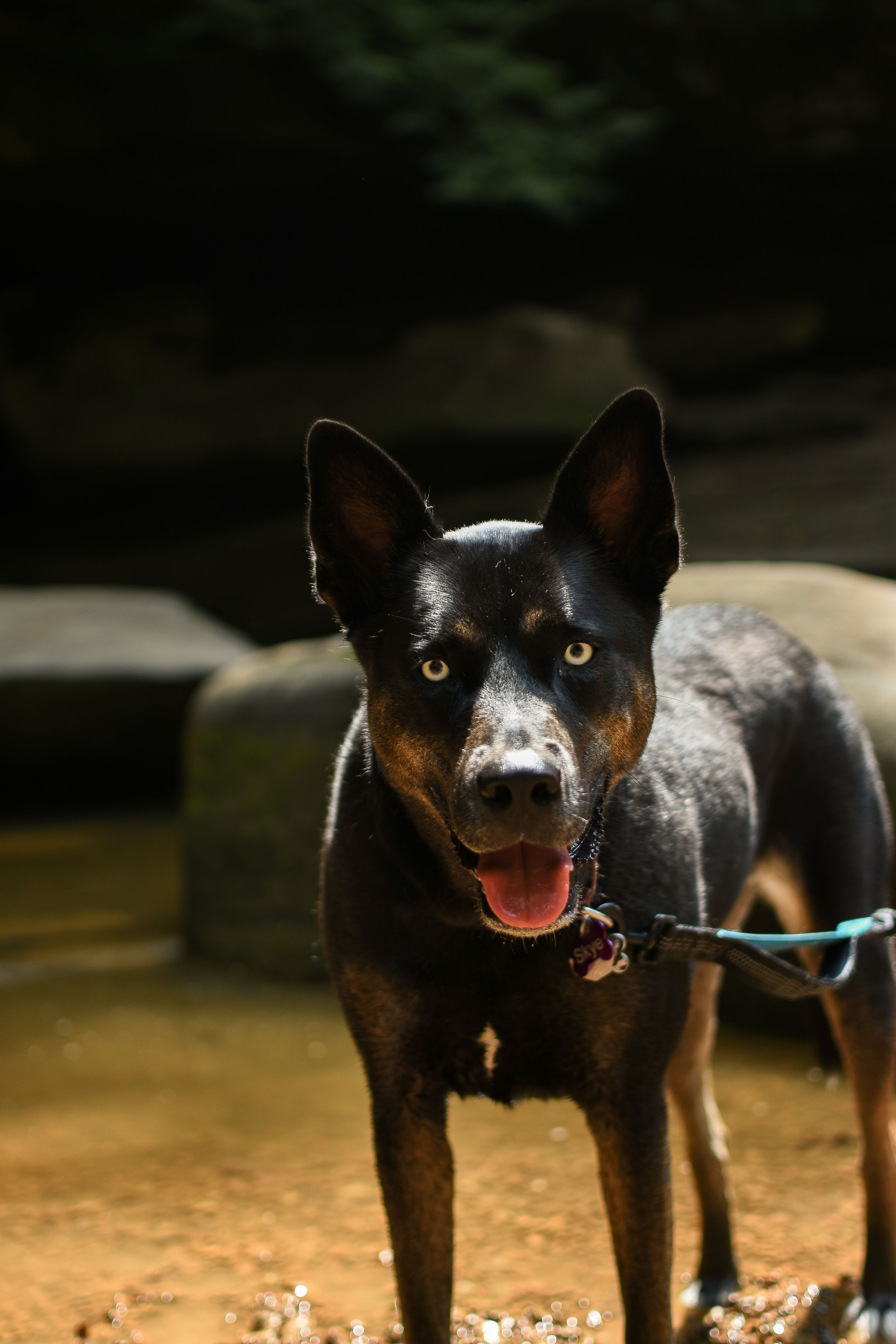
History
The Kelpie was developed in Australia to work sheep on vast stations, where traditional European herding methods proved impractical over huge distances, heat and rough ground. The FCI standard says it descends from imported Scottish collie-type working dogs, selected over generations for stamina, soundness and the ability to work stock without close direction.
Its working style is distinctive: the Kelpie will run across the backs of packed sheep and uses an intense eye and quick bursts to move stock. The FCI includes it in Group 1 and lists a working trial. The standard is dated 8 October 2012. Many Kelpies still work farms in Australia, and a separate show-type population exists. Working lines are sharper and more driven than most pet homes expect.
Temperament
The FCI describes the Kelpie as alert, eager and highly intelligent, with a mild, tractable disposition, inexhaustible energy, loyalty and a natural instinct for working sheep. In practice the mildness is real, but it comes with a brain that never fully switches off. A Kelpie will watch you, watch the door, watch a leaf and invent games if you do not.
Many are reserved with strangers but not aggressive, and deeply attached to one or two people. Under-stimulated dogs may nip at heels, chase bicycles, scooters and joggers, bark at movement, or dig and chew. Given enough work, the same dog is calm, quick to learn and a joy to be with. It needs a household that treats exercise and mental effort as a daily obligation, not an occasional treat.
Children and other pets
A Kelpie can be affectionate and good with children it knows, but its herding instinct may lead to heel-nipping and attempts to round up running youngsters, so supervision and early training are needed. It is usually fine with other dogs when well socialised, though it may be intense with them. Cats and small pets can be chased, and a Kelpie that has not grown up with them may not be safe to leave alone with them.
Exercise and the daily walk
A Kelpie needs far more than a lap of the block. Two hours a day is a sensible minimum for a healthy adult, split between brisk walking, running, off-lead time in a secure area and training. Fast, varied exercise works best: hill work, long-line recall games, fetch, agility, tracking or herding trials. A tired Kelpie body is not the same as a tired Kelpie brain.
Add mental jobs daily: scent games, food puzzles, trick training, learning names of toys. Without them the dog may invent its own tasks, and these rarely suit a tidy flat. Young dogs should not be pushed into repetitive hard exercise before the joints mature, and they should be taught to switch off between sessions with a mat and a chew.
Training
Kelpies learn extremely fast, which is both a gift and a risk: they learn your mistakes just as quickly. Reward-based training, clear timing and a little humour work well, and a bored Kelpie will invent its own rules. Sessions should be short, varied and finish while the dog is still keen.
Teach calm early. Settle on a mat, wait at doors, ignore passing bikes and children. Herding breeds fix on movement, so impulse control training, a reliable recall and a good lead habit are essential. Many do very well at agility, obedience, flyball and nosework, which give structure. A Kelpie that has a task is usually a much easier house companion than one that does not.
Coat and grooming
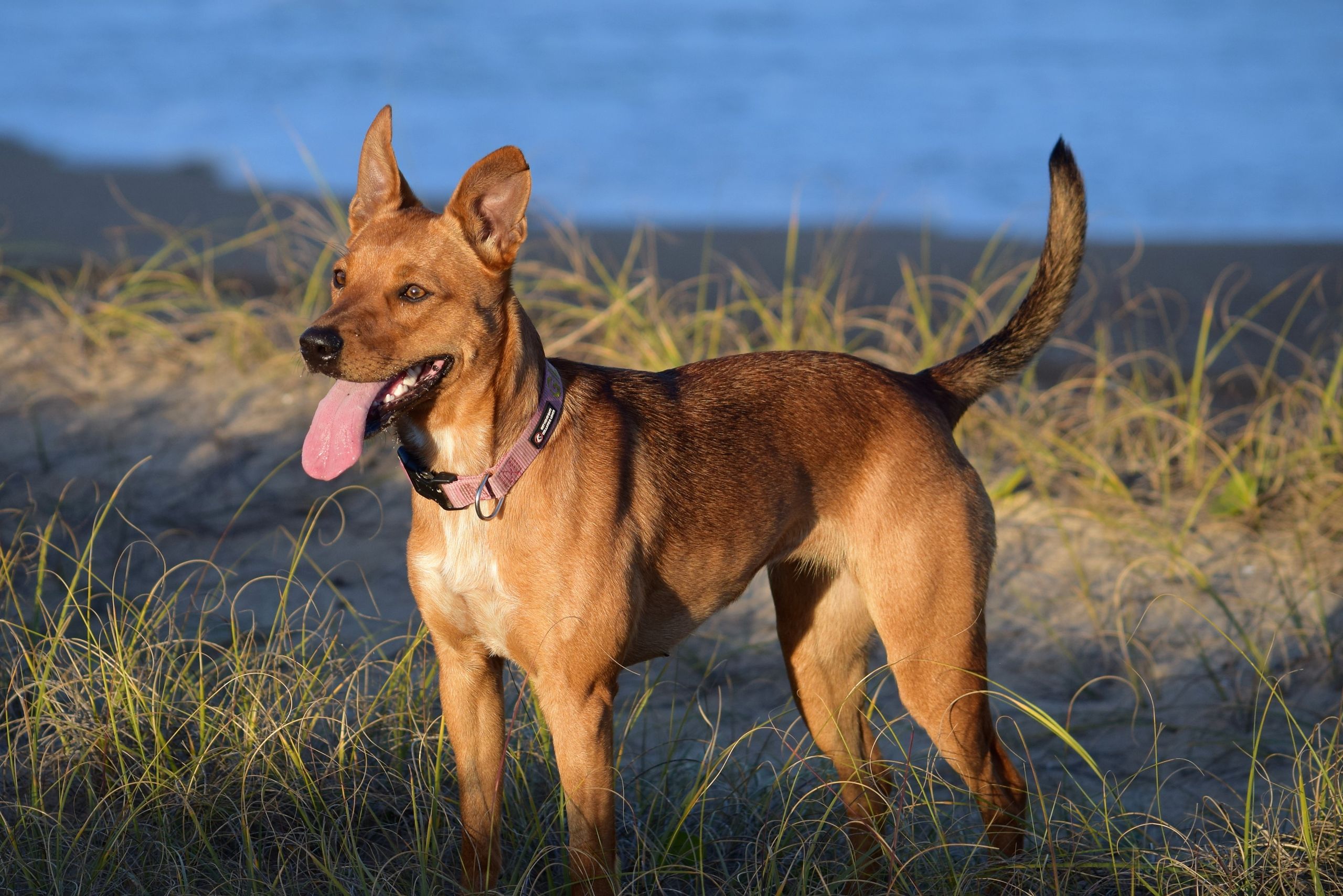
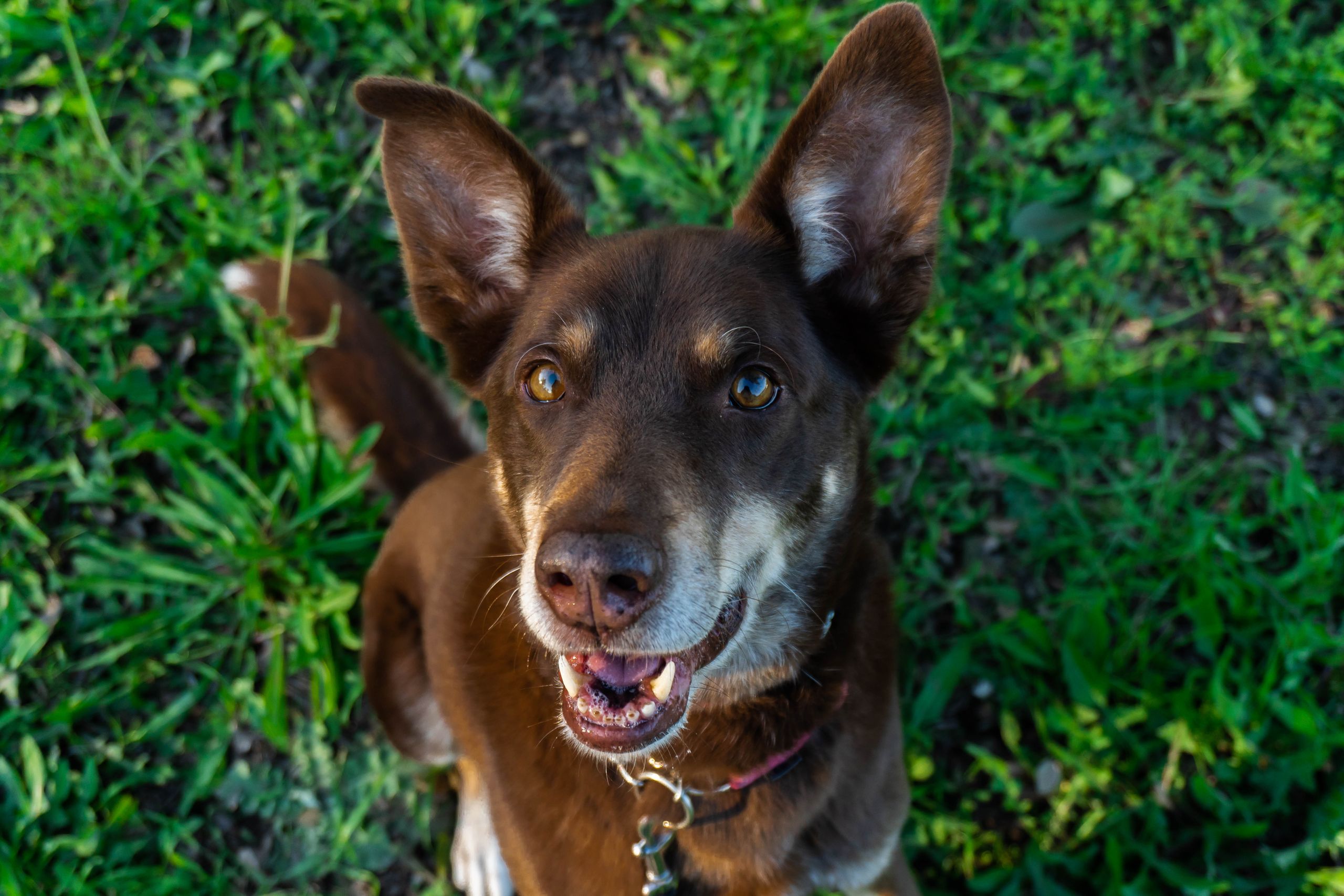
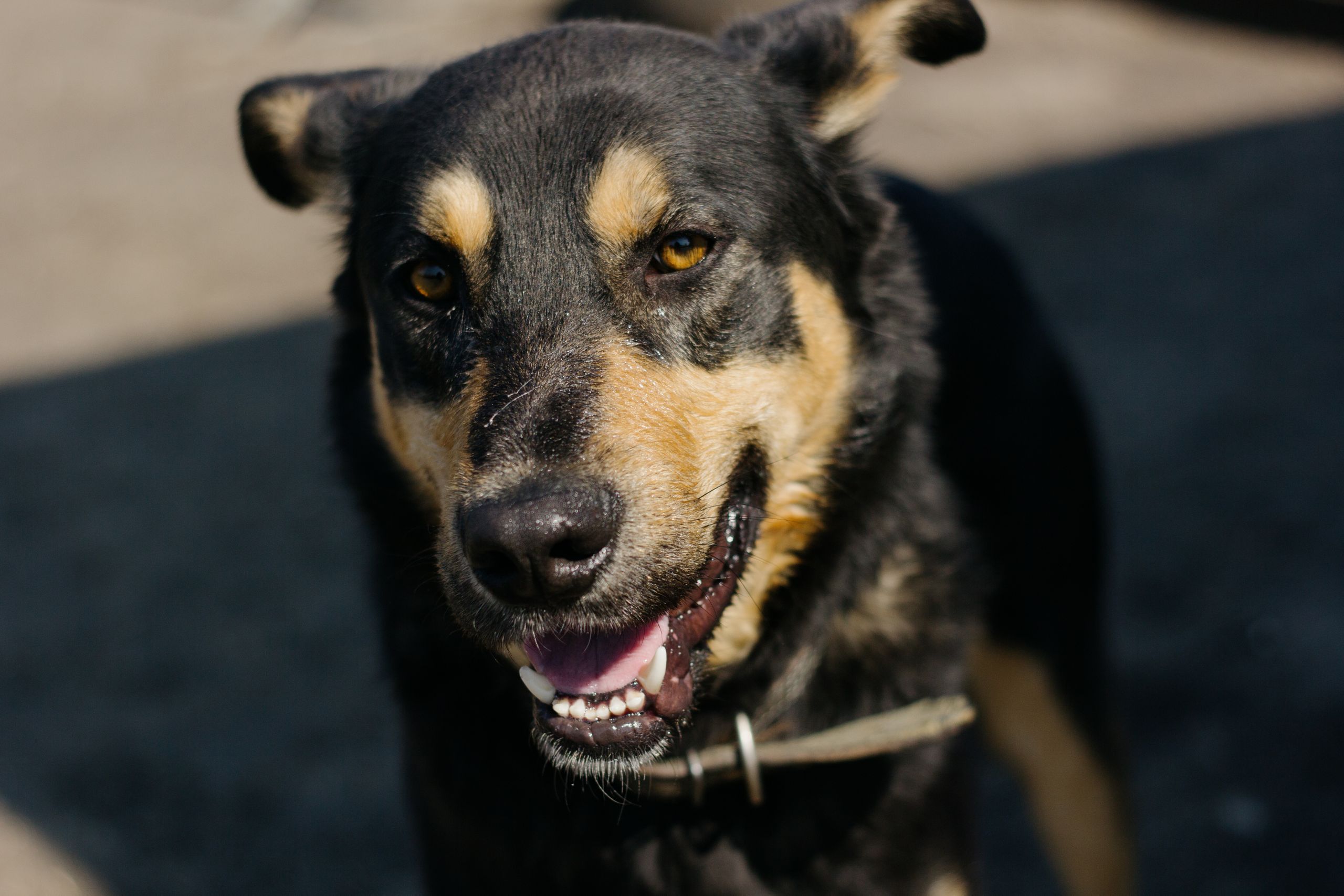
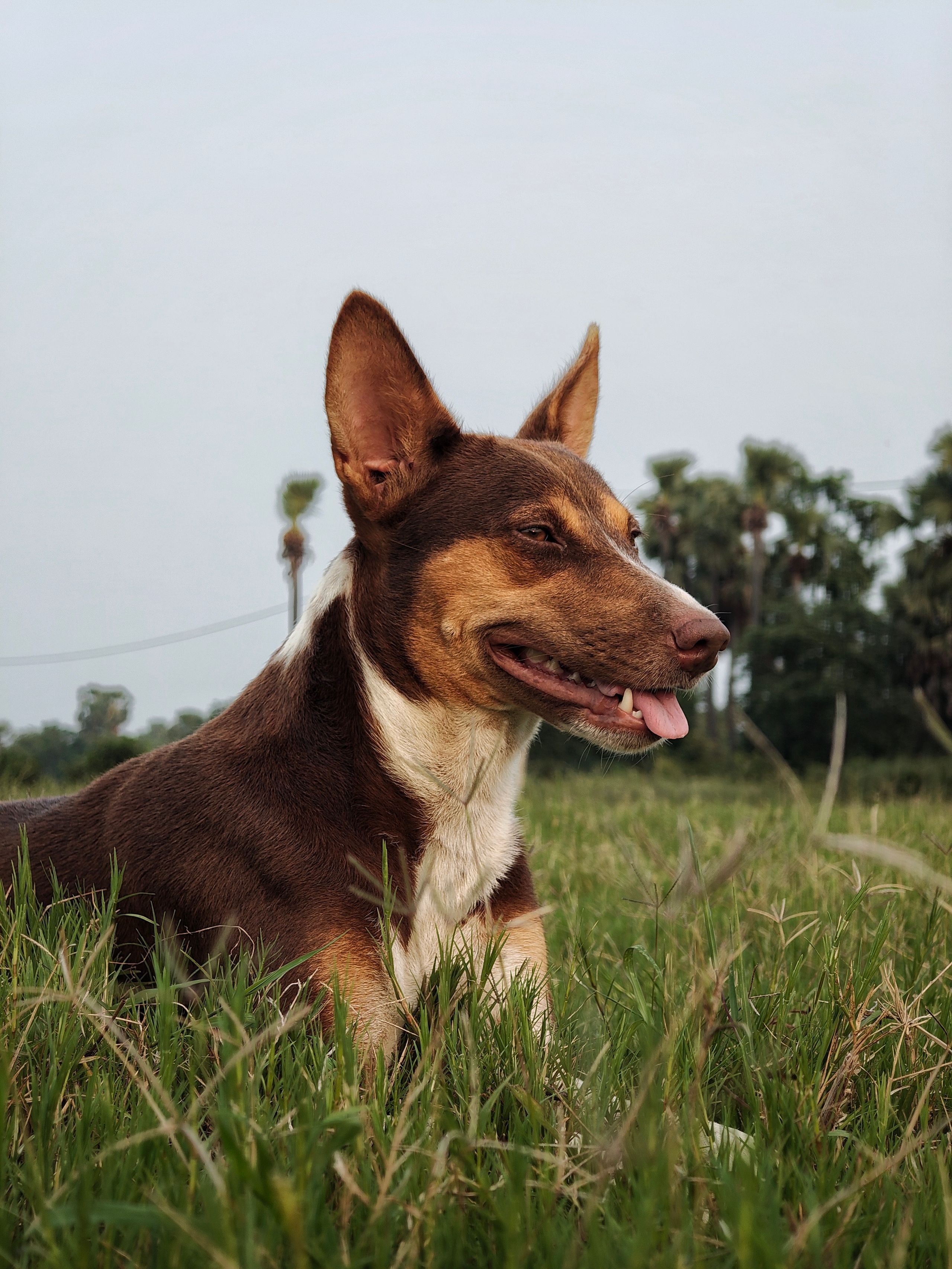
The coat is a double layer, with a short, dense undercoat and a straight, hard, flat, weather-resistant outer coat, about 2 to 3 cm on the body in the FCI standard. Permitted colours are black, black and tan, red, red and tan, fawn, chocolate and smoke blue. A weekly brush keeps it tidy, with more during the seasonal moult, when hair comes out in handfuls. It dries quickly after rain. Bathe only when truly dirty.
Feeding and weight
Kelpies are lean and active, and a good quality diet suited to an energetic medium-sized dog is usually enough. Feed measured meals, adjust for the dog's actual work and keep it slim, as extra weight stresses joints that are built for speed. Use part of the daily ration for training and puzzles. Ensure plentiful fresh water, particularly after summer exercise, and adjust food in the quiet winter months.
Work out a starting calorie figure and food weight with the calorie calculator. Not sure this is the right breed? Take the quiz.
Health
Every breed carries predispositions. These are the conditions most often discussed for the Australian Kelpie, not a prediction for any individual dog.
- Cerebellar abiotrophy, an inherited neurological disease found in the breed
- Progressive retinal atrophy and other inherited eye problems
- Hip and elbow dysplasia, less common than in larger breeds but worth testing for
- Patellar luxation (slipping kneecaps) in some lines
- Injuries from overexertion, such as torn ligaments and sore pads
What to ask the breeder. Ask which DNA tests the parents have had, including for cerebellar abiotrophy, and ask to see hip results and eye examination certificates. Also ask whether the lines are working or show type and how the parents live day to day.
Choosing a puppy
A Kelpie puppy is quick, mouthy and surprisingly clever from the first week. Begin with gentle handling, short walks, name games, toilet routines and calm time in a crate or pen. Socialise widely, including bicycles, trams, lifts and other dogs, but avoid hard exercise or jumping from heights while bones are developing. Direct nipping onto toys immediately, and reward every quiet moment so the pup learns that calm brings attention.
In Luxembourg the national kennel club is the Fédération Cynologique Luxembourgeoise (FCL), a member of the FCI. Many owners also buy from breeders in Germany, France or Belgium; a puppy coming from another EU country must be microchipped and vaccinated against rabies, which in practice means it cannot travel before about fifteen weeks of age. Where to get a dog in Luxembourg.
The older Australian Kelpie
Older Kelpies often stay sharp, fit and keen well past ten, which can mislead owners into overdoing things. Reduce high-impact sprinting, keep weight under control, and watch for stiffness, reduced vision or hearing. Frequent shorter walks, scent games and gentle training keep the mind active. Regular check-ups, a warm, supportive bed and joint-friendly exercise help a veteran stay comfortable.
A realistic day
A realistic weekday for a working household in Luxembourg City, with a midday visit. Adjust it to your dog, not the other way round.
A brisk 45 minute walk with training exercises, then a toilet break. The Kelpie needs to burn energy before the day begins.
Breakfast from a puzzle feeder, then a mat and a chew while you get ready. Settling is taught, not assumed.
A walker collects the dog for an hour of running, fetch or scent work in the park, then home for water and a rest.
Main outing of an hour or more in the forest or parkland, with off-lead work in a secure place and recall practice.
Last toilet break and a short training game, then bed. Without that, a Kelpie may still be looking for work at midnight.
An Australian Kelpie in Luxembourg
A Kelpie can live in a flat only if its owner treats exercise as a serious commitment. Expect two substantial outings a day plus a midday break, and a dog that learns to settle on a mat, ignore the lift and not bark at footsteps in the corridor. A balcony is no substitute for a run. It is far better suited to a house with a garden and an active owner.
The forests of Bambësch and Grünewald offer the long, varied walks the breed enjoys, while the Pétrusse valley and Parc Merl are good for shorter training sessions. In summer, temperatures in the 30s mean exercising early or late and carrying water. Buses and trams are free, which makes it easy to reach larger green areas by public transport. Third-party liability insurance, a microchip and the commune declaration apply, and the commune charges an annual dog tax.
Every dog in Luxembourg must be identified, declared to the commune and covered by liability insurance. How registration works.
When you travel
A sitter must be fit, experienced and ready for a long daily workout, not just a walk. Keep to the owner's routine, use secure leads and doors, and provide puzzles and games. A bored Kelpie may escape, dig, chew or bark, so give clear instructions, the vet's number and a plan for a dog that may be anxious without its person.
PAWLY's holiday and overnight care takes place in your home, so your dog keeps its own bed and routine.
Myths and facts
MythA Kelpie is just a Border Collie in a different coat.
FactThey are separate breeds. The Kelpie is a leaner, hardier Australian sheepdog, built for heat and distance, with its own FCI standard and character.
MythAn energetic dog just needs a big garden.
FactA garden does not exercise a Kelpie. It needs structured outings, training and companionship, and many will simply patrol the fence.
MythWorking Kelpies make easy pets.
FactWorking lines can be intense, sensitive and driven. They suit committed owners, not those looking for a quiet companion.
Is it the right dog for you?
Suits
- Active owners who run, hike or cycle daily
- People keen on dog sports, tracking or herding
- Experienced handlers of herding breeds
- Homes with time at home and a consistent routine
Think twice if
- You work long hours with nobody home
- You want a relaxed, low-effort flat companion
- You have small pets or toddlers running about
- You dislike training or daily exercise
Questions owners ask
How much exercise does an Australian Kelpie need?
Two hours or more a day is a sensible baseline for a healthy adult, combining fast walking, running, training and play. Mental work counts as much as physical work, and many need both to settle at home.
Can a Kelpie live in an apartment?
Yes, but only with a very committed owner. The dog needs long, varied outings, daily training, a midday break and enough rest. Without them it may bark, chew or fixate on movement.
Are Kelpies good with other dogs?
Usually, if well socialised, though they can be intense, pushy or herd other dogs. Choose play partners carefully and avoid crowded dog parks until the Kelpie is reliably calm.
How big is an Australian Kelpie?
The FCI standard gives 46 to 51 cm at the withers for males and 43 to 48 cm for females. The FCI standard does not give a weight, but they are lean, athletic dogs.
Sources
Photo: Pexels (Pexels License) · Photo: Pexels (Pexels License) · Photo: Pexels (Pexels License) · Photo: Pexels (Pexels License) · Photo: Pexels (Pexels License)
General information for dog owners in Luxembourg, not veterinary or legal advice. Official facts (origin, size, group, history and temperament as described by the breed standard) follow the FCI standard; health and care sections reflect breed-club and veterinary guidance and are typical ranges rather than rules. For your own dog, ask your vet, the breed club or your commune. How this guide is written and checked. Last reviewed 8 October 2026.
Need someone for your Australian Kelpie?
PAWLY offers an individual 45-minute walk or a home visit at your dog's pace, the same walker every time, and a written report with photos after every visit, across Luxembourg City.
Read next: the journal, for the Australian Kelpie
All articles
Working breeds in a city flat: the honest version
High-drive dogs like the Australian Kelpie can live in a flat, but it takes a plan.

Dogs and cats in the same flat
The Australian Kelpie can see small animals as prey; this covers living with a cat in a flat.

Arthritis: the pain owners file under old age
Hip and joint problems are among those discussed for the Australian Kelpie; this is how to spot and manage them.
Similar breeds
All 198 breeds
Australian Cattle Dog
A compact, tireless drover from the Australian outback, devoted to its own people and happiest with a job, a plan and a busy day.
EnergyGroomingFlat life
Border Collie
Probably the most capable working dog in the world, and for the same reason one of the hardest to keep in a city flat.
EnergyGroomingFlat life
Australian Shepherd
Beautiful, clever and tireless, and despite the name, an American ranch dog.
EnergyGroomingFlat life

