History
The Australian Terrier grew out of the rough conditions of colonial Australia, where settlers needed a small, hardy dog to keep down rats and snakes and to raise the alarm around the homestead. According to the FCI standard, its ancestors were British terriers brought out by the settlers, with the Skye Terrier, the Scottish Terrier and the Dandie Dinmont Terrier named as the main contributors. The aim was a dog that could cope with heat, rough scrub and isolation while staying close to the family.
In the early nineteenth century, breeders in Tasmania were already producing blue dogs with tan markings weighing about ten pounds, the colouring that still defines much of the breed. The FCI places the Australian Terrier in Group 3, Section 2, among the small terriers, and its current standard dates from October 2012. The standard describes it as one of the smallest of the working terriers, bred to be both helper and companion in rough times and terrain, and that dual role still explains the dog you meet today.
Temperament
The standard calls the Australian Terrier essentially a working terrier whose loyalty and even disposition make it equally suitable as a companion, and that is a fair summary. Most are confident, alert and quick to notice anything new in the street, but they are less frantic than some terriers of similar size. In the house they tend to stay close to their people, follow them from room to room and settle well once they have had a proper walk.
There is still a real terrier underneath the neat outline. A rustle in a hedge, a pigeon on the pavement or a cat on a wall will get full attention, and some individuals can be bossy with other dogs, particularly dogs of the same sex. They are good watchdogs and will announce visitors, though most are not incessant barkers if their days are interesting. With strangers they are usually polite rather than gushing.
Children and other pets
With children who understand how to treat a small dog, the Australian Terrier is often a cheerful, tough playmate, robust enough not to be fragile but small enough to be handled. Toddlers need supervision, as with any dog, because a terrier will not always tolerate being grabbed. With other dogs most do well when properly socialised, although same-sex tension can appear. Cats raised with the dog are often accepted indoors, but rabbits, guinea pigs and pet rodents are at real risk: this breed was made to catch small animals.
Exercise and the daily walk
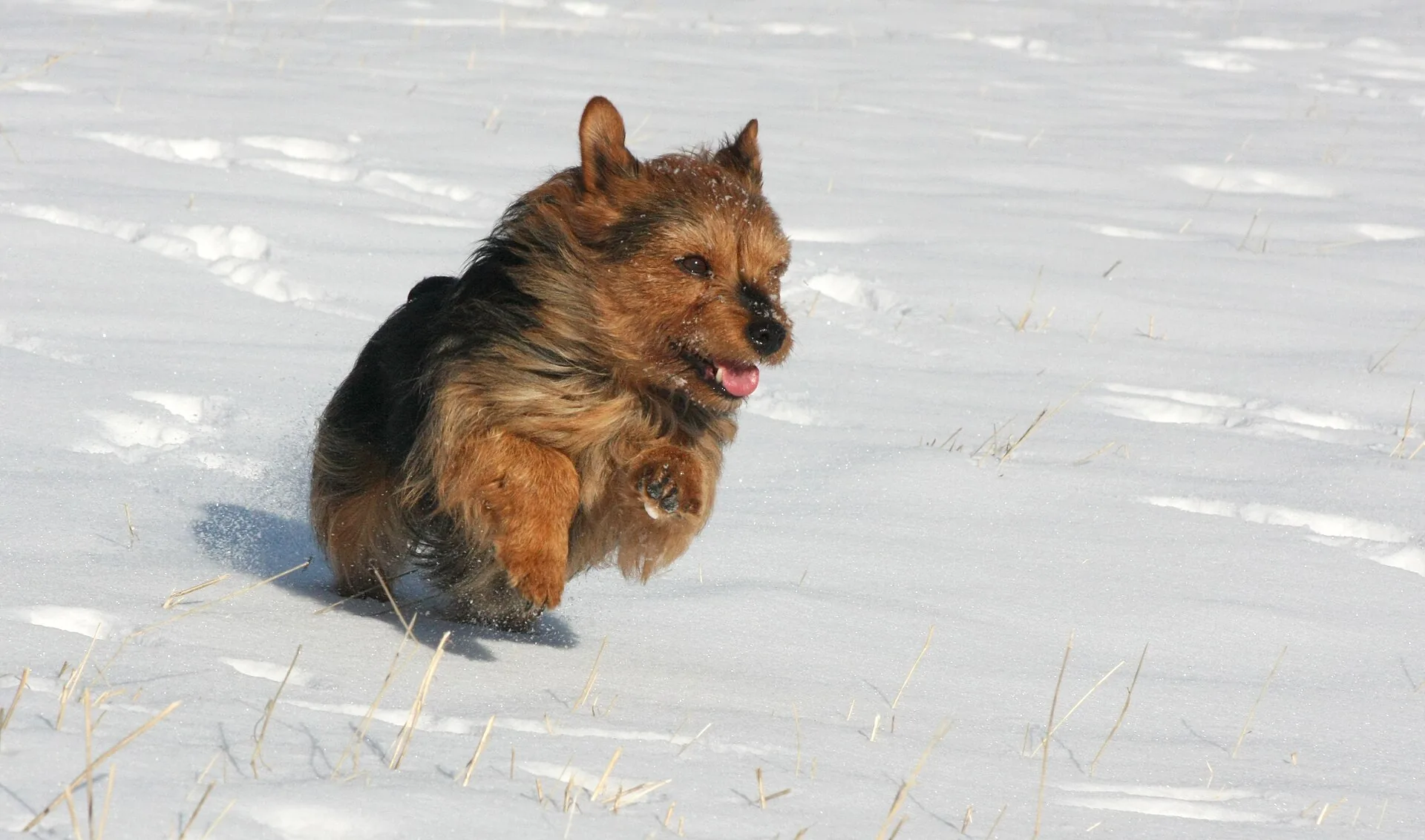
An hour a day split into two or three walks suits most adults, with some free play or sniffing time built in. They are not marathon dogs, but they enjoy rough terrain more than smooth pavements: woodland paths, long grass and a chance to investigate are worth more than a fast march. A bored Australian Terrier will find its own entertainment, which usually means digging, barking or chewing.
Recall can be good in a quiet place and unreliable when there is wildlife about. In forests with deer, hares and rabbits a long line is the sensible choice for many individuals. Short sessions of games such as hunting for hidden treats, tugging or simple scent work tire them as much as an extra walk. In hot weather keep outings to the cooler hours; the dense coat holds heat.
Training
Australian Terriers are bright and usually keen to work with their owner, which makes them among the more trainable terriers. They respond best to short, varied sessions with food rewards and a bit of fun; long drills bore them quickly. Harsh handling tends to make a terrier dig in its heels, so fairness and consistency work better than force.
House training is generally straightforward with a routine. The areas that need steady work are recall around wildlife, polite greetings with other dogs and limiting alert barking at noises in the stairwell. Teaching a quiet signal early, and rewarding calm behaviour when the doorbell rings, pays off in a building with neighbours on the other side of thin walls.
Coat and grooming
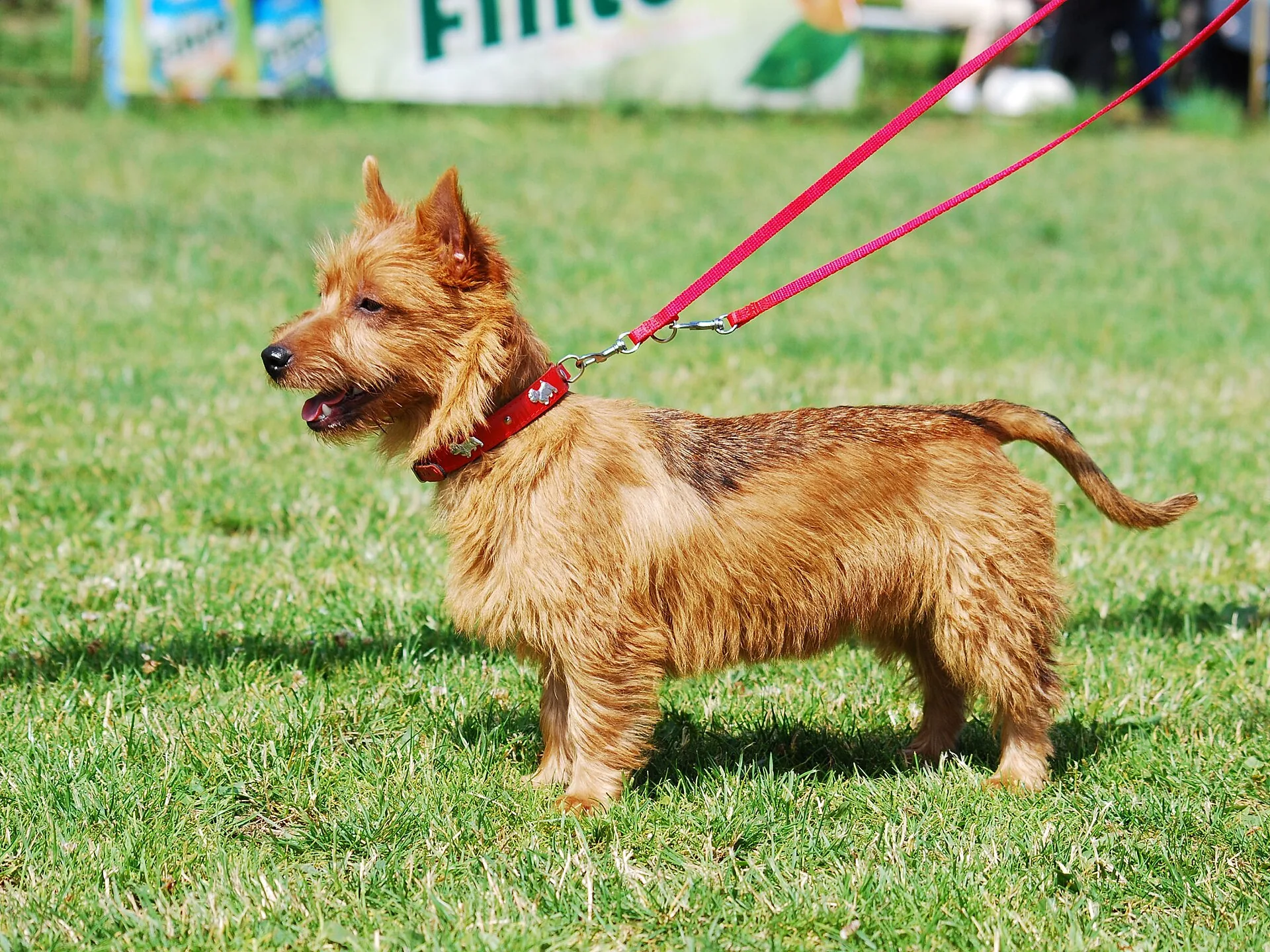
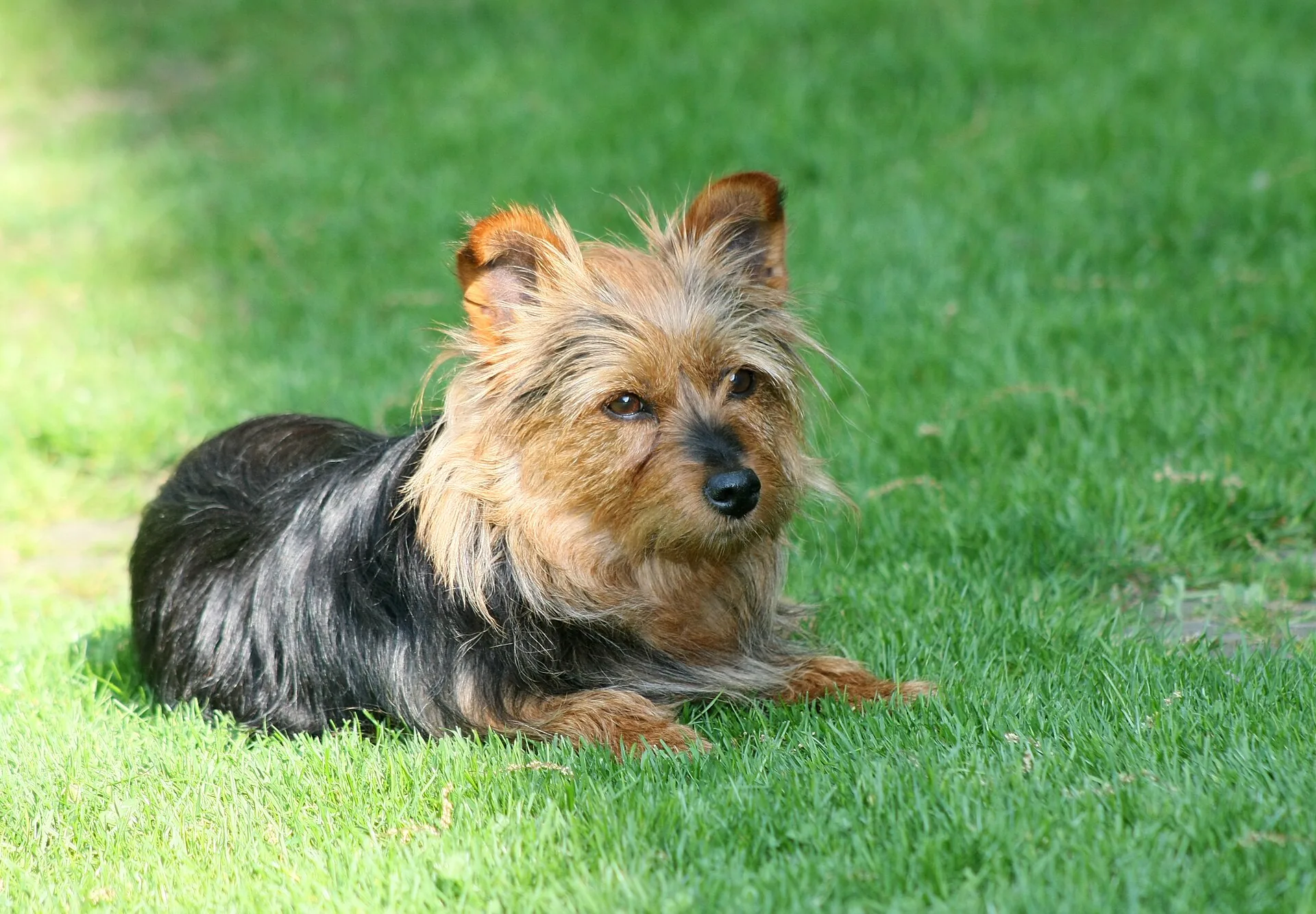
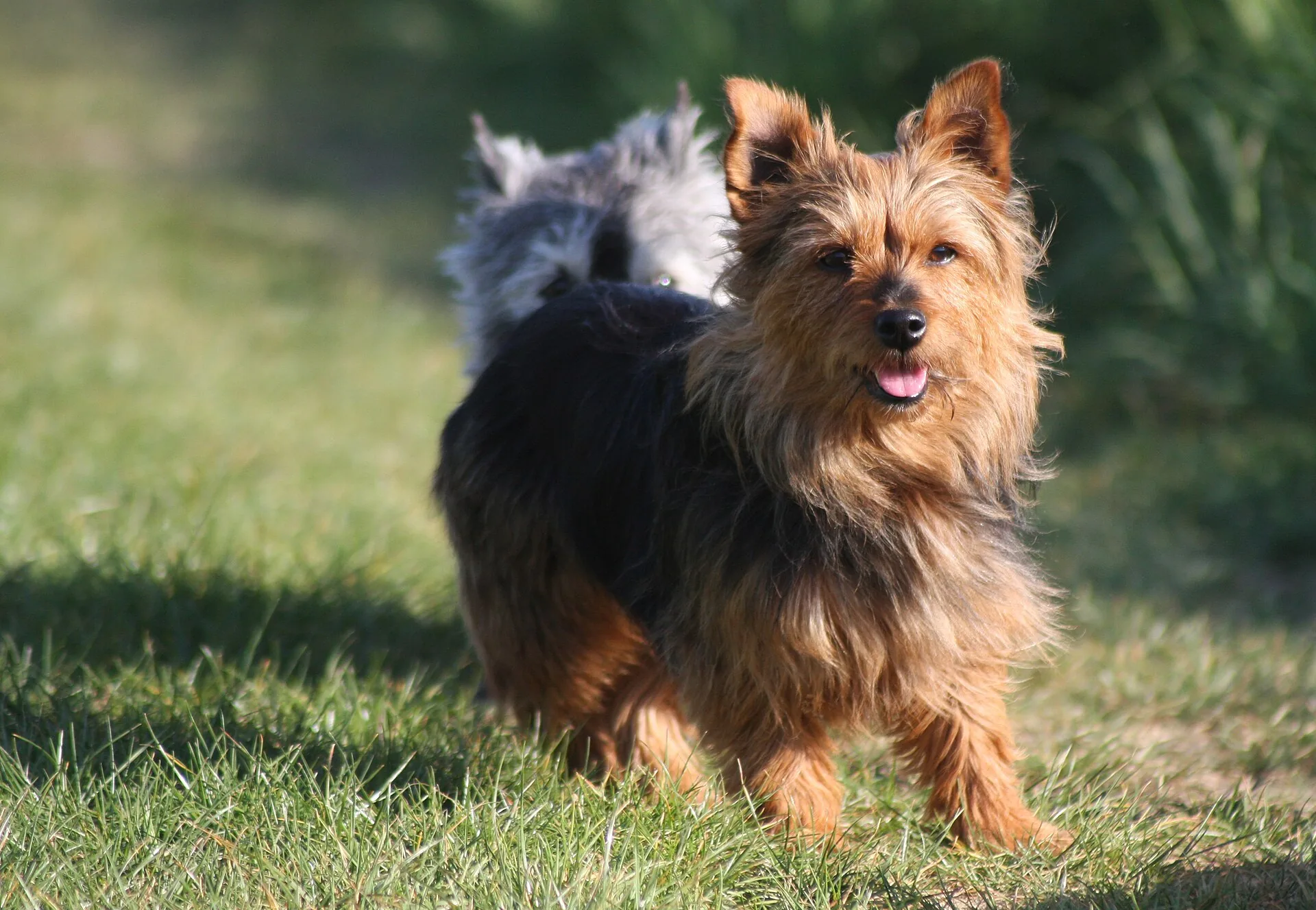
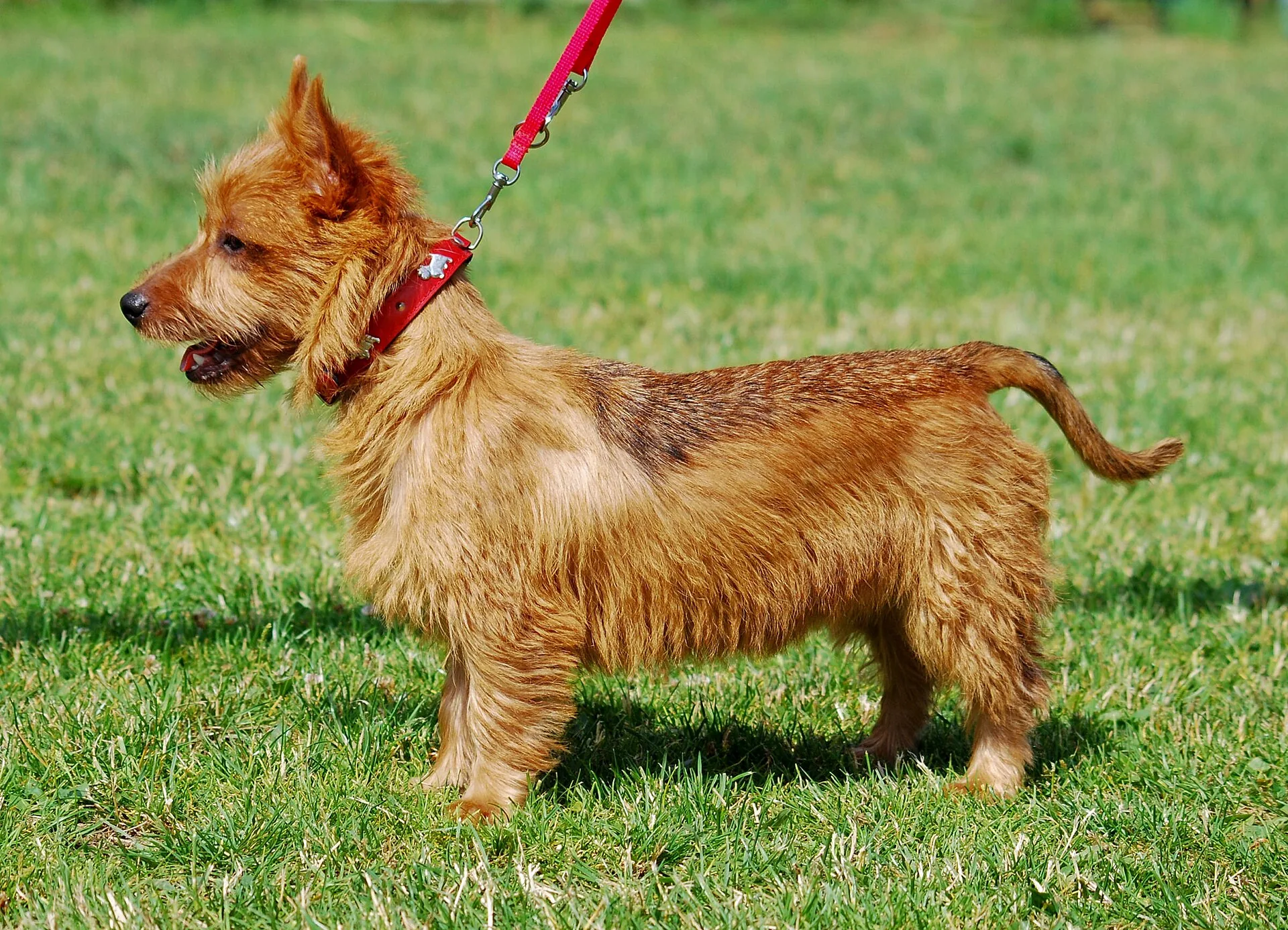
The FCI standard asks for a harsh, straight, dense topcoat about 6 cm long over a short, soft undercoat, with a soft topknot on the head. Shedding is light. A weekly brush and comb keeps the coat in order, and a pet will benefit from hand stripping of dead hair a few times a year rather than clipping, which softens the texture. Keep nails short and check the ears. Permitted colours are blue, steel blue or dark grey blue with rich tan on face, ears, underside, lower legs and feet, or clear sandy or red.
Feeding and weight
A small, active dog with a hearty appetite, the Australian Terrier gains weight easily if treats are added to full meals. Feed a good quality complete diet in measured amounts, adjusting to the dog's condition rather than the bag's suggestion. You should be able to feel the ribs without pressing. Two meals a day suit most adults. Use part of the daily ration for training rewards and keep table scraps to a minimum.
Work out a starting calorie figure and food weight with the calorie calculator. Not sure this is the right breed? Take the quiz.
Health
Every breed carries predispositions. These are the conditions most often discussed for the Australian Terrier, not a prediction for any individual dog.
- Patellar luxation (slipping kneecaps)
- Legg-Calvé-Perthes disease (hip joint degeneration in young dogs)
- Diabetes mellitus
- Hypothyroidism (underactive thyroid)
- Allergic skin disease
- Dental disease
What to ask the breeder. Ask whether both parents have had their knees checked, an eye examination by a veterinary ophthalmologist and a thyroid evaluation, and whether any relatives have had diabetes or Legg-Calvé-Perthes disease.
Choosing a puppy
Australian Terrier puppies are bold, curious and quick to learn, which makes the first months both easy and demanding. Start gentle handling of paws, ears and mouth early so grooming and vet visits are routine. Introduce lifts, buses, traffic and stairwell noises in small steps. Socialise with calm adult dogs of different sizes to reduce later sparring. Keep walks short and on soft ground while joints develop, and give plenty of chew toys, since teething terriers will otherwise choose the skirting boards.
In Luxembourg the national kennel club is the Fédération Cynologique Luxembourgeoise (FCL), a member of the FCI. Many owners also buy from breeders in Germany, France or Belgium; a puppy coming from another EU country must be microchipped and vaccinated against rabies, which in practice means it cannot travel before about fifteen weeks of age. Where to get a dog in Luxembourg.
The older Australian Terrier
Many Australian Terriers stay lively well into their teens. As they age, shorten walks but keep them interesting with sniffing and gentle exploring. Watch body weight closely, since older dogs need fewer calories. Regular dental care becomes more important, and any increase in thirst or urination is worth a vet visit. Stiff joints benefit from non-slip rugs and a warm, padded bed away from draughts.
A realistic day
A realistic weekday for a working household in Luxembourg City, with a midday visit. Adjust it to your dog, not the other way round.
Brisk 25-minute walk around the neighbourhood with time to sniff along hedges, then breakfast.
A short game or puzzle feeder before the owner leaves, then a nap in a quiet corner of the flat.
PAWLY midday visit: a 40-minute walk in the Pétrusse valley or Parc Merl, fresh water and a quick check of paws and coat.
Evening outing of 30 to 40 minutes, on a long line in woodland at weekends, followed by dinner and a brush.
Last short walk around the block, then bed.
An Australian Terrier in Luxembourg
An Australian Terrier is one of the easier terriers to keep in a Luxembourg City flat. It is small enough for lifts and narrow stairwells, light enough to carry on a bus or tram, and usually settles well indoors once exercised. The main issues in a building are alert barking at footsteps and the lift, which training can reduce, and a tendency to bristle at other dogs in tight spaces such as entrance halls.
The Pétrusse valley, Parc Merl and the Kinnekswiss give good daily variety, while Bambësch and the Grünewald suit longer weekend walks, ideally on a long line because of deer and other wildlife. On hot summer days, which can reach the 30s, walk early and late. Remember the usual local obligations: microchip, declaration to the commune, the annual dog tax and third-party liability insurance.
Every dog in Luxembourg must be identified, declared to the commune and covered by liability insurance. How registration works.
When you travel
A sitter should know that this small dog is still a capable escape artist: check balconies, garden fences and doors, and keep the dog on lead outside. Stick to the usual meal amounts, since extra treats lead quickly to weight gain. Expect some barking at unfamiliar noises during the first night. Most Australian Terriers adapt well to a calm sitter who keeps the walking routine and gives them company in the evening.
PAWLY's holiday and overnight care takes place in your home, so your dog keeps its own bed and routine.
Myths and facts
MythSmall terriers are too stubborn to train.
FactAustralian Terriers are generally willing learners. Short, rewarding sessions get good results; harsh or repetitive methods do not.
MythThey are just a smaller Silky Terrier.
FactThe two are related but different. The Australian Terrier has a harsh, weatherproof coat and a sturdier working build, while the Silky has a fine, glossy coat.
MythA small dog does not need much exercise.
FactThis is a working terrier. Without about an hour of varied activity a day it tends to invent its own jobs, often noisy ones.
Is it the right dog for you?
Suits
- Flat dwellers who want a small but robust dog
- First-time owners willing to train consistently
- Families with children old enough to respect a dog
- People who enjoy daily walks in parks and woods
Think twice if
- You keep rabbits, guinea pigs or other small pets
- You want a dog that is reliably off lead in the forest
- Neighbours are very sensitive to barking
- You prefer a dog that ignores other dogs
Questions owners ask
Does an Australian Terrier shed?
Shedding is light. Dead hair is best removed by regular brushing and, a few times a year, hand stripping. Clipping is possible for a pet but softens the coat, which then sheds and tangles more and loses some of its weather resistance.
Can it be left alone during the working day?
Most adults cope with a few hours alone once they are used to it, but a full office day is too long. A midday walk breaks the day, prevents boredom barking and keeps the dog settled until the evening.
Is it good with cats?
A puppy raised with a calm cat often lives peacefully with it. Outdoor cats and unfamiliar cats are another matter, and many Australian Terriers will chase them. Small caged pets should be kept well out of reach.
How much grooming does a pet really need?
A thorough brush and comb once a week, a quick tidy around the eyes and feet, and hand stripping by a groomer or owner a few times a year. Nails, teeth and ears should be checked weekly.
Sources
Photo: Lilly M, CC BY-SA 3.0, via Wikimedia Commons · Photo: Ketterechts, CC BY-SA 4.0, via Wikimedia Commons · Photo: User:Ronald Müller-Hagen, CC BY-SA 3.0, via Wikimedia Commons · Photo: Ketterechts, CC0, via Wikimedia Commons · Photo: Lilly M, CC BY-SA 3.0, via Wikimedia Commons
General information for dog owners in Luxembourg, not veterinary or legal advice. Official facts (origin, size, group, history and temperament as described by the breed standard) follow the FCI standard; health and care sections reflect breed-club and veterinary guidance and are typical ranges rather than rules. For your own dog, ask your vet, the breed club or your commune. How this guide is written and checked. Last reviewed 8 October 2026.
Need someone for your Australian Terrier?
PAWLY offers an individual 45-minute walk or a home visit at your dog's pace, the same walker every time, and a written report with photos after every visit, across Luxembourg City.
Read next: the journal, for the Australian Terrier
All articles
Teeth: the problem owners find least interesting and vets see most
Teeth are a known weak point in the Australian Terrier; this is the routine that helps.

The itchy dog: working through it in the right order
Skin trouble is among the conditions discussed for the Australian Terrier; this is the order to work through it.

Dogs and cats in the same flat
The Australian Terrier can see small animals as prey; this covers living with a cat in a flat.
Similar breeds
All 198 breeds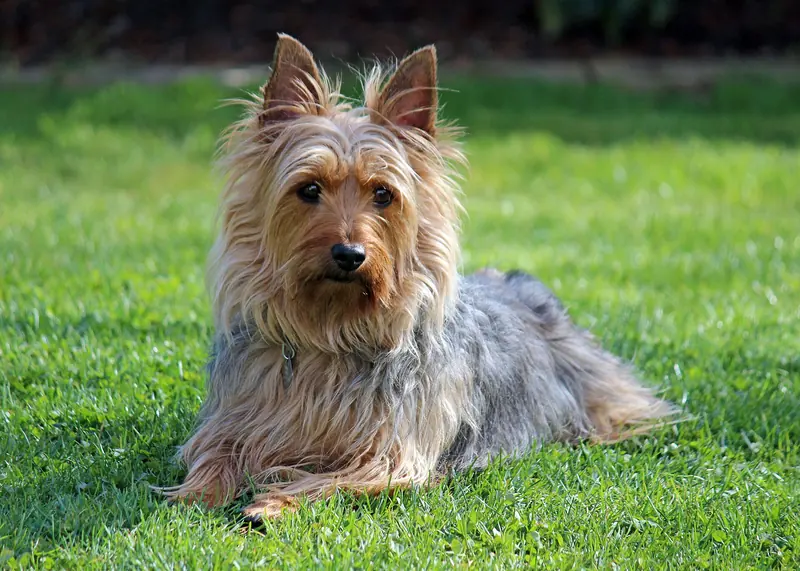
Australian Silky Terrier
A glossy little terrier in blue and tan, dignified at the door and cheerfully reckless the moment a rat, ball or squirrel appears.
EnergyGroomingFlat life
Cairn Terrier
A small, scruffy Highland terrier, bred to bolt foxes from the rocks and still cheerful, busy and unimpressed by its size.
EnergyGroomingFlat life
Norwich Terrier
One of the smallest terriers, with prick ears, a red-gold wire coat and a fearless character far larger than its 25 centimetres.
EnergyGroomingFlat life

