
History
The Australian Silky Terrier comes from Australia and is classified by the FCI in Group 3, Section 4, Toy Terriers, with the use given as toy terrier and companion dog. The standard states that the breed descended from Australian and Yorkshire Terriers. It records that, around 1820 to 1830, a blue-sheen broken-coated terrier from Tasmania was taken to England and crossed with a Dandie Dinmont Terrier.
The standard goes on to say that a Mr Macarthur Little, of London, produced puppies with soft, silky coats, and later moved to Sydney, where he continued breeding with Australian and Yorkshire Terriers. The dogs spread through the Australian colonies, and the breed was firmly established by the early twentieth century. The current standard is dated 08.10.2012. Despite the toy size, the standard stresses that the dog should have enough substance to suggest the ability to hunt domestic rodents.
Temperament
The FCI describes a courageous and dignified toy terrier, second to none as a companion, with a terrier's alertness and activity. Most owners find a bright, affectionate dog that wants to be involved in everything, from the morning routine to the post. It is a good watchdog in a small way, quick to announce visitors and slow to trust strangers, but without the heavy suspicion of larger guard breeds.
The terrier side shows outdoors. A Silky will chase, dig and challenge dogs much bigger than itself, so its owner needs to be the sensible one. It does not like being left alone, and a bored Silky may bark, shred or become a persistent attention seeker. With company, regular outings and a clear routine, it is cheerful, funny and responsive, and a more robust dog than its glamorous coat suggests.
Children and other pets
A Silky enjoys family life and can do well with gentle, older children who understand how to handle a small dog. Toddlers and rough play are not a good match, as a dog of this size is easily hurt and may snap if frightened. It tends to get on with other dogs but can be bossy or quarrelsome with same-sex dogs. Terrier instincts mean that hamsters and other small pets are at risk. With a cat it is usually fine if introduced young.
Exercise and the daily walk
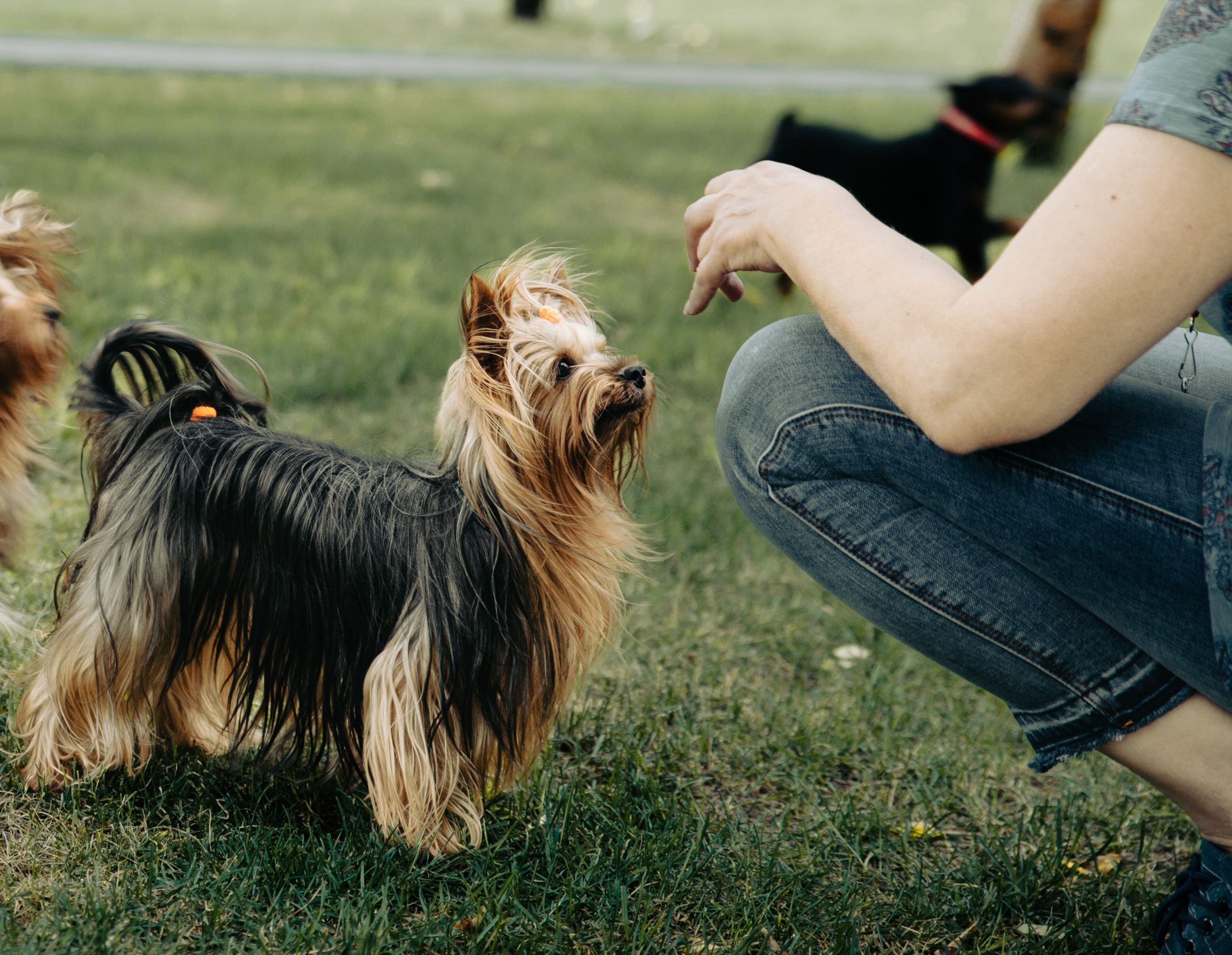
The Silky needs about 45 minutes to an hour of activity a day, split into two or three outings. It loves a brisk walk and a game of fetch, and it has a lot more stamina than its size suggests. On days when it cannot go out, a play session and a trick lesson indoors are a good substitute, but it should not be a regular replacement for fresh air and sniffing.
Keep it on a lead in open areas, as the terrier's chase drive can overrule recall when a squirrel runs by. A harness protects the delicate neck and trachea. Mind the coat on wet days, since long hair collects mud, and dry the dog well on return. Avoid jumping from high surfaces, particularly with puppies, to protect the knees and hips.
Training
The breed is smart and learns quickly, but it has a stubborn and independent streak, as with most terriers. Reward-based training with small treats, short lessons and plenty of variety works best. Start early with lead manners, a reliable sit, stay and leave-it, and with house training, which can take time in small dogs. Be consistent and patient, as a toy dog allowed to rule the house will do so.
Socialise the puppy widely, so that its natural alertness does not become reactivity, and teach a quiet cue to manage barking. Practise being alone for short periods from the start to prevent separation distress. Recall should be built carefully in enclosed spaces and not relied upon near roads or wildlife. Clever dogs enjoy trick training and simple agility, which give the terrier brain a job.
Coat and grooming
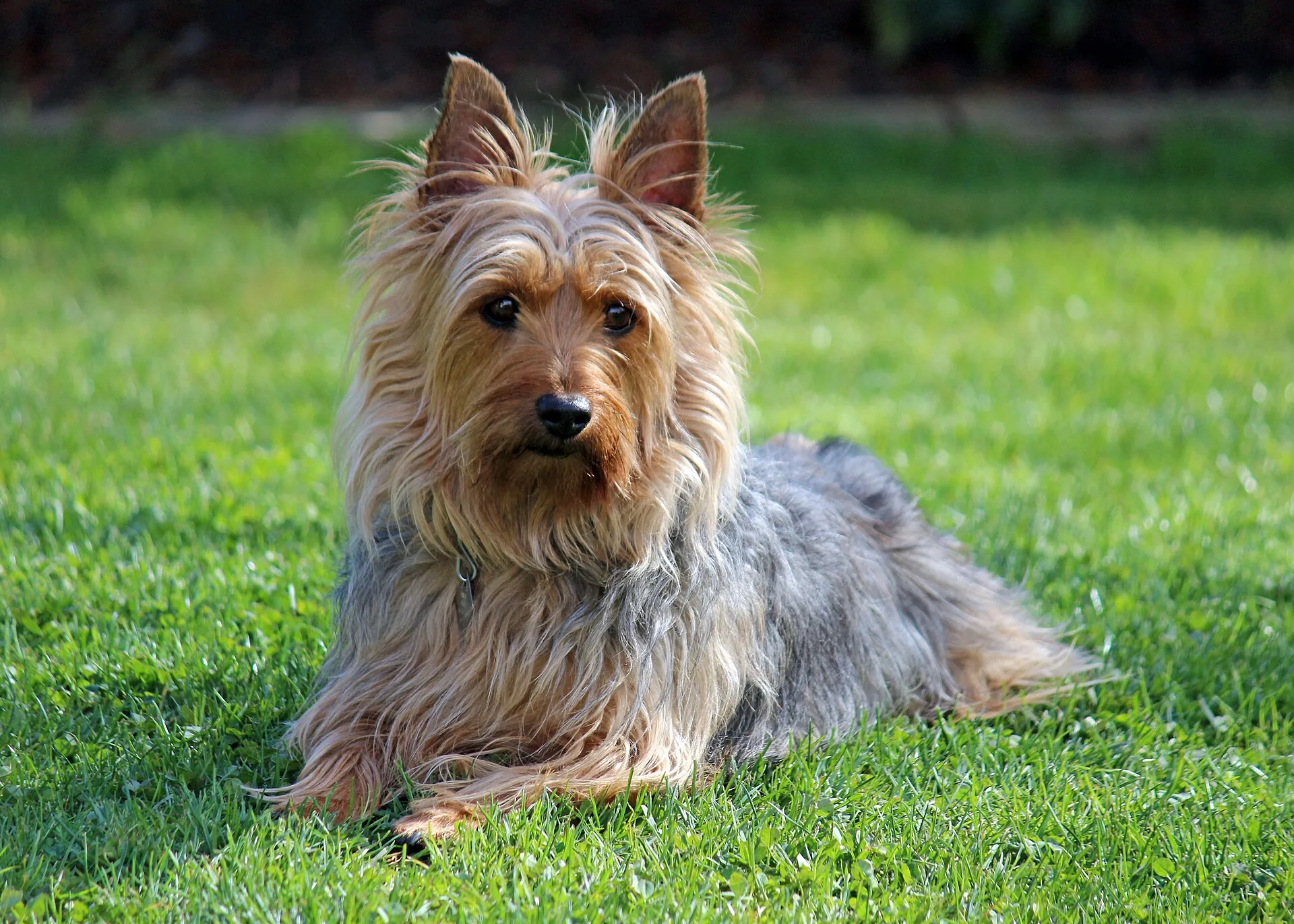
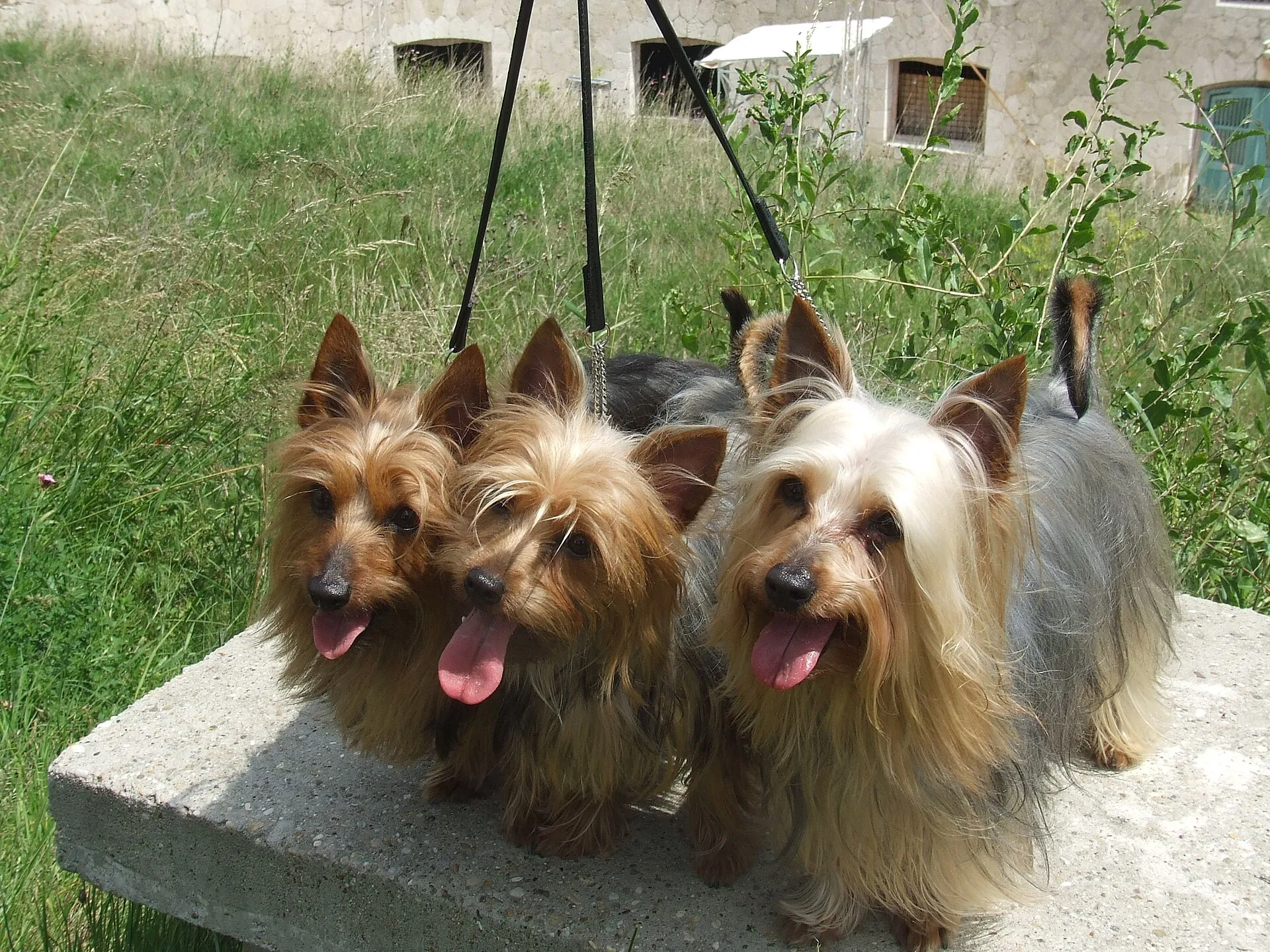
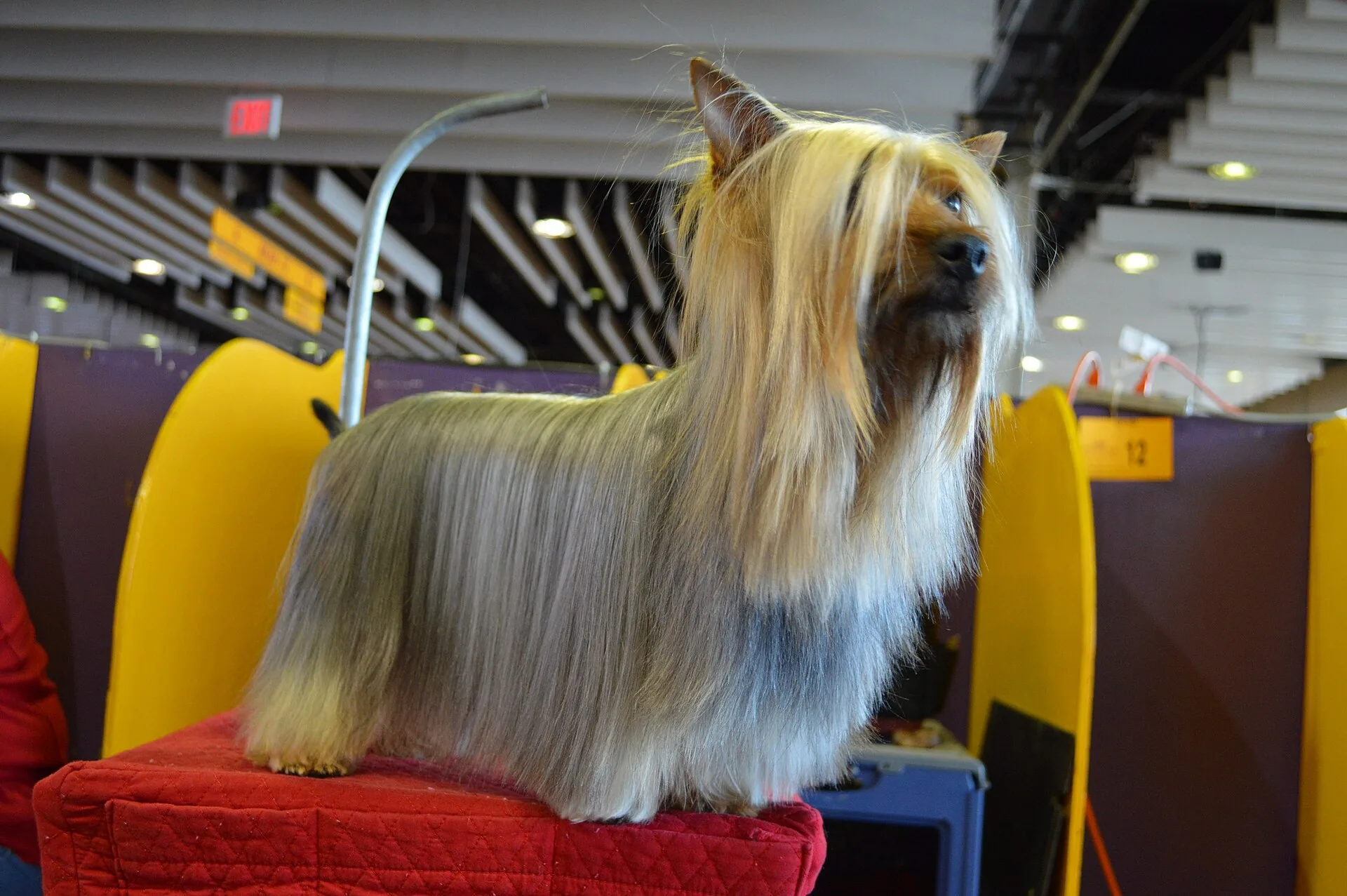
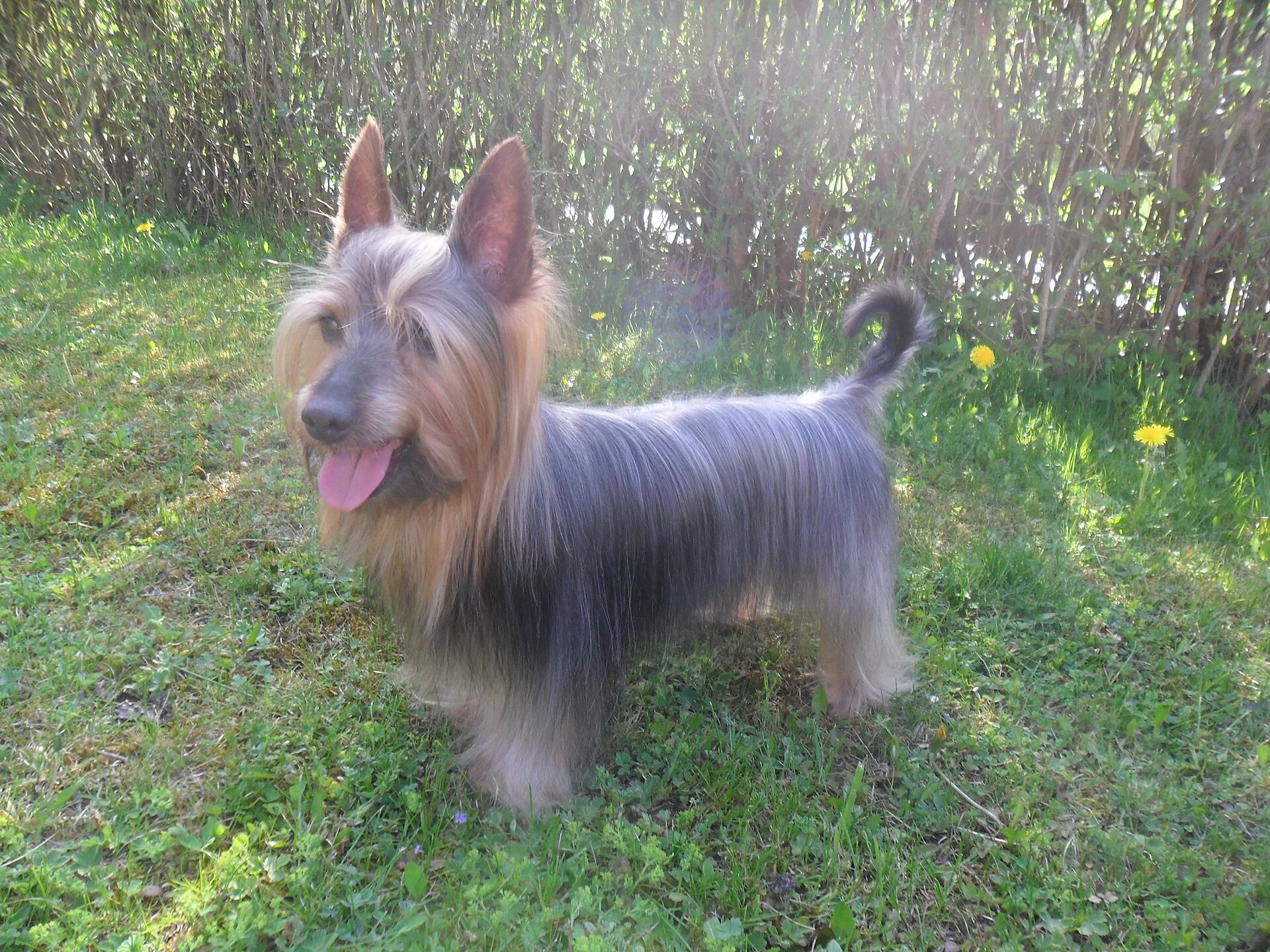
The FCI describes a flat, fine and glossy coat of silky texture. The permitted colours are all shades of blue and tan, in specified patterns, with blue required to be established by 18 months. The coat is single and does not shed heavily, but it tangles if neglected. Brush and comb several times a week, paying attention to behind the ears, under the legs and the topknot. Bathe every few weeks, trim the hair around the feet and eyes, and keep nails short.
Feeding and weight
A small, active dog does best on a complete diet in two meals, with portions measured to maintain a slim, athletic shape. Small breeds easily gain weight, and extra weight strains the knees and back. Count treats in the daily ration. Dental problems are common, so offer suitable chews or brush the teeth. Keep fresh water available and avoid feeding from the table. Ask your vet if the coat or the skin shows changes after a diet change.
Work out a starting calorie figure and food weight with the calorie calculator. Not sure this is the right breed? Take the quiz.
Health
Every breed carries predispositions. These are the conditions most often discussed for the Australian Silky Terrier, not a prediction for any individual dog.
- Patellar luxation (slipping kneecaps)
- Legg-Calvé-Perthes disease (hip joint degeneration)
- Tracheal collapse, aggravated by pulling on a collar
- Diabetes mellitus
- Dental disease and tartar
What to ask the breeder. Ask for the parents' knee (patella) results, and enquire about any history of diabetes, hip disease or breathing problems in the line. Meet the mother and see how the puppies are raised.
Choosing a puppy
A Silky puppy is quick, tiny and bold. Begin with a routine for toilet training, a safe pen for rest and gentle handling of the coat, ears and teeth. Introduce stairs, lifts, buses and street noise slowly, with treats. Keep exercise short and avoid leaps off the sofa while the joints grow. Teach a harness and lead early, rather than a collar. Brush every day, even a short session, so the dog accepts grooming as a pleasant ritual.
In Luxembourg the national kennel club is the Fédération Cynologique Luxembourgeoise (FCL), a member of the FCI. Many owners also buy from breeders in Germany, France or Belgium; a puppy coming from another EU country must be microchipped and vaccinated against rabies, which in practice means it cannot travel before about fifteen weeks of age. Where to get a dog in Luxembourg.
The older Australian Silky Terrier
Silkies are often long-lived and may stay playful in their teens. Regular vet checks become more important from about nine or ten years, including dental care, eyes, weight, and blood sugar if the dog drinks more than usual. Shorter, gentler walks suit stiff joints, and a warm bed helps. Keep the coat trimmed around the eyes and rear to make care easy. Continue short training games, as mental activity is as valuable as walking.
A realistic day
A realistic weekday for a working household in Luxembourg City, with a midday visit. Adjust it to your dog, not the other way round.
Toilet walk, breakfast and a quick brush of the coat.
Owner leaves for work; the dog settles with a chew toy or puzzle feeder.
Midday visit: a 30 minute walk with a game of fetch, fresh water and a short brush.
Evening outing of about 40 minutes, then dinner and some training games.
Final toilet break, a gentle combing and bed.
An Australian Silky Terrier in Luxembourg
The Silky is a natural flat dog: small, light and content with moderate exercise. It rides the lift easily, can be carried when the lift is crowded, and gets plenty from daily outings in Parc Merl, the Municipal Park or the Pétrusse valley. Free buses and trams allow it to join you on weekend trips. The main issue in a block of flats is barking, so teach quiet early and ensure the dog is not left alone for long hours.
In wet Luxembourg winters, the long coat picks up mud and needs drying and combing after each outing, and a light coat can help. In summer days in the 30s °C, walk early and late. In the Grünewald and Bambësch forests keep it on a lead, as it may chase wildlife and be difficult to find in undergrowth. All dogs in Luxembourg must be microchipped, declared to the commune and insured, and the annual dog tax applies.
Every dog in Luxembourg must be identified, declared to the commune and covered by liability insurance. How registration works.
When you travel
A sitter should know that the Silky is bright and bold, needing a lead and harness outdoors at all times. It dislikes being alone, so visits and company matter. Brush and comb the coat every day or two and dry it after wet walks. Leave the usual feeding amounts, a note on treats, and the vet's contact details. Mention the tendency to bark at noises and to chase small animals.
PAWLY's holiday and overnight care takes place in your home, so your dog keeps its own bed and routine.
Myths and facts
MythA Silky Terrier is just a Yorkshire Terrier.
FactThe two are related, as the FCI standard notes Yorkshire ancestry, but the Silky is a separate Australian breed, a little larger and sturdier, with its own standard.
MythA toy dog needs hardly any exercise.
FactThe Silky is an energetic terrier and needs daily walks and play, besides mental stimulation.
MythThe long coat means a lot of shedding.
FactThe fine silky coat sheds little, but it tangles if not brushed regularly.
Is it the right dog for you?
Suits
- Owners who want a bright, affectionate small dog
- Flat dwellers with parks nearby
- People who can offer company during the day
- Households ready for regular grooming
Think twice if
- You have toddlers or small pets such as hamsters
- The dog would be alone for long hours
- You dislike combing and trimming
- You want a dog that is silent in a block of flats
Questions owners ask
How big is an Australian Silky Terrier?
The FCI standard gives 23 to 26 cm at the withers for males, with females slightly less. Weight is only given as proportional to height, and many dogs weigh around 4 kg.
Does a Silky Terrier need professional grooming?
Not necessarily. Regular brushing and combing at home is enough, with occasional trimming around the feet, eyes and rear. Many owners use a groomer a few times a year.
Is the Silky Terrier a good apartment dog?
Yes, if it gets daily walks and company. It is small and clean, but can bark at noises, so training matters in a shared building.
Do Silky Terriers get on with cats?
Often, when introduced young. They are terriers, however, and may chase small pets and strange cats outside.
Sources
Photo: island silks, CC BY 2.0, via Wikimedia Commons · Photo: Pexels (Pexels License) · Photo: Ofsilkysdream, CC BY-SA 3.0, via Wikimedia Commons · Photo: Pets Adviser from Brooklyn, USA, CC BY 2.0, via Wikimedia Commons · Photo: Ofsilkysdream, CC BY-SA 3.0, via Wikimedia Commons
General information for dog owners in Luxembourg, not veterinary or legal advice. Official facts (origin, size, group, history and temperament as described by the breed standard) follow the FCI standard; health and care sections reflect breed-club and veterinary guidance and are typical ranges rather than rules. For your own dog, ask your vet, the breed club or your commune. How this guide is written and checked. Last reviewed 8 October 2026.
Need someone for your Australian Silky Terrier?
PAWLY offers an individual 45-minute walk or a home visit at your dog's pace, the same walker every time, and a written report with photos after every visit, across Luxembourg City.
Read next: the journal, for the Australian Silky Terrier
All articles
Teeth: the problem owners find least interesting and vets see most
Teeth are a known weak point in the Australian Silky Terrier; this is the routine that helps.

Dogs and cats in the same flat
The Australian Silky Terrier can see small animals as prey; this covers living with a cat in a flat.

Building a recall you can actually rely on
Terriers follow scent and movement, so the Australian Silky Terrier needs a recall built properly.
Similar breeds
All 198 breeds
Yorkshire Terrier
A glamorous toy with a working-class terrier past, and a terrier temperament to match.
EnergyGroomingFlat life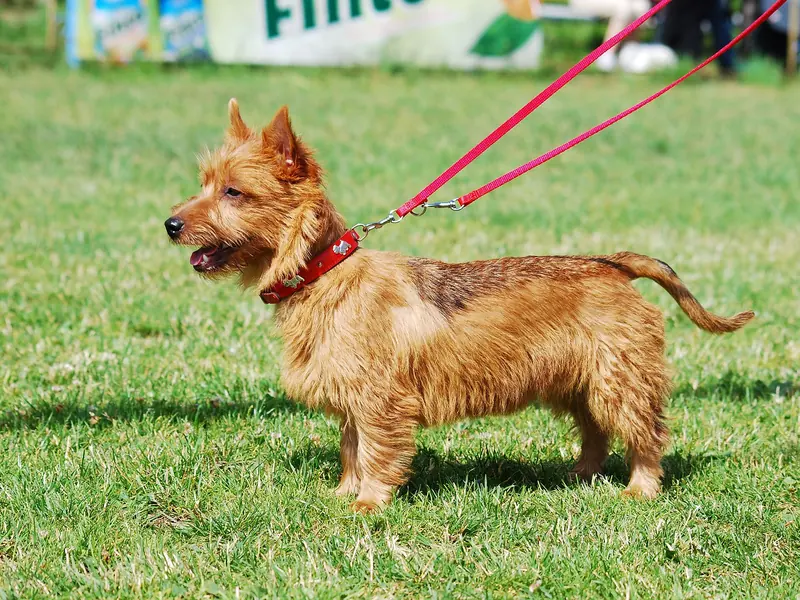
Australian Terrier
A small, sturdy terrier from the Australian bush, built for rough ground and hard work but content to share a city flat.
EnergyGroomingFlat life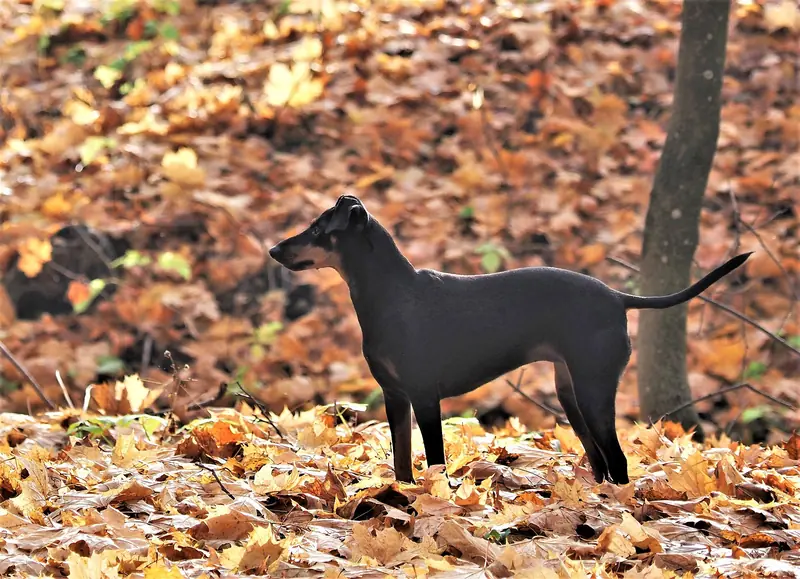
Manchester Terrier
A sleek black and tan ratter from Victorian Manchester, elegant enough for a city flat and still quick enough to clear a barn.
EnergyGroomingFlat life

