History
The FCI standard traces it to the rat-killing contests held in public houses in the middle of the nineteenth century, when working men bet on how quickly a dog could clear a pit of rats. Breeders wanted a terrier that was fast, clean in outline and fearless, and the standard notes that the breed probably carries some Whippet blood, which would explain the arched loin and the racy, elegant build.
For a time the dog was simply called the Black and Tan Terrier, and it was valued in the towns of the industrial north as a ratter in mills, warehouses and stables. The standard still describes it as an efficient vermin hunter. Great Britain is the country of origin, and the current FCI standard, dated 13 October 2010, places it in Group 3, Section 1, among the large and medium-sized terriers. Its smaller relative, the English Toy Terrier, is recognised by the FCI as a separate breed. Today the Manchester is uncommon in continental Europe, so expect to wait for a well-bred puppy.
Temperament
The standard asks for a dog that is keen, alert, gay and sporting, and also discerning and devoted. A Manchester tends to attach itself closely to its own household and to be polite but selective with strangers, which makes it a more thoughtful companion than its rat-pit history suggests. At home many are affectionate lap dogs in the evening, happy to burrow under a blanket on a cold night.
A Manchester notices everything: pigeons on a balcony, a squirrel in the Pétrusse valley, a mouse behind the bins. It is quick, inquisitive and quite capable of making its own decisions, and it will bark to tell you about a visitor without being a constant yapper.
Children and other pets
With children who are gentle and old enough to understand that a small dog is not a toy, a Manchester is usually a lively, devoted playmate. It does less well with toddlers who grab, because it will move away or object rather than tolerate rough handling. Cats raised with the terrier can be accepted, but hamsters, rabbits and guinea pigs should be treated as permanently at risk: this is a breed created to catch small animals quickly.
Exercise and the daily walk
An hour a day is a sensible baseline, split into a brisk morning walk and a longer afternoon or evening outing. A Manchester enjoys a proper sprint, and its Whippet streak shows when it is let loose in a fenced field. Recall needs serious work before any off-lead running near roads or wildlife, because a fleeing rabbit will win the argument with most young terriers.
Scent games, finding hidden toys, short agility sequences and puzzle feeders all suit the breed well. On wet November evenings it will not ask for long walks, as the thin coat gives little protection, but a short outing followed by a game of searching in the flat keeps it settled.
Training
Manchesters learn quickly and enjoy work that has a point. Short, varied sessions with food rewards suit them best; repetitive drills bore them, and harsh corrections make a sensitive terrier stubborn. Teach a reliable recall, a solid leave it and calm behaviour around doors and lifts from the first weeks.
Socialisation should cover traffic, trams, other dogs and people of all ages. A well-socialised Manchester is confident and friendly, while one kept in isolation may become suspicious and vocal. Channel the hunting instinct rather than fighting it: flirt poles, tug games with clear rules and nose work give the terrier a legitimate outlet.
Coat and grooming
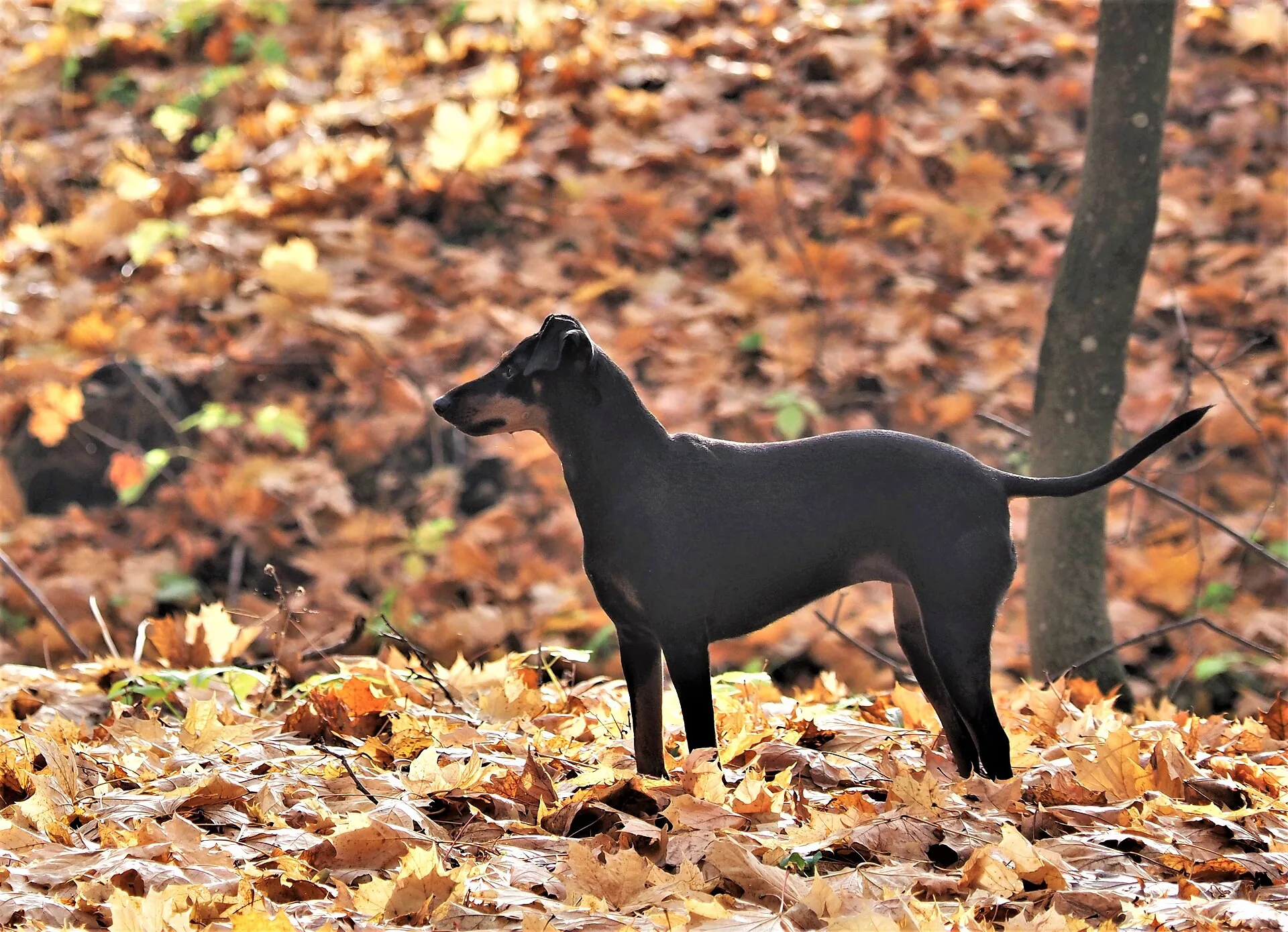
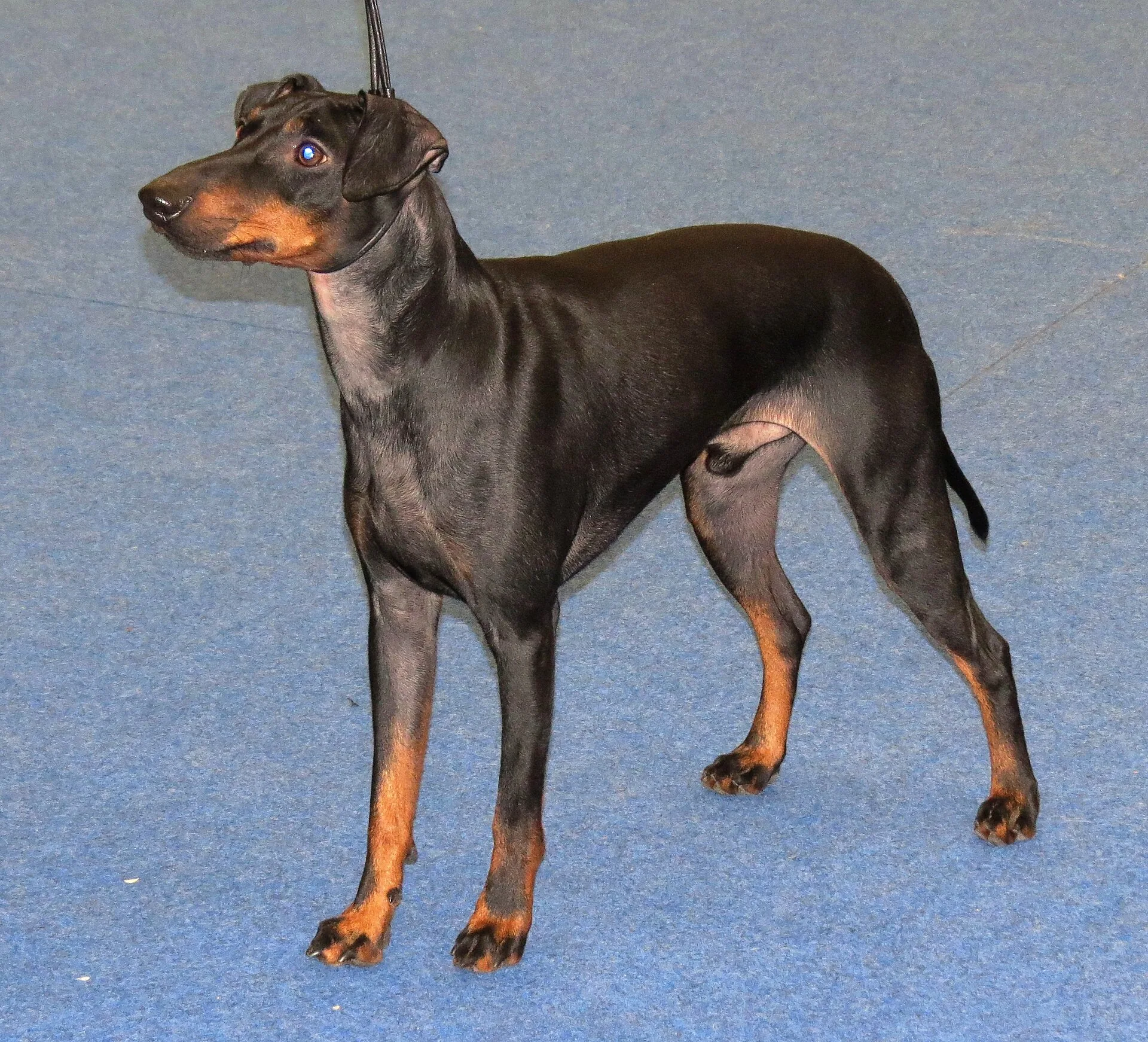
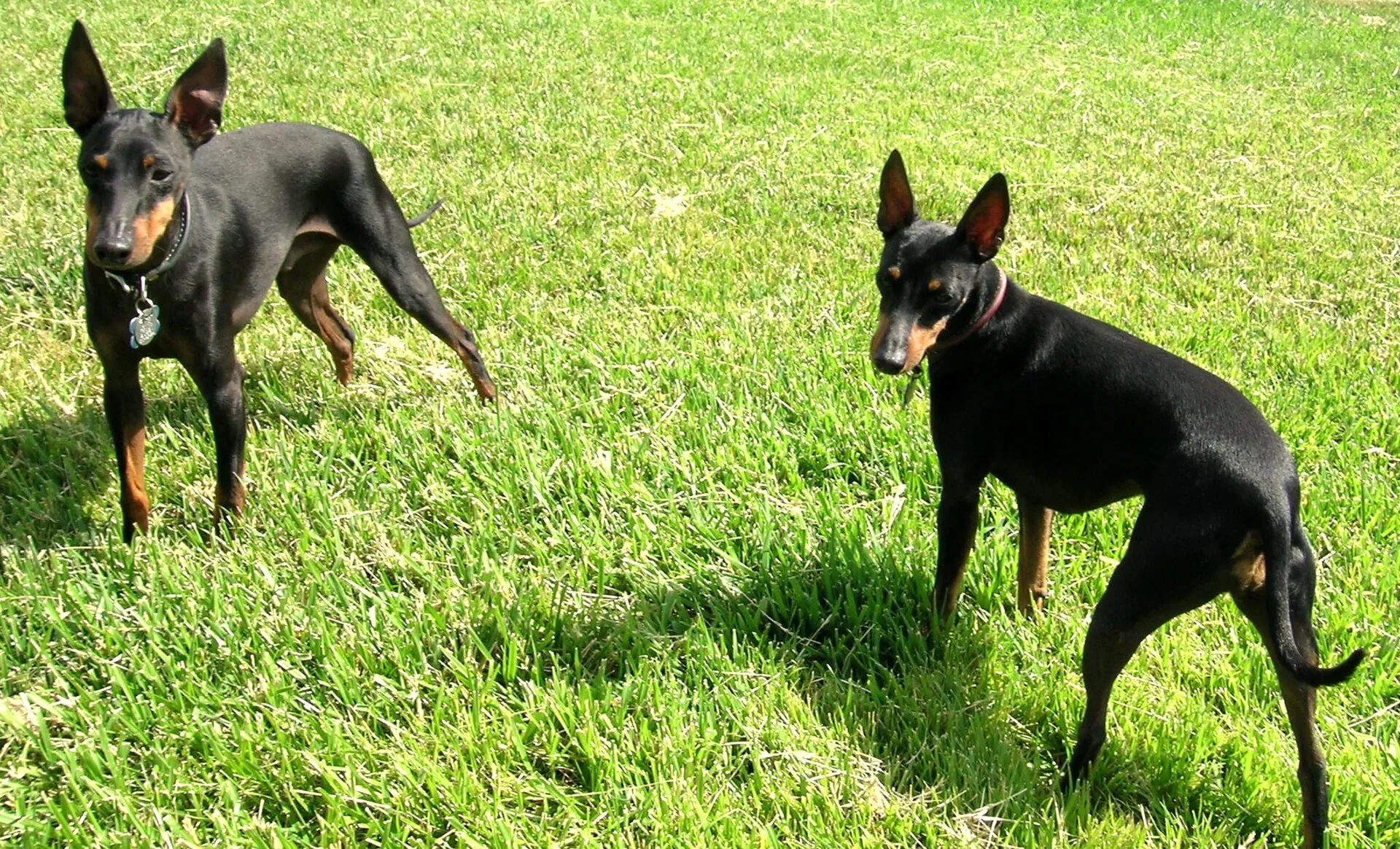
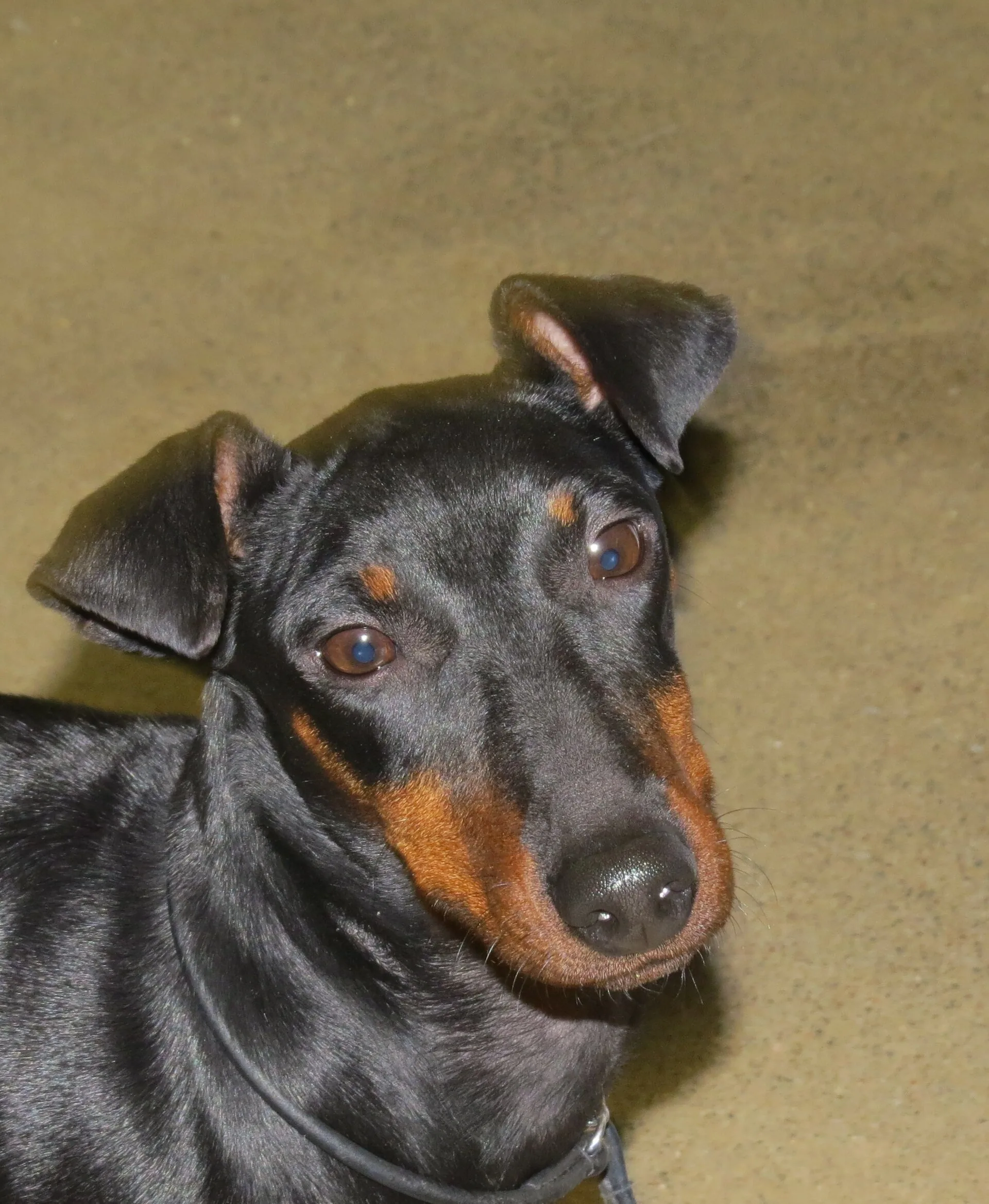
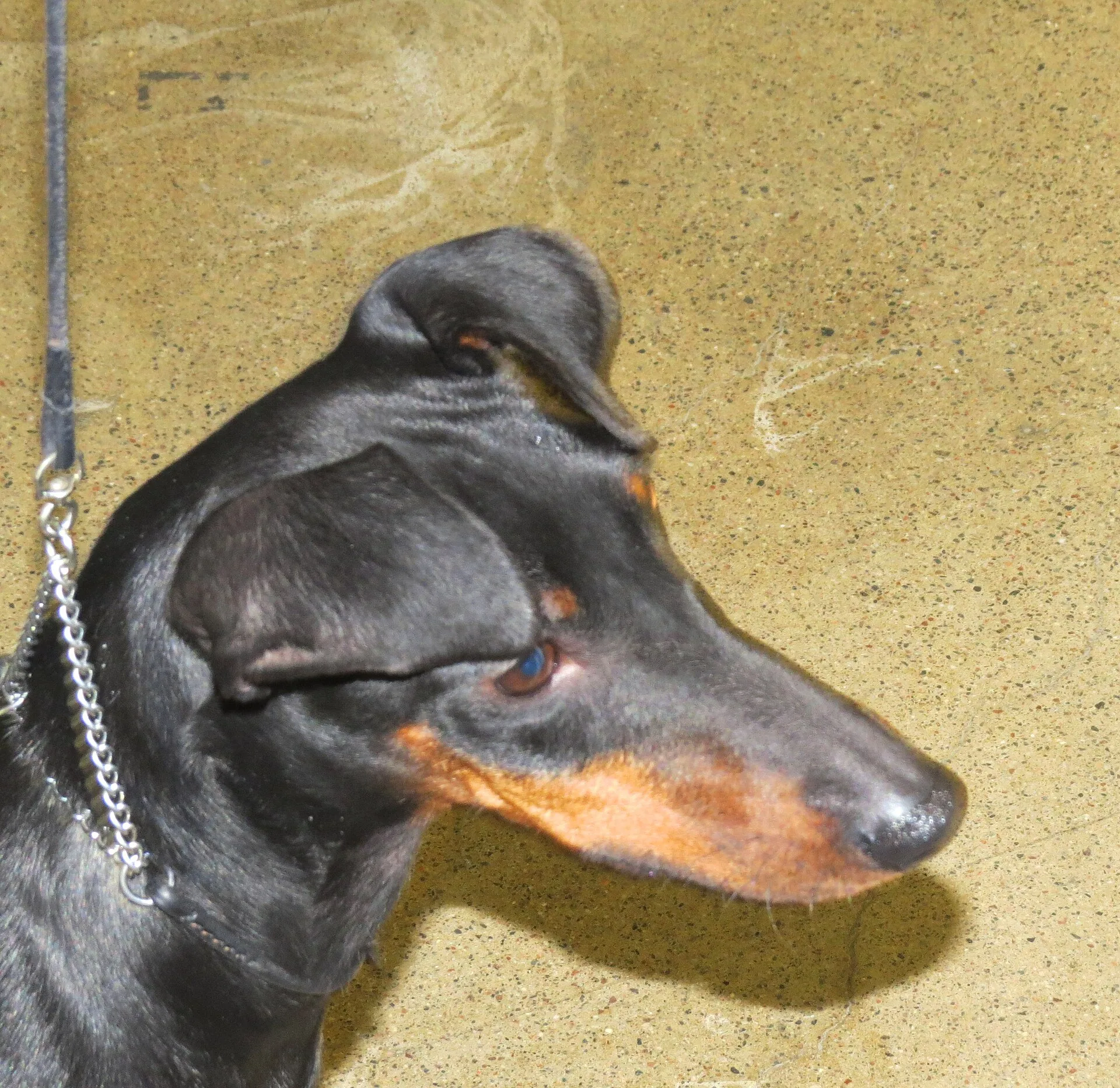
The coat is close, smooth, short and glossy, with a firm texture. The only colour permitted by the FCI standard is jet black with rich mahogany tan, in defined places on the head, chest and legs, and the two colours must be clearly divided rather than running into each other. Care is minimal: a weekly rub with a rubber mitt or hound glove keeps the shine and removes loose hair.
Feeding and weight
Most Manchesters are lean, active dogs with a healthy appetite, and they gain weight more easily than their racy outline suggests. Feed a complete diet suitable for a small, active breed, divided into two meals, and weigh the dog every few weeks. You should be able to feel the ribs easily and see a waist.
Work out a starting calorie figure and food weight with the calorie calculator. Not sure this is the right breed? Take the quiz.
Health
Every breed carries predispositions. These are the conditions most often discussed for the Manchester Terrier, not a prediction for any individual dog.
- Von Willebrand disease (an inherited bleeding disorder)
- Juvenile dilated cardiomyopathy (a heart muscle disease in young dogs)
- Legg-Calvé-Perthes disease (hip joint degeneration in small breeds)
- Patellar luxation (slipping kneecap)
- Hypothyroidism (underactive thyroid)
What to ask the breeder. Ask whether both parents have been DNA tested for von Willebrand disease and juvenile dilated cardiomyopathy, and whether they have had recent eye, knee and thyroid checks.
Choosing a puppy
A Manchester puppy is bright, fast and curious, and it will investigate every cable, shoe and gap behind the sofa. Short training sessions several times a day work better than one long one. Build confidence with gentle exposure to lifts, buses, rain and city noise, and start handling paws, ears and mouth early. Keep play with larger dogs supervised; young terriers are brave but their bones are not.
In Luxembourg the national kennel club is the Fédération Cynologique Luxembourgeoise (FCL), a member of the FCI. Many owners also buy from breeders in Germany, France or Belgium; a puppy coming from another EU country must be microchipped and vaccinated against rabies, which in practice means it cannot travel before about fifteen weeks of age. Where to get a dog in Luxembourg.
The older Manchester Terrier
Many Manchesters stay active well into their teens and keep their sharp interest in the world. Watch for stiffness after exercise, weight gain and dental problems, which are common in older small dogs. Shorter, more frequent walks and gentle scent games keep a senior terrier engaged. A warm coat matters more with age, and a soft bed away from draughts will be used constantly. Twice-yearly veterinary checks help spot heart or thyroid changes early.
A realistic day
A realistic weekday for a working household in Luxembourg City, with a midday visit. Adjust it to your dog, not the other way round.
Quick garden or pavement break, then a brisk 25-minute walk with plenty of sniffing.
Breakfast in a puzzle feeder, followed by a settled nap while the household leaves.
Midday visit: a 30-minute walk, a short recall game and fresh water.
Longer evening outing in a park, ideally with a safe sprint or a flirt pole session.
Short last walk, a chew, then under the blanket for the night.
A Manchester Terrier in Luxembourg
A Manchester is one of the easier terriers for flat life in Luxembourg City. It is small enough for any lift, clean in the home and generally quiet unless something deserves comment. The main challenge is the hunting instinct: in the Pétrusse valley or along the paths of the Bambësch forest, squirrels and rabbits are everywhere, so a long line is wise until recall is reliable. Free buses and trams make it easy to reach the Grünewald on weekends, and a well-socialised terrier rides calmly on a lap.
The thin coat means the breed feels the cold and wet more than its energy suggests, and a fitted raincoat earns its place from October onwards. Summer heat is less of an issue than for flat-faced breeds, but walks should still move to early morning and evening on days in the 30s °C. Like every dog in Luxembourg, a Manchester must be microchipped, declared to the commune, insured for third-party liability and registered for the annual dog tax.
Every dog in Luxembourg must be identified, declared to the commune and covered by liability insurance. How registration works.
When you travel
A sitter should know that a Manchester is a skilled escape artist around open doors and balconies, and that it must stay on lead outdoors unless recall has been proven. Keep the routine familiar, including walk times and puzzle feeding. Small pets in the home need secure separation. The breed dislikes being left long alone and may bark or chew if bored, so a full-day or overnight carer is better than brief drop-ins. Leave the dog's coat by the door for wet days.
PAWLY's holiday and overnight care takes place in your home, so your dog keeps its own bed and routine.
Myths and facts
MythIt is just a small Dobermann.
FactThe resemblance is superficial. The Manchester is a British terrier from the rat pits, while the Dobermann is a much later German guarding breed.
MythShort coats mean no shedding.
FactShedding is light, not absent. A weekly rub with a hound glove keeps loose hair under control.
MythTerriers cannot live in flats.
FactA well-exercised Manchester adapts very well to flat life. What it cannot tolerate is boredom.
Is it the right dog for you?
Suits
- Active owners in flats who want a small but sporty dog
- People who enjoy training games and nose work
- Households without small caged pets
- Owners who like a dog that is devoted but not clingy with strangers
Think twice if
- You keep rabbits, guinea pigs or hamsters
- You want reliable off-lead walks in the forest without training effort
- The dog would be alone for long days without a midday visit
- Your children are very young and handle animals roughly
Questions owners ask
Is a Manchester Terrier good for a first-time owner?
It can be, if the owner is willing to train consistently and provide daily exercise and mental work. The breed is intelligent and generally biddable, but it is still a terrier with a strong prey drive and opinions of its own. Puppy classes and early recall training make a large difference.
Does it bark a lot?
Usually not excessively. Most Manchesters bark to announce visitors or unusual noises and then settle. Persistent barking is normally a sign of boredom or too much time alone, and more exercise, puzzle feeding and a midday walk tend to solve it.
Can it live with a cat?
Many Manchesters live peacefully with cats they have grown up with, especially if introductions are calm and supervised. Outdoor cats and unfamiliar cats are another matter, and the terrier may chase them. Small rodents and rabbits should never be left accessible.
Does it need a coat in winter?
In Luxembourg's wet, cold months a fitted waterproof coat is sensible for longer walks. The breed's short, close coat has little insulation, and a chilled dog is more likely to refuse walks or shiver. Dry it with a towel when you come home.
Sources
Photo: Juhrek, CC BY-SA 4.0, via Wikimedia Commons · Photo: Томасина, CC BY-SA 3.0, via Wikimedia Commons · Photo: Kenneth R. Pergrem (krp), CC BY-SA 3.0, via Wikimedia Commons · Photo: Томасина, CC BY-SA 3.0, via Wikimedia Commons · Photo: Томасина, CC BY-SA 3.0, via Wikimedia Commons
General information for dog owners in Luxembourg, not veterinary or legal advice. Official facts (origin, size, group, history and temperament as described by the breed standard) follow the FCI standard; health and care sections reflect breed-club and veterinary guidance and are typical ranges rather than rules. For your own dog, ask your vet, the breed club or your commune. How this guide is written and checked. Last reviewed 8 October 2026.
Need someone for your Manchester Terrier?
PAWLY offers an individual 45-minute walk or a home visit at your dog's pace, the same walker every time, and a written report with photos after every visit, across Luxembourg City.
Read next: the journal, for the Manchester Terrier
All articles
Barking in an apartment: six causes, six different answers
Terriers are quick to sound the alarm; this sorts out the causes and the answers.

What actually tires a dog indoors
Walks alone rarely tire a busy breed like the Manchester Terrier; this covers what works indoors.

Small dogs, and the training they never get
Small dogs are often the least trained; worth reading before habits set in.
Similar breeds
All 198 breeds
Miniature Pinscher
A small German house dog with a high-stepping trot and a guard dog's opinion of itself, bold, quick and endlessly alert.
EnergyGroomingFlat life
German Pinscher
A square, springy, fearless watchdog in a compact frame, with the energy and opinions of a much bigger dog.
EnergyGroomingFlat life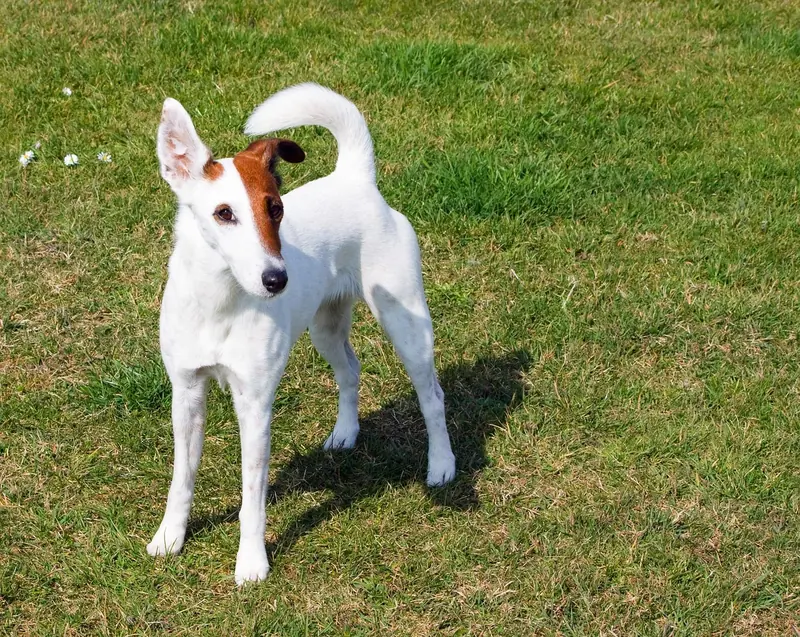
Smooth Fox Terrier
A white, quick-witted terrier with a spring in every step, sharper than most dogs twice its size and rarely willing to be ignored.
EnergyGroomingFlat life

