


History
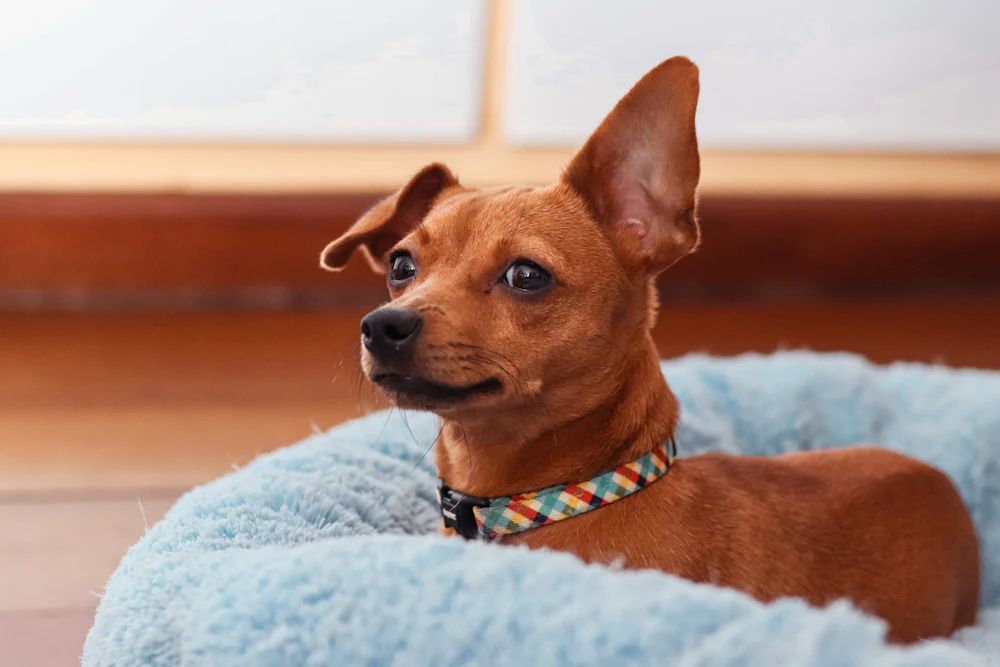
The Miniature Pinscher, or Zwergpinscher, is a German breed and the smallest member of the pinscher family. It is a scaled-down version of the German Pinscher, the old stable and farm dog valued for keeping rats and mice under control. The FCI standard notes that Miniature Pinschers were already kept in large numbers around the turn of the twentieth century, and that the German stud book for 1925 recorded no fewer than 1,300 entries, a considerable number for the time.
As with the German Pinscher, many colour varieties once existed, but breeders kept only two: black with lighter markings, and solid red to red-brown. The current FCI standard, dated 6 March 2007, places the breed in Group 2, Section 1, with the pinscher and schnauzer types, and lists its use as a house and companion dog. The first breed club in Germany was founded in 1895, according to the Royal Kennel Club, and the breed reached Britain only in the 1950s. It is often mistaken for a miniature Dobermann, yet it is the older of the two breeds.
Temperament
The standard describes the Miniature Pinscher as lively, spirited, self-assured and even-tempered, qualities that make it an agreeable family and companion dog. In practice it carries itself like a much larger animal. It will march into the lobby with its distinctive high-stepping gait, inspect every visitor and announce anything that seems out of place. Affection is given generously to its own people, often with a strong preference for one person.
This confidence has a flip side. A Min Pin can be bossy with larger dogs, possessive of toys and quick to bark at noises in the corridor. It is curious, agile and famously good at slipping through gaps, climbing onto tables and finding food left within reach. Owners who enjoy a characterful, opinionated dog find it endlessly entertaining; those who expected a quiet lap dog are sometimes surprised.
Children and other pets
With considerate older children a Miniature Pinscher can be a lively, loyal companion that enjoys games and attention. Toddlers are a different matter: the dog is small and fine-boned, can be injured if dropped or stepped on, and may snap when grabbed. Supervision and a quiet retreat are essential. It usually lives well with another dog, though it may try to boss a bigger one. Cats raised with it are often tolerated, but rodents and birds are prey.
Exercise and the daily walk
The Royal Kennel Club suggests up to 30 minutes of exercise a day, but most Min Pins happily take more, and 45 minutes to an hour spread over two or three outings keeps them calmer at home. Brisk walks with time to sniff, short bursts of play and the chance to trot in a safe enclosed space all suit the breed. It tires less quickly than its size suggests.
Indoor games make up for bad weather. Fetch along a corridor, hide and seek with treats and simple trick training use energy without the cold. Off-lead time should be restricted to fenced areas, because the breed is fast, easily distracted by birds and squirrels, and small enough to disappear under a hedge. A secure harness is better than a collar for such a slim neck.
Training
Miniature Pinschers are clever and learn quickly, but they ask what is in it for them. Food rewards, play and short sessions produce the best results, while repetition and harshness produce a stubborn little dog. House training can take longer than with larger breeds, particularly in cold or wet weather, so establish a firm routine and reward every success outside.
Teach calm greetings, a reliable recall and quiet on cue early, because barking at corridor noises can become a habit in a flat. Socialise the puppy with friendly larger dogs so it learns manners rather than bravado. Do not carry it everywhere: a Min Pin that walks, meets people and handles lifts and trams on its own four feet grows into a more balanced adult.
Coat and grooming
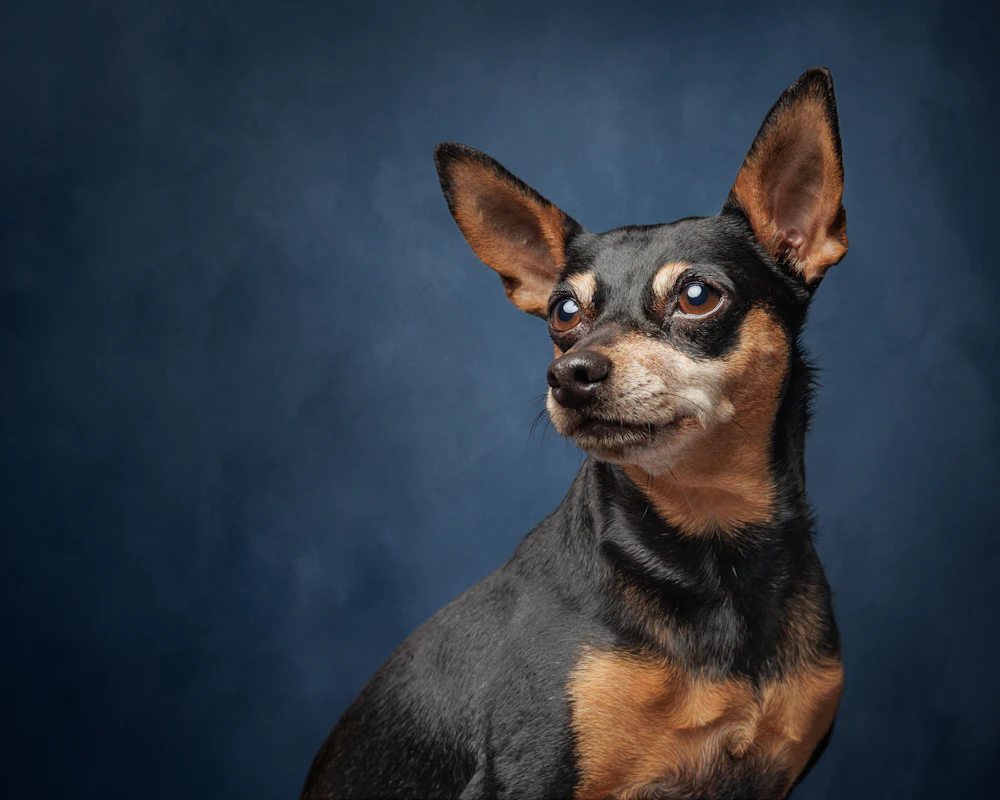
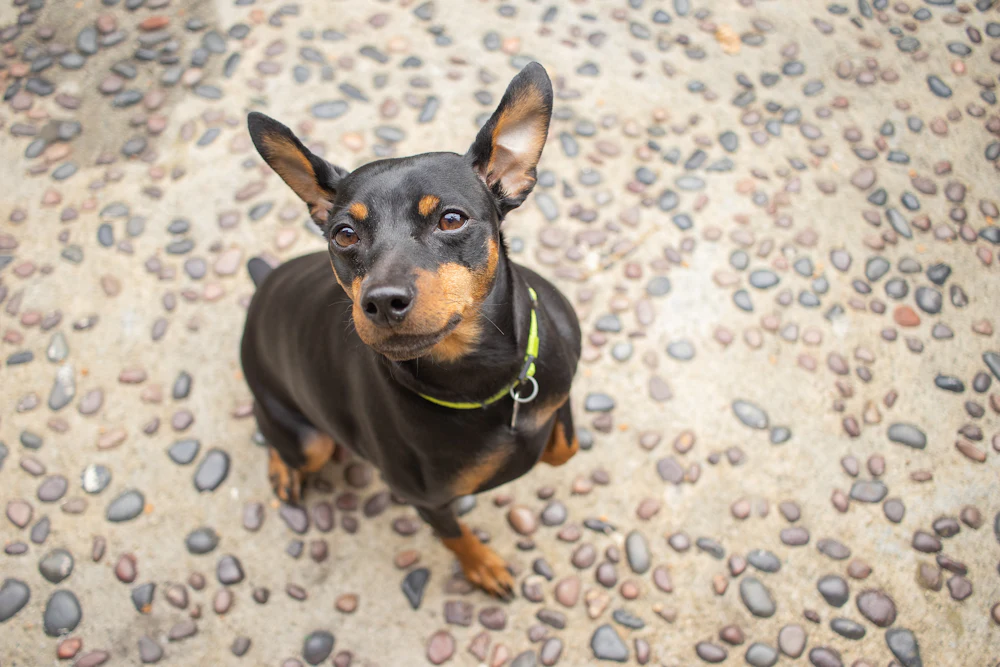
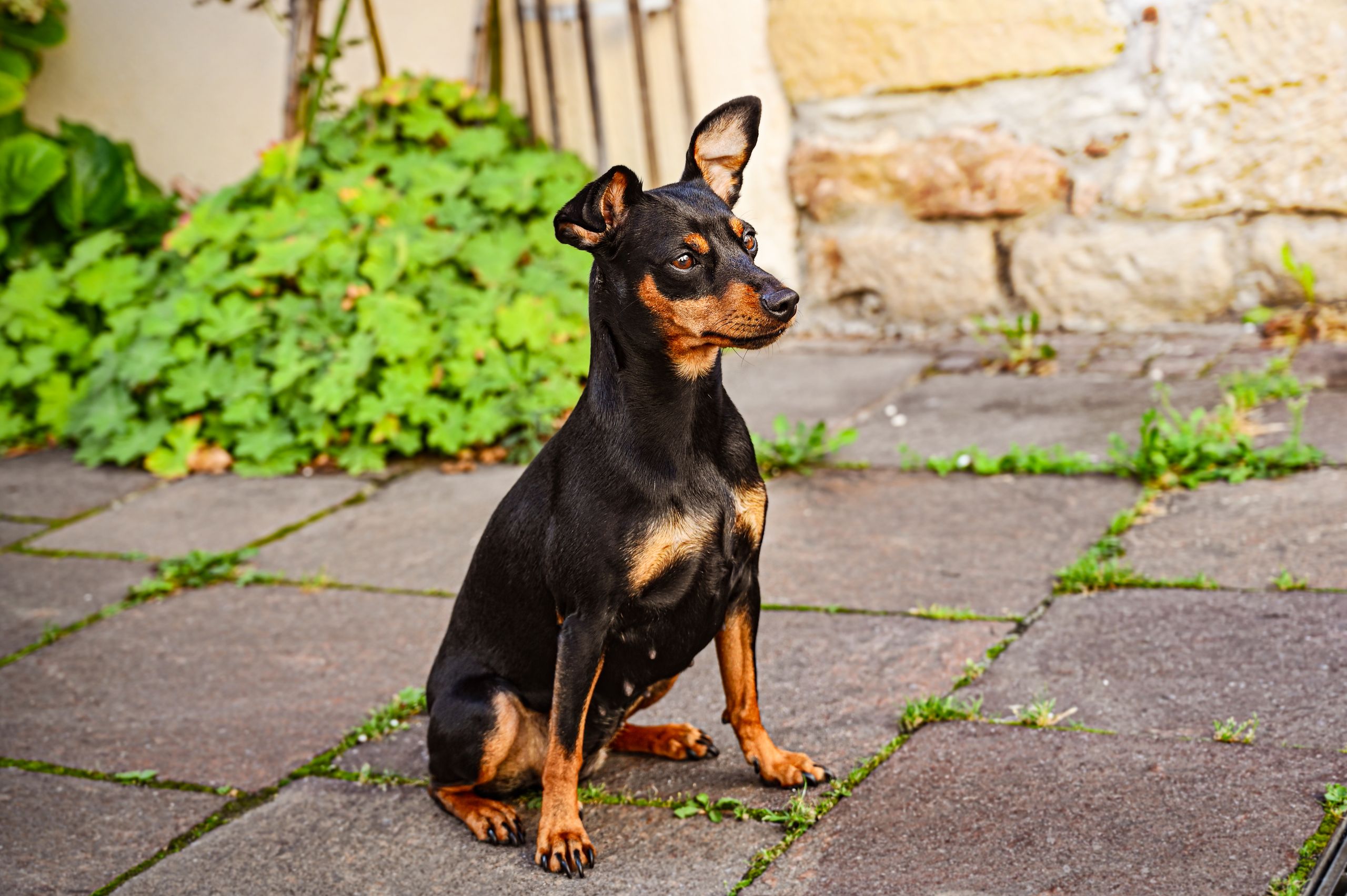
The FCI standard asks for a short, dense, smooth coat lying close to the body, shiny and without bald patches. Permitted colours are self-coloured deer red to dark red-brown, and black and tan, meaning a lacquer black coat with red or brown markings in defined places. Grooming is quick: a weekly wipe with a damp cloth or rubber mitt, nail trimming every few weeks and regular tooth brushing. Shedding is light. The thin coat offers little warmth, so a jumper or coat helps in winter.
Feeding and weight
Small dogs need small portions, and a Min Pin can become overweight quickly on treats and table scraps. Feed a complete diet designed for small breeds, in two meals, and count training rewards as part of the daily ration. The breed is an accomplished thief, so keep food out of reach. Dental health deserves attention, as small mouths are prone to tartar; daily brushing or suitable chews help keep teeth healthy into old age.
Work out a starting calorie figure and food weight with the calorie calculator. Not sure this is the right breed? Take the quiz.
Health
Every breed carries predispositions. These are the conditions most often discussed for the Miniature Pinscher, not a prediction for any individual dog.
- Patellar luxation (slipping kneecap)
- Legg-Calvé-Perthes disease (hip joint degeneration in small breeds)
- Progressive retinal atrophy and other inherited eye conditions
- Mucopolysaccharidosis type VI (a rare inherited metabolic disease, DNA test available)
- Dental disease
What to ask the breeder. Ask whether both parents have had eye examinations under a recognised scheme and knee checks, and whether they have been DNA tested for mucopolysaccharidosis type VI.
Choosing a puppy
A Miniature Pinscher puppy is tiny, fearless and very fast, and it will try to climb, jump and squeeze through everything. Block off balcony railings and gaps under doors, and lift it carefully rather than letting it jump from sofas. Start house training with frequent outings, and use a crate or puppy pen to prevent accidents. Early socialisation with calm adult dogs, children and city noise prevents the defensive barking that sometimes develops in small dogs kept too sheltered.
In Luxembourg the national kennel club is the Fédération Cynologique Luxembourgeoise (FCL), a member of the FCI. Many owners also buy from breeders in Germany, France or Belgium; a puppy coming from another EU country must be microchipped and vaccinated against rabies, which in practice means it cannot travel before about fifteen weeks of age. Where to get a dog in Luxembourg.
The older Miniature Pinscher
Min Pins often remain lively into their teens, though walks may become shorter and naps longer. Keep the weight down to protect knees and hips, and check teeth regularly, as dental disease is common in older small dogs. Eyes should be watched for clouding or changes in vision. A warm bed, a winter coat and ramps or steps to favourite sofas help an older dog stay comfortable and independent.
A realistic day
A realistic weekday for a working household in Luxembourg City, with a midday visit. Adjust it to your dog, not the other way round.
Short toilet walk around the block in a harness, then a sniff at a local green space.
Breakfast in a snuffle mat, followed by a nap in a covered bed.
Midday visit: a 25-minute walk, a few minutes of trick training and fresh water.
Longer evening walk with time to trot freely in an enclosed area if available.
Last toilet break, a short game, then bed.
A Miniature Pinscher in Luxembourg
Few breeds fit Luxembourg City flats as neatly as a Miniature Pinscher. It takes up little space, travels easily in lifts and on free buses and trams, and is welcome in many cafés on a lap or under the table. The main issue for neighbours is noise: a Min Pin that has not been taught to ignore corridor sounds will report every footstep, so work on quiet behaviour from the first week.
The breed feels cold quickly, and a waterproof coat is useful from autumn until spring. In summer, when temperatures reach the 30s °C, walk early and late and check pavements, which can burn small paws. Parks such as Parc Merl or the Kinnekswiss offer good, short loops, but keep the lead on near ducks and squirrels. Microchipping, declaration to the commune, third-party liability insurance and the annual dog tax apply as for any dog.
Every dog in Luxembourg must be identified, declared to the commune and covered by liability insurance. How registration works.
When you travel
A sitter must know that the Min Pin is an escape artist: doors, balconies and garden gates need constant attention, and a harness should be used for every walk. Keep food, medicines and bins out of reach, as the breed is an expert scavenger. It dislikes long periods alone and may bark when anxious, so company for most of the day and the familiar routine of walks, meals and bedtime help it settle quickly.
PAWLY's holiday and overnight care takes place in your home, so your dog keeps its own bed and routine.
Myths and facts
MythThe Miniature Pinscher is a bred-down Dobermann.
FactIt is the older breed, developed in Germany from the German Pinscher, and the two are not closely related.
MythSmall dogs don't need training.
FactA Min Pin needs the same training as any dog. Without it, barking, guarding and house-training problems are common.
MythIt is too delicate for real walks.
FactHealthy adults enjoy brisk walks of an hour a day. They are sturdy for their size, if not for rough handling.
Is it the right dog for you?
Suits
- Flat dwellers who want a small, lively and confident dog
- Owners who enjoy a characterful dog with plenty of opinions
- Adults or families with older, considerate children
- People who will commit to consistent training
Think twice if
- You have toddlers or a very busy household
- Thin walls and noise-sensitive neighbours are a concern
- You want a dog that ignores birds and squirrels off lead
- The dog would be left alone for most of the day
Questions owners ask
Is a Miniature Pinscher a good flat dog?
Yes, provided it gets daily walks and mental activity. Its size and short coat suit flat life very well. The main issue is barking at noises, which can be reduced with early training, enough exercise and not leaving the dog alone for long periods.
Are Min Pins good with children?
With older, gentle children they can be excellent companions. They are less suited to toddlers, because they are small and easily hurt and may snap if handled roughly. Teach children to sit on the floor to cuddle and never to pick the dog up unsupervised.
Do they shed?
A little. The coat is short and sheds lightly all year round, more noticeably in spring. A weekly rub with a rubber mitt removes most loose hair, and the breed has no dog smell to speak of.
How cold is too cold for a Miniature Pinscher?
There is no fixed figure, but the thin coat offers little protection, and many Min Pins start shivering on cold, wet days. Use a well-fitted waterproof coat in winter and keep walks moving. Dry the dog when you come home.
Sources
- FCI breed standard No. 185 (Miniature Pinscher)
- The Royal Kennel Club, Miniature Pinscher
- American Kennel Club, Miniature Pinscher
Photo: Unsplash (Unsplash License) · Photo: Unsplash (Unsplash License) · Photo: Unsplash (Unsplash License) · Photo: Pexels (Pexels License) · Photo: Unsplash (Unsplash License)
General information for dog owners in Luxembourg, not veterinary or legal advice. Official facts (origin, size, group, history and temperament as described by the breed standard) follow the FCI standard; health and care sections reflect breed-club and veterinary guidance and are typical ranges rather than rules. For your own dog, ask your vet, the breed club or your commune. How this guide is written and checked. Last reviewed 8 October 2026.
Need someone for your Miniature Pinscher?
PAWLY offers an individual 45-minute walk or a home visit at your dog's pace, the same walker every time, and a written report with photos after every visit, across Luxembourg City.
Read next: the journal, for the Miniature Pinscher
All articles
Teeth: the problem owners find least interesting and vets see most
Teeth are a known weak point in the Miniature Pinscher; this is the routine that helps.

How much exercise does your dog actually need?
The Miniature Pinscher is an active breed, so it is worth checking the exercise numbers against your actual week.

How long can a dog really be left alone?
A sociable breed has a real limit on time alone; this is how to work it out.
Similar breeds
All 198 breeds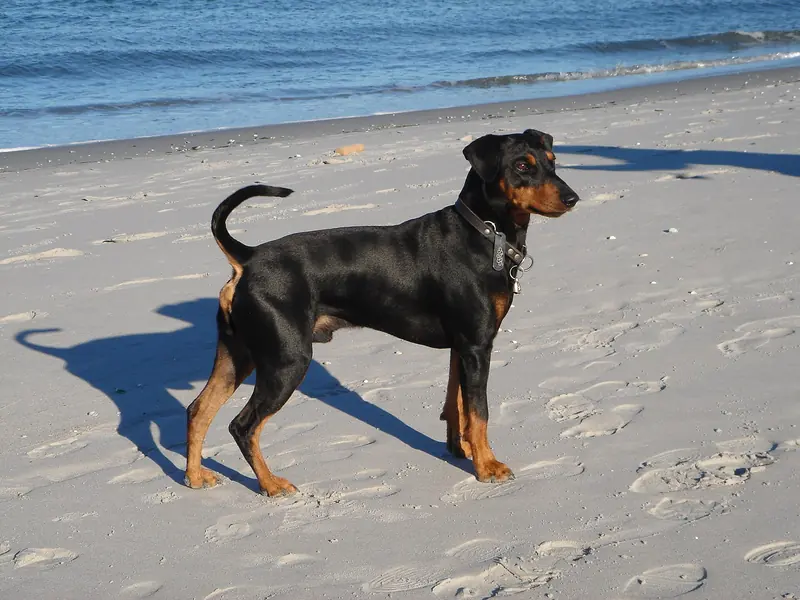
German Pinscher
A square, springy, fearless watchdog in a compact frame, with the energy and opinions of a much bigger dog.
EnergyGroomingFlat life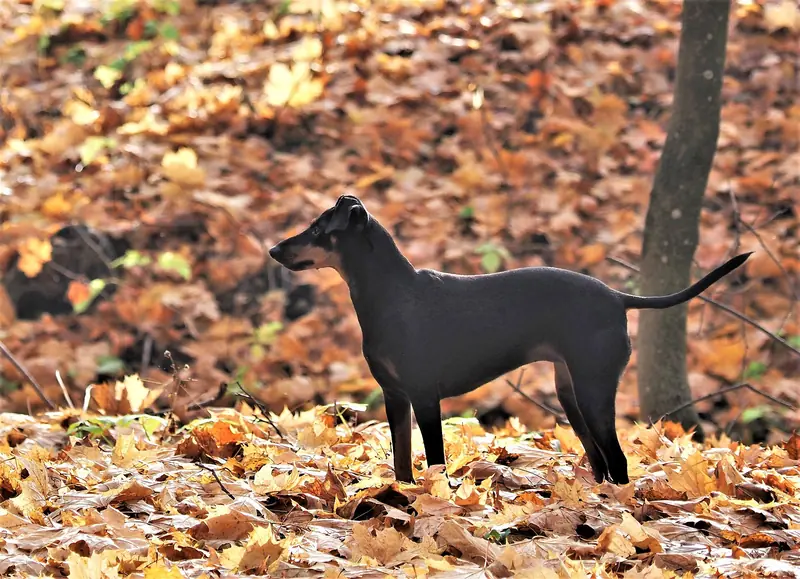
Manchester Terrier
A sleek black and tan ratter from Victorian Manchester, elegant enough for a city flat and still quick enough to clear a barn.
EnergyGroomingFlat life
Russian Toy
A slender, long-legged scrap of a dog, no heavier than a bag of sugar, with the curiosity of a terrier and the devotion of a lapdog.
EnergyGroomingFlat life

