


History
The Russian Toy comes from Russia and is classified by the FCI in Group 9, Section 9, Continental Toy Spaniels and Russian Toys, as a companion dog. According to the standard, the English Toy Terrier was highly popular in Russia in the early twentieth century, but breeding nearly ceased between 1920 and 1950. A revival began in the mid-1950s, using dogs without pedigrees or pure bloodlines.
The standard records that on 12 October 1958 two smooth-haired dogs produced a male with distinctive fringes on the ears and limbs. This feature was kept and developed by selective breeding, producing the longhaired variety, first called the Moscow Longhaired Toy Terrier, and the breeder Yevgueniya Fominichna Zharova is credited with a significant contribution. Through isolated development and careful selection, the Russian Toy emerged as a distinct breed with two coat varieties, smooth and long. The current standard is dated 05.12.2017.
Temperament
The FCI describes an active, very cheerful dog, neither cowardly nor aggressive, always curious about the world around it and strongly devoted to its owner. That is a fair portrait. The Russian Toy is quick, light on its feet and eager to follow you from room to room, and it greets the day as if every walk were a first. It tends to attach to one person above the others.
Being tiny and slender, it can feel nervous in the noise of a busy street, and early, gentle socialisation makes a difference. Overprotective handling, such as carrying the dog everywhere, tends to produce a timid or yappy dog. Left alone for long periods it can become anxious and bark. It is happiest when included in the household, treated as a dog and given a clear routine.
Children and other pets
The Russian Toy is a companion for adults and older, gentle children who understand that a dog of under 3 kg is as fragile as a small bird. It can be injured by a fall from a lap, a stumble or a rough hug, so it is a poor choice for toddlers. It is usually friendly with other dogs, but is easily overwhelmed by big ones, and walks need care near large, boisterous dogs. Cats are generally accepted if they are calm.
Exercise and the daily walk
This is an active little dog, but its needs are modest: 30 to 45 minutes of walking and play a day, spread across two or three outings, is usually enough. It enjoys a brisk walk, a game of fetch with a soft toy and a run in a safe, enclosed area. A short session of tricks or scent games indoors burns energy on rainy days.
Because it is so small and fine boned, jumping from sofas, beds and the car should be avoided, particularly in puppies, as fractures of the legs are a known risk in toy breeds. Keep the dog on a lead outside, with a well-fitted harness, and watch for larger dogs. In cold or wet weather the short, thin coat gives little protection, so a jacket is sensible, and in hot weather avoid the middle of the day.
Training
The Russian Toy is intelligent, eager to please and easy to train when lessons are short and rewarding. Use tiny treats, calm praise and consistent routines. Toilet training can be slow, as with most toy dogs, and benefits from a fixed schedule, frequent trips outside and patience. Lead manners, a stay and a recall are valuable, and a harness is better than a collar for such a delicate neck.
Gentle socialisation is the heart of training. Introduce the puppy to people, other dogs, lifts, buses and traffic gradually, always with positive experiences. Teach it to be alone for short, increasing periods, so that separation does not become distressing. Barking at noises can be managed with a quiet cue. Avoid scolding and rough handling, to which the breed is sensitive. The FCI standard lists aggressive or overly shy behaviour as a fault, which makes calm early experiences all the more important.
Coat and grooming
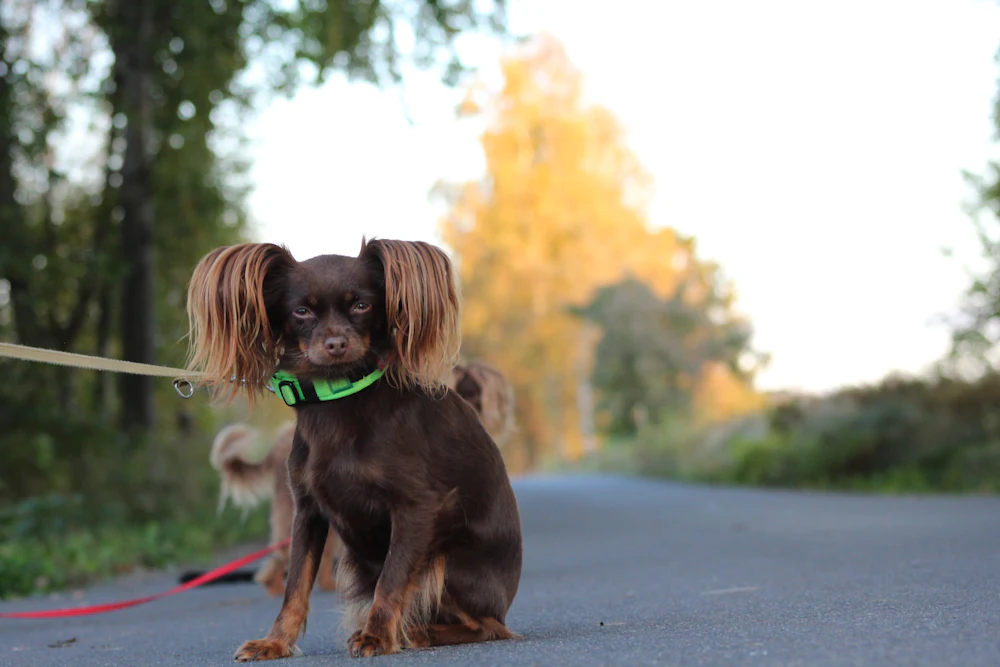
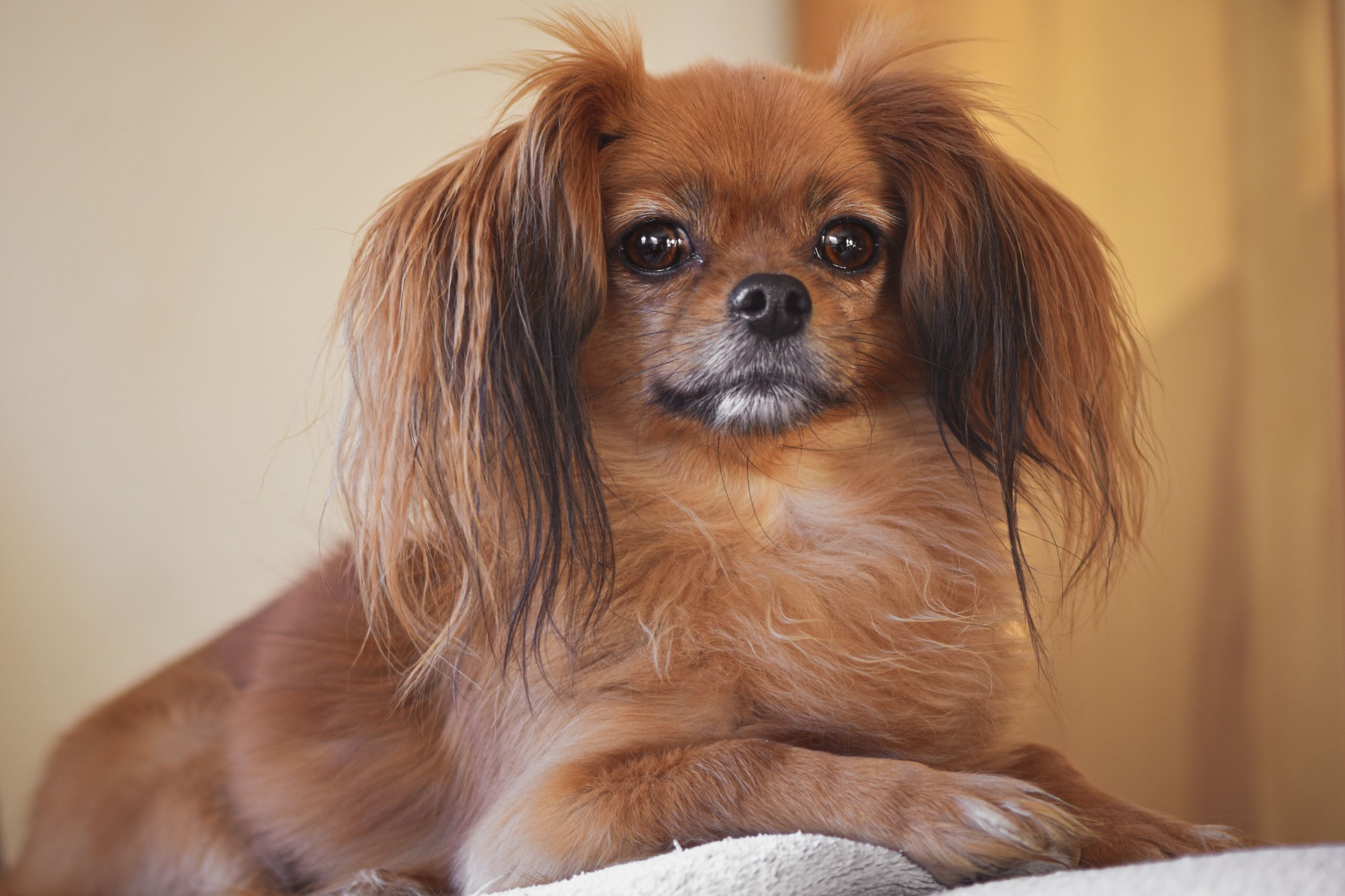
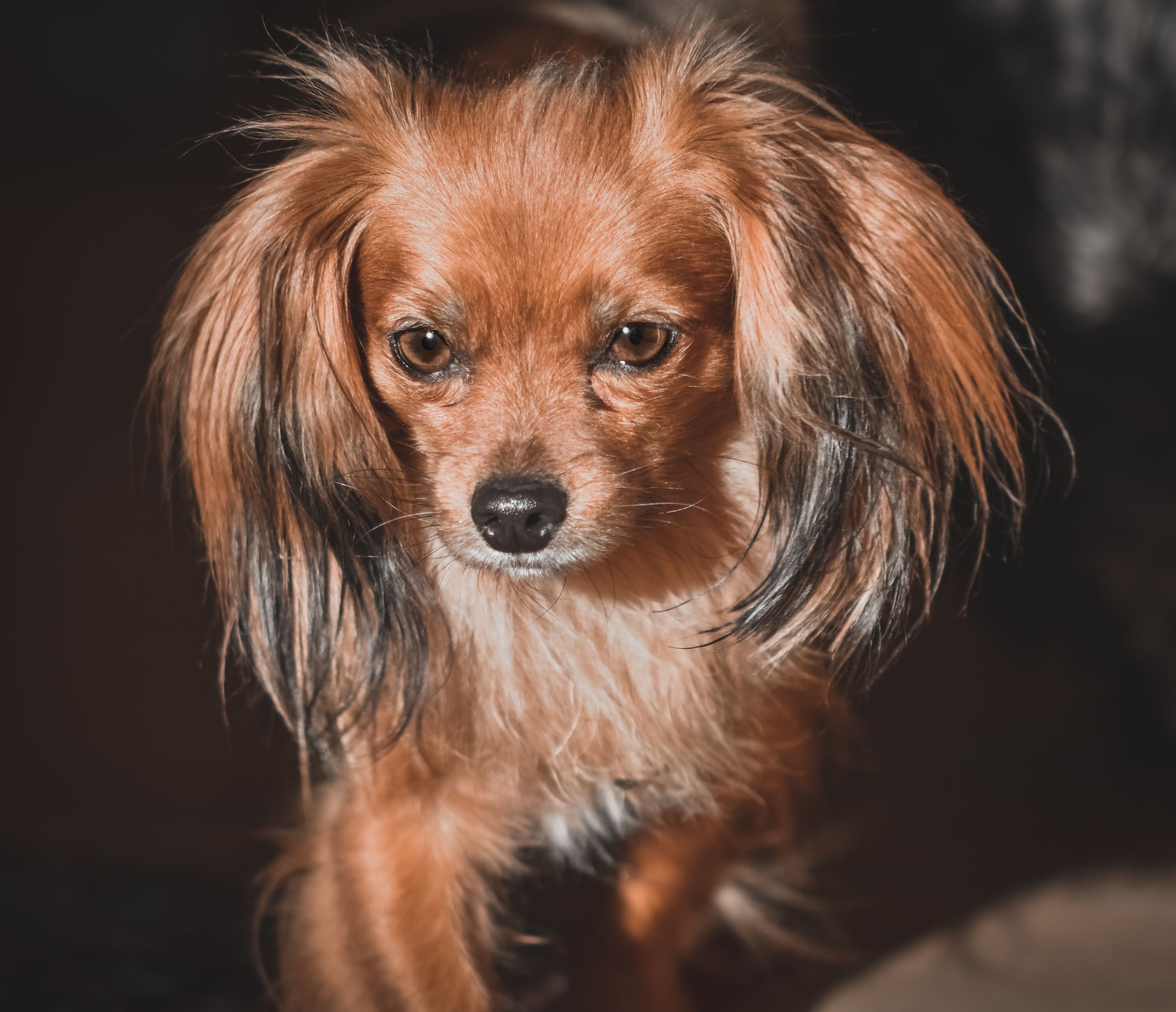
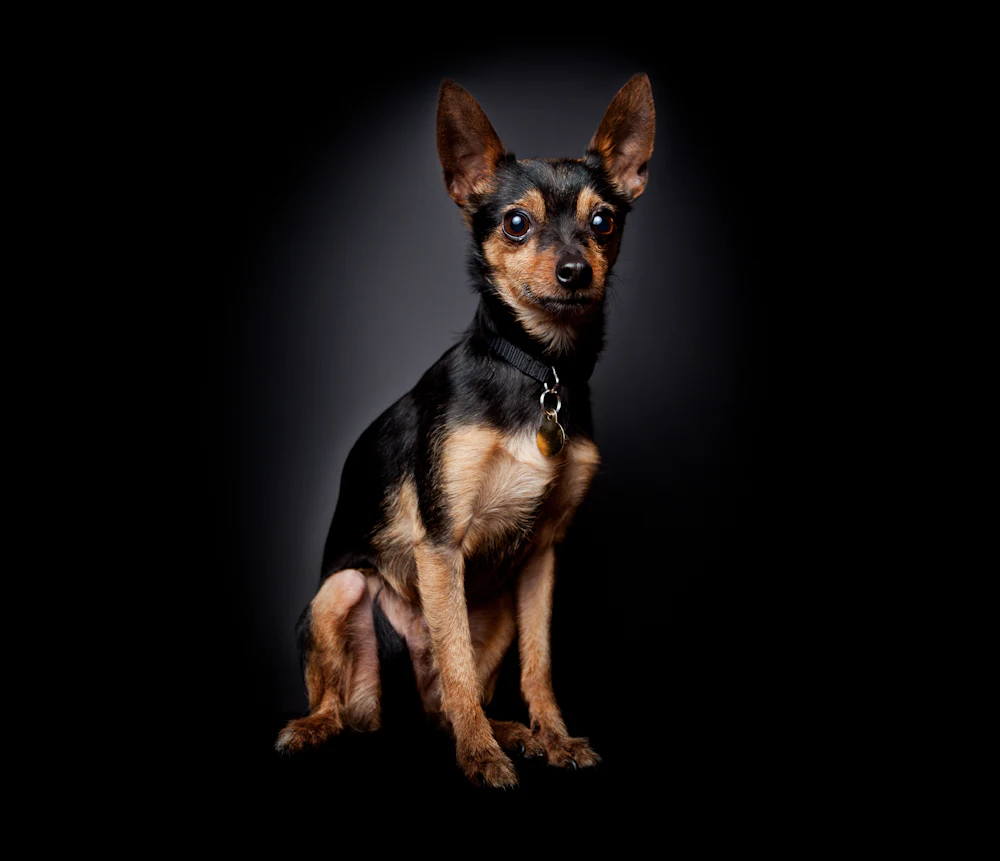
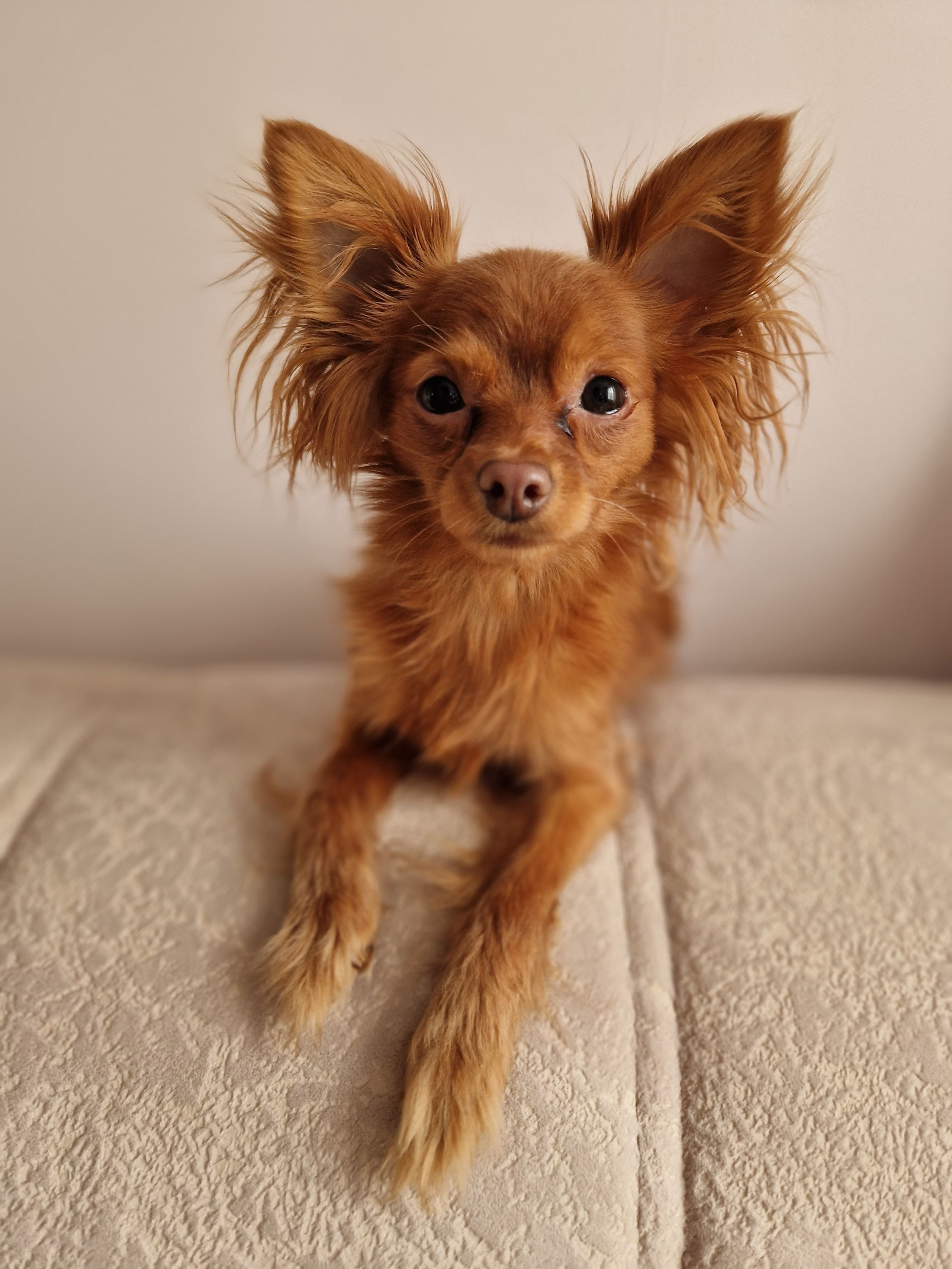
There are two varieties. The smooth-haired has short, close-lying, shiny hair without undercoat or bald patches, while the longhaired has moderately long (3 to 5 cm) straight or slightly wavy hair on body and neck, with distinct feathering on the back of the legs and tail and thick fringes on the ears. Colours include black and tan, brown and tan, blue and tan, lilac and tan, red, fawn and cream. The smooth needs weekly brushing, the long a few times weekly, with extra care to the ear fringes. Trimmed coats are not allowed.
Feeding and weight
A dog of under 3 kg needs very small portions of a complete diet formulated for toy breeds, usually in three small meals as a puppy and two as an adult, to avoid low blood sugar and digestive upsets. Measure food carefully, as a few extra grams matter, and count treats. Small kibble helps with dental hygiene. Fresh water should always be available. Ask your vet for advice if the dog is picky or loses weight.
Work out a starting calorie figure and food weight with the calorie calculator. Not sure this is the right breed? Take the quiz.
Health
Every breed carries predispositions. These are the conditions most often discussed for the Russian Toy, not a prediction for any individual dog.
- Patellar luxation (slipping kneecaps)
- Dental disease and retained baby teeth
- Open fontanelle, a gap in the skull that fails to close, noted in the standard
- Fractures of fragile leg bones from falls
- Legg-Calvé-Perthes disease (hip joint degeneration)
- Eye conditions such as progressive retinal atrophy
What to ask the breeder. Ask for the parents' knee examinations and eye test results, and enquire about any history of fontanelle or dental problems. Meet the mother and check how the puppies are kept, as very small dogs need careful rearing.
Choosing a puppy
A Russian Toy puppy is minute and fragile, so every surface it can fall from is a risk. Keep a safe puppy pen, supervise around people and furniture, and teach children to sit on the floor with it. Start toilet training with a rigid schedule and praise. Introduce street noise, lifts and other dogs gradually, and use a harness from the start. Expect baby teeth to be lost around four to seven months, and ask the vet to check for retained teeth.
In Luxembourg the national kennel club is the Fédération Cynologique Luxembourgeoise (FCL), a member of the FCI. Many owners also buy from breeders in Germany, France or Belgium; a puppy coming from another EU country must be microchipped and vaccinated against rabies, which in practice means it cannot travel before about fifteen weeks of age. Where to get a dog in Luxembourg.
The older Russian Toy
Many Russian Toys remain lively into their teens. Regular vet checks, particularly of the teeth, knees and eyes, become more important from about ten years. Gentle walks, a warm bed and non-slip surfaces protect fragile joints. Keep weight in check, as even a few hundred grams matter. The dog may feel the cold more with age, so a coat in winter is useful. Keep short games going to maintain mental sharpness.
A realistic day
A realistic weekday for a working household in Luxembourg City, with a midday visit. Adjust it to your dog, not the other way round.
Brief toilet walk in a harness, then a small breakfast.
Owner leaves for work; the dog snoozes in a warm, cosy bed with a safe chew.
Midday visit: a gentle 25 minute walk, a game and fresh water, and a quick check of teeth and paws.
Evening outing of about 30 minutes in a quiet area, then a small dinner.
Final toilet break, a light brush and bed.
A Russian Toy in Luxembourg
A Russian Toy is almost made for a Luxembourg City flat, being tiny, clean and content with short outings. It can be carried through busy stations, sit calmly in a bag on a tram and enjoy Parc Merl or the Municipal Park in small doses. Free buses and trams make it easy to go anywhere. The main hazards are other dogs and people's feet, so a harness and a watchful eye are essential in crowded places.
Luxembourg's damp winters can chill a short-coated dog, so a jacket is useful for the smooth variety, and the longhaired needs drying after wet walks. Summer days in the 30s °C also need care, with early and late walks and shade. In the Grünewald and Bambësch forests, keep the dog in sight and on a lead, as a creature of this size is easily lost. Microchip, commune declaration, third-party liability insurance and the dog tax apply as for any dog.
Every dog in Luxembourg must be identified, declared to the commune and covered by liability insurance. How registration works.
When you travel
A sitter must handle this dog with great care, as a fall or a stumble can cause a fracture. Keep it on a lead and harness outdoors, watch for large dogs, and avoid leaving it alone for long periods, since it is strongly devoted to its owner. Feed small, measured meals, keep it warm in cold weather and cool in hot weather, and leave the vet's details and any signs of low blood sugar to watch for.
PAWLY's holiday and overnight care takes place in your home, so your dog keeps its own bed and routine.
Myths and facts
MythA Russian Toy is just a Chihuahua.
FactIt is a separate breed from Russia, with an FCI standard of its own, slimmer and longer-legged, with a smooth or longhaired coat.
MythToy dogs do not need training or socialisation.
FactThey need both. A well-socialised small dog is calmer, quieter and easier to live with.
MythA tiny dog can be left alone for the day.
FactThis is a companion breed, strongly devoted to its owner, and long absences cause stress and barking.
Is it the right dog for you?
Suits
- Adults or couples who want a devoted small companion
- Flat dwellers with a calm routine
- People who can be at home or arrange a midday visit
- Owners ready to handle a fragile dog with care
Think twice if
- You have toddlers or boisterous large dogs at home
- You want a dog for long off-lead hikes
- The dog would be alone most of the day
- You are not ready for the fragility of a dog under 3 kg
Questions owners ask
How big is a Russian Toy?
The FCI standard gives 22 to 27 cm at the withers, preferably 25 cm, and a weight of up to 3 kg, preferably 2.3 kg. It is slim, elegant and long-legged.
What is the difference between the two varieties?
The smooth has short, close-lying, shiny hair without undercoat. The longhaired has 3 to 5 cm hair with feathering on the legs and tail and fringes on the ears. Both are the same breed.
Is the Russian Toy good for flats?
Yes, it is very well suited, as it is small, clean and content with short walks. Teach it to be quiet and comfortable alone, as it is strongly attached to its owner.
Can a Russian Toy live with children?
It suits older, gentle children. Because of its tiny, fragile body, it is not safe with toddlers or rough play.
Sources
Photo: Unsplash (Unsplash License) · Photo: Pexels (Pexels License) · Photo: Pexels (Pexels License) · Photo: Unsplash (Unsplash License) · Photo: Pexels (Pexels License)
General information for dog owners in Luxembourg, not veterinary or legal advice. Official facts (origin, size, group, history and temperament as described by the breed standard) follow the FCI standard; health and care sections reflect breed-club and veterinary guidance and are typical ranges rather than rules. For your own dog, ask your vet, the breed club or your commune. How this guide is written and checked. Last reviewed 8 October 2026.
Need someone for your Russian Toy?
PAWLY offers an individual 45-minute walk or a home visit at your dog's pace, the same walker every time, and a written report with photos after every visit, across Luxembourg City.
Read next: the journal, for the Russian Toy
All articles
Teeth: the problem owners find least interesting and vets see most
Teeth are a known weak point in the Russian Toy; this is the routine that helps.

Small dogs, and the training they never get
Small dogs are often the least trained; worth reading before habits set in.

Dogs in apartment buildings: the rules, the neighbours and the noise
Flat life is one of the Russian Toy's strengths, but building rules and neighbours still count.
Similar breeds
All 198 breeds
Chihuahua
The smallest pedigree dog in the world, with an apple-shaped head, a big personality and a courage that far outruns its size.
EnergyGroomingFlat life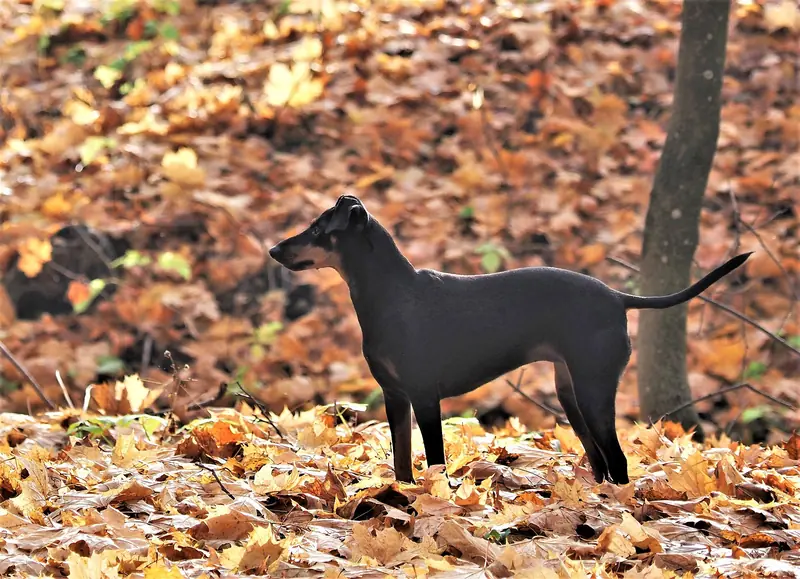
Manchester Terrier
A sleek black and tan ratter from Victorian Manchester, elegant enough for a city flat and still quick enough to clear a barn.
EnergyGroomingFlat life
Italian Greyhound
A miniature sighthound of Renaissance courts: elegant, affectionate, fond of warm laps and rather more fragile than it looks.
EnergyGroomingFlat life

