


History
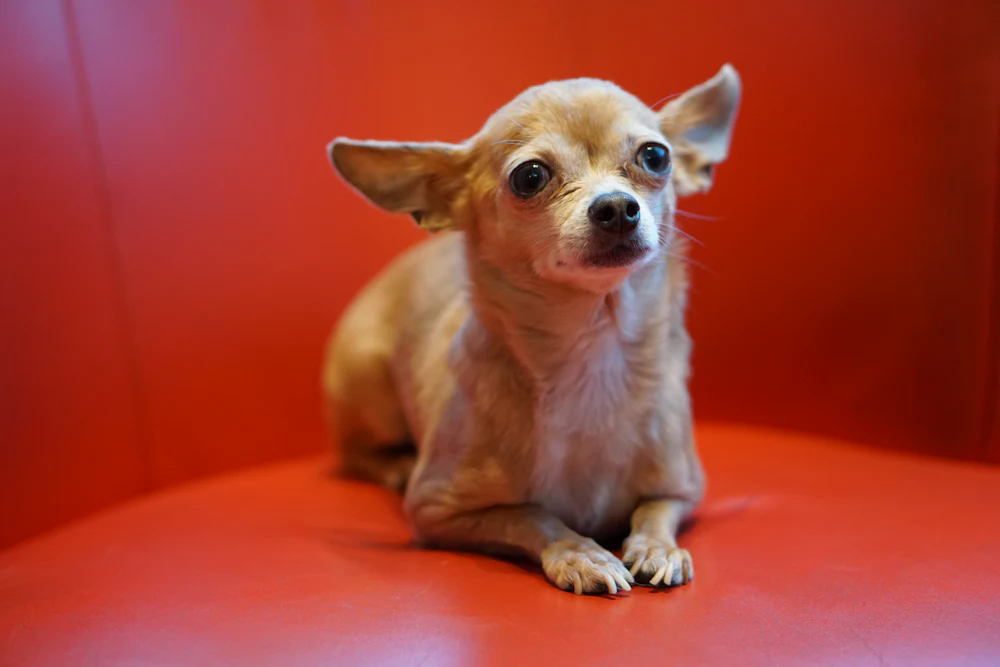
The Chihuahua is the smallest pedigree dog, and the FCI standard places its roots in the ancient domesticated dogs of Mexico. The name comes from Chihuahua, the largest Mexican state. The standard traces the lineage to the Techichi, a small dog shown in the architecture of Tula, the Toltec capital, and notes a clear resemblance to the modern breed. Few pedigree dogs have a documented link to a named pre-Columbian ancestor.
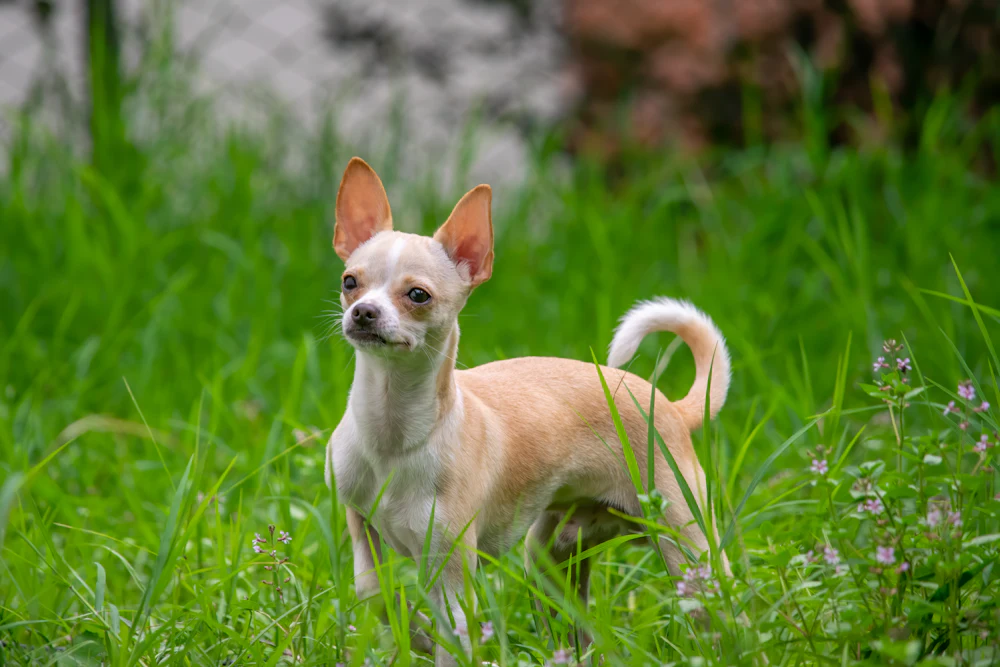
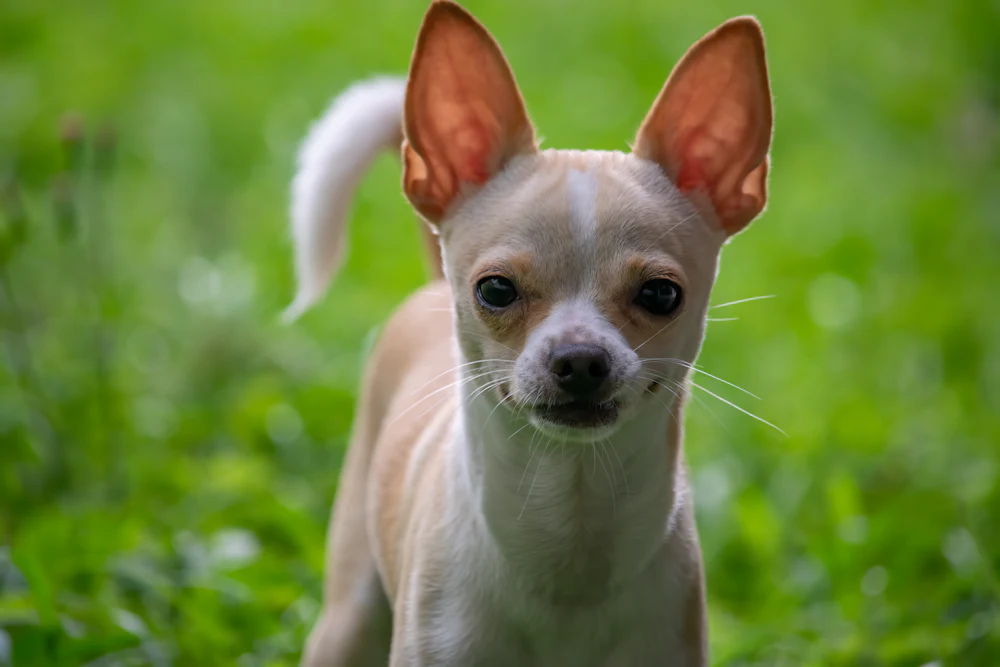
The breed belongs to FCI Group 9, Companion and Toy Dogs, in a section of its own, Section 6, called Chihuahueño. Two varieties are recognised, smooth-haired and long-haired. The standard describes a compact body, a skull shaped like an apple and a tail carried high in a curve or semicircle towards the loin. It asks for weight only, between 1 and 3 kg, with 1.5 to 2.5 kg preferred, and disqualifies dogs under 1 kg or over 3 kg.
Temperament
The FCI describes the Chihuahua as quick, alert, lively and very courageous, and that last word is the one owners notice. A Chihuahua will square up to a Rottweiler on the pavement without any sense of scale. At home it is attached, observant and often glued to one person, following them from room to room and settling in the warmest spot available.
Because the dog is small, behaviour that would be corrected in a larger breed is often tolerated, and that is where problems start. Barking at every noise, growling when picked up, and snapping at visitors are habits, not personality. A well-raised Chihuahua is confident, sociable and delightfully quick to learn. A spoiled one is anxious, noisy and difficult to handle, and the standard explicitly disqualifies aggression.
Children and other pets
A Chihuahua is best with adults and with older children who understand how to handle something that weighs about as much as a bag of sugar. Toddlers can injure it without meaning to, so supervision is essential and picking it up should be an adult job. Many are happiest with one dog companion of similar size and can be bold or nervous with large, boisterous dogs. Cats are usually fine, and the breed has little prey drive.
Exercise and the daily walk
Thirty to forty-five minutes a day is enough for most adults, divided into two short walks and some indoor play. A Chihuahua will happily walk further, but it is better to build stamina slowly than to push a very small dog on a long outing. Cold and rain affect it quickly, so a coat is practical in a Luxembourg winter.
Mental exercise matters as much as distance. Scent games, a few trick sessions and food puzzles keep a clever dog from inventing its own entertainment, which usually means barking. Use a harness rather than a collar, as the small windpipe is easily irritated. Keep the dog away from rough play with large breeds and stairs for puppies.
Training
Chihuahuas are quick learners and take well to reward-based training, with tiny treats and short, cheerful sessions. House training can take longer than with larger breeds, mostly because a small bladder and a dislike of wet pavements make accidents common. Be consistent, take the puppy out often and reward success each time. Pads or a litter tray are an option for flat living, but outdoor habits are worth building too.
Start socialisation early and widely. Introduce the puppy to lifts, traffic, children, other dogs and being handled by a vet, since an under-socialised Chihuahua can become fearful and snappy. Teach calm greetings, tolerance of being picked up and quiet when the doorbell rings. Treat the dog as a real dog, with rules and routine, and it will be a charming, well-mannered companion.
Coat and grooming
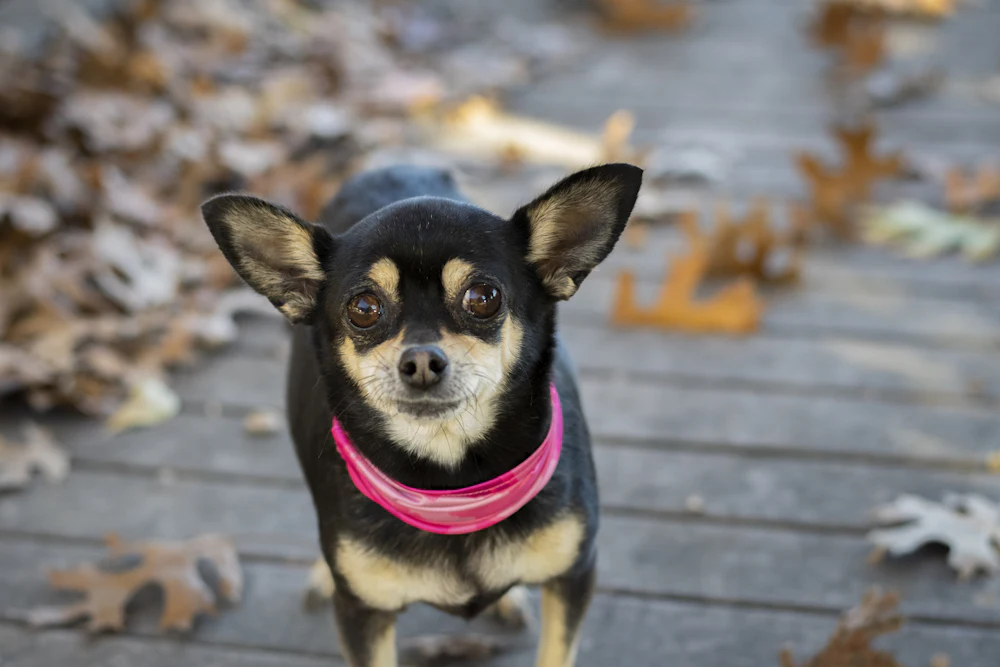
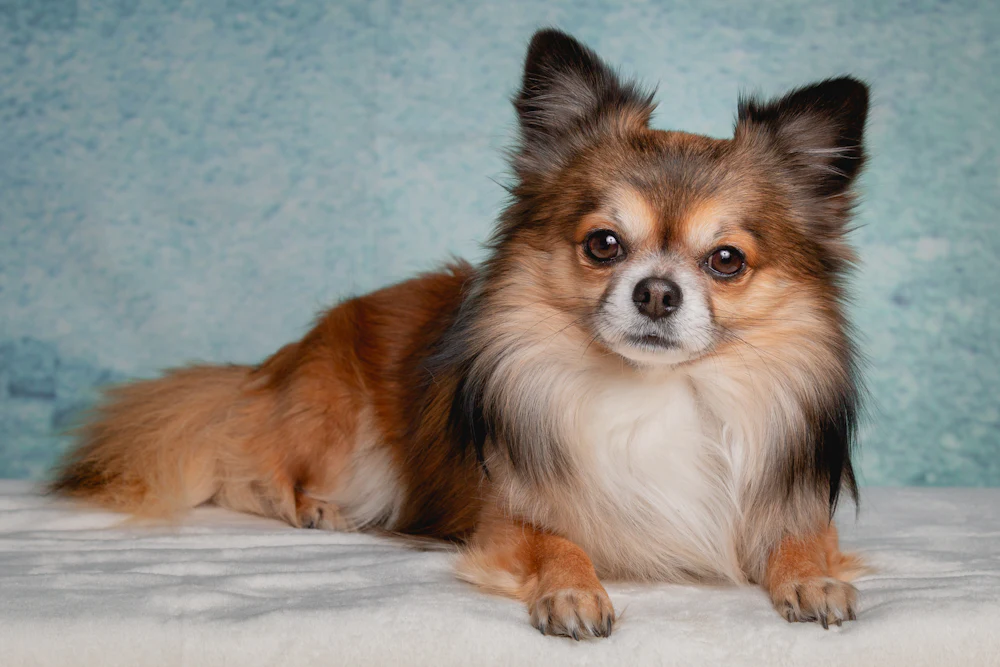
There are two varieties: smooth-haired, with a short, close-lying coat, and long-haired, with a fine, silky coat. The FCI permits all colours and shades except merle. Smooth coats need only an occasional wipe or soft brush, while long coats need a gentle brush once or twice a week to avoid tangles behind the ears and on the feathering. Both shed moderately. Clean the teeth regularly, as dental care is part of grooming here.
Feeding and weight
A Chihuahua eats very little, but what it eats counts. Feed a complete diet suited to small dogs, in small meals two or three times a day, with smaller kibble that is easy to chew. Weigh food carefully, since a few extra treats make a real difference on a 2 kg dog. Very small puppies should not go long between meals, and fresh water should always be available.
Work out a starting calorie figure and food weight with the calorie calculator. Not sure this is the right breed? Take the quiz.
Health
Every breed carries predispositions. These are the conditions most often discussed for the Chihuahua, not a prediction for any individual dog.
- Dental disease, because a small mouth crowds the teeth
- Patellar luxation, where the kneecap slips out of place
- Tracheal collapse, so a harness is better than a collar
- Hydrocephalus, a build-up of fluid in the brain, in some dogs
- Hypoglycaemia in very small puppies, which can cause weakness
- Open fontanelle (molera), a gap in the skull that the FCI treats as a disqualifying fault
What to ask the breeder. Ask for patella examinations, a dental check and a heart check for both parents, and ask about the breeder's puppy weights and feeding routine. Reputable breeders also discuss size honestly.
Choosing a puppy
Choose a breeder who raises puppies in the home and does not let them go before about twelve weeks. Very small puppies are vulnerable to low blood sugar, so feed little and often and keep them warm. Handle them gently, teach calm lifting from the start and never leave them on high furniture, as falls cause serious injury. Begin socialisation with other dogs and children immediately.
In Luxembourg the national kennel club is the Fédération Cynologique Luxembourgeoise (FCL), a member of the FCI. Many owners also buy from breeders in Germany, France or Belgium; a puppy coming from another EU country must be microchipped and vaccinated against rabies, which in practice means it cannot travel before about fifteen weeks of age. Where to get a dog in Luxembourg.
The older Chihuahua
Chihuahuas often live well into their teens. Older dogs need dental care, a warm bed and shorter, more frequent walks. Watch for a cough, which may signal heart or tracheal trouble, and for changes in the kneecaps or eyes. Keep weight steady, use steps for the sofa and book regular vet checks, since small dogs hide pain well.
A realistic day
A realistic weekday for a working household in Luxembourg City, with a midday visit. Adjust it to your dog, not the other way round.
Toilet break and a short walk of 15 minutes in a harness, with a coat in winter. A small breakfast follows.
Settle in a warm bed with a safe chew. A calm routine at departure reduces barking and anxiety.
Midday visit: toilet break, water, a short stroll and a little play or a scent game, then a few minutes of cuddling.
The longest walk of the day, 20 to 30 minutes, with a chance to sniff and meet other small dogs, then dinner.
A final toilet break, a check of teeth and paws, and bed in a draught-free spot. Many sleep under a blanket.
A Chihuahua in Luxembourg
Few breeds suit a Luxembourg flat better. A Chihuahua is easily carried in lifts, needs little floor space and is welcome on the free buses and trams, so it can travel across the country with you. Everyday walks fit into the Pétrusse valley, Parc Merl or the municipal park, and a weekend in the Grünewald forest is a pleasure so long as the dog is kept close and kept warm.
The main concerns are cold and size. Winters feel sharp to a 2 kg dog, so a coat and a warm bed matter, while summers in the 30s are better handled with indoor rest and early walks. Large dogs on busy paths can be a danger, so keep the Chihuahua on a short lead or carry it. As everywhere, it needs a microchip, commune declaration, third-party liability insurance and payment of the annual dog tax.
Every dog in Luxembourg must be identified, declared to the commune and covered by liability insurance. How registration works.
When you travel
A sitter should know that Chihuahuas bond strongly and can be anxious when the owner is away, so keep the routine as familiar as possible. Provide a warm bed, a coat, the harness, food measured by weight and vet contacts. Handle the dog gently, avoid leaving it alone for long periods, check the teeth and eyes, and watch for any signs of low energy or poor appetite.
PAWLY's holiday and overnight care takes place in your home, so your dog keeps its own bed and routine.
Myths and facts
MythChihuahuas are naturally aggressive and yappy.
FactBarking and snapping come from poor socialisation and spoiling, not from the breed itself. The FCI describes a lively, alert and courageous dog and disqualifies aggression.
MythA tiny dog needs almost no exercise.
FactShort walks are enough, but Chihuahuas still need daily outings, play and mental work. Without them they become bored and noisy.
MythThe soft spot on the head is normal in every Chihuahua.
FactThe FCI standard treats an open fontanelle as a disqualifying fault. Ask the breeder and the vet about it.
Is it the right dog for you?
Suits
- Flat dwellers who want a small, adaptable companion
- People home often who enjoy a close bond with one dog
- Owners who will set rules and handle a small dog carefully
- Travellers who can take a dog on buses and trams
Think twice if
- You have toddlers who may handle the dog roughly
- You want a dog to run with or hike for hours
- Barking in a shared building would be a problem
- You are away from home for long periods
Questions owners ask
How big does a Chihuahua grow?
The FCI sets weight rather than height: between 1 and 3 kg, ideally 1.5 to 2.5 kg. Dogs under 1 kg or over 3 kg are disqualified in the show ring, though pets are often a little heavier.
Are Chihuahuas good with children?
They suit older, gentle children. Toddlers can hurt such a small dog without meaning to, so adult supervision is essential and the dog should have a safe place to retreat to.
Do Chihuahuas need a lot of grooming?
Not much. Smooth coats need a quick wipe or brush, and long coats need brushing once or twice a week. Dental care and nail trimming matter more than coat care. Dental care and nail trimming matter more than coat care.
How long do Chihuahuas live?
Often 12 to 16 years. Good dental care, a lean weight and regular vet checks help them stay comfortable into old age. Dental care, a lean weight and regular vet checks help them stay comfortable into old age.
Sources
Photo: Unsplash (Unsplash License) · Photo: Unsplash (Unsplash License) · Photo: Unsplash (Unsplash License) · Photo: Unsplash (Unsplash License) · Photo: Unsplash (Unsplash License)
General information for dog owners in Luxembourg, not veterinary or legal advice. Official facts (origin, size, group, history and temperament as described by the breed standard) follow the FCI standard; health and care sections reflect breed-club and veterinary guidance and are typical ranges rather than rules. For your own dog, ask your vet, the breed club or your commune. How this guide is written and checked. Last reviewed 8 October 2026.
Need someone for your Chihuahua?
PAWLY offers an individual 45-minute walk or a home visit at your dog's pace, the same walker every time, and a written report with photos after every visit, across Luxembourg City.
Read next: the journal, for the Chihuahua
All articles
Teeth: the problem owners find least interesting and vets see most
Teeth are a known weak point in the Chihuahua; this is the routine that helps.

Dogs and cats in the same flat
The Chihuahua can see small animals as prey; this covers living with a cat in a flat.

Small dogs, and the training they never get
Small dogs are often the least trained; worth reading before habits set in.
Similar breeds
All 198 breeds
Yorkshire Terrier
A glamorous toy with a working-class terrier past, and a terrier temperament to match.
EnergyGroomingFlat life
Pomeranian
A tiny spitz with a lion's mane and a big voice.
EnergyGroomingFlat life
Miniature Pinscher
A small German house dog with a high-stepping trot and a guard dog's opinion of itself, bold, quick and endlessly alert.
EnergyGroomingFlat life

