


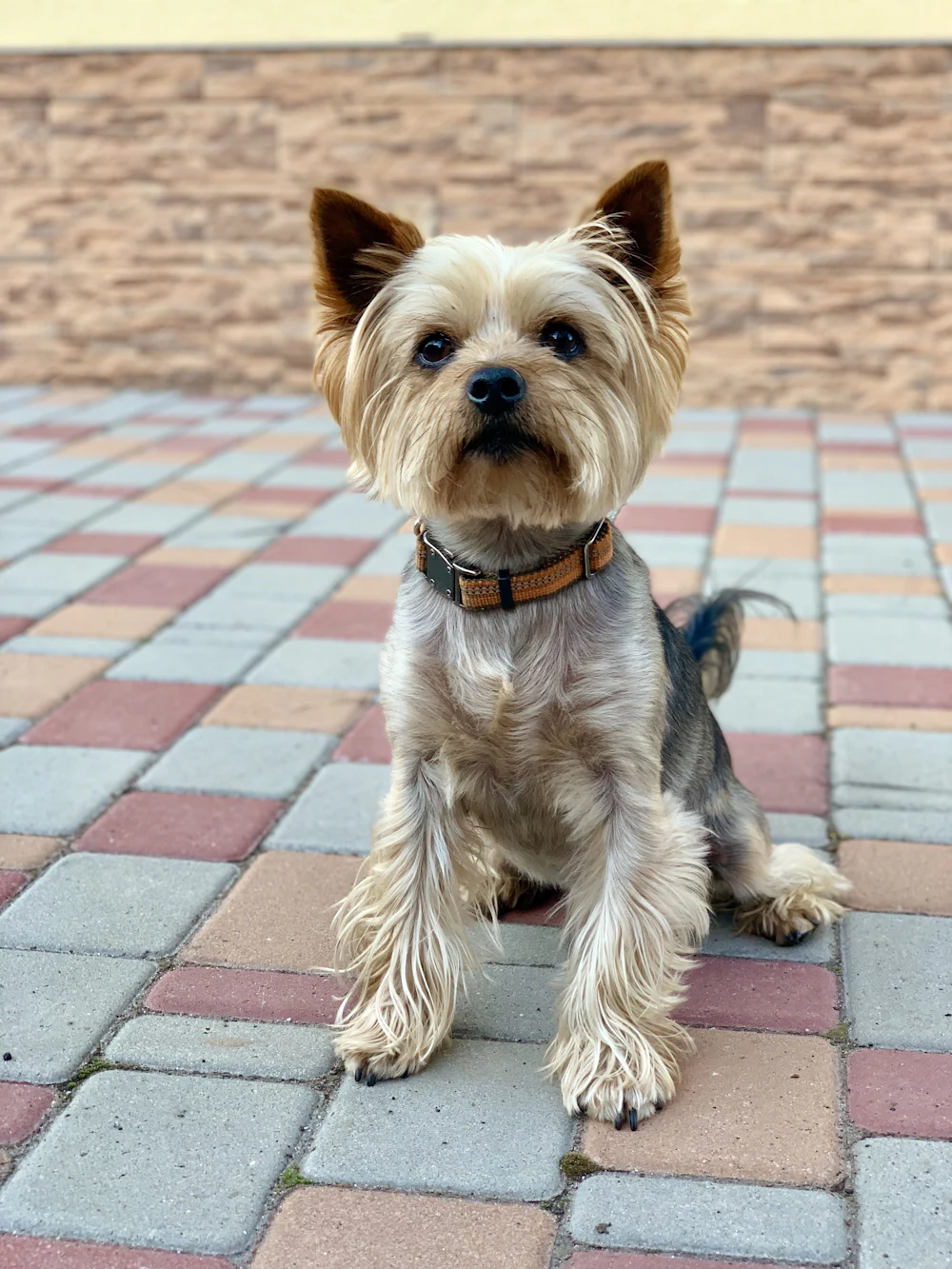
History
The Yorkshire Terrier takes its name from the county where it was developed. The FCI standard says the breed comes from the same locale as the Airedale Terrier and was first seen around the 1850s. Scottish workers who moved south to the mills of Yorkshire and Lancashire brought small terriers with them, and these were used to catch rats in mills and mines. The standard names the Black and Tan Terrier, the Maltese and the Skye Terrier among its ancestors, and records that the present name was accepted in 1870.
A dog called Huddersfield Ben is regarded as the foundation sire of the breed, and the Yorkie rose quickly from working terrier to fashionable companion. The FCI classes it in Group 3, Section 4, toy terriers, with a utilisation as a companion dog. The best-known Yorkie of the twentieth century was Smoky, found in New Guinea during the Second World War, who later became one of the first recorded therapy dogs. A tiny dog with a very large reputation.
Temperament
The FCI describes an alert, intelligent toy terrier with a spirited manner and an even disposition. In practice that means a dog with plenty to say. Yorkies are brave to the point of foolishness, curious about every smell and sound, and attached to their people with real devotion. They tend to follow you from room to room and will announce a courier at the door with the confidence of a dog three times the size.
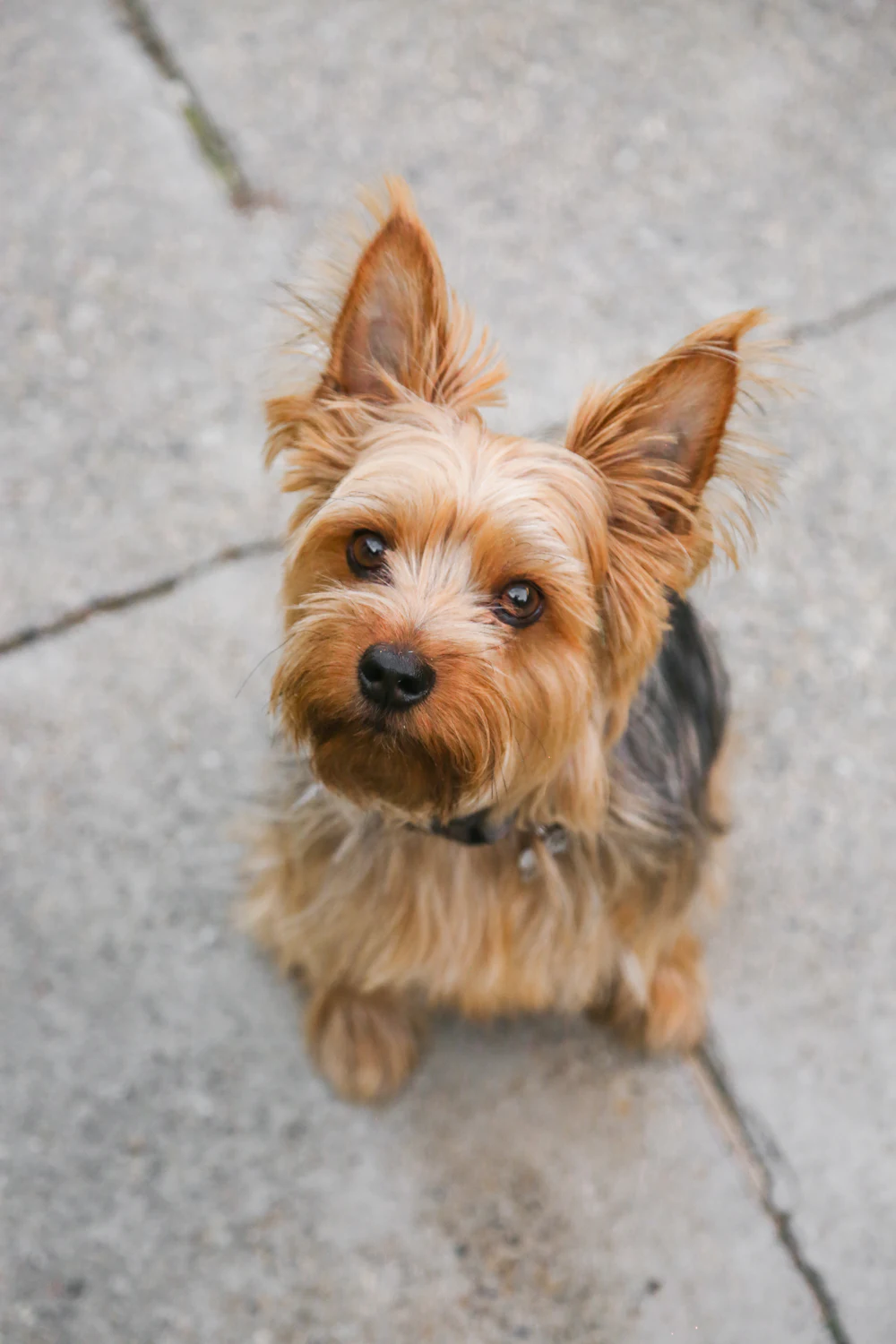
The standard gives it a long, straight, glossy coat and a neat, upright carriage, and the dog behaves accordingly: head up, tail high, always ready. The terrier side shows in chasing small things, barking at noises and holding firm opinions about walks, food and the sofa. Well socialised, the breed is cheerful and confident. Poorly socialised, it can become shrill, wary of strangers and quick to bluster at larger dogs. The standard counts aggression and excessive shyness as faults.
Children and other pets
Yorkies can live happily with older, gentle children who understand how to handle a very small dog, but they are too fragile for rough play, and a dropped or squeezed Yorkie is easily injured. Toddlers should always be supervised. Most get on with other dogs if socialised early, though they may bark and bluster at larger ones. Their terrier instincts mean hamsters, rabbits and other small pets are best kept well out of reach.
Exercise and the daily walk
Despite the delicate appearance, a Yorkie needs real exercise, about 45 minutes a day spread over a couple of outings. They enjoy proper walks, sniffing, short games with a ball or a tug toy and a bit of mental work. Treating them as ornaments carried everywhere leads to a bored, yappy dog. Allow plenty of time to explore on the ground, as walking builds both confidence and fitness.
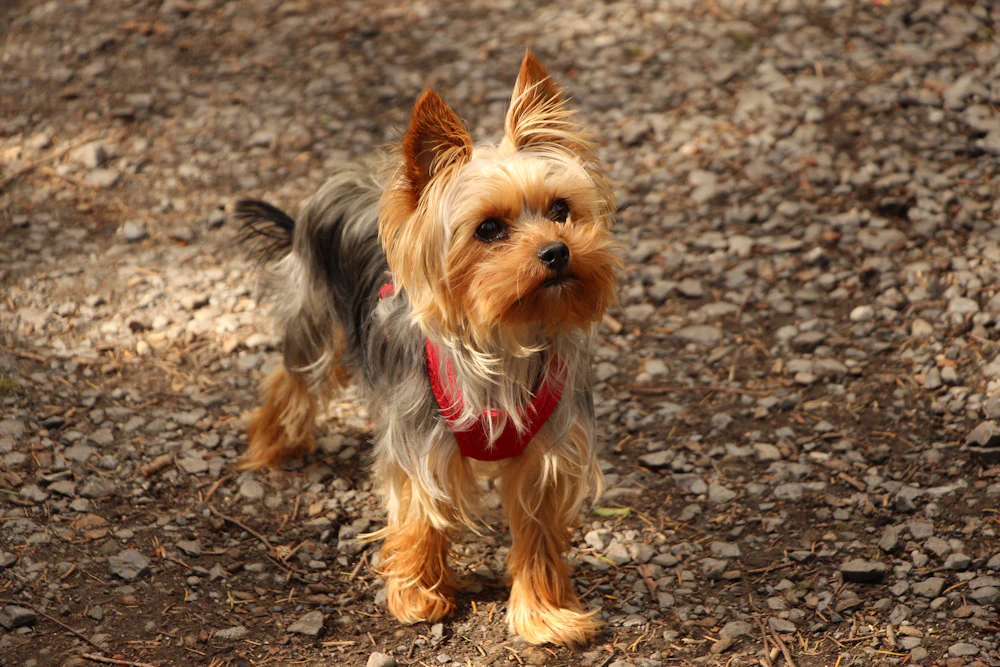
Size brings risks. A big, boisterous dog can injure a Yorkie without meaning to, so pick play partners carefully and avoid crowded dog areas. Use a well-fitted harness rather than a collar, because the trachea is delicate in toy breeds and pulling on a collar can aggravate it. Jumping off furniture and down stairs is hard on small joints, so teach the dog to use steps or a ramp where possible.
Training
Under the silky coat sits a clever, determined terrier that is quick to bark. Start training early with small food rewards, keep sessions short and cheerful, and be consistent, because a Yorkie that gets its way once will try again. Teach a quiet cue before barking becomes a habit in a building where neighbours share walls. Toilet training can take longer in toy breeds, so be patient and use a regular routine.
Yorkies enjoy learning tricks and often do well in small-dog agility and scentwork. Socialise them with calm, friendly larger dogs so they grow up neither frightened nor provocative, and practise handling of paws, teeth and coat from the start, since grooming and dental care are lifelong. Avoid the trap of carrying the dog everywhere; it can make the behaviour worse.
Coat and grooming
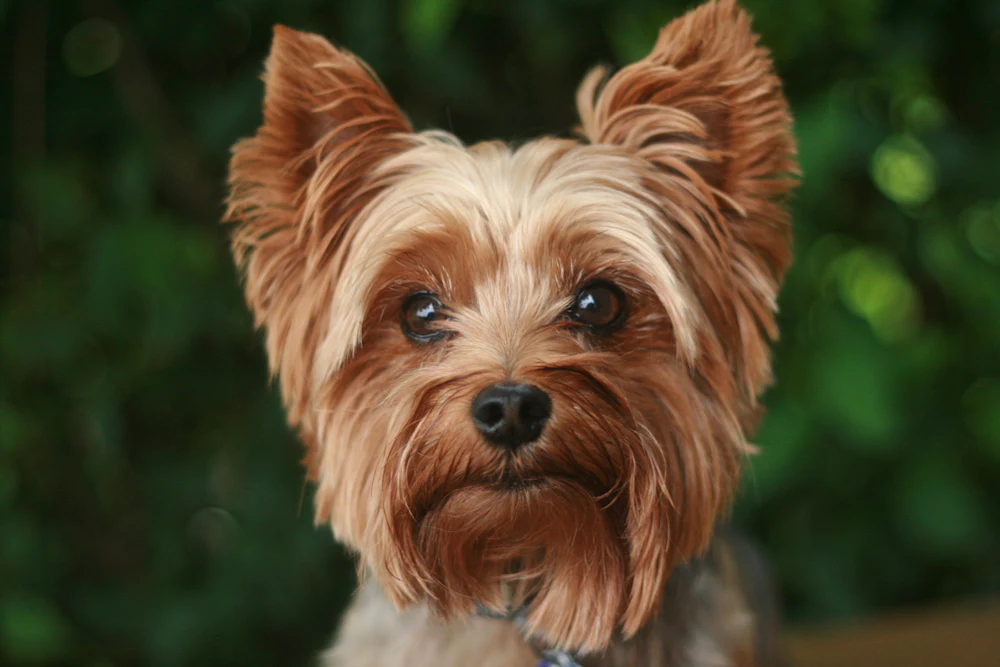
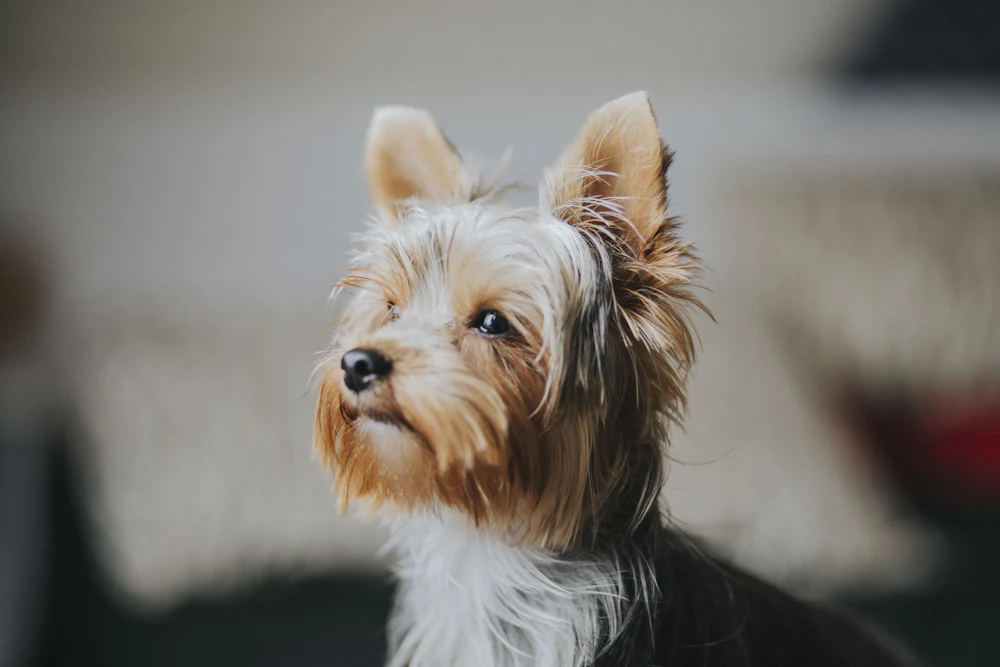
The FCI describes a moderately long, perfectly straight, glossy, silky coat, dark steel blue (not silver blue) on the body with rich tan on the head and chest. It is hair rather than fur, grows continuously and sheds very little. A full show coat needs daily brushing, while most pet owners keep a shorter puppy cut with a professional trim every six to eight weeks. Brush gently to prevent tangles, and keep the hair out of the eyes.
Feeding and weight
Feed small, measured portions of a complete food made for toy breeds, and count treats in the daily ration, because a few extra grams matter on a dog of three kilograms. Some Yorkies are fussy eaters, so resist the temptation to change foods constantly. Dental care deserves daily attention, with brushing and suitable chews. Long gaps between meals can upset some toy dogs, so ask your vet about meal frequency for your puppy.
Work out a starting calorie figure and food weight with the calorie calculator. Not sure this is the right breed? Take the quiz.
Health
Every breed carries predispositions. These are the conditions most often discussed for the Yorkshire Terrier, not a prediction for any individual dog.
- Dental disease
- Patellar luxation (slipping kneecaps)
- Tracheal collapse
- Portosystemic (liver) shunt
- Legg-Calvé-Perthes disease of the hip
What to ask the breeder. Ask for patella checks on the parents and about liver shunts in the lines. As with all toy breeds, avoid teacup marketing.
Choosing a puppy
Ask the breeder for patella checks on the parents and about liver shunts in the lines, and meet the mother if you can. Be wary of anyone selling tiny puppies marketed as teacup, and of puppies offered before eight weeks, as very small size is a health risk, not a bonus. Handle the puppy gently, introduce a harness early, and begin brushing and tooth cleaning from the first week at home.
In Luxembourg the national kennel club is the Fédération Cynologique Luxembourgeoise (FCL), a member of the FCI. Many owners also buy from breeders in Germany, France or Belgium; a puppy coming from another EU country must be microchipped and vaccinated against rabies, which in practice means it cannot travel before about fifteen weeks of age. Where to get a dog in Luxembourg.
The older Yorkshire Terrier
As Yorkies age, dental disease and tracheal collapse can worsen, so continue regular vet dental checks, use a harness and keep the body lean. Joints may stiffen, so offer steps to the sofa and a warm, supportive bed. Many Yorkies remain bright and playful well into old age and often live long lives. Hearing and sight may fade slowly, so keep routines steady and walks gentle.
A realistic day
A realistic weekday for a working household in Luxembourg City, with a midday visit. Adjust it to your dog, not the other way round.
A morning walk with plenty of time to sniff, on a harness.
Breakfast, then a quick brush and a tooth clean.
A midday visit from a walker for a toilet break, play and company.
An evening walk, with a short training game on the way home.
A final toilet walk before bed.
A Yorkshire Terrier in Luxembourg
A Yorkie is very well suited to flat life. It fits in a lift, travels well on the free buses and trams and needs little space. The chief challenge is noise: a barking terrier in a block with thin walls is a quick route to complaints, so train a quiet cue early and avoid leaving the dog alone for long stretches. Remember the legal basics: a microchip, declaration to the commune, third-party insurance and the annual dog tax apply to a Yorkie as to any dog.
Parks such as the Pétrusse valley, Parc Merl and the Municipal Park offer ample room for a small dog, and the Bambësch or Grünewald suit longer weekend outings. Winter rain and cold may call for a small coat, and summer heat in the 30s is best handled with early and late walks on shaded paths. Budget for regular grooming appointments and dental care. Use a harness rather than a collar, and watch for larger dogs in busy parks.
Every dog in Luxembourg must be identified, declared to the commune and covered by liability insurance. How registration works.
When you travel
Yorkies suit sitters well, being small and adaptable, though many dislike long absences. The sitter needs your grooming routine, dental care instructions and a harness for walks. Explain the feeding schedule, as some toy dogs are fussy. Warn them about barking at the door, so neighbours are not surprised, and give the vet's contact details. Small size means a Yorkie also travels in the cabin with many airlines.
PAWLY's holiday and overnight care takes place in your home, so your dog keeps its own bed and routine.
Myths and facts
MythYorkies are just lap dogs.
FactThey were bred to catch rats in mills and mines, and they still have the energy and curiosity of working terriers.
MythA Yorkie never needs a groomer.
FactThe hair grows continuously. Regular trims or daily brushing are unavoidable, even if it sheds very little.
MythSmaller dogs need less training.
FactA small terrier can be as stubborn and loud as a large one. Early rewards-based training and a quiet cue pay off in a shared building.
Is it the right dog for you?
Suits
- Apartment dwellers
- Owners happy to groom or pay a groomer
- People wanting a lively small companion
- Households that can commit to dental care
Think twice if
- Homes with young children
- Owners who want a quiet dog
- Anyone unprepared for grooming costs
Questions owners ask
Are Yorkies hypoallergenic?
No dog is truly hypoallergenic. Yorkies shed little, which some allergic people tolerate better, but reactions vary and are caused by proteins in saliva and dander, not just hair. Spend time with the dog before committing.
How often should a Yorkie be groomed?
Brush a few times a week in a short cut, and book a professional trim every six to eight weeks. A full show coat needs brushing every day to prevent tangles and keep the hair in good condition.
Do Yorkies bark a lot?
They can. As terriers they react to noises and visitors. Early training, a quiet cue, rewards for calm behaviour and enough exercise reduce barking, though few Yorkies are truly silent.
Are Yorkies good with children?
With gentle, older children, yes. They are fragile and can be injured by rough handling, so supervise young children and teach them to sit down and let the dog come to them.
Sources
Photo: Unsplash (Unsplash License) · Photo: Unsplash (Unsplash License) · Photo: Unsplash (Unsplash License) · Photo: Unsplash (Unsplash License) · Photo: Unsplash (Unsplash License)
General information for dog owners in Luxembourg, not veterinary or legal advice. Official facts (origin, size, group, history and temperament as described by the breed standard) follow the FCI standard; health and care sections reflect breed-club and veterinary guidance and are typical ranges rather than rules. For your own dog, ask your vet, the breed club or your commune. How this guide is written and checked. Last reviewed 8 October 2026.
Need someone for your Yorkshire Terrier?
PAWLY offers an individual 45-minute walk or a home visit at your dog's pace, the same walker every time, and a written report with photos after every visit, across Luxembourg City.
Read next: the journal, for the Yorkshire Terrier
All articles
Teeth: the problem owners find least interesting and vets see most
Teeth are a known weak point in the Yorkshire Terrier; this is the routine that helps.

Grooming and coat care through the Luxembourg year
The Yorkshire Terrier has a coat that needs a routine that holds through the Luxembourg seasons.

Building a recall you can actually rely on
Terriers follow scent and movement, so the Yorkshire Terrier needs a recall built properly.
Similar breeds
All 198 breeds
Chihuahua
The smallest pedigree dog in the world, with an apple-shaped head, a big personality and a courage that far outruns its size.
EnergyGroomingFlat life
Maltese
One of the oldest companion breeds in Europe, gentle and devoted, with a white coat that shows everything.
EnergyGroomingFlat life
West Highland White Terrier
A cheerful, confident little Scottish terrier, white by design, with a big opinion of itself and a worker's stamina.
EnergyGroomingFlat life

