


History
The FCI places the Maltese in the Central Mediterranean area, with Italy holding the patronage of the standard. Its name, the standard says, comes from a Semitic word meaning refuge or harbour, not from the island of Malta as is often assumed. Small dogs of this type lived in Mediterranean ports and maritime cities, where they kept rodents down in warehouses and on ships.
Classical writers mention little white dogs called canes melitenses, a reference the standard connects to Aristotle's time, and Roman matrons and poets are recorded as admirers. Renaissance painters later showed them as the companions of the nobility. The Maltese belongs to the bichon group, Section 1 of FCI Group 9, alongside breeds such as the Bichon Frisé and the Bolognese. Its history is that of a lapdog bred for company and appearance.
Temperament
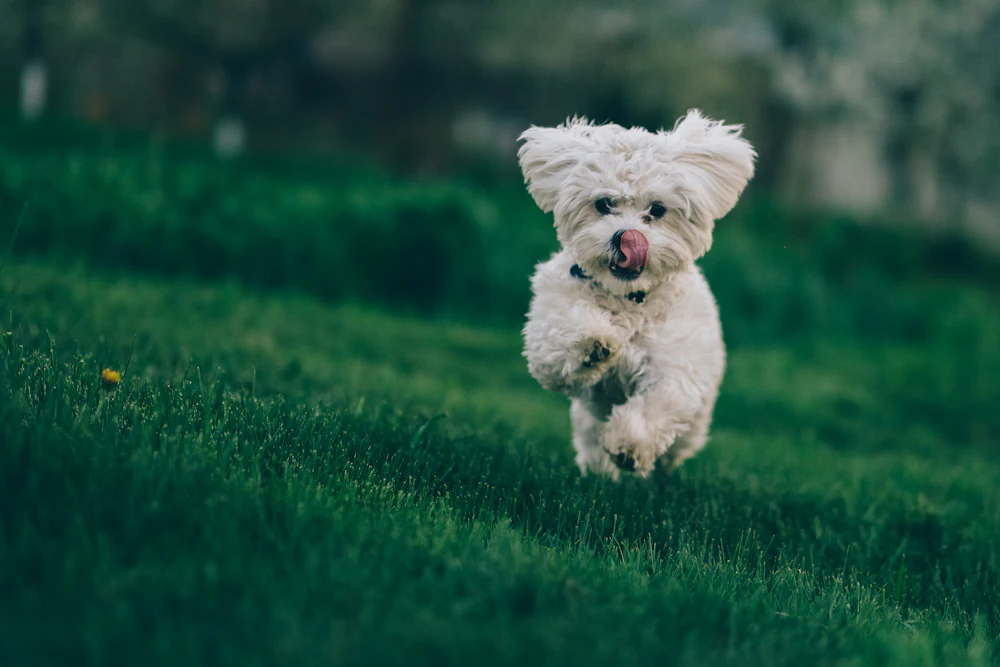
The FCI standard describes the Maltese as lively, affectionate, very calm and very intelligent. In practice it is a dog that wants to be where its person is, and it will follow you from kitchen to bathroom. It is playful and quick, and it combines this with a gentle, watchful quality that suits quiet households.
They can be sensitive and do not like being left alone for long, and some become anxious or noisy if no one teaches them to cope. A few are vocal, announcing every footstep in the corridor, and some are wary of strangers until they get to know them. Aggression and excessive shyness are listed as disqualifying faults, so a good Maltese should be neither snappy nor timid.
Children and other pets
Maltese are gentle and affectionate but very small, so they suit adults and calm older children best. Toddlers can hurt them by accident, and a small dog may bite if frightened. They usually get on with other small dogs and with cats, and they should be protected from rough play with large dogs. Teach children to sit on the floor and let the dog approach.
Exercise and the daily walk
Maltese enjoy walks and games but need relatively little, perhaps half an hour to three-quarters of an hour a day split between outings. Short, brisk walks with time to sniff, and a few minutes of indoor play, usually satisfy them. They are tough for their size but easily tired in heat.
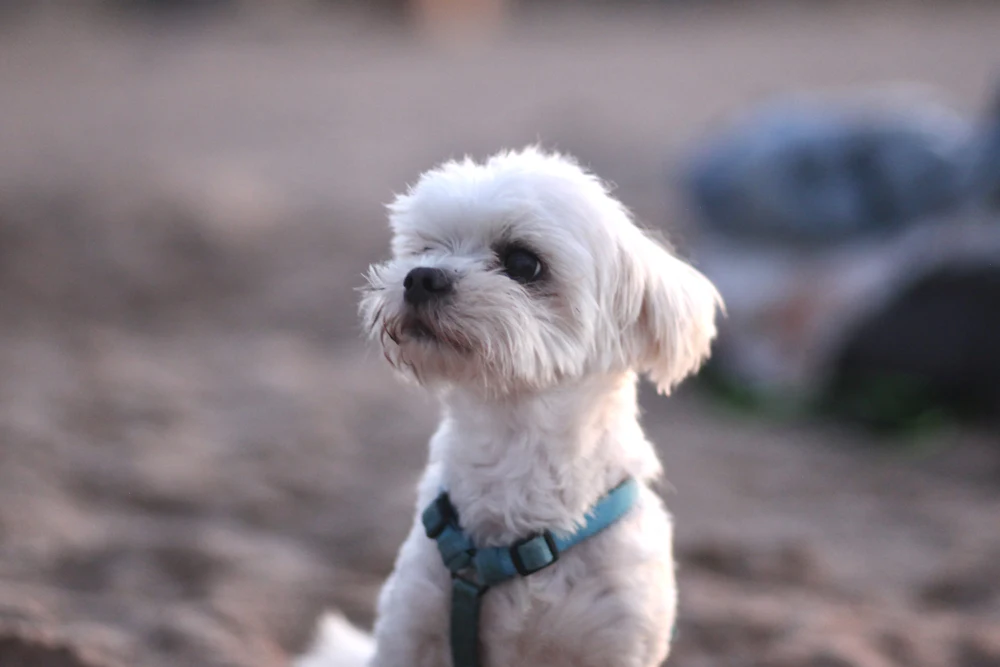
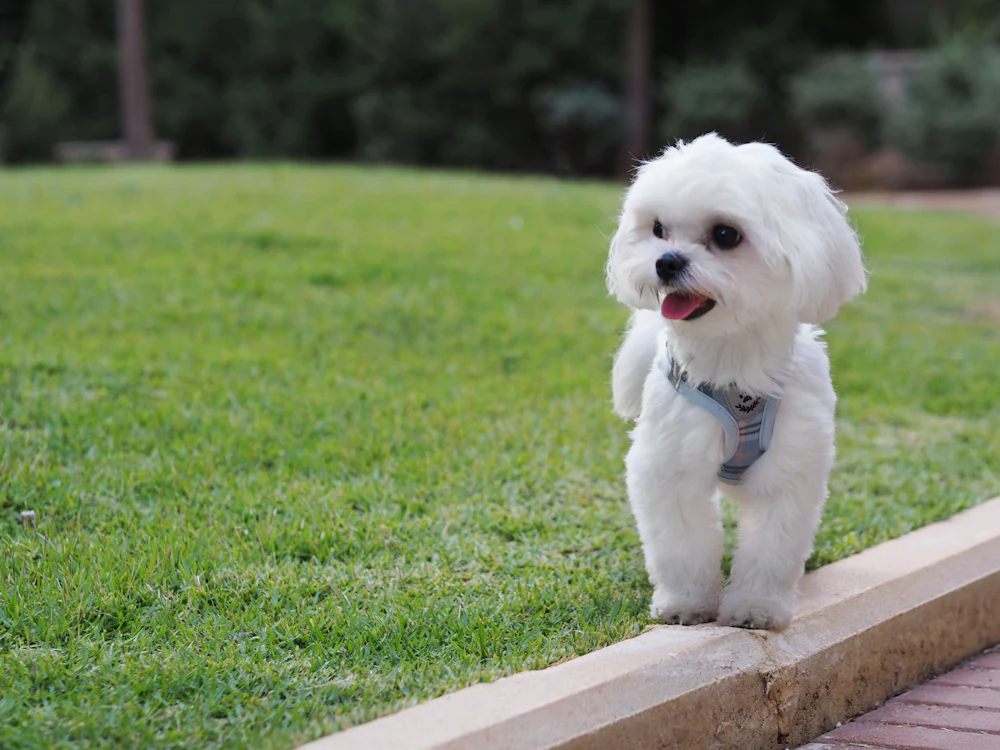
They are small enough to be hurt by big dogs in play, so supervise mixed groups and choose quieter parks for the daily outing. Carry the dog or use a harness on crowded pavements and in lifts. A harness protects the neck, and the coat should be kept clear of dirt and brambles so that a walk does not turn into an hour of grooming.
Training
Maltese are intelligent and responsive to kind, reward-based training. Teach them to be comfortable alone gradually, because they bond closely with their people, and practise short departures from the first week. House training can take patience in a small dog, so keep to a strict routine and reward every success outside.
Socialise them with calm larger dogs and gentle children, and discourage excessive barking early, before it becomes a habit. A quiet cue, a settle on a bed and acceptance of handling for brushing and tooth cleaning are the most useful lessons. Keep sessions short and light, as harsh words upset a sensitive dog quickly.
Coat and grooming
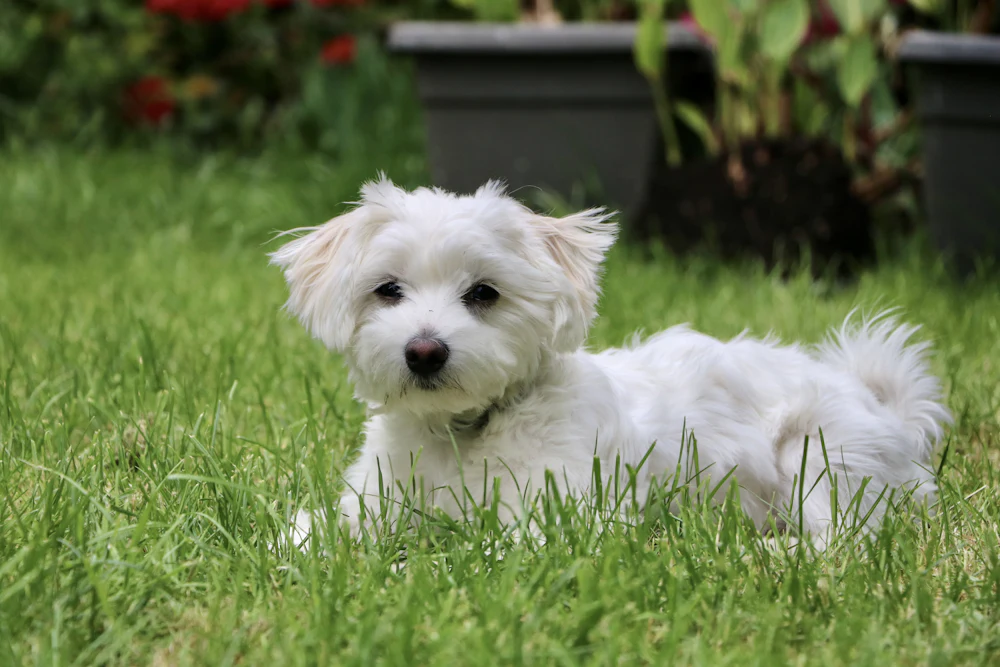
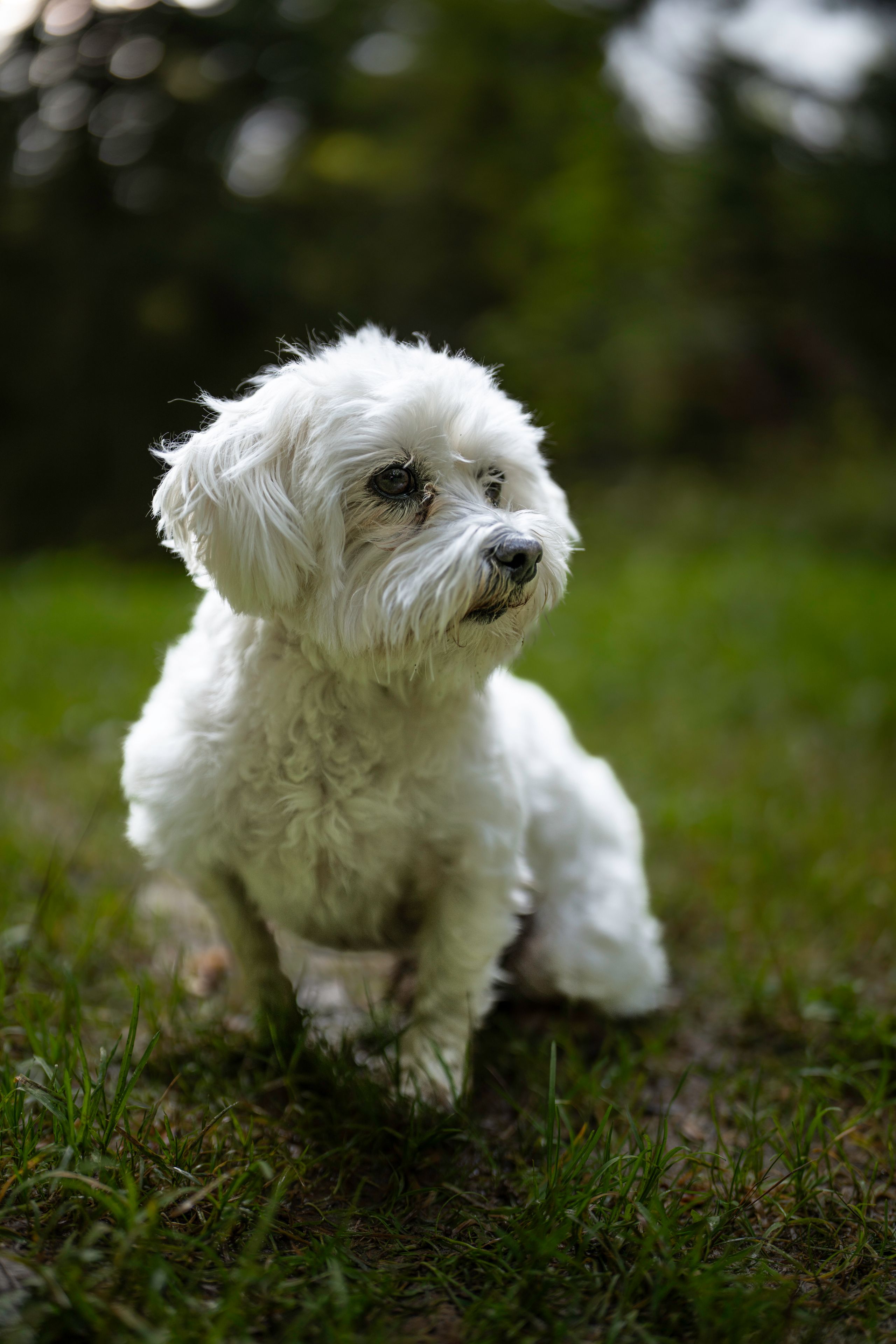
The FCI standard asks for a very long, dense, shiny, straight coat that falls heavily without waves or curls, in pure white with a pale ivory tinge permitted. There is no undercoat and little shedding, but the long coat mats and stains. Brush daily if it is kept long, or choose a regular trim, as many owners do. Tear staining around the eyes is common; keep the area clean and dry.
Feeding and weight
Small measured meals suit a dog of three to four kilograms, and treats should be tiny. Good dental care matters, because small breeds are prone to tartar, so offer suitable chews and brush the teeth. Persistent heavy tear staining is worth a vet check rather than a change of food at random. Keep the dog lean, because excess weight strains the knees and the heart.
Work out a starting calorie figure and food weight with the calorie calculator. Not sure this is the right breed? Take the quiz.
Health
Every breed carries predispositions. These are the conditions most often discussed for the Maltese, not a prediction for any individual dog.
- Dental disease
- Patellar luxation (slipping kneecaps)
- Portosystemic shunt (a liver blood-vessel problem)
- White shaker syndrome
- Tear staining and eye irritation
What to ask the breeder. Patella checks and questions about liver shunts in the lines.
Choosing a puppy
Ask for patella checks and about liver shunts in the lines, and meet the mother. Avoid anyone selling teacup puppies, which is a marketing term and not a standard, and which usually means undersized, fragile dogs. Maltese puppies are very small and easily hurt, so pick up and handle them carefully. Start brushing, face wiping and short spells alone from the first days.
In Luxembourg the national kennel club is the Fédération Cynologique Luxembourgeoise (FCL), a member of the FCI. Many owners also buy from breeders in Germany, France or Belgium; a puppy coming from another EU country must be microchipped and vaccinated against rabies, which in practice means it cannot travel before about fifteen weeks of age. Where to get a dog in Luxembourg.
The older Maltese
Dental disease is the main issue with age. Regular dental checks and brushing keep the mouth healthy, and many older Maltese need professional cleaning under anaesthetic. Watch for coughing, reduced stamina and stiffness in the knees. Keep the coat short for comfort, offer a warm, soft bed, and expect shorter, gentler walks as they slow down.
A realistic day
A realistic weekday for a working household in Luxembourg City, with a midday visit. Adjust it to your dog, not the other way round.
A short walk, with a wipe of the face and feet afterwards.
Breakfast and a quick brush.
Midday visit: toilet, water, a game and a cuddle.
Evening walk in a quiet park on a harness.
Brush, teeth and bed.
A Maltese in Luxembourg
Maltese are very well suited to apartment life. They are small enough to be carried in a lift, quiet if trained, and content with a short daily walk in the Pétrusse valley or Parc Merl. They are not forest dogs in wet weather, as the white coat will take on every puddle, so many owners use a trimmed coat and a dog coat in winter.
Rinse and dry the feet after salted pavements in winter: the white coat stains and the salt irritates the pads. In summer, when temperatures reach the thirties, walk early or late and avoid hot pavements. Buses and trams are free, so a small dog in a carrier or on a lap is easy to take anywhere. Remember that every dog needs a microchip, commune declaration, insurance and the annual dog tax.
Every dog in Luxembourg must be identified, declared to the commune and covered by liability insurance. How registration works.
When you travel
Maltese often attach closely to one person and may pine when that person is away. A familiar sitter who stays in the home, keeps the routine and cleans the face daily is much better for them than a kennel. Leave notes on feeding, the grooming routine, any medication and the dog's usual spot. Ask the sitter to keep the dog on a harness outdoors and never leave it alone in a garden.
PAWLY's holiday and overnight care takes place in your home, so your dog keeps its own bed and routine.
Myths and facts
MythWhite dogs are delicate.
FactMaltese are small but lively and resilient companions. The coat is what needs care.
MythMaltese are hypoallergenic.
FactNo dog is. Maltese shed little, which some allergic people tolerate better.
MythMaltese are named after the island of Malta.
FactThe FCI standard says the name derives from a Semitic word meaning refuge or harbour, linked to the Mediterranean ports where the dogs lived.
Is it the right dog for you?
Suits
- Apartment dwellers
- Older owners
- People wanting a devoted small companion
- Owners who will brush and trim regularly
Think twice if
- You are away for long hours
- You have a family with rough play
- You want a low-grooming dog
- You mind face-staining and daily wiping
Questions owners ask
Why does my Maltese have brown stains under its eyes?
This is tear staining, common in white dogs. Keep the area clean and dry with a soft, damp cloth. Persistent heavy tearing is worth a vet check, because blocked tear ducts, eyelash problems or eye irritation can all be the cause.
Do Maltese shed?
Very little, since they have no undercoat. Loose hairs tend to stay in the coat and tangle, which is why brushing matters. Many owners keep a short clip to make daily care easier.
How much do Maltese weigh and how tall are they?
The FCI standard gives 21 to 25 cm at the withers for males and 20 to 23 cm for females, with a weight of 3 to 4 kg. They are tiny dogs, easy to lift and easily hurt.
Can a Maltese be left alone while I work?
Some can, with training, a midday visit and a calm routine. They bond closely and may bark or fret if left for long periods. Build up absences slowly and consider a walker for a break around lunch.
Sources
Photo: Unsplash (Unsplash License) · Photo: Unsplash (Unsplash License) · Photo: Unsplash (Unsplash License) · Photo: Pexels (Pexels License) · Photo: Unsplash (Unsplash License)
General information for dog owners in Luxembourg, not veterinary or legal advice. Official facts (origin, size, group, history and temperament as described by the breed standard) follow the FCI standard; health and care sections reflect breed-club and veterinary guidance and are typical ranges rather than rules. For your own dog, ask your vet, the breed club or your commune. How this guide is written and checked. Last reviewed 8 October 2026.
Need someone for your Maltese?
PAWLY offers an individual 45-minute walk or a home visit at your dog's pace, the same walker every time, and a written report with photos after every visit, across Luxembourg City.
Read next: the journal, for the Maltese
All articles
Teeth: the problem owners find least interesting and vets see most
Teeth are a known weak point in the Maltese; this is the routine that helps.

Grooming and coat care through the Luxembourg year
The Maltese has a coat that needs a routine that holds through the Luxembourg seasons.

Choosing a groomer, and what to ask before you book
A coat like this usually means a groomer; this covers what to ask before you book.
Similar breeds
All 198 breeds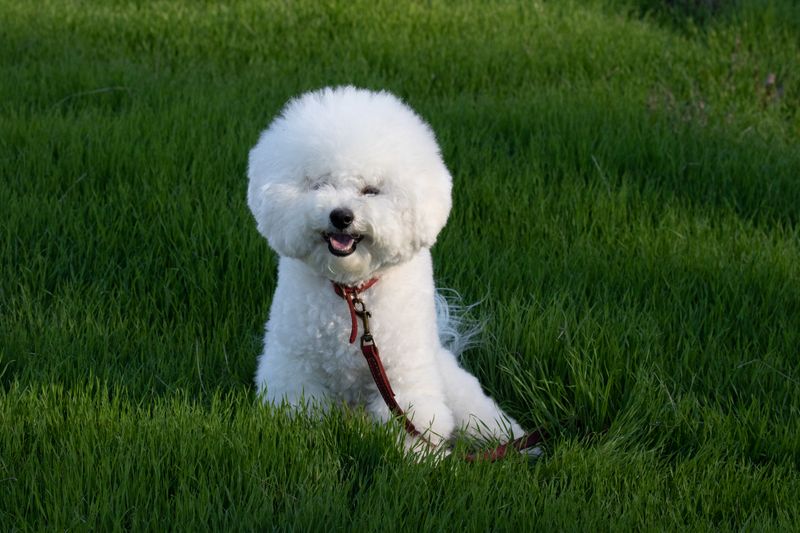
Bichon Frisé
A cheerful white powder puff with a sense of humour and a serious grooming requirement.
EnergyGroomingFlat life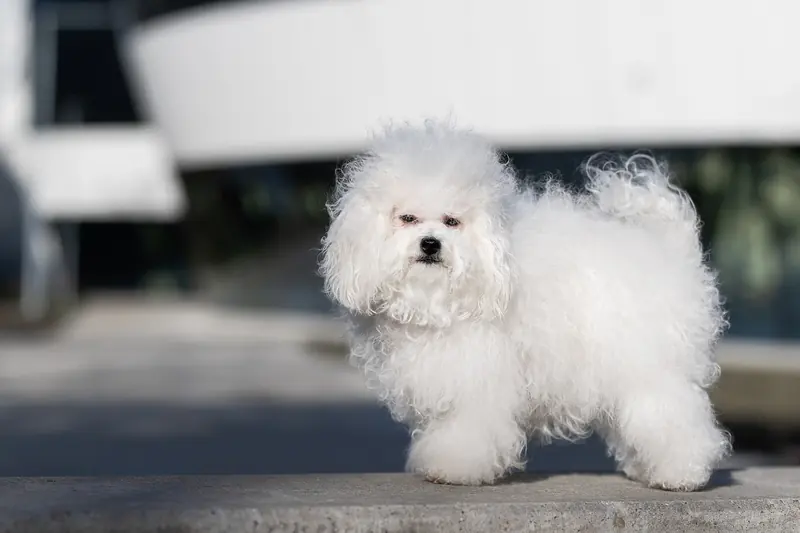
Bolognese
A white, cloud-like Italian companion dog: gentle, devoted and happiest when glued to its person.
EnergyGroomingFlat life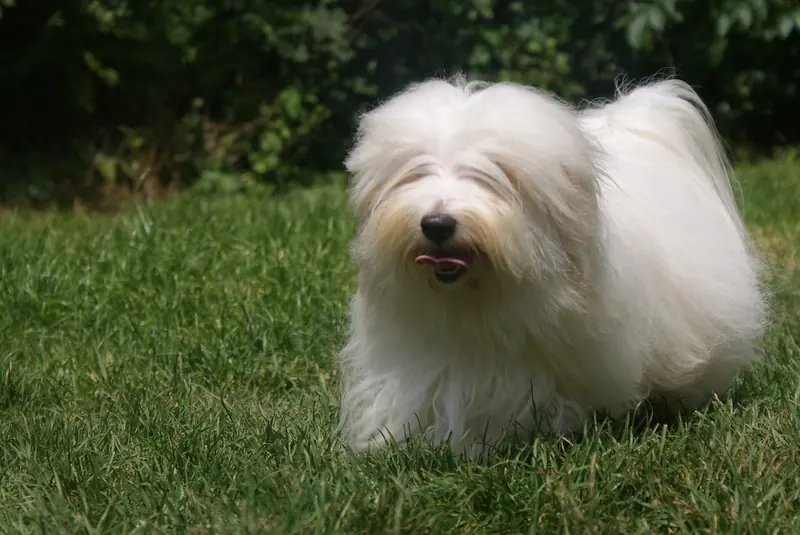
Coton de Tulear
A small white companion from Madagascar with a coat like cotton wool, a cheerful head and a talent for fitting into almost any household.
EnergyGroomingFlat life

