
History
The FCI standard names Belgium and France as the breed's patrons, and records that the ancestors of the Bichon Frisé were brought to France from Italy during the Renaissance. They were first called barbichon, because they resembled a small Barbet, and the family of bichons that grew from them includes the Maltese and the Bolognese. The dogs appear in paintings of the seventeenth and eighteenth centuries, a sign of how long they were favoured as indoor companions.
They regained popularity under Napoléon III, when they were known as the Ténériffe. The breed was nearly lost after the world wars, and dedicated French and Belgian breeders rebuilt the population. The FCI notes that the first Bichon registered in Belgium was Pitou, in 1932, and the first in France was Ida, in 1934. The name Bichon à poil frisé, meaning curly-haired bichon, was settled in 1978, and the standard places the dog in Group 9, Section 1.1, Bichons.
Temperament
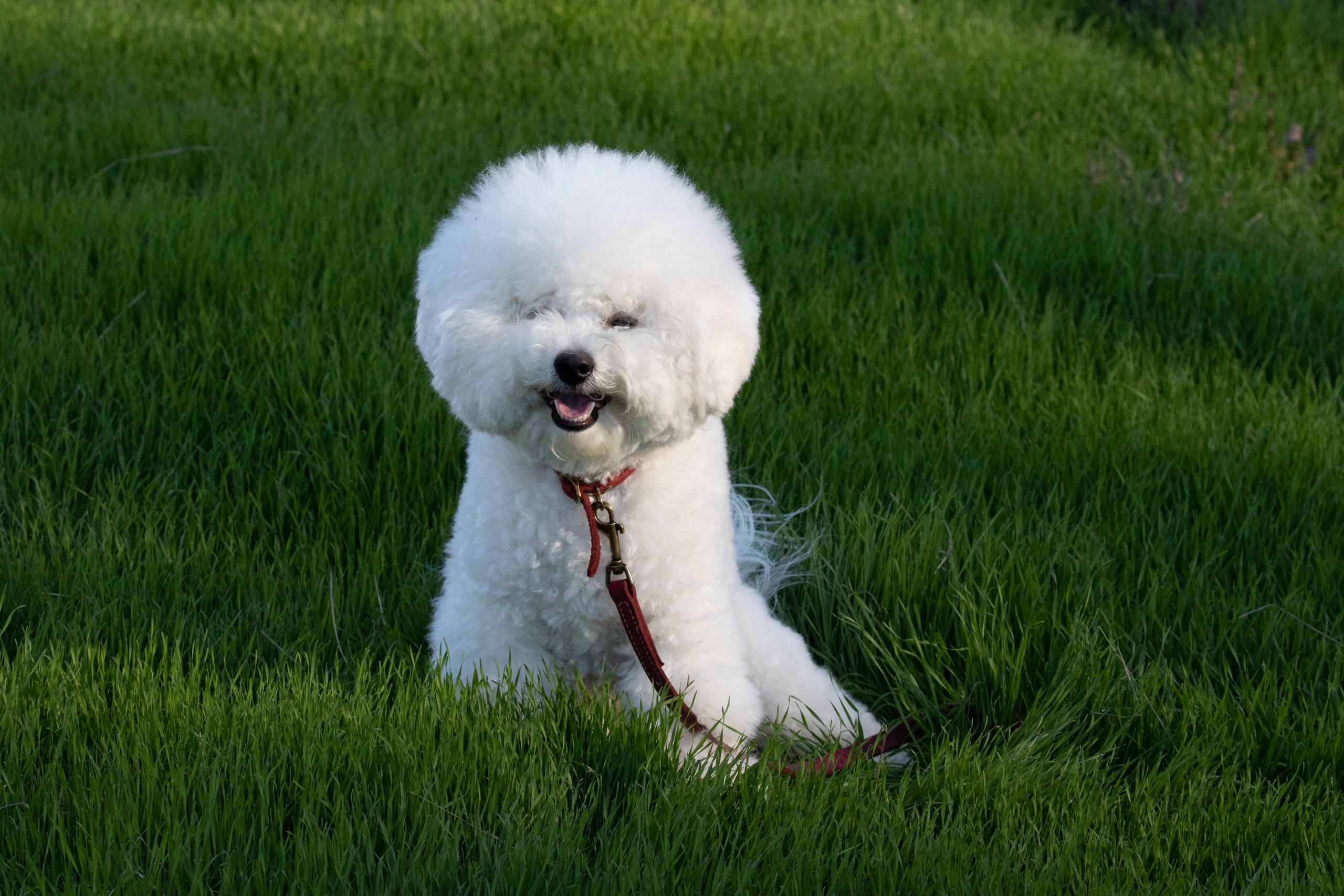
The standard describes a cheerful little dog with a lively gait, and it is specific about character: neither nervous nor given to much barking, and very sociable towards both people and dogs. That reads as accurate. A Bichon greets visitors as if they were the best news of the week, trots along in good spirits and tends to treat every dog it meets as a possible friend. The standard also lists lack of self-assurance among its faults, and aggression and shyness are disqualifying.
Underneath the cheer is a dog that wants company. Bichons are affectionate and people-focused, and they dislike being left alone for long, which is the most common source of trouble: barking, toilet accidents and chewing when the household is out. They are playful, clever clowns that enjoy attention and will happily repeat a trick that earns a laugh. Some are slow to house train, so patience and routine matter more than any clever technique.
Children and other pets
Bichons are friendly with children, visitors, other dogs and cats, and they are often one of the easiest small breeds for families. They are sturdy enough for gentle play, but still small, so supervise very young children and teach them to pick the dog up properly. They are rarely snappy or possessive. Two Bichons will often keep each other company, though neither fully replaces human attention.
Exercise and the daily walk
Regular walks and play are enough. Plan on 45 minutes to an hour a day, in two or three outings, plus a game at home. A Bichon is small but surprisingly athletic, and it is quite capable of a longer weekend walk if you build up gradually. It is also a dog that will happily live in a flat when the weather is poor, provided it gets out for a toilet break and a sniff.
Bichons enjoy training and tricks, and ten minutes of learning something new tires them mentally. Short games of fetch, hide-and-seek with a toy and simple agility in the living room all help. In wet weather, think about the coat: a wet, muddy Bichon is a chore to dry, so keep a towel by the door and trim around the feet to reduce dirt.
Training
Bichons are cheerful, sociable and quick to learn tricks, and they respond best to praise, small treats and play. House training can take patience, since small dogs have small bladders and a few are slow learners. Crate training and a consistent routine help, with frequent trips outside and a clear reward for success. Avoid harsh corrections, which crush a sensitive dog.
Teach alone time gradually, starting with a few minutes and building up, to reduce the risk of separation distress. Handle the coat, feet and face from the beginning so grooming and vet visits are never a battle. Socialise with different people, children and dogs, and with lifts, trams and busy pavements. A confident Bichon is a joy in a city, and early practice makes that likelier.
Coat and grooming
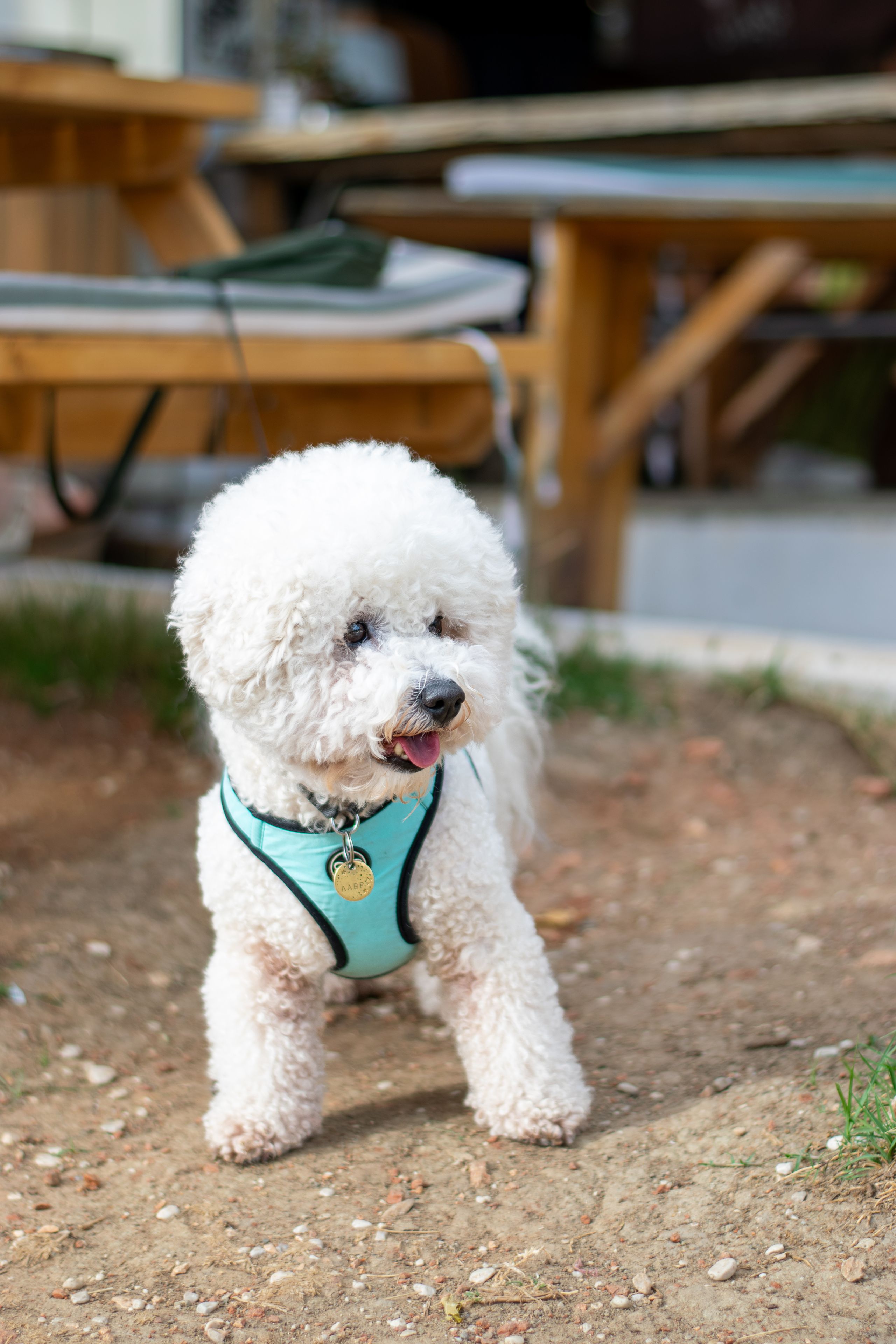
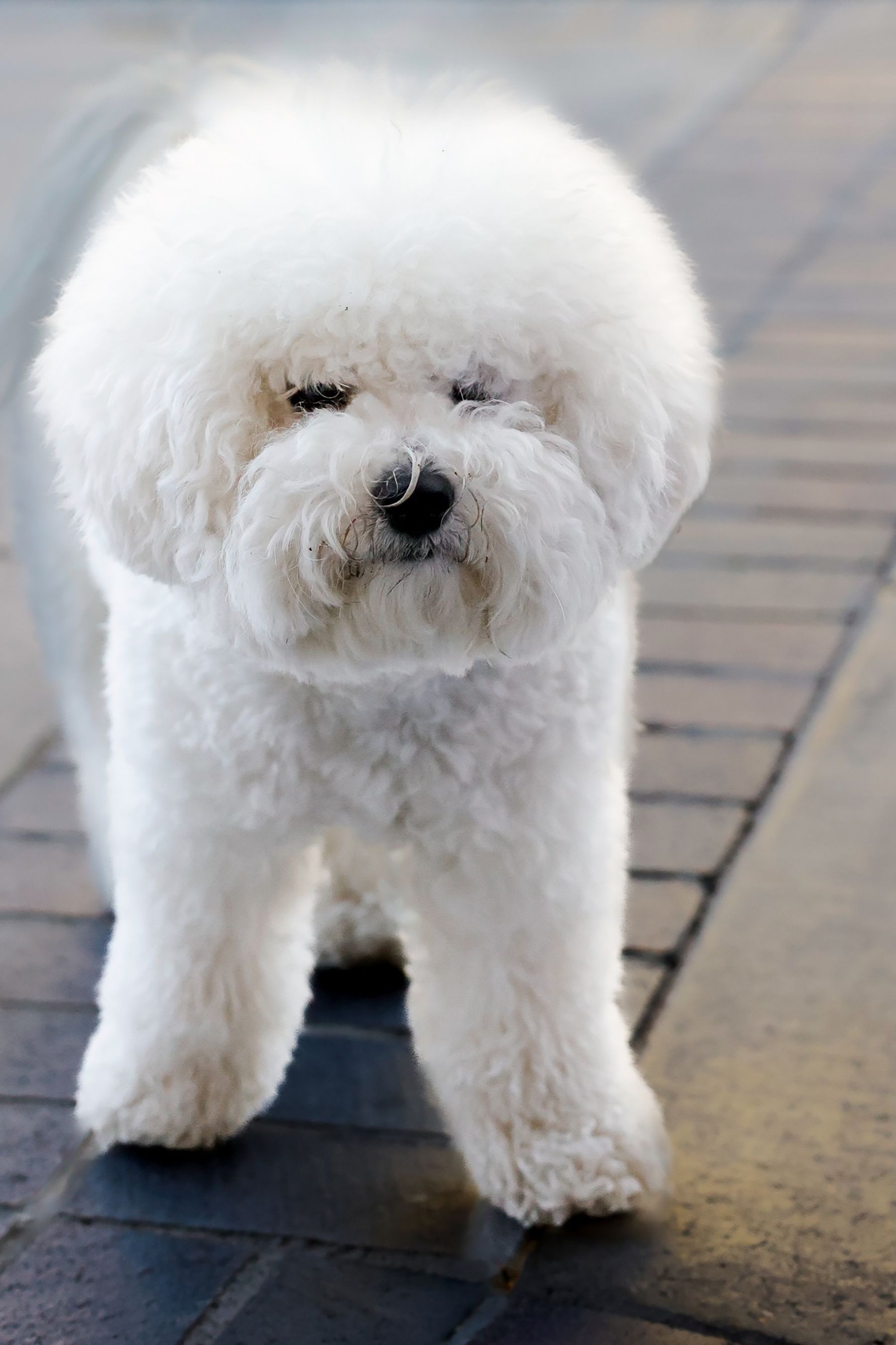
The profuse coat is made of spiral curls over a soft, dense undercoat, and the standard requires pure white, though dogs under 12 months may show slight beige tinting. The coat is curly and sheds little, but loose hair stays in it and mats unless it is brushed out. Brush several times a week, and expect a professional groom every four to six weeks. Keep the eyes and beard clean to reduce staining.
Feeding and weight
Measured meals and good dental care are the foundations. Small dogs are easy to overfeed, so weigh the food and count treats. Some Bichons have food-related skin allergies, so talk to your vet about persistent itching, redness or ear problems rather than guessing. Fresh water matters because of the risk of bladder stones, and dental chews or brushing help keep teeth healthy.
Work out a starting calorie figure and food weight with the calorie calculator. Not sure this is the right breed? Take the quiz.
Health
Every breed carries predispositions. These are the conditions most often discussed for the Bichon Frisé, not a prediction for any individual dog.
- Skin allergies
- Bladder stones
- Patellar luxation (slipping kneecaps)
- Dental disease
- Cataracts
What to ask the breeder. Ask for patella checks and an eye examination for the parents, and about skin problems and bladder stones in the lines.
Choosing a puppy
Ask for patella and eye checks for the parents, and meet the mother. Choose a breeder who raises puppies in the home with daily handling, because a Bichon raised in a kennel can be nervous. Plan for house training from day one and short, gentle introductions to alone time. Begin brushing and handling immediately, so the coat and the grooming routine become normal early.
In Luxembourg the national kennel club is the Fédération Cynologique Luxembourgeoise (FCL), a member of the FCI. Many owners also buy from breeders in Germany, France or Belgium; a puppy coming from another EU country must be microchipped and vaccinated against rabies, which in practice means it cannot travel before about fifteen weeks of age. Where to get a dog in Luxembourg.
The older Bichon Frisé
Cataracts, dental disease and bladder stones can appear with age, so keep up with regular vet checks and offer fresh water. Look out for cloudy eyes, increased thirst, straining to urinate, bad breath and stiffness in the back legs. Older Bichons remain playful, and shorter, gentler outings with plenty of company suit them well.
A realistic day
A realistic weekday for a working household in Luxembourg City, with a midday visit. Adjust it to your dog, not the other way round.
Morning walk around the block and a toilet break.
Breakfast and a brush.
Midday visit from a walker: toilet break, play and fresh water.
Evening walk in a nearby park, with a short play session.
Final toilet walk and a settle in the bed.
A Bichon Frisé in Luxembourg
An easy city dog, happy in a flat, comfortable in a lift and sociable in cafés and on public transport. Buses and trams are free nationwide, and a small, adaptable Bichon is easy to take along on weekend outings. Neighbours rarely mind, as the standard describes a dog that barks little and gets on with people and dogs alike.
The grooming bill is the main cost to plan for, alongside the usual obligations: microchip, declaration to the commune, third-party liability insurance and the annual dog tax. Parks such as the Pétrusse valley, Parc Merl and the Municipal Park offer plenty of room for daily walks. Summers can reach the 30s, and a white curly coat is no great protection, so walk early and late and keep water to hand. In wet November weather, expect to dry the dog and its feet.
Every dog in Luxembourg must be identified, declared to the commune and covered by liability insurance. How registration works.
When you travel
They cope well with a sitter at home and enjoy company. Plan your trips around the grooming calendar: a Bichon whose appointment falls in the middle of your holiday will come back matted. Leave notes on meals, brushing and toilet routine, and make sure the sitter does not leave the dog alone for long hours. A friendly Bichon will welcome any kind person, but a familiar face helps.
PAWLY's holiday and overnight care takes place in your home, so your dog keeps its own bed and routine.
Myths and facts
MythBichons do not shed, so they need no grooming.
FactThey shed little into the house because loose hair stays in the coat, which is exactly why they need regular brushing and grooming.
MythBichons are only lap dogs.
FactThey are lively and athletic, and many enjoy agility, tricks and long walks, as well as a lap.
MythA Bichon is a hypoallergenic dog.
FactNo dog is guaranteed allergy-free. Some allergic people tolerate low-shedding breeds better, but spend time with the dog first.
Is it the right dog for you?
Suits
- Apartment dwellers
- Families and first-time owners
- People who want a friendly, low-shedding dog
- Owners who enjoy grooming routines
Think twice if
- You are out all day
- You dislike grooming costs
- You live a very muddy outdoor lifestyle
- You want a guard dog
Questions owners ask
Is a Bichon good for people with allergies?
Some allergic people tolerate low-shedding breeds better, but no dog is guaranteed allergy-free. Spend time with the breed first, and ask your doctor if allergies are significant.
Bichon or Maltese?
Both are bichon-type companions of similar size and temperament. The Bichon has a curly coat and is often more outgoing, while the Maltese has a long, straight, silky coat that needs different care.
How often does a Bichon need grooming?
Brush several times a week and book a professional groom every four to six weeks. Without regular brushing, the curly coat mats against the skin, which is uncomfortable and may need clipping short.
Can a Bichon be left alone during the working day?
Not for very long. Bichons dislike being alone, and long days can lead to barking and accidents. A midday visit from a walker, plus gradual training in alone time, makes a big difference.
Sources
Photo: Pexels (Pexels License) · Photo: Pexels (Pexels License) · Photo: Pexels (Pexels License)
General information for dog owners in Luxembourg, not veterinary or legal advice. Official facts (origin, size, group, history and temperament as described by the breed standard) follow the FCI standard; health and care sections reflect breed-club and veterinary guidance and are typical ranges rather than rules. For your own dog, ask your vet, the breed club or your commune. How this guide is written and checked. Last reviewed 8 October 2026.
Need someone for your Bichon Frisé?
PAWLY offers an individual 45-minute walk or a home visit at your dog's pace, the same walker every time, and a written report with photos after every visit, across Luxembourg City.
Read next: the journal, for the Bichon Frisé
All articles
Teeth: the problem owners find least interesting and vets see most
Teeth are a known weak point in the Bichon Frisé; this is the routine that helps.

Grooming and coat care through the Luxembourg year
The Bichon Frisé has a coat that needs a routine that holds through the Luxembourg seasons.

Separation anxiety: the signs owners miss and what actually helps
The Bichon Frisé bonds closely with its people; this covers the signs owners miss.
Similar breeds
All 198 breeds
Maltese
One of the oldest companion breeds in Europe, gentle and devoted, with a white coat that shows everything.
EnergyGroomingFlat life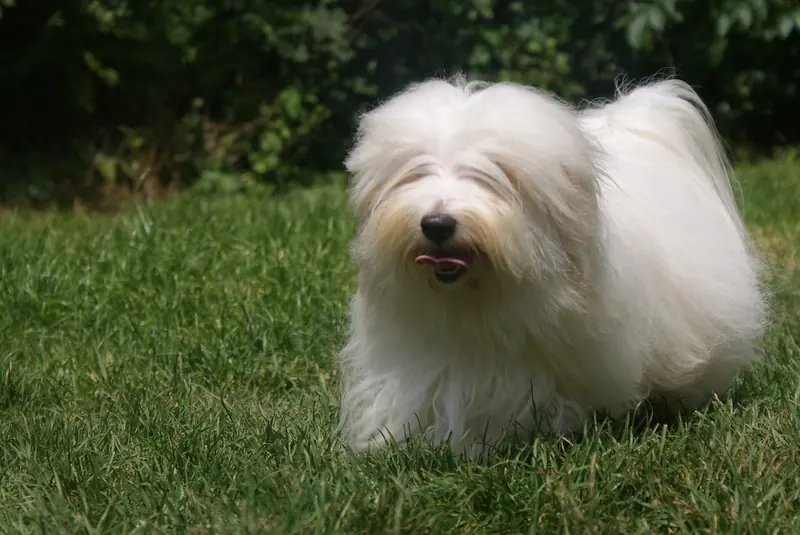
Coton de Tulear
A small white companion from Madagascar with a coat like cotton wool, a cheerful head and a talent for fitting into almost any household.
EnergyGroomingFlat life
Poodle
Far from a fashion accessory: one of the most intelligent and athletic breeds, in four sizes.
EnergyGroomingFlat life

