


History
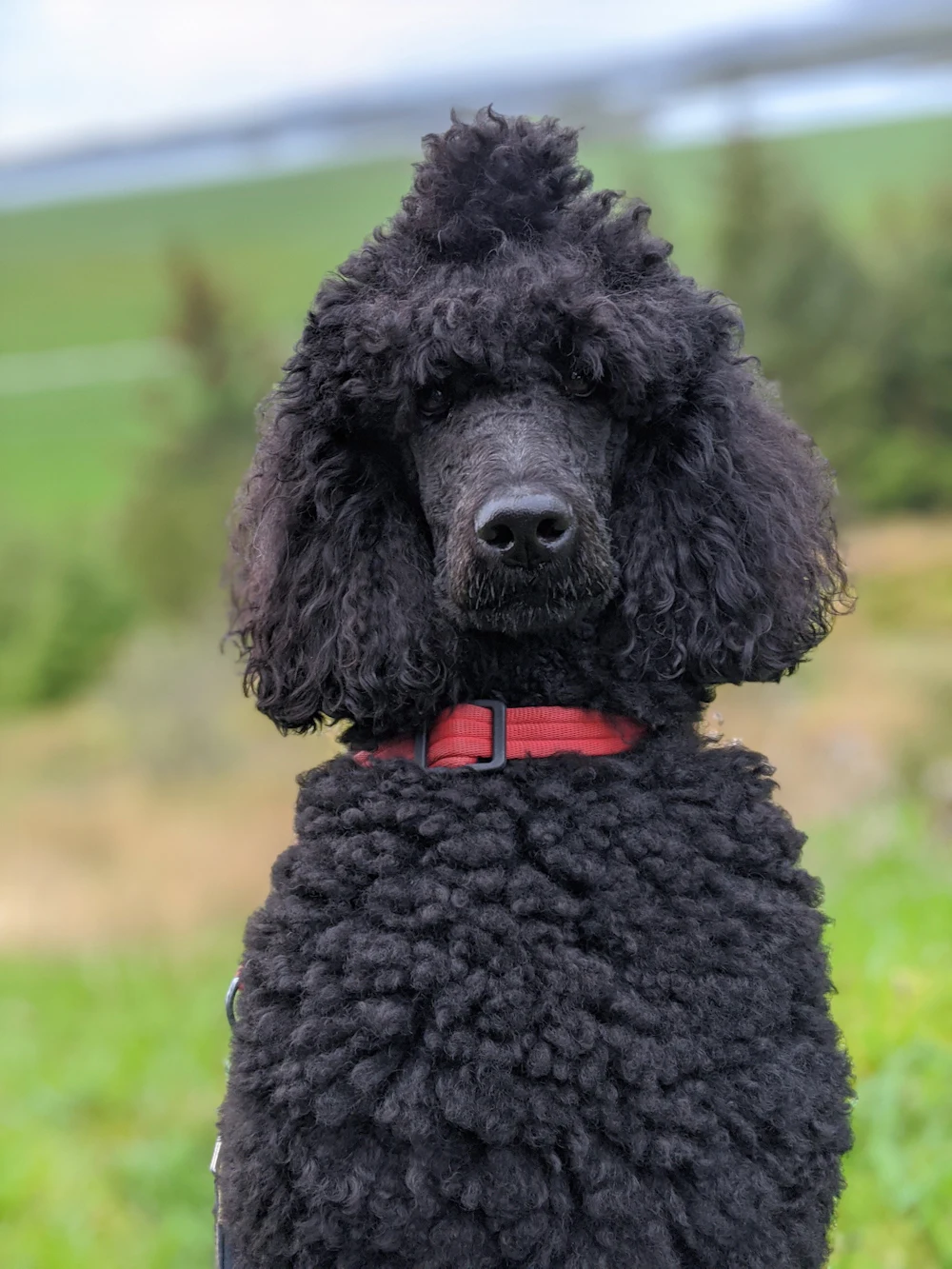
The Poodle descends from the Barbet, a water dog used in France for wildfowling, and the FCI credits France as its country of origin. The French name caniche comes from cane, the word for a female duck, which tells you what the dog was once asked to fetch. The German name Pudel is usually linked to splashing in water, a hint of the breed's long association with German-speaking countries too. The famous clip began as working dress: hair shaved where it would drag in the water, and left over the joints and chest for warmth.
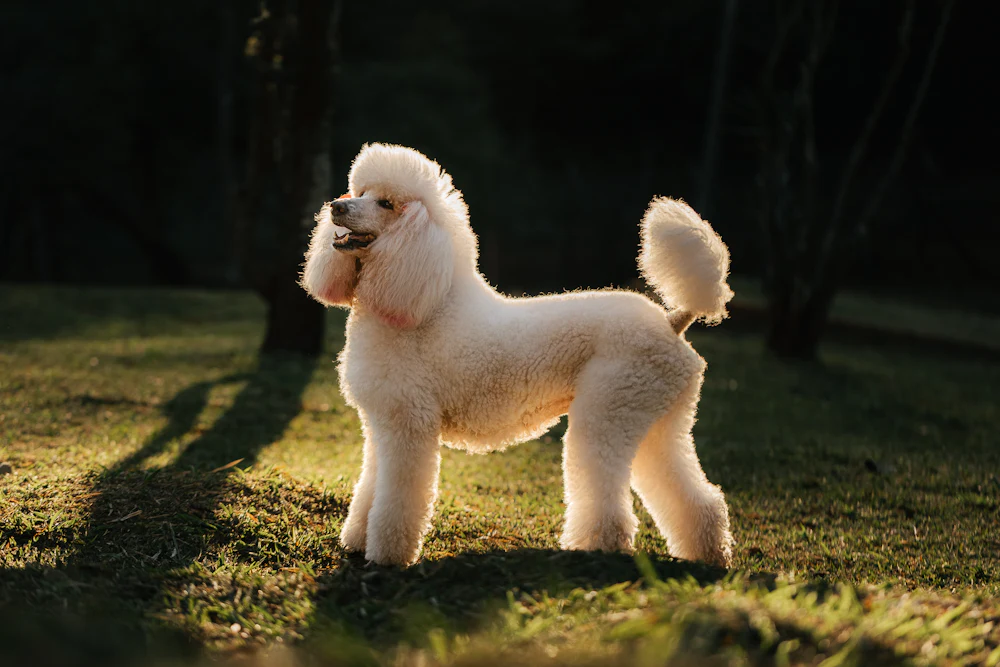
The breed was formally recognised as the caniche in 1743, and over the following generations breeders gradually separated it from the Barbet and refined its look. Its friendly, joyful and loyal character made it a favourite companion, and it came to be bred in four sizes and many colours. The FCI standard today describes toy, miniature, medium and standard varieties, all with the same characteristic frizzy coat, either curly or corded, and the same impression of elegance and pride.
Temperament
The FCI standard calls the Poodle a dog renowned for its loyalty, capable of learning and of being trained, which makes it a particularly pleasant companion. It describes a dog that looks intelligent and is constantly alert and active. In daily life that translates into a dog that watches your face, notices a change of routine within a day, and is rarely content to be left out of whatever the household is doing.
Size changes the style more than the substance. Standards tend to be athletic, playful and a little goofy well into middle age. Miniatures and toys are quicker, more alert, and more likely to announce visitors. The standard lists aggression and excessive shyness as disqualifying, so a well-bred Poodle of any size should be confident rather than brittle. Sensitivity is part of the package: raised voices and chaotic homes can unsettle them, and a bored Poodle will invent its own entertainment.
Children and other pets
Standard and miniature Poodles are usually good with children and enjoy a game of fetch or hide and seek. Toy Poodles are small and easily hurt, so they suit older, gentle children who have been taught how to pick up and handle a dog. Most Poodles live comfortably with other dogs and with cats, especially when raised with them. Their sensitivity means they dislike a noisy, unpredictable household, so teach young children to be calm around them. Whatever the size, supervise early meetings and give the dog somewhere quiet to retreat.
Exercise and the daily walk
A Standard Poodle is a genuine sporting dog and needs around two hours of varied activity a day: a brisk walk, off lead running in a safe space, and something that uses its mind. Many love water, which is no surprise given the breed's origins, and a summer swim is one of the best ways to tire one out. A tired Standard is a calm, elegant housemate; an under-exercised one can become restless and noisy.
Miniatures and toys need less distance, perhaps 45 minutes to an hour split across the day, but they gain just as much from mental work. Short training sessions, scent games, puzzle feeders and simple tricks suit them well. Do not mistake a small body for a small appetite for activity: a toy Poodle that never leaves the flat can become anxious and barky.
Training
Poodles rank among the most trainable of all breeds, and that cuts both ways. They learn a new cue in a handful of repetitions, but they also get bored when asked to repeat it endlessly. Keep sessions short, vary the exercises, and reward generously with food or play. A dog this quick will happily train you into a routine you did not intend, so be consistent about the rules you want.
Standards make excellent sport and activity dogs, and miniatures and toys excel at tricks, rally and agility. Early socialisation matters for every size, so that the natural sensitivity does not harden into wariness of strangers, traffic or noise. Practise being left alone from the first weeks, because a Poodle devoted to its people can find separation harder than expected. Grooming should be part of training too: handle paws, ears and face from puppyhood.
Coat and grooming
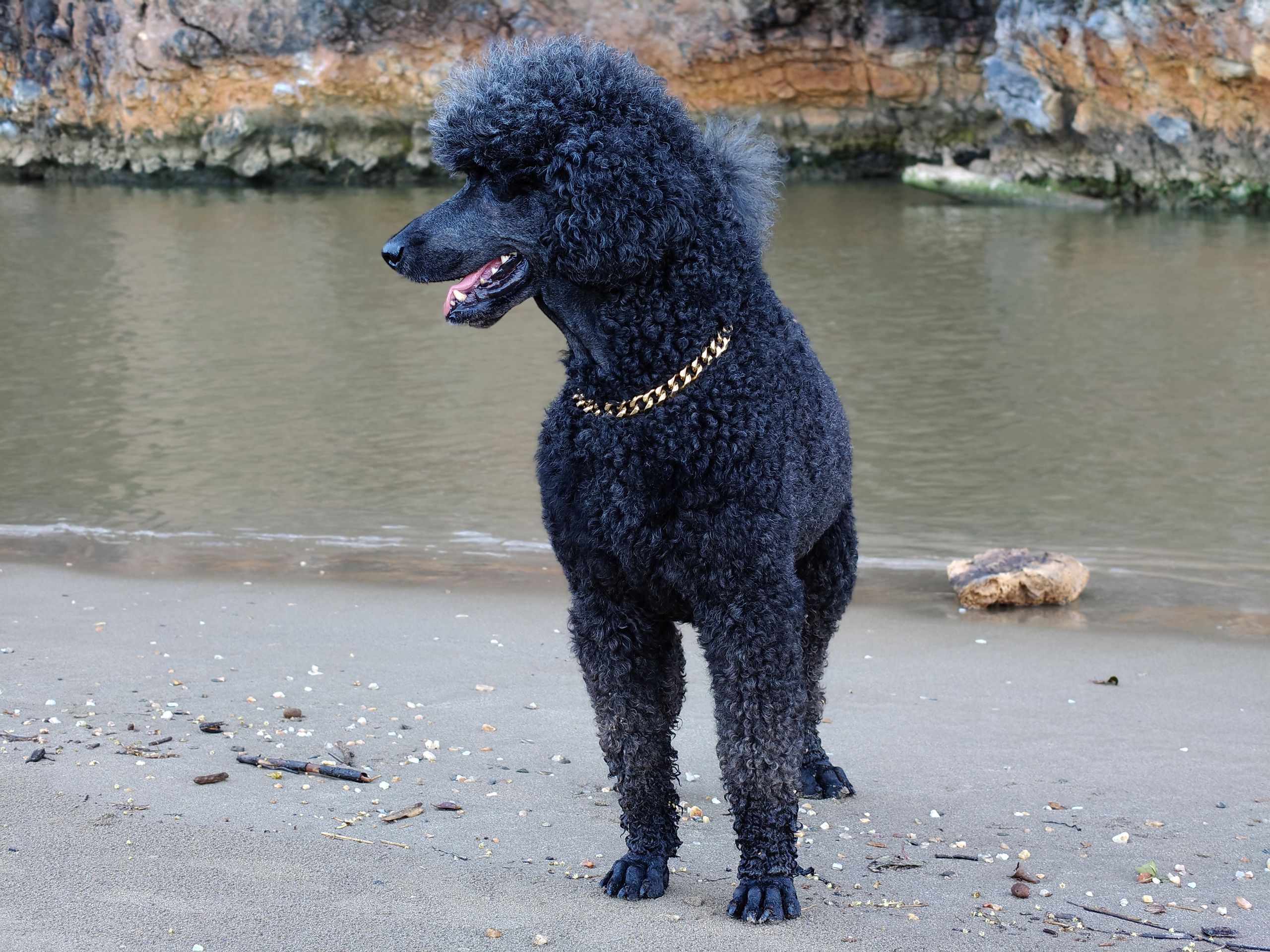
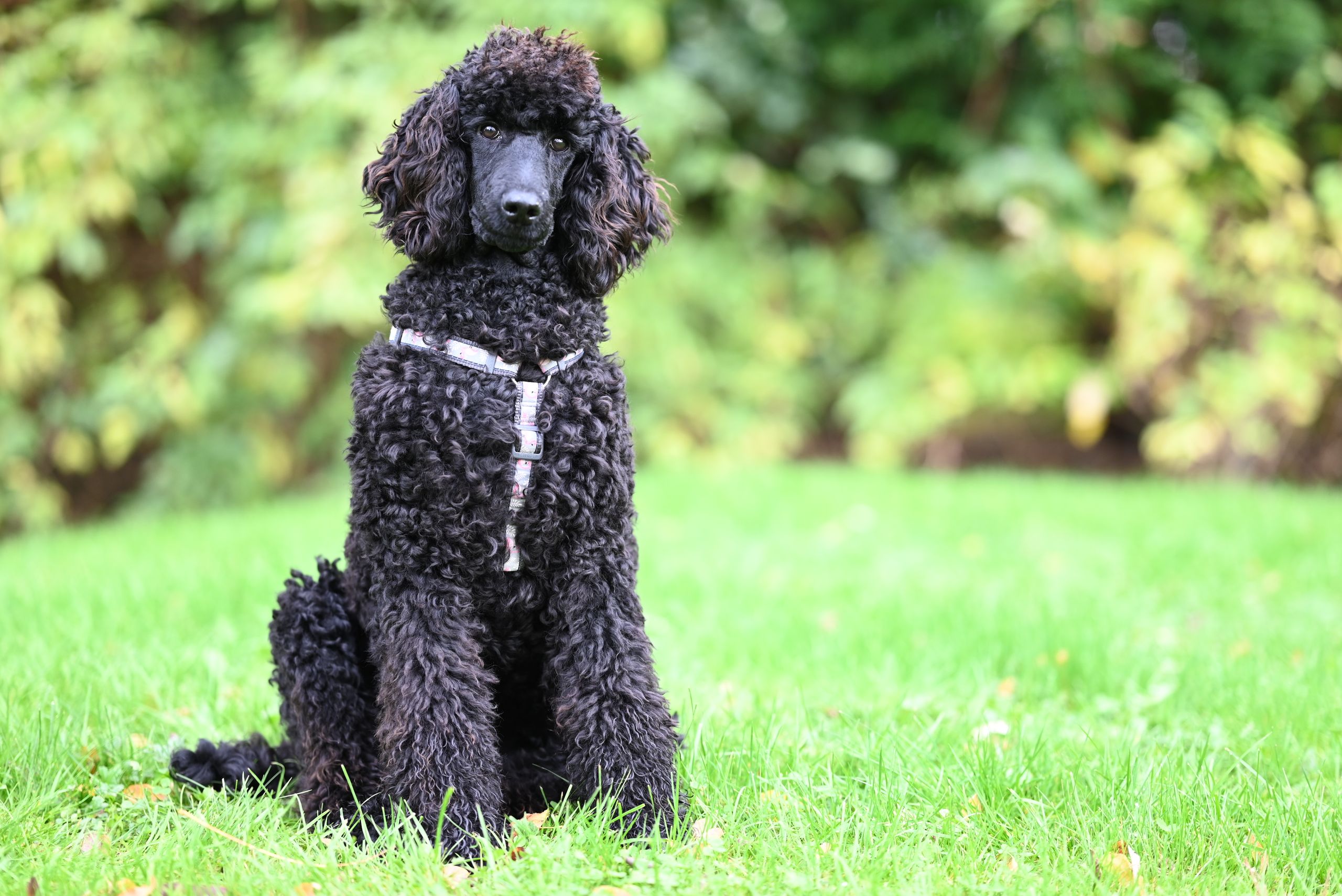
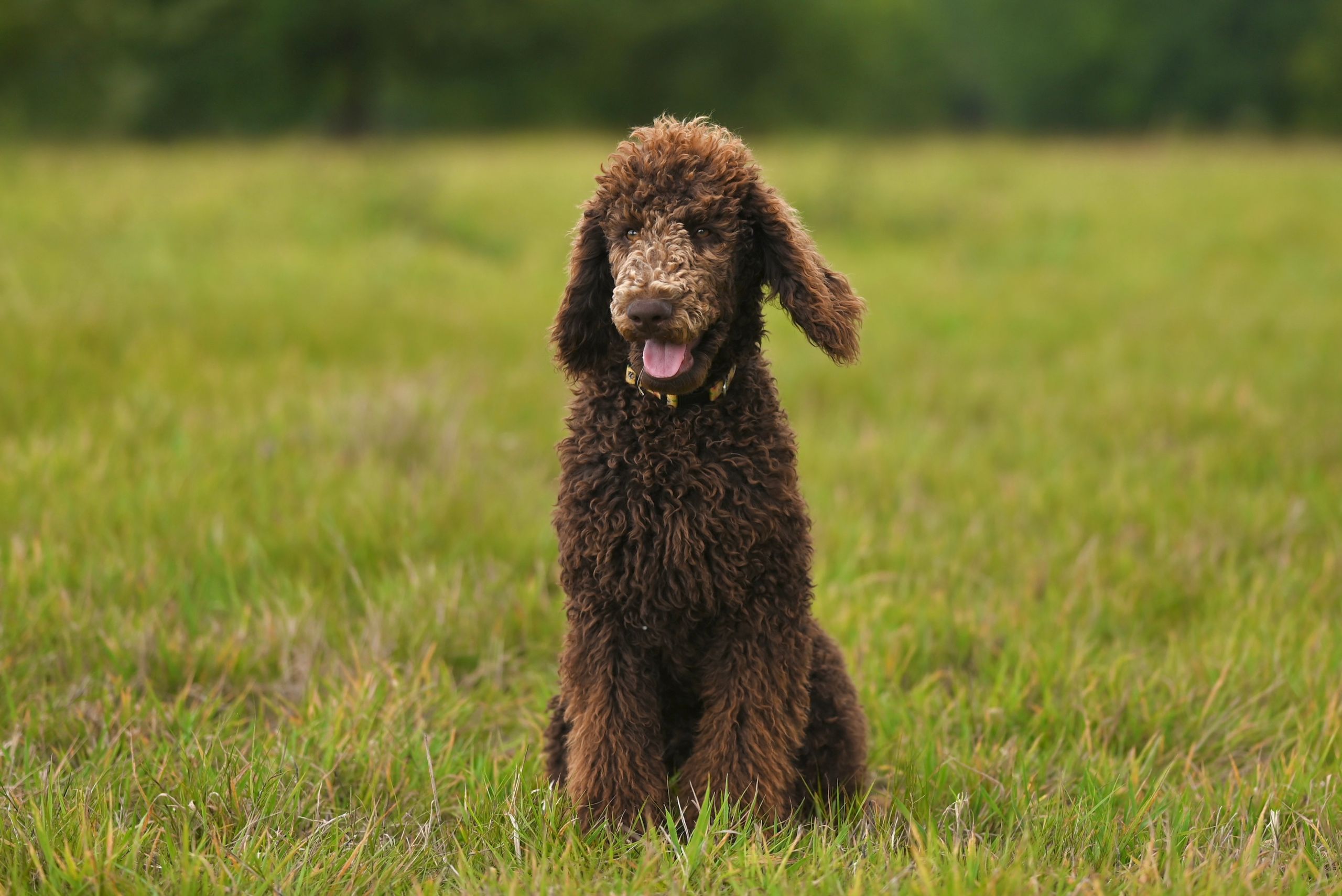
The coat is dense and frizzy, either curly or corded, and sheds very little, which is why the Poodle is so often crossed with other breeds. The price is upkeep: brush down to the skin several times a week to stop mats forming, and book a professional clip every four to eight weeks for life. The FCI permits solid colours including black, white, brown, grey and fawn, plus parti-coloured and tricoloured varieties in some combinations. Even a short pet clip needs regular bathing and attention to the ears.
Feeding and weight
Feed a good complete diet matched to size and activity, and adjust portions by body condition rather than the packet. Standards have a deep chest and are at risk of bloat, so split the daily ration into two meals, avoid vigorous exercise around mealtimes and discourage gulping. Toy and miniature Poodles can be fussy and prone to dental tartar, so use hard food or dental chews and clean teeth regularly. Treats used in training should come out of the daily allowance.
Work out a starting calorie figure and food weight with the calorie calculator. Not sure this is the right breed? Take the quiz.
Health
Every breed carries predispositions. These are the conditions most often discussed for the Poodle, not a prediction for any individual dog.
- Addison's disease
- Sebaceous adenitis (standards)
- Gastric dilatation-volvulus (standards)
- Progressive retinal atrophy (miniatures and toys; DNA test available)
- Patellar luxation (small sizes)
- Epilepsy
What to ask the breeder. Depends on size: hip scores for standards, eye examinations and PRA DNA tests for smaller sizes, patella checks for toys and miniatures.
Choosing a puppy
Choose a breeder who health tests appropriately for the size: hip scores for standards, PRA DNA tests and patella checks for smaller sizes. Ask to meet the mother and judge her temperament, because well-bred Poodles are confident rather than nervous. Expect a clever, bouncy puppy who needs early grooming practice, gentle socialisation and short, frequent training. Buy the right size for your home and life; the varieties differ greatly in exercise needs, strength and cost of keeping.
In Luxembourg the national kennel club is the Fédération Cynologique Luxembourgeoise (FCL), a member of the FCI. Many owners also buy from breeders in Germany, France or Belgium; a puppy coming from another EU country must be microchipped and vaccinated against rabies, which in practice means it cannot travel before about fifteen weeks of age. Where to get a dog in Luxembourg.
The older Poodle
Poodles often live long and stay youthful, so many owners are surprised when the first signs of age arrive. Keep up grooming, since a stiff older dog may find clipping tiring, and pay close attention to dental care, which matters most in the smaller sizes. Watch for eye changes in toys and miniatures, and for increased thirst, weight loss or lethargy, which should be checked by a vet. Gentle exercise and mental games keep an older Poodle bright.
A realistic day
A realistic weekday for a working household in Luxembourg City, with a midday visit. Adjust it to your dog, not the other way round.
Short walk with a training game, then a drink.
Breakfast and a quick brush of the face and feet.
Midday visit from a walker: toilet break, a game and a walk around the block.
Longer walk in the park, or a swim in summer, with off lead time where it is safe.
Brush through the coat, one last toilet trip and bed.
A Poodle in Luxembourg
Poodles of every size fit Luxembourg City well. A toy or miniature is easy in a flat with a lift, and a Standard is often calm indoors once exercised. Parks such as the Pétrusse valley, Parc Merl and Kinnekswiss give daily variety, and the Bambësch and Grünewald forests offer a proper outing at weekends. Buses and trams are free nationwide, so small Poodles can travel with you easily. In summer, the clip helps, but walk early or late when temperatures reach the 30s.
Remember the formalities that apply to every dog in Luxembourg: microchip identification, declaration to the commune, third-party liability insurance and the annual dog tax. The many poodle crosses in the city share the grooming bill without always sharing the Poodle's coat or temperament. If you want a low-shedding coat and a trainable mind, a well-bred Poodle is often the more predictable choice.
Every dog in Luxembourg must be identified, declared to the commune and covered by liability insurance. How registration works.
When you travel
Poodles adapt easily to sitters and travel well by car, but they do not like being ignored. A sitter should keep to the usual walking and feeding times, include some training or games each day, and brush the coat every day or two. Book a clip just before you leave, so the coat stays manageable while you are away. Leave the vet details, the groomer's name and a note on any sensitivities, such as noise.
PAWLY's holiday and overnight care takes place in your home, so your dog keeps its own bed and routine.
Myths and facts
MythPoodles are pampered show dogs.
FactThe breed began as a working water retriever, and the standard describes an alert, active, intelligent dog. Standards in particular are athletic.
MythA poodle cross always has a poodle coat.
FactCrosses can inherit any combination of coats and temperaments. Some shed heavily and some mat badly, and the grooming bill still arrives.
MythThe fancy clip is purely decoration.
FactIt began as a practical clip: hair removed to ease swimming, and kept over the joints and chest for warmth.
Is it the right dog for you?
Suits
- Owners wanting a clever, trainable dog
- People sensitive to shedding
- Active families (standard and miniature)
Think twice if
- You are unwilling to pay for regular grooming
- Days will pass without stimulation
- Play with toy sizes may be rough
Questions owners ask
Which Poodle size is best for a flat?
All can work. Miniatures and mediums are a good compromise, and toys are easiest of all. A Standard needs more exercise and space for its length, but it is often calm indoors once it has had its daily outing.
Are Poodles hypoallergenic?
No dog is truly hypoallergenic, but Poodles shed very little and many allergic people cope well with them. Spend time with the actual dog before buying, because individual reactions vary and dander is still produced.
How often does a Poodle need grooming?
Brush several times a week, and book a professional clip every four to eight weeks. Leave it longer and the dense curls mat, which is uncomfortable and may mean a close shave.
Do Poodles get separation anxiety?
They can. A Poodle bonds closely and thrives on company and activity, so long empty days are hard. Teach alone time gradually from puppyhood, give a midday visit or walk, and provide chews and puzzle toys for quiet periods.
Sources
Photo: Unsplash (Unsplash License) · Photo: Pexels (Pexels License) · Photo: Pexels (Pexels License) · Photo: Pexels (Pexels License) · Photo: Unsplash (Unsplash License)
General information for dog owners in Luxembourg, not veterinary or legal advice. Official facts (origin, size, group, history and temperament as described by the breed standard) follow the FCI standard; health and care sections reflect breed-club and veterinary guidance and are typical ranges rather than rules. For your own dog, ask your vet, the breed club or your commune. How this guide is written and checked. Last reviewed 8 October 2026.
Need someone for your Poodle?
PAWLY offers an individual 45-minute walk or a home visit at your dog's pace, the same walker every time, and a written report with photos after every visit, across Luxembourg City.
Read next: the journal, for the Poodle
All articles
Grooming and coat care through the Luxembourg year
The Poodle has a coat that needs a routine that holds through the Luxembourg seasons.

Dog first aid: the six emergencies and what to do first
Bloat is an emergency in deep-chested breeds like the Poodle; this covers what cannot wait.

Water, rivers and the algae that kills dogs every summer
Dogs that love water need to know which water is safe, including the summer algae that kills dogs.
Similar breeds
All 198 breeds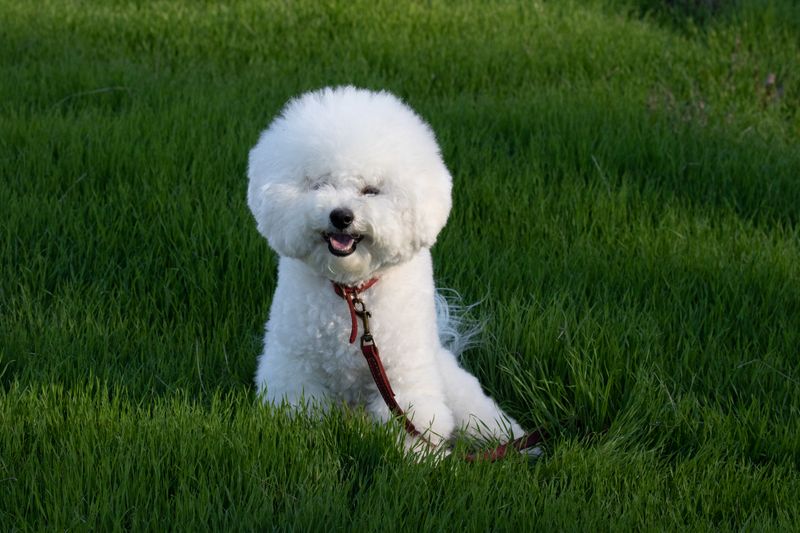
Bichon Frisé
A cheerful white powder puff with a sense of humour and a serious grooming requirement.
EnergyGroomingFlat life
Lagotto Romagnolo
A curly-coated Italian truffle hunter with a nose that never switches off, happiest when every walk becomes a search.
EnergyGroomingFlat life
Portuguese Water Dog
A fisherman's dog from the Algarve, strong, clever and water mad, with a coat that needs a professional and a mind that needs a job.
EnergyGroomingFlat life

