


History
The FCI standard describes the Lagotto Romagnolo as an ancient breed of water retrieving dog from the lowlands of Comacchio and the marshlands of Ravenna, in north-eastern Italy. For centuries these dogs worked in wetlands, retrieving waterfowl for hunters. As the great marshes were drained and turned into farmland, the breed's role changed. It moved into the flat open country and the hills of Romagna, where it became an excellent dog for searching truffles.
That shift shaped the modern dog. The standard notes that the former hunting instinct has been modified by selection, so a working Lagotto is not distracted by the scent of game while searching for truffles. Italy is the country of origin. The FCI places the breed in Group 8, Section 3, Water dogs, and gives its utilisation simply as truffle dog. The current standard was published on 30 September 2019, and it describes a small to medium, powerfully built dog of rustic appearance.
Temperament
According to the standard, the Lagotto is tractable, undemanding, keen, affectionate, very attached to its owner and easy to train, as well as a very good companion and an excellent watchdog. That matches the dogs walkers meet: cheerful, people-oriented and busy, with a constant interest in what lies under the leaves. Most are friendly with strangers once introduced, and they will bark to announce arrivals.
The nose defines the breed. A Lagotto on a walk is working, investigating every hedge and digging if allowed. That makes it a wonderful partner for scent games and a frustrating one for owners who want a dog that simply trots at heel. Without enough mental work, young Lagotti invent their own projects, which can include excavating the garden or sofa cushions. Given a job and company, they are easy, affectionate housemates.
Children and other pets
Lagotti usually make good family dogs: sturdy enough for play, affectionate and keen to join in. They suit children who enjoy games of find-it and fetch. As with any lively dog, supervise with toddlers, since an excited young Lagotto can jump. Most live well with other dogs and, when raised with them, with cats. Selection has reduced the hunting instinct, but individuals still vary, so small pets should be introduced carefully.
Exercise and the daily walk
This is an energetic working dog that needs around an hour and a half of activity a day, ideally with plenty of off-road time where it can use its nose. Two good walks plus a short midday outing suit most adults. Varied routes through woods and fields give far more satisfaction than repeated laps of the same pavement.
Nose work is the breed's natural outlet. Scent trails, hidden treats, organised scent-detection classes and even truffle-search training all tire a Lagotto more effectively than distance alone. Many love water, true to their origins, so a safe swim in summer is a welcome treat. Recall is usually trainable, but the urge to follow a fascinating smell can be strong, so practise in enclosed spaces first.
Training
The standard calls the breed easy to train, and Lagotti do learn quickly with food rewards and play. They are sensitive to tone, so keep training positive and patient. Short daily sessions work better than long ones. Teaching a reliable recall and a cue to leave things alone is essential for a dog that investigates everything at ground level.
Digging is natural and hard to extinguish, so give it a legitimate outlet, such as a sandpit in the garden or digging games in the forest, rather than trying to stop it entirely. Socialise widely so the breed's watchdog streak stays sensible. Many Lagotti thrive in structured activities such as scent work, obedience or agility, which also deepen the bond with their owners.
Coat and grooming
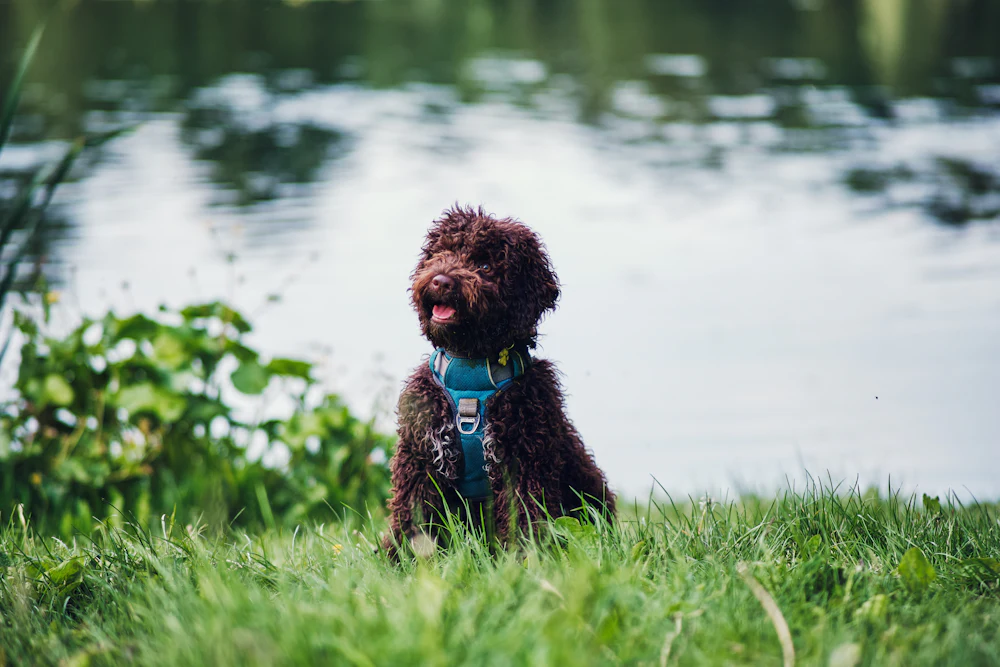
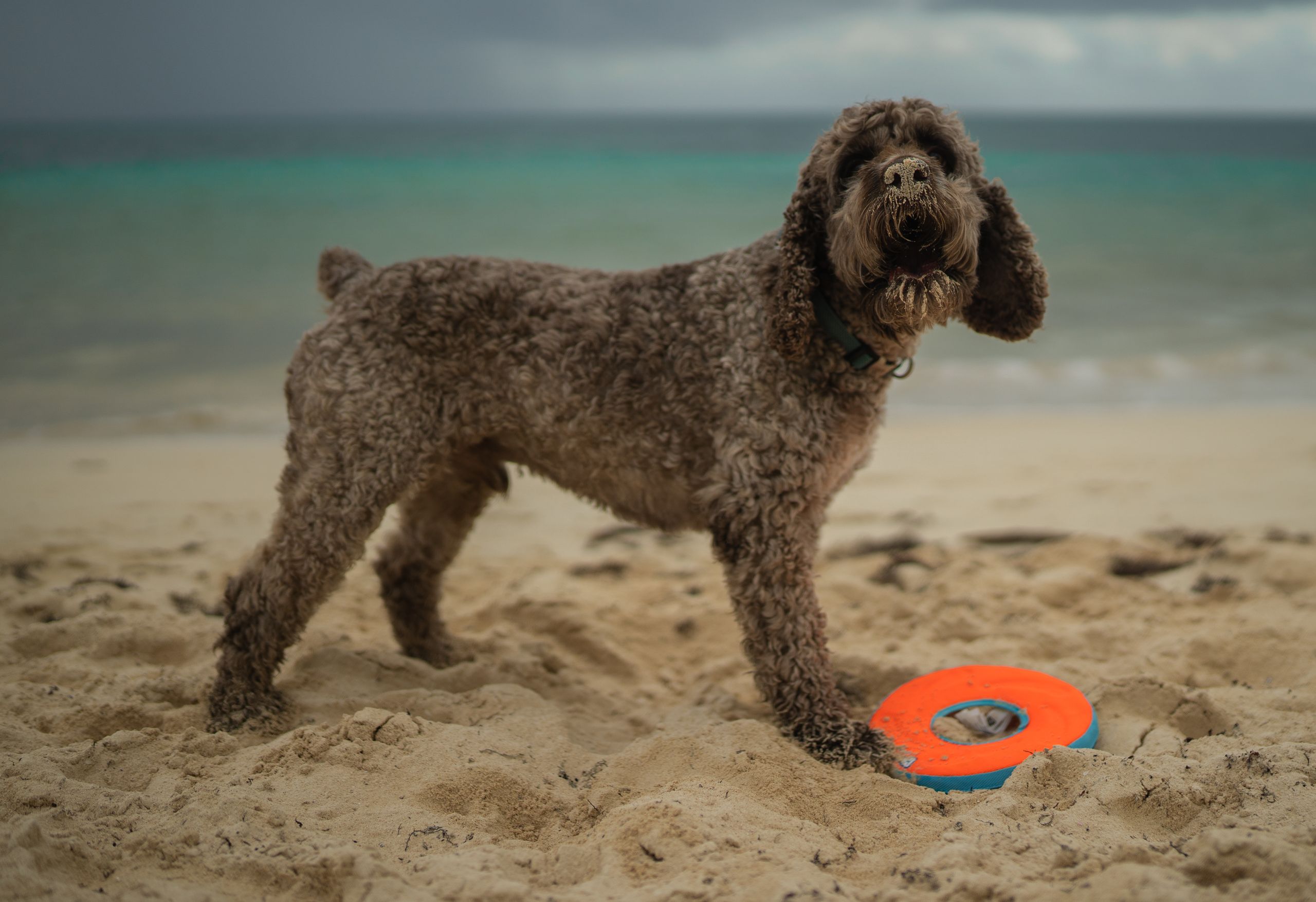
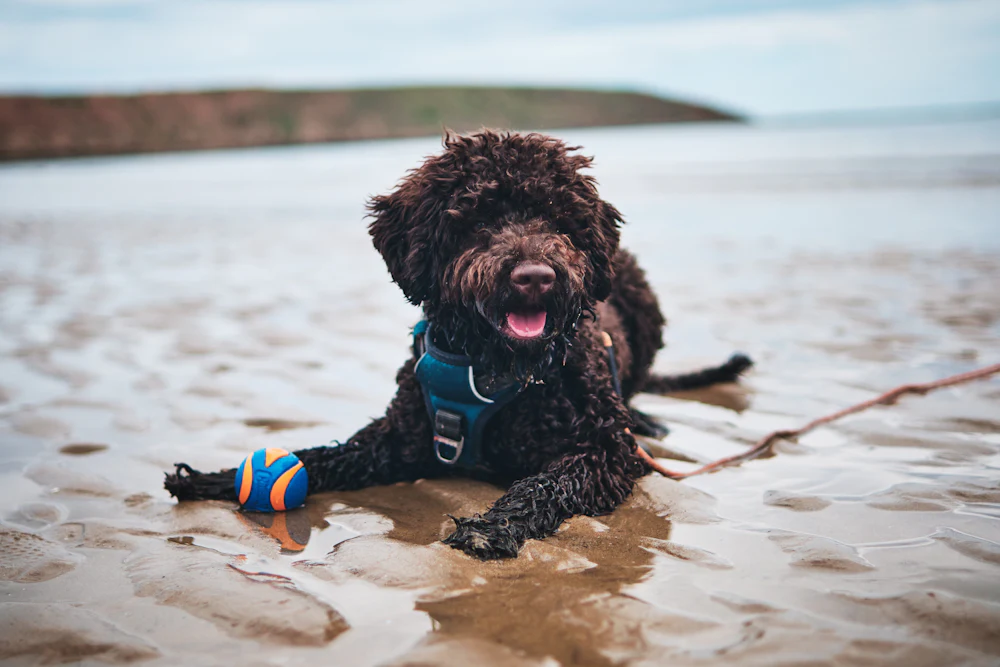
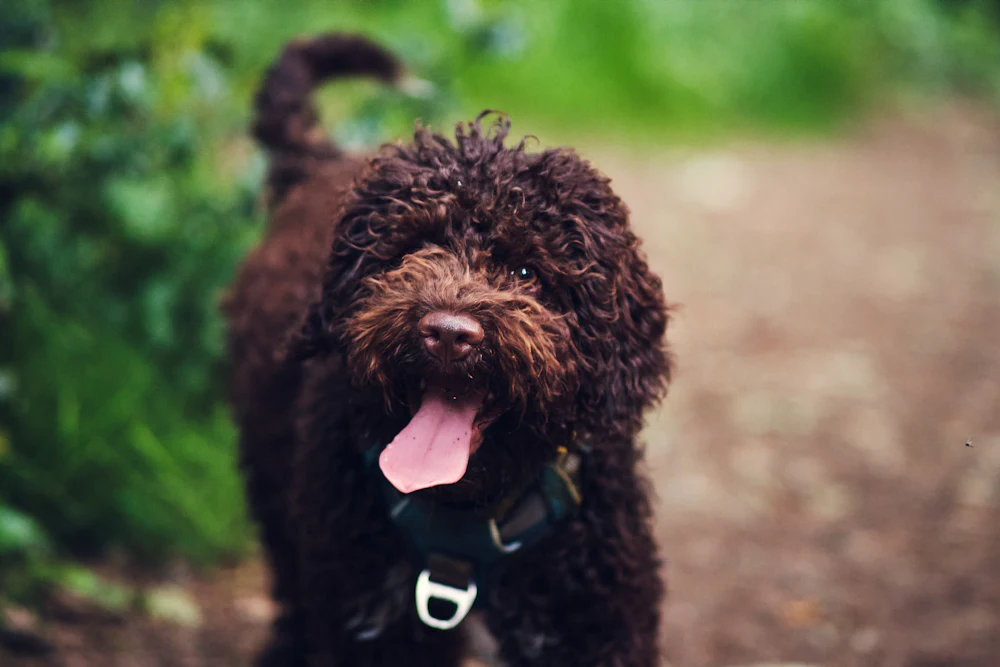
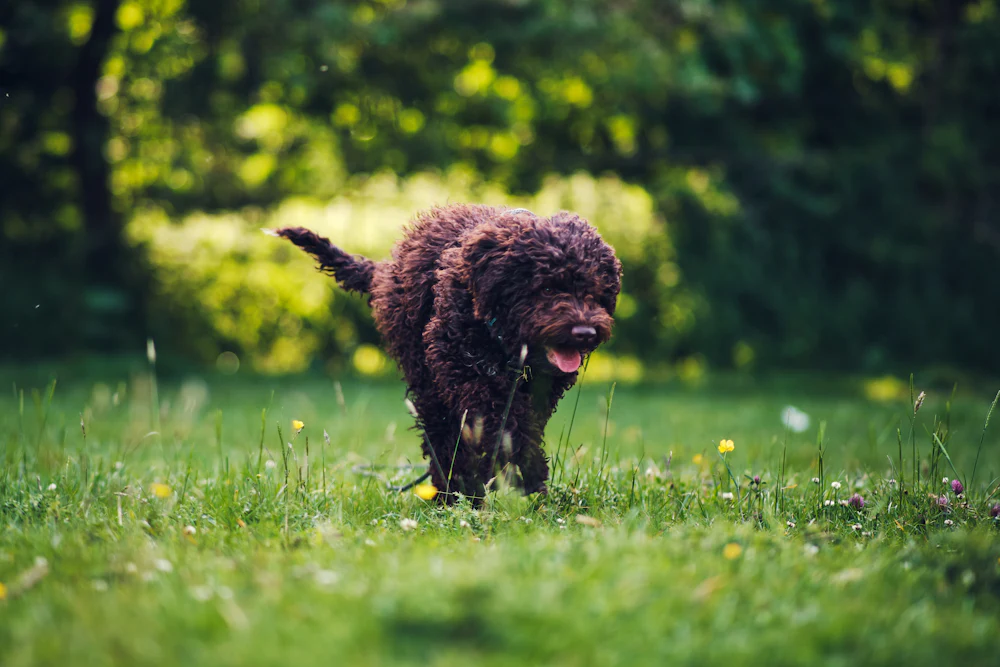
The coat is woolly, never forming thin cords, semi-rough on the surface, with tight ring-shaped curls and a visible undercoat. The FCI standard asks for a complete clip at least once a year, with the coat no longer than 4 cm and the head hair never covering the eyes. Permitted colours are off-white, white with brown or orange patches, orange roan, brown roan, brown in different shades with or without white, and orange with or without white; a brown mask and tan markings are allowed. The coat sheds very little but mats if neglected, so comb to the skin weekly, trim every few months and check ears for trapped hair and grass seeds.
Feeding and weight
A Lagotto does well on a good-quality complete diet in two meals, adjusted to its activity level. Because the curls disguise the outline, feel for ribs regularly. Truffle-searching dogs are trained with food rewards, so a portion of the daily ration can be used for scent games and training. Keep chews and treats moderate, store bins securely, as this nose finds everything, and always provide fresh water, particularly after swimming or long walks.
Work out a starting calorie figure and food weight with the calorie calculator. Not sure this is the right breed? Take the quiz.
Health
Every breed carries predispositions. These are the conditions most often discussed for the Lagotto Romagnolo, not a prediction for any individual dog.
- Hip dysplasia
- Elbow dysplasia
- Benign familial juvenile epilepsy (a DNA test is available)
- Lagotto storage disease (a DNA test is available)
- Cerebellar abiotrophy (a DNA test is available)
- Ear infections (otitis externa)
What to ask the breeder. Ask for hip and elbow scores for both parents and the DNA results for juvenile epilepsy, Lagotto storage disease and cerebellar abiotrophy, and whether the parents have had an eye examination.
Choosing a puppy
Lagotto puppies are curious, bold and quick to learn. Start simple nose games in the first weeks, since this is the easiest way to tire a young dog without overworking growing joints. Introduce combing, ear checks and the sound of clippers early. Socialise widely, including lifts, buses and city streets. Set rules about digging and chewing from the start, and puppy-proof the flat, because a Lagotto investigates with its mouth and paws.
In Luxembourg the national kennel club is the Fédération Cynologique Luxembourgeoise (FCL), a member of the FCI. Many owners also buy from breeders in Germany, France or Belgium; a puppy coming from another EU country must be microchipped and vaccinated against rabies, which in practice means it cannot travel before about fifteen weeks of age. Where to get a dog in Luxembourg.
The older Lagotto Romagnolo
Many Lagotti stay keen and active into old age. Shorter, slower walks with more sniffing time keep an older dog content, and gentle scent games remain a pleasure long after running fades. Keep weight lean to support hips and elbows, and continue regular grooming, as older dogs may resent long sessions. Senior vet checks once or twice a year help catch joint and other age-related problems early.
A realistic day
A realistic weekday for a working household in Luxembourg City, with a midday visit. Adjust it to your dog, not the other way round.
Brisk 30-minute walk with a few hidden treats along the way to start the nose working.
Breakfast, partly fed from a snuffle mat, then a settle in the crate or bed.
PAWLY midday visit: 45 minutes of walking and a short scent game in the park.
Long evening walk in the Bambësch or Grünewald, off road and on a long line where needed.
Quick comb through the ears and legs to remove burrs, a last outing and bed.
A Lagotto Romagnolo in Luxembourg
A Lagotto adapts well to a Luxembourg City flat, provided it gets its daily exercise and scent work. Its medium size makes lifts, stairs and free buses and trams easy, and its low-shedding coat is welcome in rented homes. The Bambësch and the Grünewald offer ideal sniffing territory within easy reach, while Parc Merl and the Pétrusse valley work for shorter outings. Every dog must be microchipped, declared to the commune, insured and registered for the annual dog tax.
Forest walks come with burrs, grass seeds and mud caught in the curls, so a quick comb and ear check after each outing is part of life with the breed. In summer, when temperatures reach the 30s °C, walk early and late; a trimmed coat helps, but shade and water matter more. Neighbours tend to appreciate the breed's moderate voice once it has learned that not every lift door needs announcing.
Every dog in Luxembourg must be identified, declared to the commune and covered by liability insurance. How registration works.
When you travel
A sitter should know the dog's walking routes, the amount of daily exercise and any nose games it enjoys, since a bored Lagotto may dig or chew. Leave a comb and ask for a quick check of ears and paws after each walk. Note any tendency to scavenge, so bins and food are secured. Familiar routines and home-based care usually suit the breed best.
PAWLY's holiday and overnight care takes place in your home, so your dog keeps its own bed and routine.
Myths and facts
MythThe Lagotto is hypoallergenic.
FactIt sheds very little, which some people with allergies tolerate better, but no breed is guaranteed to be allergy-free.
MythA truffle dog is just a hunting dog.
FactThe FCI standard notes that the former hunting instinct has been modified by selection, so a working Lagotto searches for truffles without being distracted by game.
MythA curly coat looks after itself.
FactThe coat mats if not combed through and needs a full clip at least once a year, as the standard requires.
Is it the right dog for you?
Suits
- Active owners who enjoy forest walks and scent games
- Families wanting a sturdy, affectionate medium-sized dog
- Homes where low shedding is a priority
- People interested in nose work or truffle training
Think twice if
- Think twice if you want a dog that ignores smells and walks to heel
- Think twice if you cannot comb and trim the coat regularly
- Think twice if the dog would be alone for long hours
- Think twice if a dug-up garden would upset you
Questions owners ask
Does a Lagotto shed?
Very little. Loose hair tends to stay in the curls, which is why regular combing to the skin is essential to prevent mats. The FCI standard also asks for a complete clip at least once a year. The low shedding suits many households, though it is no guarantee for allergy sufferers.
Can a Lagotto find truffles in Luxembourg?
The breed's nose can be trained to find almost any scent, and truffle-search courses exist in several countries. Whether truffles grow on any particular piece of land is another matter. Many owners simply use the instinct for scent games and detection classes.
Is it a good family dog?
Usually yes. The standard describes it as affectionate, very attached to its owner and easy to train. It suits active families who will give it walks and mental work. Young dogs can be bouncy, so supervise with small children.
How do I stop my Lagotto digging?
Digging is part of the breed's search behaviour and rarely disappears completely. Give it an approved outlet, such as a sandpit or digging games on walks, provide enough exercise and nose work, and supervise in gardens with valuable plants.
Sources
Photo: Unsplash (Unsplash License) · Photo: Pexels (Pexels License) · Photo: Unsplash (Unsplash License) · Photo: Unsplash (Unsplash License) · Photo: Unsplash (Unsplash License)
General information for dog owners in Luxembourg, not veterinary or legal advice. Official facts (origin, size, group, history and temperament as described by the breed standard) follow the FCI standard; health and care sections reflect breed-club and veterinary guidance and are typical ranges rather than rules. For your own dog, ask your vet, the breed club or your commune. How this guide is written and checked. Last reviewed 8 October 2026.
Need someone for your Lagotto Romagnolo?
PAWLY offers an individual 45-minute walk or a home visit at your dog's pace, the same walker every time, and a written report with photos after every visit, across Luxembourg City.
Read next: the journal, for the Lagotto Romagnolo
All articles
Building a recall you can actually rely on
Scent and movement can cancel a recall; this is the method for the Lagotto Romagnolo.

What to do during a seizure
Seizures are discussed in the Lagotto Romagnolo; knowing what to do in the first minutes matters.

Grooming and coat care through the Luxembourg year
The Lagotto Romagnolo has a coat that needs a routine that holds through the Luxembourg seasons.
Similar breeds
All 198 breeds
Spanish Water Dog
A rustic Andalusian all-rounder in a curly woolly coat, quick to learn, keen to work and wary of strangers until it knows them.
EnergyGroomingFlat life
Portuguese Water Dog
A fisherman's dog from the Algarve, strong, clever and water mad, with a coat that needs a professional and a mind that needs a job.
EnergyGroomingFlat life
Poodle
Far from a fashion accessory: one of the most intelligent and athletic breeds, in four sizes.
EnergyGroomingFlat life

