


History
According to the FCI standard, the Spanish Water Dog has been present on the Iberian Peninsula for a very long time and shares its origin with the old Barbet. Its largest population is in Andalusia, where it has been used as a shepherd dog and has been known for centuries as the Turkish dog. The standard links the curly coat to the marshy regions where the breed lived, alternating between humidity and drought.
Traditionally the dog did several jobs: it herded sheep and goats, retrieved waterfowl for hunters and helped fishermen on the coast. The standard still lists all three uses. The breed is officially known as the Perro de Agua Español, and Spain is its country of origin. The current FCI standard is dated 1 October 2019. Outside Spain it is now kept as a family and sport dog, but it remains a sturdy, rustic worker rather than a showpiece.
Temperament
The standard describes a dog that is faithful, obedient, cheerful, hard working, watchful and well balanced, with an outstanding ability to learn and to adapt to all situations. That combination makes it a superb partner for owners who enjoy training and outdoor activity. It bonds closely with its family and likes to have a job, whether that is retrieving, tracking or learning a new trick.
The watchful side is worth taking seriously. Many Spanish Water Dogs are reserved or suspicious with strangers and quick to bark at unfamiliar sounds, a legacy of guarding flocks. Thorough early socialisation produces a confident adult that is polite with visitors. A poorly socialised one can become nervous and noisy, which is uncomfortable in a building full of neighbours.
Children and other pets
With its own family the Spanish Water Dog is affectionate and playful, and it usually does well with considerate children. It may try to herd running youngsters by circling or nudging, which should be redirected early. Visiting children are strangers at first and should be introduced calmly. Most get on with other dogs and with a cat they know, though the herding and hunting background means chasing small animals is possible.
Exercise and the daily walk
An adult needs at least an hour to an hour and a half of activity each day, and mental work counts as much as distance. A walk with retrieving games, scent work or a short training session leaves the dog more satisfied than a long march on lead. Many excel at agility, obedience, tracking and canine sports, which are a good outlet for a dog that likes to think.
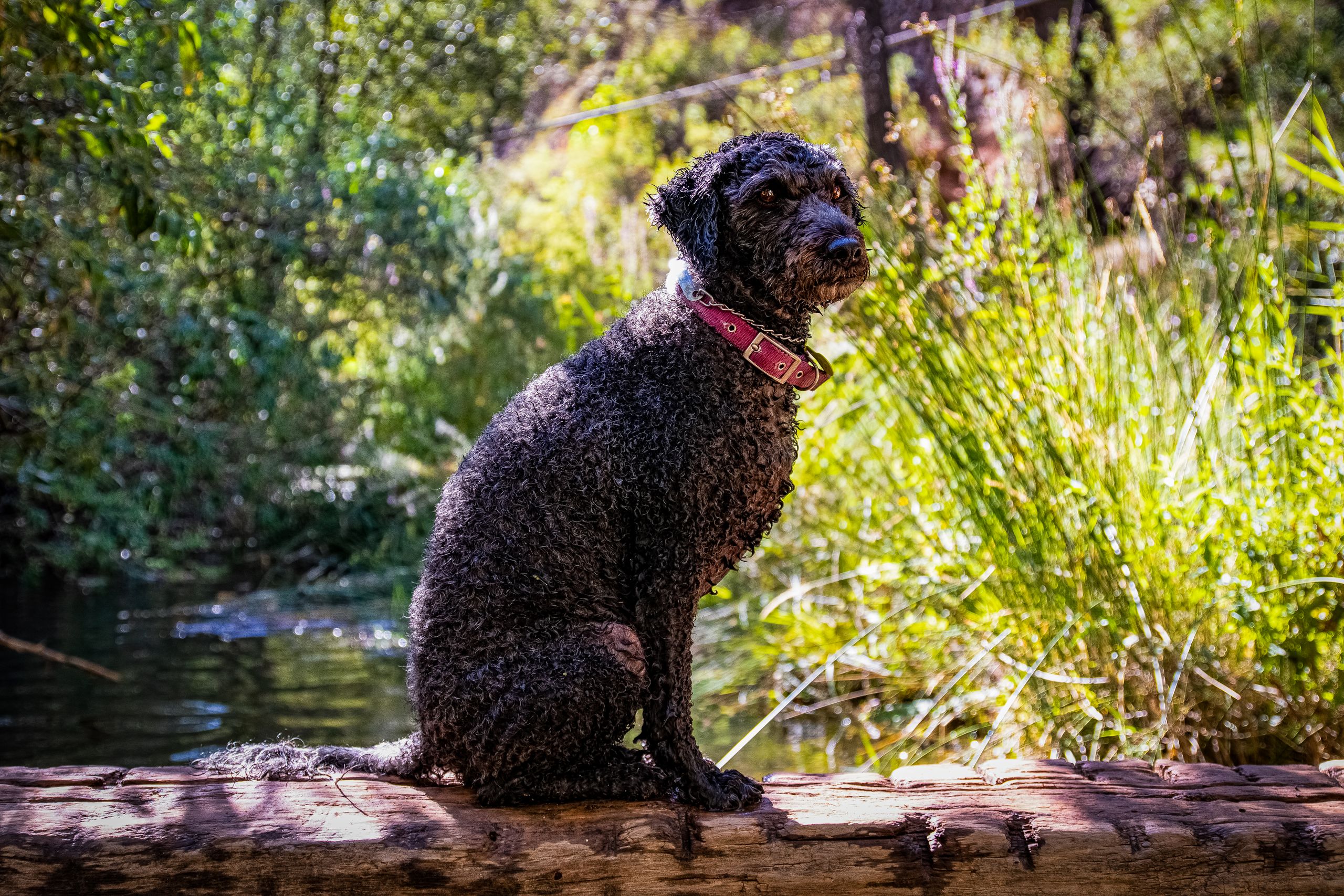
As the name suggests, most love water and swim strongly. Lakes and streams on forest walks are a treat, but the coat holds water and should be squeezed and allowed to dry naturally. Recall is usually trainable, but the herding instinct can make some chase joggers or bicycles, so practise control around moving things before giving freedom.
Training
Training is a pleasure with this breed. It learns fast, enjoys working with its owner and responds very well to reward-based methods. Because it learns so quickly, it also picks up bad habits quickly, so consistency from the first day matters. Boredom shows as barking, herding family members or inventing jobs around the home.
Socialisation is the other half of the work. Puppies should meet many calm strangers, children, other dogs and new environments during the first months, and the meetings should be positive and unhurried. Teaching the dog to settle on a mat and to stay quiet when the doorbell rings will make life in a flat far easier. A good puppy class or dog sport club is an investment.
Coat and grooming
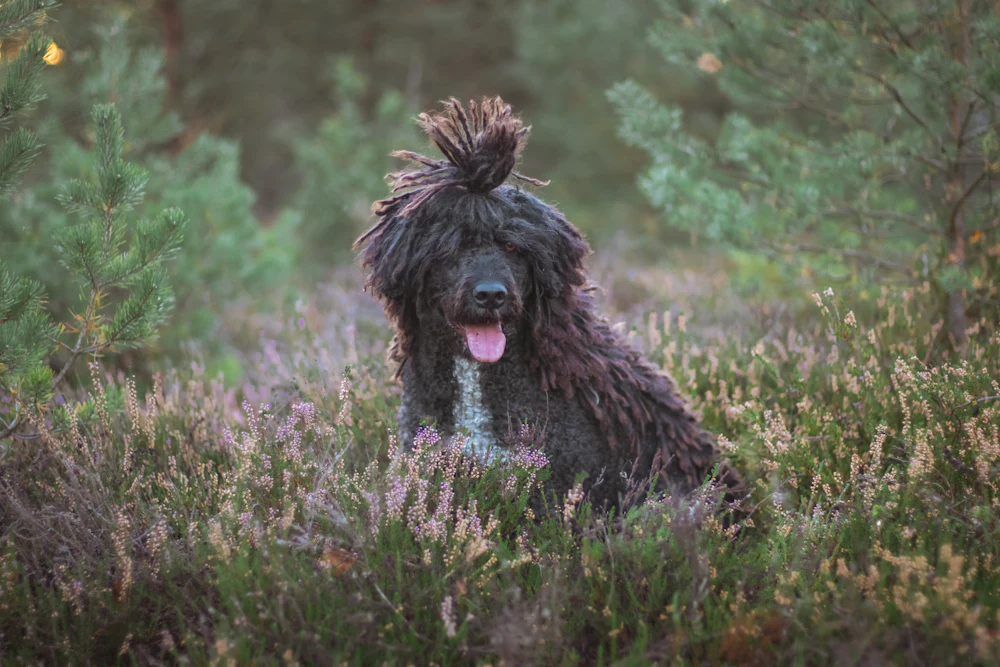
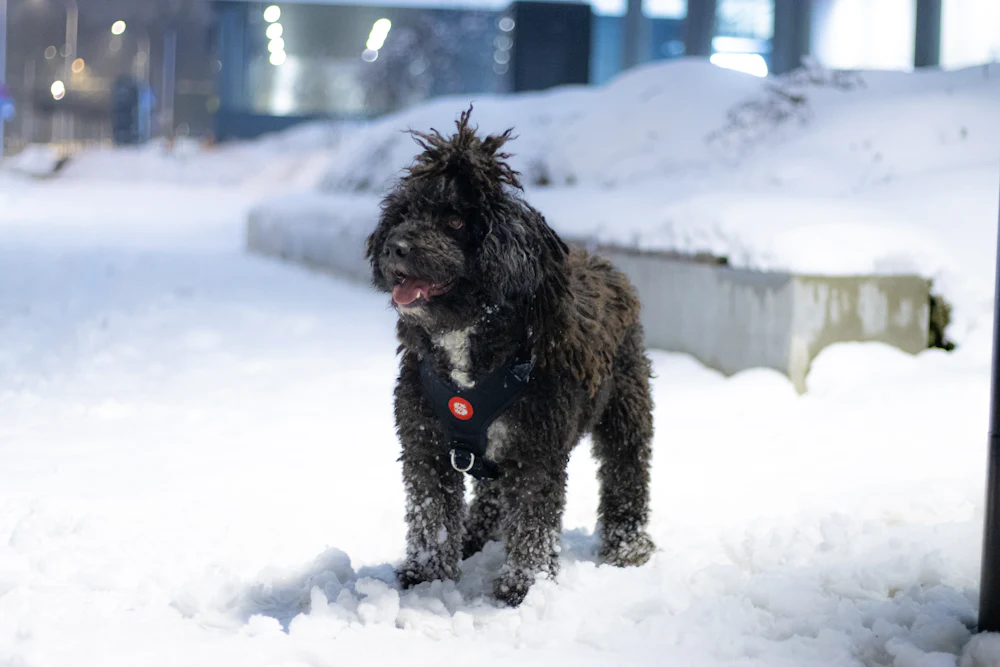
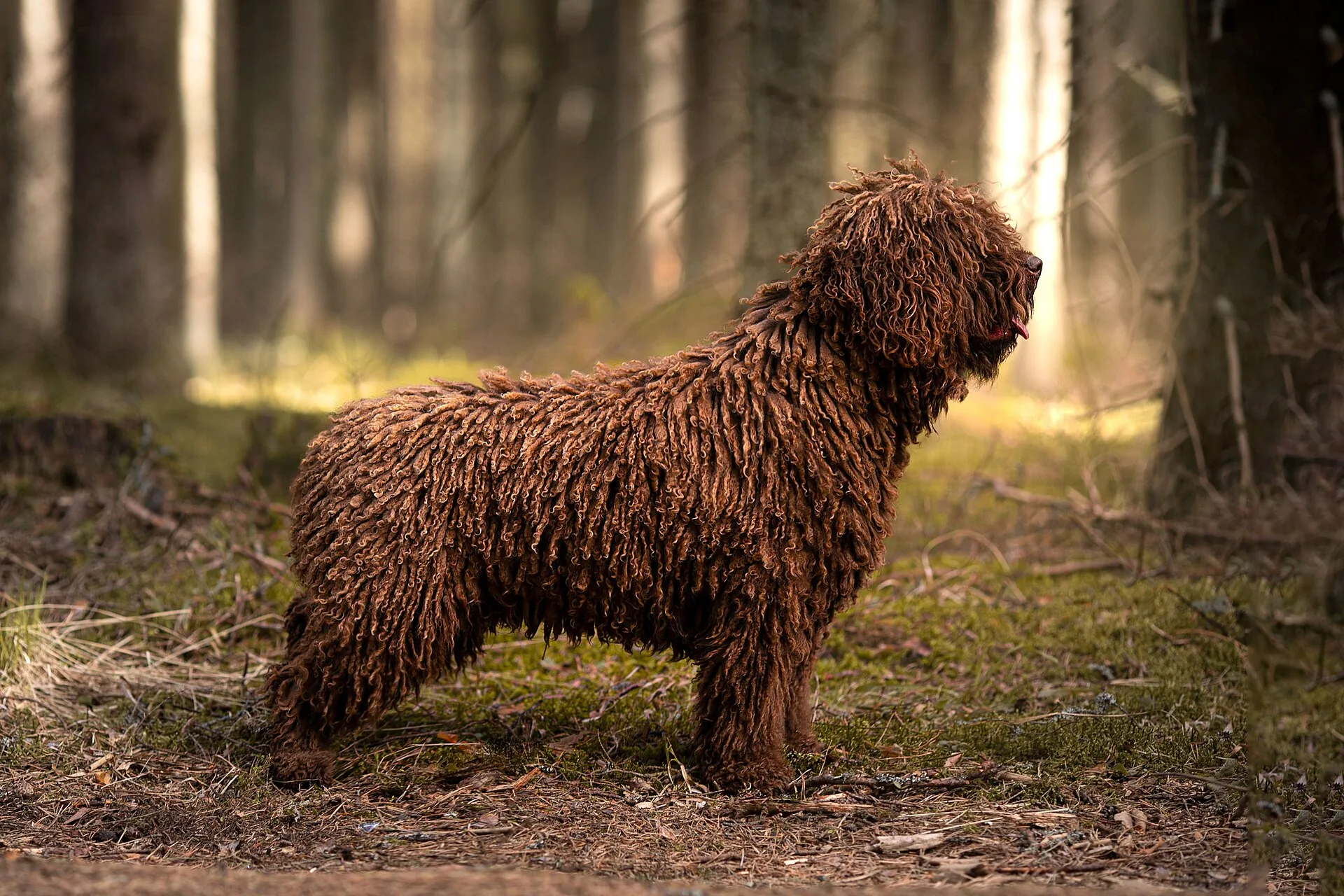
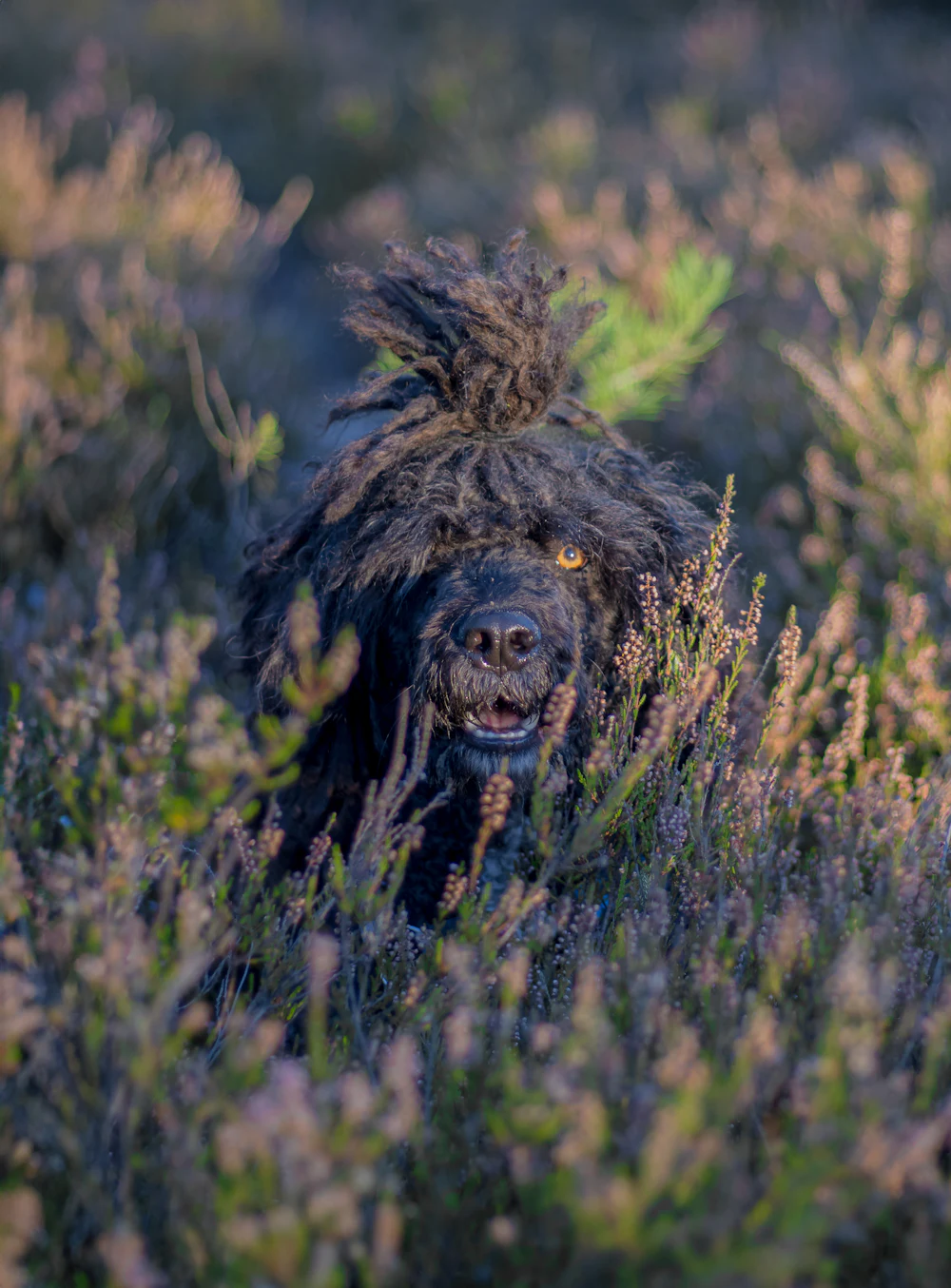
The coat is always curly and woolly. Left long, it forms cords; clipped, it stays as tight curls. The FCI standard requires the coat to be shorn to an even length and it should never be brushed, as brushing produces frizz and felting. Wash with plain shampoo, without conditioner, and let it dry naturally. Shedding is low. Permitted colours are solid white, black or chestnut in their shades, or bicolour white with black or brown; tricolour and tan markings are not admitted.
Feeding and weight
Feed a complete diet suited to an active medium-sized dog in two meals, adjusting portions to exercise and condition. Working types burn more on busy days and need less on quiet ones. Because the curly coat can hide weight gain, feel for the ribs regularly. Use part of the daily ration for training rewards and food puzzles, which suits a dog that enjoys problem-solving.
Work out a starting calorie figure and food weight with the calorie calculator. Not sure this is the right breed? Take the quiz.
Health
Every breed carries predispositions. These are the conditions most often discussed for the Spanish Water Dog, not a prediction for any individual dog.
- Hip dysplasia
- Progressive retinal atrophy (prcd-PRA and early-onset PRA)
- Congenital hypothyroidism with goitre (CHG)
- Hypothyroidism (autoimmune thyroiditis)
- Cataracts and other inherited eye disease
What to ask the breeder. Ask for hip scores, current eye examination results and DNA test results for prcd-PRA, early-onset PRA and congenital hypothyroidism with goitre for both parents.
Choosing a puppy
Spanish Water Dog puppies are bright and busy, and they learn household rules within days, good or bad. Short training sessions several times a day, gentle handling of the coat and regular outings to meet strangers set the foundation. The puppy coat is usually clipped for the first time at a few months old. Avoid long runs while the joints are growing; free play, sniffing and swimming in calm water are better.
In Luxembourg the national kennel club is the Fédération Cynologique Luxembourgeoise (FCL), a member of the FCI. Many owners also buy from breeders in Germany, France or Belgium; a puppy coming from another EU country must be microchipped and vaccinated against rabies, which in practice means it cannot travel before about fifteen weeks of age. Where to get a dog in Luxembourg.
The older Spanish Water Dog
Most stay active well into their senior years, and a dog used to training enjoys a gentle job in old age, such as scent games at home. Keep the dog lean to protect its joints, schedule regular eye checks and blood tests including thyroid function, and keep the coat clipped short for easy care. Swimming is excellent low-impact exercise if the dog is dried well afterwards.
A realistic day
A realistic weekday for a working household in Luxembourg City, with a midday visit. Adjust it to your dog, not the other way round.
Forty-five minute walk with retrieving games or a short scent search, then breakfast.
Owner leaves; a food puzzle helps the dog settle quietly for the morning.
Midday visit: 30-minute walk with a few minutes of training and some free running on a long line.
Evening outing of about 45 minutes, including play, a swim in summer or a training session.
Short toilet walk and a calm settle before bed.
A Spanish Water Dog in Luxembourg
A Spanish Water Dog can adapt to a flat in Luxembourg City if it receives enough exercise and mental work every day. The bigger challenge is barking: a watchful dog that hears neighbours in the stairwell may announce every one of them. Practising calm behaviour in the lift and the entrance hall from puppyhood pays off. Parc Merl and the Pétrusse valley are good for daily walks, while the Grünewald gives room for longer outings.
The coat copes well with Luxembourg's wet weather, although it carries home mud and leaves. In summer heat, a short clip and early morning walks keep the dog comfortable. For dog sports and training, the Fédération Cynologique Luxembourgeoise, the national kennel club, is a sensible first point of contact. Every dog must be microchipped, declared to the commune, insured and taxed annually, and free buses and trams make countryside trips easy.
Every dog in Luxembourg must be identified, declared to the commune and covered by liability insurance. How registration works.
When you travel
A sitter should be someone the dog has met before, as many Spanish Water Dogs are wary of strangers. The dog needs two good walks plus some mental work every day, or it may bark and pace. The sitter must not brush the coat; a wet dog should be towelled and left to dry. Ask the sitter to keep the dog on a long line near livestock, cyclists and joggers.
PAWLY's holiday and overnight care takes place in your home, so your dog keeps its own bed and routine.
Myths and facts
MythThe curly coat must be brushed like a Poodle's.
FactThe FCI standard states the coat should be clipped to an even length and never brushed. Brushing ruins the curl and causes felting.
MythWater dogs are relaxed retrievers.
FactThe breed is also a herding and guarding dog, watchful and often reserved with strangers, and it needs plenty of socialisation.
MythCorded coats are always for show.
FactCords form naturally in this coat if it is left long. Many pet owners keep it clipped short for practicality.
Is it the right dog for you?
Suits
- Active owners who enjoy training or dog sports
- People who walk in all weathers and like water
- Households willing to invest in early socialisation
- Owners who want a low-shedding coat that is not brushed
Think twice if
- The dog will be alone for most of the working day
- You want a dog that is friendly with every stranger
- Barking would be a problem in your building
- You are not interested in daily training or games
Questions owners ask
Should I brush my Spanish Water Dog?
No. The coat is meant to be clipped to an even length and left unbrushed. Brushing destroys the curl and leads to matting. Wash with a simple shampoo, avoid conditioner and let the coat dry naturally.
Is the breed good for allergy sufferers?
The coat sheds little, which some allergic people tolerate better, but no dog is free of allergens. Spend time with adult dogs of the breed before committing.
Why does my Spanish Water Dog bark at visitors?
The breed is watchful by nature and was used to guard and herd livestock. Early, positive meetings with many people and a trained routine for the doorbell reduce the barking, but some alertness will remain.
How much exercise does it need?
At least an hour to an hour and a half a day, combined with mental work such as training, retrieving or scent games. A tired brain matters as much as tired legs with this breed.
Sources
- FCI breed standard No. 336 (Perro de Agua Español)
- Spanish Water Dog Club of America, CHIC health requirements
- The Royal Kennel Club, Spanish Water Dog breed information
Photo: Unsplash (Unsplash License) · Photo: Unsplash (Unsplash License) · Photo: Pexels (Pexels License) · Photo: Natalia Ricci, CC BY-SA 4.0, via Wikimedia Commons · Photo: Unsplash (Unsplash License)
General information for dog owners in Luxembourg, not veterinary or legal advice. Official facts (origin, size, group, history and temperament as described by the breed standard) follow the FCI standard; health and care sections reflect breed-club and veterinary guidance and are typical ranges rather than rules. For your own dog, ask your vet, the breed club or your commune. How this guide is written and checked. Last reviewed 8 October 2026.
Need someone for your Spanish Water Dog?
PAWLY offers an individual 45-minute walk or a home visit at your dog's pace, the same walker every time, and a written report with photos after every visit, across Luxembourg City.
Read next: the journal, for the Spanish Water Dog
All articles
Building a recall you can actually rely on
Scent and movement can cancel a recall; this is the method for the Spanish Water Dog.

Water, rivers and the algae that kills dogs every summer
Dogs that love water need to know which water is safe, including the summer algae that kills dogs.

Dogs and cats in the same flat
The Spanish Water Dog can see small animals as prey; this covers living with a cat in a flat.
Similar breeds
All 198 breeds
Portuguese Water Dog
A fisherman's dog from the Algarve, strong, clever and water mad, with a coat that needs a professional and a mind that needs a job.
EnergyGroomingFlat life
Lagotto Romagnolo
A curly-coated Italian truffle hunter with a nose that never switches off, happiest when every walk becomes a search.
EnergyGroomingFlat life
Poodle
Far from a fashion accessory: one of the most intelligent and athletic breeds, in four sizes.
EnergyGroomingFlat life

