History
The Bolognese is an old Italian companion breed named after the city of Bologna. The FCI standard links it with the Maltese, both being traced to ancient small dogs, and it belongs to the bichon family alongside the Maltese, Bichon Frisé, Havanese and Löwchen. Italy is its country of origin, and the standard places it in Group 9, Section 1, Bichons and related breeds. It was kept purely as a companion and never had a working job.
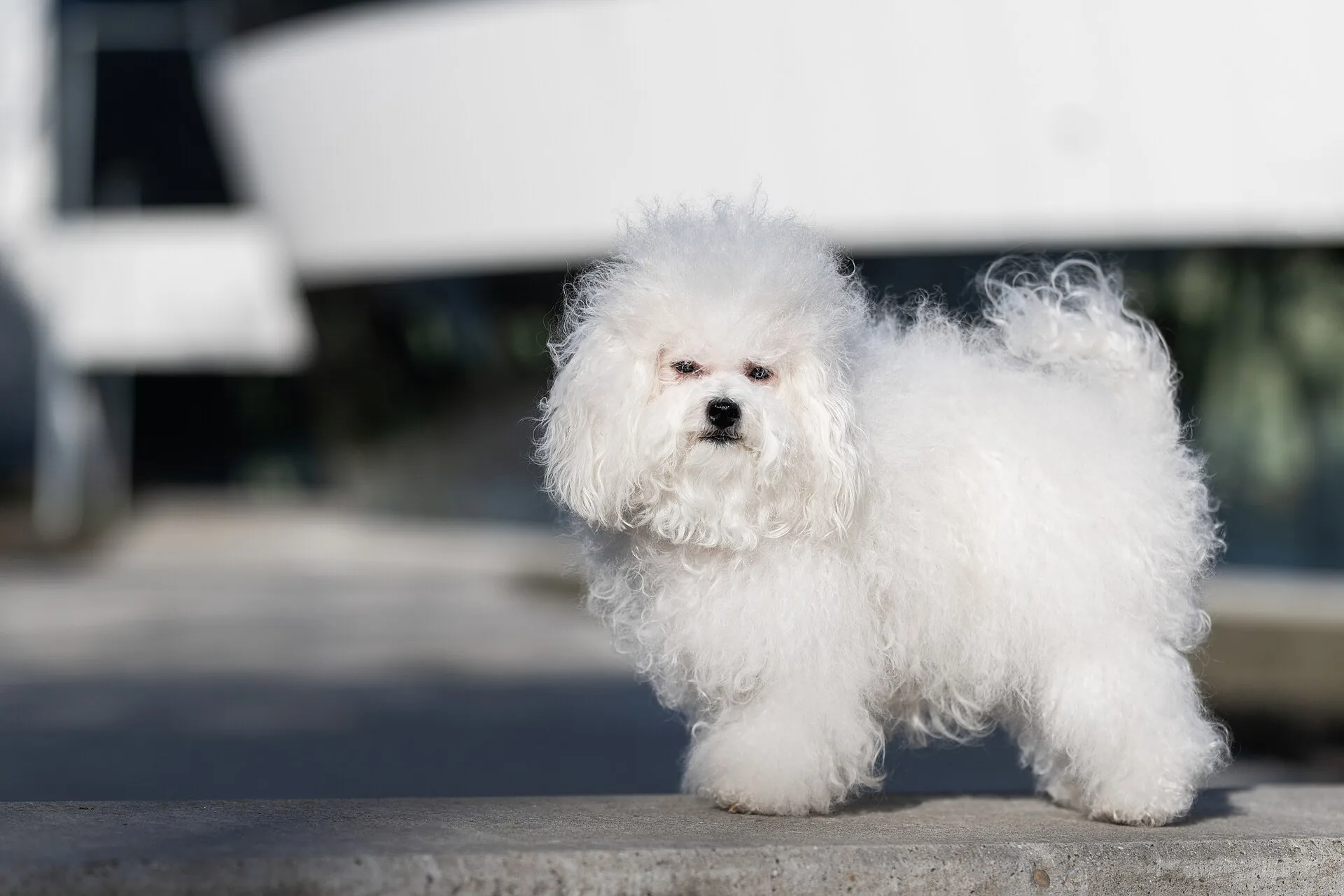
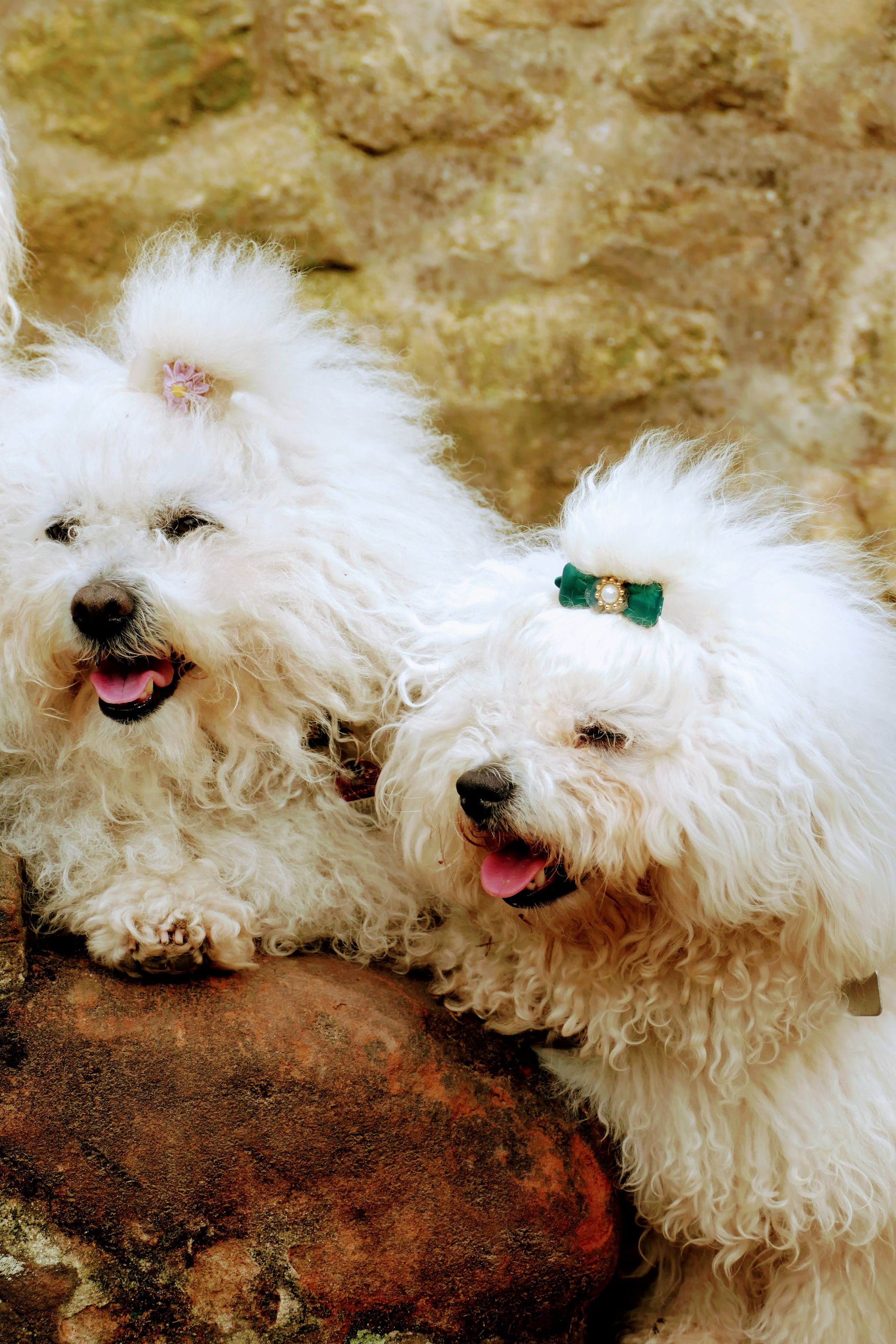
The standard records that these dogs were prized gifts among nobility. It names Cosimo de Medici, who is said to have sent eight of them to Belgian noblemen, and King Philip II of Spain, who praised them as the most royal gift one can give to an emperor. The dogs also appear in paintings by Titian, Bruegel and Goya. The standard asks for a small, stocky, compact dog in a pure white coat, long and fluffy, with square proportions.
Temperament
The FCI gives the character in very few words: very serene, generally not very active, eventful but calm, and very faithful to its master and the household. That is a fair summary of a breed that has spent centuries as a lap companion. A Bolognese is rarely a bouncing, noisy dog. It follows its person from room to room, settles on a cushion within reach and watches the world with quiet attention, perhaps with a low murmur at the doorbell.
The other side of that devotion is dependence. Bolognese attach strongly to their people, are reserved with strangers until they have been introduced, and are sensitive to tension in the home. They dislike being left alone and can develop separation anxiety if they are never taught to cope with it. A raised voice upsets them, and a quarrelling household is a poor setting. For a person at home much of the day who wants a calm dog, they are one of the most agreeable of the toy breeds.
Children and other pets
A Bolognese is good with considerate children and calm pets, but it is a very small dog and should never be handled roughly. Teach children to sit on the floor and let the dog approach, and never to pick it up without support. Boisterous households can be stressful for it, so the breed is happiest in a quiet home. Many get on well with other small dogs and with cats.
Exercise and the daily walk
Half an hour to 45 minutes of easy walking a day, split into two or three short outings, is enough for most adults. Add some play indoors: a soft toy, a gentle chase, or a game of finding hidden treats. The breed enjoys exploring a park or a quiet street at its own pace, but is not built for long hikes or very hot afternoons.
Because a Bolognese is so small and calm, it is easy to under-exercise, so keep a routine. Short, regular outings keep the weight down and the mind busy, and gentle sniffing walks are as valuable as brisk ones. In bad weather, a game of hide-and-seek or a few easy tricks in the hallway can stand in for a walk, though not for every day.
Training
Bolognese are intelligent and eager to please, but sensitive. Gentle, reward-based training works best, with a soft voice and small treats. Harsh methods or raised voices can make a Bolognese shut down. House training may take time and is often the hardest job with a toy breed, so be consistent: frequent outings, a regular schedule, and calm praise when the dog gets it right.
Practise being left alone from the start, in small steps, to reduce the risk of separation anxiety. Start with a few minutes in another room and build up slowly, giving a chew or a treat as the person leaves. Socialise with people and dogs gently, since a reserved dog can slide into timidity without careful exposure. Handle paws, ears and the face every day, so grooming is a pleasure rather than a battle.
Coat and grooming
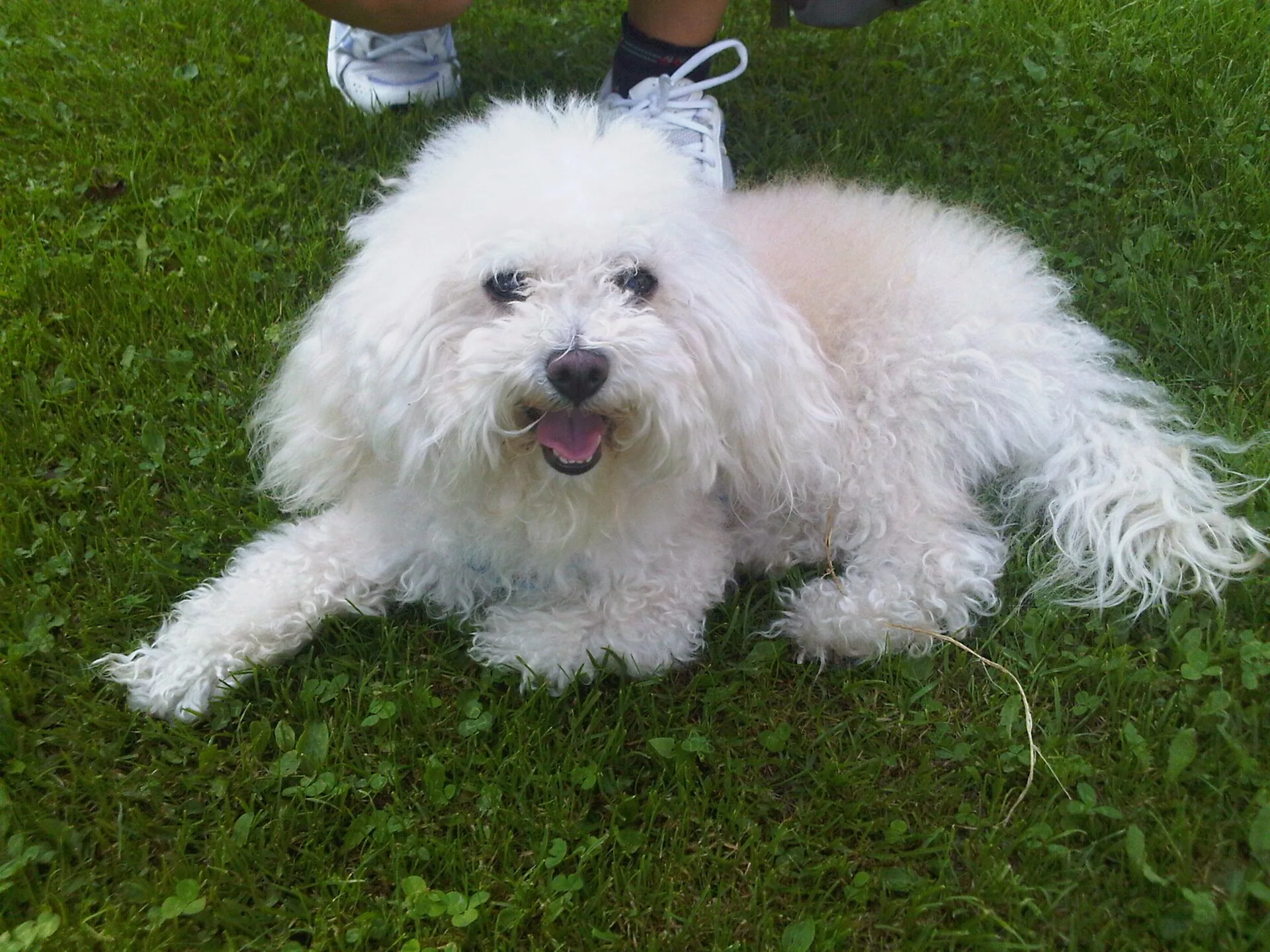
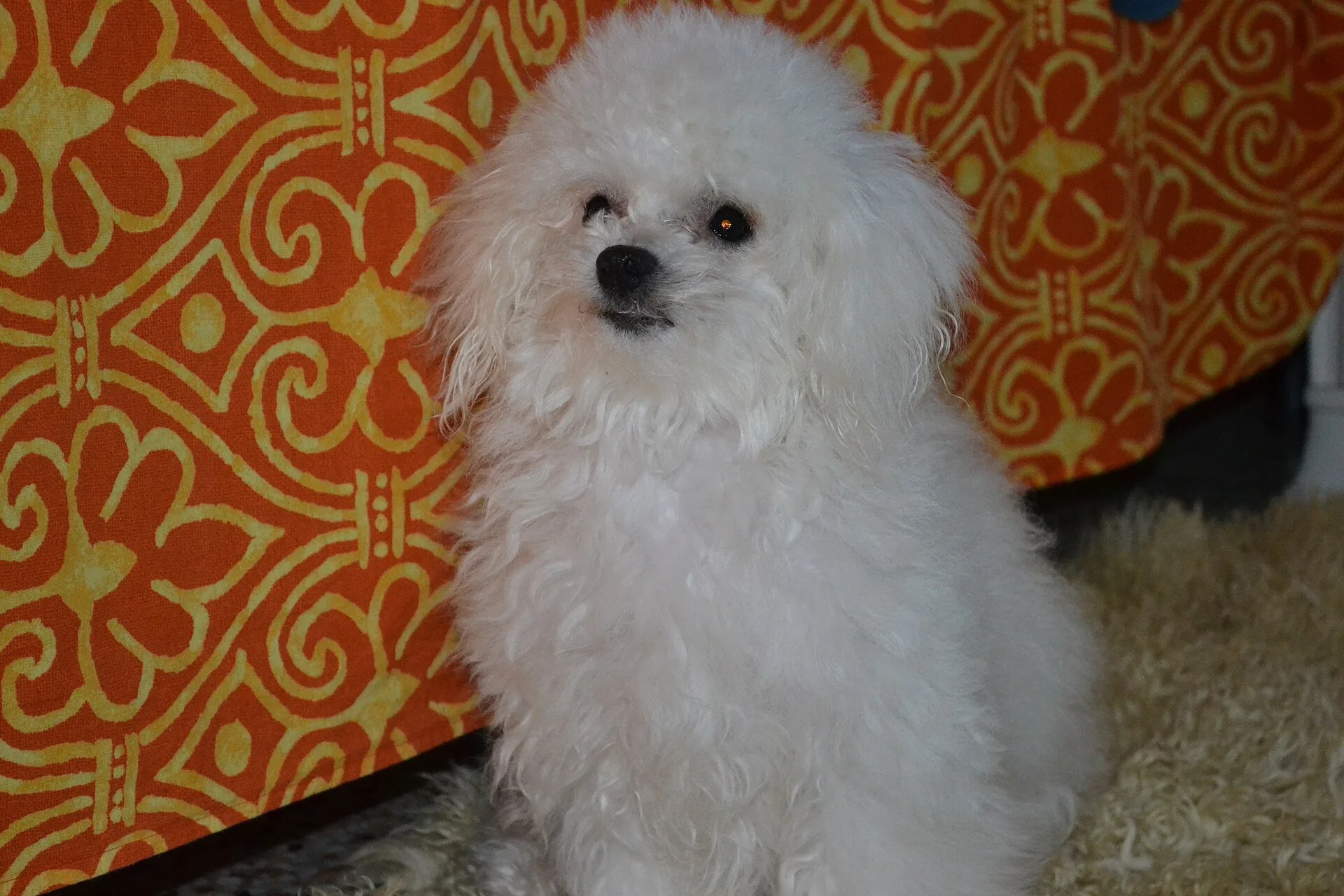
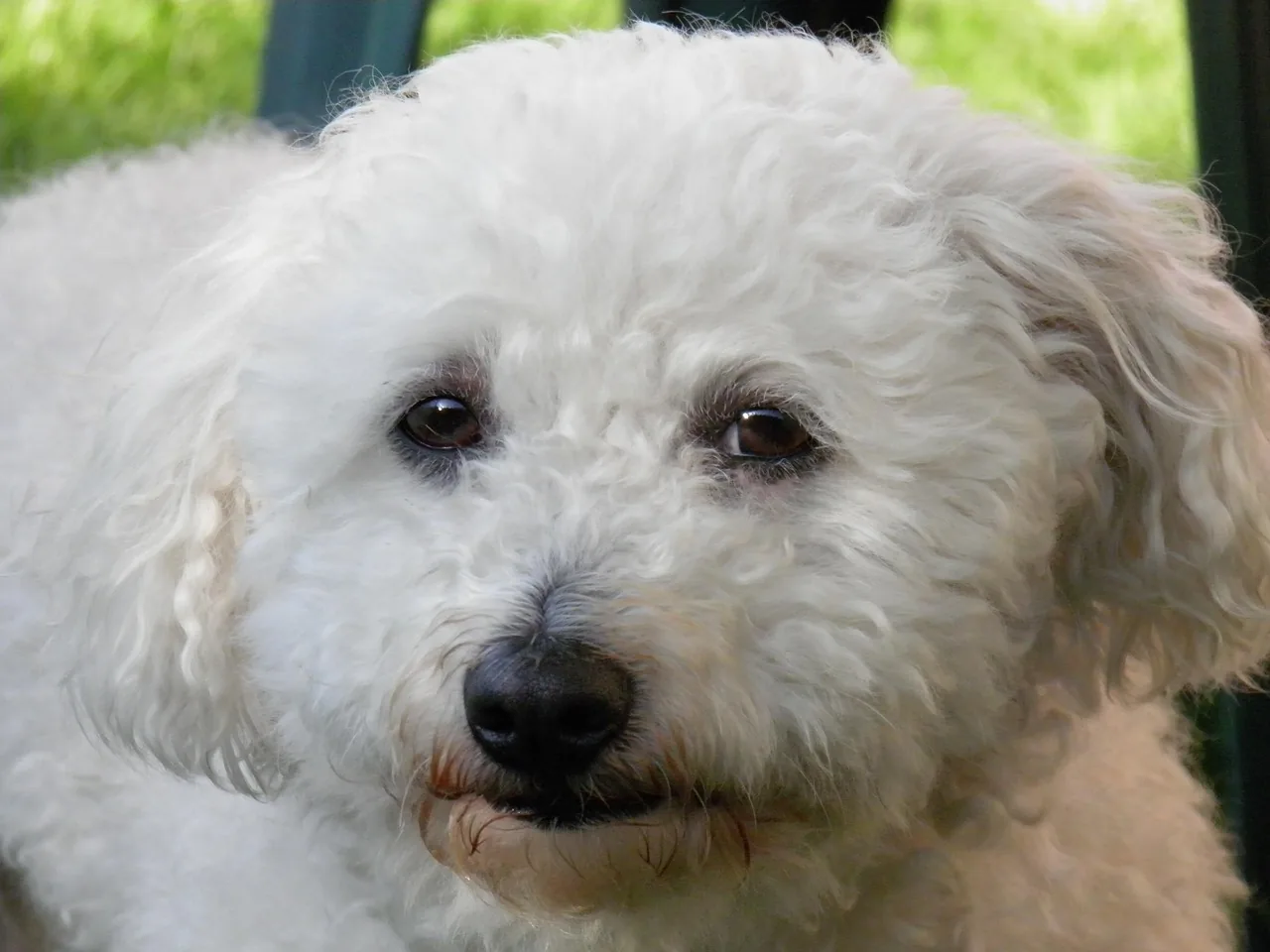
The standard asks for a coat that is long all over the body, rather off-standing and never lying flat, with no fringes. The colour is pure white, and very slight shades of ivory are not disqualifying. The coat is not clipped in the traditional style but brushed and left natural. Brush several times a week to prevent tangles and mats, and bathe regularly. It sheds very little. Clean around the eyes to prevent staining.
Feeding and weight
Small dogs are easily overfed, and Bolognese are no exception. Feed measured meals, use small treats and count them in the daily ration. A lean Bolognese is healthier and more active, and extra weight puts pressure on the knees and the heart. Good dental care matters, since toy breeds are prone to dental problems, so ask your vet about brushing and suitable chews.
Work out a starting calorie figure and food weight with the calorie calculator. Not sure this is the right breed? Take the quiz.
Health
Every breed carries predispositions. These are the conditions most often discussed for the Bolognese, not a prediction for any individual dog.
- Patellar luxation (slipping kneecaps)
- Dental disease
- Eye conditions and tear staining
- Skin allergies
- Separation anxiety
What to ask the breeder. Ask for kneecap and eye checks for the parents, and about dental health and skin problems in the lines. A good breeder will also let you meet the mother.
Choosing a puppy
Ask for kneecap and eye checks for the parents and meet them if you can. Look for a calm, friendly puppy raised in a home with daily handling. A Bolognese puppy is tiny and fragile, so supervise stairs, jumping off furniture and young children. Start handling, grooming and short separations early, and plan house training with patience and a regular routine.
In Luxembourg the national kennel club is the Fédération Cynologique Luxembourgeoise (FCL), a member of the FCI. Many owners also buy from breeders in Germany, France or Belgium; a puppy coming from another EU country must be microchipped and vaccinated against rabies, which in practice means it cannot travel before about fifteen weeks of age. Where to get a dog in Luxembourg.
The older Bolognese
Bolognese often live to sixteen or more. Watch for dental problems, stiffness, eye changes and confusion, and keep up regular vet checks. Shorter, gentler walks suit the later years, and a soft, warm bed away from draughts helps. Older dogs may find stairs and slippery floors difficult, so put down rugs and offer a lift where needed.
A realistic day
A realistic weekday for a working household in Luxembourg City, with a midday visit. Adjust it to your dog, not the other way round.
A gentle walk and a toilet break.
Breakfast and a brush.
Midday visit from a walker: a short walk, play and company.
A gentle evening walk in a nearby park.
Final toilet trip and a settle in the bed.
A Bolognese in Luxembourg
A Bolognese is an ideal flat dog: small, quiet and adaptable, comfortable in a lift and unlikely to disturb the neighbours. It needs regular grooming and a lot of company, so it is not suited to being alone all day, which matters in a city where many owners work long hours in banks, funds or institutions. A midday visit from a walker, or a flexible working pattern, helps a great deal.
Short walks suit it well. The Pétrusse valley, Parc Merl and the Municipal Park are near enough for easy daily outings, and the Bambësch offers a quiet, shaded outing at weekends. Summers can reach the 30s, so walk early and late and keep fresh water to hand. In winter, a toy dog may enjoy a coat on wet evenings. Handle the formalities from the start: microchip, declaration to the commune, liability insurance and the annual dog tax.
Every dog in Luxembourg must be identified, declared to the commune and covered by liability insurance. How registration works.
When you travel
Bolognese bond closely with their people, so a sitter who stays in the home, or visits several times a day, is best. Introduce them first, because a reserved dog needs time to accept a newcomer. Follow the grooming and feeding routine, and leave the vet's number. Expect some anxiety in the first days, and ask the sitter to be calm, patient and gentle.
PAWLY's holiday and overnight care takes place in your home, so your dog keeps its own bed and routine.
Myths and facts
MythBolognese and Bichon Frisé are the same.
FactThey are separate breeds: the Bolognese has a flocked, cloud-like coat and the Bichon Frisé has a curly coat.
MythBolognese are lap ornaments that need no exercise.
FactThey are calm, but still need daily walks and play to stay fit, happy and a healthy weight.
MythA small dog is easy to leave alone.
FactBolognese are devoted and prone to separation anxiety. They need company and careful, gradual training for time alone.
Is it the right dog for you?
Suits
- Flat dwellers
- People at home for much of the day
- Calm, quiet households
- Owners who enjoy grooming
Think twice if
- You are out all day
- You have rowdy young children
- You want an energetic jogging partner
- You dislike regular brushing
Questions owners ask
Is a Bolognese the same as a Bichon Frisé?
No. Both are bichon-type breeds, but the Bolognese has a long, fluffy, off-standing white coat, while the Bichon Frisé has curly hair and is usually clipped. The Bolognese is also calmer and more reserved.
How long do Bolognese live?
Often fourteen to sixteen years, and some live longer. Regular dental care, a healthy weight and routine vet checks all help to keep a small dog well into old age.
Does a Bolognese shed?
Very little. The long, fluffy coat holds loose hair, so it needs brushing several times a week to prevent mats. Expect little hair on the sofa but a regular grooming routine.
Can a Bolognese cope with being left alone?
Not well. The breed is devoted and can develop separation anxiety. Teach alone time in small steps from puppyhood, and arrange a midday visit if the household is out all day.
Sources
Photo: Bolognese94, CC BY-SA 4.0, via Wikimedia Commons · Photo: Boel at Italian Wikipedia, CC BY-SA 3.0, via Wikimedia Commons · Photo: ValeG94Wiki, Public domain, via Wikimedia Commons · Photo: Pixabay (Pixabay Content License) · Photo: Pexels (Pexels License)
General information for dog owners in Luxembourg, not veterinary or legal advice. Official facts (origin, size, group, history and temperament as described by the breed standard) follow the FCI standard; health and care sections reflect breed-club and veterinary guidance and are typical ranges rather than rules. For your own dog, ask your vet, the breed club or your commune. How this guide is written and checked. Last reviewed 8 October 2026.
Need someone for your Bolognese?
PAWLY offers an individual 45-minute walk or a home visit at your dog's pace, the same walker every time, and a written report with photos after every visit, across Luxembourg City.
Read next: the journal, for the Bolognese
All articles
Teeth: the problem owners find least interesting and vets see most
Teeth are a known weak point in the Bolognese; this is the routine that helps.

Grooming and coat care through the Luxembourg year
The Bolognese has a coat that needs a routine that holds through the Luxembourg seasons.

Choosing a groomer, and what to ask before you book
A coat like this usually means a groomer; this covers what to ask before you book.
Similar breeds
All 198 breeds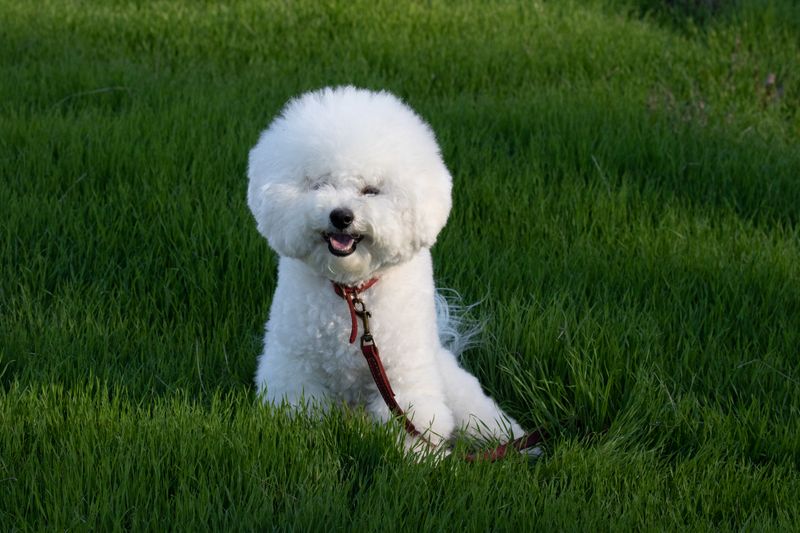
Bichon Frisé
A cheerful white powder puff with a sense of humour and a serious grooming requirement.
EnergyGroomingFlat life
Havanese
Cuba's national dog: a cheerful, sociable little bichon that loves people, learns tricks quickly and hates being left alone.
EnergyGroomingFlat life
Maltese
One of the oldest companion breeds in Europe, gentle and devoted, with a white coat that shows everything.
EnergyGroomingFlat life

