History
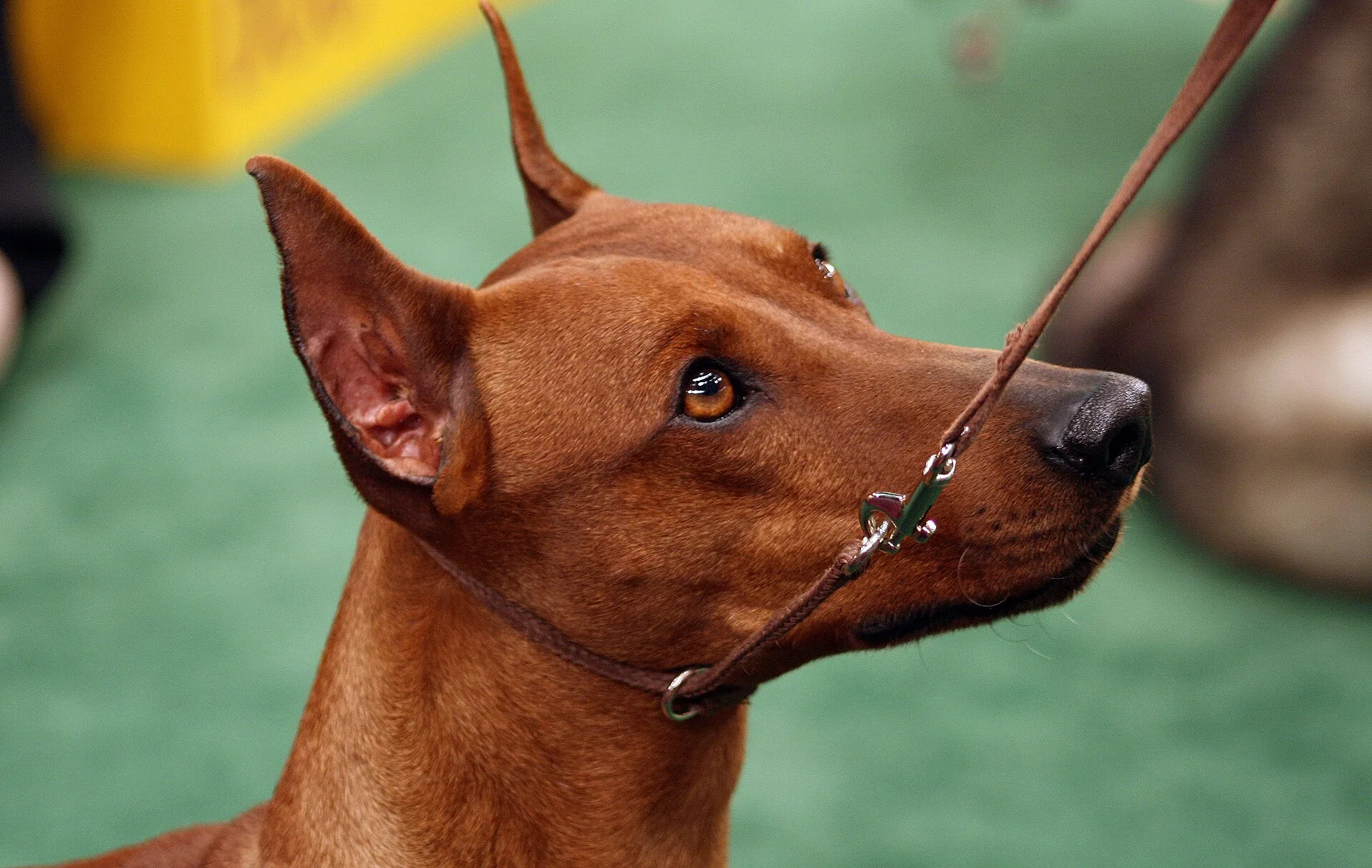
The German Pinscher is recorded in German dog records by 1880, and the FCI standard notes that it shares its ancestry with the Schnauzer. The smooth-haired Pinschers differed from the rough-haired ones, later Schnauzers, in their colour and their short coat. Traditional colours included black and tan, shades of brown to red, pepper and salt, and blue grey.
The FCI classifies the breed in Group 2, Section 1, Pinscher and Schnauzer type, without working trial, and gives its use as a watch and companion dog. The standard is the one valid today, dated 2007. The breed is much rarer than the Dobermann or the Miniature Pinscher, both of which it is often confused with, and it has never been a fashion dog, which has helped preserve its working temperament.
Temperament
The standard describes a lively, spirited, self-assured and evenly tempered dog with intelligence and endurance, suitable as a family, watch and companion dog. In daily life that means a dog that is alert, brave, quick on its feet and rather full of itself. It is a natural guardian, reserved with strangers and quick to sound the alarm, and it does not have to be taught to notice what is happening on the pavement.
A German Pinscher needs to be involved. It is clever, restless and curious, and a bored one finds its own employment in the sofa, the bin or the neighbour's cat. Many are somewhat bossy with other dogs, particularly those of the same sex. They are devoted to their people and enjoy a game, a task and a job to do, but they tend to be sensitive too, and respond poorly to harshness.
Children and other pets
With sensible children the German Pinscher is a playful, tireless companion. Its energy and speed can overwhelm toddlers, and its watchdog instincts mean visiting children need introductions. Many accept other dogs, but same-sex rivalry may appear, so socialise early. Prey drive varies: some live peacefully with cats they have known since puppyhood, while others chase anything that runs. Rodents and small pets should be kept out of reach.
Exercise and the daily walk
A German Pinscher needs about an hour and a half of active exercise daily, and it appreciates variety. Brisk lead walks, jogging, ball games and a run in a safe area are all welcome. It is an athletic dog with endurance, and it makes a good partner for an owner who likes cycling beside a quiet path or hiking at weekends.
Mental exercise is just as important. Short training sessions, scent games, agility or tricks help the dog use its brain. Off-lead freedom needs judgement: the dog is quick, curious and may chase small animals. A short coat means it feels the cold, so a jacket is useful on winter walks, and young dogs should avoid hard impact exercise until their joints have matured.
Training
The German Pinscher is intelligent and learns fast, but it also tests boundaries, and an owner who is inconsistent will be quietly managed by the dog. Be firm in a calm, fair way, set the rules early and keep sessions varied and rewarding. Food, toys and praise work well. Harsh methods tend to produce resentment or a dog that goes into its shell.
Socialisation is essential, since the natural reserve and watchdog instinct can become suspicion or over-reaction. Take the puppy to busy places, the lift, trams and cafés while it is young. Teach a calm response to the doorbell, and a reliable recall, with a long line in unfamiliar places. Provide an outlet such as agility, nose work or obedience classes.
Coat and grooming
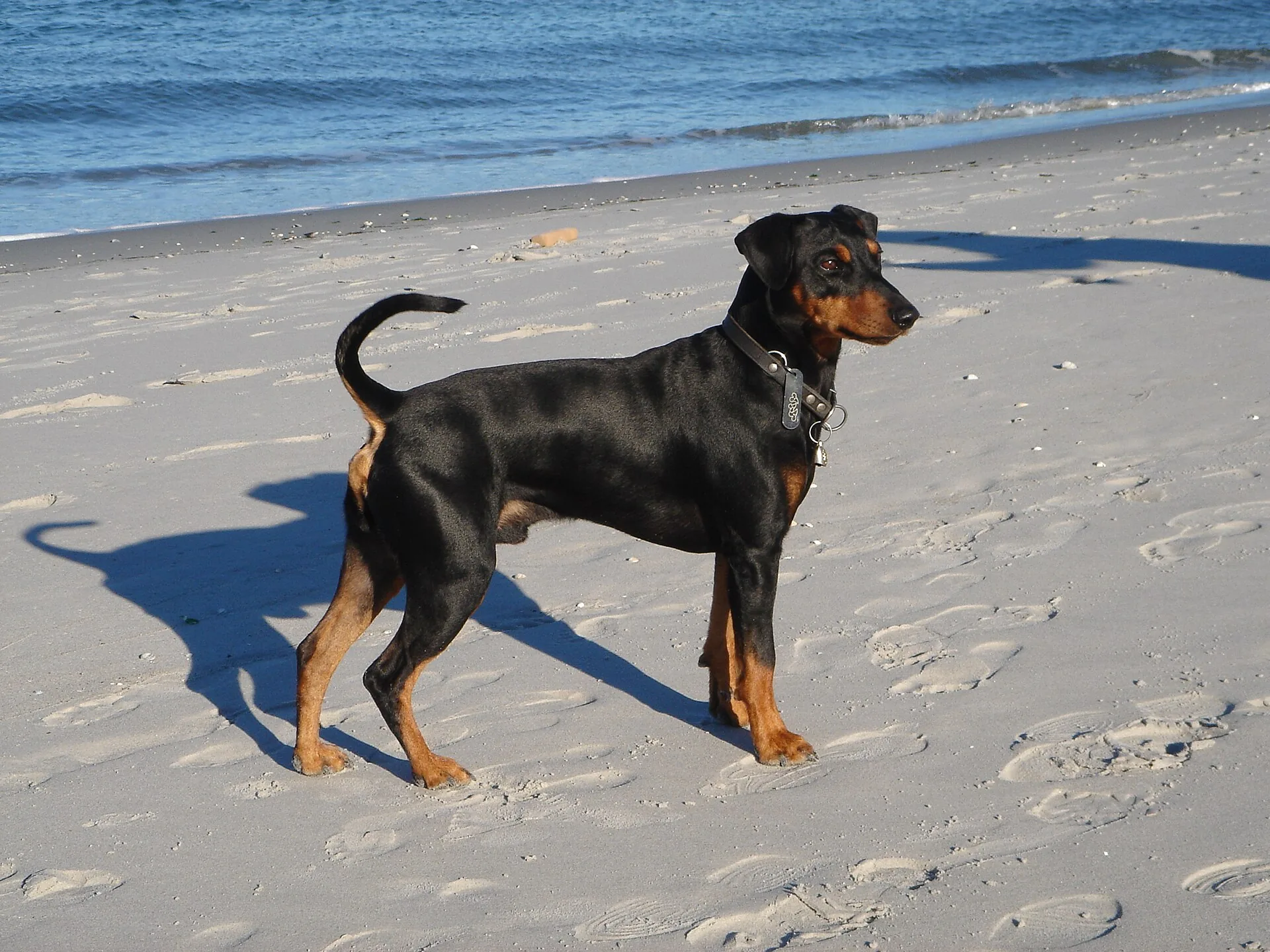
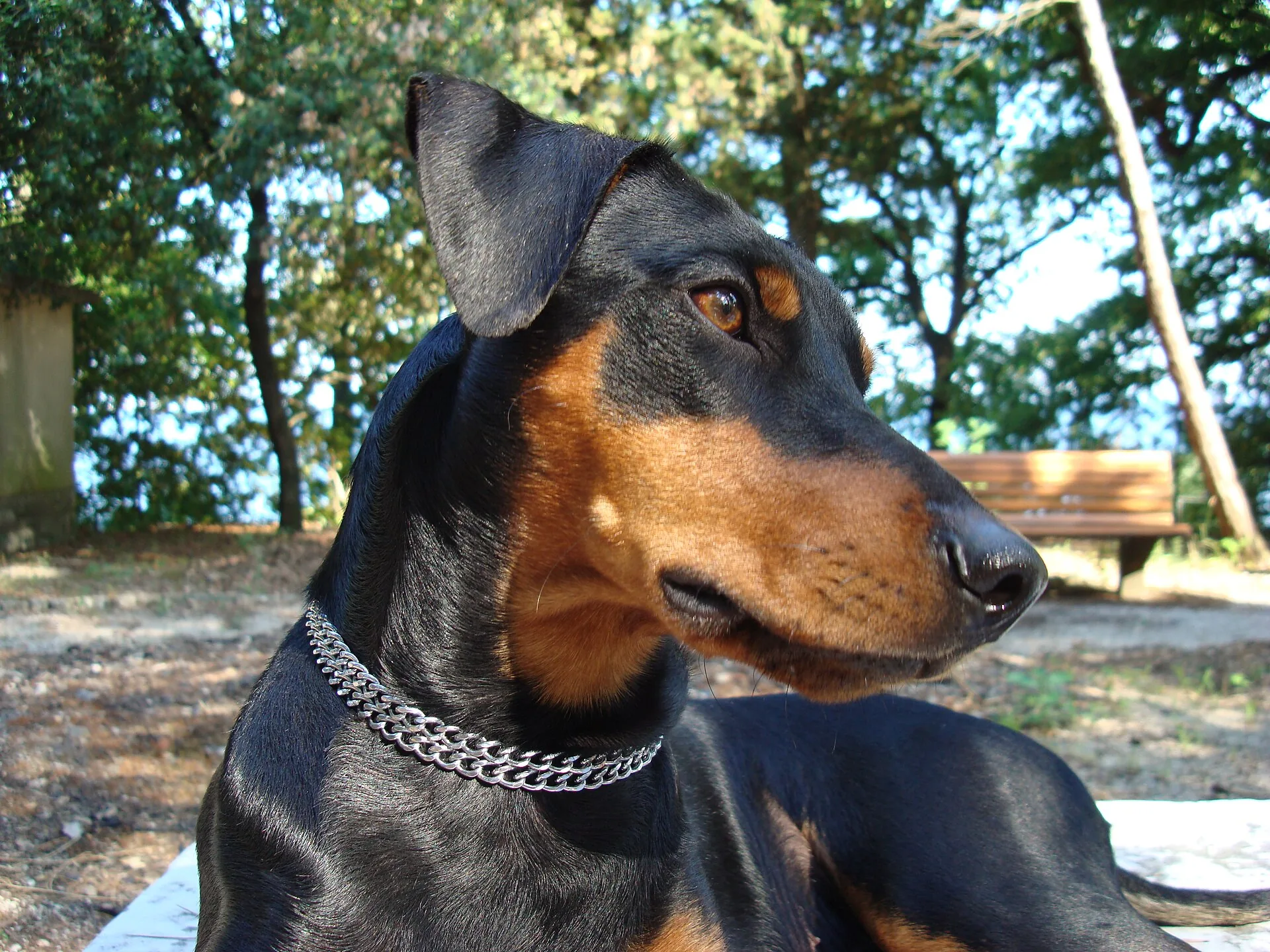
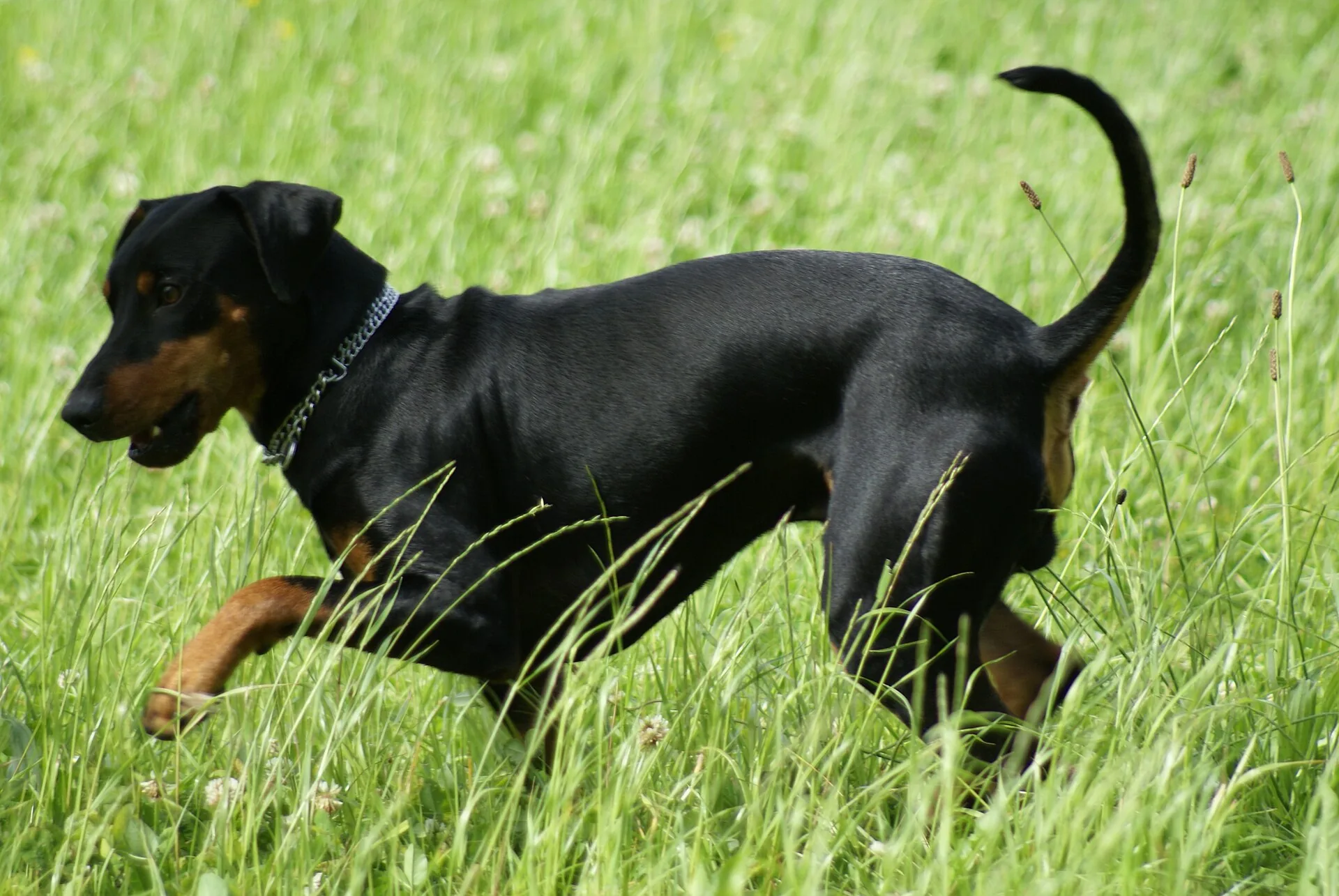
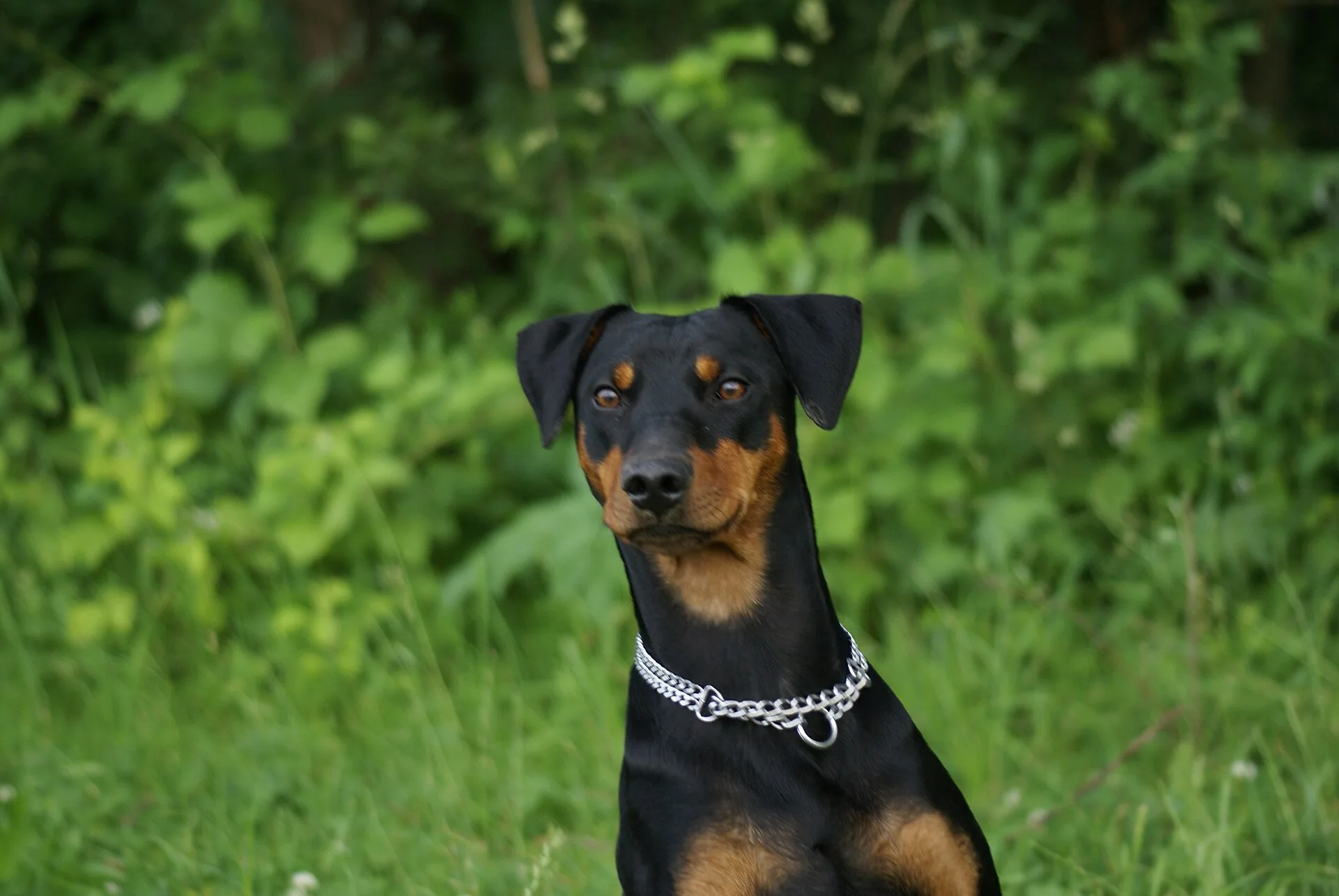
The standard calls for a short, dense, smooth, close-lying and shiny coat, with the musculature visible beneath. Care is minimal: a weekly rub with a rubber mitt or damp cloth removes dead hair and brings out the shine. Shedding is moderate. The FCI permits self-coloured dogs, from deer red to dark red-brown, and black and tan with defined markings above the eyes, on the throat, pasterns, feet, hind legs and base of the tail. Because the coat is thin, a jacket helps in winter.
Feeding and weight
Feed a complete diet for an active medium-sized dog, in two meals a day. German Pinschers are lean and busy, and many burn what they eat, but they can gain weight if treats and training rewards are not counted. Adjust portions to activity and age. Keep fresh water at hand, especially after exercise. Ask your vet for advice if the dog has digestive problems or a dull coat.
Work out a starting calorie figure and food weight with the calorie calculator. Not sure this is the right breed? Take the quiz.
Health
Every breed carries predispositions. These are the conditions most often discussed for the German Pinscher, not a prediction for any individual dog.
- Von Willebrand's disease (an inherited bleeding disorder)
- Hip dysplasia (poor hip joint formation)
- Cataracts and other eye conditions
- Hypothyroidism (underactive thyroid)
- Heart conditions, which a vet can screen for
What to ask the breeder. Ask whether both parents have been tested for von Willebrand's disease and for hip and eye problems, and ask to see results.
Choosing a puppy
German Pinscher puppies are bouncy, clever and mischievous. Start training and socialisation as soon as they come home, and make early experiences with people, dogs, traffic and the lift pleasant. Keep exercise short and gentle while the joints grow, but provide plenty of mental games. Puppies chew and explore with their mouths, so supply safe toys, put shoes away and use a pen or crate. Teach calm alone time in short steps.
In Luxembourg the national kennel club is the Fédération Cynologique Luxembourgeoise (FCL), a member of the FCI. Many owners also buy from breeders in Germany, France or Belgium; a puppy coming from another EU country must be microchipped and vaccinated against rabies, which in practice means it cannot travel before about fifteen weeks of age. Where to get a dog in Luxembourg.
The older German Pinscher
Many German Pinschers stay lively well into their senior years. From about ten, the dog may slow down, with stiffer joints and less stamina. Shorter, more frequent walks keep the muscles fit without strain. Watch weight and teeth, and ask your vet about health checks for heart, eyes and thyroid. A warm bed and a coat for cold weather are welcome, and the dog still enjoys a puzzle toy.
A realistic day
A realistic weekday for a working household in Luxembourg City, with a midday visit. Adjust it to your dog, not the other way round.
Brisk 40-minute lead walk with a few training exercises, then breakfast.
Owner leaves for work; the dog has a food puzzle and a chew to occupy it.
Midday visit: a 45-minute active walk or ball session in a park, then fresh water.
Evening outing of about an hour, including some jogging or a training game.
Short final walk, quiet time on the sofa, then bed in a warm spot.
A German Pinscher in Luxembourg
A German Pinscher fits a flat if exercised properly, as it is compact, clean and short-coated. The challenge is its alertness: footsteps in the stairwell and noises on the landing can set it off, so teach quiet early. Parc Merl and the Pétrusse valley provide good everyday walking, and the Grünewald and Bambësch forests suit weekend outings, with a lead or long line because the dog chases wildlife. Free buses and trams make transport easy once the dog is socialised.
The short coat makes the breed feel the cold on damp Luxembourg winter mornings, so a jacket is useful. In summer, it copes with heat better than heavy-coated dogs, though pavements get hot and midday exercise should be avoided. Remember the obligations: microchip, declaration to the commune, third-party liability insurance and the annual dog tax.
Every dog in Luxembourg must be identified, declared to the commune and covered by liability insurance. How registration works.
When you travel
A sitter should know this is an energetic, alert and clever dog that needs full exercise and mental work every day, or it will find its own entertainment. Keep it on a lead in public places, as it will chase. Expect barking at noises, and keep the dog warm in cold weather. Be consistent with the owner's rules, and leave the vet's contact details.
PAWLY's holiday and overnight care takes place in your home, so your dog keeps its own bed and routine.
Myths and facts
MythA German Pinscher is just a small Dobermann.
FactThe two share some ancestry in the Pinscher family, but the German Pinscher is a distinct breed, with its own standard, size and character.
MythShort-coated dogs need no care.
FactThe coat is easy, but the dog needs a coat in winter, a weekly rub-down and proper exercise and mental work.
MythThey are aggressive guard dogs.
FactThe standard describes an evenly tempered dog, suitable as a family dog. It is alert, but aggression is not a breed characteristic.
Is it the right dog for you?
Suits
- Active owners who enjoy training and sport
- People who want a compact watchdog
- Households with time to give the dog attention
- Owners who like a clever, spirited dog
Think twice if
- You want a relaxed dog that needs little exercise
- The dog would be alone for long hours
- You have small pets that might be chased
- You are not prepared for consistent training
Questions owners ask
Is a German Pinscher a good first dog?
It can be for an active, confident owner willing to train. The breed is clever and strong-willed, so an owner who gives clear rules and plenty of exercise will do better than one hoping for a quiet pet.
How big does a German Pinscher get?
The FCI standard gives 45 to 50 cm at the withers and a weight of 14 to 20 kg, so it is a medium-sized, square, athletic dog that fits well in a flat.
Does the German Pinscher bark a lot?
It is alert and may bark at unexpected sounds. Early training in a quiet cue and enough exercise reduce this, but it remains a watchful dog.
Is a German Pinscher good with other dogs?
Often, with early socialisation, though some can be bossy, especially with dogs of the same sex. Careful introductions and well-run puppy classes help.
Sources
Photo: Stesi-cliff, CC BY-SA 3.0, via Wikimedia Commons · Photo: Babsi B., CC BY-SA 3.0, via Wikimedia Commons · Photo: Babsi B., CC BY-SA 3.0, via Wikimedia Commons · Photo: Babsi B., CC BY-SA 3.0, via Wikimedia Commons · Photo: Lori Branham, CC BY 2.0, via Wikimedia Commons
General information for dog owners in Luxembourg, not veterinary or legal advice. Official facts (origin, size, group, history and temperament as described by the breed standard) follow the FCI standard; health and care sections reflect breed-club and veterinary guidance and are typical ranges rather than rules. For your own dog, ask your vet, the breed club or your commune. How this guide is written and checked. Last reviewed 8 October 2026.
Need someone for your German Pinscher?
PAWLY offers an individual 45-minute walk or a home visit at your dog's pace, the same walker every time, and a written report with photos after every visit, across Luxembourg City.
Read next: the journal, for the German Pinscher
All articles
The dog that barks and lunges on the lead
Some German Pinscher dogs are selective with other dogs; this is the plan for lunging and barking on the lead.

The front door: barking, deliveries and escapes
A watchful breed reacts at the door; this is how to manage it.

The dog that is afraid of people
The German Pinscher is often reserved with strangers; early, patient handling of that matters.
Similar breeds
All 198 breeds
Miniature Pinscher
A small German house dog with a high-stepping trot and a guard dog's opinion of itself, bold, quick and endlessly alert.
EnergyGroomingFlat life
Dobermann
An elegant, square-built German guard dog that is far more devoted, sensitive and people-minded than its fierce reputation suggests.
EnergyGroomingFlat life
Standard Schnauzer
The original whiskered Schnauzer: a square, quick-witted German stable dog with a ratter's alertness and a strong sense of ownership over its people.
EnergyGroomingFlat life

