History
The FCI standard traces the Schnauzer to southern Germany, where it was kept as a stable dog and was particularly at home in the company of horses. It watched for rodents and killed them quickly, which earned it the nickname Rattler, meaning ratter. When the Pinscher-Schnauzer-Club was founded in 1895, the breed was entered under the name rough-haired Pinscher, a reminder that Schnauzers and Pinschers grew from the same roots and were long distinguished mainly by coat.
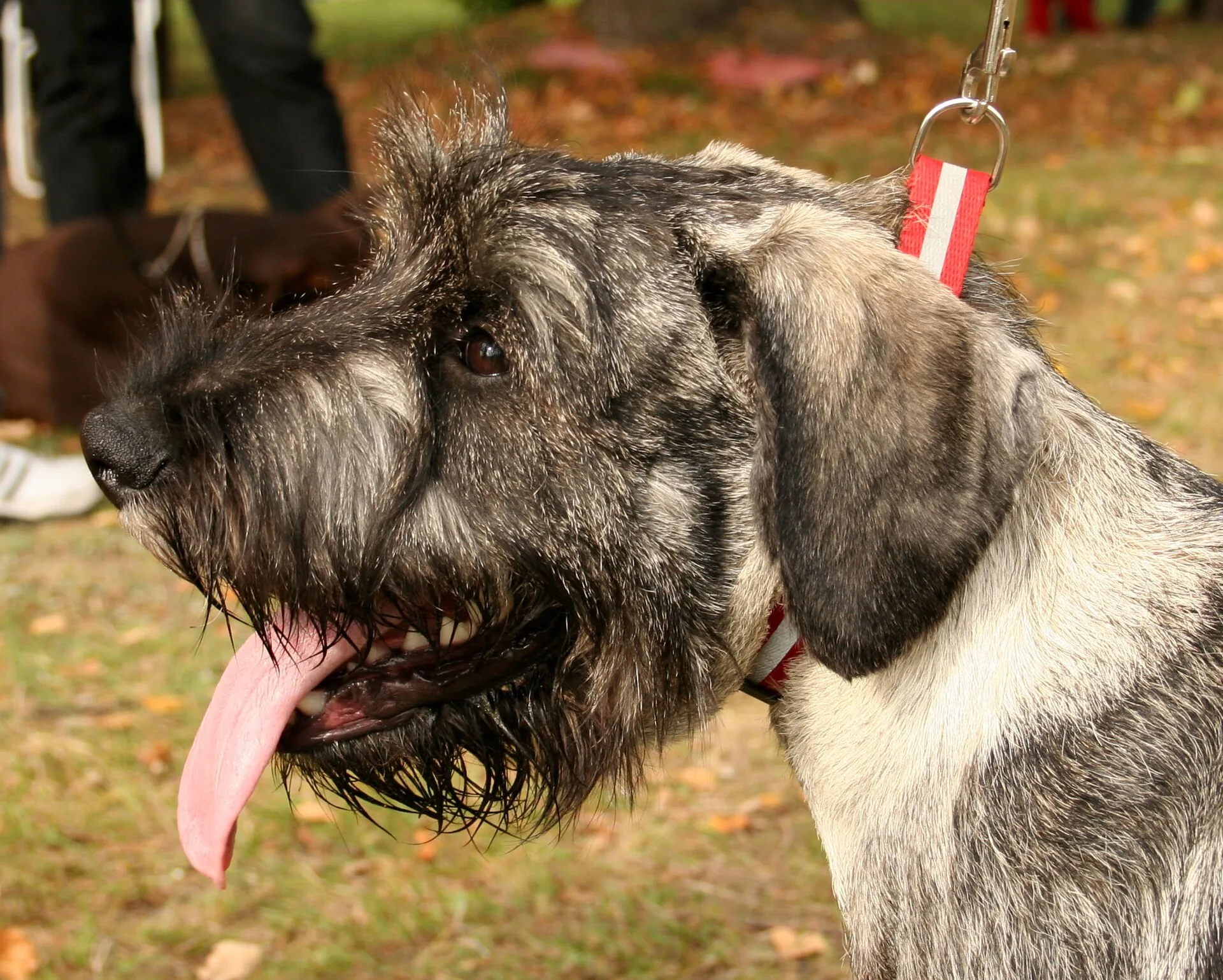
The name itself refers to the whiskered snout, the bristly beard and eyebrows that define the breed's look. The medium-sized Schnauzer is the original from which the Miniature and Giant Schnauzers were later developed as separate breeds. Under the FCI it is simply called the Schnauzer and is classed as a watch and companion dog, without a working trial. Germany is the country of origin and the current standard dates from 6 March 2007.
Temperament
The standard describes a lively temperament combined with placid composure, and lists good nature, playfulness and proverbial devotion to its master as typical traits. It also asks for a dog that is incorruptible and alert. In daily life that means a dog that is affectionate and funny with its family, settled indoors when given enough to do, and quick to notice anything unusual outside.
Standard Schnauzers are clever and independent thinkers. They work out routines quickly, test boundaries and remember which family members are easiest to persuade. Most are reserved with strangers at first and make reliable watchdogs, barking to announce arrivals. Without enough exercise and mental work they can become noisy, bossy or restless, so they suit owners who enjoy an engaged, opinionated companion.
Children and other pets
A well-raised Standard Schnauzer is usually excellent with the children of its household, sturdy enough for play and protective of them. It may be less tolerant of rough visiting children, so supervision helps. Most live well with other dogs, particularly when raised together. The ratting instinct is real: cats raised with the dog are often accepted, but rodents, rabbits and unfamiliar cats are likely to be chased.
Exercise and the daily walk
An adult needs about an hour to an hour and a half of activity a day, including a brisk walk and time to run, play or train. The breed has stamina and enjoys jogging, hiking and dog sports such as agility, obedience and scent work. A predictable lead walk around the block will not satisfy it on its own.
Mental exercise matters as much as physical effort. Searching games, short training sessions and food puzzles tire this breed effectively, which is useful on wet days. Recall can be good with training, but the urge to chase small animals means a long line is wise near woods and fields until the dog has proved itself.
Training
Standard Schnauzers learn quickly and remember well, but they need a reason to cooperate. Reward-based training with clear rules and varied tasks keeps them interested. Repetitive drills bore them, and inconsistency invites negotiation. They respond poorly to harsh handling, which can make them stubborn or defensive.
Early socialisation helps the natural watchfulness stay balanced. The puppy should meet many people, dogs and situations calmly, and should learn that the doorbell is a cue to go to a mat rather than a call to arms. Teaching a quiet signal early is worthwhile in a flat. Many owners find a training class or dog sport gives the dog the structured work it craves.
Coat and grooming
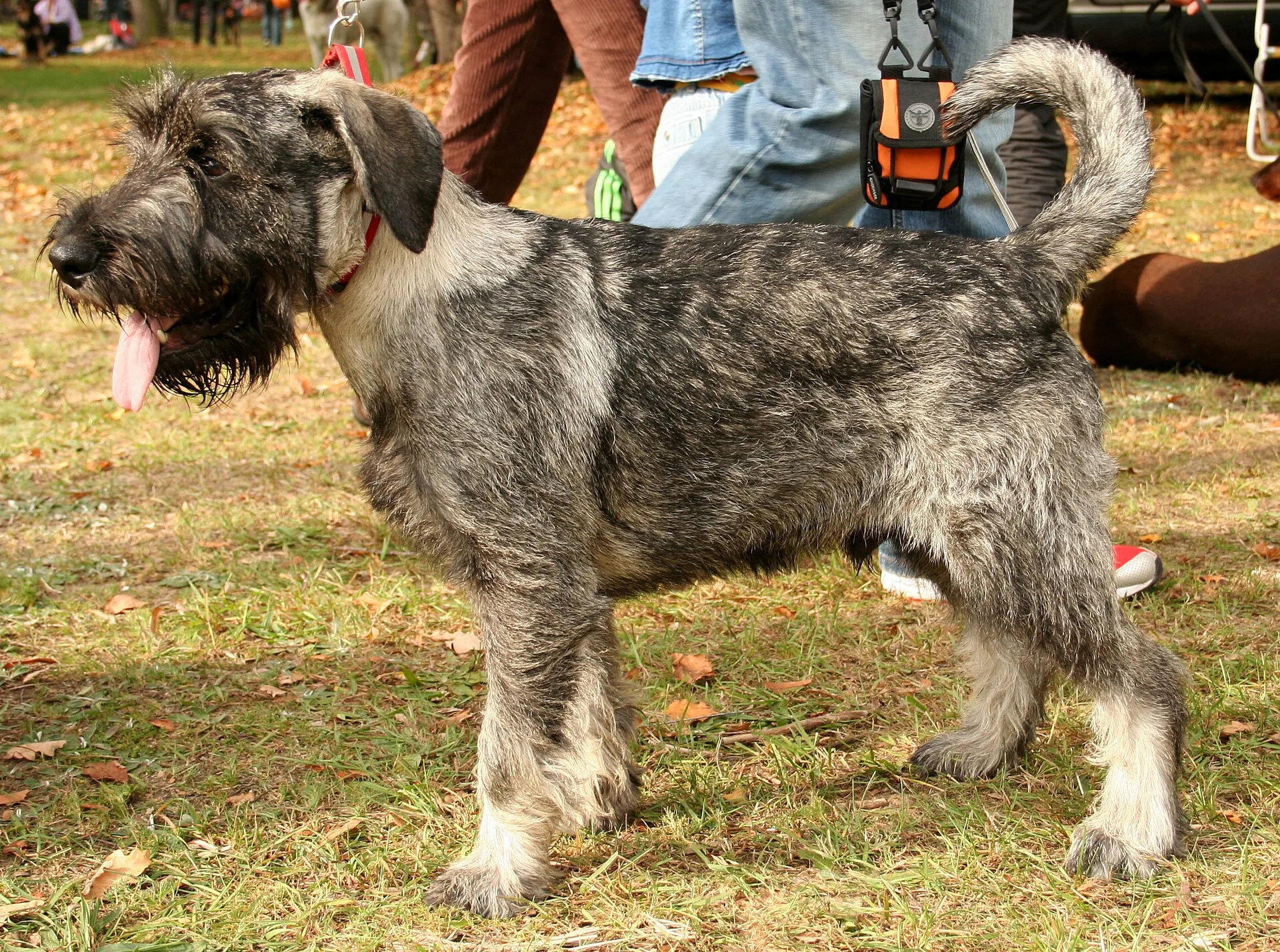
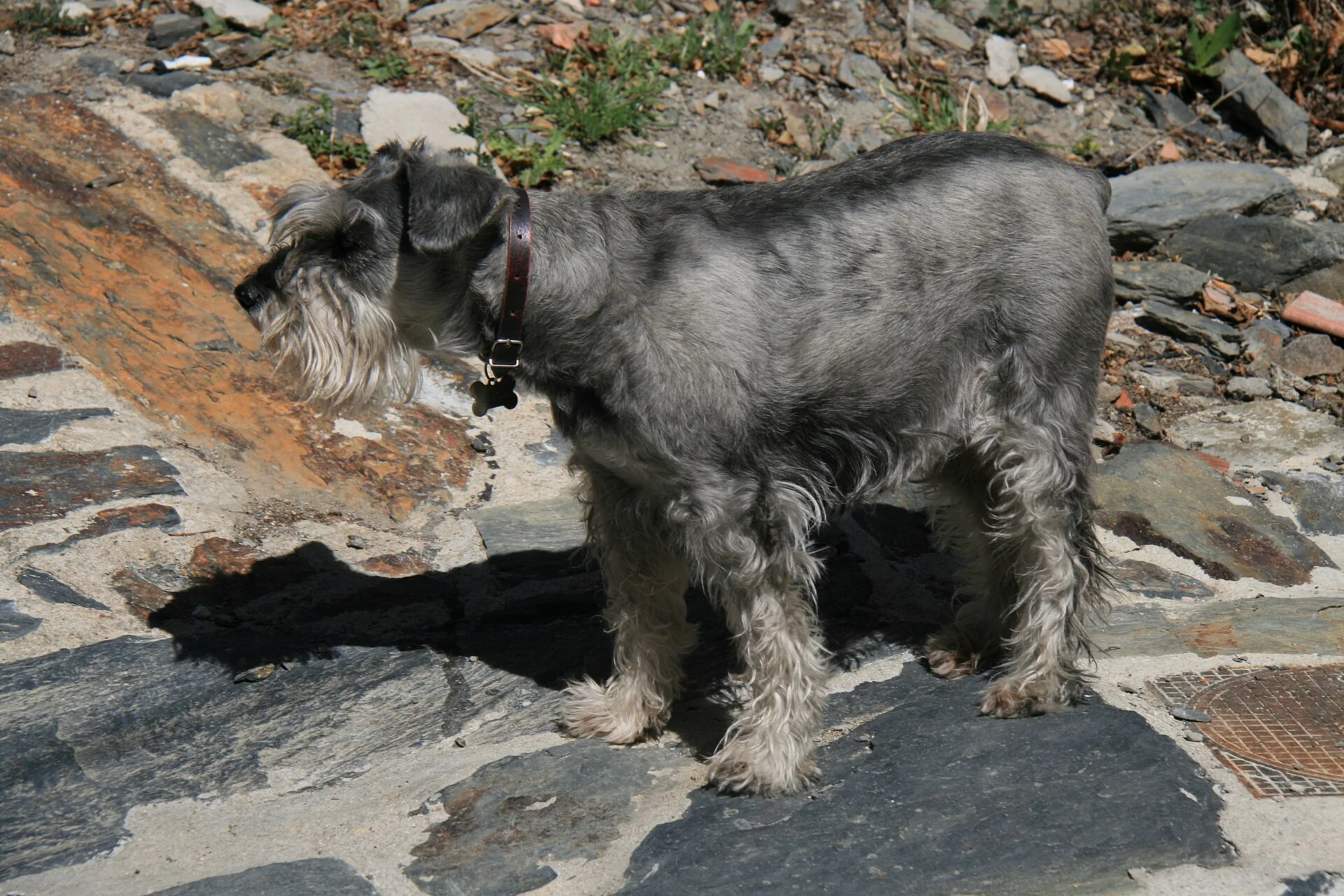
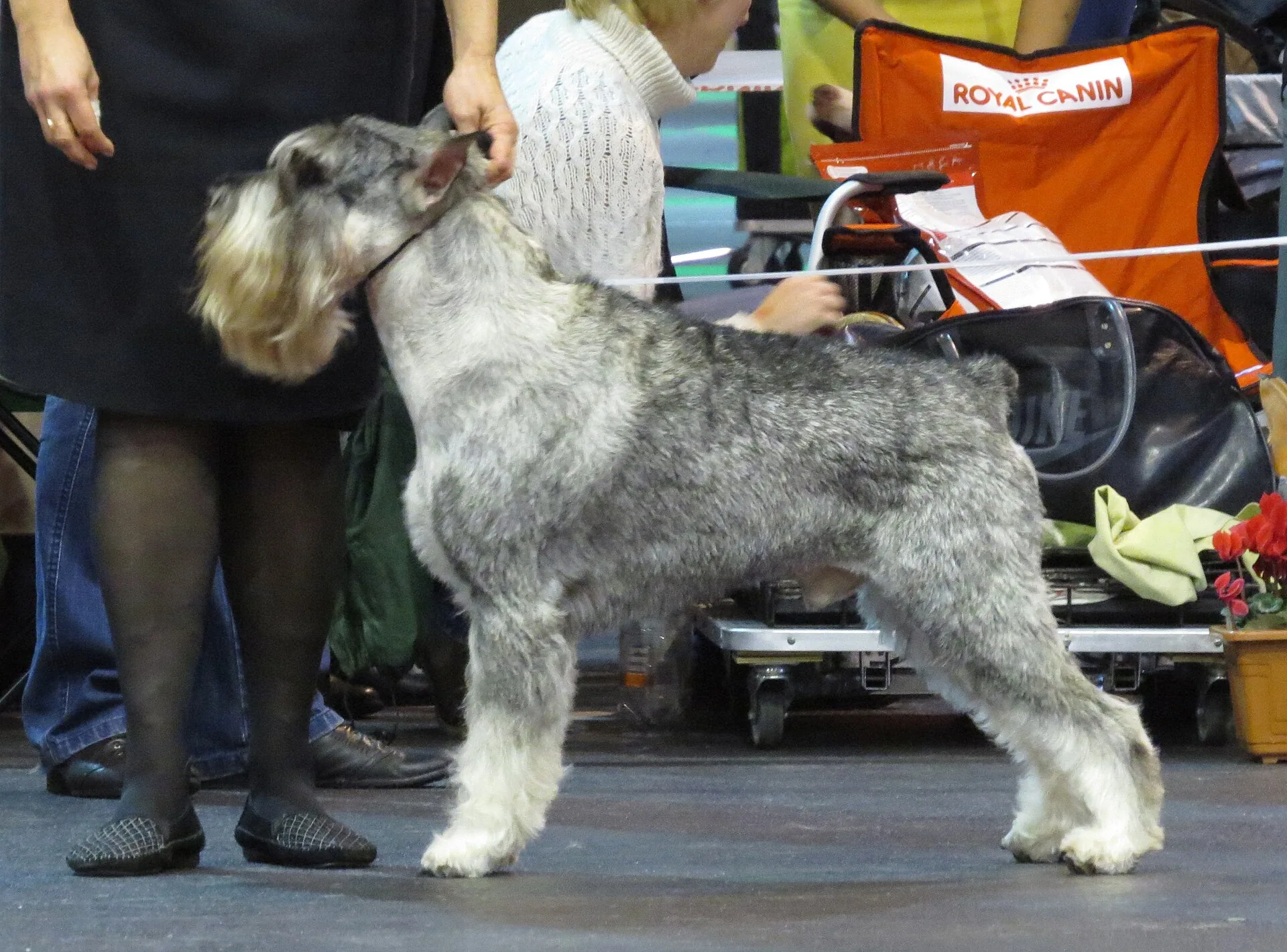
The FCI standard asks for a wiry, harsh, dense coat with a dense undercoat and a topcoat that lies close to the body. Show dogs are hand-stripped to keep the correct texture; many pet dogs are clipped, which is easier but softens the coat and dulls the colour. Weekly brushing and combing of the beard and leg furnishings prevent mats. Shedding is light. Only two colours are permitted: pure black with a black undercoat, and pepper and salt.
Feeding and weight
Two measured meals a day of a complete diet suited to an active medium-sized dog meet most adults' needs. Adjust amounts for activity, and weigh the dog regularly, as the furnished coat can hide extra kilos. Clean the beard after meals to prevent staining and smells. Use part of the ration for training rewards, which suits a dog that works happily for food.
Work out a starting calorie figure and food weight with the calorie calculator. Not sure this is the right breed? Take the quiz.
Health
Every breed carries predispositions. These are the conditions most often discussed for the Standard Schnauzer, not a prediction for any individual dog.
- Hip dysplasia
- Hereditary cataract and other inherited eye disease
- Dilated cardiomyopathy (a form linked to a known Schnauzer DNA variant)
- Hypothyroidism
What to ask the breeder. Ask for hip scores and recent eye examination results for both parents, and whether they have been DNA tested for the variant associated with dilated cardiomyopathy in Schnauzers.
Choosing a puppy
Standard Schnauzer puppies are confident and curious and will explore everything within reach. Begin grooming practice early: standing on a table, having the beard combed and the feet handled. Set household rules from the first day, because this breed notices loopholes. Short training sessions, calm socialisation outings and plenty of sleep are the priorities, with play rather than long walks while the joints develop.
In Luxembourg the national kennel club is the Fédération Cynologique Luxembourgeoise (FCL), a member of the FCI. Many owners also buy from breeders in Germany, France or Belgium; a puppy coming from another EU country must be microchipped and vaccinated against rabies, which in practice means it cannot travel before about fifteen weeks of age. Where to get a dog in Luxembourg.
The older Standard Schnauzer
Standard Schnauzers often stay lively and alert into old age. Regular vet checks should include eyes, heart and thyroid. Keep the dog lean and exercise regular but gentler, with attention to stiffness in the hips. Grooming becomes a welcome daily contact, and a check of teeth, skin and nails every month catches problems early. Many older dogs sleep more and feel the cold, so a warm bed away from draughts helps.
A realistic day
A realistic weekday for a working household in Luxembourg City, with a midday visit. Adjust it to your dog, not the other way round.
Brisk 45-minute walk with a few minutes of training, then breakfast.
Owner leaves; a food puzzle and a chew help the dog settle for the morning.
Midday visit: 30-minute walk with sniffing time and a short search game.
Longer evening outing of about 45 minutes, with running on a long line or a training session.
Short toilet walk and a comb through the beard before bed.
A Standard Schnauzer in Luxembourg
A Standard Schnauzer suits flat life in Luxembourg City as long as it is well exercised and taught to stay calm about noises in the stairwell. Its watchdog nature means it may bark at footsteps and lift doors, so quiet behaviour in shared spaces should be trained from the start. Parks such as Parc Merl and the Kinnekswiss offer pleasant routes, and the Grünewald forest is ideal for longer weekend walks.
The wiry coat copes well with rain and cold, though the beard and legs collect mud on wet November evenings. In summer heat, walks should be early or late, and a dog with a heavy coat may benefit from a shorter trim. Like every dog in Luxembourg, it must be microchipped, declared to the commune, insured for third-party liability and covered by the annual dog tax. Free buses and trams make it easy to reach the forest.
Every dog in Luxembourg must be identified, declared to the commune and covered by liability insurance. How registration works.
When you travel
A sitter should keep the routine predictable, with two good walks and some mental work each day. The dog may be wary of a new person at first, so an introduction before the owner leaves helps. The sitter should know how to deal with barking at the door, should comb the beard and legs, and should keep the dog on lead near cats, rabbits and wildlife.
PAWLY's holiday and overnight care takes place in your home, so your dog keeps its own bed and routine.
Myths and facts
MythA Standard Schnauzer is just a larger Miniature Schnauzer.
FactThe medium-sized Schnauzer is the original breed. The Miniature and Giant were developed later and are separate breeds with their own standards.
MythLow shedding means little grooming.
FactShed hair stays in the coat, so it needs regular brushing and stripping or clipping every few months.
MythSchnauzers are naturally aggressive guard dogs.
FactThe FCI standard describes a good-natured, playful and devoted dog. It is alert and reserved with strangers, but it should not be aggressive.
Is it the right dog for you?
Suits
- Active owners who enjoy training and outdoor activities
- Families wanting a sturdy, devoted and alert companion
- People who appreciate a clever dog with personality
- Owners prepared for regular grooming
Think twice if
- You need a quiet dog for a building with thin walls
- You have small pets such as rabbits or guinea pigs
- You prefer a dog that is friendly with everyone
- There is little time for daily exercise and training
Questions owners ask
Should my Standard Schnauzer be hand-stripped or clipped?
Hand-stripping preserves the harsh texture and rich colour that the standard describes. Clipping is quicker and cheaper but leaves the coat softer and lighter. Many pet owners clip; those who want the correct coat find a groomer experienced in stripping.
Is a Standard Schnauzer good with children?
Usually yes, especially with children in its own household. It is sturdy, playful and protective. Rough handling by unfamiliar children should be avoided, and supervision helps everyone learn good manners.
Do Standard Schnauzers bark a lot?
They are alert watchdogs and will announce visitors and unusual sounds. Training a quiet signal and giving enough exercise reduces nuisance barking, but some alerting is part of the breed.
How much exercise is enough?
About an hour to an hour and a half daily, combining walks, running and mental work. Searching games and training sessions are valuable on days when long walks are not possible.
Sources
- FCI breed standard No. 182 (Schnauzer)
- The Royal Kennel Club, Schnauzer breed information
- AKC, Working Group health testing requirements
Photo: Pleple2000, CC BY-SA 3.0, via Wikimedia Commons · Photo: Tamorlan, CC BY-SA 3.0, via Wikimedia Commons · Photo: Pleple2000, CC BY-SA 3.0, via Wikimedia Commons · Photo: Томасина, CC BY-SA 3.0, via Wikimedia Commons
General information for dog owners in Luxembourg, not veterinary or legal advice. Official facts (origin, size, group, history and temperament as described by the breed standard) follow the FCI standard; health and care sections reflect breed-club and veterinary guidance and are typical ranges rather than rules. For your own dog, ask your vet, the breed club or your commune. How this guide is written and checked. Last reviewed 8 October 2026.
Need someone for your Standard Schnauzer?
PAWLY offers an individual 45-minute walk or a home visit at your dog's pace, the same walker every time, and a written report with photos after every visit, across Luxembourg City.
Read next: the journal, for the Standard Schnauzer
All articles
Dogs and cats in the same flat
The Standard Schnauzer can see small animals as prey; this covers living with a cat in a flat.

When a dog loses its hearing or its sight
Eye and hearing conditions are watched for in the Standard Schnauzer; this covers living with them.

What actually tires a dog indoors
Walks alone rarely tire a busy breed like the Standard Schnauzer; this covers what works indoors.
Similar breeds
All 198 breeds
Miniature Schnauzer
A small, sturdy German farm dog with a beard, eyebrows and a lot to say.
EnergyGroomingFlat life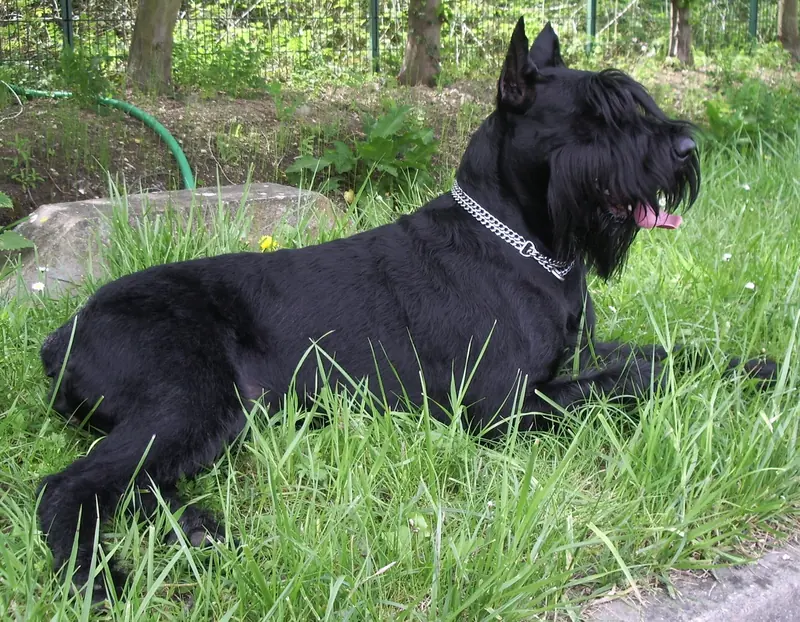
Giant Schnauzer
A big, intense Bavarian working dog, loyal to the point of stubbornness and happiest with a capable owner and a proper job.
EnergyGroomingFlat life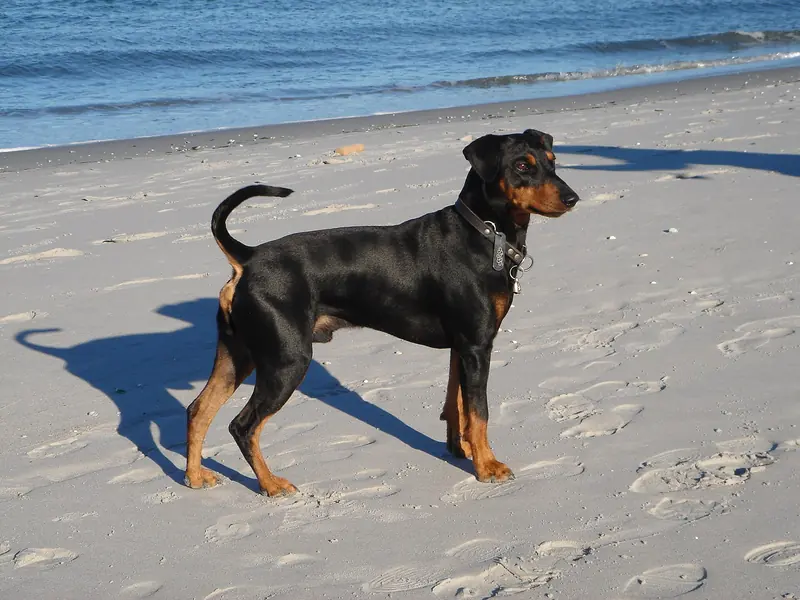
German Pinscher
A square, springy, fearless watchdog in a compact frame, with the energy and opinions of a much bigger dog.
EnergyGroomingFlat life

