History
The Smooth Fox Terrier is a British breed, listed by the FCI in Group 3, Section 1, Large and medium-sized terriers. The standard says that the Smooth and the Wire Fox Terrier descend from British dog types that also produced the Bull Terrier and the Manchester Terrier. The dogs were used to hunt rats, rabbits and foxes, and they have the build and stamina to cope with plenty of exercise.
The FCI notes that the type was standardised in the late nineteenth century, with the original standard dating from 1876. The breed was long a favourite in the show ring and a popular working terrier. The current FCI standard is dated 30.10.2016, and the use is given simply as terrier. The Smooth is not the same breed as the Wire: the two coat varieties are listed separately by the FCI, with different standards, though the dogs share the same general type.
Temperament
The FCI describes a dog that is alert, quick of movement and keen of expression, friendly and fearless. Smooth Fox Terriers are noticeably quick-witted, always scanning the street for something to investigate, and the combination of energy and curiosity is what defines them. They are affectionate with their people and enjoy attention, but they have a terrier's independence and a strong sense of what is worth doing.
Expect a dog that digs, chases and barks at things it finds suspicious, whatever its size. It can be a splendid companion for an active owner and a trial for one who wants a calm lap dog. Boredom is the main source of trouble: a Smooth Fox Terrier without work will find its own, which may involve cushions, post or the neighbour's cat. Give it jobs, such as tricks, scent games and varied walks, and it is cheerful and good company.
Children and other pets
The breed is lively and fun for sensible, active children, who can play fetch and learn training games with it. It is sturdy enough for family life, but it is not tolerant of teasing and may nip if cornered. With other dogs it can be feisty, and same-sex squabbles are possible. Small pets such as rabbits, hamsters or guinea pigs are a poor match given its hunting instincts, and cats are only safe if the dog was raised with them.
Exercise and the daily walk
This is an energetic terrier that needs about an hour to an hour and a half daily, including some free running in a safe place and some mental work. A short walk around the block will not satisfy it. It enjoys fetch, agility, flyball and scent games, and it can keep up with a jogger or cyclist once adult. After a good outing it is calm and sleeps in the flat.
Because of its strong chase drive, it should be off lead only in enclosed spaces. The breed was developed to go to ground after quarry, so burrows and holes are irresistible, and a bolting rabbit can lead to a long absence. Wet and cold days do not trouble it much, but the coat is thin, so a jacket helps in winter. Puppies should not be over-exercised while growing.
Training
Clever and eager to learn, the Smooth Fox Terrier is also strong-willed. Training should be fun, short and varied, with plenty of food and play as rewards. It learns quickly but gets bored with repetition. Concentrate on lead manners, a solid recall in safe areas, a calm door routine and reliable leave-it commands, as these matter most for a dog that will chase.
Early socialisation helps prevent excessive reaction to other dogs, which terriers can show. Teach barking cues and settle-on-a-mat games to channel its alertness. Fox Terriers are often described as clowns, and a sense of humour helps; harsh correction tends to be answered with stubbornness. Dog sports such as agility or trick training give an outlet for the intelligence and are a good way for owner and dog to build a relationship.
Coat and grooming
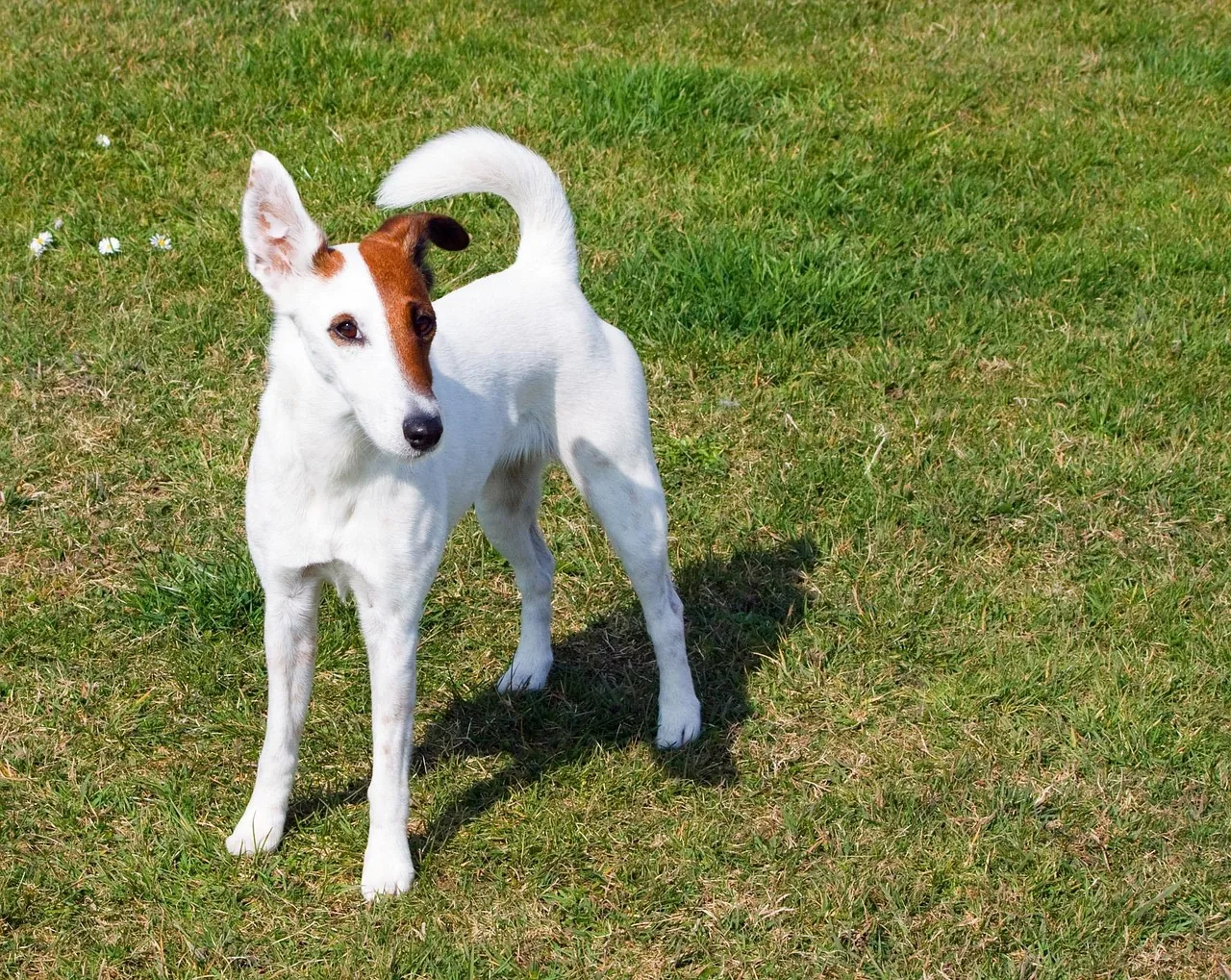
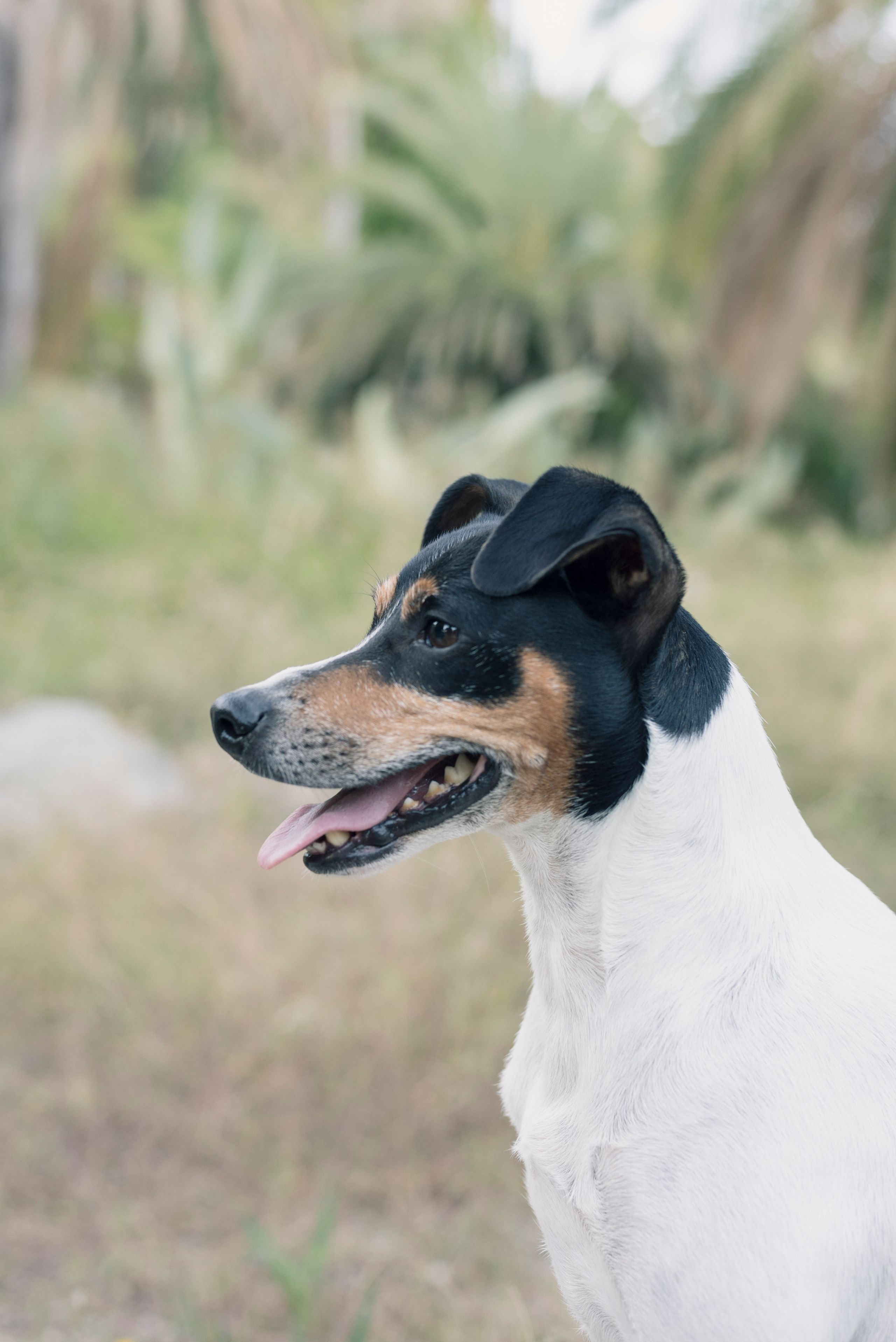
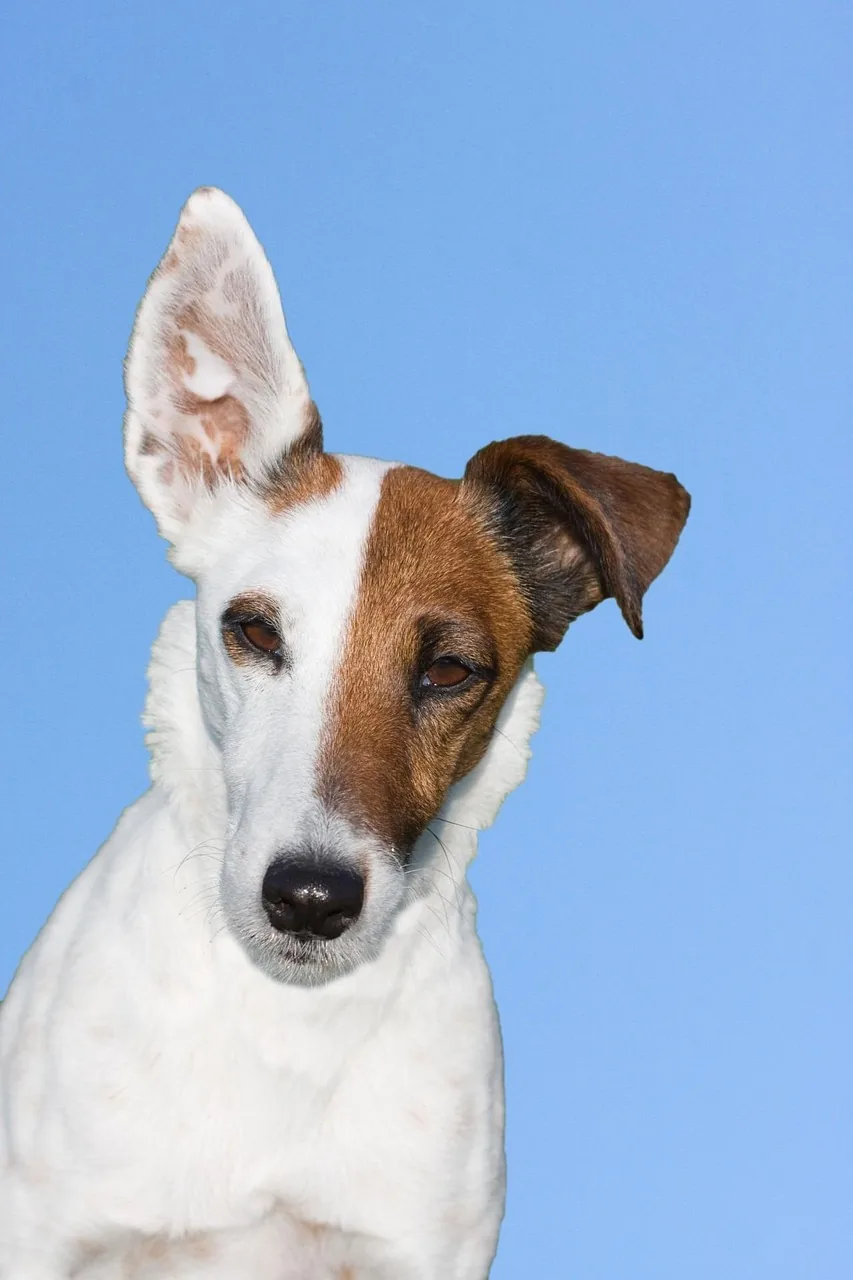
The FCI describes hair that is straight, flat, smooth, hard, dense and abundant. White should predominate, and acceptable colours are all white, or white with tan, black and tan, or black markings. Care is simple: brush weekly with a rubber mitt or soft brush to remove loose hair, and bathe only when dirty. Shedding is moderate and constant, with short hairs that can stick to fabric. The thin coat gives little protection against cold, wet weather.
Feeding and weight
A complete diet for an active small to medium breed, measured by weight and divided into two meals, suits most adults. These dogs burn a lot of energy but can still gain weight if given too many treats, so use part of the daily ration for training. Fresh water should be available at all times. Check body condition by feeling the ribs under a light covering, and adjust portions for age and activity.
Work out a starting calorie figure and food weight with the calorie calculator. Not sure this is the right breed? Take the quiz.
Health
Every breed carries predispositions. These are the conditions most often discussed for the Smooth Fox Terrier, not a prediction for any individual dog.
- Primary lens luxation (displacement of the eye lens)
- Patellar luxation (slipping kneecaps)
- Legg-Calvé-Perthes disease (hip joint degeneration)
- Congenital deafness
- Epilepsy
- Cataracts
What to ask the breeder. Ask for the parents' eye test results, including testing for lens luxation, and for knee and hearing checks. Ask about any history of seizures in the line.
Choosing a puppy
A Smooth Fox Terrier puppy is a bundle of energy and mischief. Start lead training, short alone periods and handling in the first week. Provide plenty of chew toys and a pen or crate to protect furniture and cables. Socialise with calm dogs and many types of people, lifts and traffic noises, and keep outings short and fun. Avoid jumping from heights and long runs while the bones are growing. Begin recall games in an enclosed space early.
In Luxembourg the national kennel club is the Fédération Cynologique Luxembourgeoise (FCL), a member of the FCI. Many owners also buy from breeders in Germany, France or Belgium; a puppy coming from another EU country must be microchipped and vaccinated against rabies, which in practice means it cannot travel before about fifteen weeks of age. Where to get a dog in Luxembourg.
The older Smooth Fox Terrier
Many Smooth Fox Terriers stay active into their teens. Watch for stiffness, changes in vision, and slower recovery after exercise, and adjust walks to shorter, more frequent outings. Check eyes regularly for redness or cloudiness, and have teeth examined. A warm, supportive bed and a coat in winter help. Mental games remain valuable because the breed keeps its curiosity, and regular vet checks, ideally twice a year, catch problems early.
A realistic day
A realistic weekday for a working household in Luxembourg City, with a midday visit. Adjust it to your dog, not the other way round.
Brisk 25 minute walk and breakfast, with a few training exercises.
Owner leaves for work; the dog rests with a chew toy or puzzle feeder.
Midday visit: a 40 minute walk with a ball game in a secure area, water and a short training session.
Evening outing of about an hour, ideally with some off-lead time in a safe place, then dinner.
Short toilet break, a calm settling routine and bed.
A Smooth Fox Terrier in Luxembourg
The Smooth Fox Terrier is small enough for a flat, but it needs enough daily exercise to be settled. Luxembourg City has plenty of space: Parc Merl, the Municipal Park and the Pétrusse valley for morning and evening outings, and the Bambësch and Grünewald forests for weekend adventures. Free buses and trams let you reach them without a car, and a fit terrier usually copes happily with public transport.
Because of the chase drive, keep it on a lead near roads and in forests, where deer and other wildlife can lead it astray. Summer days in the 30s °C are manageable for this short-coated breed but still call for early and late walks. A dog that barks at the lift or at neighbours needs training in a block with shared walls. As in all of Luxembourg, microchip, commune declaration, third-party liability insurance and the dog tax are required.
Every dog in Luxembourg must be identified, declared to the commune and covered by liability insurance. How registration works.
When you travel
A sitter should be active and able to provide proper exercise, ideally twice or three times daily. Keep the dog on a lead outdoors, as it will chase anything. Secure the garden or balcony, as terriers dig and climb. Keep to the usual routine, provide puzzle toys and leave feeding amounts and vet details. Warn the sitter that the dog may bark at noises and does not like to be ignored.
PAWLY's holiday and overnight care takes place in your home, so your dog keeps its own bed and routine.
Myths and facts
MythSmooth Fox Terriers are the same as Jack Russells.
FactThey are different breeds. The Fox Terrier is a larger, longer-legged dog with an FCI standard of its own, and the Jack Russell is a separate type.
MythA small terrier is easy to exercise.
FactThe breed needs an hour or more of active exercise and mental stimulation daily.
MythA short coat means no grooming.
FactBrushing is simple, but regular, and the dog still sheds short hairs all year round.
Is it the right dog for you?
Suits
- Active owners who enjoy training and games
- Families with sensible, energetic children
- People who can provide daily outdoor time
- Flat dwellers with parks nearby
Think twice if
- You want a calm, low-energy dog
- You keep rabbits, hamsters or other small pets
- You cannot provide daily exercise
- You expect a dog that is always reliable off lead
Questions owners ask
How big is a Smooth Fox Terrier?
The FCI standard gives a maximum height of 39 cm for males, with females slightly smaller, and weights of about 7.5 to 8 kg for males and 7 to 7.5 kg for females.
Is a Smooth Fox Terrier good for flat life?
Yes, provided it gets an hour or more of exercise and mental work daily. Without it, the breed can bark, dig and become destructive indoors.
Do Smooth Fox Terriers shed?
They shed moderately all year round, with short, hard hairs. Weekly brushing keeps it under control, and a rubber mitt is useful.
Are they good with other dogs?
Often, if socialised well, but terriers can be feisty and quarrel with dogs that challenge them. Introduce new dogs carefully.
Sources
Photo: Pixabay (Pixabay Content License) · Photo: FoxTerrier / Pixabay (Pixabay Content License) · Photo: Pexels (Pexels License) · Photo: Pixabay (Pixabay Content License)
General information for dog owners in Luxembourg, not veterinary or legal advice. Official facts (origin, size, group, history and temperament as described by the breed standard) follow the FCI standard; health and care sections reflect breed-club and veterinary guidance and are typical ranges rather than rules. For your own dog, ask your vet, the breed club or your commune. How this guide is written and checked. Last reviewed 8 October 2026.
Need someone for your Smooth Fox Terrier?
PAWLY offers an individual 45-minute walk or a home visit at your dog's pace, the same walker every time, and a written report with photos after every visit, across Luxembourg City.
Read next: the journal, for the Smooth Fox Terrier
All articles
Building a recall you can actually rely on
Terriers follow scent and movement, so the Smooth Fox Terrier needs a recall built properly.

Dogs and cats in the same flat
The Smooth Fox Terrier can see small animals as prey; this covers living with a cat in a flat.

Small dogs, and the training they never get
Small dogs are often the least trained; worth reading before habits set in.
Similar breeds
All 198 breeds
Wire Fox Terrier
Bright-eyed and permanently on tiptoe, a small working terrier with a big opinion of itself and a remarkable talent for entertaining a household.
EnergyGroomingFlat life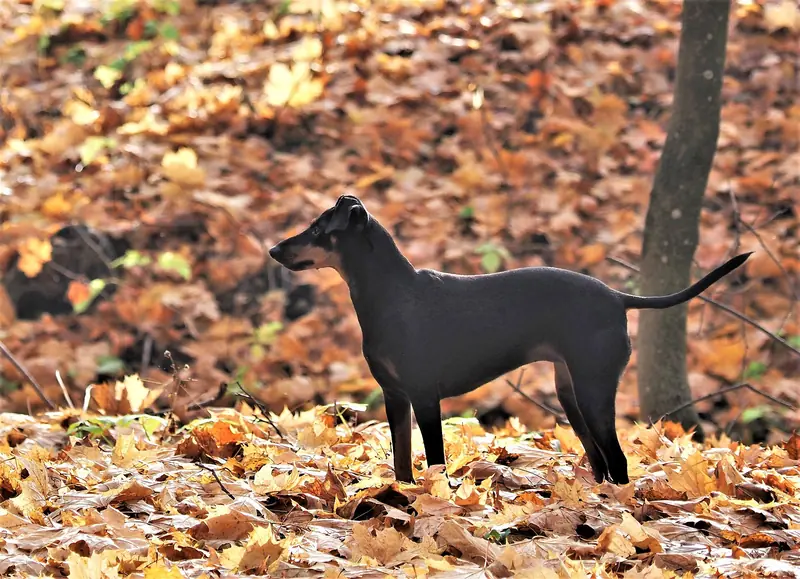
Manchester Terrier
A sleek black and tan ratter from Victorian Manchester, elegant enough for a city flat and still quick enough to clear a barn.
EnergyGroomingFlat life
Jack Russell Terrier
A big dog in a small body: fearless, clever, endlessly busy and permanently looking for something to hunt.
EnergyGroomingFlat life

