
History
The Wire Fox Terrier is a British dog, developed to work with mounted foxhunts. Its job was to follow a fox to ground and bolt it from its earth, which demanded a small, agile, courageous dog with a harsh coat to shrug off thorns and weather. The FCI standard contains no historical section, but its description of the ideal dog, standing like a short-backed hunter covering a lot of ground, still reflects that working purpose.
The wire-coated and smooth-coated fox terriers were long shown as one breed with two varieties, and today the FCI treats them as two separate breeds with their own standards. The Wire became a celebrated show dog and a familiar family pet in the twentieth century, and Hergé's Snowy, Tintin's companion, made the silhouette famous across Europe. The FCI places it in Group 3, Section 1, among the large and medium-sized terriers, with Great Britain as country of origin and a standard dated 2009.
Temperament
The standard describes the Wire Fox Terrier as alert, quick of movement and keen of expression, on tiptoe of expectation at the slightest provocation, friendly, forthcoming and fearless. Owners recognise every word. This is a dog that notices everything, from a pigeon on the balcony rail to a crisp packet on the pavement, and reacts with speed and enthusiasm.
Wires are sociable and affectionate with their people and often full of comedy, but they are also bold, independent and quick to argue the point. Some are not keen on other dogs who challenge them, and a terrier that has decided to chase or dig is hard to redirect. The reward for living with all that energy is a lively, cheerful companion that rarely has a dull day and keeps its sense of fun well into old age.
Children and other pets
With sensible, active children a Wire Fox Terrier can be a fun, robust playmate, though it may nip at clothes during wild games and does not tolerate rough handling. Supervise young children and give the dog a quiet place to retreat. Living with other dogs works best with a calm partner of the opposite sex. The prey drive is strong: cats raised with it may be accepted indoors, but rabbits, guinea pigs and rodents should be kept well out of reach.
Exercise and the daily walk
An adult needs at least an hour a day, ideally more, with variety: brisk walks, sniffing time, and games of fetch or tug. The Royal Kennel Club gives up to an hour a day as a baseline, but most Wires happily do more. A bored terrier invents its own entertainment, which usually involves digging, barking or redesigning cushions.
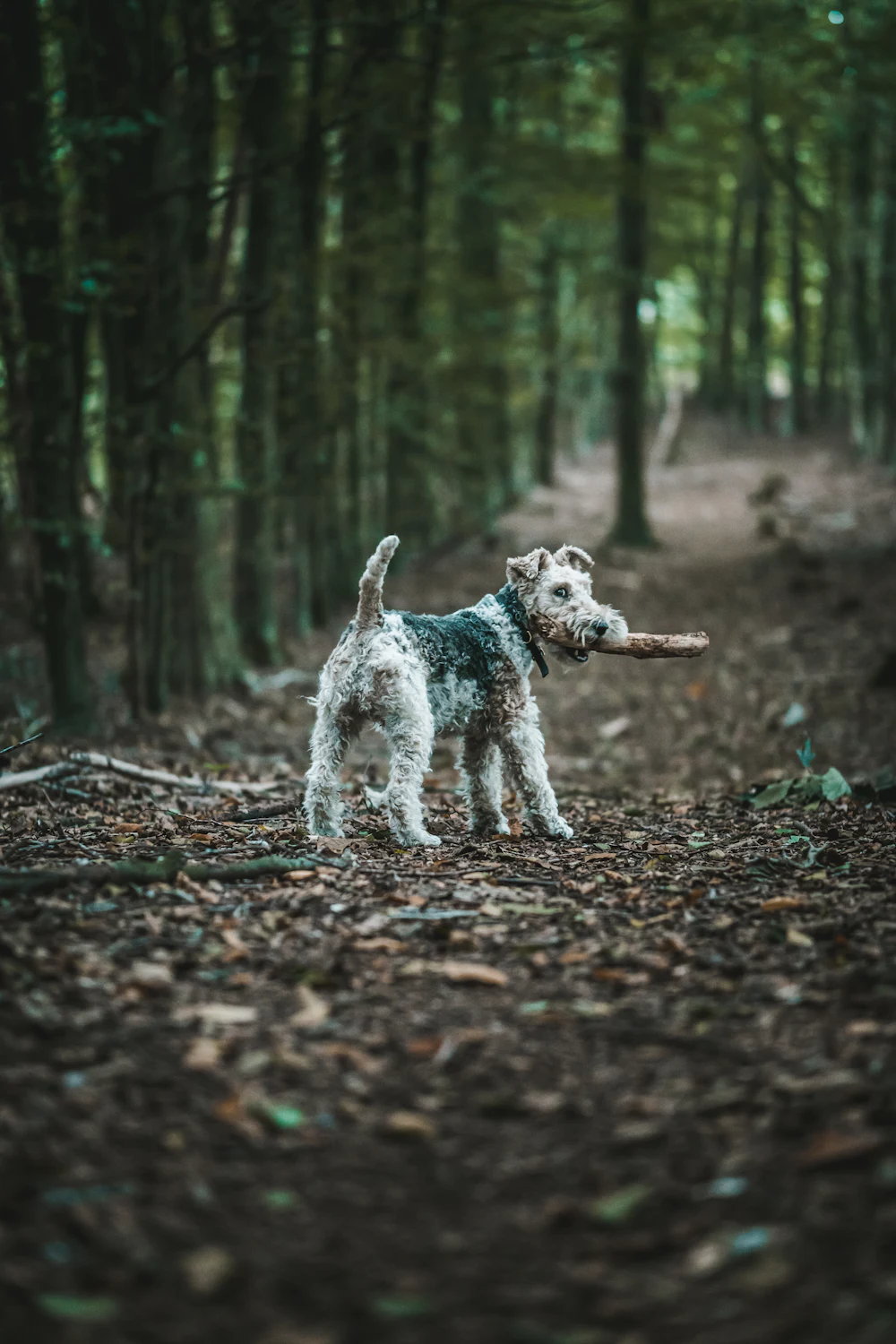
Off-lead running should only happen in secure areas or once recall is truly solid, and even then the forest edge is a risk, because a fox terrier on the scent of a rabbit or squirrel stops listening. A long line works well in parks and woodland. Scent games, simple agility and earthdog-style activities suit the breed's instincts and tire the mind as well as the legs.
Training
Wires learn quickly, but they are thinkers with their own agenda, so training must be lively, short and rewarding. Food and play work far better than pressure. Start with a reliable recall, a solid leave it, and calm behaviour on the lead around other dogs. Teach a quiet cue early, since many fox terriers are vocal and alert to every noise.
Socialisation with other dogs is especially important to prevent the confident terrier swagger turning into scrappiness. Puppy classes, controlled meetings with well-mannered adult dogs, and plenty of calm city experience such as lifts, buses and café terraces help. Consistency from every member of the household matters, because a Wire will quickly identify the person who lets the rules slide.
Coat and grooming
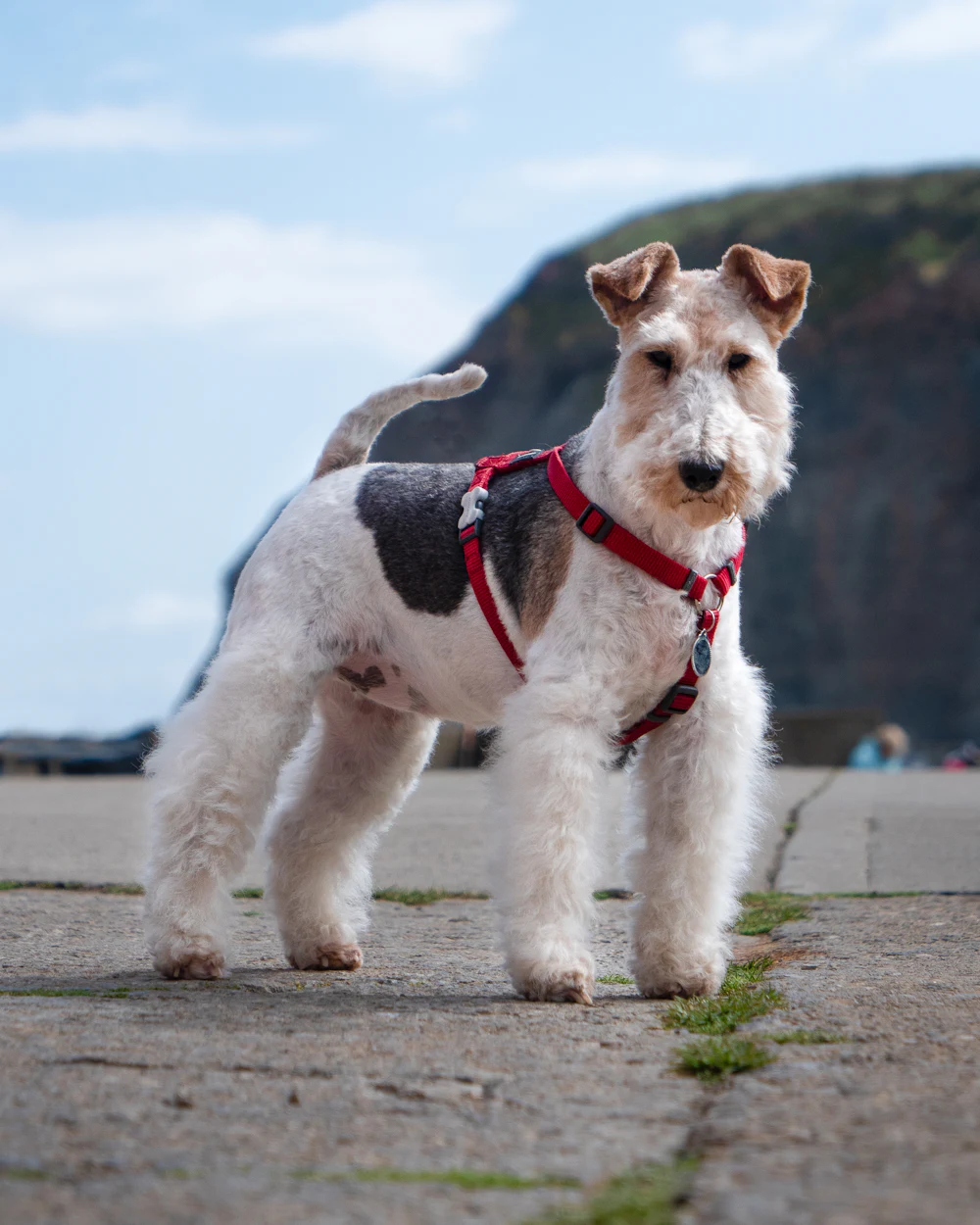
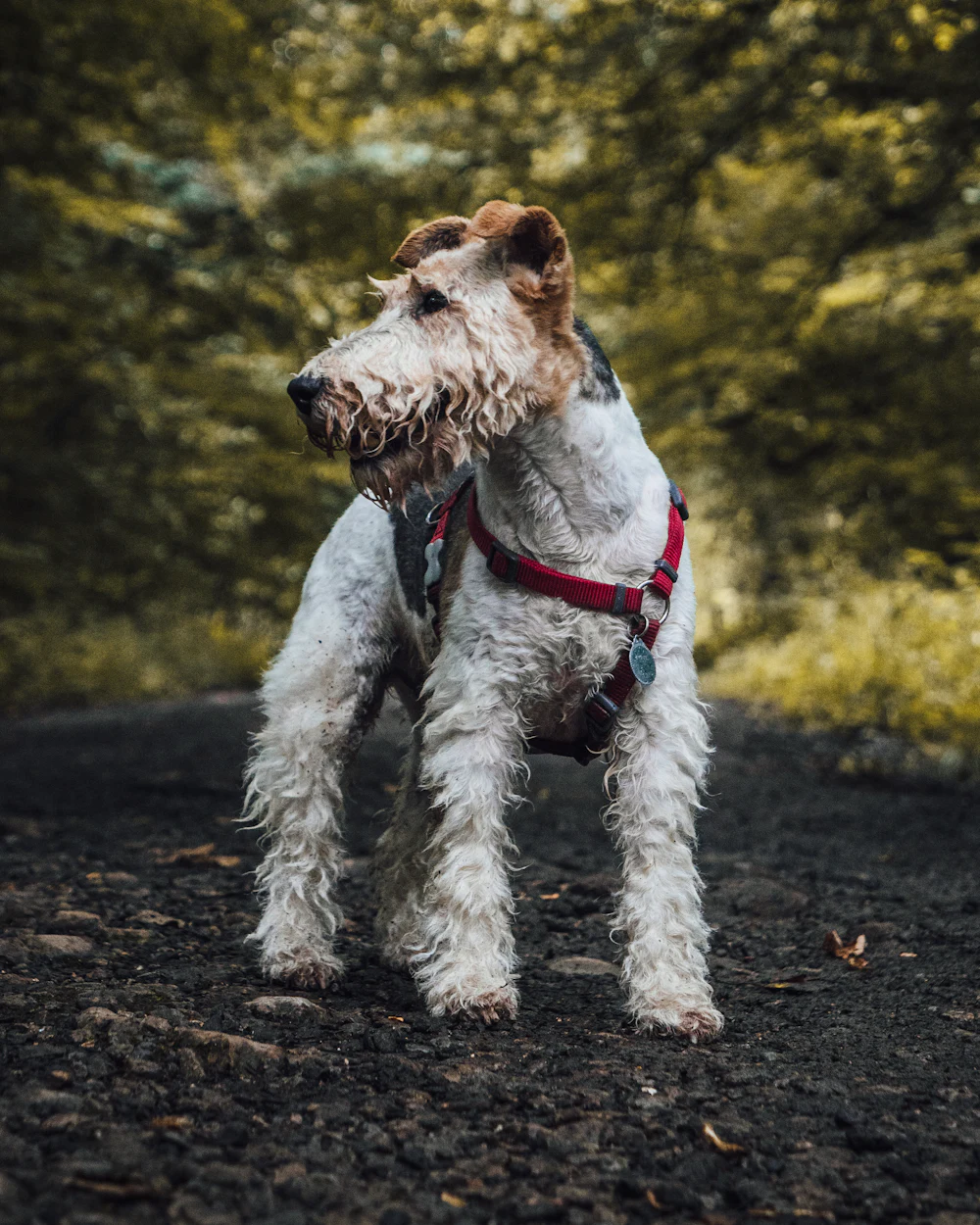
The coat is dense and very wiry, the standard describing a texture like coconut matting, with a softer, shorter undercoat. It is longer on the body than on the sides of the neck and shoulders. Show dogs are hand-stripped, which preserves the harsh texture and colour; many pets are clipped, which is easier but softens the coat over time. Shedding is low if the coat is maintained. White should predominate, with black, black and tan, or tan markings; brindle, red, liver or slate-blue markings are undesirable.
Feeding and weight
Wire Fox Terriers are usually keen eaters with a fast metabolism when young and a tendency to gain weight with age if portions are not adjusted. Feed a complete diet in two meals, use part of the daily ration for training, and weigh the dog every few months. A lean terrier is a more agile and longer-lived terrier, and its compact frame shows extra weight quickly.
Work out a starting calorie figure and food weight with the calorie calculator. Not sure this is the right breed? Take the quiz.
Health
Every breed carries predispositions. These are the conditions most often discussed for the Wire Fox Terrier, not a prediction for any individual dog.
- Primary lens luxation (PLL)
- Patellar luxation (slipping kneecap)
- Legg-Calvé-Perthes disease
- Allergic skin disease
- Heart conditions (cardiac examination recommended)
What to ask the breeder. Ask whether both parents have been DNA tested for primary lens luxation and checked for patellar luxation and heart health, as the AKC recommends for the breed.
Choosing a puppy
A Wire puppy is a small tornado of curiosity. Puppy-proof the flat, keep cables and shoes out of reach, and provide plenty of chew toys and short training games. Start handling the coat early and introduce a groomer's table or a mat at home so the puppy learns to stand still. Early socialisation with friendly dogs is the best investment you can make, and gentle rules about biting and barking set the tone for adult life.
In Luxembourg the national kennel club is the Fédération Cynologique Luxembourgeoise (FCL), a member of the FCI. Many owners also buy from breeders in Germany, France or Belgium; a puppy coming from another EU country must be microchipped and vaccinated against rabies, which in practice means it cannot travel before about fifteen weeks of age. Where to get a dog in Luxembourg.
The older Wire Fox Terrier
Many Wires stay lively into their teens, though they may need shorter walks and more rest days. Keep up mental games, which older terriers enjoy as much as ever, and watch weight carefully as activity drops. Regular checks of the eyes, teeth, heart and knees catch problems early. A warm coat in cold, wet weather can help a senior dog with a clipped coat.
A realistic day
A realistic weekday for a working household in Luxembourg City, with a midday visit. Adjust it to your dog, not the other way round.
A brisk 30-minute walk with time to sniff along the streets and park edges, then breakfast.
A short tug or puzzle game before the owner leaves, so the terrier settles for its morning nap.
PAWLY midday visit: a 45-minute walk on a long line in Kinnekswiss or the Pétrusse valley, scent games and fresh water.
Evening walk of 45 minutes or a training session, followed by dinner.
Short last outing around the block and a quiet chew before bed.
A Wire Fox Terrier in Luxembourg
A Wire Fox Terrier is a good size for a Luxembourg City flat, easy to carry in a lift and light enough for a tram or bus ride. The challenges are noise and energy: an under-exercised terrier will bark at the door, at the lift and at the neighbour's dog. A walk before work, a midday break and a proper evening outing go a long way towards a quiet home.
The Pétrusse valley, Parc Merl and the Kinnekswiss suit daily walks on lead, while Bambësch and the Grünewald forest offer more varied ground, but keep the terrier on a long line where hares, deer and squirrels are about. The wiry coat copes well with Luxembourg's damp winters; in summer, walk early and late when the heat climbs into the 30s °C. Like every dog it must be microchipped, declared to the commune and insured.
Every dog in Luxembourg must be identified, declared to the commune and covered by liability insurance. How registration works.
When you travel
A sitter must know that this dog is fast, curious and an escape artist: doors, balcony gaps and garden fences need checking. Keep the lead on outside secure areas and avoid letting it greet unfamiliar dogs too boldly. Stick to its usual routine, offer chew toys and short training games to keep its mind busy, and expect some alert barking at new sounds. Daily exercise is essential to prevent boredom.
PAWLY's holiday and overnight care takes place in your home, so your dog keeps its own bed and routine.
Myths and facts
MythSmall means low energy.
FactThe Wire Fox Terrier was bred to keep up with hunts and still has the energy to prove it. It needs real daily exercise.
MythClipping is as good as hand-stripping.
FactClipping is practical for a pet, but over time it softens the coat and dulls the colour. Hand-stripping keeps the wiry texture.
MythTerriers cannot be trained.
FactThey can, and many excel at sports. They simply respond to motivation and variety rather than repetition and force.
Is it the right dog for you?
Suits
- Active owners who enjoy a characterful, funny dog
- Households where someone is around or a midday walk is arranged
- People willing to invest in training and socialisation
- Flat dwellers who want a small but robust companion
Think twice if
- Think twice if you have small pets such as rabbits or rodents
- Think twice if barking would be a problem in your building
- Think twice if you want a dog that can be left alone all day
- Think twice if you need reliable off-lead recall in open countryside
Questions owners ask
Do Wire Fox Terriers shed?
Very little, as long as the dead coat is removed by stripping or clipping. A neglected coat does not fall out cleanly and can become matted and itchy. Weekly brushing and professional grooming every few months keep it tidy.
Are they good with other dogs?
Many are sociable, but the breed is fearless and some will not back down from a challenge. Early, positive socialisation and careful introductions help. Pairing with a calm dog of the opposite sex usually works best.
What is the difference between the Wire and the Smooth Fox Terrier?
They share the same origins and similar build, but the Wire has a dense, harsh coat that needs stripping or clipping, while the Smooth has a short, flat coat. The FCI treats them as two separate breeds with their own standards.
Can a Wire Fox Terrier live in a flat?
Yes, if it gets enough exercise and mental work. It is small and adaptable, but a bored terrier is noisy and destructive. Plan at least an hour of activity a day and a break during working hours.
Sources
- FCI breed standard No. 169 (Fox Terrier, Wire)
- The Royal Kennel Club, Fox Terrier (Wire)
- AKC Terrier Group health testing requirements
- AKC Wire Fox Terrier standard
Photo: Unsplash (Unsplash License) · Photo: Unsplash (Unsplash License) · Photo: Unsplash (Unsplash License)
General information for dog owners in Luxembourg, not veterinary or legal advice. Official facts (origin, size, group, history and temperament as described by the breed standard) follow the FCI standard; health and care sections reflect breed-club and veterinary guidance and are typical ranges rather than rules. For your own dog, ask your vet, the breed club or your commune. How this guide is written and checked. Last reviewed 8 October 2026.
Need someone for your Wire Fox Terrier?
PAWLY offers an individual 45-minute walk or a home visit at your dog's pace, the same walker every time, and a written report with photos after every visit, across Luxembourg City.
Read next: the journal, for the Wire Fox Terrier
All articles
Building a recall you can actually rely on
Terriers follow scent and movement, so the Wire Fox Terrier needs a recall built properly.

Dogs and cats in the same flat
The Wire Fox Terrier can see small animals as prey; this covers living with a cat in a flat.

Barking in an apartment: six causes, six different answers
Terriers are quick to sound the alarm; this sorts out the causes and the answers.
Similar breeds
All 198 breeds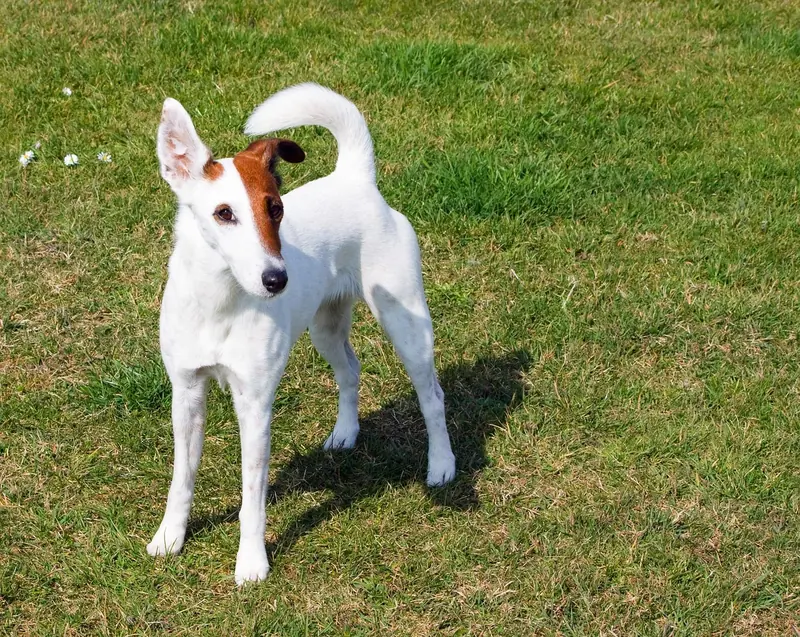
Smooth Fox Terrier
A white, quick-witted terrier with a spring in every step, sharper than most dogs twice its size and rarely willing to be ignored.
EnergyGroomingFlat life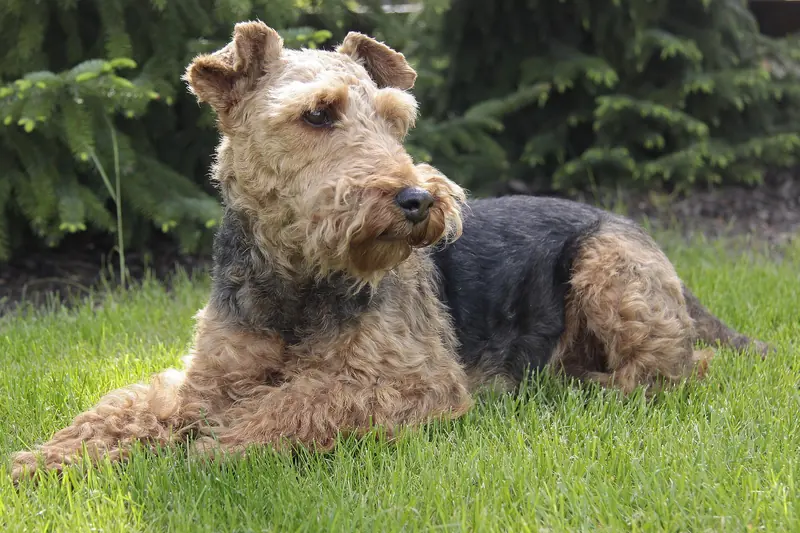
Welsh Terrier
A cheerful, sturdy terrier from Wales: like an Airedale in miniature, with more energy than manners.
EnergyGroomingFlat life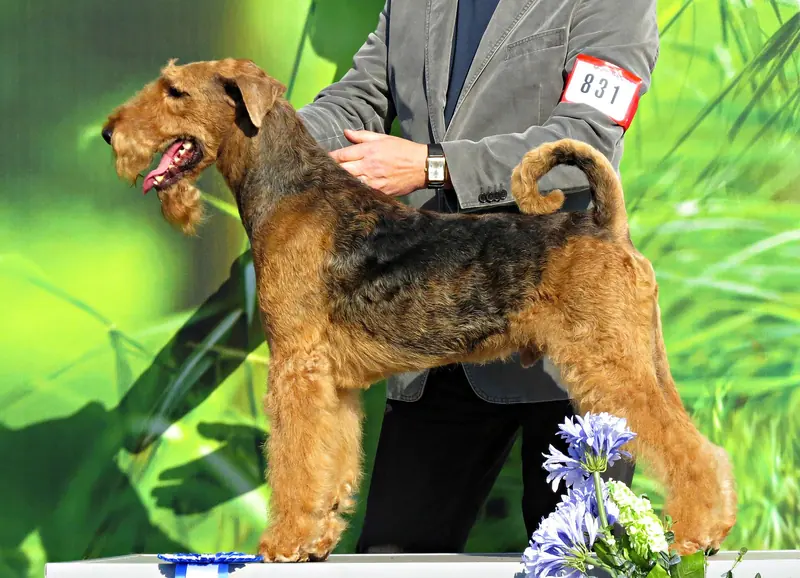
Lakeland Terrier
A neat, fearless fell terrier from the English Lake District: tireless, cheerful and very terrier.
EnergyGroomingFlat life

