History
Despite the name, the Black Russian Terrier is not a true terrier. According to the FCI standard, it was developed in Russia in the late 1940s and early 1950s by selective crossing of the Giant Schnauzer, Rottweiler, Airedale Terrier and Newfoundland, with the Giant Schnauzer as the main ancestor. The work was supervised by military dog schools near Moscow, at the Red Star kennel, which wanted a large, brave, adaptable working dog suited to guard and other duties in many climates.
Dogs from the programme were later released to private breeders, who refined type and temperament. The FCI recognised the breed in 1984, and it sits today in Group 2, Section 1, among the Pinscher and Schnauzer type breeds, with an optional working trial. The current standard dates from 2010. Its uses, as listed in the standard, are working dog, guard dog, sporting dog and companion.
Temperament
The standard describes a dignified, confident dog that remains well controlled in all situations, reacts defensively when needed but quickly calms down once the threat has gone. At home this translates into a dog that is often surprisingly calm and affectionate, happiest close to its family and very attached to its people.
With strangers, many Black Russian Terriers are watchful and aloof, and they naturally guard their home and family. They are rarely nuisance barkers, but a deep bark at the door is enough to make visitors think twice. A good Black Russian Terrier is stable, not aggressive; that stability depends on genetics, early socialisation and clear, consistent leadership from the owner.
Children and other pets
In its own family, a well-raised Black Russian Terrier is often patient and gentle with children, although its size means toddlers can be knocked over, and visiting children may trigger protectiveness during rough play. Supervision is essential. Many live well with other household pets, including cats they have grown up with. With unfamiliar dogs, especially dogs of the same sex, some can be dominant or reactive, so socialisation from puppyhood is important.
Exercise and the daily walk
An adult Black Russian Terrier needs about an hour and a half of activity a day: brisk walks, play and a chance to use its mind. It is not hyperactive, but it was bred to work, and a dog with no outlet becomes bored and may develop destructive habits. Tracking, obedience, and other structured activities suit the breed well.
Its heavy black coat makes it sensitive to heat. In summer, plan walks for early morning and late evening, provide shade and water, and avoid strenuous activity on hot afternoons. Because of the bloat risk shared by many large, deep-chested breeds, avoid vigorous exercise for an hour or so around meals.
Training
Intelligent and capable, the Black Russian Terrier learns quickly but can be strong-willed. It needs an owner who is calm, consistent and confident, and who uses reward-based methods with clear boundaries. Harsh methods tend to damage the dog's trust and can make guarding behaviour worse.
Socialisation must start early and continue through adolescence: meeting many people, dogs, children and situations, and learning that visitors are welcome when the owner says so. Teach a reliable lead walk early, as an adult can easily outpull an adult human. Many owners benefit from a training club or professional trainer with experience of working breeds.
Coat and grooming
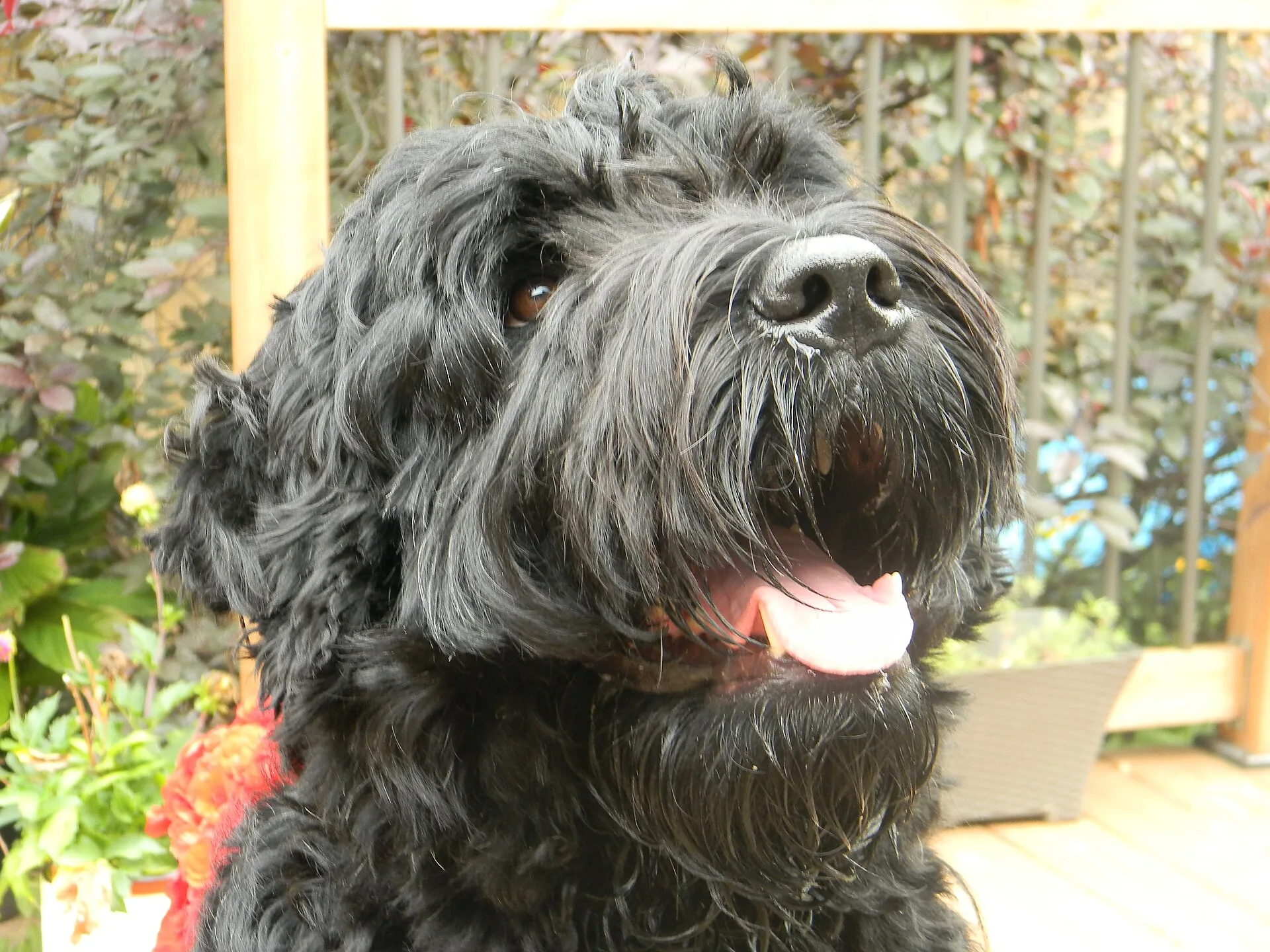
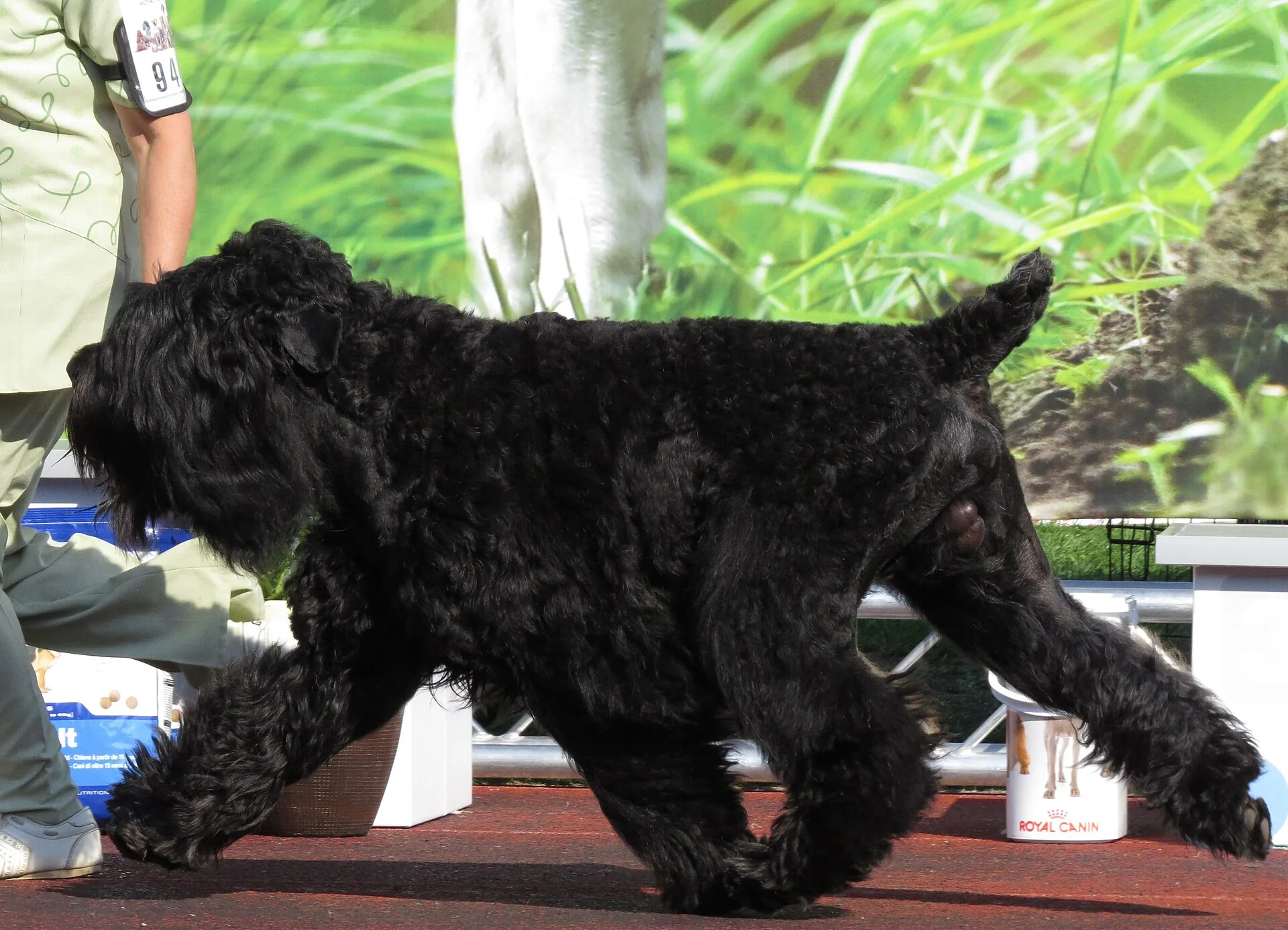
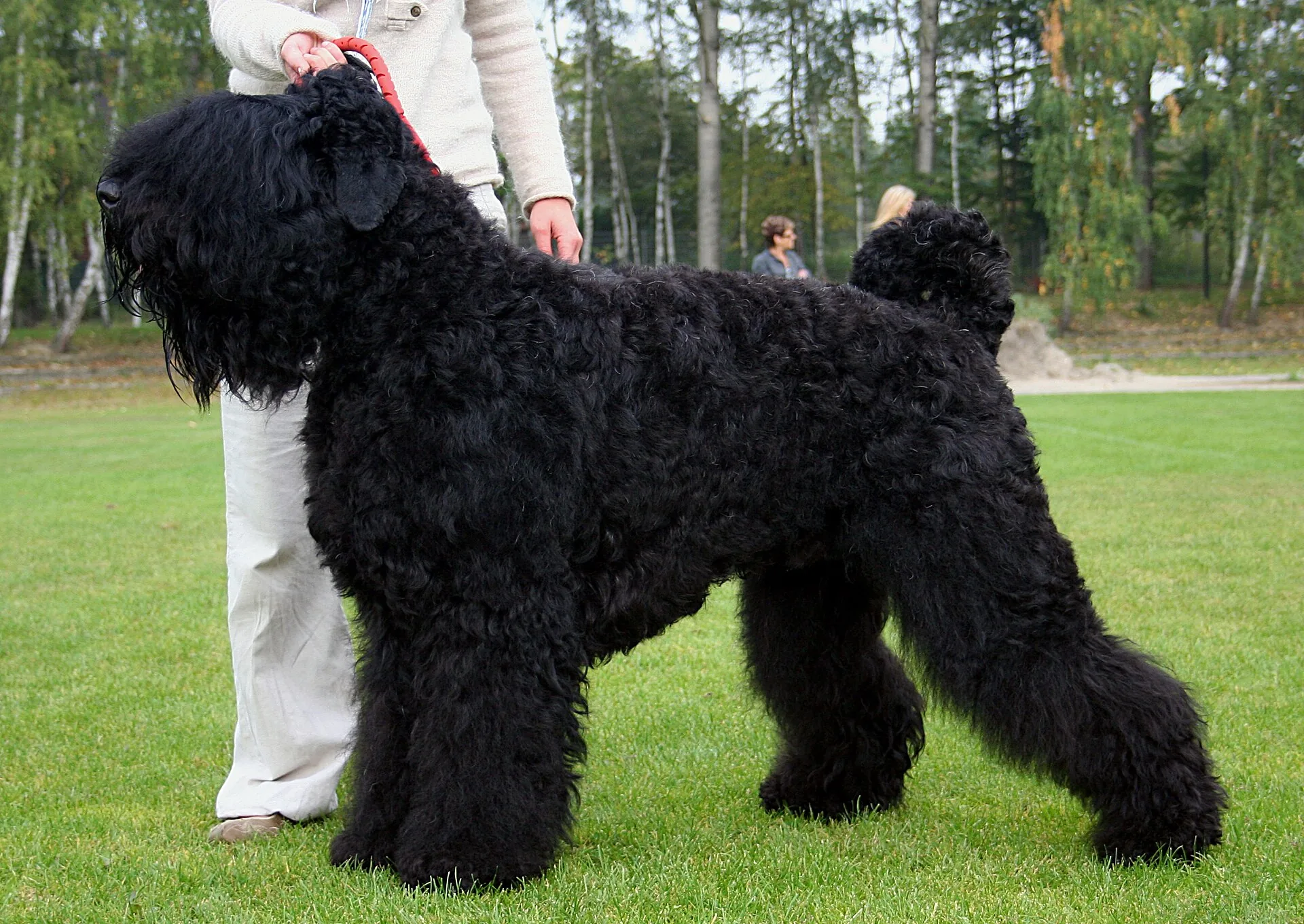
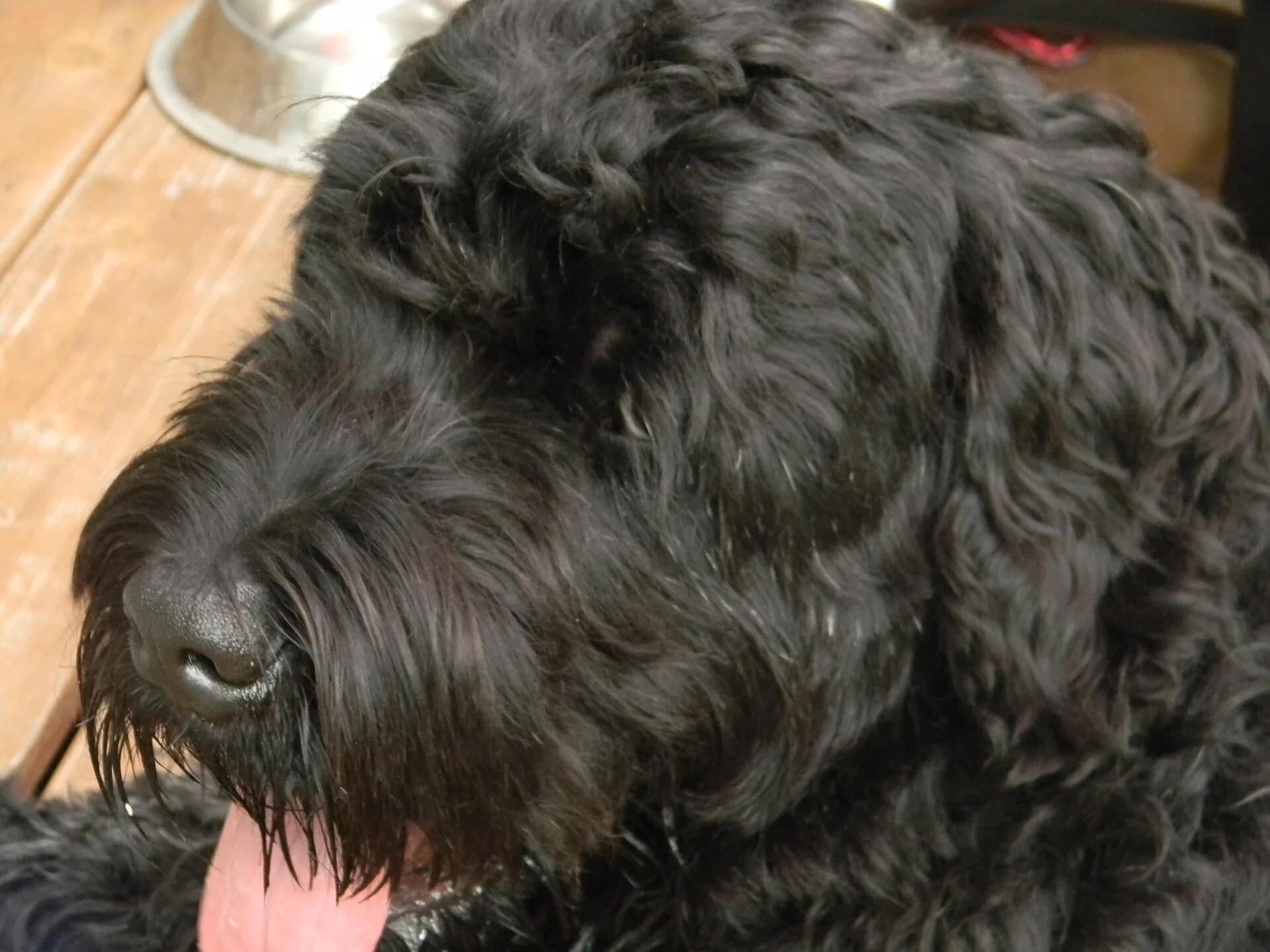
The FCI standard describes a rough, thick double coat, coarse on top with a soft undercoat, between 5 and 15 cm long, forming a beard, moustache and eyebrows on the head. It sheds little but mats easily. Brush thoroughly two or three times a week, and have the coat trimmed every six to eight weeks to maintain shape and hygiene. The beard needs regular cleaning after eating and drinking. The only colour permitted is black, or black with a light scattering of grey hairs not exceeding one third of the body.
Feeding and weight
Feed a high quality complete diet suitable for a giant breed, in two or three measured meals a day rather than one large one, which may help reduce the risk of bloat. Puppies need a large breed puppy food to support steady growth; rapid weight gain stresses developing joints. Keep adults lean, as excess weight burdens hips and elbows. Leave a rest period before and after meals.
Work out a starting calorie figure and food weight with the calorie calculator. Not sure this is the right breed? Take the quiz.
Health
Every breed carries predispositions. These are the conditions most often discussed for the Black Russian Terrier, not a prediction for any individual dog.
- Hip dysplasia
- Elbow dysplasia
- Juvenile laryngeal paralysis and polyneuropathy (JLPP)
- Hyperuricosuria (bladder stones)
- Inherited eye conditions (parents should have eye examinations)
- Gastric dilatation-volvulus (bloat)
What to ask the breeder. Ask for hip and elbow scores for both parents, a JLPP DNA result, a recent eye examination and a cardiac examination, and ask about temperament in the parents and wider family.
Choosing a puppy
A Black Russian Terrier puppy grows fast and quickly becomes strong. Start training and socialisation on the first day: calm meetings with many people, children and dogs, visits to busy places and lift rides. Teach the puppy to accept handling and grooming. Limit stairs and jumping, and keep walks short while joints develop. Choose a breeder who selects for stable temperament and health, and plan for regular puppy classes.
In Luxembourg the national kennel club is the Fédération Cynologique Luxembourgeoise (FCL), a member of the FCI. Many owners also buy from breeders in Germany, France or Belgium; a puppy coming from another EU country must be microchipped and vaccinated against rabies, which in practice means it cannot travel before about fifteen weeks of age. Where to get a dog in Luxembourg.
The older Black Russian Terrier
Black Russian Terriers age relatively early. Keep older dogs lean, with shorter but regular walks and gentle mental work. Watch for stiffness, weight loss or changes in breathing, and keep up regular vet checks. A thick, soft bed in a cool place helps aging joints. Grooming may need to be done in shorter sessions.
A realistic day
A realistic weekday for a working household in Luxembourg City, with a midday visit. Adjust it to your dog, not the other way round.
Brisk 40-minute walk on lead, in the cooler morning air, then a rest before breakfast.
Breakfast, a short training exercise, then a nap while the owner leaves for work.
PAWLY midday visit by a confident, experienced walker: a 45-minute walk, fresh water and a quick brush of the beard.
Main activity: a longer walk in the forest or a training session, followed by dinner after a rest.
Short last walk around the block, then bed.
A Black Russian Terrier in Luxembourg
A Black Russian Terrier in a Luxembourg City flat is possible but demanding. The dog is large and heavy, and in a small lift or narrow stairwell its presence can intimidate neighbours, while its guarding instinct may lead it to react to people near the door. A ground floor flat or a house with a secure garden makes life easier. Muddy beards and paws on rainy days also need towels by the door.
Summers in the 30s are hard on this black, heavily coated breed, so plan walks for the cooler parts of the day and keep the home cool. Long walks in the Grünewald or Bambësch suit it well on lead. Note that the breed is not among the types named in the law of 9 May 2008, but as with any dog, it must be microchipped, declared to the commune, insured and taxed.
Every dog in Luxembourg must be identified, declared to the commune and covered by liability insurance. How registration works.
When you travel
A sitter must be experienced with large guarding breeds, and should meet the dog several times before the owner leaves. The dog may not accept strangers entering the home without its owner. Keep routines, feed in measured meals with rest afterwards, and watch for any sign of bloat, such as a swollen belly or unproductive retching, which requires an emergency vet. In hot weather, keep the dog cool.
PAWLY's holiday and overnight care takes place in your home, so your dog keeps its own bed and routine.
Myths and facts
MythIt is a terrier.
FactIt is classified by the FCI with the Pinscher and Schnauzer breeds, and its main ancestor is the Giant Schnauzer. The name is historical.
MythGuard dogs must be kept away from people.
FactA guarding breed needs more socialisation, not less, to tell real threats from ordinary visitors.
MythA black coat protects from the sun.
FactBlack coats absorb heat, and this breed suffers in hot weather. Shade and cool walking times are essential.
Is it the right dog for you?
Suits
- Experienced owners of large working breeds
- Families with a house and secure garden
- People interested in obedience or working sports
- Owners who value a natural guardian
Think twice if
- You live in a small flat with a tiny lift
- You have frequent visitors or many children coming and going
- You cannot commit to regular professional grooming
- This would be your first dog
Questions owners ask
Is a Black Russian Terrier a good first dog?
Usually not. Its size, strength and guarding instinct need experienced, consistent handling and a lot of socialisation. First-time owners are better off with a less demanding breed.
Does it shed?
It sheds little, but its coat mats easily. Brush two or three times a week and plan for a trim every six to eight weeks.
Is it aggressive?
A well-bred, well-socialised Black Russian Terrier is calm and stable, and the standard describes a dog that calms down quickly once a threat has passed. Poor breeding or socialisation can lead to problems.
Can it cope with Luxembourg summers?
With care. Walk early and late, avoid hot pavements, provide shade and water, and keep the home cool. Some owners keep the coat a little shorter in summer.
Sources
Photo: Pleple2000, CC BY-SA 3.0, via Wikimedia Commons · Photo: Laslovarga, CC BY-SA 4.0, via Wikimedia Commons · Photo: Томасина, CC BY-SA 3.0, via Wikimedia Commons · Photo: Canarian, CC BY 4.0, via Wikimedia Commons · Photo: Laslovarga, CC BY-SA 4.0, via Wikimedia Commons
General information for dog owners in Luxembourg, not veterinary or legal advice. Official facts (origin, size, group, history and temperament as described by the breed standard) follow the FCI standard; health and care sections reflect breed-club and veterinary guidance and are typical ranges rather than rules. For your own dog, ask your vet, the breed club or your commune. How this guide is written and checked. Last reviewed 8 October 2026.
Need someone for your Black Russian Terrier?
PAWLY offers an individual 45-minute walk or a home visit at your dog's pace, the same walker every time, and a written report with photos after every visit, across Luxembourg City.
Read next: the journal, for the Black Russian Terrier
All articles
Dogs in hot weather: the Luxembourg summer guide
The Black Russian Terrier carries a heavy coat or a heavy frame, which makes a Luxembourg summer the hard season.

Arthritis: the pain owners file under old age
Giant breeds tend to have joint trouble early; this is what to look for.

Growing a large-breed puppy without wrecking its joints
A giant puppy grows fast on soft bones; how it grows decides its joints for life.
Similar breeds
All 198 breeds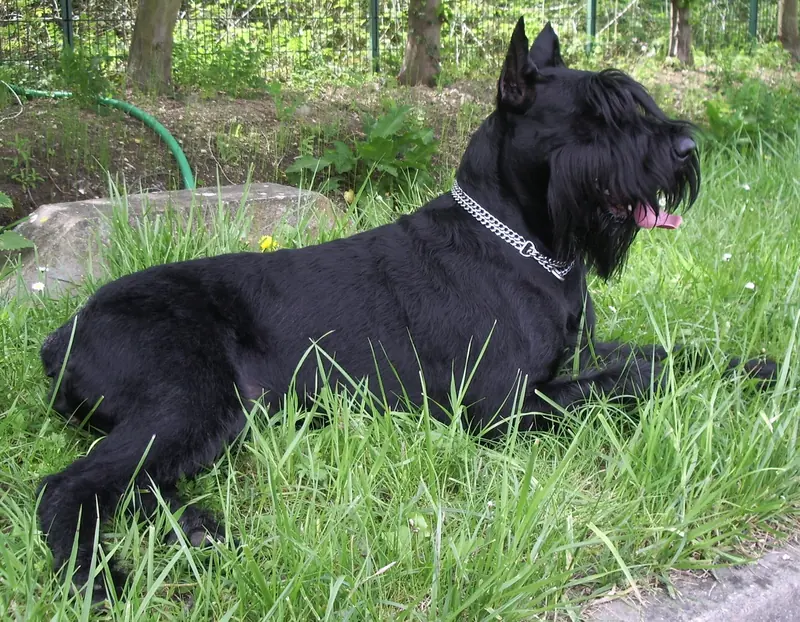
Giant Schnauzer
A big, intense Bavarian working dog, loyal to the point of stubbornness and happiest with a capable owner and a proper job.
EnergyGroomingFlat life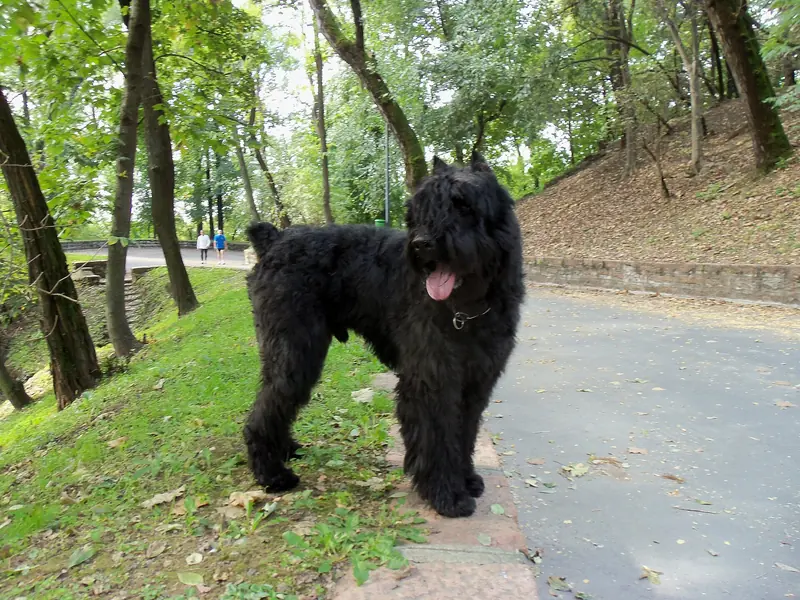
Bouvier des Flandres
Flanders' rugged cattle dog: steady, protective and powerful, with a serious face and a soft side.
EnergyGroomingFlat life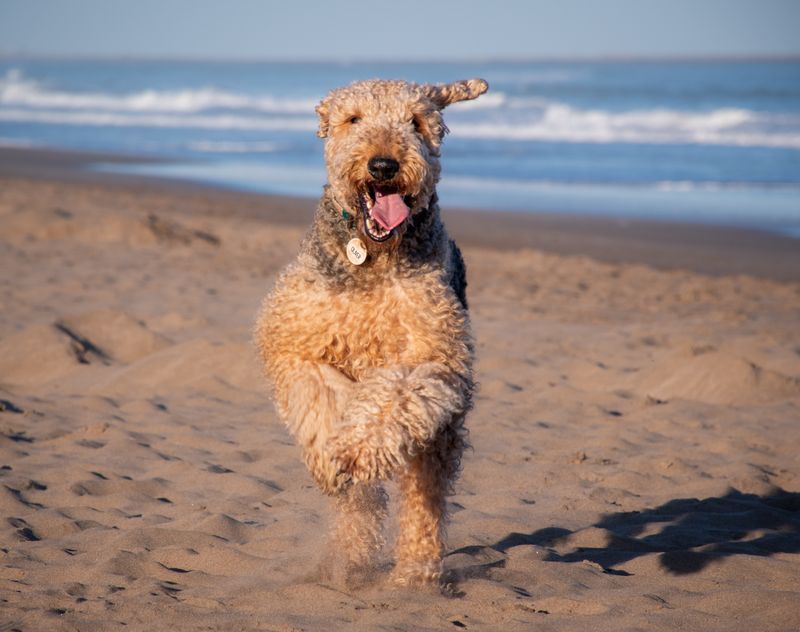
Airedale Terrier
The largest of the terriers: clever, funny, tireless and rarely as easy as it looks.
EnergyGroomingFlat life

