

History
The Airedale takes its name from the valley of the River Aire in Yorkshire. The FCI standard traces the breed to the Waterside Terriers shown at the Airedale Show, and the usual account adds that working men there crossed rough-coated terriers with the Otterhound to produce a dog that could swim, hunt rats and otters, and use its head. The standard calls it the largest of the terriers, a muscular, active and fairly cobby dog, never leggy and never overlong in the body.
Its nose and nerve made it useful far beyond the riverbank. The FCI text records Airedales tracking in Africa, India and Canada, helping the Red Cross in wartime and serving with police and military forces in Britain and Russia. They were used as messengers and sentries in the First World War, and the nickname king of the terriers followed. That history explains the modern dog: bold, capable, happiest with a task, and not inclined to wait politely for instructions.
Temperament
The standard describes an outgoing, confident, friendly, courageous and intelligent dog, quick in its movements, with a keen expression. It should be alert and fearless without being aggressive, and the same text lists aggression and excessive shyness as disqualifying faults. In practice that means a dog that greets visitors with enthusiasm, watches the street from the window and holds firm opinions about most things.
Airedales mature slowly and often behave like adolescents until three. They are funny, inventive and devoted, but they are terriers and they negotiate. Some become choosy about other dogs as adults, particularly of the same sex, and a firm, good humoured owner will get further than a stern one. Expect a dog that wants to be part of the household conversation, not left in another room.
Children and other pets
Airedales are usually robust and playful with children and make a good match for sensible older ones. A young dog can be too bouncy for toddlers, simply through size and enthusiasm, so supervise early on. The prey drive is genuine: hamsters, rabbits and cats that bolt are at risk, and introductions to a cat need to be gradual. With other dogs, early and varied socialisation matters, because adult terrier temperaments can turn selective.
Exercise and the daily walk
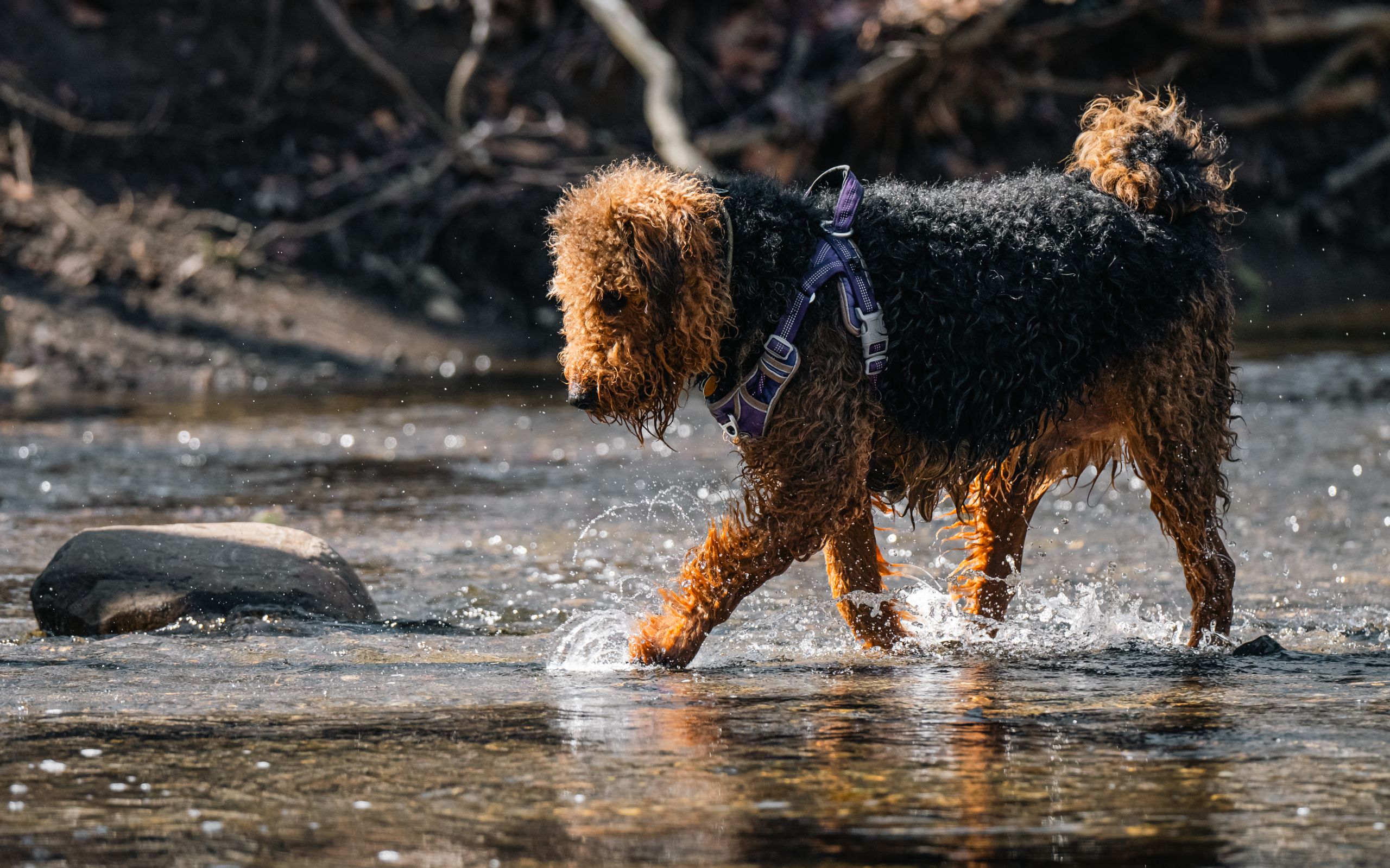
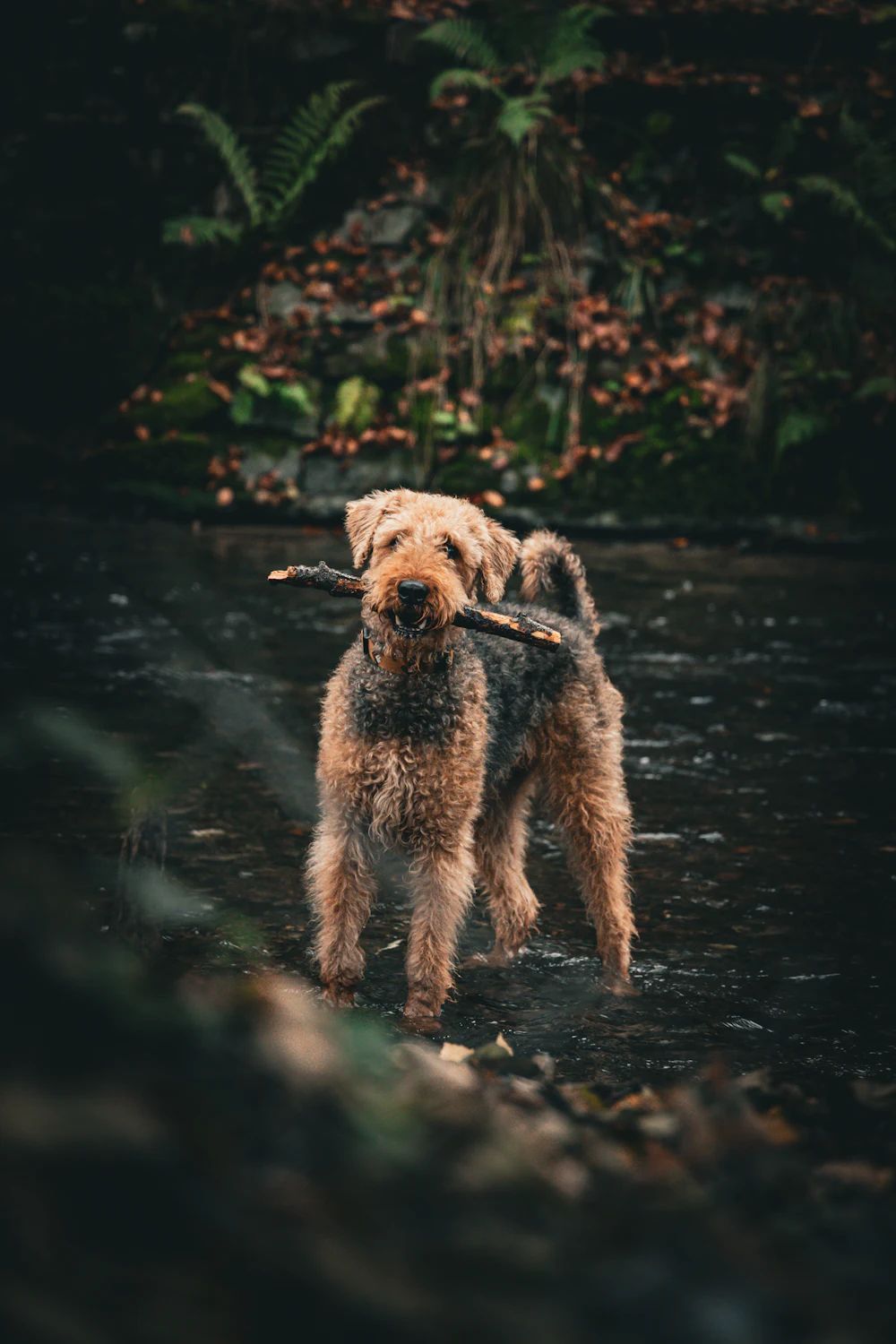
Plan on an hour and a half to two hours a day, with a job built into it. Fetch, scent games, short training sessions and, where the water is safe, a swim all suit the breed. A bored Airedale digs, barks and redecorates, usually while you are in the shower. Two substantial outings and a quick toilet walk at midday suit most adults.
Off-lead time needs a reliable recall and a route away from wildlife, because a terrier that has found a scent is not listening. Build the recall on a long line before trusting it, and reward it generously. Young dogs under a year need shorter, more frequent outings rather than long hikes while their joints finish growing.
Training
Airedales are intelligent and independent, and they get bored quickly. Keep sessions short, varied and rewarding, and use humour: repetition and harshness make them stubborn rather than obedient. Lead manners matter early, because a strong adolescent on a lead is a different proposition from a puppy, and a good sit at the kerb is worth more than any trick.
Recall is a lifelong project because the instinct to follow a scent is strong. Practise on a long line, vary the rewards and be honest about which places are safe to let go. Classes help with socialisation, but choose ones that favour calm focus over free play, as many Airedales do better learning to ignore other dogs than to greet them.
Coat and grooming
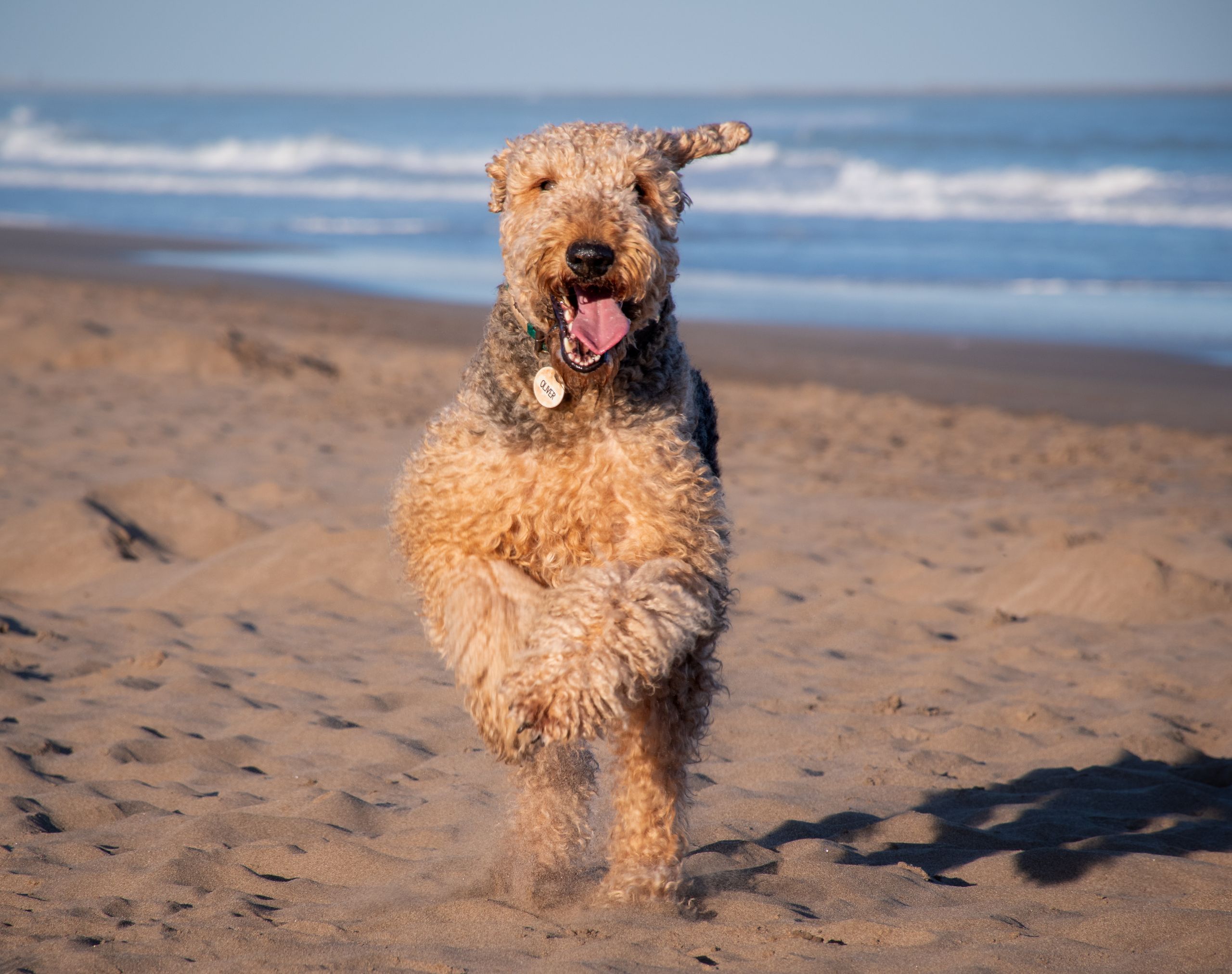
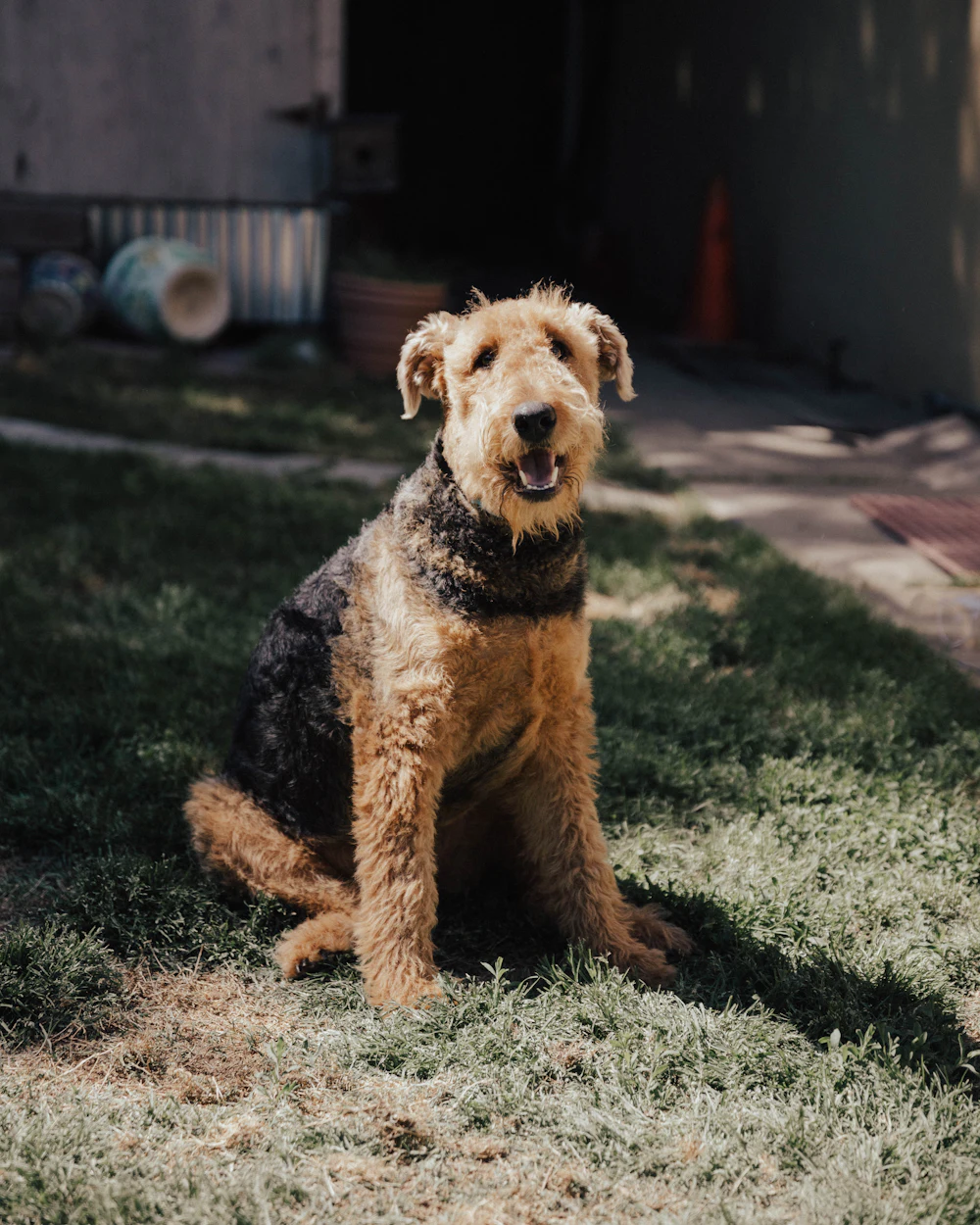
The standard describes a hard, dense and wiry coat with a softer undercoat, with a black or grizzle saddle and tan on the rest of the body. It sheds very little but is not maintenance free. Ideally it is hand-stripped a couple of times a year; clipping is common for pet dogs, though it softens the texture and fades the colour. Brush weekly, check for tangles behind the ears, and wipe the beard after meals and wet walks.
Feeding and weight
Airedales are usually keen eaters and easy to overfeed. Weigh the food, keep the dog lean, and change diets gradually because skin and stomach sensitivities are not unusual. Use part of the daily ration for training so that treats do not add to it. Avoid hard exercise straight after a large meal, and split the day's food into two portions rather than one.
Work out a starting calorie figure and food weight with the calorie calculator. Not sure this is the right breed? Take the quiz.
Health
Every breed carries predispositions. These are the conditions most often discussed for the Airedale Terrier, not a prediction for any individual dog.
- Hip dysplasia
- Hypothyroidism
- Skin allergies and atopic dermatitis
- Gastric dilatation-volvulus (bloat), which is an emergency
- Some cancers in older dogs
What to ask the breeder. Ask for hip scores for both parents, thyroid and eye testing where the breed club recommends it, and whether skin problems appear in the lines. A good breeder will also describe how the parents behave with other dogs.
Choosing a puppy
Meet the mother and, if possible, the father. Look for a confident, sociable puppy rather than one that is frantic or timid, and ask about skin and thyroid history. Be ready for a long adolescence, with chewing, selective hearing and bursts of energy. Start gentle handling of the coat, feet and ears early, because grooming will be part of life, and book a puppy class before the socialisation window closes.
In Luxembourg the national kennel club is the Fédération Cynologique Luxembourgeoise (FCL), a member of the FCI. Many owners also buy from breeders in Germany, France or Belgium; a puppy coming from another EU country must be microchipped and vaccinated against rabies, which in practice means it cannot travel before about fifteen weeks of age. Where to get a dog in Luxembourg.
The older Airedale Terrier
Watch for stiffness in the hips, thyroid changes, skin problems and new lumps, which should always be checked by a vet. Many Airedales stay playful well into double digits if the walks become shorter and more frequent. Keep them lean, provide a non slip surface on tiled floors, and expect the coat to need a little more attention as the dog becomes less able to groom itself with enthusiasm.
A realistic day
A realistic weekday for a working household in Luxembourg City, with a midday visit. Adjust it to your dog, not the other way round.
A brisk walk with plenty of time to sniff, and a short training game on the way home.
Breakfast, then a settle in a favourite spot with a chew.
Midday visit from a walker: toilet break, a short walk and a puzzle toy.
Longer walk in a park or wood, with fetch, scent work or a swim if it is safe.
Final toilet walk, then a calm evening on the sofa.
An Airedale Terrier in Luxembourg
An Airedale can live in a flat if its exercise and brain are looked after, and the lift is rarely a problem for a dog of this size, though a wet beard in a small lift is something neighbours notice. Bored dogs are noisy and inventive, so a midday visit makes a real difference on office days. Remember the basics: a microchip, a declaration to the commune, third party liability insurance and the annual dog tax.
Access to green edges helps a great deal. The Pétrusse valley and Parc Merl are good for everyday walks, while the Bambësch and Grünewald forests offer room to work off steam. Expect an opinion on every other dog you pass, and choose quieter routes and times while the dog is young. In summer, which can reach the 30s, walk early and late, as the dense coat holds heat more than it looks.
Every dog in Luxembourg must be identified, declared to the commune and covered by liability insurance. How registration works.
When you travel
Airedales are outgoing and settle quickly with a sitter who has met them first. Give written details of the feeding routine, the usual routes and any dogs the Airedale dislikes. Make sure gates and fences are terrier proof, and leave chews and puzzle toys for the quiet hours. A sitter should be firm and cheerful, not anxious, and should keep the dog on a lead anywhere wildlife might tempt it.
PAWLY's holiday and overnight care takes place in your home, so your dog keeps its own bed and routine.
Myths and facts
MythAiredales are hyperactive.
FactAdolescents certainly are, but an adult that gets enough exercise and mental work is usually a cheerful, settled dog.
MythLow shedding means hypoallergenic.
FactAiredales shed little, but allergies are triggered by dander and saliva, not only loose hair. Spend time with the breed before deciding.
MythAn Airedale is just a big Welsh Terrier.
FactThey look alike, but they are separate breeds, and the Airedale is the largest of the terriers, with a different build, strength and temperament.
Is it the right dog for you?
Suits
- Active owners who enjoy training
- Homes with easy access to woods or a garden
- People with a sense of humour
- Households happy to pay for regular grooming
Think twice if
- First time owners wanting an easy dog
- Homes with small pets that run
- People who dislike grooming costs
Questions owners ask
Does an Airedale shed?
Very little, but the wiry coat needs hand stripping or clipping every few months to stay comfortable and tidy. Brushing weekly prevents tangles, especially on the legs and beard, and regular grooming appointments are part of the cost of the breed.
Airedale or Welsh Terrier?
They look alike, but the Welsh Terrier is much smaller, at up to about 39 cm, and lighter. The Airedale is a large, strong dog that needs more space, more exercise and a firmer, more experienced hand.
Are Airedales good with children?
Usually, yes. They are playful and sturdy, and many enjoy sensible older children. A young dog can be boisterous around toddlers, so supervise, teach calm greetings and give the dog somewhere to retreat when the house gets noisy.
Can an Airedale be left alone?
For a working day with a midday visit, many cope well once they are mature, exercised and trained to settle. Without enough activity they become noisy and destructive, so build up absences gradually and provide chews and puzzle toys.
Sources
Photo: Pexels (Pexels License) · Photo: Pexels (Pexels License) · Photo: Unsplash (Unsplash License) · Photo: Unsplash (Unsplash License)
General information for dog owners in Luxembourg, not veterinary or legal advice. Official facts (origin, size, group, history and temperament as described by the breed standard) follow the FCI standard; health and care sections reflect breed-club and veterinary guidance and are typical ranges rather than rules. For your own dog, ask your vet, the breed club or your commune. How this guide is written and checked. Last reviewed 8 October 2026.
Need someone for your Airedale Terrier?
PAWLY offers an individual 45-minute walk or a home visit at your dog's pace, the same walker every time, and a written report with photos after every visit, across Luxembourg City.
Read next: the journal, for the Airedale Terrier
All articles
Feeding, portions and how to tell if your dog is the right weight
Large dogs suffer more from extra weight; this is how to judge the right one.

Grooming and coat care through the Luxembourg year
The Airedale Terrier has a coat that needs a routine that holds through the Luxembourg seasons.

Building a recall you can actually rely on
Terriers follow scent and movement, so the Airedale Terrier needs a recall built properly.
Similar breeds
All 198 breeds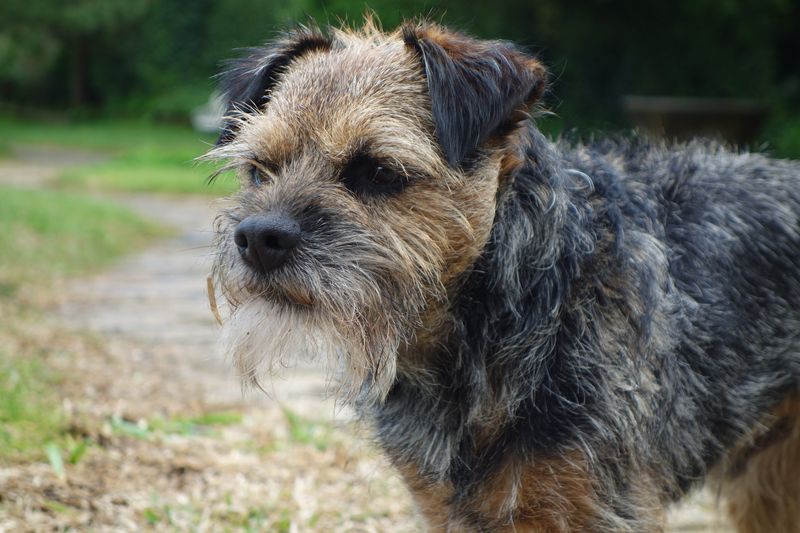
Border Terrier
The terrier for people who find terriers too much: tough, cheerful and easy-going.
EnergyGroomingFlat life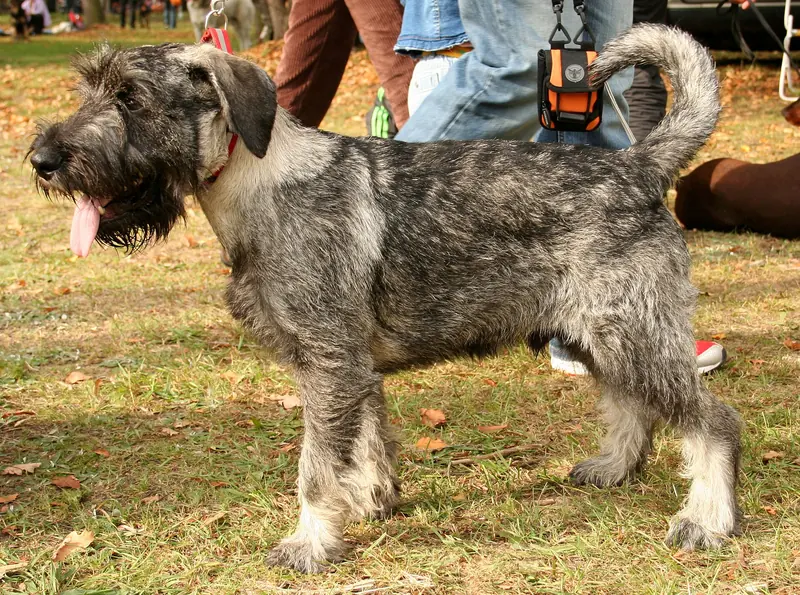
Standard Schnauzer
The original whiskered Schnauzer: a square, quick-witted German stable dog with a ratter's alertness and a strong sense of ownership over its people.
EnergyGroomingFlat life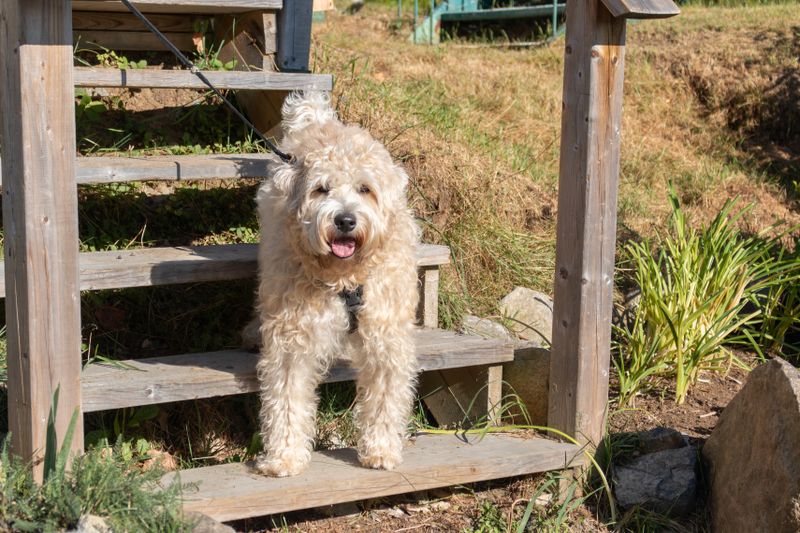
Soft Coated Wheaten Terrier
An Irish farm terrier with a silky wheaten coat and a famously exuberant greeting, cheerful at home and sturdy enough for a long walk.
EnergyGroomingFlat life

