


History
The FCI standard calls the Wheaten probably the oldest of the four Irish terrier breeds, with references to a soft-coated dog going back at least two hundred years. It was the all-purpose terrier of small farmers, kept to keep down vermin, help around the farm and hunt badger and otter. Its exact ancestry is unclear, and the standard notes that deliberate crosses may have played a part, as was common with working farm dogs of the period.
Formal recognition came late. The Irish Kennel Club accepted the breed in 1937, and from then on it spread steadily to Britain, North America and continental Europe. Ireland is the country of origin, and the current FCI standard dates from 27 January 2001. Today the Wheaten is kept almost entirely as a companion, but the build of a working terrier remains: square, strong and well balanced, with a gait that should look free and lively.
Temperament
The standard describes a spirited and game dog, good tempered, intelligent and loyal, a trustworthy companion that is defensive without being aggressive. Owners meet the spirit first. Wheatens tend to greet people with their whole body, and the bouncing welcome, known among fanciers as the Wheaten greetin', is part of the breed's charm and part of its training homework.
Compared with many terriers the Wheaten is softer and more people-oriented, less inclined to pick fights and generally easier to live with in a family. It still has terrier traits: a lively interest in anything that runs, a stubborn streak and a habit of announcing visitors. Most are playful well into adulthood and enjoy being involved in whatever the household is doing, which also means they do not like long hours on their own.
Children and other pets
Wheatens are usually very good with children, sturdy enough for family life and keen to play, though their jumping can knock over a toddler, so manners need teaching early. They generally live well with other dogs. Many accept a cat they are raised with, but the terrier instinct to chase is still there, and rabbits, guinea pigs or hamsters should be kept well out of reach and never left unsupervised with the dog.
Exercise and the daily walk
An adult Wheaten needs about an hour of exercise a day, split into two walks, plus play and some training. They enjoy a varied route, a game of tug or fetch, and a run in a safe space. Without enough activity they invent their own entertainment, which usually involves barking at the window or digging in the sofa cushions.
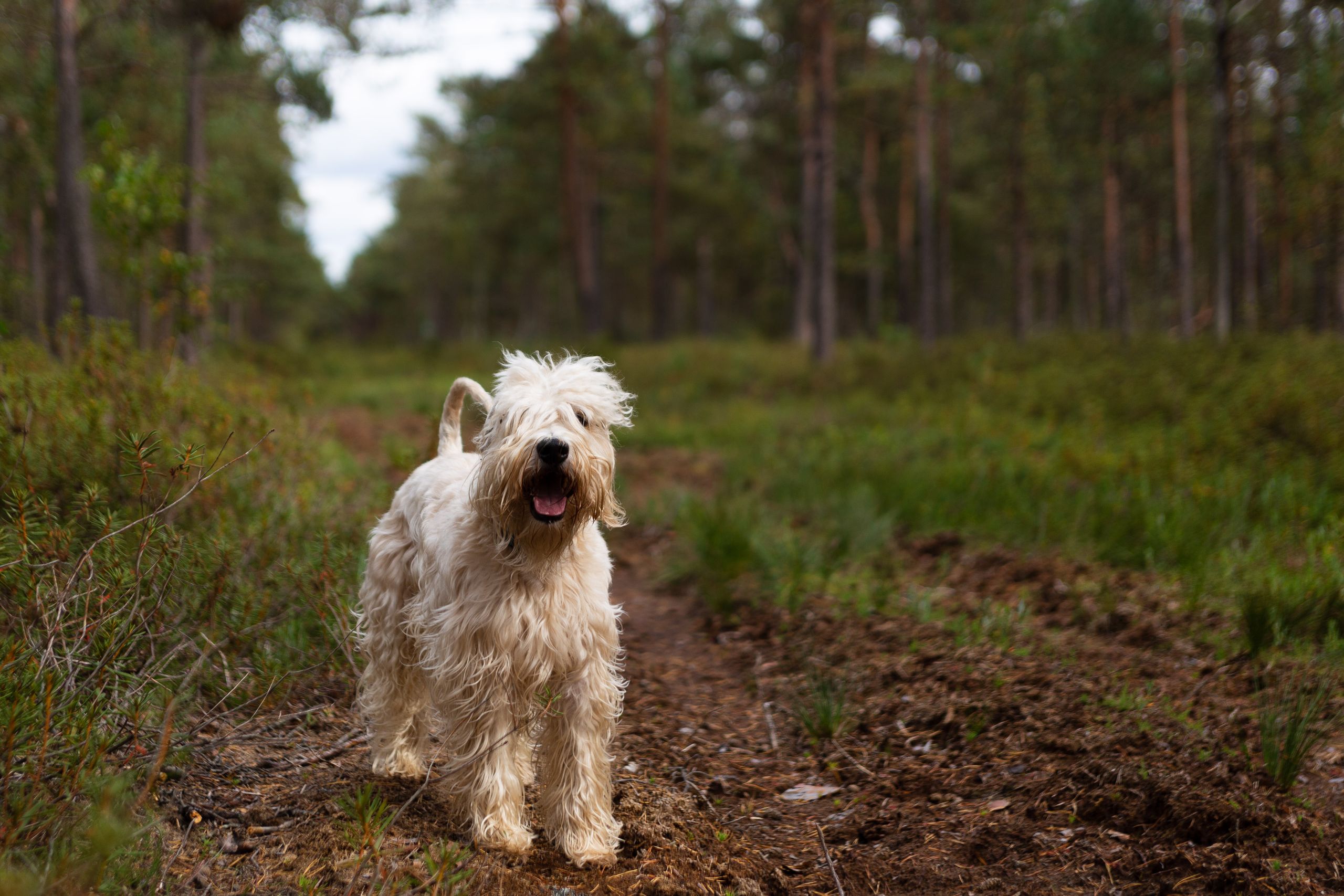
Recall is the weak point. A Wheaten that spots a squirrel or a cat may forget everything it has learnt, so off-lead running is best kept to enclosed areas or practised on a long line. The coat collects mud, leaves and burrs on forest walks, and a quick comb after an autumn outing saves a long session at the weekend.
Training
Wheatens learn readily but get bored with repetition and are quick to find loopholes. Short, varied sessions with food or toy rewards keep them engaged. Consistency is important, because a dog that is allowed to jump up on Saturday will not understand why it is scolded on Monday. Teaching an alternative to jumping, such as sitting to be greeted, works better than trying to suppress the enthusiasm.
Socialisation should include grooming from the start: standing on a table, being combed all over, having feet and face trimmed. A puppy that learns to enjoy this becomes an adult that can be groomed without a struggle. Puppy classes are worthwhile both for manners and for practising calm behaviour around other dogs, which helps a walker manage a busy park.
Coat and grooming
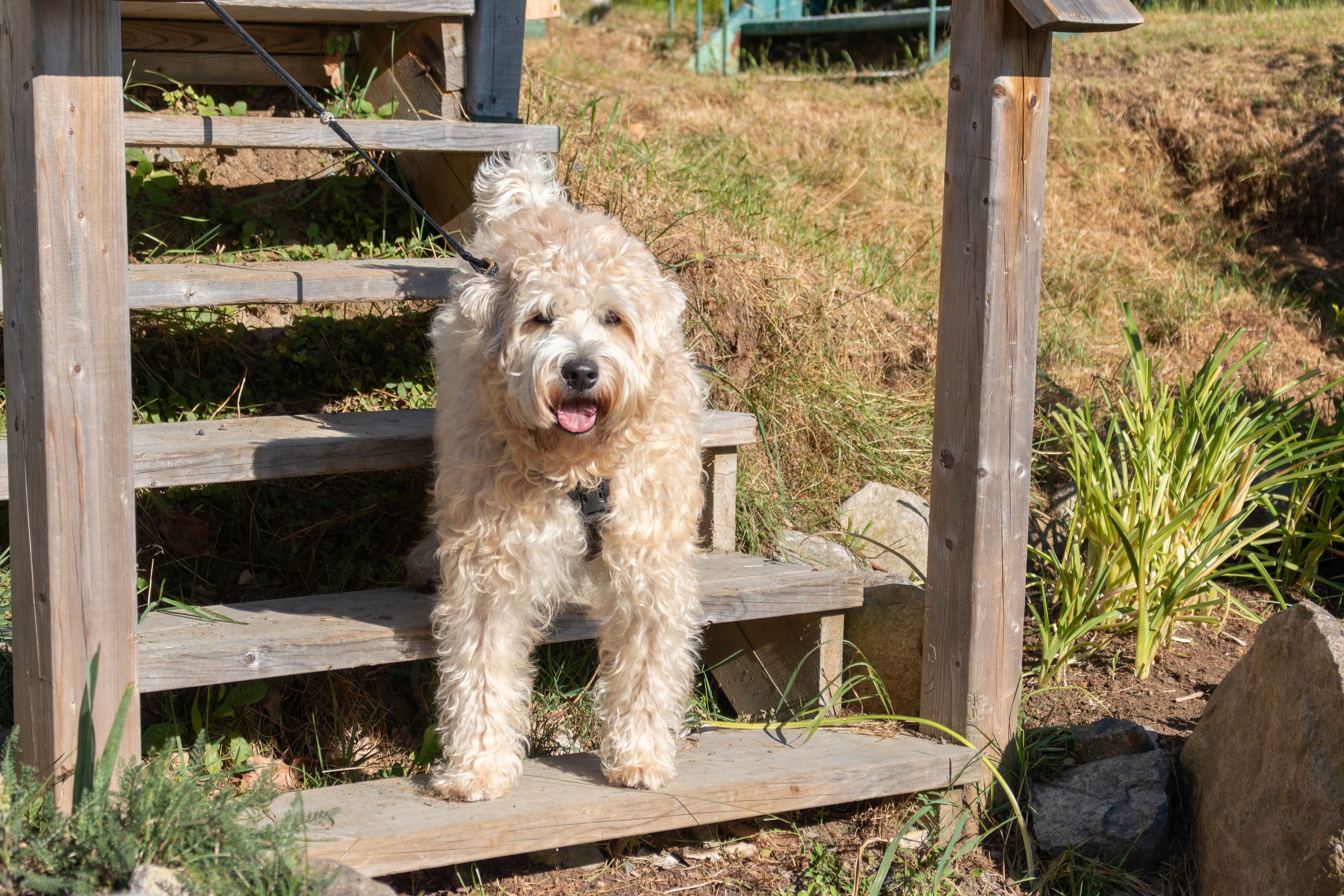
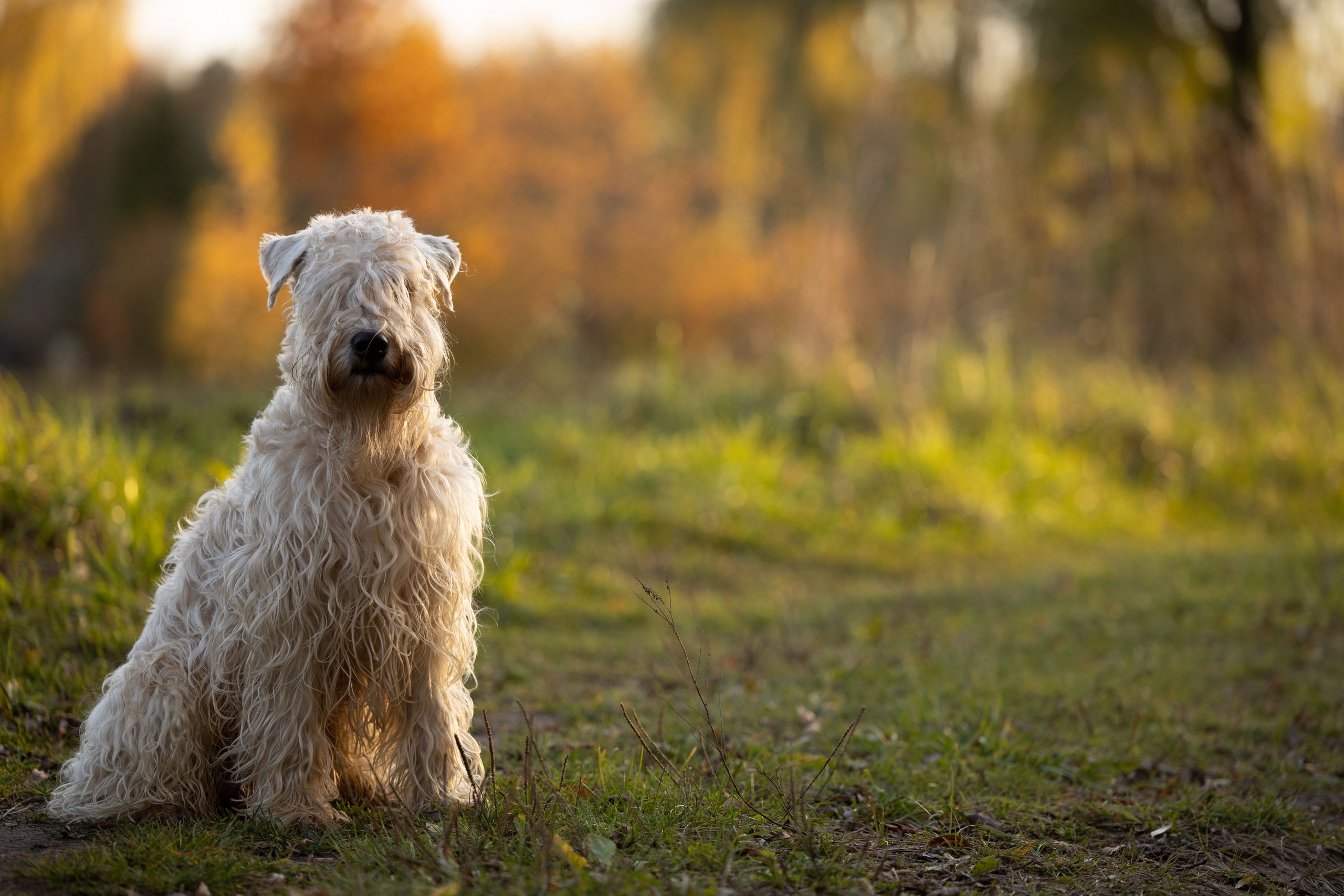
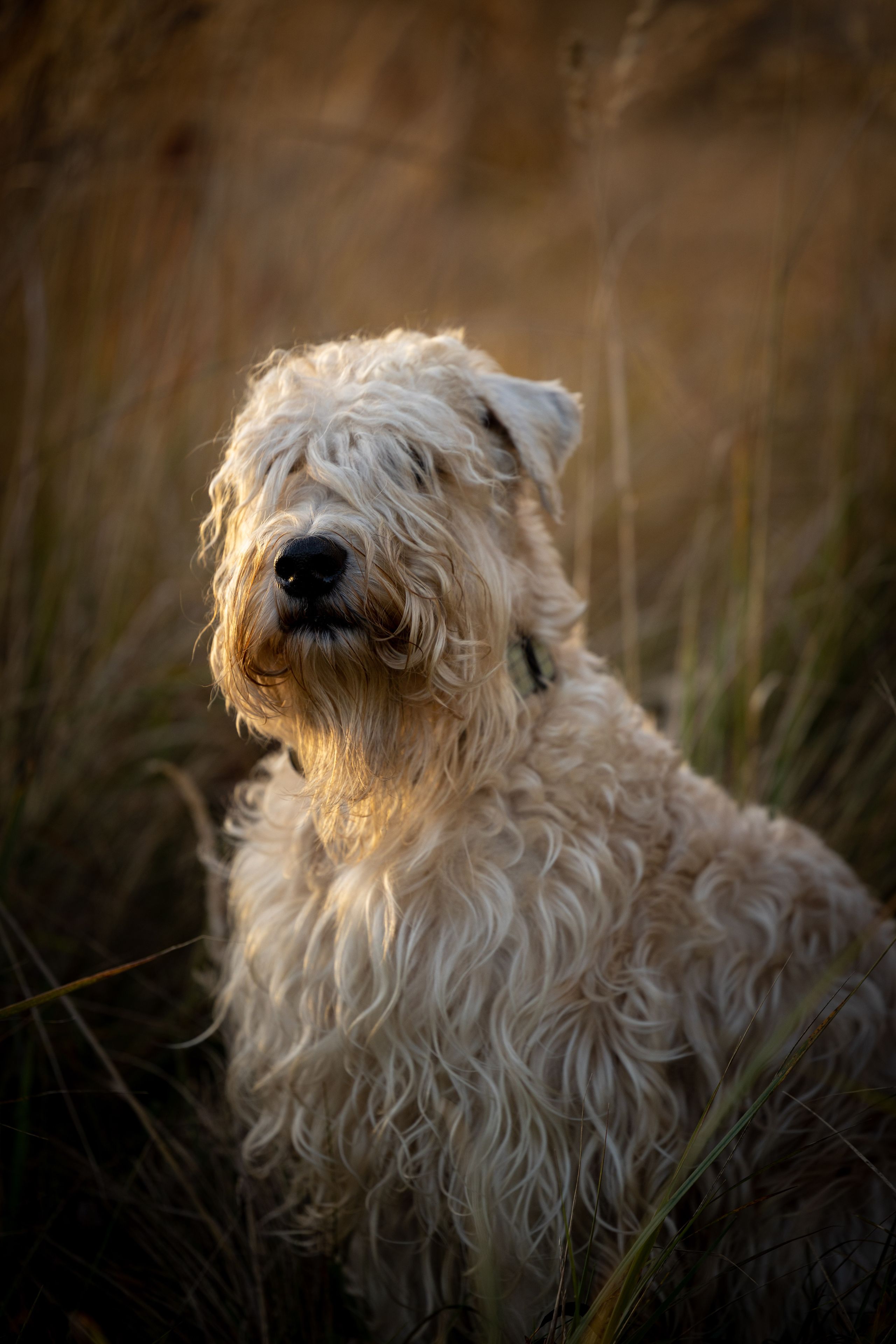
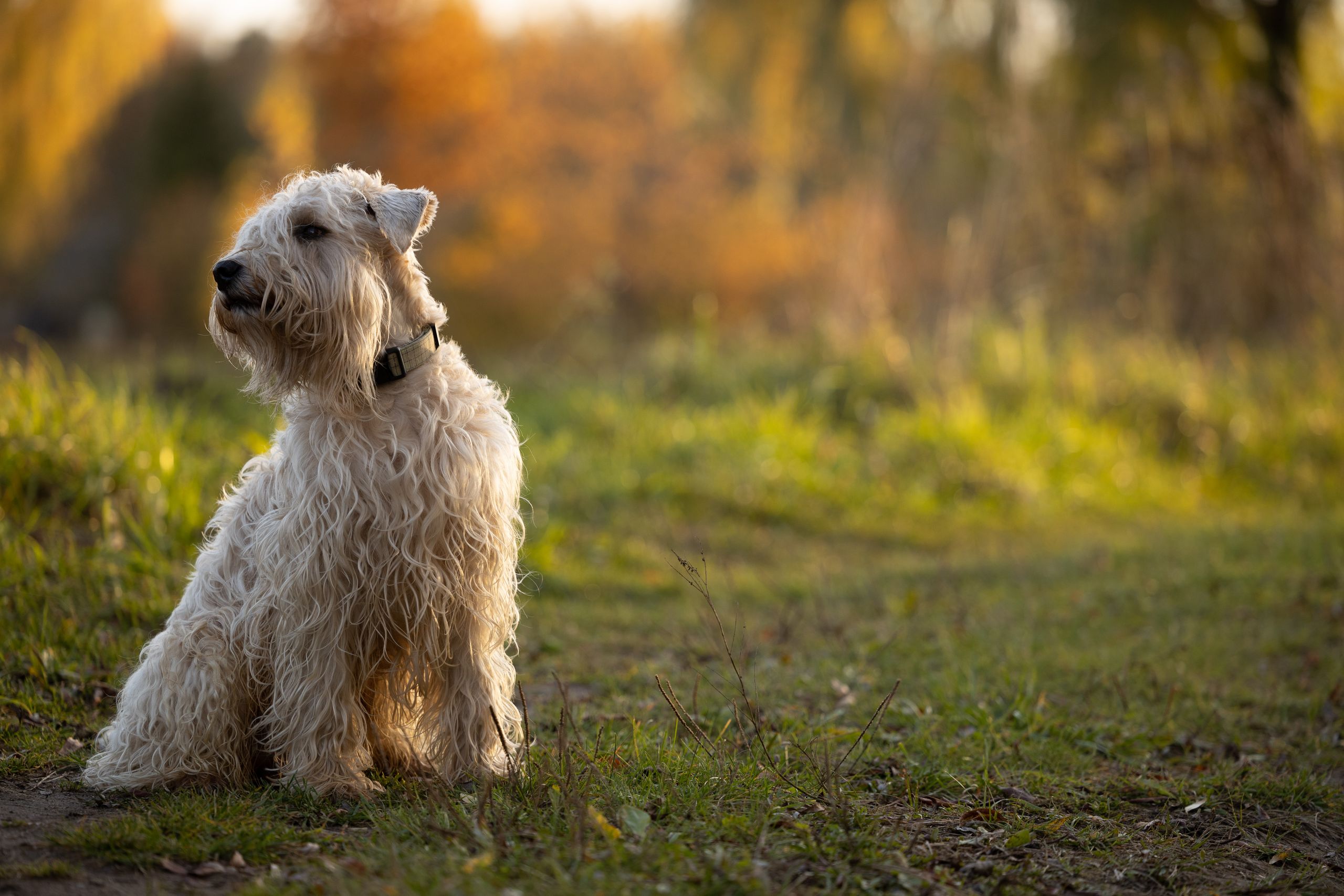
The Wheaten has a single coat, soft and silky, falling in loose waves or curls, which the FCI standard describes as having the sheen of silk. Without an undercoat it sheds little, but loose hair stays in the coat and mats quickly, so combing right down to the skin several times a week is essential. Most pet owners have the coat trimmed every six to eight weeks. The colour is any shade of wheaten from light to golden reddish; puppies are often darker and clear to wheaten between about 18 and 30 months.
Feeding and weight
Feed a complete diet appropriate for an active medium-sized dog, split into two meals, and adjust the amount to keep a visible waist under the coat, which can hide weight gain. Wheatens can be prone to sensitive digestion, so introduce changes gradually. Because the breed has inherited kidney and gut protein-loss conditions, discuss any persistent change in stools, thirst or appetite with the vet promptly rather than switching foods repeatedly.
Work out a starting calorie figure and food weight with the calorie calculator. Not sure this is the right breed? Take the quiz.
Health
Every breed carries predispositions. These are the conditions most often discussed for the Soft Coated Wheaten Terrier, not a prediction for any individual dog.
- Protein-losing nephropathy (kidney disease causing protein loss)
- Protein-losing enteropathy (gut disease causing protein loss)
- Renal dysplasia (abnormal kidney development)
- Hip dysplasia
- Addison's disease (hypoadrenocorticism)
What to ask the breeder. Ask whether the parents have been DNA tested for the variants associated with protein-losing nephropathy, and request hip scores and recent urine protein screening results for both parents.
Choosing a puppy
Wheaten puppies are often dark at birth, sometimes with black on the muzzle, and the colour lightens gradually over the first two years. Start brushing and combing from the first week at home, in short sessions with treats. Teach sitting to be greeted before the jumping becomes a habit. Keep exercise playful and varied, with plenty of rest, and use the early weeks to visit busy places calmly so the puppy learns to settle around people and traffic.
In Luxembourg the national kennel club is the Fédération Cynologique Luxembourgeoise (FCL), a member of the FCI. Many owners also buy from breeders in Germany, France or Belgium; a puppy coming from another EU country must be microchipped and vaccinated against rabies, which in practice means it cannot travel before about fifteen weeks of age. Where to get a dog in Luxembourg.
The older Soft Coated Wheaten Terrier
Many Wheatens stay playful into old age. Annual or twice-yearly checks that include urine and blood tests are sensible given the breed's kidney and gut conditions. Watch for weight loss, increased thirst, vomiting or diarrhoea. Grooming may need to be gentler on stiff joints, and a shorter trim makes daily care easier. Shorter walks with more sniffing keep an older dog interested.
A realistic day
A realistic weekday for a working household in Luxembourg City, with a midday visit. Adjust it to your dog, not the other way round.
Brisk 40-minute walk with a short game of fetch, then breakfast.
Quick comb through the legs and beard to remove debris, then the dog settles while the owner leaves.
Midday visit: 30-minute walk and a few minutes practising calm greetings and recall on a long line.
Evening walk of 30 to 45 minutes in a park, ideally with a familiar dog friend.
Short toilet walk and a few minutes of combing before bed.
A Soft Coated Wheaten Terrier in Luxembourg
A Wheaten fits well into a Luxembourg City flat if it gets its daily exercise and company. It is a medium-sized dog that rides comfortably in a lift, but the enthusiastic greeting needs managing in shared hallways, where neighbours may not welcome muddy paws on a suit. Parc Merl and the Kinnekswiss offer easy daily routes, and the forests of the Grünewald and Bambësch give longer weekend walks, though seeds and burrs cling to the coat.
Wet weather is a factor. A November walk can leave the coat heavy with mud, so many owners keep the legs and underside shorter in winter. In the summer heat a trim helps, and walks should be moved to the cooler hours. Like every dog in Luxembourg, the Wheaten must be microchipped, declared to the commune, insured and covered by the annual dog tax. Free public transport makes trips to the forest straightforward.
Every dog in Luxembourg must be identified, declared to the commune and covered by liability insurance. How registration works.
When you travel
A sitter should comb the coat daily, paying attention to the armpits, behind the ears and the beard, where mats form first. The dog needs two proper walks and company for much of the day, because a lonely Wheaten may bark. Recall should not be trusted in open spaces. The sitter should know the dog's usual food and report any vomiting, diarrhoea or unusual thirst to the owner and the vet.
PAWLY's holiday and overnight care takes place in your home, so your dog keeps its own bed and routine.
Myths and facts
MythWheatens are hypoallergenic.
FactNo dog is free of allergens. The single coat sheds less onto furniture, which some allergic people find easier, but reactions vary between individuals.
MythLow shedding means low grooming.
FactThe opposite is true. Hair that is not shed stays in the coat and mats quickly without frequent combing and regular trimming.
MythAs a terrier it will fight with other dogs.
FactThe FCI standard describes a good-tempered dog that is defensive without aggression. Most Wheatens are sociable with other dogs.
Is it the right dog for you?
Suits
- Families with children who want a lively, affectionate dog
- Owners who enjoy grooming or budget for regular professional trims
- Households where someone is around for much of the day or a midday visit is arranged
- First-time owners willing to attend training classes
Think twice if
- You want a dog with a low-maintenance coat
- You need reliable off-lead recall in open spaces
- Neighbours or visitors will not tolerate jumping and noise while training is in progress
- The dog would be alone for long working days
Questions owners ask
How often does a Wheaten need professional grooming?
Most pet Wheatens are trimmed every six to eight weeks, with combing at home several times a week in between. A shorter pet trim is easier to maintain and practical for wet Luxembourg winters, but it still needs regular attention.
Why is my Wheaten puppy so dark?
Puppies are often reddish, greyish or darker wheaten, sometimes with a black mask, and the FCI standard notes that the colour usually clears to wheaten between about 18 and 30 months. A dark puppy coat is normal.
Is the Wheaten a good first dog?
It can be, for owners who are prepared for regular grooming, some training work on jumping and recall, and plenty of companionship. The temperament is generally softer and easier than that of many terriers.
Which health tests matter most?
Ask about DNA testing for the variants linked to protein-losing nephropathy, hip scoring, and the breeder's approach to monitoring kidney and gut health in their lines. Regular urine and blood checks throughout the dog's life are sensible.
Sources
Photo: Pexels (Pexels License) · Photo: Pexels (Pexels License) · Photo: Pexels (Pexels License) · Photo: Pexels (Pexels License) · Photo: Pexels (Pexels License)
General information for dog owners in Luxembourg, not veterinary or legal advice. Official facts (origin, size, group, history and temperament as described by the breed standard) follow the FCI standard; health and care sections reflect breed-club and veterinary guidance and are typical ranges rather than rules. For your own dog, ask your vet, the breed club or your commune. How this guide is written and checked. Last reviewed 8 October 2026.
Need someone for your Soft Coated Wheaten Terrier?
PAWLY offers an individual 45-minute walk or a home visit at your dog's pace, the same walker every time, and a written report with photos after every visit, across Luxembourg City.
Read next: the journal, for the Soft Coated Wheaten Terrier
All articles
Grooming and coat care through the Luxembourg year
The Soft Coated Wheaten Terrier has a coat that needs a routine that holds through the Luxembourg seasons.

Barking in an apartment: six causes, six different answers
Terriers are quick to sound the alarm; this sorts out the causes and the answers.

Teaching a settle, the most useful thing a flat dog can learn
A settle is the most useful thing a flat dog can learn.
Similar breeds
All 198 breeds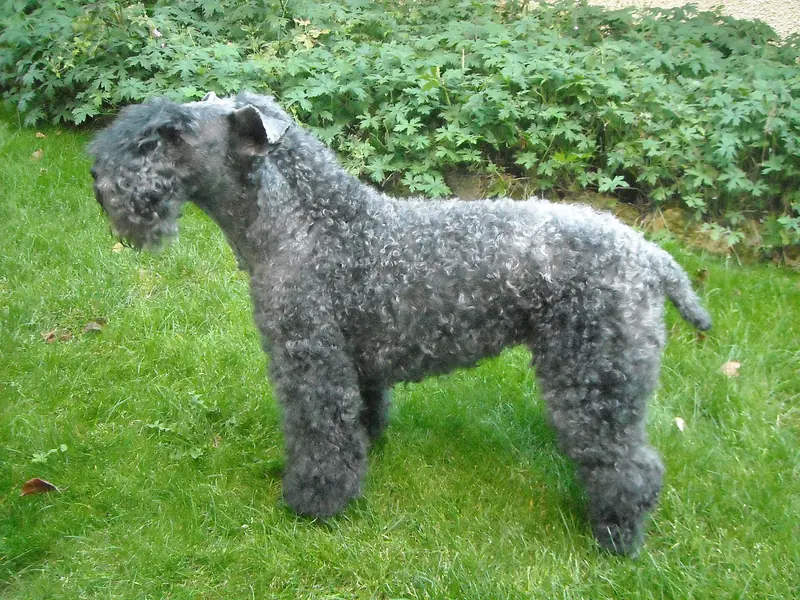
Kerry Blue Terrier
Ireland's blue-grey terrier: clever, lively and low-shedding, but with a fierce streak and a coat that demands a groomer.
EnergyGroomingFlat life
Irish Terrier
The red daredevil of Ireland: bold, loyal, affectionate with its own people and never far from a scrap or a good idea.
EnergyGroomingFlat life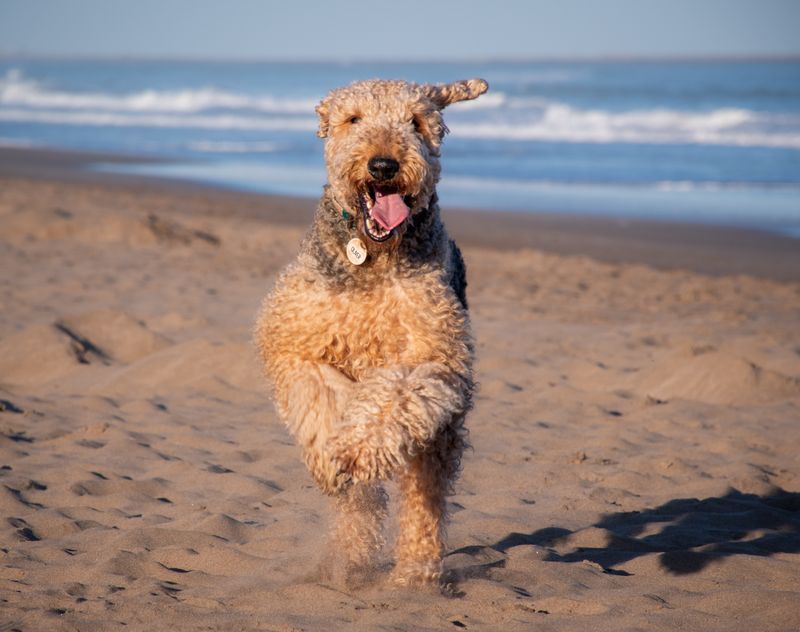
Airedale Terrier
The largest of the terriers: clever, funny, tireless and rarely as easy as it looks.
EnergyGroomingFlat life

