
History
The Irish Terrier is possibly the oldest of the Irish terrier breeds, although the FCI standard admits that early records are scarce. Before the 1880s the coat colour was far from fixed, and black and tan or brindle dogs turned up in the same litters as red ones. Breeders gradually settled on a whole-coloured red, and by the twentieth century that was the only acceptable look. The first breed club was founded in Dublin on 31 March 1879, which tells you how quickly the show ring took an interest in a farm and ratting dog.
The breed's reputation grew further during the First World War, when Irish Terriers were used as messenger dogs in the trenches, a job that rewarded courage, speed and a stubborn refusal to be put off. The standard sums up the dog's role with three phrases that are still quoted: the poor man's sentinel, the farmer's friend and the gentleman's favourite. The nickname daredevil is much older than any of that and describes the breed's habit of walking into trouble first and thinking afterwards.
Temperament
The FCI standard calls the Irish Terrier game and capable with other dogs, yet remarkably loyal, good tempered and affectionate with mankind. It also says that the breed's reputation for scraps is undeserved, which is a generous reading. In practice most Irish Terriers are confident to the point of cheek, and a dog that will not back down from a larger one on the pavement is not unusual. At home the same dog is often soft, clowning for attention and shadowing its owner from room to room.
The shape described in the standard, active, lively, lithe and wiry, is also a clue to the mind: this is a dog built for speed and endurance, and it thinks in the same way. Expect quick decisions, strong opinions and a sense of humour. Irish Terriers dislike being ignored and can become noisy or destructive when bored. They notice everything at the door, which makes them excellent sentinels and mildly tiring neighbours in a block of flats.
Children and other pets
With their own family, Irish Terriers are usually playful, loyal and surprisingly gentle, and many enjoy the company of older, sensible children who like games. A boisterous young dog can still knock over a toddler without meaning any harm, so supervise early on. Other dogs are the harder question: the breed may challenge dogs of the same sex, and the standard's remark about scraps is a fair warning. Cats in the household can work if introduced young, but small animals outside will trigger the chase.
Exercise and the daily walk
Plan on an hour to an hour and a half each day, split into at least two outings. A brisk walk before work, a longer session in the evening and a few minutes of fetch or scent games in between suit the breed far better than one long weekend hike. Irish Terriers are athletic and enjoy jogging, hiking and chasing a ball, and they have the endurance to keep going long after their owners are tired.
Mental work matters as much as miles. Hide treats around the flat, teach new tricks and let the dog dig somewhere sanctioned if you have a garden. Safety is the important point: the breed has little sense of danger and will cross a road after a cat or a jogger. Keep the dog on a lead near traffic, and use a secure fence or a long line anywhere else.
Training
Irish Terriers are clever and headstrong, and they respond best to firm, friendly training that has variety and a sense of humour. Short sessions with real rewards work well, repetition for its own sake does not. Start early, stay consistent and be patient, because an Irish Terrier will test whether the rules still apply on a bad day. Harshness backfires: the dog either digs in or shuts down.
Socialise with other dogs from puppyhood and teach calm passing on a loose lead, rewarding the dog for looking at you rather than at the other dog. A reliable recall is hard to build in any terrier, so use a long line until you have proof that it holds against a squirrel. A group class with a trainer who understands terriers is money well spent.
Coat and grooming
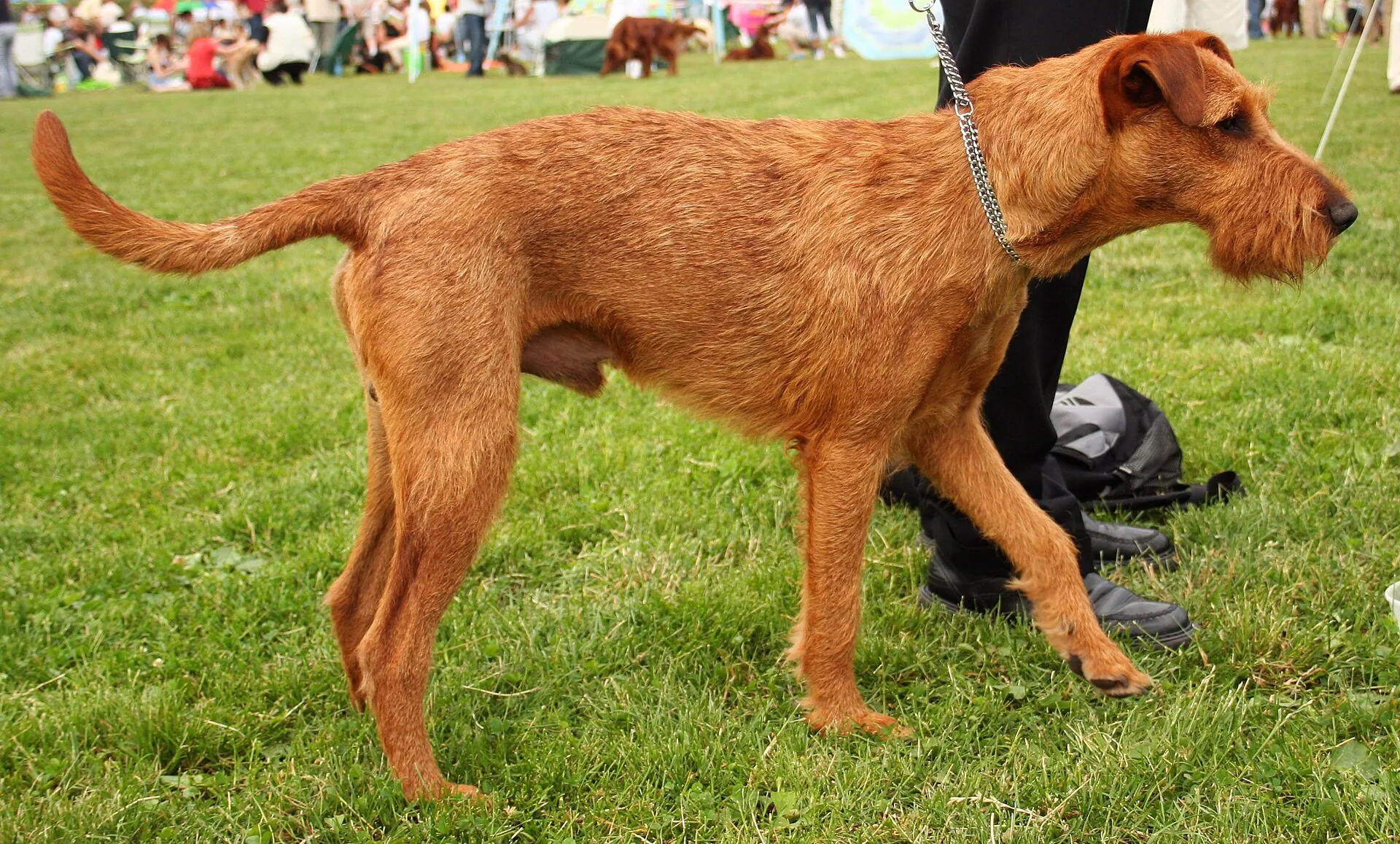
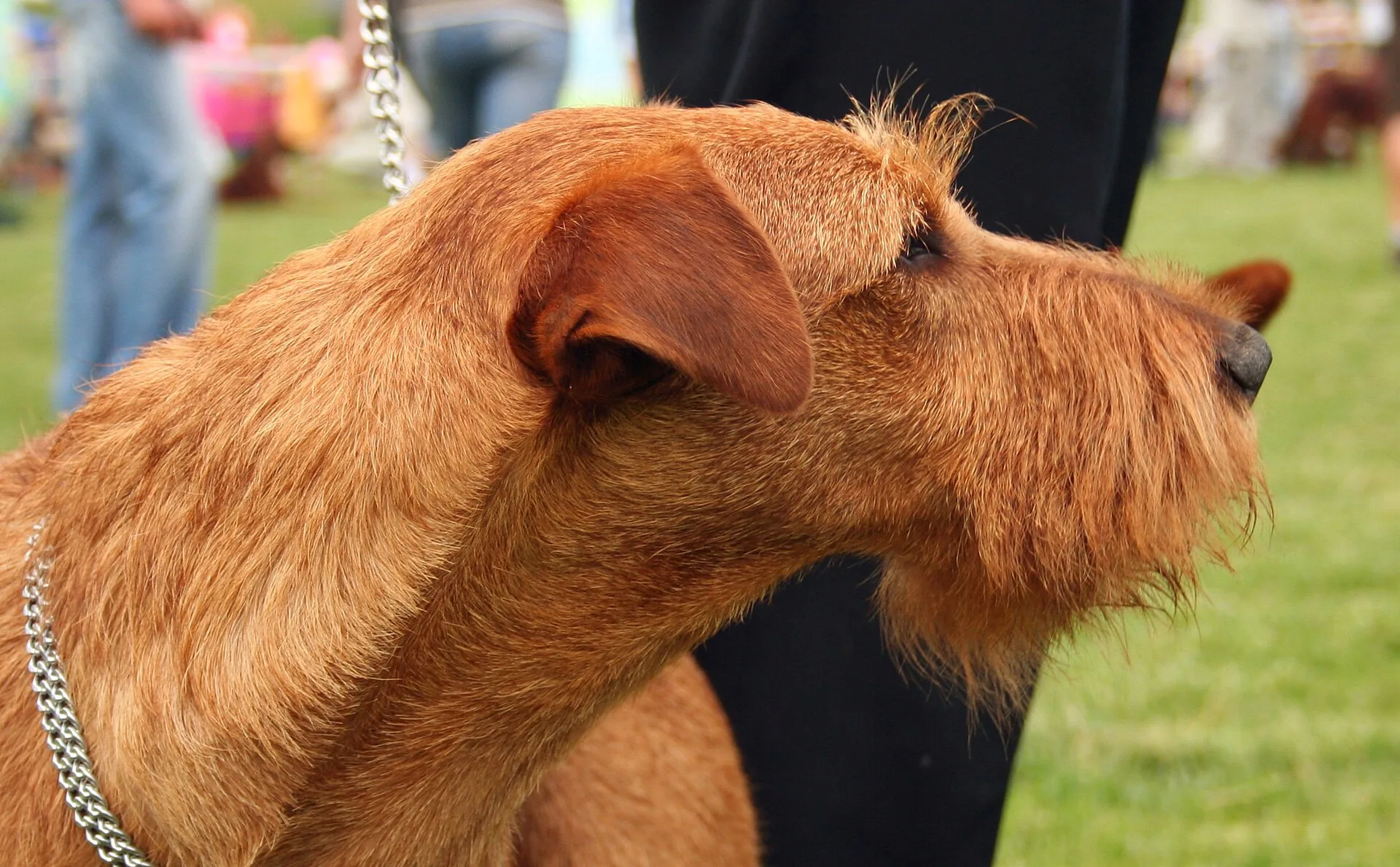
The coat is dense and wiry, with a broken appearance, lying flat against the body. The FCI standard asks for a whole colour of red, red-wheaten or yellow-red, with a little white on the chest permitted. It sheds very little, but it needs weekly brushing and hand-stripping or trimming a few times a year to keep the right texture and colour, since clipping alone softens it. The beard collects water and food, so wipe it after meals and drinks.
Feeding and weight
Irish Terriers are active and usually in lean condition, but they can put on weight in a quiet home, especially if they are neutered or ageing. Feed measured meals of a good quality complete diet, and adjust portions with the seasons and the workload rather than the dog's hopeful expression. Use part of the daily ration for training. A lean dog with a visible waist is a healthier and happier dog.
Work out a starting calorie figure and food weight with the calorie calculator. Not sure this is the right breed? Take the quiz.
Health
Every breed carries predispositions. These are the conditions most often discussed for the Irish Terrier, not a prediction for any individual dog.
- Cystinuria, an inherited condition that can cause urinary stones
- Hyperkeratosis of the paw pads (thickened, cracked pads)
- Skin allergies
- Hip dysplasia
- Inherited eye conditions
What to ask the breeder. Ask whether cystinuria or paw-pad problems occur in the breeder's lines, whether DNA testing has been done where a test is available, and to see hip and eye results for both parents.
Choosing a puppy
Ask about urinary stones and paw-pad problems in the lines, and meet the mother and, if possible, the father. Look for a puppy that is bold but balanced, curious without being frantic. The FCI standard lists excessive shyness as a disqualifying fault, so a nervous puppy is a poor sign. Begin socialisation with other dogs and with lifts, trams and busy pavements early, and keep every encounter positive.
In Luxembourg the national kennel club is the Fédération Cynologique Luxembourgeoise (FCL), a member of the FCI. Many owners also buy from breeders in Germany, France or Belgium; a puppy coming from another EU country must be microchipped and vaccinated against rabies, which in practice means it cannot travel before about fifteen weeks of age. Where to get a dog in Luxembourg.
The older Irish Terrier
An older Irish Terrier often keeps its spirit well into its teens, but watch for straining to urinate, frequent toilet trips, blood in the urine or stiff joints, all of which need a vet promptly. Check the paw pads for cracks and the coat for skin trouble. Regular health checks, a lean body and shorter, more frequent walks help keep the breed active and comfortable for as long as possible.
A realistic day
A realistic weekday for a working household in Luxembourg City, with a midday visit. Adjust it to your dog, not the other way round.
A brisk walk or short jog, with some lead training at kerbs and junctions.
Breakfast, then a chew or puzzle toy while the household gets ready.
Midday visit from a walker: a toilet break, a game and a short sniff round the block.
Longer walk in a park or forest, with recall practice on a long line and some fetch.
Final walk, then a quiet settle on the bed.
An Irish Terrier in Luxembourg
An Irish Terrier can live in a flat in Luxembourg City if it is properly exercised, but it is a spirited dog that needs more than a balcony. The lift is the first test: a young dog that lunges at the sight of a neighbour's dog needs to learn to sit and wait in the hall. Quiet routes at first, such as the Pétrusse valley early in the morning, help the dog learn to pass others calmly.
Forest paths and parks suit the breed well. The Bambësch and the Grünewald offer long walks on soft ground, and Kinnekswiss gives room for a game, though a long line is wiser than off-lead freedom. Summers that reach the thirties are manageable for a wiry-coated dog if you walk early and late. Buses and trams are free, so a trip to a forest on the outskirts needs no car.
Every dog in Luxembourg must be identified, declared to the commune and covered by liability insurance. How registration works.
When you travel
Irish Terriers are sociable and usually settle well with a sitter who is active and firm. Brief the sitter on lead manners, the dog's dislike of some dogs and its tendency to bolt after small animals. Keep the dog on a lead outdoors, check that the garden fence is secure and keep the routine of walks and meals. Leave vet details and a note about toilet habits, as changes in urination always matter.
PAWLY's holiday and overnight care takes place in your home, so your dog keeps its own bed and routine.
Myths and facts
MythIrish Terriers are aggressive.
FactThey are bold and protective, and some dislike other dogs, but the FCI standard describes them as loyal, good tempered and affectionate with people. Good socialisation makes a large difference.
MythThey are just small Airedales.
FactThe Irish Terrier is red, lighter and more racy in outline, and a separate breed with its own history, recognised under its own FCI standard.
MythA wiry coat means no grooming.
FactThe coat sheds little, but it needs weekly brushing and regular stripping or trimming to keep its texture and colour.
Is it the right dog for you?
Suits
- Active owners who enjoy daily outings
- Households with older, sensible children
- People who like a spirited, loyal and funny companion
- Owners prepared to train consistently
Think twice if
- Your home already has a dog of the same sex
- You keep small pets such as rabbits or hamsters
- You want a quiet, undemanding dog
- You are away from home for long stretches
Questions owners ask
Does an Irish Terrier shed?
Very little, which makes it popular with tidy owners. The coat does need weekly brushing and hand-stripping or trimming a few times a year, otherwise it becomes soft and loses the correct red colour.
Are Irish Terriers good with children?
Often, with their own family and when properly socialised. They are lively and playful, which suits older children, but they can knock over toddlers, so supervision is sensible during the early years.
Can an Irish Terrier live in a flat?
Yes, provided it receives an hour or more of exercise every day and enough mental work. Noise from the door can be an issue, so teach quiet early and avoid long periods alone.
How do they get on with other dogs?
Mixed. Many are fine when socialised from puppyhood, but the breed can be quick to challenge dogs, especially of the same sex. Careful introductions and calm passing practice are essential.
Sources
Photo: Unsplash (Unsplash License) · Photo: Pleple2000, CC BY-SA 3.0, via Wikimedia Commons · Photo: Pleple2000, CC BY-SA 3.0, via Wikimedia Commons
General information for dog owners in Luxembourg, not veterinary or legal advice. Official facts (origin, size, group, history and temperament as described by the breed standard) follow the FCI standard; health and care sections reflect breed-club and veterinary guidance and are typical ranges rather than rules. For your own dog, ask your vet, the breed club or your commune. How this guide is written and checked. Last reviewed 8 October 2026.
Need someone for your Irish Terrier?
PAWLY offers an individual 45-minute walk or a home visit at your dog's pace, the same walker every time, and a written report with photos after every visit, across Luxembourg City.
Read next: the journal, for the Irish Terrier
All articles
The dog that barks and lunges on the lead
Some Irish Terrier dogs are selective with other dogs; this is the plan for lunging and barking on the lead.

What actually tires a dog indoors
Walks alone rarely tire a busy breed like the Irish Terrier; this covers what works indoors.

Dogs and cats in the same flat
The Irish Terrier can see small animals as prey; this covers living with a cat in a flat.
Similar breeds
All 198 breeds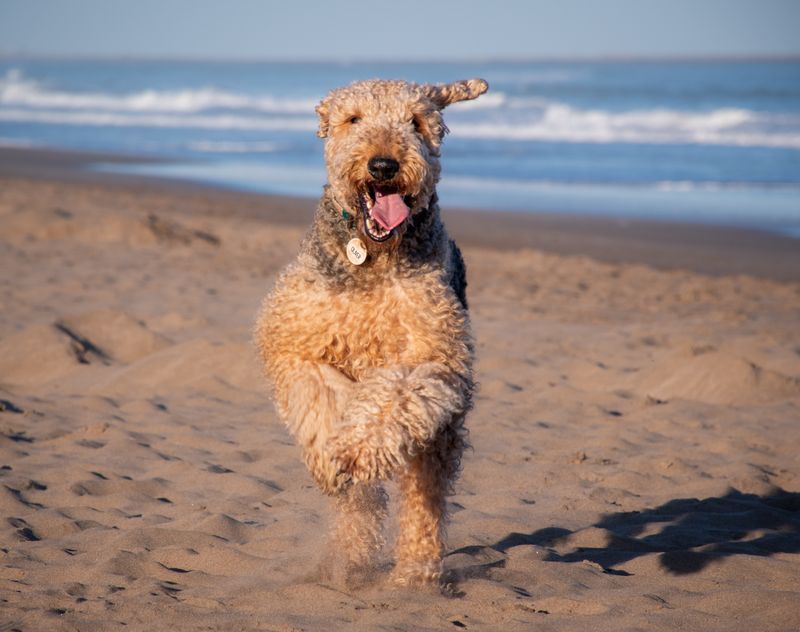
Airedale Terrier
The largest of the terriers: clever, funny, tireless and rarely as easy as it looks.
EnergyGroomingFlat life
Wire Fox Terrier
Bright-eyed and permanently on tiptoe, a small working terrier with a big opinion of itself and a remarkable talent for entertaining a household.
EnergyGroomingFlat life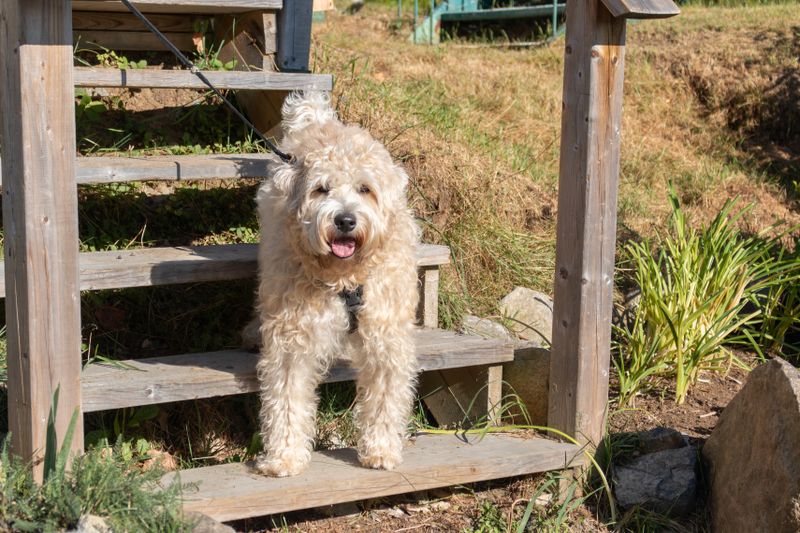
Soft Coated Wheaten Terrier
An Irish farm terrier with a silky wheaten coat and a famously exuberant greeting, cheerful at home and sturdy enough for a long walk.
EnergyGroomingFlat life

