History
The Kerry Blue Terrier comes from County Kerry in south-west Ireland, where it worked for centuries as a farm dog. The FCI standard admits that written records are thin before the twentieth century, but it quotes an 1847 reference to a bluish slate-coloured dog, marked with darker blotches, that prevailed in Kerry. That description is the nearest thing the breed has to a birth certificate, and it matches the dog that is recognised today.
The breed appeared at dog shows in 1913, and the Dublin Blue Terrier Club was established in 1920. It then became an Irish patriotic symbol, which led to several breed clubs and a run of competitions between 1922 and 1924. By 1928 the Kerry Blue had won recognition around the world. The standard places it in FCI Group 3, Section 1, with the large and medium-sized terriers, and asks for an upstanding, well-knit, well-proportioned dog with definite terrier style.
Temperament
The FCI standard keeps the temperament description short: terrier character throughout, with a keen and alert expression. Behind those words lies a dog with plenty of courage, a strong will and a quick mind. Kerry Blues can be wary of strangers, protective of home and family, and quick to challenge other dogs, especially of the same sex. The standard disqualifies aggressive or overly shy dogs, so good breeding and early handling are essential.
With a calm, confident owner, a Kerry Blue is a bright, funny and deeply loyal companion that enjoys games, learning and company. With a hesitant or inconsistent one, it quickly takes charge. It dislikes being left out of family life, and a bored Kerry will bark, dig or find mischief. Most are keen to please, but they are not obedient automatons: expect them to ask why.
Children and other pets
Kerry Blues can be loyal and playful with children in their own family, and many enjoy active games. Their strength and exuberance can overwhelm toddlers, and supervision is wise. They are not always easy with other dogs, particularly of the same sex, and early, careful socialisation is vital. Cats and small animals may be chased, though a Kerry raised with a cat will often accept it. Visitors to the home need a calm introduction, as the breed is protective.
Exercise and the daily walk
Plan on one to one and a half hours a day. This should be split between brisk walks, running and play, with some training or scent work for the mind. Kerry Blues are athletic and enjoy hiking, jogging with an owner and games of fetch. They are happiest when they have a task, and a bored terrier with too much energy turns to digging and barking.
Be careful with other dogs on walks. A Kerry that is tense around other dogs may escalate quickly, so keep a lead on in busy places and choose quiet times for early training. A long line allows freedom in open ground, but recall is never absolute with a terrier. Use puzzle feeders, simple obedience and nose work at home to fill gaps in the day.
Training
Kerry Blues are intelligent and learn quickly, but they need a calm, firm and consistent trainer. Use rewards, variety and clear boundaries. Harsh methods provoke a stubborn or defensive response, while weak ones invite the dog to make its own rules. Start in puppyhood with basic manners, a settle on a mat and a polite greeting, and keep training short and interesting.
Socialisation is the key. Introduce the puppy to many people, dogs and places while it is young, and teach calm passing on a loose lead. Never allow the dog to practise lunging or barking at other dogs, because the habit sets hard. Group classes help, and so does a trainer who knows terriers. Practise recall on a long line for a long time before trusting the dog off the lead.
Coat and grooming
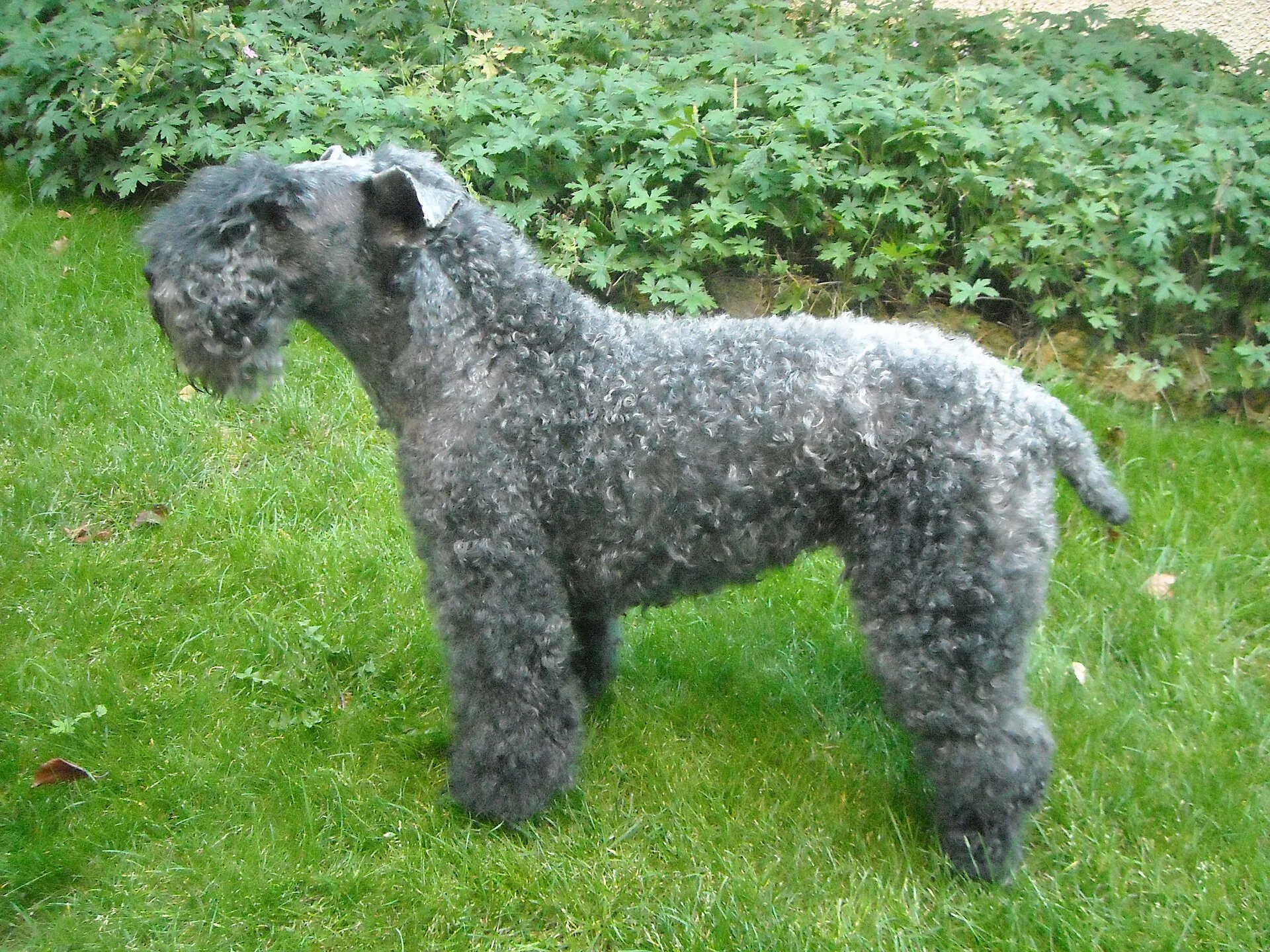
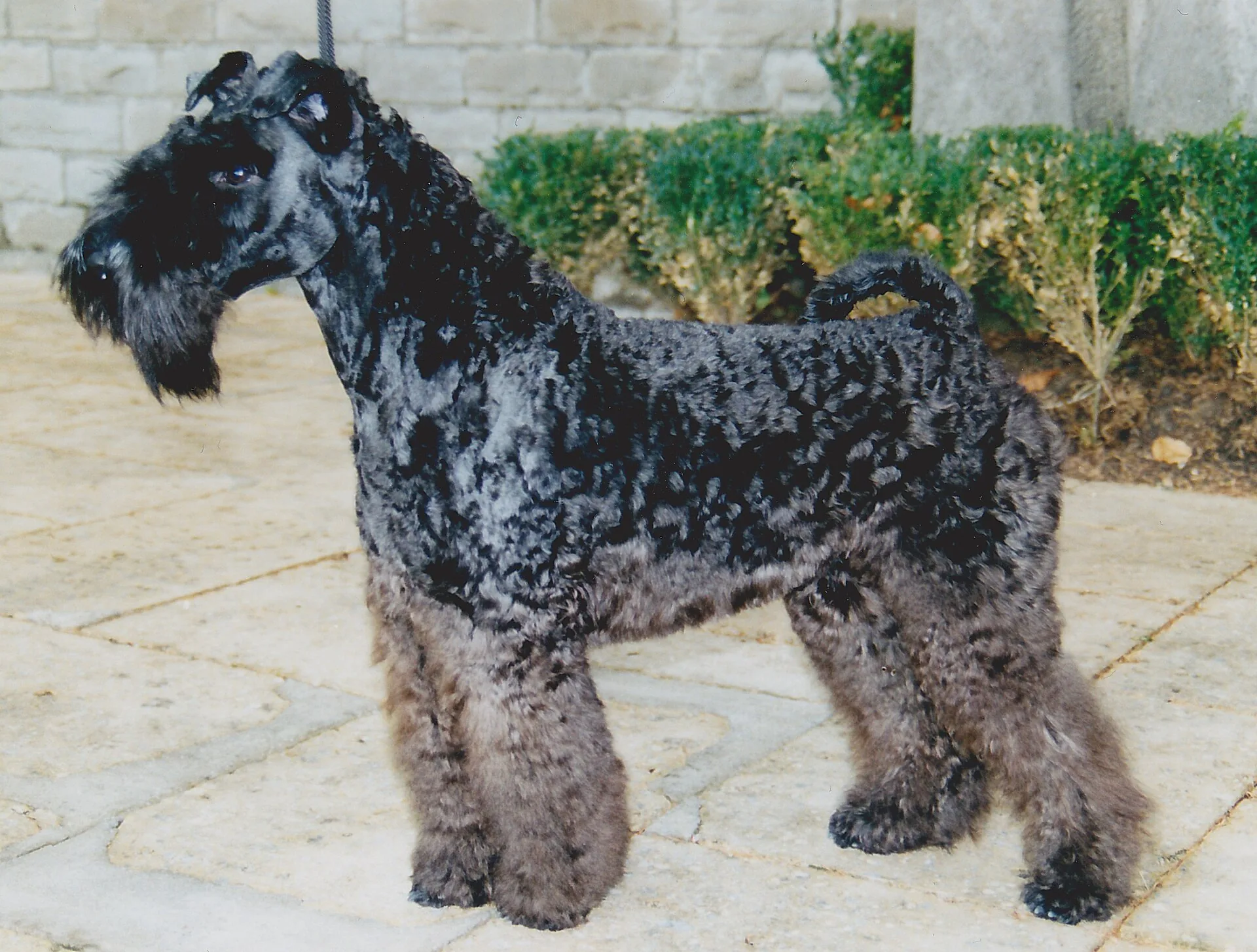
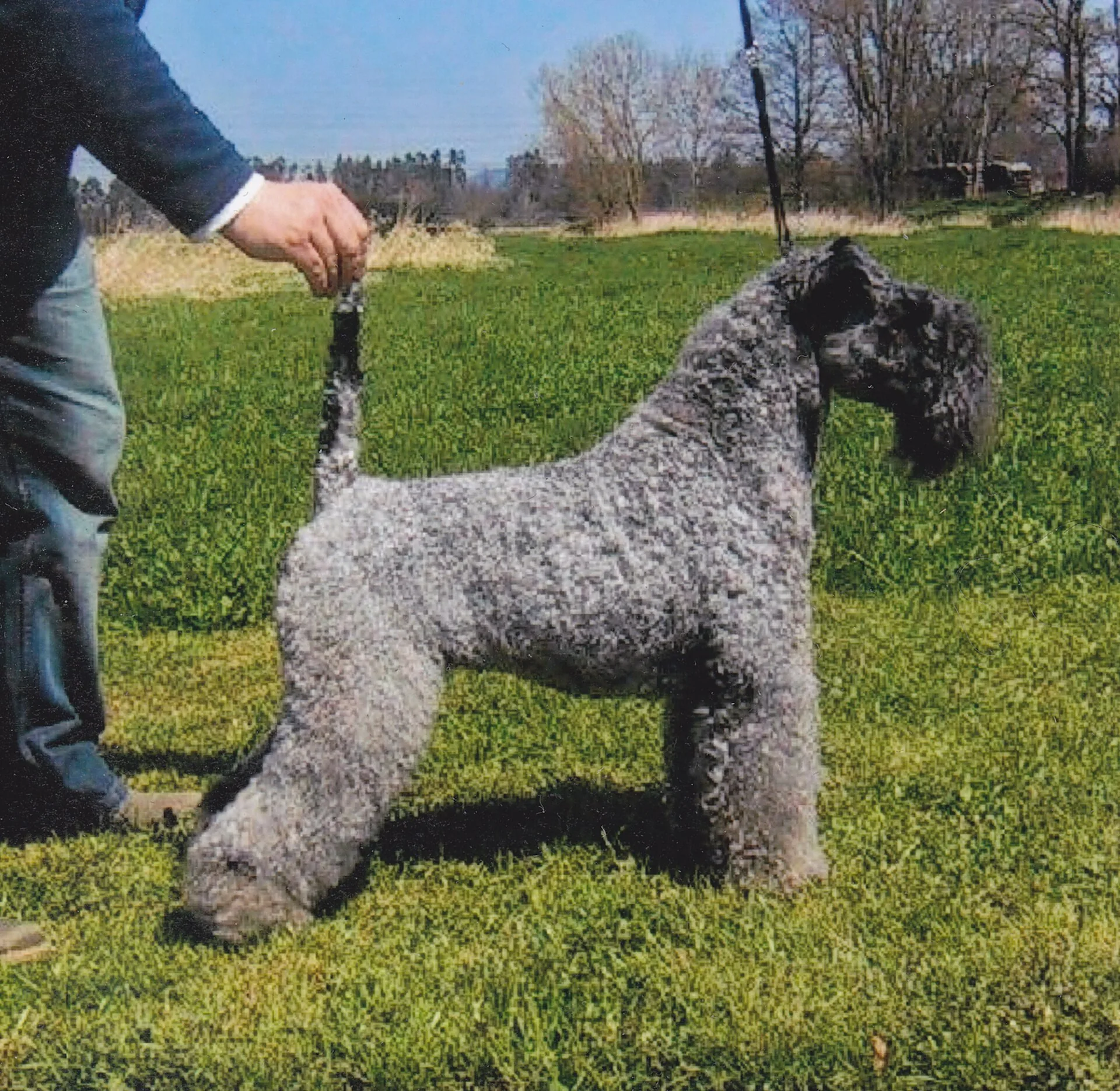
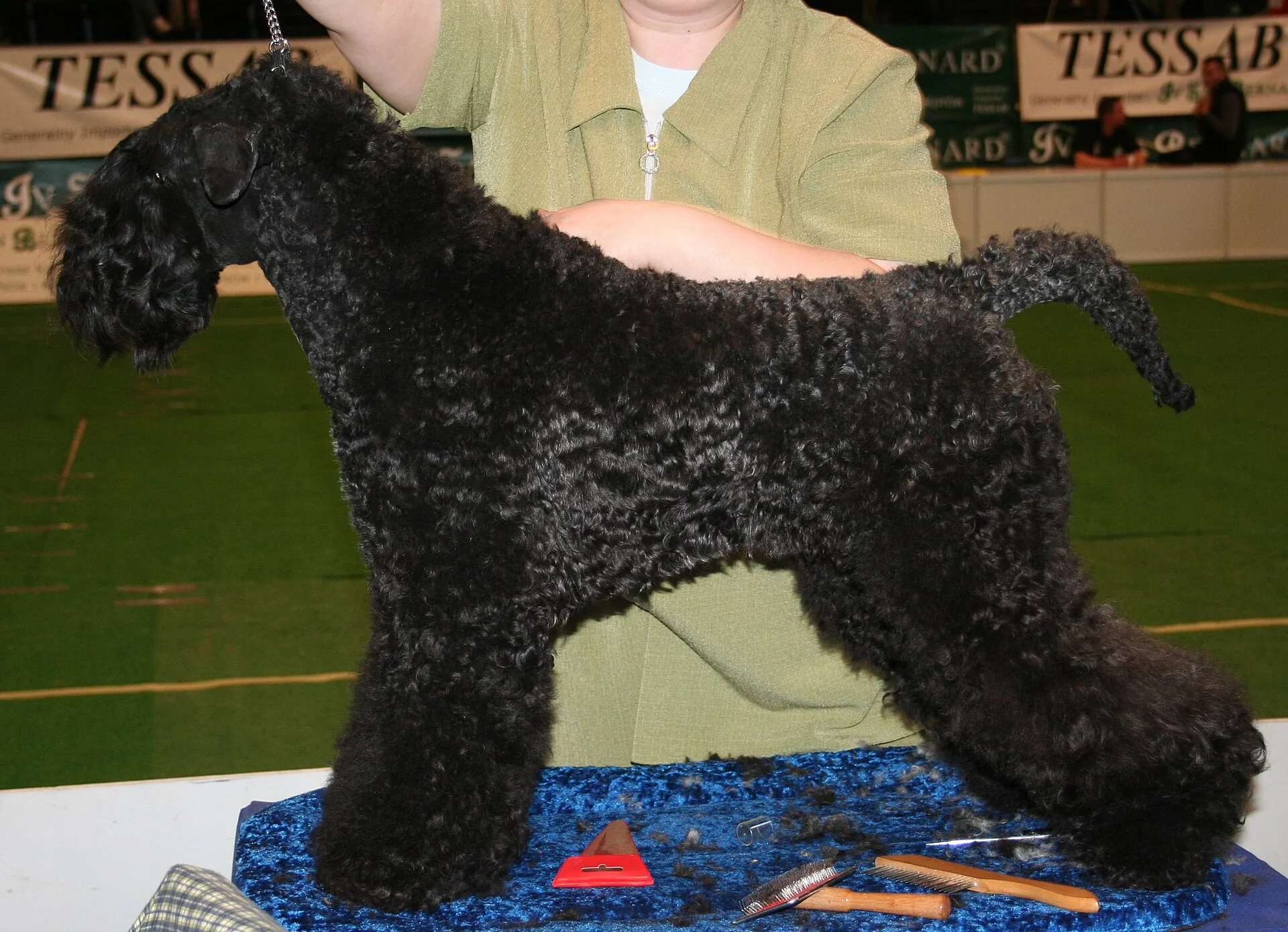
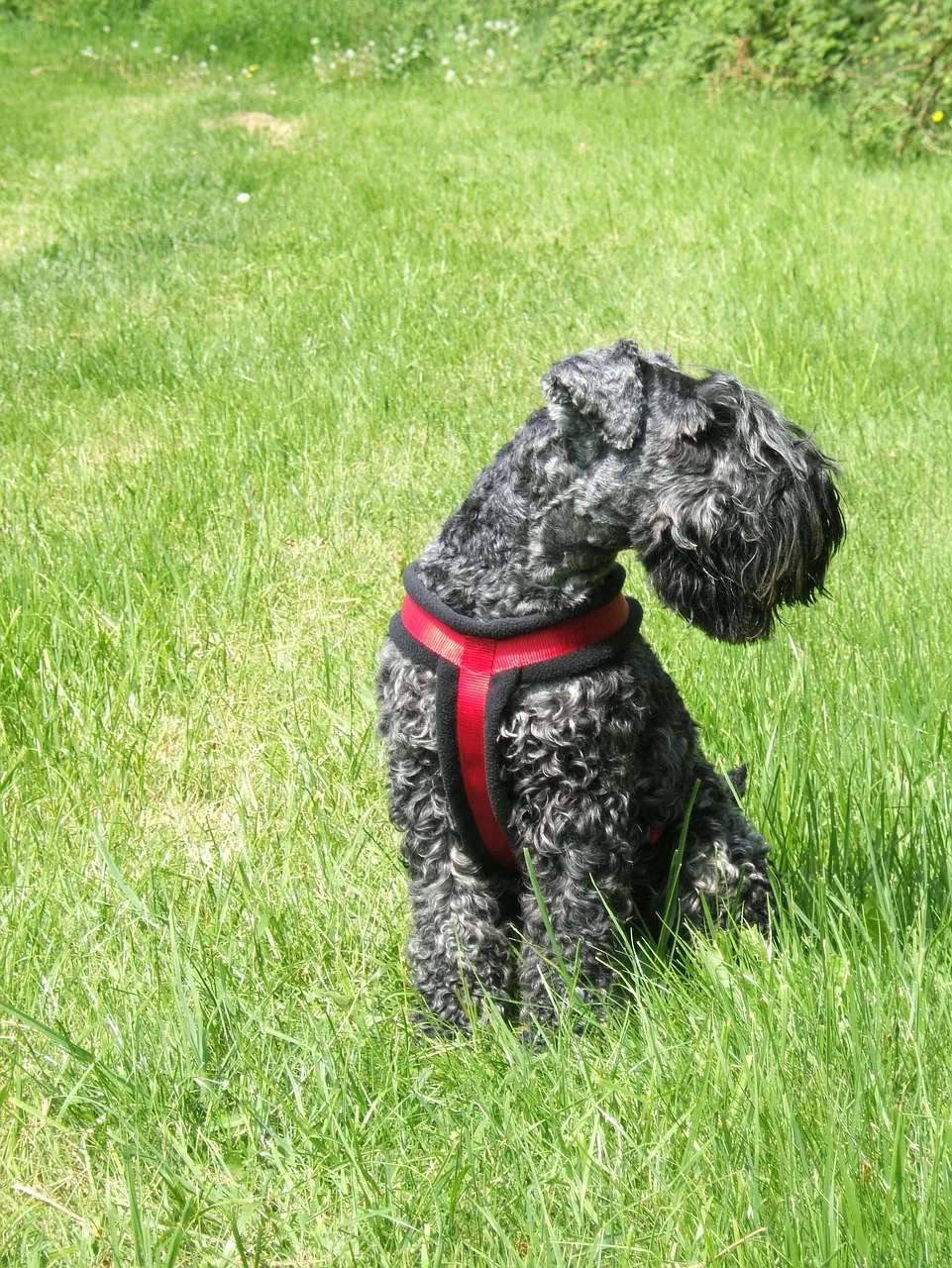
The FCI standard describes the coat as soft, plentiful and wavy, and asks for blue of any shade, with or without black points. Puppies are born black, and the standard allows black, and also a shade of tan, only up to the age of 18 months while the blue develops. Hard coats are a fault. The coat does not shed much, but it mats easily, so brush several times a week and clip or trim every six to eight weeks. Keep the beard and feet clean.
Feeding and weight
Kerry Blues are active and usually eat well, but they gain weight easily if exercise drops. Feed a good quality complete diet in measured portions, and adjust to the dog's activity and age. Use part of the daily food as training rewards. Wipe the beard after meals, as food and water collect there. Keep the dog lean, with a visible waist, since extra weight places pressure on the hips and makes grooming harder.
Work out a starting calorie figure and food weight with the calorie calculator. Not sure this is the right breed? Take the quiz.
Health
Every breed carries predispositions. These are the conditions most often discussed for the Kerry Blue Terrier, not a prediction for any individual dog.
- Hip dysplasia
- Cerebellar abiotrophy, a neurological condition for which DNA tests exist
- Skin problems and cysts
- Entropion and cataracts (eye conditions)
- Hereditary coagulation problems in some lines
What to ask the breeder. Ask for hip results and DNA test results for cerebellar abiotrophy on both parents, eye checks, and whether skin cysts or bleeding disorders occur in the lines.
Choosing a puppy
Look for a bold but balanced puppy, with no signs of fear or aggression, since the standard disqualifies both. Meet the mother and observe how she behaves with strangers. Ask for DNA and hip results. Expect a black puppy, because the blue develops over many months. Start socialisation, lead training and grooming handling at once, and find a groomer who knows the breed before the first full clip is due.
In Luxembourg the national kennel club is the Fédération Cynologique Luxembourgeoise (FCL), a member of the FCI. Many owners also buy from breeders in Germany, France or Belgium; a puppy coming from another EU country must be microchipped and vaccinated against rabies, which in practice means it cannot travel before about fifteen weeks of age. Where to get a dog in Luxembourg.
The older Kerry Blue Terrier
Older Kerry Blues often stay active and sharp, but they may slow down, develop lumps or suffer joint stiffness. Check the skin regularly and show any new lump to the vet. Keep the weight steady, offer shorter walks and soft bedding, and have the eyes and teeth checked each year. Keep up the grooming, because matted fur on an older dog becomes uncomfortable.
A realistic day
A realistic weekday for a working household in Luxembourg City, with a midday visit. Adjust it to your dog, not the other way round.
A brisk walk or short jog, with lead and recall practice.
Breakfast, then a chew or puzzle toy.
Midday visit from a walker: a toilet break, a game and some training.
A longer walk in a park or forest, with a ball or training.
Final walk, then a quick brush and a settle for the night.
A Kerry Blue Terrier in Luxembourg
A Kerry Blue can live in a flat in Luxembourg City if exercise and mental work are regular, but it is a lively dog and not a sofa ornament. Lifts and stairwells are the first test: a dog that tenses at the sight of another dog needs a calm routine and a firm sit. A low-shedding coat is a benefit in a small home, though the trip to the groomer every six to eight weeks needs a place in the diary.
Parks and forests suit the breed. The Pétrusse valley and Parc Merl work well for early training, while the Bambësch and Grünewald offer space for long walks and games on a long line. Summers in the thirties are manageable, but trim the coat sensibly and walk early and late. Free buses and trams help when the best walking is outside the city centre, though a nervous young dog needs time to adjust to crowds.
Every dog in Luxembourg must be identified, declared to the commune and covered by liability insurance. How registration works.
When you travel
Kerry Blues like to be part of the household, so a sitter should be confident, active and consistent. Tell the sitter about the dog's wariness of strangers, its attitude to other dogs and its need for firm routine. Keep the dog on a lead outdoors and check the garden fence. Leave grooming notes, vet details and a clear schedule of walks and meals.
PAWLY's holiday and overnight care takes place in your home, so your dog keeps its own bed and routine.
Myths and facts
MythKerry Blues are blue at birth.
FactPuppies are born black, and the standard allows black coats only up to the age of 18 months while the blue-grey colour develops.
MythA non-shedding coat means low maintenance.
FactThe coat sheds little but mats easily, and it needs brushing several times a week and clipping every six to eight weeks.
MythKerry Blues are aggressive.
FactThey are brave and protective, and they may challenge other dogs, but a well-bred and well-socialised dog is steady with a calm owner.
Is it the right dog for you?
Suits
- Confident, consistent owners who like a character
- Active people who enjoy training and outings
- Allergy-conscious households that want a low-shedding coat
- Owners who will pay for regular grooming
Think twice if
- You are a first-time owner
- You have another dog of the same sex
- You keep small pets such as rabbits
- You dislike regular trips to the groomer
Questions owners ask
Does a Kerry Blue shed?
Very little, which is one of its attractions. The soft, wavy coat tends to mat, however, so plan on brushing several times a week and a professional clip every six to eight weeks.
Are Kerry Blues good with other dogs?
Not always. They are terriers, and they may challenge dogs, especially of the same sex. Early socialisation and calm lead handling reduce the risk, but they will never be indiscriminately friendly.
How big is a Kerry Blue?
According to the FCI standard, dogs are 45.5 to 49.5 cm at the withers and weigh 15 to 18 kg, while bitches are slightly smaller at 44.5 to 48 cm and proportionately lighter.
Is a Kerry Blue suitable for first-time owners?
It can work for a committed beginner, but this is a strong-willed terrier that needs consistent training, socialisation and regular grooming. Many owners find it easier with some previous dog experience.
Sources
Photo: Eponimm, CC BY-SA 3.0, via Wikimedia Commons · Photo: Alofok, CC BY-SA 3.0, via Wikimedia Commons · Photo: Peter Kumpert, Germany, CC BY-SA 3.0 de, via Wikimedia Commons · Photo: Pleple2000, CC BY-SA 3.0, via Wikimedia Commons · Photo: Pixabay (Pixabay Content License)
General information for dog owners in Luxembourg, not veterinary or legal advice. Official facts (origin, size, group, history and temperament as described by the breed standard) follow the FCI standard; health and care sections reflect breed-club and veterinary guidance and are typical ranges rather than rules. For your own dog, ask your vet, the breed club or your commune. How this guide is written and checked. Last reviewed 8 October 2026.
Need someone for your Kerry Blue Terrier?
PAWLY offers an individual 45-minute walk or a home visit at your dog's pace, the same walker every time, and a written report with photos after every visit, across Luxembourg City.
Read next: the journal, for the Kerry Blue Terrier
All articles
The front door: barking, deliveries and escapes
A watchful breed reacts at the door; this is how to manage it.

What a proper meet and greet actually involves
A reserved dog needs slow introductions to a new walker or sitter.

Grooming and coat care through the Luxembourg year
The Kerry Blue Terrier has a coat that needs a routine that holds through the Luxembourg seasons.
Similar breeds
All 198 breeds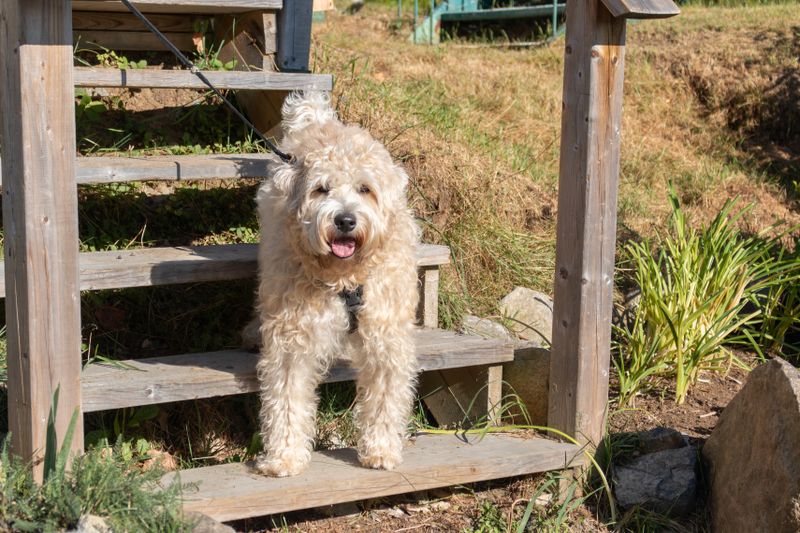
Soft Coated Wheaten Terrier
An Irish farm terrier with a silky wheaten coat and a famously exuberant greeting, cheerful at home and sturdy enough for a long walk.
EnergyGroomingFlat life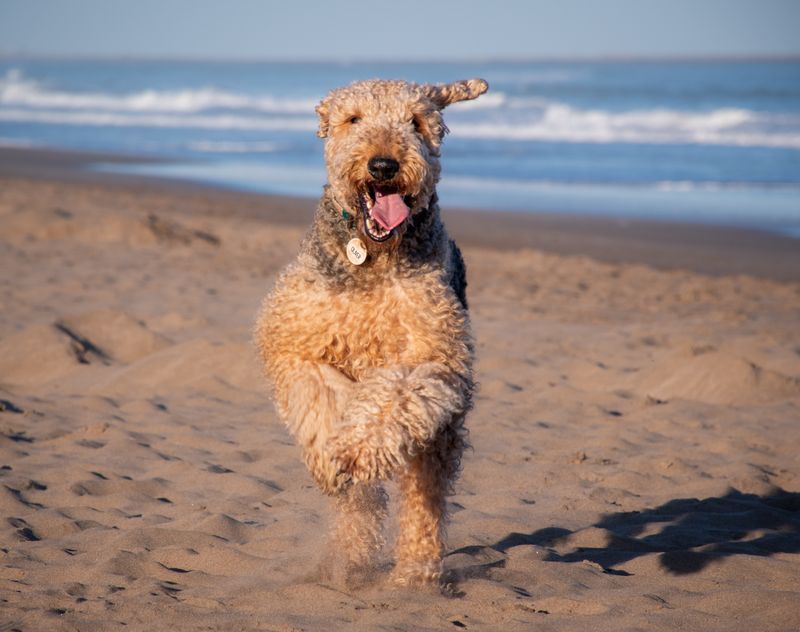
Airedale Terrier
The largest of the terriers: clever, funny, tireless and rarely as easy as it looks.
EnergyGroomingFlat life
Miniature Schnauzer
A small, sturdy German farm dog with a beard, eyebrows and a lot to say.
EnergyGroomingFlat life

