


History
The Border Terrier comes from the Cheviot Hills on the border between England and Scotland, where it was bred to run with foxhounds and bolt foxes. It had to be leggy enough to keep up with horses and small enough to follow a fox underground. The FCI lists Great Britain as the country of origin, places the breed in Group 3, Section 1, among large and medium sized terriers, and dates its standard to 24 June 1987.
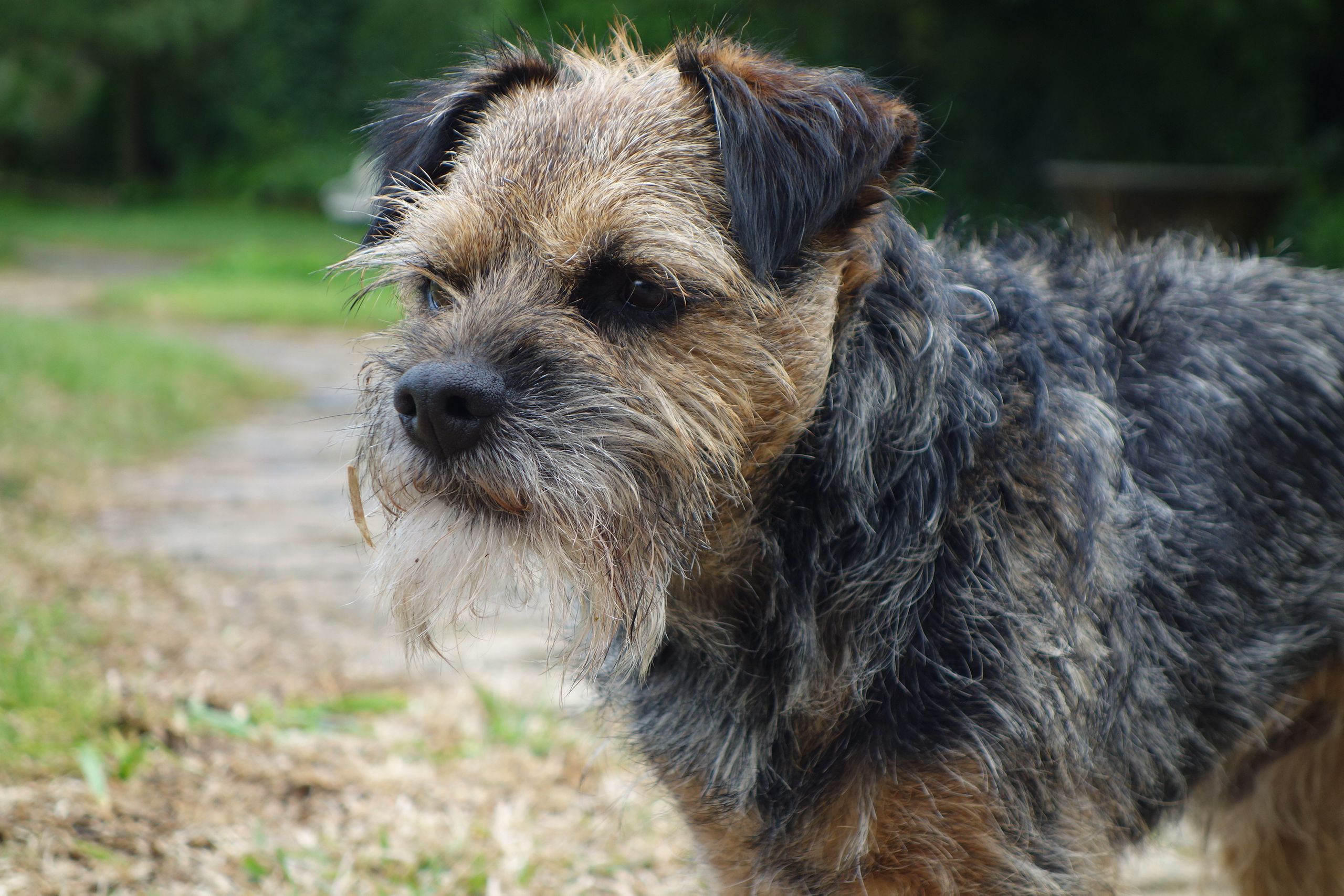
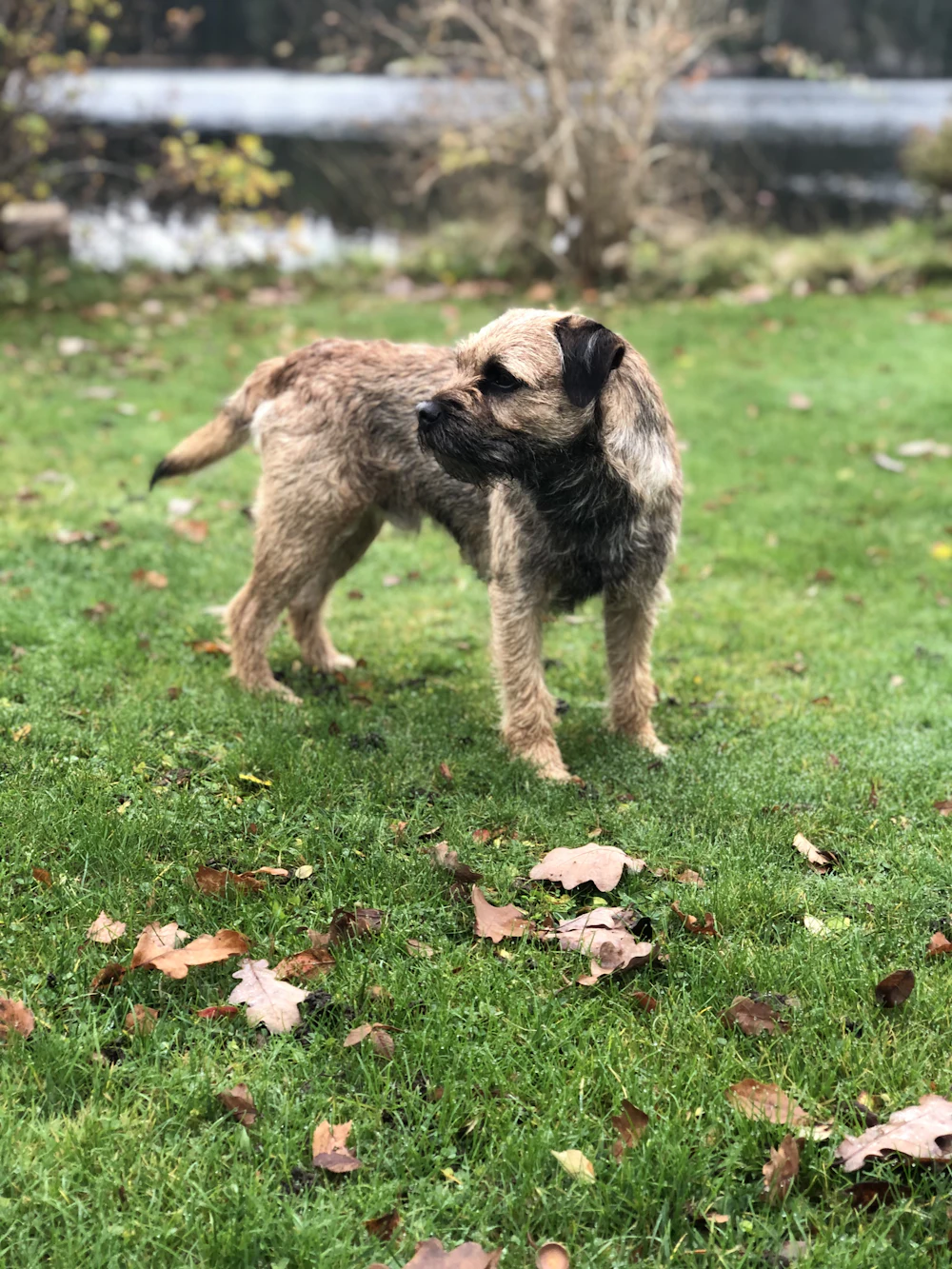
The standard opens with a plain job description: essentially a working terrier, capable of following a horse. It asks for a racy, athletic build with thick skin, a moderately short tail and a head like that of an otter, a much quoted phrase, with a moderately broad skull and small, V shaped ears that drop forward close to the cheek. Nothing in the text is aimed at show glamour, and the best examples still look like dogs that could do a day in the hills.
Temperament
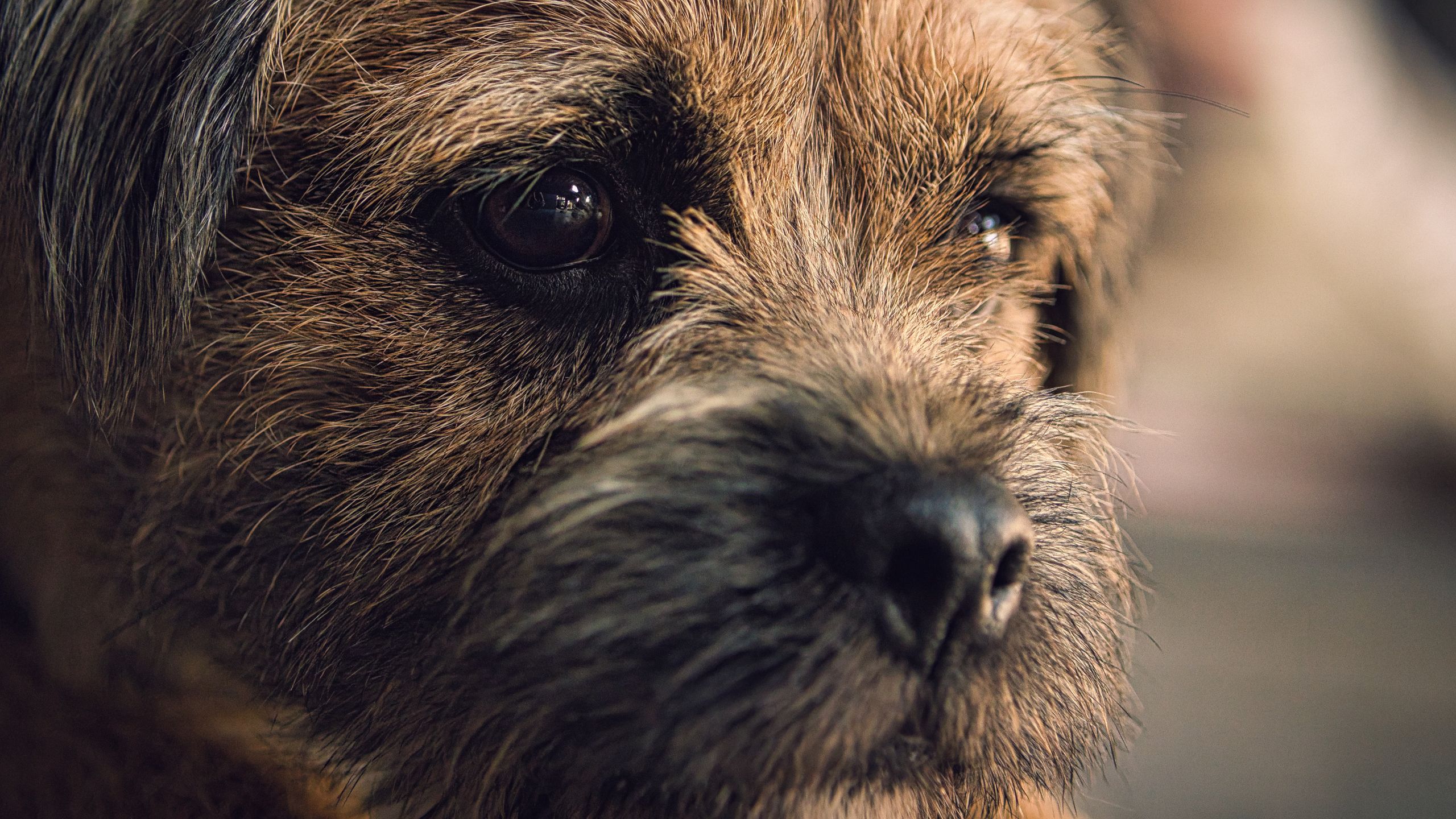
The standard sums the breed up as combining activity with gameness, which in practice means a cheerful, tough little dog that will go all day and cheerfully ignore bad weather. Eyes should be dark with a keen expression, and that look fits the character well: alert, curious and rarely sulky. Border Terriers tend to be friendly with people, adaptable and less abrasive than many terriers.
They are still terriers, however. Anything that bolts, rustles or squeaks can trigger a chase, and a Border Terrier that has locked onto a squirrel is deaf to ordinary requests. Many dig, and many are inventive escape artists. They are not dramatic barkers, but they will announce visitors. Most are happiest close to their people, following them from room to room.
Children and other pets
Border Terriers are generally robust, good humoured and patient with sensible children, which makes them one of the easier terriers for a family. They enjoy games and walks and will tolerate a fair amount of fuss, though small children should still be taught not to grab or corner the dog. With other dogs they are usually sociable. Cats, rabbits and other small pets are another matter: the hunting instinct is real, and even a dog raised alongside a cat may chase one outdoors.
Exercise and the daily walk
A healthy adult needs around an hour to an hour and a half a day, and enjoys more if the walk is varied. The breed was built for stamina, so a long weekend hike in the Grünewald suits it far better than a short lap round the block. Mix steady walking with sniffing time, games of fetch and a little training.
Mental exercise counts too. Hide treats in the garden or in the flat, teach new tricks, or try scent games, which suit the terrier brain. A bored Border Terrier digs, barks or redecorates the sofa. Because the prey drive is high, keep the dog on a lead or long line wherever it cannot be safely recalled.
Training
Border Terriers are intelligent and keen to please, which makes them more cooperative than many terriers, but they are not robots. Short, cheerful sessions with food or toys work well, while repetition and harsh corrections bring selective deafness. Start with a reliable recall and a calm greeting, because both will be tested by every squirrel and passing dog.
Socialise the puppy widely, including lifts, trams, cafes and busy pavements, so that a bright little dog grows into a steady one. Teach a leave it cue early, as the breed likes to pick things up. Patience pays off, and most owners find that a Border Terrier trained kindly becomes a delightful companion.
Coat and grooming
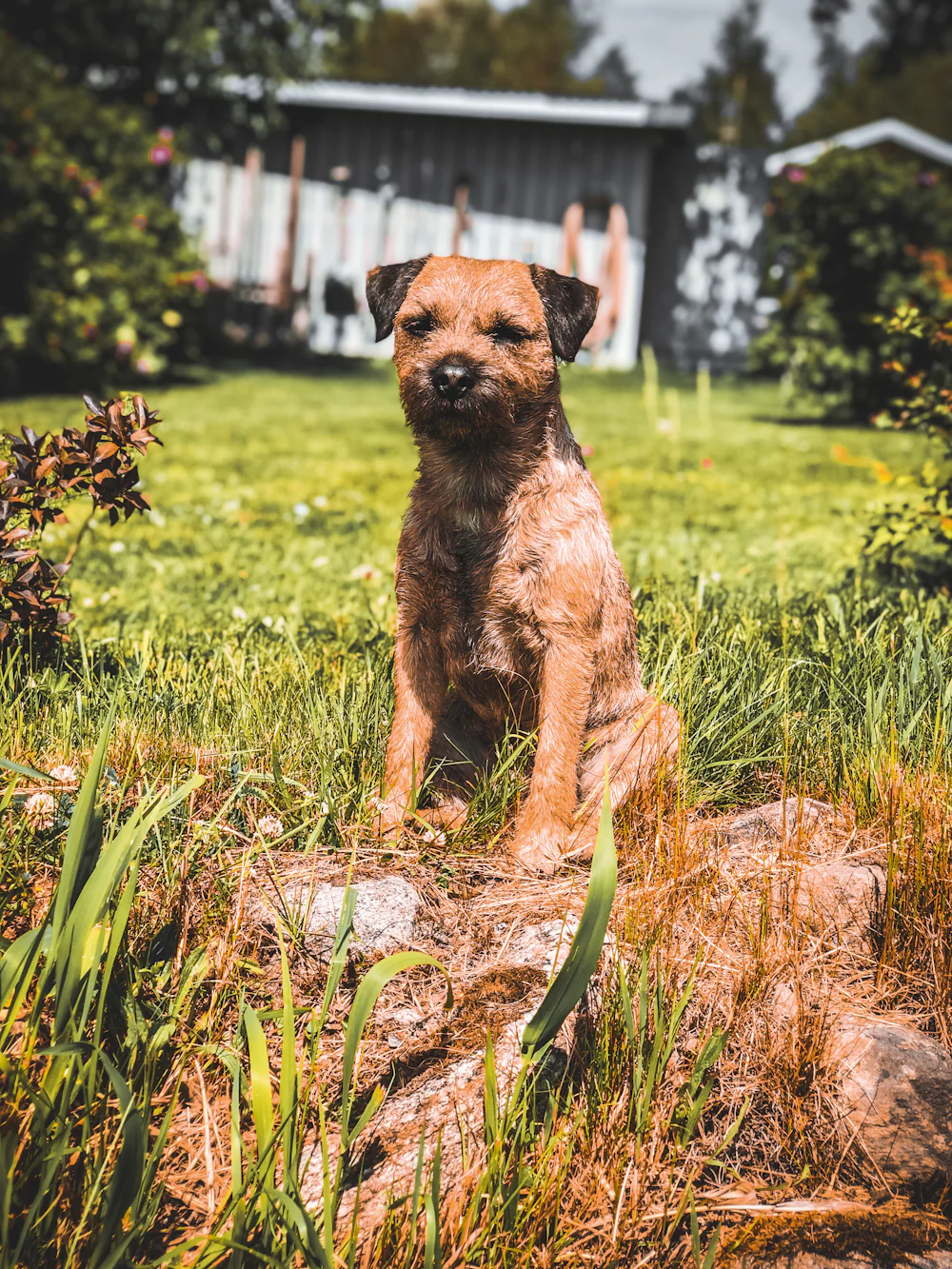
The standard asks for a harsh, dense coat with a close undercoat, over thick skin. It is weatherproof. Colours permitted are red, wheaten, grizzle and tan, or blue and tan. Brush weekly to remove loose hair. Many owners have the coat hand stripped, plucking the dead hair out by hand, about twice a year to keep the texture correct. Clipping softens the coat and changes its colour, so ask a groomer who knows the breed.
Feeding and weight
Border Terriers are active but small, and many are happy to eat whatever is put in front of them. Measure meals carefully, use part of the daily ration for training rewards, and keep to a good quality complete diet suited to age and activity. Extra weight puts strain on joints and shortens the energy for walking, so check the waistline regularly and adjust portions rather than waiting for a vet to mention it.
Work out a starting calorie figure and food weight with the calorie calculator. Not sure this is the right breed? Take the quiz.
Health
Every breed carries predispositions. These are the conditions most often discussed for the Border Terrier, not a prediction for any individual dog.
- Canine epileptoid cramping syndrome (Spike's disease)
- Seizures
- Hip dysplasia
- Heart conditions
- Hypothyroidism
What to ask the breeder. Ask about CECS and seizures in the lines, and ask for hip scores and heart checks for both parents.
Choosing a puppy
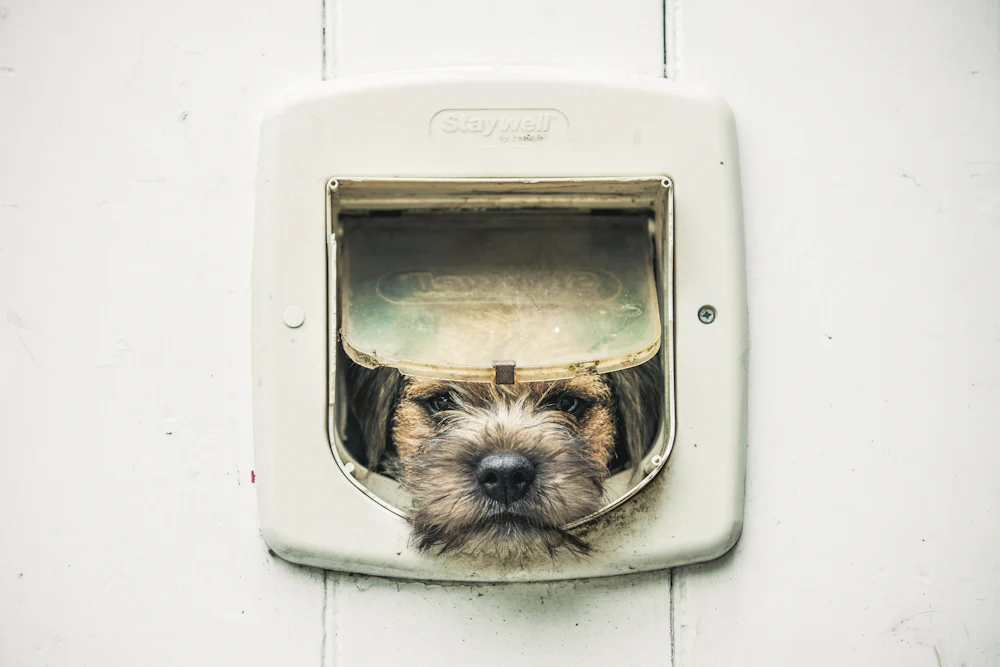
Choose a breeder who is open about CECS, seizures and heart problems in the lines, and who raises the litter in a busy household. Puppies need lots of short outings, early practice at being left for brief periods, and safe things to chew. Fence the garden carefully, because a Border Terrier can squeeze through remarkably small gaps. Begin recall games in the first weeks, while the puppy still wants to stay close.
In Luxembourg the national kennel club is the Fédération Cynologique Luxembourgeoise (FCL), a member of the FCI. Many owners also buy from breeders in Germany, France or Belgium; a puppy coming from another EU country must be microchipped and vaccinated against rabies, which in practice means it cannot travel before about fifteen weeks of age. Where to get a dog in Luxembourg.
The older Border Terrier
Many Border Terriers remain bright and active well into their teens. Keep them walking, because moderate exercise protects joints and weight, but shorten the route and avoid slippery floors. Check teeth, hearing and vision regularly, and ask the vet about heart screening in later years. Older terriers often become more clingy, so a quiet bed close to the family is appreciated.
A realistic day
A realistic weekday for a working household in Luxembourg City, with a midday visit. Adjust it to your dog, not the other way round.
A twenty minute walk before breakfast, with time to sniff in the courtyard or the nearest park.
Breakfast, then a settle in a crate or bed while you leave for work.
A walker takes the dog out for a brisk forty minute walk with a short training game.
A longer walk of up to an hour, ideally in the Pétrusse valley or a forest path.
A short final outing, a chew and bedtime.
A Border Terrier in Luxembourg
Border Terriers suit Luxembourg flats better than most terriers. They are compact, tidy and not especially noisy, and the dog fits in a lift and under a cafe table without fuss. A flat with a lift is fine as long as the daily walks happen, and the free buses and trams make weekend trips to forests easy, though a nervous dog may need practice at first.
Plan for the prey drive. City parks hold squirrels, and the Bambësch and Grünewald have plenty of wildlife, so a long line is a sensible tool until recall is excellent. In summer, which can reach the 30s, walk early and late, since a dense coat and an energetic dog can overheat. Neighbours rarely complain, but digging in shared gardens can cause friction.
Every dog in Luxembourg must be identified, declared to the commune and covered by liability insurance. How registration works.
When you travel
A sitter needs to know that a Border Terrier is an escape artist: check gates, hedges and balcony gaps, and never rely on a recall near open ground. Keep to the usual walking and feeding times, and give puzzle toys to prevent boredom. Leave details of any seizure history and the vet's number, and keep small pets out of reach.
PAWLY's holiday and overnight care takes place in your home, so your dog keeps its own bed and routine.
Myths and facts
MythTerriers are too difficult for first time owners.
FactBorder Terriers are among the more adaptable terriers, but they still need consistent training and a safe recall.
MythA small dog needs little exercise.
FactThis is a working terrier built to follow a horse, and an hour or more a day keeps it content.
MythThey can be clipped like any other terrier.
FactClipping softens and discolours the harsh coat. Hand stripping, or a groomer who knows the breed, keeps the correct texture.
Is it the right dog for you?
Suits
- Active families with children
- First time owners prepared to train
- Walkers who enjoy the forests
- Flat owners who can provide long outings
Think twice if
- You keep cats, rabbits or other small pets
- You want a dog that walks reliably off lead
- You are away from home for long hours
- You dislike the occasional dug up garden
Questions owners ask
Are Border Terriers good in flats?
Yes, provided they get daily walks and company. They are compact and fairly quiet, but they need real exercise and something to do while you are out. A tidy home needs a tired dog.
Do Border Terriers shed?
Only lightly. The harsh coat holds dead hair, so brushing weekly and hand stripping a couple of times a year keep it tidy. Clipping is possible but changes the coat. Wipe muddy feet after outings.
Can a Border Terrier be left alone?
A well exercised adult can manage a normal working day with a midday visit. Longer absences risk digging, chewing and barking, so arrange a walker. A tired terrier is a calmer terrier.
Can a Border Terrier live with a cat?
Sometimes, particularly if raised together, but it is never guaranteed. The breed was bred to chase and bolt animals, and unfamiliar cats outdoors may trigger a chase. Keep early introductions supervised and calm.
Sources
Photo: Pexels (Pexels License) · Photo: Unsplash (Unsplash License) · Photo: Pexels (Pexels License) · Photo: Unsplash (Unsplash License) · Photo: Unsplash (Unsplash License)
General information for dog owners in Luxembourg, not veterinary or legal advice. Official facts (origin, size, group, history and temperament as described by the breed standard) follow the FCI standard; health and care sections reflect breed-club and veterinary guidance and are typical ranges rather than rules. For your own dog, ask your vet, the breed club or your commune. How this guide is written and checked. Last reviewed 8 October 2026.
Need someone for your Border Terrier?
PAWLY offers an individual 45-minute walk or a home visit at your dog's pace, the same walker every time, and a written report with photos after every visit, across Luxembourg City.
Read next: the journal, for the Border Terrier
All articles
What actually tires a dog indoors
Walks alone rarely tire a busy breed like the Border Terrier; this covers what works indoors.

Barking in an apartment: six causes, six different answers
Terriers are quick to sound the alarm; this sorts out the causes and the answers.

Building a recall you can actually rely on
Terriers follow scent and movement, so the Border Terrier needs a recall built properly.
Similar breeds
All 198 breeds
Jack Russell Terrier
A big dog in a small body: fearless, clever, endlessly busy and permanently looking for something to hunt.
EnergyGroomingFlat life
Cairn Terrier
A small, scruffy Highland terrier, bred to bolt foxes from the rocks and still cheerful, busy and unimpressed by its size.
EnergyGroomingFlat life
West Highland White Terrier
A cheerful, confident little Scottish terrier, white by design, with a big opinion of itself and a worker's stamina.
EnergyGroomingFlat life

