History
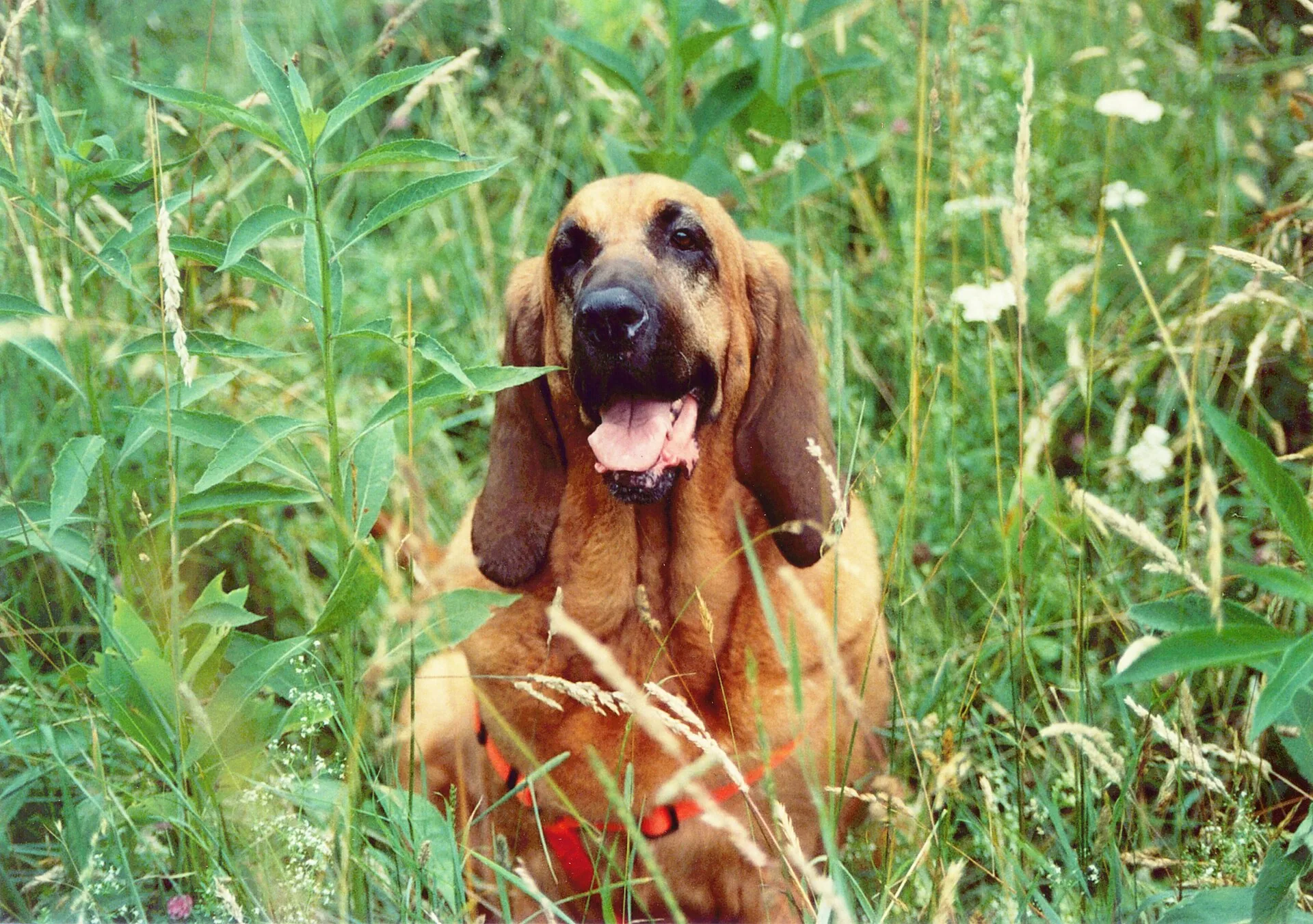
The FCI lists this breed as the Chien de Saint-Hubert, with Belgium as its country of origin, and the story begins very close to Luxembourg. According to the standard, large scent hounds were bred by the monks of the Abbey of Saint-Hubert in the Belgian Ardennes, probably descending from the black or black and tan hounds kept there in the 7th century. They became known for robustness and stamina rather than speed, and were valued in particular for hunting wild boar through difficult country.
The standard relates that William the Conqueror took these hounds to England in the 11th century, where they developed into the dog known in English as the Bloodhound. The name refers to a blooded hound, meaning one of pure breeding, not to any taste for blood. The breed later travelled to the United States, where its talent for following human trails made it a byword for tracking. The FCI classifies it as a scent hound with working trial, used for large game, as a service and tracking dog, and as a family dog.
Temperament
The FCI standard describes a gentle, placid, kind and sociable dog, particularly attached to its owner, tolerant of other dogs and domestic animals, somewhat reserved and stubborn, and never aggressive. That matches the dogs we meet: affectionate, unhurried indoors, and quite capable of ignoring you completely once a promising smell has been found. Most greet visitors with interest rather than suspicion, which makes them poor guards and pleasant hosts.
Outdoors the character changes gear. A Bloodhound on a trail becomes single-minded, head down, pulling steadily, deaf to calls it would answer in the kitchen. This is the breed working as designed, not disobedience, but it shapes daily life. Expect a deep, carrying bay when excited or bored, a good deal of drool after drinking and eating, and a sensitive streak: harsh handling produces a sulking hound, while patience and food produce a willing partner.
Children and other pets
With children the Bloodhound is usually tolerant and soft, but its size and enthusiasm can knock over a toddler, and a swinging head or tail lands at face height for small children. Supervise early meetings and teach children not to run screaming past a hound that may decide to follow. Other dogs are generally accepted, as the standard notes. Cats raised with the dog are often fine at home, though a strange cat crossing a trail outside is another matter.
Exercise and the daily walk
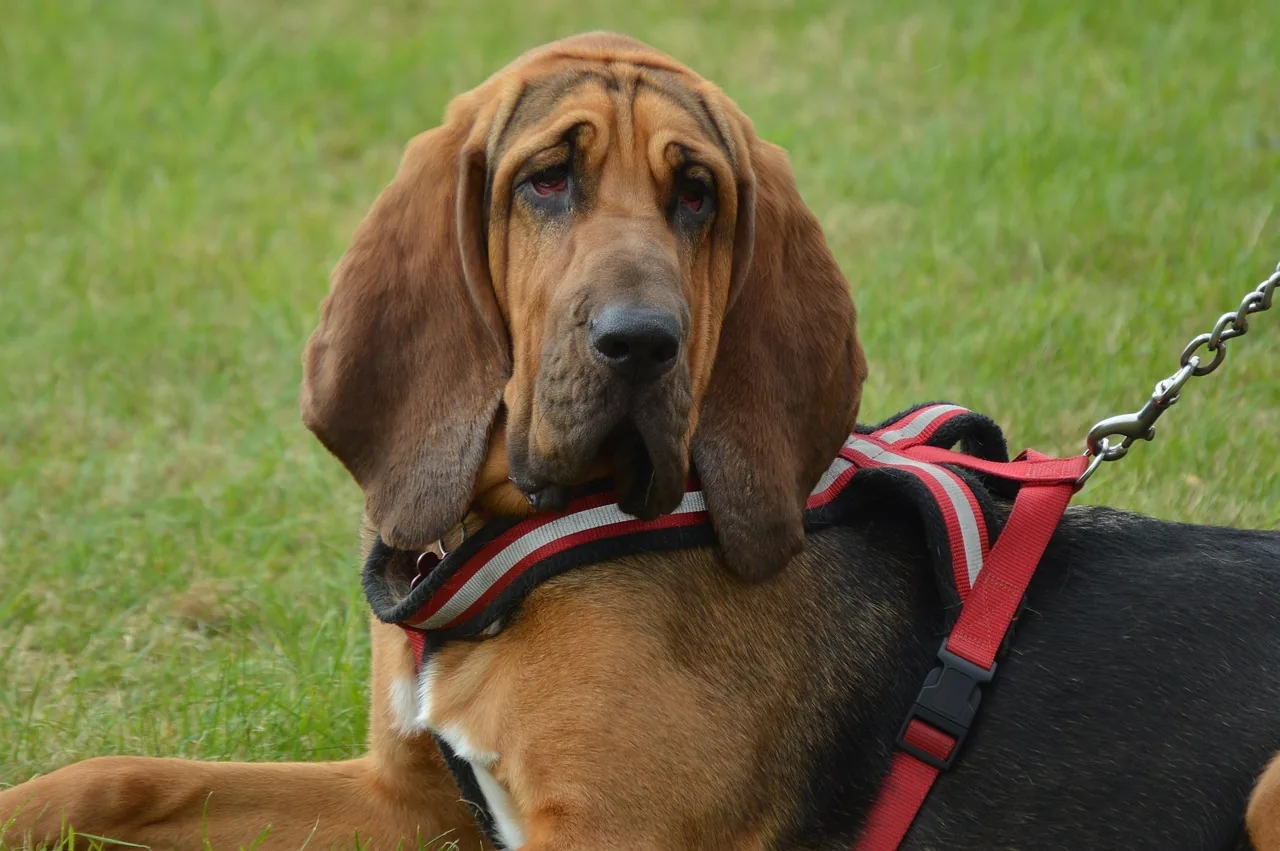
A healthy adult needs around two hours of activity a day, but the quality matters more than the distance. Long, sniff-rich walks at the dog's pace tire a Bloodhound far more than brisk laps of a park. Because the nose overrides recall, almost all of this happens on a lead or a long line attached to a well-fitted harness. Only securely fenced areas are realistic for off-lead time.
Scent work is the ideal outlet. Simple trailing games, where a family member walks off and the dog follows the track, use exactly the instincts the breed was developed for. Puppies should not be marched for long distances while the joints are growing; short outings, free play on soft ground and gentle exploration are enough until roughly eighteen months. Avoid heavy exercise just before or after meals because of the bloat risk.
Training
Bloodhounds learn quickly when they see the point and slowly when they do not. Short sessions, generous food rewards and a calm voice work better than repetition. The standard's word stubborn is accurate: the dog that walked perfectly to heel yesterday may today decide that the lamppost needs another forty seconds. Lead manners deserve early attention, because a 50 kg hound pulling towards a scent is a real hazard on wet pavement.
Recall is the hardest skill and should never be trusted near roads, whatever progress you make. Teach a cue anyway, for use in enclosed areas. Settle on a mat, polite greetings and food manners are worth working on, as these dogs are tall enough to clear a kitchen counter. Joining a mantrailing or tracking group gives both owner and dog a structured hobby that fits the breed perfectly.
Coat and grooming
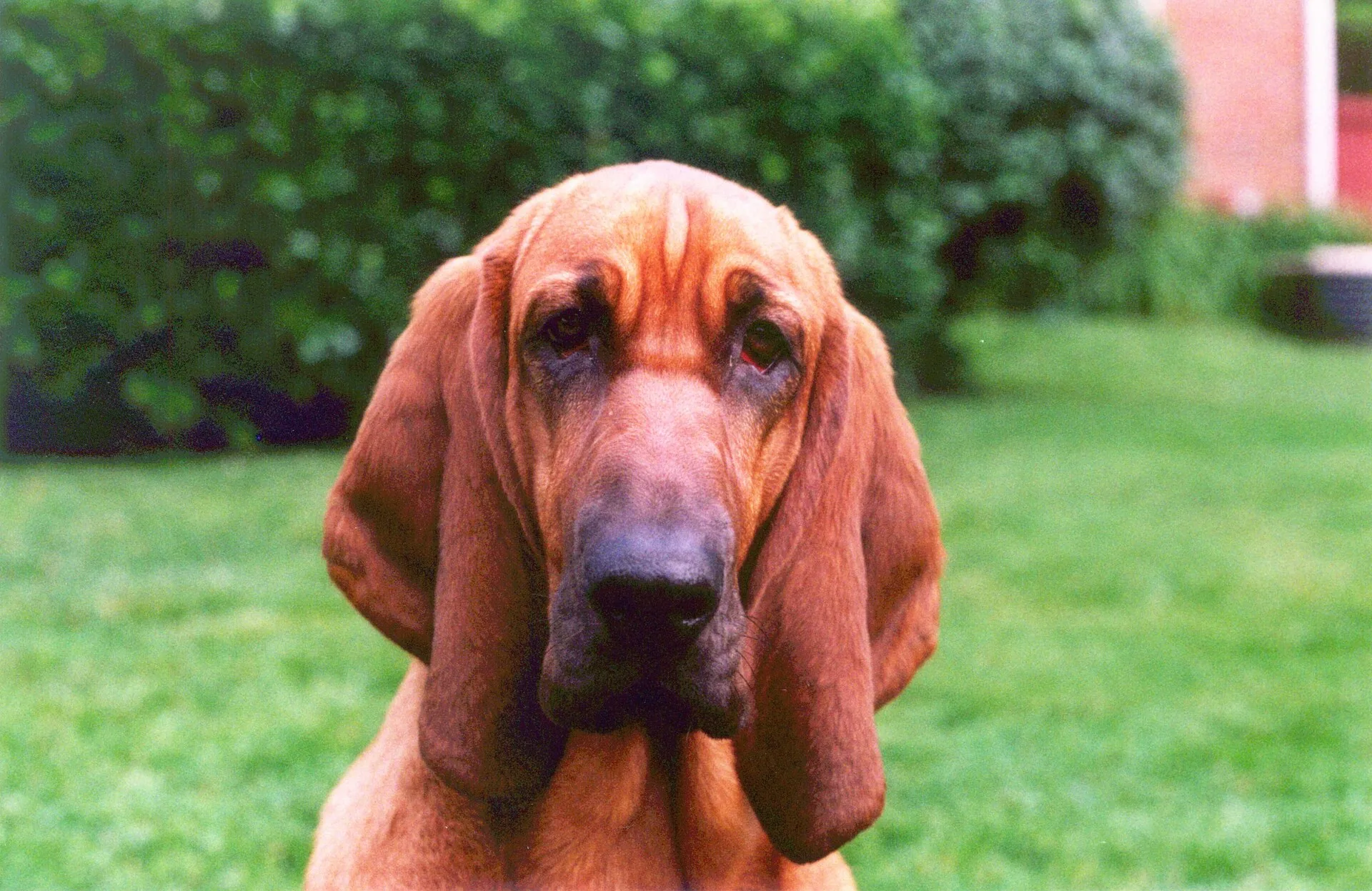
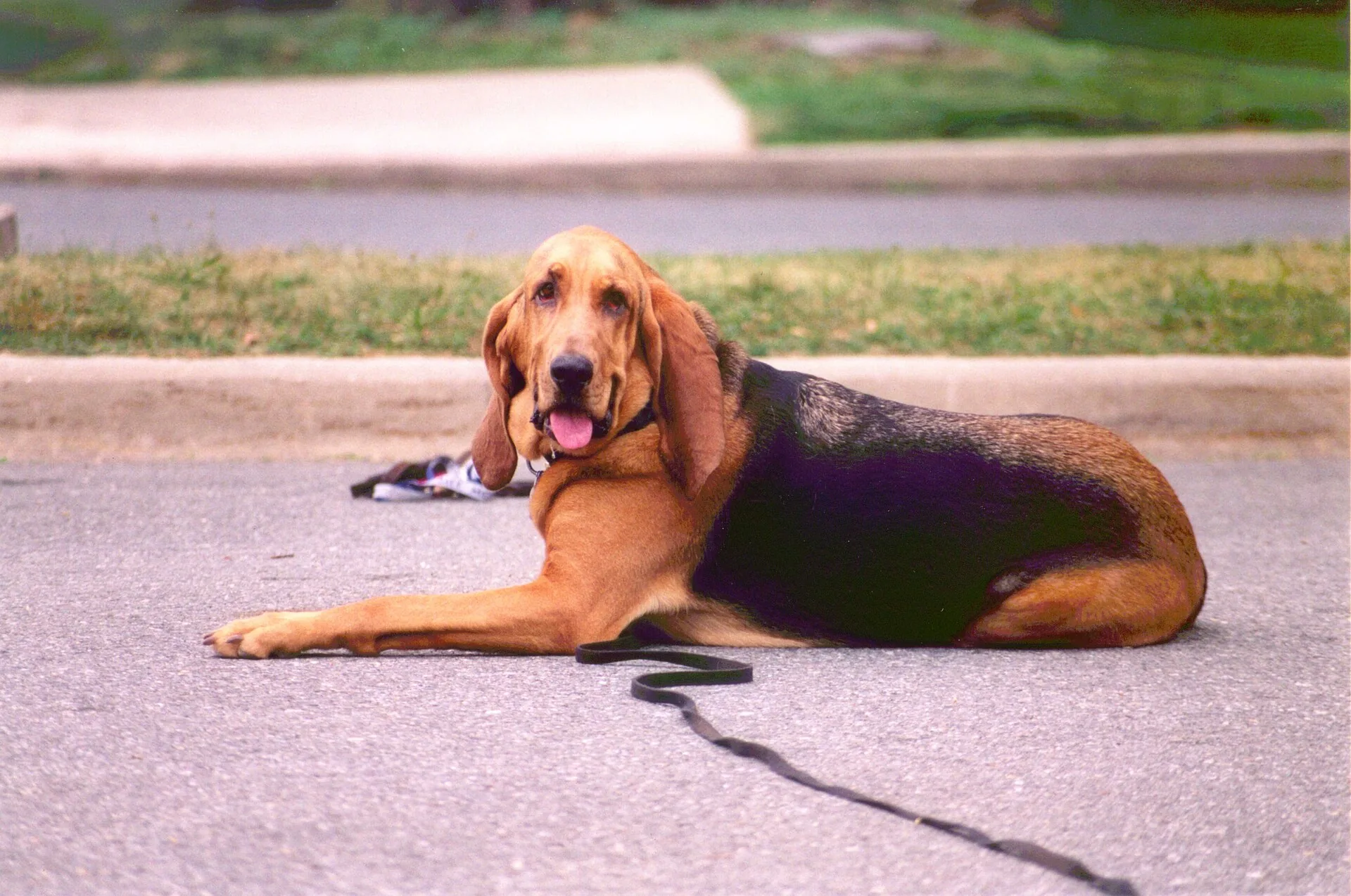
The FCI describes a short, dense, rather harsh and weatherproof coat on the body, very short and soft on the head and ears. Shedding is moderate and fairly constant; a weekly rub with a rubber mitt keeps it tidy. The real grooming work lies elsewhere: long ears that trail through puddles and food bowls, deep facial folds and drooping eyelids all need daily checks and cleaning. Permitted colours are black and tan, liver and tan, and red, with small white marks tolerated on chest, toes and tail tip.
Feeding and weight
Feed a complete diet suited to a large, slow-maturing breed, divided into two or more meals rather than one large one. Raised bowls are debated; ask your vet. Rest the dog for an hour around meals to reduce the risk of bloat. Many Bloodhounds are greedy and opportunistic, so keep bins secured and watch body condition, as excess weight strains the joints. Keep a towel near the water bowl.
Work out a starting calorie figure and food weight with the calorie calculator. Not sure this is the right breed? Take the quiz.
Health
Every breed carries predispositions. These are the conditions most often discussed for the Bloodhound, not a prediction for any individual dog.
- Gastric dilatation-volvulus (bloat)
- Hip and elbow dysplasia
- Eyelid problems (entropion and ectropion)
- Ear infections (otitis externa)
- Skin fold dermatitis
What to ask the breeder. Ask to see hip and elbow scores for both parents and recent eye examination results, and ask about any history of bloat in the line.
Choosing a puppy
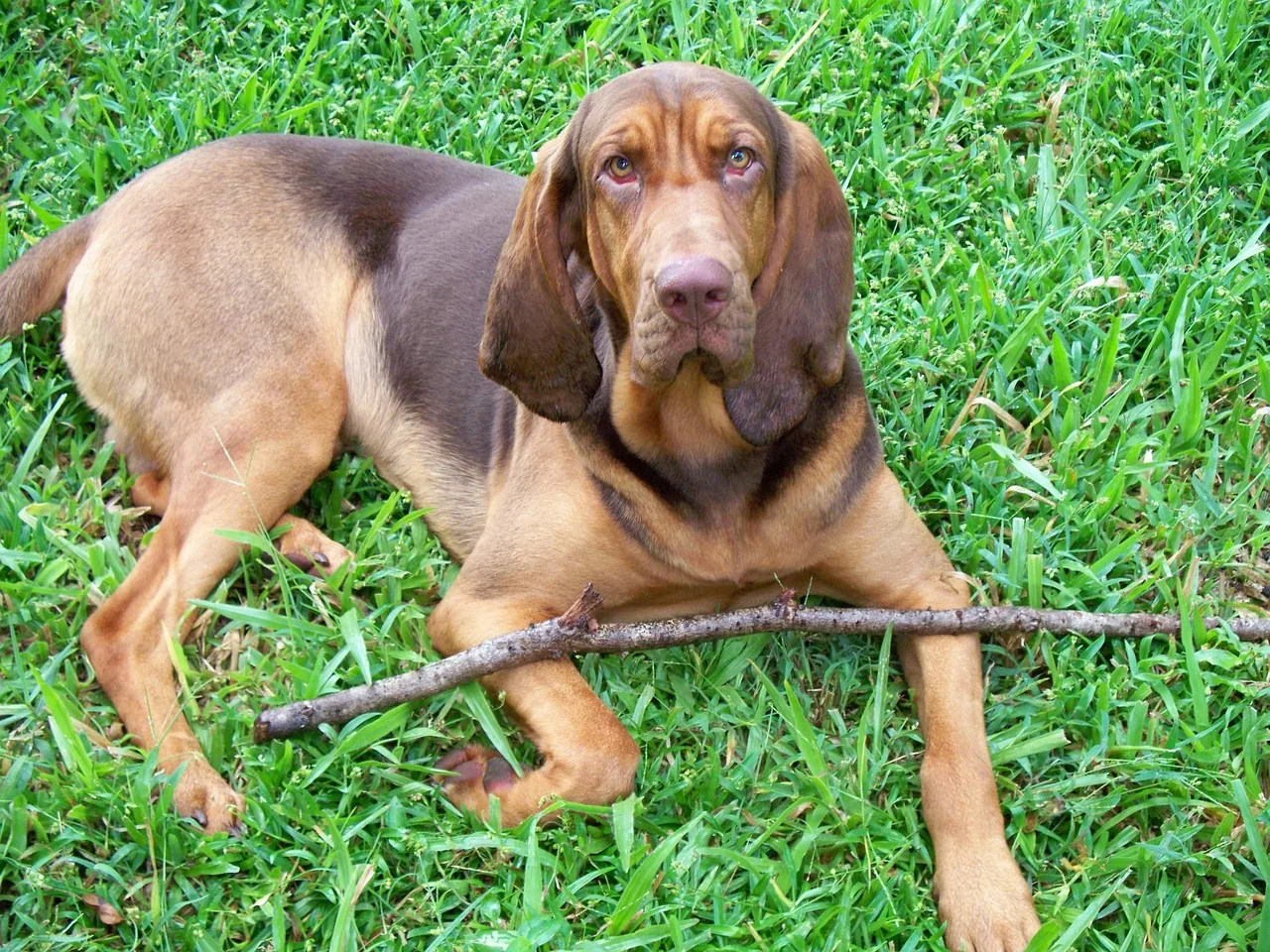
Bloodhound puppies are clumsy, loose-skinned and grow at an alarming rate. Protect developing joints by limiting stairs and long walks, and use non-slip mats on smooth floors. Start lead training and handling of ears, eyes and mouth in the first weeks at home. Introduce the lift, the bus and busy pavements gradually, with treats. A crate or puppy pen protects shoes and cables during the chewing months, which can last well past the first birthday.
In Luxembourg the national kennel club is the Fédération Cynologique Luxembourgeoise (FCL), a member of the FCI. Many owners also buy from breeders in Germany, France or Belgium; a puppy coming from another EU country must be microchipped and vaccinated against rabies, which in practice means it cannot travel before about fifteen weeks of age. Where to get a dog in Luxembourg.
The older Bloodhound
From around eight years many Bloodhounds slow noticeably. Shorter, more frequent sniffing walks keep the mind engaged without straining stiff joints. Watch weight closely, check eyes and ears more often, and ask your vet about joint support. An orthopaedic bed away from draughts is appreciated. Any sudden restlessness or swelling of the belly after a meal still needs emergency attention at any age.
A realistic day
A realistic weekday for a working household in Luxembourg City, with a midday visit. Adjust it to your dog, not the other way round.
Lead walk along quiet streets with plenty of sniffing time; breakfast once home and settled.
Owner leaves for work; the hound naps on a padded bed after a stuffed chew toy.
Midday visit: a 45-minute sniff walk on a long line in a quiet green area, fresh water, ears checked.
Evening outing of about an hour, ideally including a short scent trail; dinner after a rest.
Brief garden or street break, face folds wiped, lights out.
A Bloodhound in Luxembourg
The Bloodhound's Ardennes roots make Luxembourg familiar territory, and the Grünewald and Bambësch forests are full of the scents it was made for. Use them on a long line: wildlife is plentiful and a hound on a fresh deer trail can cover a great deal of ground. In town, the Pétrusse valley and Parc Merl are pleasant, though busy paths call for good lead manners. Free buses and trams help reach the forest edges, but check that your dog is comfortable before boarding with a hound of this size.
Flat life is possible with a lift and a calm routine, as adults sleep much of the day, but the baying can test thin walls and patient neighbours. Hot summer days in the 30s °C call for early and late walks only. Remember the standard Luxembourg obligations: microchip, declaration to the commune, third-party liability insurance and the annual dog tax.
Every dog in Luxembourg must be identified, declared to the commune and covered by liability insurance. How registration works.
When you travel
A sitter must keep the dog on a lead or long line outdoors at all times, without exception, and should know the feeding routine and the hour of rest around meals. Daily cleaning of ears and folds matters, as infections develop quickly. Warn the sitter about counter surfing, drool and baying when the dog is left alone, and leave the vet's details with clear signs of bloat to watch for.
PAWLY's holiday and overnight care takes place in your home, so your dog keeps its own bed and routine.
Myths and facts
MythBloodhounds are aggressive because of their name.
FactThe name means pure-bred hound. The FCI standard describes the breed as gentle, kind and never aggressive.
MythA well-trained Bloodhound can be let off lead anywhere.
FactTraining helps, but a strong scent will override recall in most individuals. Off-lead time belongs in fenced areas.
MythThey are lazy dogs that hardly need walking.
FactIndoors they are calm, but they need long daily walks and mental work for the nose to stay content.
Is it the right dog for you?
Suits
- Patient owners who enjoy slow, exploratory walks
- People interested in mantrailing or tracking
- Homes with easy access to forest or countryside
- Owners who do not mind drool and a deep voice
Think twice if
- You want a dog with reliable off-lead recall
- Your flat has thin walls and no lift
- You are house-proud about clean floors and furniture
- The dog would be alone for most of the day
Questions owners ask
Can a Bloodhound live in a flat in Luxembourg City?
Yes, if there is a lift, a calm routine and someone to provide long walks every day. Adults sleep a great deal indoors. The main difficulties are the size of the dog in small rooms, drool on walls and the bay, which neighbours may hear if the dog is bored or left too long.
How much do Bloodhounds drool?
A fair amount, especially after drinking, eating or a long walk. Keep towels by the water bowl and door, and expect to wipe walls occasionally. Drool is part of the breed's loose facial skin and cannot be trained away.
Are Bloodhounds good with cats?
Many live peacefully with a cat they have grown up with, and the FCI notes tolerance of other domestic animals. Introductions should still be slow and supervised. Outdoors, any running animal leaves an exciting trail, so a lead is essential.
Is a Bloodhound a good first dog?
It can be for a patient, well-prepared owner, but it is not an easy choice. Size, strength on the lead, stubbornness and the need for daily scent outlets mean that a first-time owner should plan for training classes and reliable help with walks.
Sources
- FCI breed standard No. 84 (Chien de Saint-Hubert, Bloodhound)
- FCI breed page No. 84
- The Royal Kennel Club, Bloodhound
Photo: Asilverstein, CC BY-SA 3.0, via Wikimedia Commons · Photo: markfizzwig / Pixabay (Pixabay Content License) · Photo: Pixabay (Pixabay Content License) · Photo: Asilverstein, CC BY-SA 3.0, via Wikimedia Commons · Photo: Asilverstein, CC BY-SA 3.0, via Wikimedia Commons
General information for dog owners in Luxembourg, not veterinary or legal advice. Official facts (origin, size, group, history and temperament as described by the breed standard) follow the FCI standard; health and care sections reflect breed-club and veterinary guidance and are typical ranges rather than rules. For your own dog, ask your vet, the breed club or your commune. How this guide is written and checked. Last reviewed 8 October 2026.
Need someone for your Bloodhound?
PAWLY offers an individual 45-minute walk or a home visit at your dog's pace, the same walker every time, and a written report with photos after every visit, across Luxembourg City.
Read next: the journal, for the Bloodhound
All articles
Feeding, portions and how to tell if your dog is the right weight
Large dogs suffer more from extra weight; this is how to judge the right one.

The itchy dog: working through it in the right order
Skin trouble is among the conditions discussed for the Bloodhound; this is the order to work through it.

Separation anxiety: the signs owners miss and what actually helps
The Bloodhound bonds closely with its people; this covers the signs owners miss.
Similar breeds
All 198 breeds
Basset Hound
A short-legged hound of real substance, placid and affectionate at home, single-minded once a scent reaches that long, low nose.
EnergyGroomingFlat life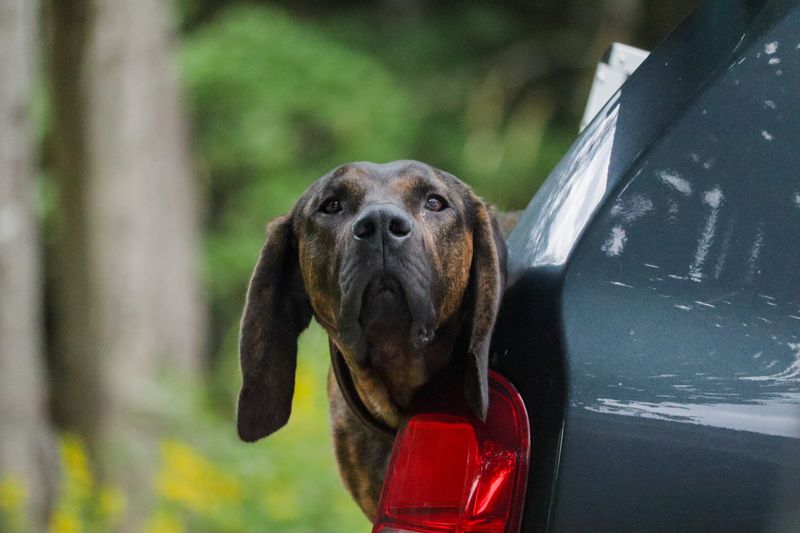
Bavarian Mountain Scent Hound
A light, calm and quietly obsessive tracker, bred to follow the trail of wounded game for hours and not to be a pavement ornament.
EnergyGroomingFlat life
Beagle
A cheerful, sociable nose on four legs. Everything about living with a Beagle follows from the nose.
EnergyGroomingFlat life

