
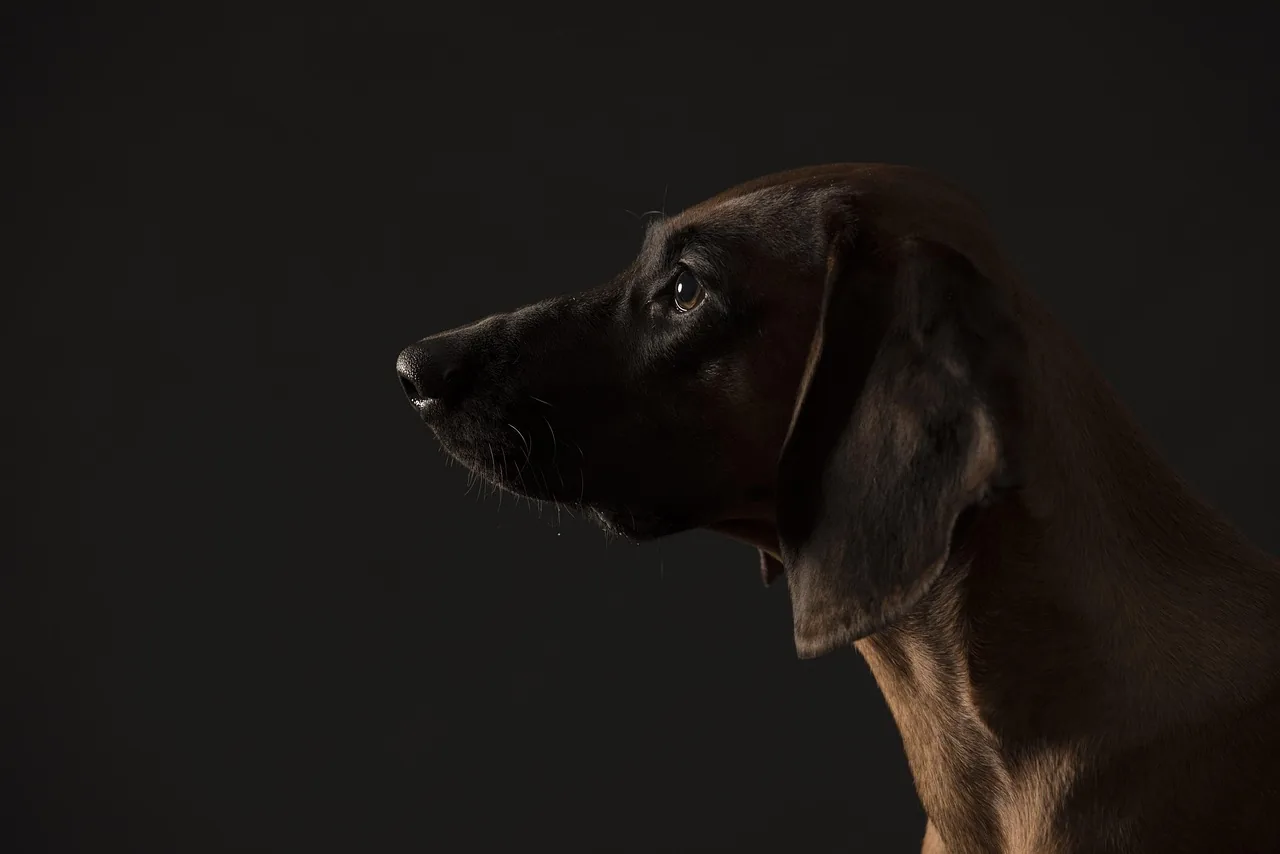
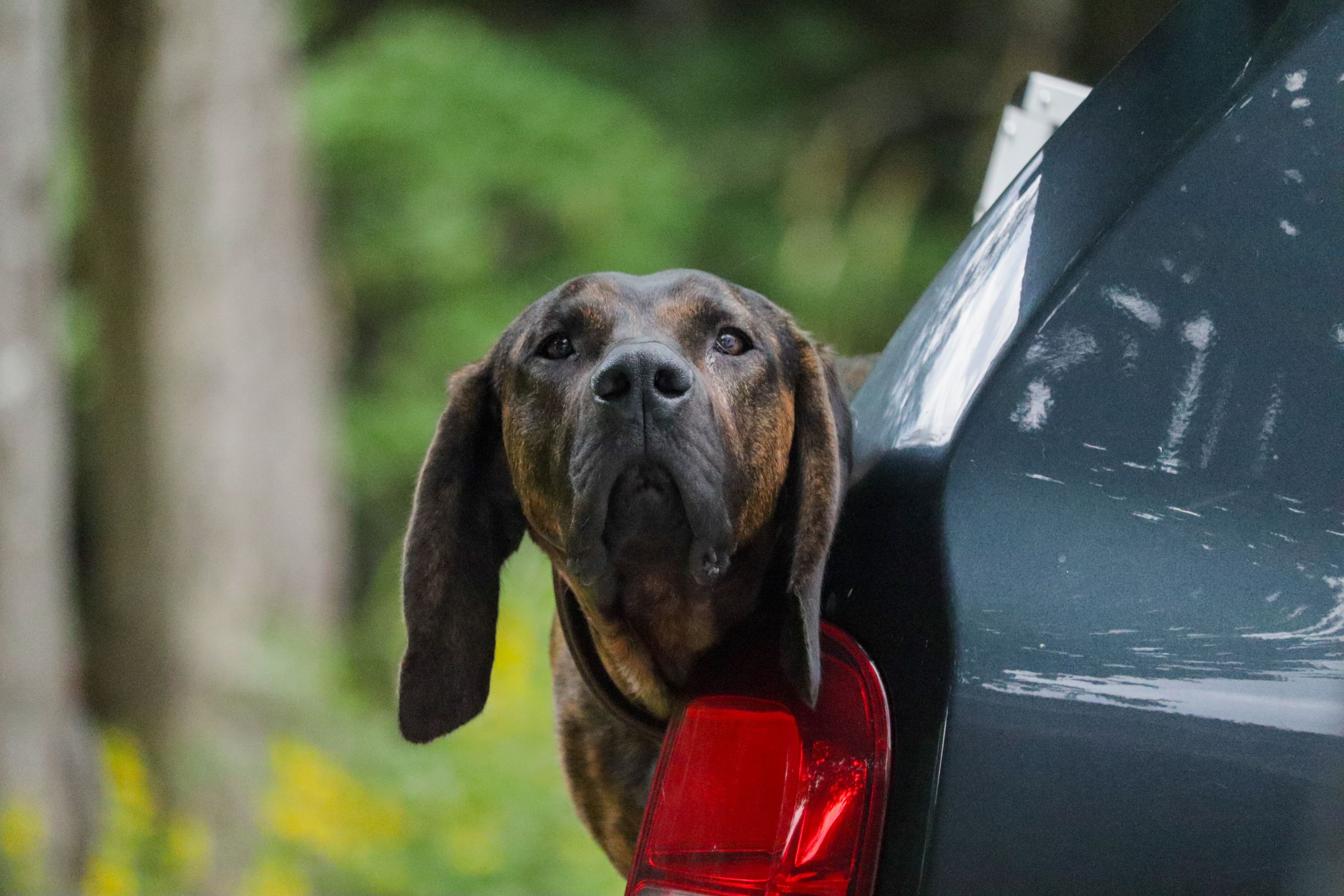
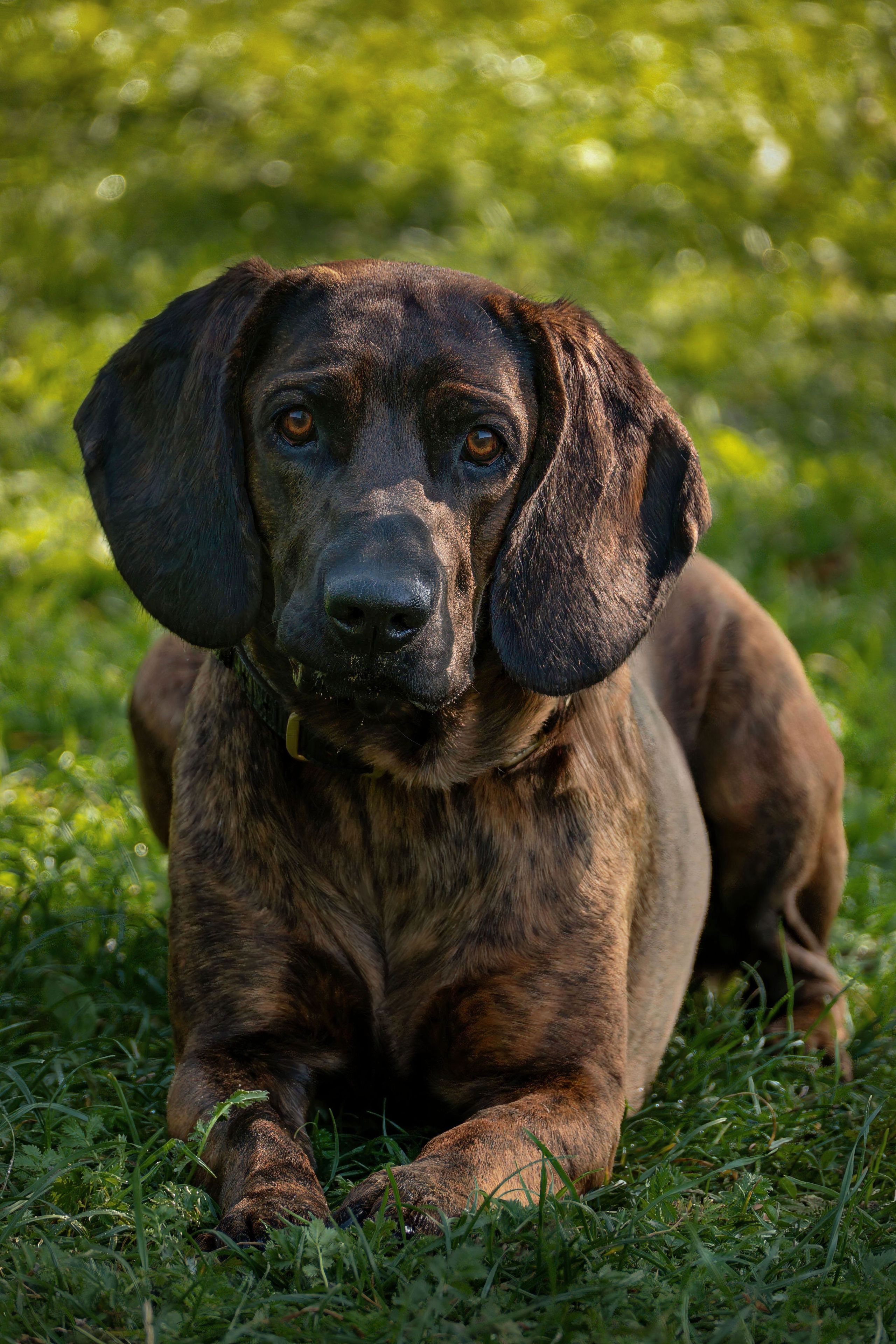
History
The Bavarian Mountain Scent Hound, in German the Bayerischer Gebirgsschweisshund, comes from Germany. According to the FCI standard it descends from the old Bracken, hunting hounds of the type used on the leash. After 1870 Baron Karg-Bebenburg set out to create a lighter hound better suited to the mountains, crossing Hanoverian Scent Hounds with red Mountain Scent Hounds. The result was a more agile dog that could work in steep, rough country where a heavier hound would struggle.
The standard describes the breed as the classical companion of the professional hunter and gamekeeper, and its purpose has changed very little. It is used as a specialist for locating wounded hoofed game, and the FCI lists it in Group 6, Section 2, Leash (Scent) hounds, with a working trial. The breed club was founded in Munich in 1912. The dogs we see in towns today still carry this specialist heritage: they are bred first for tracking ability and temperament in the field.
Temperament
The FCI describes a calm and balanced dog, devoted to its owner and reserved with strangers. It should be sound, self-assured, unafraid and biddable, neither shy nor aggressive. At home that makes a quiet, observant companion that does not demand constant attention, though it attaches closely to one person or family and may not warm quickly to guests.
Outdoors the dog changes. A scent hound that has been trained to follow a blood trail for hours is intense, determined and independent when the nose is working, and it will often ignore calls, whistles and treats. That is not defiance; it is concentration. The breed is not usually noisy, but it can give voice when excited, and it may be unhappy when left alone for long hours without work. It is a breed for people who like a quiet, thoughtful dog and who accept that the hunting instinct is not an accessory.
Children and other pets
With its own family the Bavarian Mountain Scent Hound is gentle and steady, and many get on well with older, respectful children. It is not a rowdy playmate, and it may withdraw from noisy toddlers and visiting children. Other dogs are usually accepted with proper socialisation. Cats and small animals are a different matter, since this is a hunting dog and the urge to follow a moving animal can override household manners. Keep introductions careful and supervised, and never trust the dog alone with small pets.
Exercise and the daily walk
This is not a breed for a quick lap of the block. A healthy adult needs around an hour and a half to two hours a day, and the quality of the exercise matters as much as the length. Slow, sniff-led walks in woodland, tracking games and scent work tire the dog in a way that fast walking does not. Without these outlets it can become restless, destructive or vocal.
Off-lead freedom needs great care. Once on a trail the dog may follow it for a long way, and wildlife is plentiful in the forests around Luxembourg. A long line and a well-fitted harness are the safe default, with off-lead running confined to enclosed areas. Mantrailing, tracking classes or similar scent sports suit the breed very well. Puppies should avoid long hikes and strenuous jumping while their joints are developing.
Training
The breed is intelligent and willing with its handler, but it was developed to work alone on a lead, concentrating on a faint trail. Reward-based, patient training works best, using food and quiet praise. The standard calls for a biddable dog, and most are, as long as the lesson is not competing with an irresistible scent. Harsh correction usually shuts down a sensitive hound.
Early lead training, a dependable settle and calm greetings should be priorities. Recall will always be conditional, so teach it, practise it in safe places and never rely on it near roads or in forest with game. Plan for mental work from the start, for example scent games in the flat or garden, and consider a tracking class. Experienced owners with a love of the outdoors are best placed to bring out the breed's quiet, cooperative side.
Coat and grooming
The standard calls for a dense, close-fitting, moderately harsh coat with little gloss. It is easy to maintain: brush once a week with a rubber mitt or soft brush, and more often during the seasonal moult. Wipe off mud after woodland walks and check the ears regularly. Permitted colours range through deep red, deer red, reddish brown, tan, clear fawn to biscuit, and reddish grey, with brindle variants. Non-standard colours are faults.
Feeding and weight
A working hound of this build does best on a complete, good quality food in measured portions, adjusted to activity. Two meals a day suit most adults. Because the breed can gain weight quickly when exercise drops, weigh food rather than guessing and keep treats within the daily allowance. Avoid hard exercise straight after eating. Fresh water must always be available, especially after long woodland outings.
Work out a starting calorie figure and food weight with the calorie calculator. Not sure this is the right breed? Take the quiz.
Health
Every breed carries predispositions. These are the conditions most often discussed for the Bavarian Mountain Scent Hound, not a prediction for any individual dog.
- Hip dysplasia and elbow dysplasia, as in many medium and large breeds
- Ear infections, because of the hanging ears and woodland outings
- Eyelid problems (entropion or ectropion), which the standard treats as a fault
- Weight gain when working exercise is reduced
What to ask the breeder. Ask for hip and elbow results for both parents and about the working record of the parents. Ask where the breeder usually places puppies and whether the dog is expected to be worked.
Choosing a puppy
A puppy is calm for a hound but curious, and it learns about the world through the nose from the first week. Start short lead walks, quiet socialisation and handling early. Let the puppy sniff generously, as this is both exercise and education. Avoid long hikes, repeated jumping and stairs until the joints mature. Teach settling in a pen or crate, and start simple scent games with a favourite toy or a piece of food on the floor.
In Luxembourg the national kennel club is the Fédération Cynologique Luxembourgeoise (FCL), a member of the FCI. Many owners also buy from breeders in Germany, France or Belgium; a puppy coming from another EU country must be microchipped and vaccinated against rabies, which in practice means it cannot travel before about fifteen weeks of age. Where to get a dog in Luxembourg.
The older Bavarian Mountain Scent Hound
A fit Bavarian Mountain Scent Hound can stay active into its teens, but many slow down from about nine or ten. Keep daily sniff walks, shorter and more frequent if stiffness shows. Maintain a healthy weight, check ears, eyes and teeth often, and discuss joint support with the vet. A soft bed away from draughts helps. Mental work, such as simple scent searches, keeps the older dog content and engaged.
A realistic day
A realistic weekday for a working household in Luxembourg City, with a midday visit. Adjust it to your dog, not the other way round.
Lead walk of about 40 minutes with plenty of sniffing, then breakfast and a rest.
Owner leaves for work; the dog settles with a stuffed chew or a scatter of kibble to find.
Midday visit: a 45-minute sniff walk on a long line in a quiet green area, water and a short scent game.
Evening outing of an hour or more, ideally in woodland, with a tracking or scent exercise, then dinner.
Brief toilet break, a quick check of ears and paws, and bed.
A Bavarian Mountain Scent Hound in Luxembourg
With forests such as the Grünewald and the Bambësch close to the city, Luxembourg offers the kind of ground this breed was made for. A weekend scent walk on a long line there is the sort of outing it will treasure, and the abundant wildlife makes a secure lead essential. In town, the Pétrusse valley and Parc Merl are pleasant for quieter hours, but a dog of this nature will often want to follow a trail across a lawn, so do not expect a relaxed saunter.
A medium-sized dog like this can live in a flat with a lift, provided it receives real exercise and mental work, but it is better matched with an active home with access to green space. Summer heat in the 30s °C is manageable with early and late walks. Free buses and trams make forest trips easy. All dogs must be microchipped, declared to the commune, insured for third-party liability and subject to the annual dog tax.
Every dog in Luxembourg must be identified, declared to the commune and covered by liability insurance. How registration works.
When you travel
A sitter must keep the dog on a lead or long line outdoors at all times, since a scent can pull it a long way in seconds. Walks should include sniffing time and, if possible, a short scent game. Keep to the routine for feeding and rest, check ears after woodland outings, and leave the vet's details. Never leave the dog loose in an unfenced garden or let it out of a car or door unclipped.
PAWLY's holiday and overnight care takes place in your home, so your dog keeps its own bed and routine.
Myths and facts
MythA scent hound is just a sleepy dog that likes sniffing.
FactThe breed is calm at home but very driven outdoors. It needs real work for the nose and a good deal of exercise.
MythWith training, it will always come back.
FactRecall helps, but a fresh trail can override it. Use a long line or a fenced area.
MythIt is a good beginner's dog because it is calm.
FactThe breed was developed for specialist hunting work and needs informed handling, plenty of outdoor time and a lot of patience.
Is it the right dog for you?
Suits
- Active owners who love woodland walking
- People interested in tracking or mantrailing
- Homes with access to forest or countryside
- Hunters or outdoor professionals who can offer real work
Think twice if
- You want a dog with reliable off-lead recall
- You work long hours and the dog would be alone much of the day
- You have cats or small animals you cannot separate
- You are looking for a flat companion with little exercise
Questions owners ask
Can a Bavarian Mountain Scent Hound live in a flat?
It can, if the owner provides generous exercise and mental work every day and there is a lift or easy access. A bored, under-exercised dog may bark, whine or destroy things, so this breed suits an active household.
Is it a family pet?
It is calm and loyal with its own family, but it is a specialist working hound, not a typical companion. Families should ask the breeder honestly whether a puppy is suited to a pet home.
How much exercise does it need?
Around an hour and a half to two hours daily, with plenty of sniffing and ideally some scent work. Fast walking alone is not enough for the mind.
Does it bark?
It is not typically a barking breed, but a bored or lonely dog may give voice, and a hound on a trail can be vocal. Training and enough work keep it settled.
Sources
Photo: Pexels (Pexels License) · Photo: Pexels (Pexels License) · Photo: Pixabay (Pixabay Content License)
General information for dog owners in Luxembourg, not veterinary or legal advice. Official facts (origin, size, group, history and temperament as described by the breed standard) follow the FCI standard; health and care sections reflect breed-club and veterinary guidance and are typical ranges rather than rules. For your own dog, ask your vet, the breed club or your commune. How this guide is written and checked. Last reviewed 8 October 2026.
Need someone for your Bavarian Mountain Scent Hound?
PAWLY offers an individual 45-minute walk or a home visit at your dog's pace, the same walker every time, and a written report with photos after every visit, across Luxembourg City.
Read next: the journal, for the Bavarian Mountain Scent Hound
All articles
Building a recall you can actually rely on
Scent and movement can cancel a recall; this is the method for the Bavarian Mountain Scent Hound.

How much exercise does your dog actually need?
The Bavarian Mountain Scent Hound is an active breed, so it is worth checking the exercise numbers against your actual week.

Dogs and cats in the same flat
The Bavarian Mountain Scent Hound can see small animals as prey; this covers living with a cat in a flat.
Similar breeds
All 198 breeds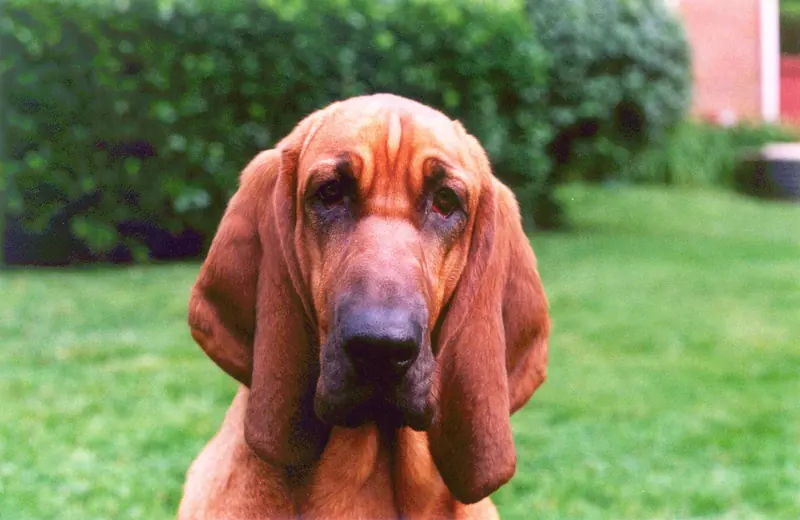
Bloodhound
A gentle giant whose nose writes the itinerary of every walk, and who follows a scent long after common sense has gone home.
EnergyGroomingFlat life
Basset Hound
A short-legged hound of real substance, placid and affectionate at home, single-minded once a scent reaches that long, low nose.
EnergyGroomingFlat life
Beagle
A cheerful, sociable nose on four legs. Everything about living with a Beagle follows from the nose.
EnergyGroomingFlat life

