



History
The Beagle is a British scent hound. The FCI standard describes it as a merry hound whose essential function is to hunt, primarily hare, by following a scent, and says it descends from larger Foxhounds and was developed for hunting on foot. Because Beagles were meant to live and work in packs, they are sociable with other dogs, and because they were meant to follow a scent for hours, they are persistent in a way that owners discover quickly.
The standard also notes that wirehaired Beagles existed in the reigns of Henry VIII and Elizabeth I, some small enough to fit in a hunting jacket, and that modern litters occasionally produce smaller pocket Beagles. The FCI places the breed in Group 6, Section 1.3, small sized hounds. Its nose is so good that Beagles are widely used as detection dogs at airports and borders, including the United States Department of Agriculture's well known Beagle Brigade.
Temperament
The standard asks for an alert, intelligent dog of even temperament, amiable and alert, showing neither aggression nor timidity. It adds boldness, activity, stamina and determination, which belong to a hunting dog. At home that translates into a friendly, gentle, merry dog that greets everybody, including the courier, as a long lost friend, and makes the household feel busy.
Beagles are also independent. When the nose engages, the ears switch off, and no amount of calling will compete with a fresh trail. Many bay or howl, which is worth knowing in an apartment building, particularly if the dog is bored or lonely. They are good with children and usually with other dogs, but they are not a guard dog and they are not obedient by nature. Expect charm, persistence and an eye on the kitchen.
Children and other pets
Beagles are cheerful with children and usually excellent with other dogs, having been bred to live in packs. They are sturdy enough to cope with lively play, but young children should still be taught not to pull ears or disturb a dog eating. Small pets and cats need careful introductions, since the hunting instinct is real, and rabbits or hamsters should be kept out of reach. Beagles do best in homes where someone is around for company.
Exercise and the daily walk
An adult needs around an hour and a half a day, and the quality matters as much as the length. Sniffing is the main event: let the dog follow a trail, hide treats in the grass, and use scent games in the park. A Beagle that has used its nose for twenty minutes is calmer than one dragged round a block at pace.
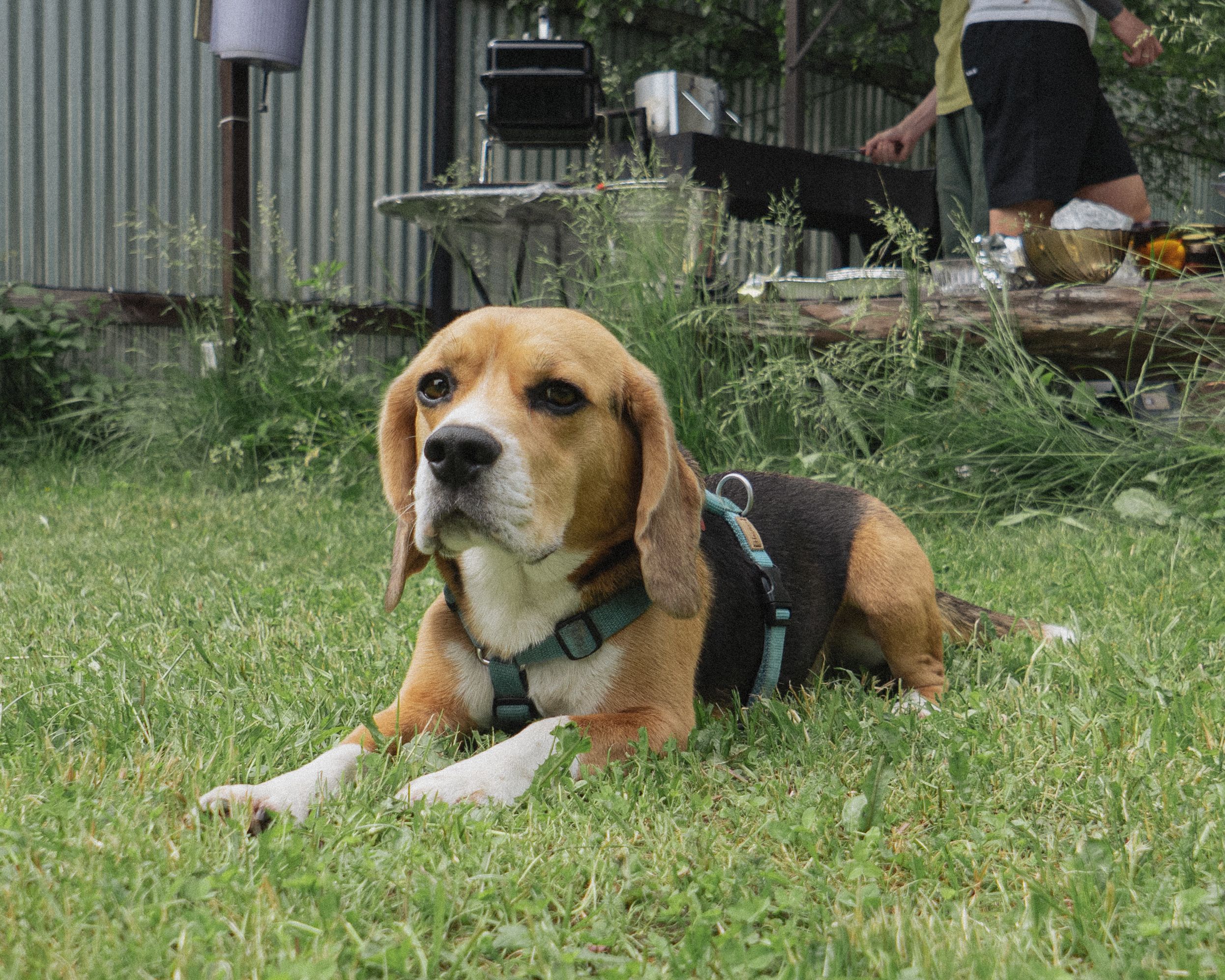
Off lead freedom is limited by the nose. Some Beagles can be let go in safe, fenced areas, but in the forest most will follow a scent and not return quickly. Use a long line for training and for walks, and build a recall with high value rewards. Check the harness fits, because a Beagle will try to reverse out of anything loose.
Training
Beagles are intelligent but stubborn, and food is the most useful currency. Use small, tasty rewards, keep sessions short and upbeat, and finish while the dog is still keen. Harsh corrections work badly and are unnecessary. Teach loose lead walking early, because a Beagle that has found a smell pulls hard, and add a firm leave it and a reliable name response.
Recall will be a lifelong project. Practise in boring places first, pay generously and never punish a dog for returning. Teaching a settle, a quiet signal and gentle crate or mat training helps with barking and howling. House training can take longer than expected, so keep a consistent routine and reward success at the right spot.
Coat and grooming
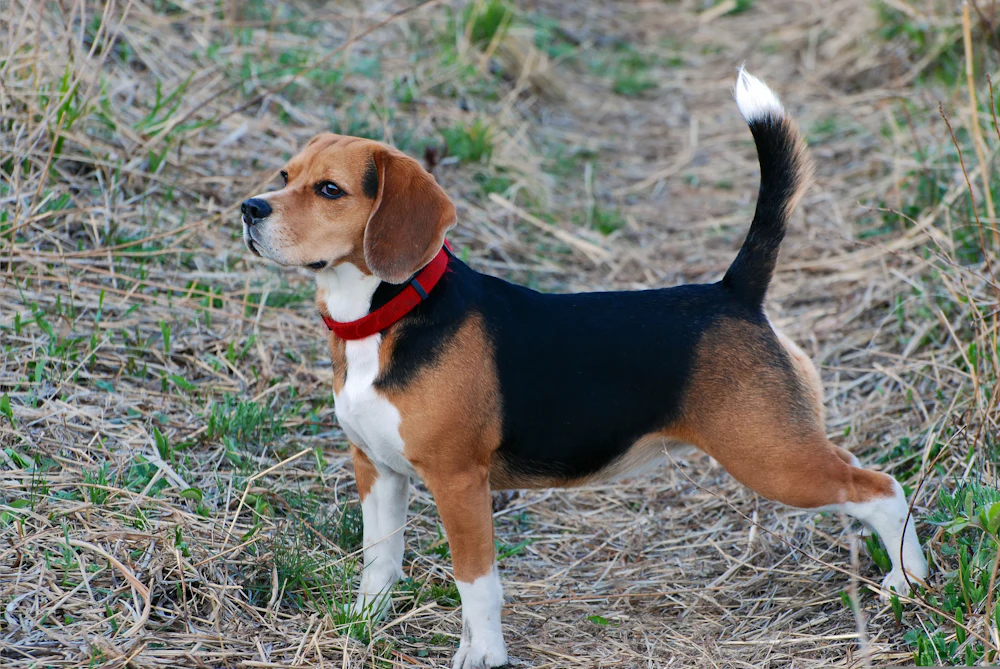
The standard describes a short, dense and weatherproof coat. Permitted colours include tricolour, blue white and tan, and various pieds, though not solid white. Grooming is simple: a weekly brush with a rubber mitt removes loose hair, which sheds steadily year round. Wipe the long ears and check them for wax and infection, because the shape holds moisture. Bathe only when needed, and dry the dog after wet walks.
Feeding and weight
Beagles are enthusiastic eaters and gain weight quickly, so measure every meal and count treats. Use part of the daily ration for training or a snuffle mat. Keep food, bins and shopping out of reach, because a Beagle will climb to get it. Feed two meals a day and keep the dog lean, since extra weight stresses the back and joints. Ask a vet if the weight begins to creep.
Work out a starting calorie figure and food weight with the calorie calculator. Not sure this is the right breed? Take the quiz.
Health
Every breed carries predispositions. These are the conditions most often discussed for the Beagle, not a prediction for any individual dog.
- Obesity: Beagles are enthusiastic eaters
- Intervertebral disc disease
- Epilepsy
- Hypothyroidism
- Ear infections
- Musladin-Lueke syndrome (a DNA test exists)
What to ask the breeder. Ask for DNA tests for Musladin-Lueke syndrome and other conditions offered by the breed club, and ask about epilepsy and back problems in the lines. Meet the mother and see how she behaves.
Choosing a puppy
Choose a breeder who tests the parents and raises the litter indoors, with handling and a variety of noises. Look for a bold, friendly puppy that is neither frantic nor shy. Put food out of reach before the puppy arrives, since a Beagle will find any crumb. Begin lead training and recall games at once, start with house training and short alone periods, and be ready for the howl. A puppy class and plenty of sniffing walks will help.
In Luxembourg the national kennel club is the Fédération Cynologique Luxembourgeoise (FCL), a member of the FCI. Many owners also buy from breeders in Germany, France or Belgium; a puppy coming from another EU country must be microchipped and vaccinated against rabies, which in practice means it cannot travel before about fifteen weeks of age. Where to get a dog in Luxembourg.
The older Beagle
Older Beagles tend to put on weight as they slow, so keep portions measured and walks regular. Watch for back pain, ear infections, hearing loss, cloudy eyes and new lumps. Many remain cheerful and food driven into their teens. Provide steps for the sofa to protect the back, soft bedding and gentle sniffing walks, which give mental stimulation without strain, and arrange regular vet checks.
A realistic day
A realistic weekday for a working household in Luxembourg City, with a midday visit. Adjust it to your dog, not the other way round.
A sniffy walk at the dog's pace, on a lead near roads.
Breakfast from a snuffle mat, then a rest.
Midday visit, to break the day and prevent howling, with a short sniff walk.
Longer walk with a scent trail or search game on a long line.
Final toilet walk, then bed with a chew.
A Beagle in Luxembourg
Beagles can live happily in flats provided exercise and company are covered, but the voice is the issue. A bay carries through walls and stairwells, so a lonely Beagle is soon a neighbourhood topic. A midday visit, a chew and a scent game before you leave help. In the lift, expect a wagging dog who wants to greet everyone. Remember the legal basics: a microchip, a declaration to the commune, third party liability insurance and the annual dog tax.
For exercise, the Pétrusse valley, Parc Merl and the Kinnekswiss park suit sniffing walks, while the Bambësch and Grünewald forests are a hunter's paradise full of enticing scents, so keep a long line on. Summers can reach the 30s, and a Beagle will walk until it overheats if the nose says go, so exercise early and late. Free buses and trams make it easy to reach the green edges without a car.
Every dog in Luxembourg must be identified, declared to the commune and covered by liability insurance. How registration works.
When you travel
Beagles are sociable and settle well with a sitter who is around, because loneliness leads to howling. Share the feeding routine in writing and stress that food is strictly measured and that the kitchen bin and counters need guarding. Keep the dog on a lead or long line outdoors, as the nose will override recall. Provide chews, a snuffle mat and a comfortable bed, and warn neighbours if the dog is vocal.
PAWLY's holiday and overnight care takes place in your home, so your dog keeps its own bed and routine.
Myths and facts
MythBeagles are easy first dogs.
FactThey are friendly and robust, but also stubborn, vocal and obsessed with food. Manageable, but not effortless.
MythA Beagle will come back when called.
FactNot while it is following a scent. A long line is the honest solution.
MythBeagles are lazy.
FactThey sleep happily, but they are bred for stamina and need a proper daily outing. A bored Beagle is loud and destructive.
Is it the right dog for you?
Suits
- Families with children
- Owners who enjoy relaxed, sniffy walks
- Homes with other dogs
- People who are at home for much of the day
Think twice if
- Owners wanting reliable off lead recall
- Thin walled flats with long absences
- Anyone who leaves food on counters
Questions owners ask
Do Beagles bark a lot?
They are vocal, and the hound bay carries. Loneliness and boredom make it worse. Exercise, scent games, company and a midday visit help a great deal, but in a building with thin walls it is worth considering carefully.
Can a Beagle be off lead?
Some can, in safe fenced areas. In the forest, most will follow a scent and not come back quickly. Use a long line, practise recall with high value rewards and accept that the nose can win.
How much should a Beagle weigh?
Aim for a dog you can feel the ribs on, with a visible waist. The adult range is about 9 to 14 kg, but the right weight depends on the dog's frame. Weigh food, count treats and ask the vet to check body condition.
Are Beagles good with children?
Usually, yes. They are cheerful, sturdy and sociable. Teach children to respect the dog's food and rest, and supervise young ones. Remember that a Beagle will charm children out of snacks, so explain the food rules.
Sources
Photo: Unsplash (Unsplash License) · Photo: Pexels (Pexels License) · Photo: Pexels (Pexels License) · Photo: Unsplash (Unsplash License) · Photo: Pexels (Pexels License)
General information for dog owners in Luxembourg, not veterinary or legal advice. Official facts (origin, size, group, history and temperament as described by the breed standard) follow the FCI standard; health and care sections reflect breed-club and veterinary guidance and are typical ranges rather than rules. For your own dog, ask your vet, the breed club or your commune. How this guide is written and checked. Last reviewed 8 October 2026.
Need someone for your Beagle?
PAWLY offers an individual 45-minute walk or a home visit at your dog's pace, the same walker every time, and a written report with photos after every visit, across Luxembourg City.
Read next: the journal, for the Beagle
All articles
Long-backed breeds, stairs and the spine
A long back makes stairs matter more than most owners think.

Getting weight off a dog, and keeping it off
Weight is a recurring issue for the Beagle; this is how to take it off and keep it off.

Building a recall you can actually rely on
Scent and movement can cancel a recall; this is the method for the Beagle.
Similar breeds
All 198 breeds
Basset Hound
A short-legged hound of real substance, placid and affectionate at home, single-minded once a scent reaches that long, low nose.
EnergyGroomingFlat life
Dachshund
A long, low hunting dog from Germany with a loud voice, a stubborn streak and a nose that overrules everything else.
EnergyGroomingFlat life
Jack Russell Terrier
A big dog in a small body: fearless, clever, endlessly busy and permanently looking for something to hunt.
EnergyGroomingFlat life

